Power Tools
Ryobi ONE+ vs Craftsman V20: Which Value Tool System Gives You More for Your Money?
We compare two budget-friendly cordless tool systems on combo kits, batteries, tool selection, and total cost to build out a full homeowner setup.
Introduction
If you are outfitting a new home or getting into DIY for the first time, two value-focused cordless platforms come up again and again: Ryobi’s ONE+ 18V system sold through Home Depot and Craftsman’s V20 system sold through Lowe’s. Both sit below the mid-range tier and both make a full homeowner toolkit surprisingly affordable. We built out two nearly identical carts, tool for tool, to see which brand delivers more value per dollar.
The Starter Combo Kits: Six Tools for $199
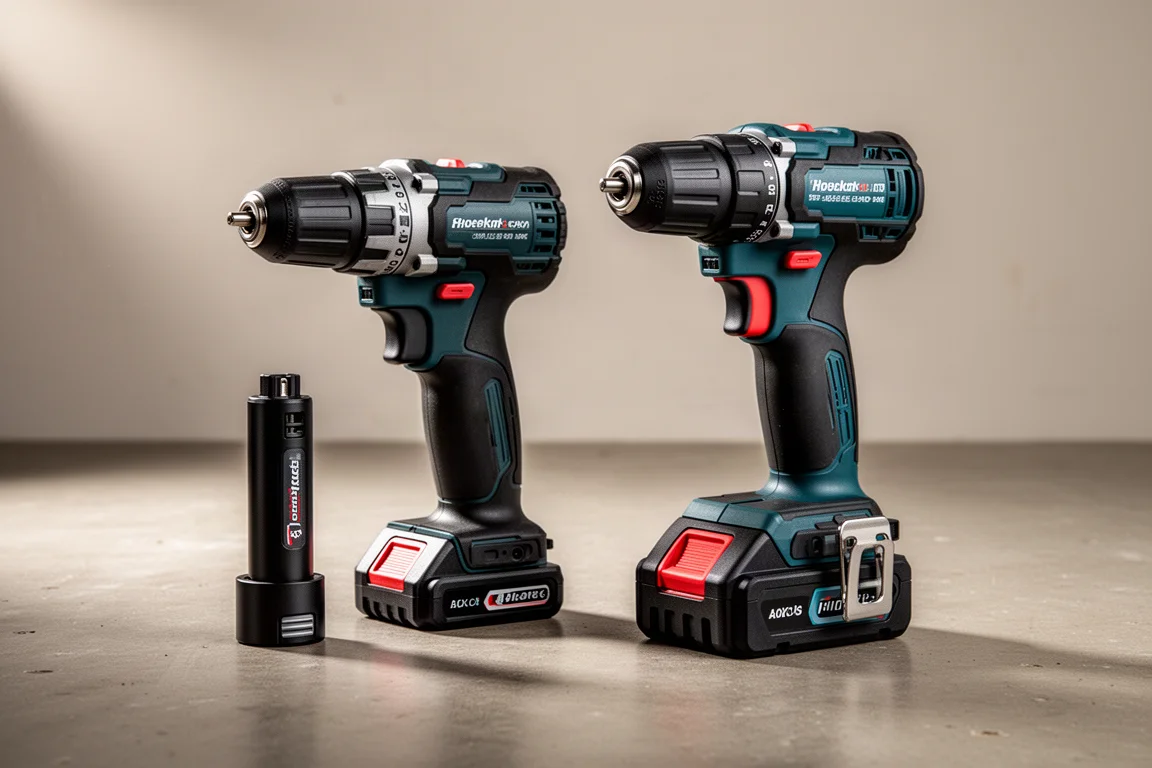
Both brands currently offer a $199 six-tool combo kit, and on the surface they look nearly identical. Each includes a brushed drill, brushed impact driver, brushed multi-tool, brushed reciprocating saw, and a brushed circular saw, along with two batteries.
The main difference sits in the batteries. The Ryobi kit pairs a 4Ah battery with a 1.5Ah pack, while the Craftsman kit includes two 2Ah batteries. The larger Ryobi battery can give better runtime on the circular saw and reciprocating saw, which makes the Ryobi kit the slight edge in value, though the two sets are very close when you compare individual tool specs.
Tool Selection: How Deep Does Each Line Go?
Ryobi’s ONE+ line is one of the most established value brands in power tools, and it shows in the catalog. Searching just the ONE+ system on Home Depot’s site returns 777 results, covering everything from drills and saws to inflators, pole saws, vacuums, and nailers.
Craftsman’s V20 system is newer and noticeably more limited: the same search filters return 134 results. That narrower catalog affects pricing too, since fewer deals and fewer kit configurations are available. If variety matters to you, this is one of the biggest practical differences between the two platforms.
One interesting Ryobi extra: the brand also makes a compact hand tool line, including socket sets, screwdriver sets, a thermometer, a knife, and a workshop marker, roughly 31 hand tool items in total.
Batteries and Charger Counts
Both brands use a 3-year warranty, so that is essentially a wash. The more interesting difference is battery style and how many packs you end up with.
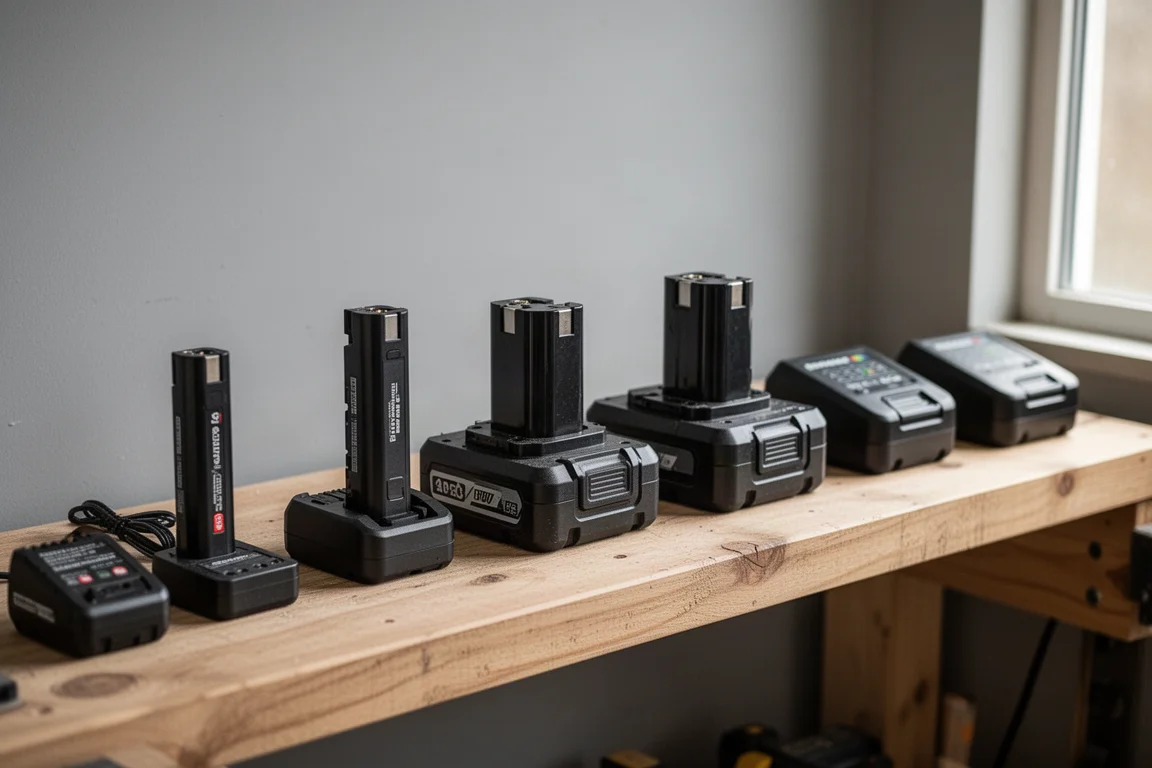
Ryobi has committed to keeping its stick-pack battery format, meaning older ONE+ tools keep working with newer batteries, which is a genuine long-term advantage for anyone building into the system. When the carts were tallied, the Ryobi side came out to six batteries and four chargers, while the Craftsman side ended at seven batteries and six chargers. Both approaches leave you well covered, and battery sizes run from 1.5Ah to 4Ah across both platforms.
Outdoor and Specialty Tools
This is where the cart-building got interesting. Highlights from the Ryobi side include:
- A brad nailer for $100, described as one of the most universally useful nailers for around-the-house work
- A blower at $88 that includes a 2Ah battery and charger
- A 10-inch sliding compound miter saw kit with a 4Ah battery and charger for $270
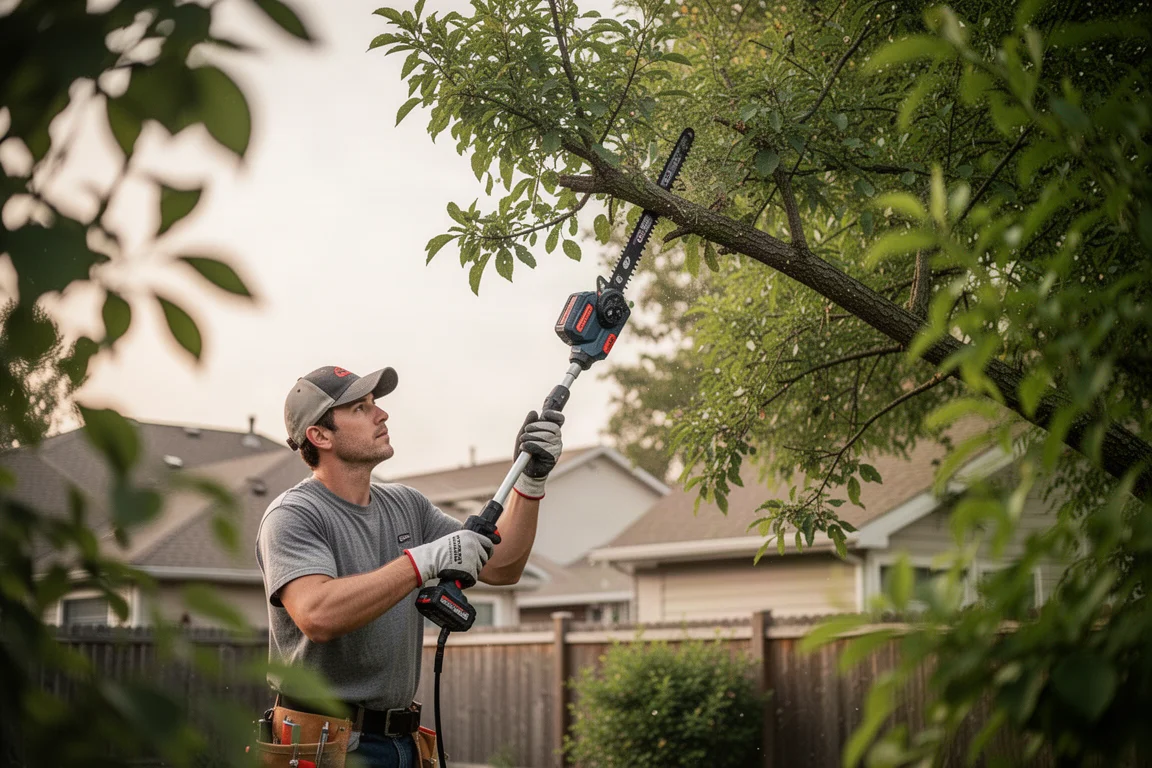
- A pole saw at $88, a 10-inch chainsaw, an 18V vacuum for $70, a jigsaw for $44, and a 4.5Ah half-inch impact wrench kit for $100
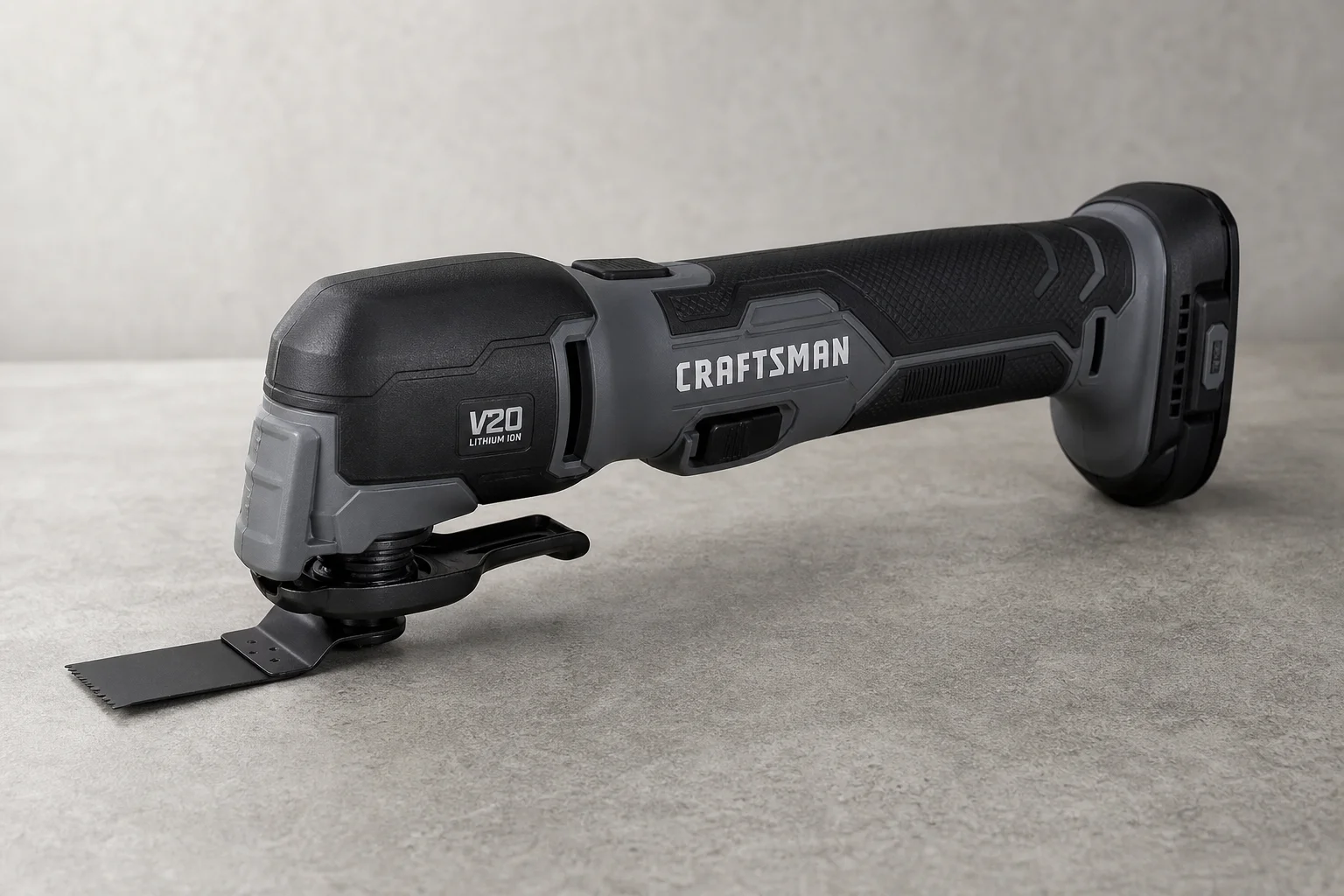
On the Craftsman side, the matching miter saw is cheaper but uses a smaller 7.25-inch blade with a single bevel, while the Ryobi offers the larger 10-inch blade. Craftsman’s inflator is a clear step up, though, at $80 on sale: it can run off 120V wall power or your car, giving it more flexibility than the Ryobi version. Craftsman’s brushless half-inch impact wrench is also a step up in class from the brushed Ryobi equivalent, even though the cart version skips the included battery and charger.
View more details for Craftsman V20
The Total Cart Comparison
With the same tool list built on both sides, the totals came to $1,286.91 for the Ryobi cart versus $1,508.96 for the Craftsman cart, a difference of roughly $250. That saving is enough to add another couple of tools and a battery on the Ryobi side.
Current sale depth reinforced the gap: the Ryobi cart showed around $615 in savings, while Craftsman’s discounts came to about $235. Not every category favors Ryobi, though. Craftsman’s angle grinder came in slightly cheaper at $50, and its inflator and brushless impact wrench are stronger picks, while the Craftsman vacuum and jigsaw cost more than their Ryobi counterparts.
Buying Advice
Both systems are well made and very close in overall quality, so this is not a case of one brand being clearly better built than the other. For a first-time homeowner buying into an entire platform, though, Ryobi gets the nod here: a deeper tool catalog, the larger-battery combo kit, the better 10-inch miter saw deal, and roughly $250 less for a complete setup. Craftsman makes sense if you specifically want its stronger inflator or prefer the brushless impact wrench, or if you already own V20 batteries.
Conclusion
Ryobi and Craftsman are remarkably close value brands, and it is genuinely hard to go wrong with either. But when you compare complete carts, catalog depth, and current sale pricing, the Ryobi ONE+ system edges out the Craftsman V20 for most DIY buyers. Whichever you choose, buying into a battery platform is a long-term decision, so matching the ecosystem to your project list matters more than any single tool deal.
Further reading
Related Reviews
Power Tools
Best 1-Inch Pistol Impact Wrenches: Three Heavy-Duty Options Compared
We compare three 1-inch pistol impact wrenches, from a budget-friendly Harbor Freight model to a premium Caterpillar unit, to help you choose the right one.
Power Tools
Best 3/4-Inch Impact Wrenches 2026: Five Contenders Compared
We compare five 3/4-inch impact wrenches across price and performance, from a budget Amazon option to Snap-on's most powerful model yet.
Power Tools
Best Budget Cordless Tools 2026: Walmart Finds That Punch Above Their Price
We tested five cordless tools from Walmart, including a high-torque impact wrench that trades blows with Milwaukee and a $35 duster that outperforms its price class.