Power Tools
Ryobi R18GN18 ONE+ 18V Brad Nailer Review: Do You Really Need One?
After weeks of real-world use on trim and joinery work, this cordless 18-gauge brad nailer proved fast, jam-free, and genuinely portable, with a few trade-offs to weigh up.
Introduction
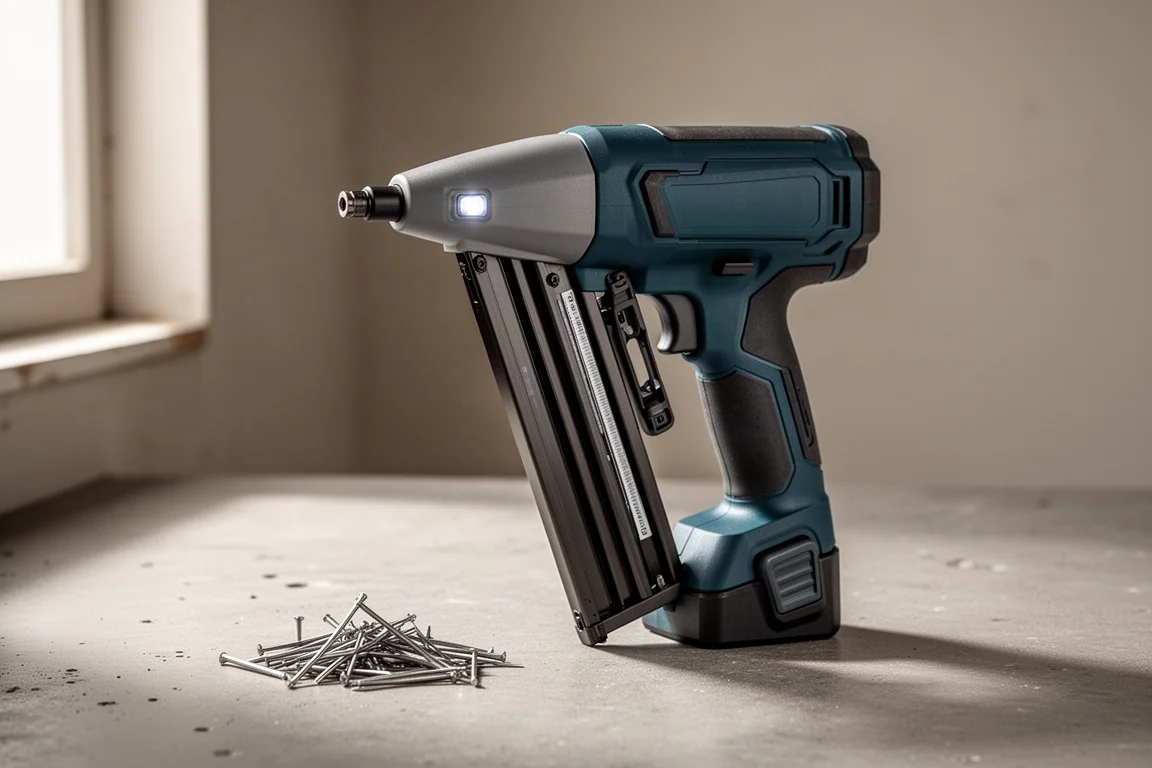
Cordless brad nailers sit in that awkward category of tools that seem unnecessary until you own one, at which point you wonder how you managed without it. The Ryobi R18GN18 ONE+ 18-gauge cordless brad nailer fires thin brad nails for finishing and trim work, and after several weeks of regular use on real projects, it has proven reliable, accurate, and genuinely useful for second fix carpentry.
What This Nailer Fires and How It Is Set Up
This is an 18-gauge brad nailer, which fires nails roughly 1.2 mm in width. It is worth remembering that 18 gauge is actually smaller than 16 gauge, despite the numbering going the wrong way. The nailer accepts brads from 15 mm up to 2 inches in length, which covers both ends of the spectrum well enough that there is rarely a need for anything smaller or larger.
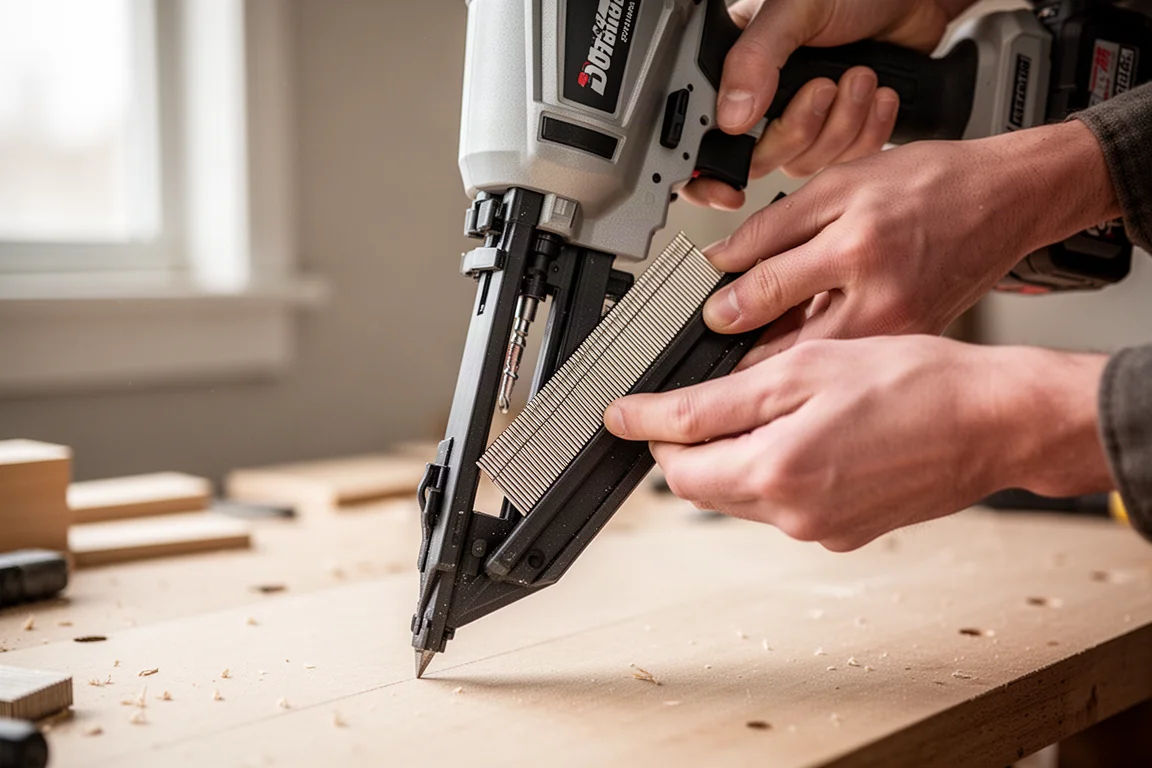
Loading works as you would expect from any cordless nailer. The magazine opens with a clip, nails go in tip-down at the bottom, and the whole thing closes with a click. The tool cannot fire unless the contact tip at the nose is depressed and the gun is turned on, so the safety arrangement is straightforward.
Adjustments, Loading and Small Practical Touches
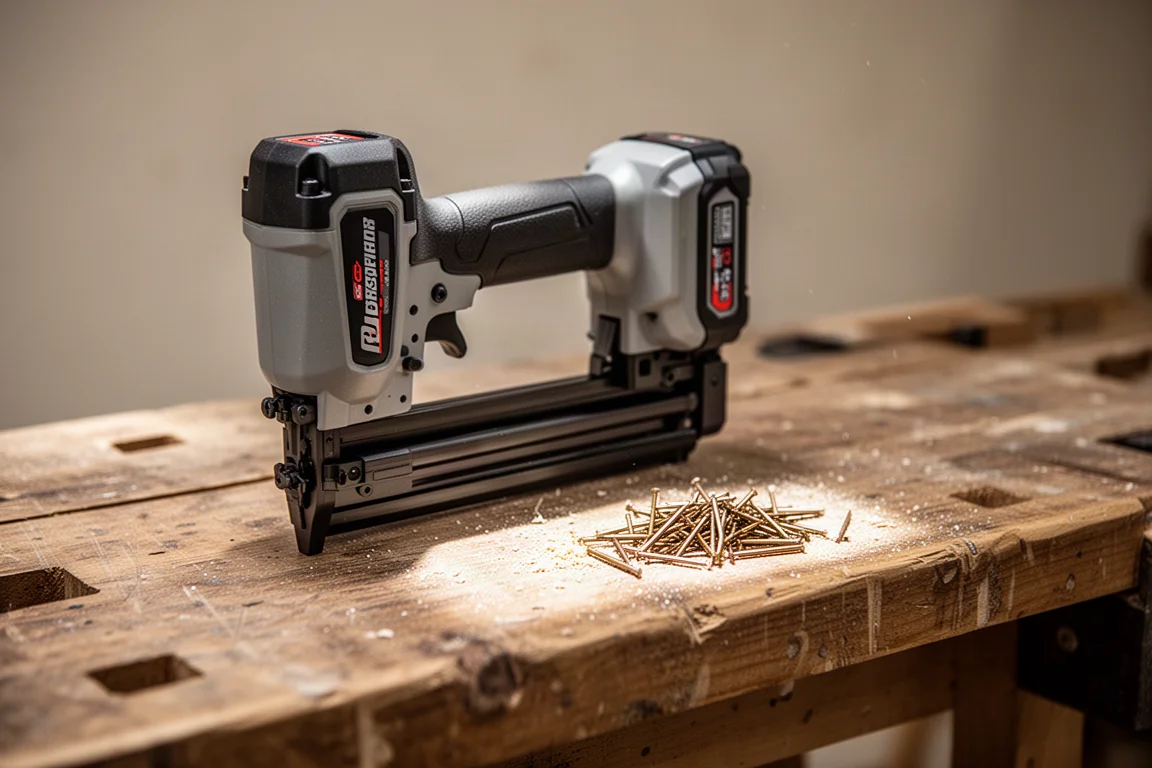
There are two adjustments worth knowing about. The first is firing depth, which is genuinely accurate and easy to fine-tune. The second is a pressure setting on the rear of the tool. While the instructions describe it as adjusting the pressure inside the gun, in practice it made no noticeable difference, so leaving it on the mid setting is a sensible default.
Jam clearing is quick: the front plate pulls forward to expose the entire tip mechanism, letting you clear anything stuck inside, provided the battery is removed first. The tool also has a belt clip, a useful LED light at the nose that doubles as an on indicator, and an auto-off after around 30 seconds of inactivity, so there is no dedicated power button. Turning it on is done either by depressing the head or via a second rear button operated with the middle finger. Note that this nailer is single shot only and cannot bump fire.
Other thoughtful touches include a rubberized tip that protects the wood from marks, with a spare supplied and stored on the rear of the tool. The magazine has a window showing a yellow indicator strip when nails are running low, and the tool will not fire once you are down to the last couple of brads.
Real-World Performance
Straight out of the box, it was used to build boxes and hangers for a French cleat system, where it performed well. Changing nail lengths between shots depending on material thickness proved quick and painless. Ryobi claims around 1,950 nails of 15 mm length per charge on a 5 amp hour battery, which rings true given that the battery never ran flat during use, despite hundreds of nails fired.
At just under 2.5 kg without the battery, it is reasonably heavy and bulky, as most cordless nailers are. Working at a bench, an air nailer is honestly easier: it weighs a fraction as much, costs less, and works very well, provided you have a compressor. On a workbench, the compressor and hose are barely a hindrance, so this cordless nailer is not at its best there.
Where It Excels: Second Fix Work Around the House
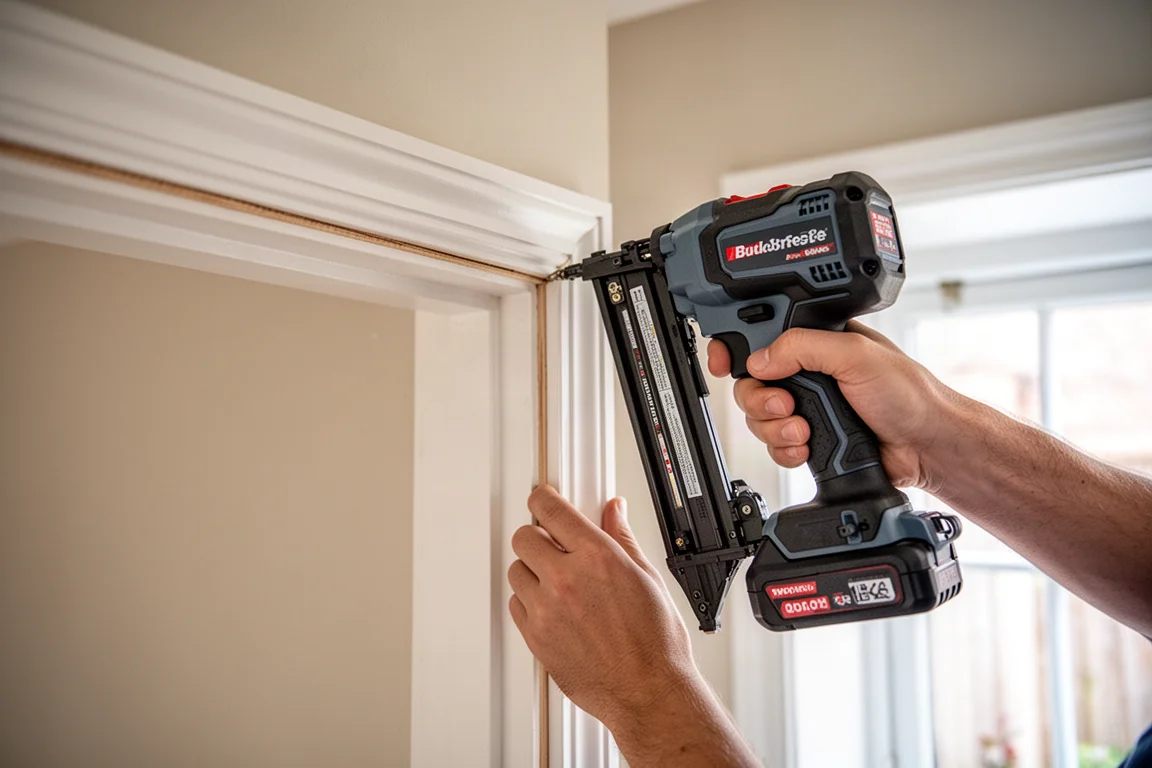
The real payoff is portability. On a walk-in wardrobe project, being able to carry the nailer into any room without cables or hoses and start fixing immediately is exactly what this tool is designed for. Fixing architrave and door stops with a nailer is faster and produces better results than hammer and nails, because you position the piece perfectly and let the gun do the work.
Even with a smaller 4 amp hour battery, the tool fires literally thousands of nails, so there is rarely a need to carry a spare. With a pocket full of brads, you are set for the whole day. In tight spaces and moving around the house, the weight simply stops being something you notice.
Buying Advice: Should You Invest in a Cordless Brad Nailer?
If you have more than a single door to fix and the budget allows it, a cordless brad nailer is worth the investment. You will use it more than you expect, it speeds up second fix work noticeably, and the finished quality is better because you can hold the trim in place while the tool does the driving.
At the time of review, the nailer was retailing for around £160 on Amazon, cheaper than other retailers, with the manufacturer’s own site listing it at over £200. As for this specific model, it has done everything asked of it without a single jam or hiccup, making it easy to recommend, though direct comparisons with other budget machines are worth waiting for before committing.
Conclusion
The Ryobi R18GN18 is a capable, jam-free 18-gauge brad nailer that shines brightest in portability-driven second fix work. It is heavy for prolonged bench use and the pressure setting feels pointless, but for trim, architraves, and door stops around the house, it earns its place in the toolbox.
Product link
View more details for Ryobi R18GN18 ONE+ 18V 18-Gauge Cordless Brad Nailer
This product is mentioned in the review. Check the specifications, options, and compatibility before buying.
View more details for Ryobi R18GN18 ONE+ 18V 18-Gauge Cordless Brad NailerFurther reading
Related Reviews
Power Tools
Best 1-Inch Pistol Impact Wrenches: Three Heavy-Duty Options Compared
We compare three 1-inch pistol impact wrenches, from a budget-friendly Harbor Freight model to a premium Caterpillar unit, to help you choose the right one.
Power Tools
Best 3/4-Inch Impact Wrenches 2026: Five Contenders Compared
We compare five 3/4-inch impact wrenches across price and performance, from a budget Amazon option to Snap-on's most powerful model yet.
Power Tools
Best Budget Cordless Tools 2026: Walmart Finds That Punch Above Their Price
We tested five cordless tools from Walmart, including a high-torque impact wrench that trades blows with Milwaukee and a $35 duster that outperforms its price class.