Power Tools
Ryobi P343 vs Makita XMT-03: Can a Budget Oscillating Multi-Tool Do the Job?
We compare the affordable Ryobi P343 against the Makita XMT-03 on weight, handling, blade changes, and cutting performance to see if spending more is worth it.
Introduction
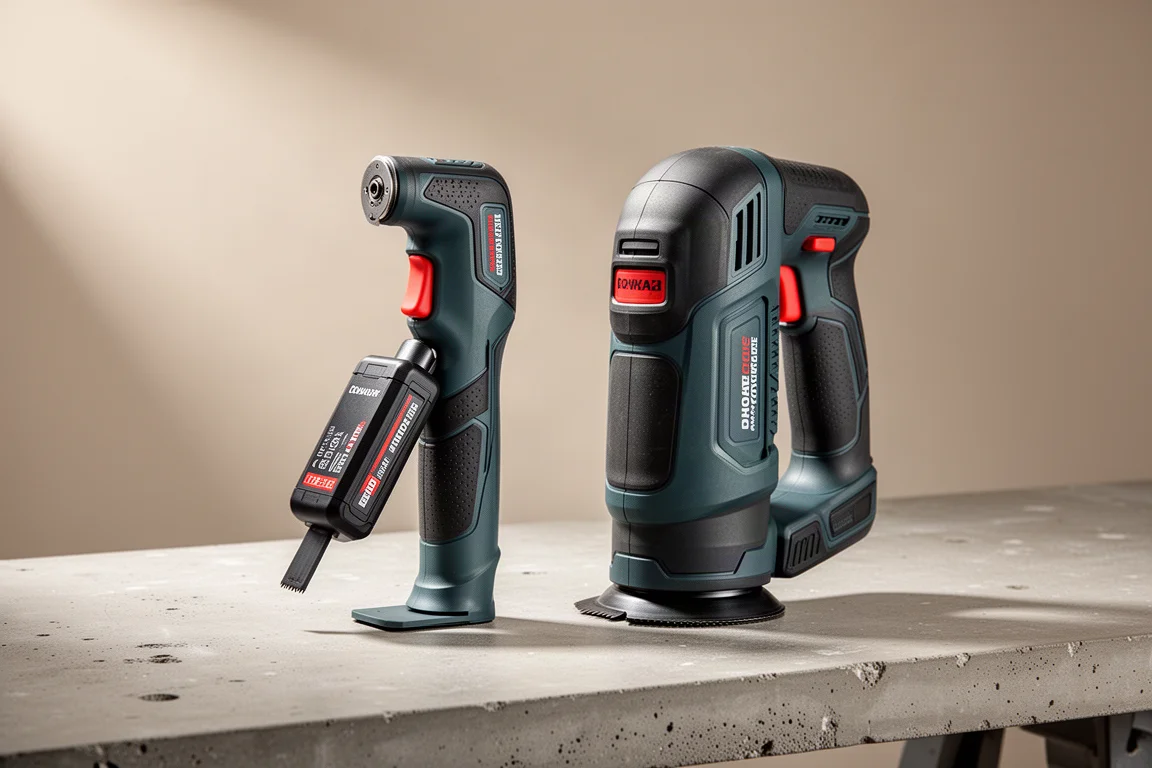
Oscillating multi-tools are one of those purchases where the question is not just which tool is best, but whether you actually need a premium one. Many tradespeople and DIYers only pull a multi-tool out a couple of times a year, maybe for flooring work or an occasional trim job. That raises an honest question: can a cheaper tool do the same job as a more expensive one?
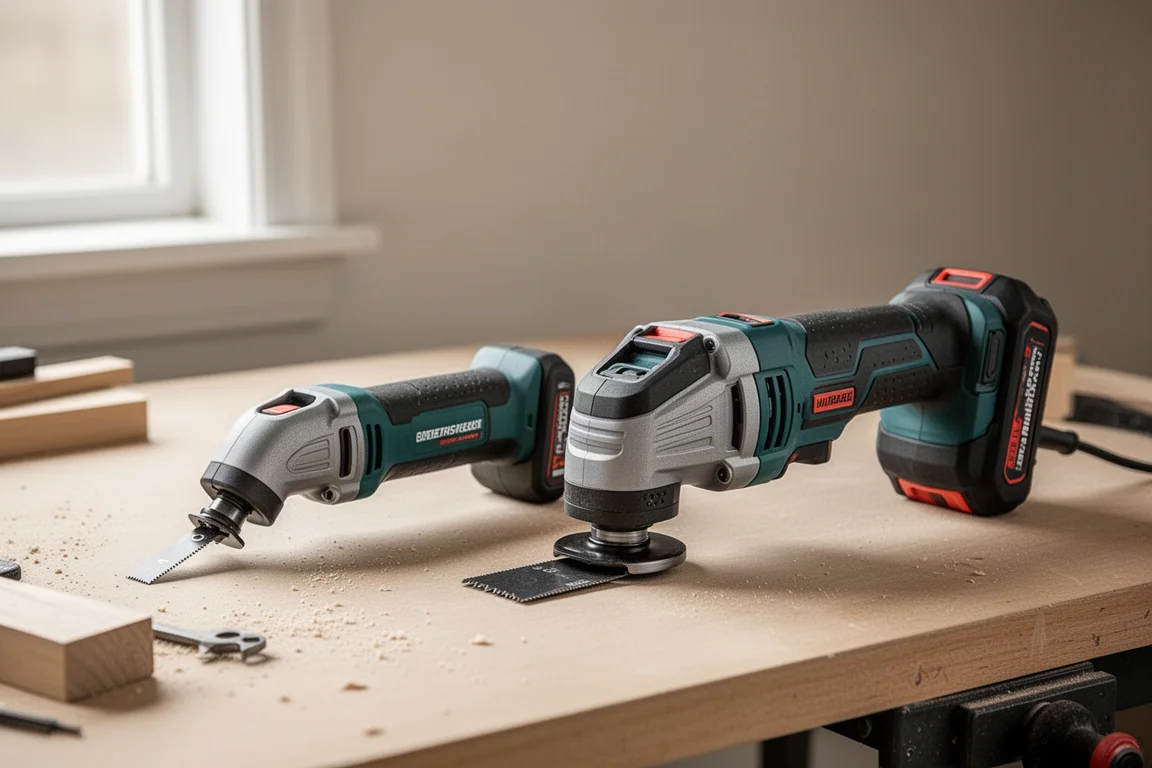
To find out, we compared two cordless oscillating multi-tools with near-identical feature sets: the budget-friendly Ryobi P343 and the standard brushed Makita XMT-03. Both offer six speed settings, run on a 4Ah battery class, and take the same style of accessory blades, which makes them a fair head-to-head comparison.
Evaluation Criteria
The comparison focused on the things that actually matter in day-to-day use:
- Weight and handling: how comfortable the tool is to hold and guide, especially one-handed
- Blade change system: toolless versus hex key, and how fiddly each is in practice
- Cutting performance: real-world cuts through a 1x2 and a 2x4 on full batteries
- Price and value: what you get for the money, given how often most people use a multi-tool
Ryobi P343: Low Price, Surprisingly Practical
The Ryobi P343 sells for around $59 at Home Depot, though it has been picked up brand new for closer to $27, and it appears on sale for around $36 at times. That alone makes it one of the most affordable decent multi-tools around.
Feature-wise, it matches the Makita closely: six speed settings, a trigger-style throttle with a lock-on switch so you do not have to keep holding the trigger in awkward positions, and compatibility with the same blades. One quirk: even on zero speed with the lock engaged, the LED on the head still flashes as a reminder, and turning the dial does nothing until you click the lock off.
The main ergonomic advantage is the handle. It rises above the body, leaving a thinner section where your other hand can comfortably guide the tool. With a 4Ah battery and blade fitted, it weighs around 3 pounds 5.4 ounces, and just 1 pound 12 ounces for the tool and blade alone. The trade-off is the stick battery style, which angles the battery upward into the handle and makes the tool nearly 14 inches long (about 13.8 inches) overall.
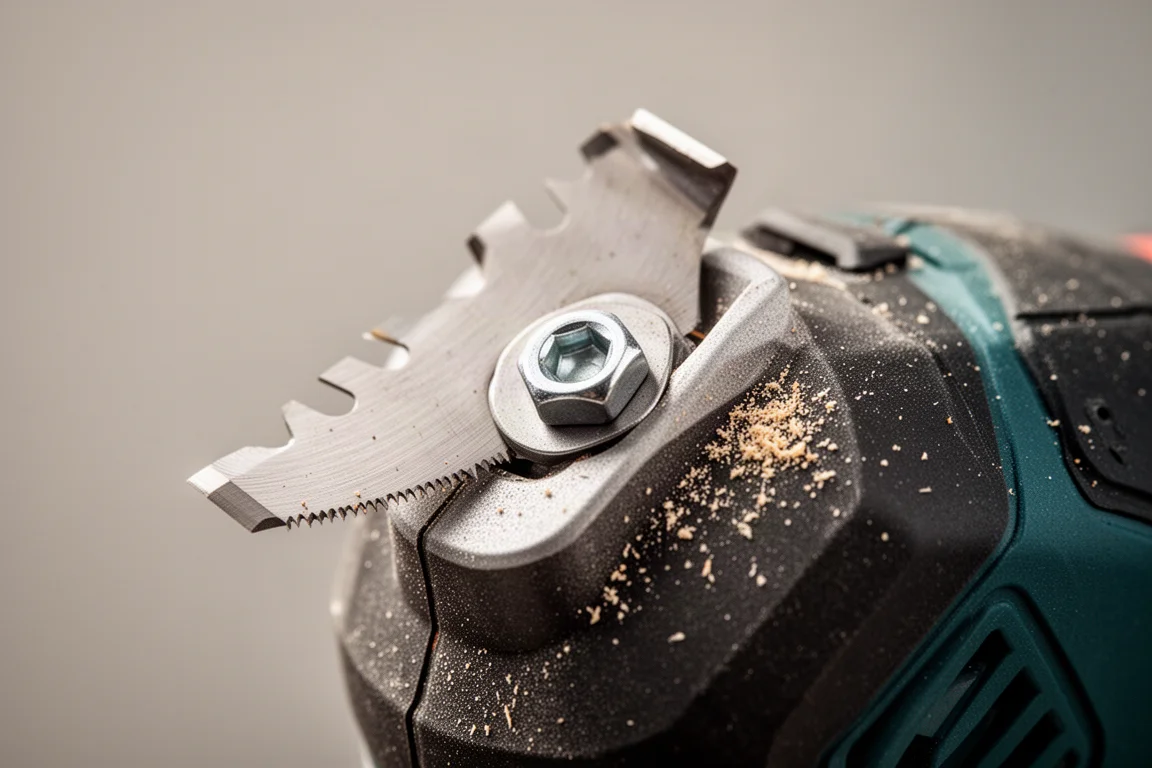
The biggest drawback is the blade change: there is no toolless release, so you need a hex key or a hex adapter on an impact driver to swap blades. Not a dealbreaker, but worth knowing.
Makita XMT-03: Smoother but Bulkier
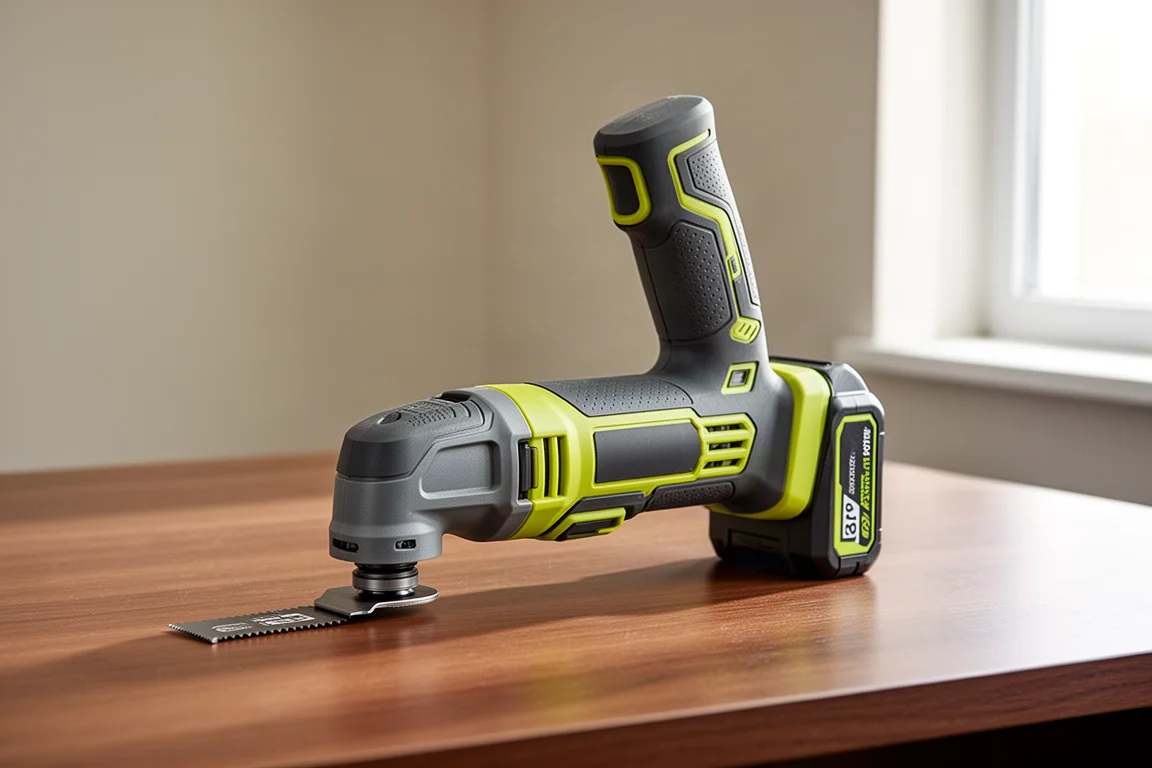
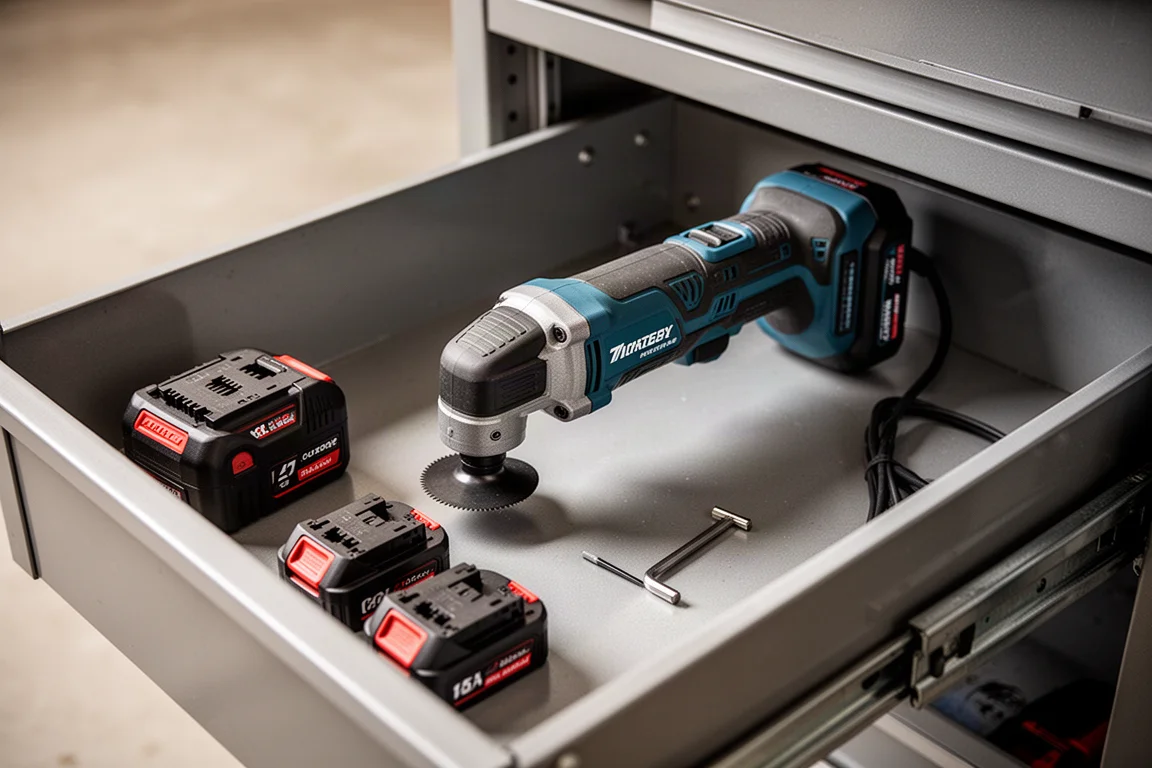
The Makita XMT-03 is the brand’s standard brushed multi-tool, typically found on sale for around $100, with prices reaching roughly $150 depending on the model. It is built to be durable and it works well, but it comes with some compromises.
Its best feature is the toolless blade release: flip the lever up fully, a pin retracts, and the blade comes free. It works, though the mechanism is tight, and the loose pin is an extra piece that can go missing. The Makita also adds battery isolation, where the battery mount moves independently to damp vibration, which helps the battery last longer. It has a similar trigger and lock-on arrangement, plus rubber bumpers at the front.
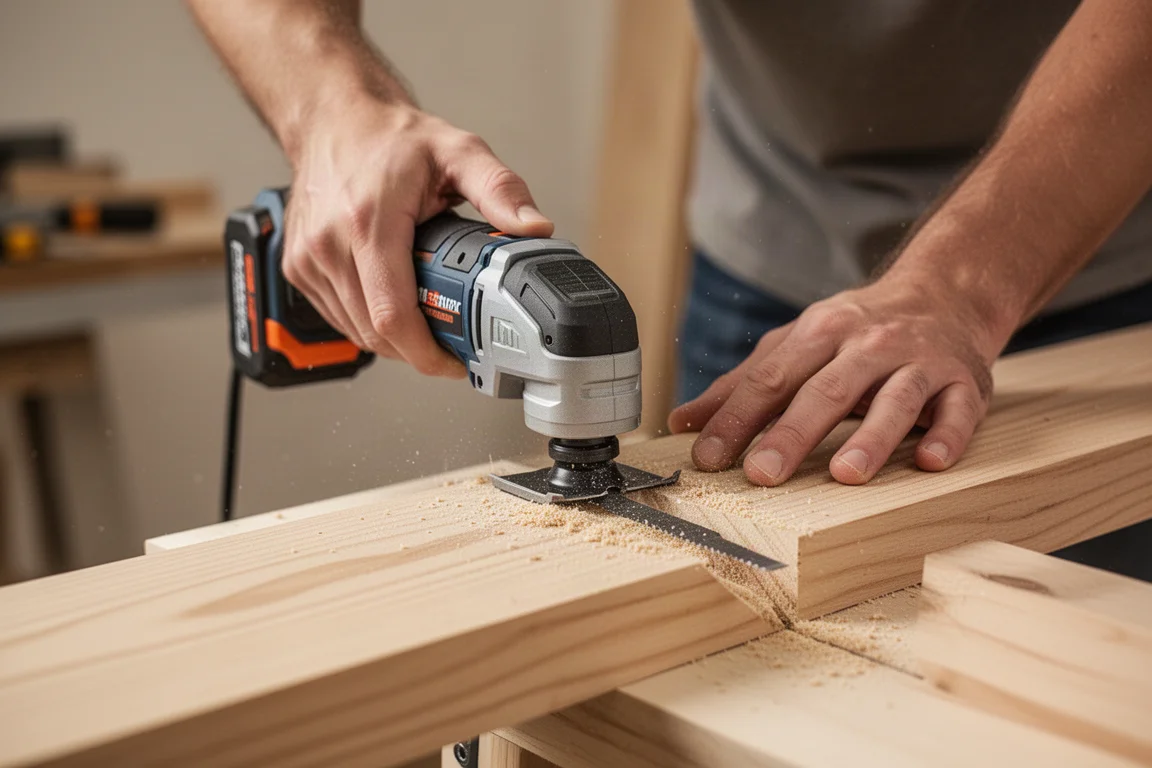
Where it loses ground is size and weight. With a 4Ah battery and blade, it weighs a full 5 pounds, and 3 pounds 10.2 ounces for the tool and blade alone, well above the Ryobi. It is about a quarter of an inch shorter at roughly 13.5 inches, but the body is so thick that it is hard to wrap your hand fully around it anywhere. The Ryobi’s contoured handle simply makes it easier to guide.
Cutting Performance: A Surprisingly Close Contest
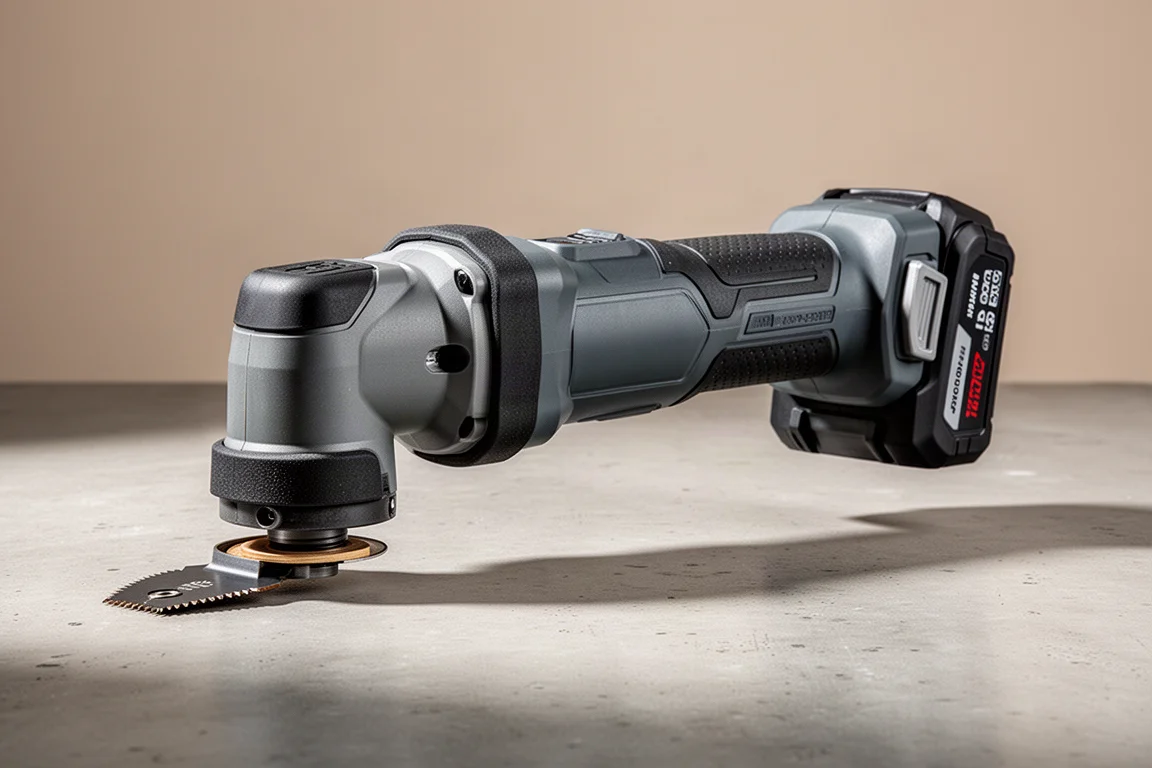
Both tools ran the same blades, fresh fully charged 4Ah batteries, and speed setting 6, cutting through a small 1x2 and then repeated cuts in a 2x4.
Neither tool embarrassed itself. Both chewed through the 1x2 quickly, and both kept four bars of battery showing after multiple 2x4 cuts. The overall impression was that the tools are essentially a tie. The Makita felt slightly smoother to hold, with noticeably less vibration, but the Ryobi’s significantly lighter weight and better handle made one-handed work easier.
In practical terms, cutting performance does not separate these two. What separates them is ergonomics and price, and on both of those fronts the cheaper Ryobi holds its own.
Buying Advice: Which One Should You Get?
If you use a multi-tool a couple of times a year, the Ryobi P343 is hard to beat. Its low sale price makes it a genuinely impressive value, and it comes with a three-year warranty. That matters more than you might think, because the advice is not to buy the cheapest multi-tool you can find, but to buy something cheap with a decent warranty.
The Makita XMT-03 is still a fantastic, well-built tool that is designed to hold up over the long term, and its vibration isolation and toolless blade change are real advantages. But its heavier, bulkier body and thick handle make it harder to use comfortably, especially one-handed.
The honest takeaway: for occasional and emergency use, a cheaper option like the Ryobi can do the same job as a more expensive tool. Regular users who value smoothness and durability may still prefer the Makita.
Conclusion
Head-to-head, these two oscillating multi-tools come out remarkably even. The Ryobi P343 wins on price, weight, and handle comfort, while the Makita XMT-03 counters with smoother operation, vibration isolation, and a toolless blade release. For most people who only reach for a multi-tool occasionally, the budget option genuinely gets the job done.
Further reading
Related Reviews
Power Tools
Best 1-Inch Pistol Impact Wrenches: Three Heavy-Duty Options Compared
We compare three 1-inch pistol impact wrenches, from a budget-friendly Harbor Freight model to a premium Caterpillar unit, to help you choose the right one.
Power Tools
Best 3/4-Inch Impact Wrenches 2026: Five Contenders Compared
We compare five 3/4-inch impact wrenches across price and performance, from a budget Amazon option to Snap-on's most powerful model yet.
Power Tools
Best Budget Cordless Tools 2026: Walmart Finds That Punch Above Their Price
We tested five cordless tools from Walmart, including a high-torque impact wrench that trades blows with Milwaukee and a $35 duster that outperforms its price class.