Power Tools
Ryobi ONE+ Cordless Trim Router Review: Cheap and Cheerful, But Is It Good?
A hands-on look at the brushed Ryobi ONE+ cordless trim router, with how it compares to the Trend 18V and the budget Katsu corded option.
Introduction
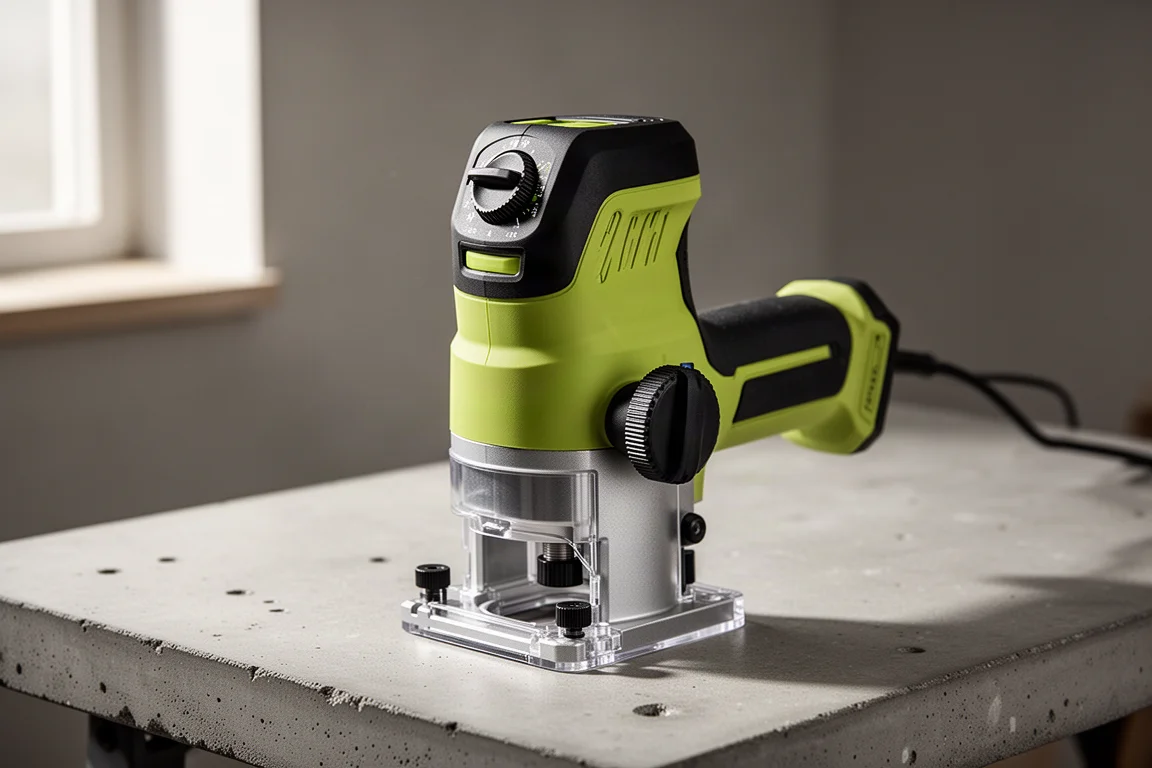
Trim routers are one of those tools that quietly earn their place in the workshop, and the Ryobi ONE+ cordless trim router has recently become one of the most affordable ways to get one. The brushed version of this router has been available for at least a couple of years, and in the UK it has recently dropped to around £95 on Amazon, down from about £120. In the US, it has been spotted at Home Depot for $80 plus tax, roughly £63. There is also a newer brushless version that launched a few months ago, though it has reportedly already sold out on the Ryobi UK website.
The obvious question is whether a cheap and cheerful cordless trim router is actually worth buying. This hands-on look covers what comes in the box, how it handles, how it cuts, and how it stacks up against two well-known alternatives: the Trend 18V cordless trim router and the budget Katsu corded trim router.
Why Cordless Makes Sense for a Trim Router
Before diving into the router itself, it is worth asking whether you even need a cordless trim router. With larger tools, the answer is often no. A standard plunge router, for example, tends to stay in one area of the workshop, and it usually runs a dust extractor anyway. Once you are tethered to the extractor hose, adding a power cable barely changes the experience.
Trim routers are different. You often find yourself working all the way around a table or a door, or even outside on garden sleepers. Being free of a cable means you can use the tool wherever and whenever needed, and that convenience is exactly why many people eventually upgrade from a corded model to a cordless one. It is also worth remembering that a trim router is arguably one of the most dangerous tools in the workshop, so careful handling matters no matter which version you choose.
What You Get in the Box
Beyond the main unit, the Ryobi keeps things simple. The box includes a plastic dust shroud, a stack of paper instructions in multiple languages, and a small 16 mm spanner for tightening and loosening the collet, which on this model is a quarter inch.
Loosening and tightening the collet with the supplied metal spanner is easy enough, though a sticker on the unit suggests removing the entire base unit first to make the process easier. It takes no more than a couple of minutes either way, and most people will probably just work from the base plate end.
Everyday Handling and Controls
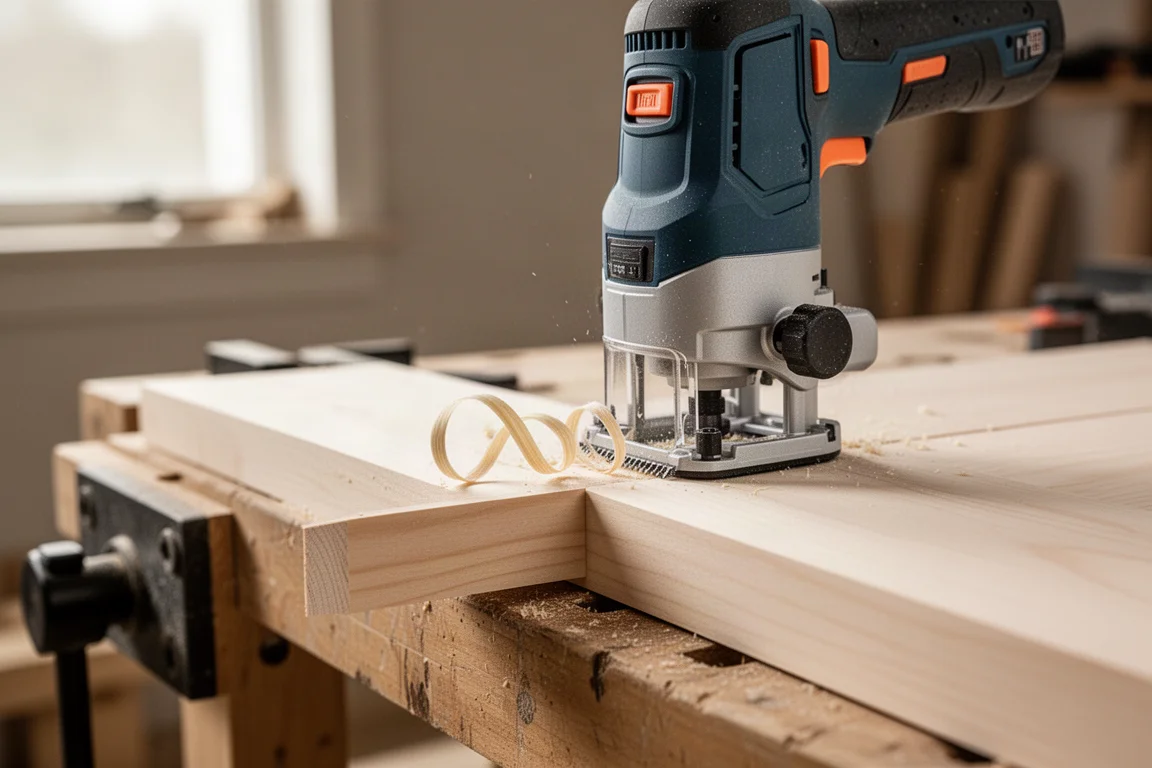
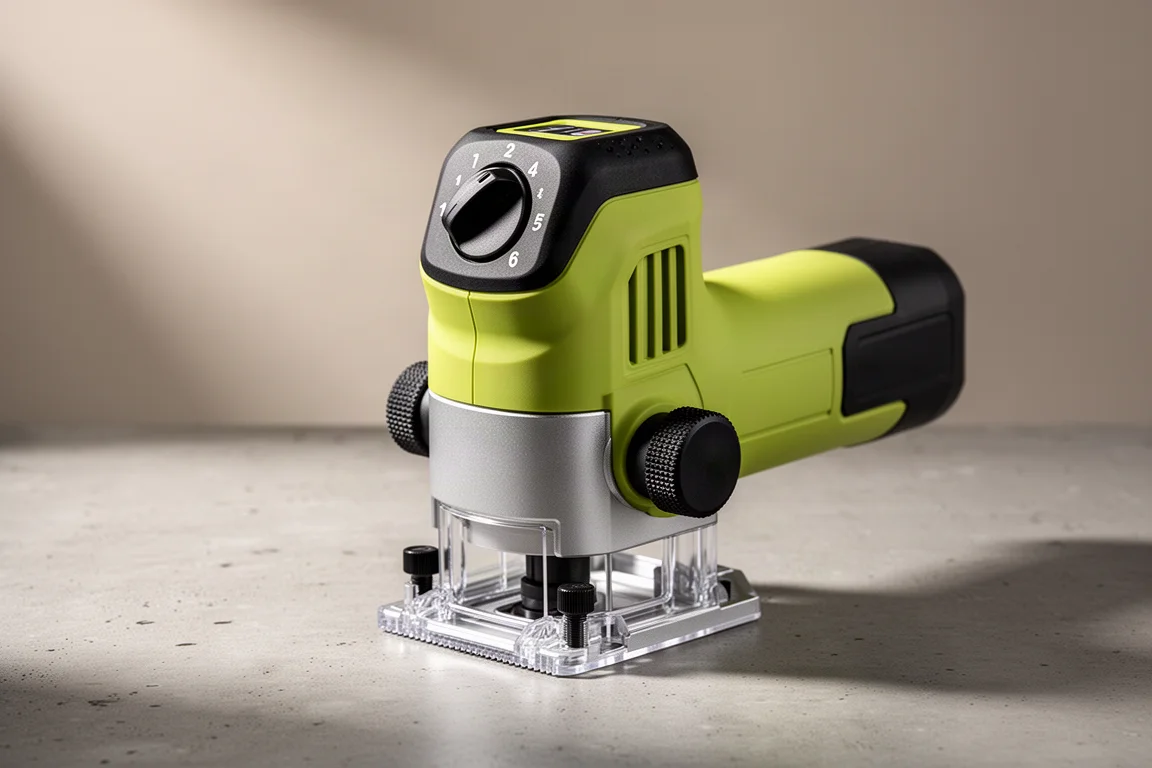
Like many trim routers, the Ryobi has a locking mechanism to keep the depth setting tight, along with a fine adjustment wheel that feels accurate and positive. Removing the base is also nicer than expected: rather than unwinding it all the way down the thread, a quick-release lets the base disengage from the thread entirely.
The overall build is where the budget price shows. The body is pretty plasticky, and the one metal part, the alloy motor shroud, feels like fairly soft alloy. Speed adjustment runs from one to six, but the on/off switch is the real weak point. It is clunky, awkward to move, and not particularly prominent, which is a concern for a tool you may need to switch off quickly in an emergency. A switch that stuck out more and moved more easily would be welcome.

Cutting Performance
In use, the Ryobi performs better than its plasticky feel suggests. One quirk to note early: the base plate protrudes further on one side than the other, and as supplied it seemed to face the wrong way, offering less stability at the front of the cut. Twisting the unit 180 degrees solves it immediately, and the orientation can be permanently changed when the base plate comes off.
With a 45-degree cutter fitted and the speed set to three for softwood, there is clearly no shortage of power. It cuts about as well as the 18V Trend router that has been in regular use recently, leaving a nice finish on softwood.
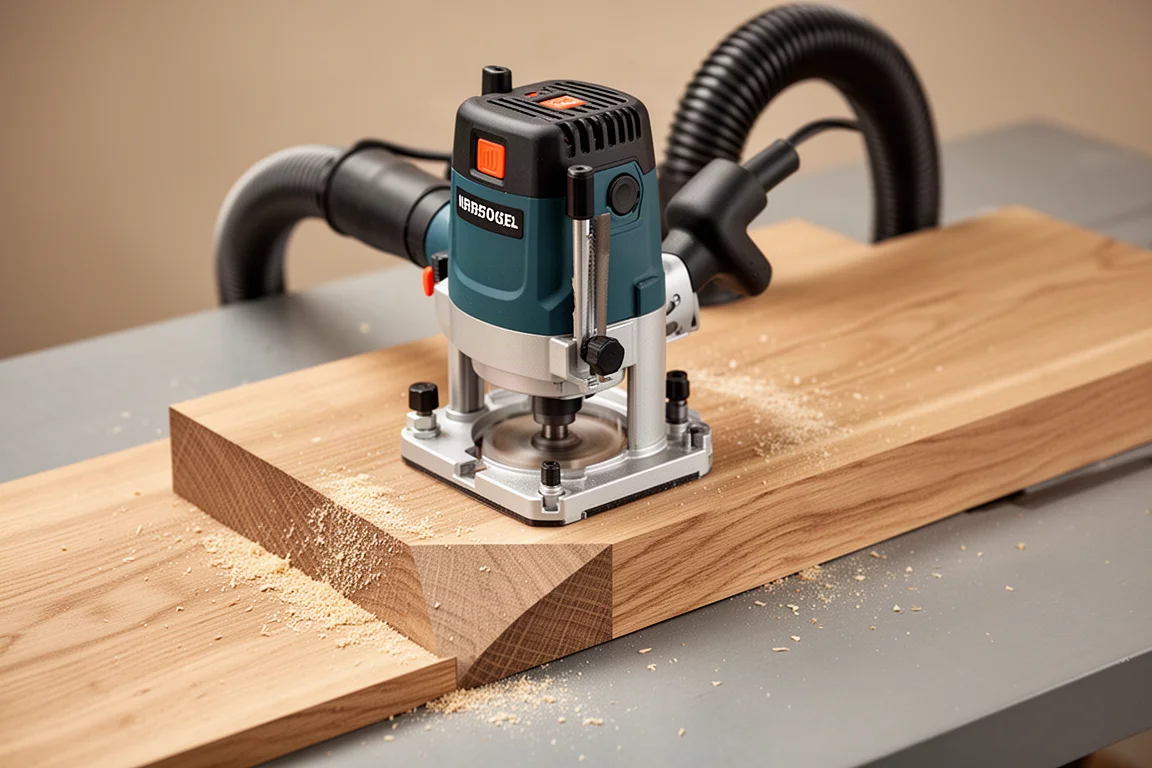
Moving to something more challenging, an offcut of oak made little difference to the way it cut. The small brushed motor keeps up impressively, and the result on oak was genuinely good. Power delivery is not the reason to skip this router.
Dust Extraction
Fitting the dust collection shroud is a bit of a faff. The base has to be taken apart so one plastic section can be removed and the shroud clipped in its place, which seems like something that could have been designed to be easier.
The dust port itself is another snag: it does not fit a standard workshop hose, which most other tools do, so an adapter is needed. Once connected with an adapter, the unit plus hose becomes quite unwieldy to move around. Dust extraction quality is okay, but with an open bottom it was never going to be perfect.
Attachments and Upgrade Path
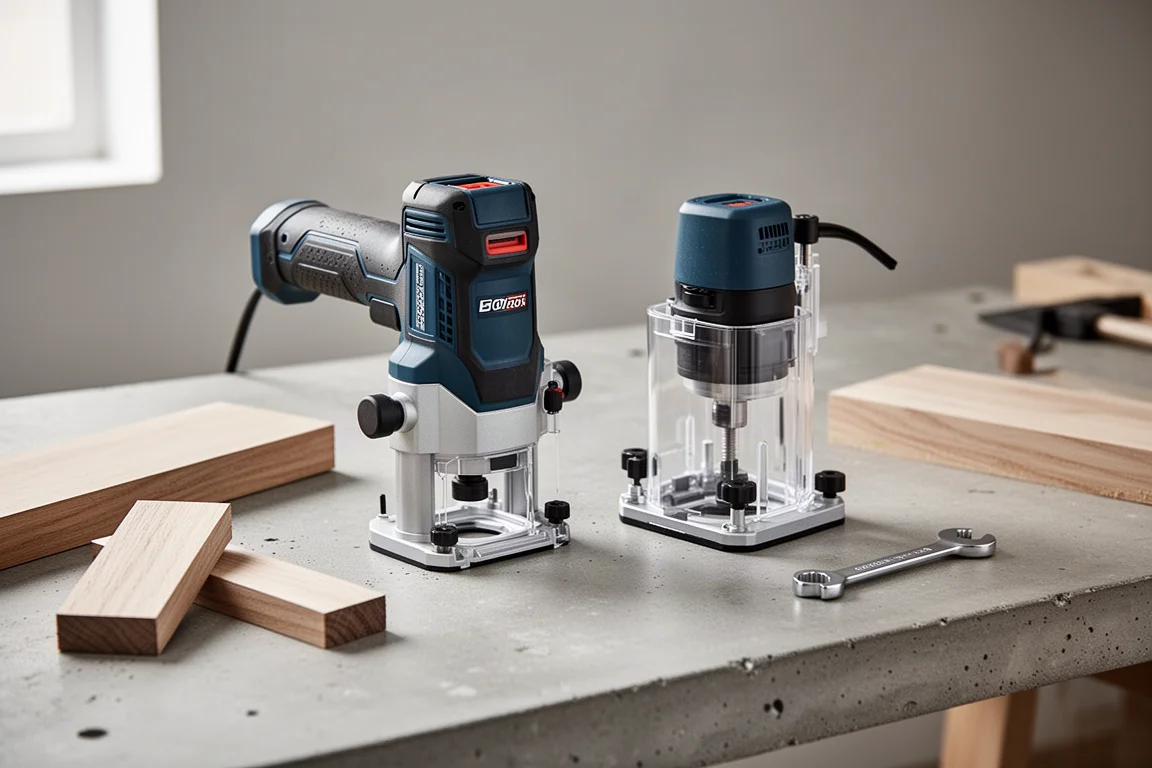
The biggest structural drawback is the lack of attachments. With the Trend trim router, you can remove the motor from the trim base and fit it into a plunge attachment, turning it into a capable mini plunge router for smaller jobs. Even the budget Katsu can be bought with a plunge base that the motor slots into.
No plunge attachment or similar accessory has been found for the Ryobi, and it does not appear that Ryobi makes any for this model. So this really is set up as a trim router, and that is all it will ever be. The good news is that as a trim router, it is a pretty good one.
The Trend 18V Cordless Trim Router
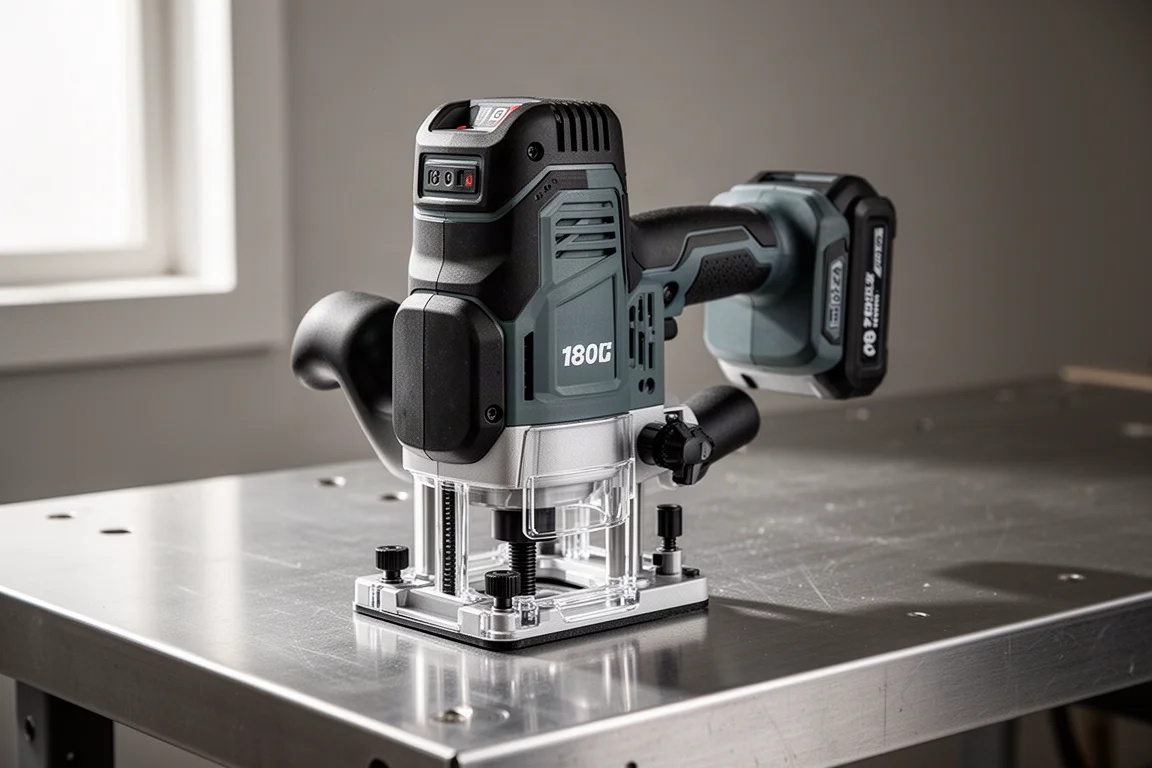
For anyone not already invested in the Ryobi battery platform, or who wants a bit more from the tool, the Trend 18V cordless trim router is the stronger recommendation. It currently sells for about £30 more than the Ryobi with a battery and charger included, and it is a considerably more substantial machine. On top of that, a plunge base is available separately, so the Trend motor can be swapped between the trim base and the plunge base, effectively giving you both a trim router and a small plunge router in one package.
The Katsu Corded Trim Router
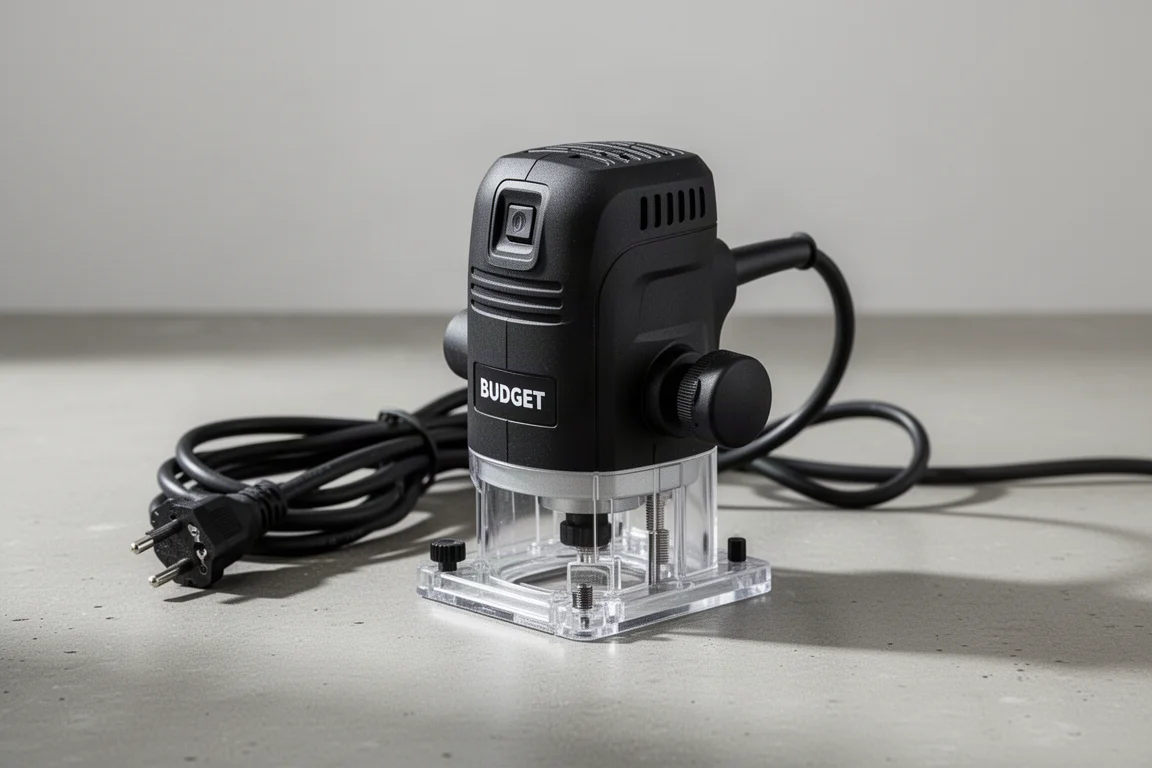
The Katsu corded trim router has been a workshop staple for years and can still be found on Amazon for £40. It is hugely powerful, offers similar micro depth adjustment, and does a genuinely good job. For anyone on no battery platform at all who mainly wants a cheap capable router for bench work, it remains a very sensible buy.
The cordless argument still applies, though: a corded trim router limits you to wherever the socket reaches, which is exactly the convenience a battery version removes.
Ryobi ONE+ Cordless Trim Router: The Verdict
As a trim router, the Ryobi works well. It is lightweight, a little plasticky, and the switch is poor, but everything it was asked to do, it did well, with plenty of power behind it. For anyone already on the Ryobi ONE+ battery platform who is in the market for a trim router, it is an easy recommendation at £95: it will handle just about all the trim routing most people ever need.
Buying Advice
The decision mostly comes down to your battery platform and how much tool you want. Already own Ryobi ONE+ batteries and just want a trim router? The Ryobi is the obvious pick. Not on a platform, or want the flexibility of a plunge attachment later? Spend the extra £30 or so on the Trend 18V, which is a more substantial machine with an upgrade path. On a strict budget and happy with a cable? The £40 Katsu does the same core job and does it well.
Conclusion
The Ryobi ONE+ cordless trim router is cheap and cheerful in the best sense: plasticky and lightweight, but genuinely capable, with no shortage of power and accurate depth adjustment. Its limitations, the clunky switch, awkward dust shroud, and lack of attachments, are worth knowing before you buy. Match it to the right situation and it is a solid, affordable addition to an existing Ryobi setup.
Further reading
Related Reviews
Power Tools
Best 1-Inch Pistol Impact Wrenches: Three Heavy-Duty Options Compared
We compare three 1-inch pistol impact wrenches, from a budget-friendly Harbor Freight model to a premium Caterpillar unit, to help you choose the right one.
Power Tools
Best 3/4-Inch Impact Wrenches 2026: Five Contenders Compared
We compare five 3/4-inch impact wrenches across price and performance, from a budget Amazon option to Snap-on's most powerful model yet.
Power Tools
Best Budget Cordless Tools 2026: Walmart Finds That Punch Above Their Price
We tested five cordless tools from Walmart, including a high-torque impact wrench that trades blows with Milwaukee and a $35 duster that outperforms its price class.