Power Tools
Ryobi Goes Fully Cordless: 10-Inch Brushless Miter Saw and 8-1/4-Inch Table Saw Review
Two new HP brushless Ryobi saws run entirely on battery power. Here's how they cut, what impressed us, and where the compromises show up.
Introduction
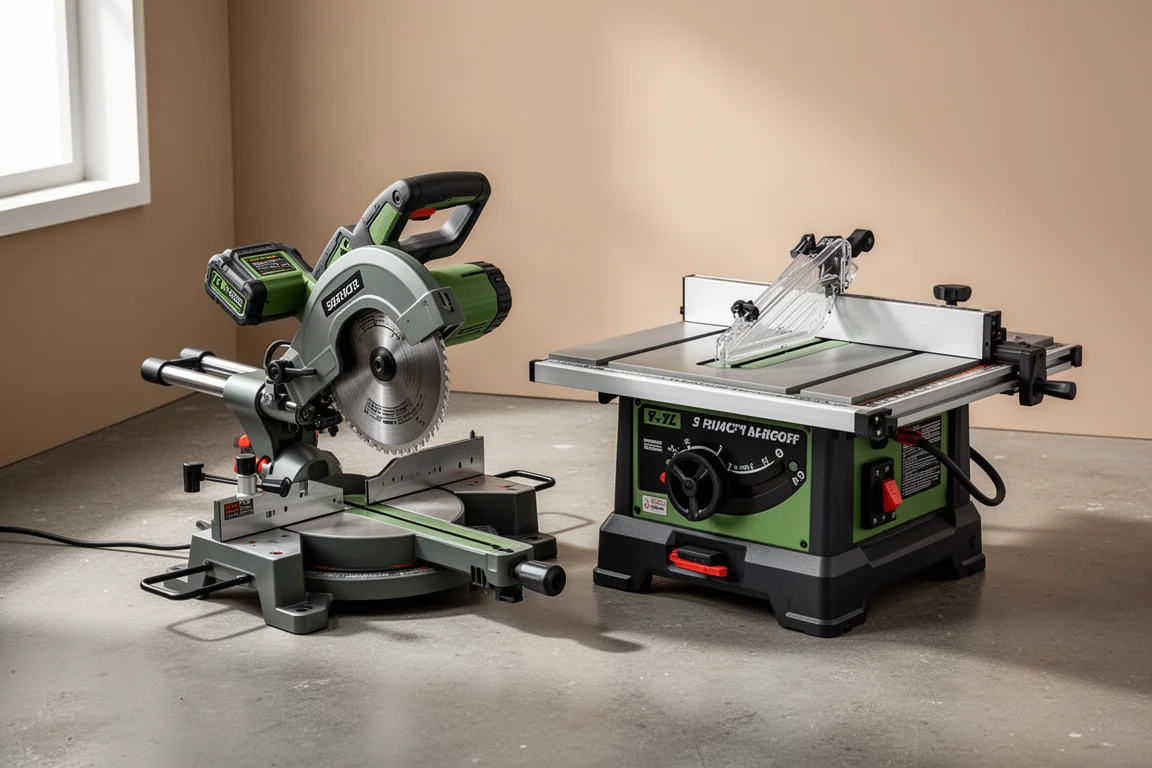
Ryobi has taken an unusual step with two of its newest saws: the 10-inch miter saw and the 8-1/4-inch table saw are both 100 percent cordless, running entirely on battery power. Both use the HP brushless platform, Ryobi’s top-of-the-line motor technology, and both ship ready to cut right out of the box.
That cordless-only approach changes the value proposition. Compared with corded 10-inch and 12-inch saws from bigger brands that can run five, six or seven hundred dollars, these two sit at a much friendlier price point. The trade-off is that some premium features, like a double bevel on the miter saw or a corded option on the table saw, were left out to keep costs down.
We spent time cutting, adjusting and pushing both saws to see what they can genuinely do. Here is how they stack up.
Ryobi 10-Inch Cordless HP Brushless Miter Saw
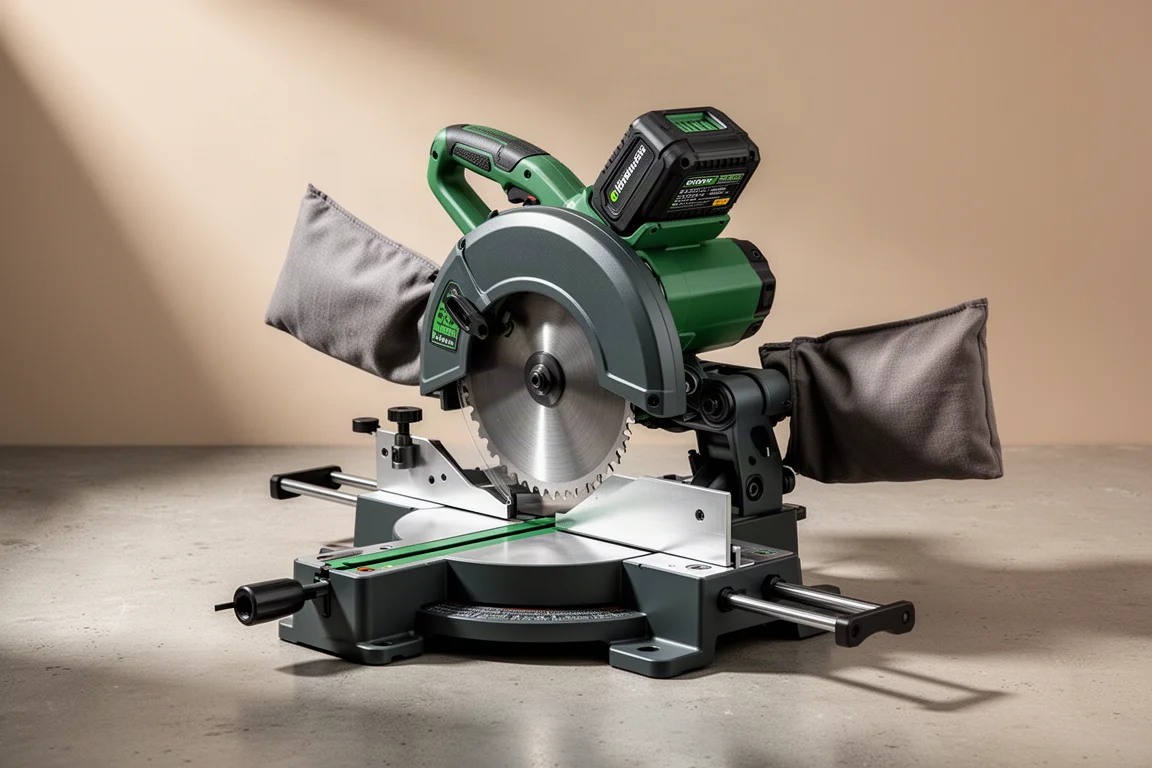
The miter saw comes with a 10-inch blade already installed, so there is nothing to assemble beyond attaching the handles, which takes only a couple of minutes. The kit pairs with a 4Ah HP battery, and while any Ryobi battery will work, HP batteries are the right choice for these HP brushless tools.
Feature-wise, you get a depth stop that can be adjusted or bypassed entirely, a single-direction 45-degree bevel, miter movement in both directions with multiple positive stops, and a sliding mechanism that is not the smoothest available but far from the roughest. There is also a larger dust collection area, a blade brake, and an LED shadow line for cut alignment. On a sunny day the shadow line can be faint, but in shaded conditions it is easy to see.
One small gripe: the blade guard does not stay up on its own when you are changing the blade. A handle is included, though our unit arrived with two bolts but no locking nut for the other side, so check your box contents carefully.
Cutting Performance and Dust Collection
Startup is quick and smooth, though the motor carries a noticeable high-pitched noise that some users may find irritating. The blade brake is not the quickest either. Once the blade is into the wood, however, none of that matters much: the saw does not bog down and keeps cutting steadily.
With the included stamped blade, cuts on a two-by-four were respectable with only minor tear-out. Swapping in a higher-quality finishing blade would improve cut quality significantly, and that is our main recommendation for getting the most from this saw. A fence extension is also included and tightens down securely.
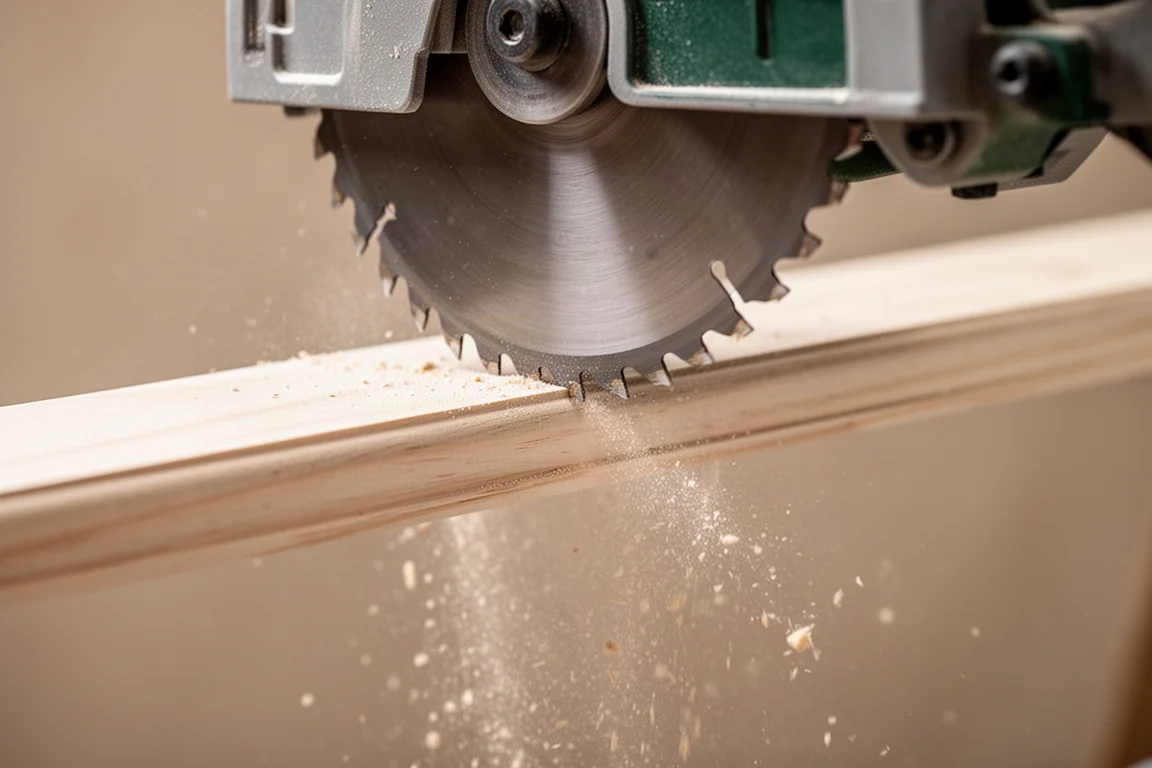
Dust collection performed reasonably well into the included bag, though some dust escaped sideways and a fair amount settled on the table. It is not perfect, but the larger collection port clearly helps.
Running on just a 4Ah battery, the saw delivered a solid number of cuts. Still, keeping a spare battery charged is smart if you plan to take this saw to a job site or a remote build.
Ryobi 8-1/4-Inch Cordless HP Brushless Table Saw
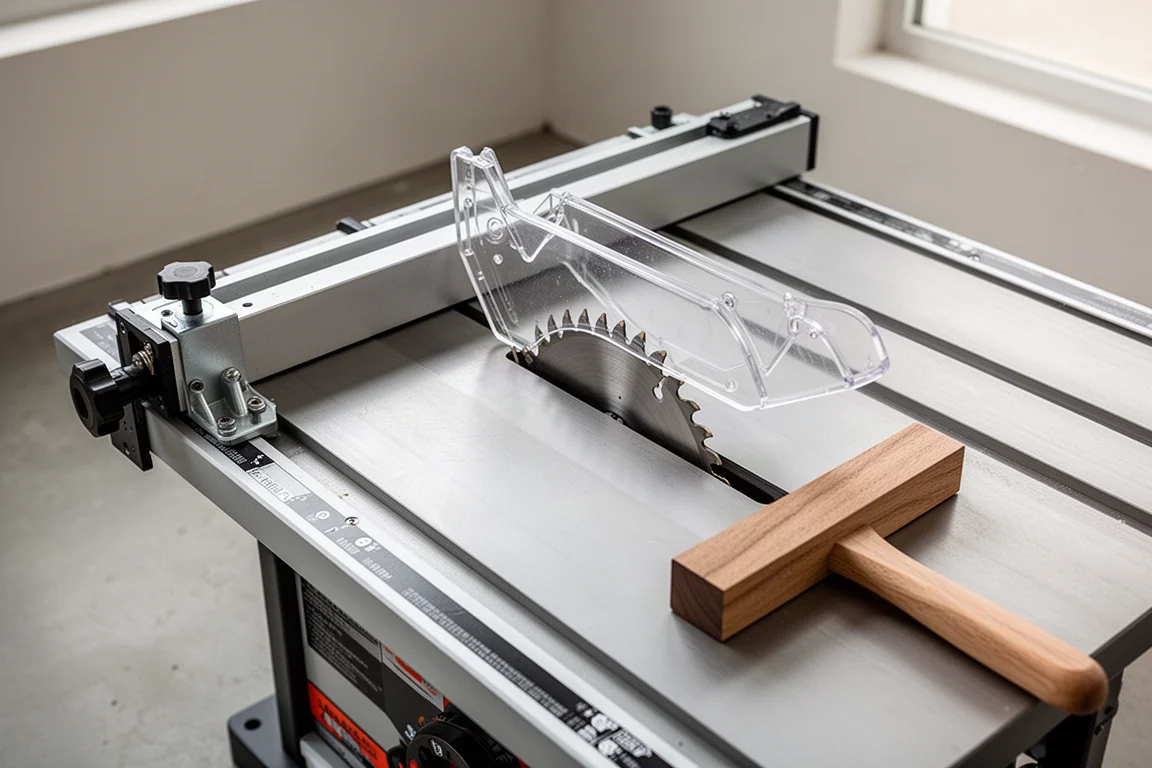
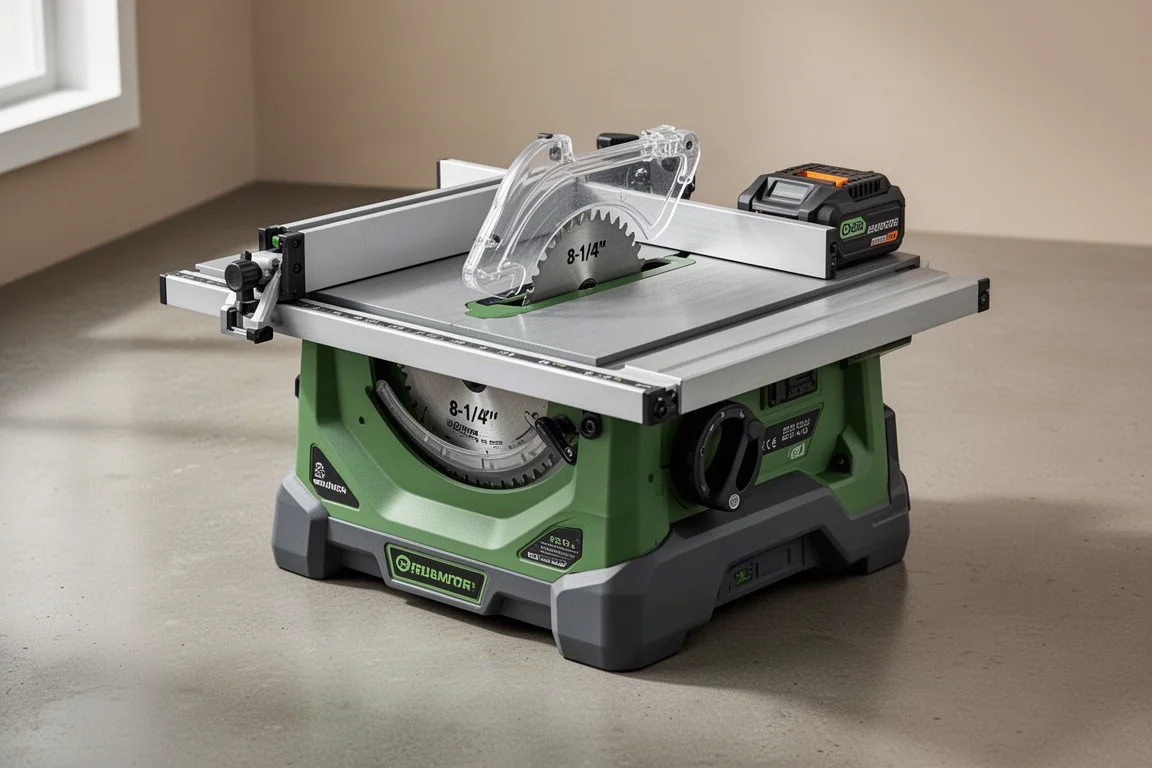
The table saw was the bigger surprise of the two. Both saws arrived square out of the box, which is not always a given at this price point, and the table saw’s locking fence deserves real praise: once locked down, it stays put with no play.
Storage is built in for the included push stick and accessories, though the lower storage area layout is a little odd. It works, it is just not elegant. The blade guard stays up on its own and the anti-kickback pawls are notably aggressive, which is exactly what you want behind the blade.
There is no rack-and-pinion fence adjustment, but remembering the price point, the trade-off is reasonable. There is also no option to run the saw plugged in; it is battery only. Adding a cord option would likely push the price up considerably, so Ryobi kept it simple.
Everyday Use and Cutting Quality
Adjustments are where this table saw shines. Raising and lowering the blade with the hand wheel is smooth, and the bevel adjustment is genuinely excellent: it can be done one-handed with a single finger, and it may be the easiest and smoothest bevel mechanism on any table saw we have handled. Once set, it locks down securely.
Startup happens at the press of a button, and the blade brake shuts the blade down quickly. Battery-powered saws like this run smoother and quieter than corded machines, without that electric hum, which makes them pleasant to work around even if they will not run all day on a single pack like a corded saw would.
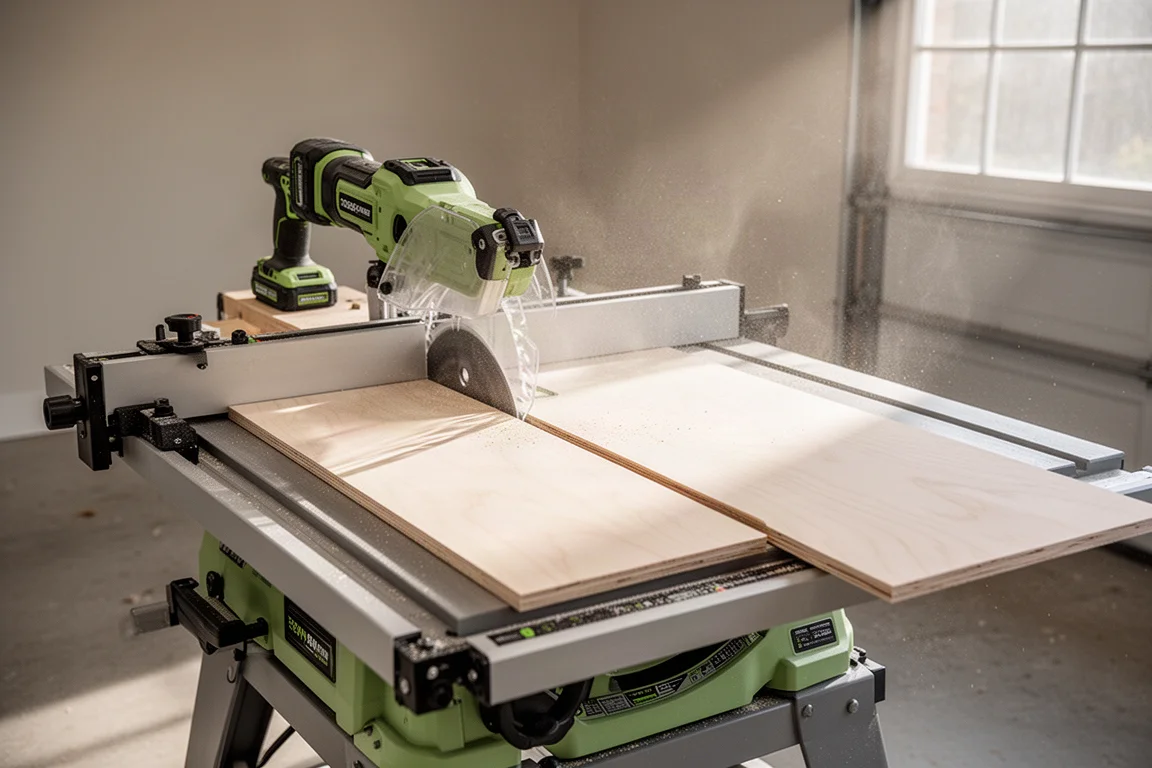
On three-quarter-inch birch-veneer plywood, the included blade produced surprisingly smooth cuts, with only minor tear-out on bevel cuts, which we again attribute to the basic included blade rather than the saw itself. The larger table surface gives you plenty of support for a compact, portable machine. Power never seemed lacking, and the saw cuts without bogging down. The included push stick stores right on the saw, and using it is strongly recommended.
Buying Advice: Which One Makes Sense for You?
Both saws earn a recommendation for the price. If you want a one-off cordless tool without committing to a whole new platform, either is a good entry point, though having one or two Ryobi batteries on hand makes the whole system more flexible.
These are best understood as DIY and handyman saws. Weekend warriors, hobbyists setting up a small side-gig shop, and anyone building something remote with no electricity available will get real value here. For heavy daily construction, corded pro-tier saws remain the better fit, and this is not what these saws are trying to be.
A few practical notes before buying: check that the blade is square on arrival (both of ours were), keep a spare battery charged, and budget for a better aftermarket blade to unlock the cut quality these motors are capable of. The miter saw’s slider could be smoother and its single-direction bevel limits certain crown molding work, while the table saw’s battery-only design means long sessions require rotation between packs.
Conclusion
Ryobi’s first fully cordless miter saw and table saw pair do a lot of things right: both arrived square, both adjustments are smooth and easy, the table saw’s fence and bevel mechanism genuinely impress, and neither saw bogs down under load. The compromises, a slower blade brake and high-pitched startup on the miter saw, a battery-only power source, and basic included blades, are all defensible at this price. For DIYers, weekend builders, and anyone who values true portability over pro-shop capability, both saws are easy to recommend.
Further reading
Related Reviews
Power Tools
Best 1-Inch Pistol Impact Wrenches: Three Heavy-Duty Options Compared
We compare three 1-inch pistol impact wrenches, from a budget-friendly Harbor Freight model to a premium Caterpillar unit, to help you choose the right one.
Power Tools
Best 3/4-Inch Impact Wrenches 2026: Five Contenders Compared
We compare five 3/4-inch impact wrenches across price and performance, from a budget Amazon option to Snap-on's most powerful model yet.
Power Tools
Best Budget Cordless Tools 2026: Walmart Finds That Punch Above Their Price
We tested five cordless tools from Walmart, including a high-torque impact wrench that trades blows with Milwaukee and a $35 duster that outperforms its price class.