Lawn Care
Ryobi 54" Electric Battery Zero Turn Mower: A 3-Year Long-Term Review
After three cutting seasons with the Ryobi 54" battery-powered zero turn, here is what holds up, what breaks, and who should actually buy it.
Introduction
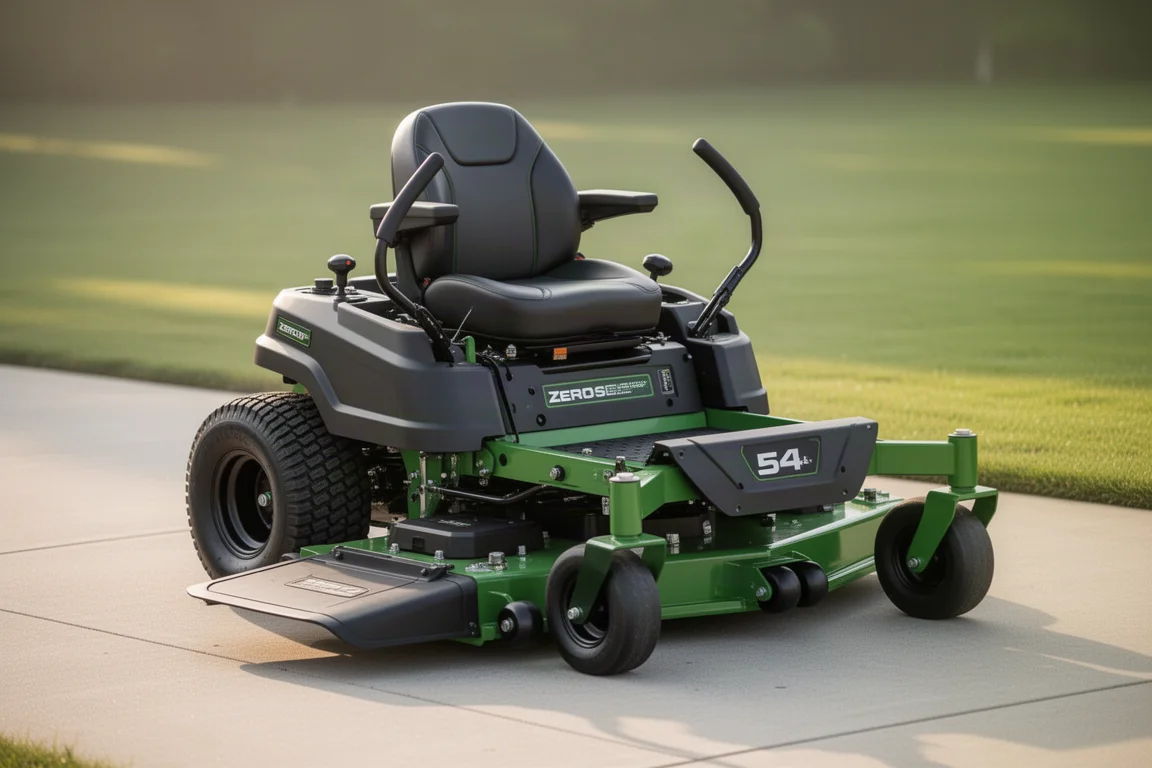
The Ryobi 54” electric battery zero turn mower has attracted a persistent claim online: that it will not last longer than a year. After nearly three full cutting seasons of regular use, including mowing other properties beyond a single home lawn, that prediction has not come close to reality. This long-term look covers what still works well, the small issues that have come up, and the honest limitations you should weigh before buying.
Who This Product Is For
This mower suits homeowners with roughly one to three acres of grass. In demanding spring conditions, thick, wet growth, expect about an acre and a half of cutting per charge at best. In summer, when growth slows, it can stretch to three, four, or even five acres with blade power set low. Fall sits in between, at around two to two and a half acres.
If you have ten or twenty acres, this is not the machine for you. Recharge times of a couple of hours from empty make it impractical for large properties or full-time professional use, where refueling a gas mower in seconds is simply faster.
What Makes This Mower Different
The headline difference is steering. Instead of the two lap paddles found on most zero turns, this mower uses a joystick. Forward, reverse, left, and right all happen through one stick. The first hours are genuinely awkward, but within a couple of days it becomes second nature, and after three years it is hard to go back.
One trade-off deserves honesty: the joystick makes it difficult to cut perfectly straight lines. It tends to wander and zigzag slightly, which can be frustrating if a crisp stripe pattern matters to you.
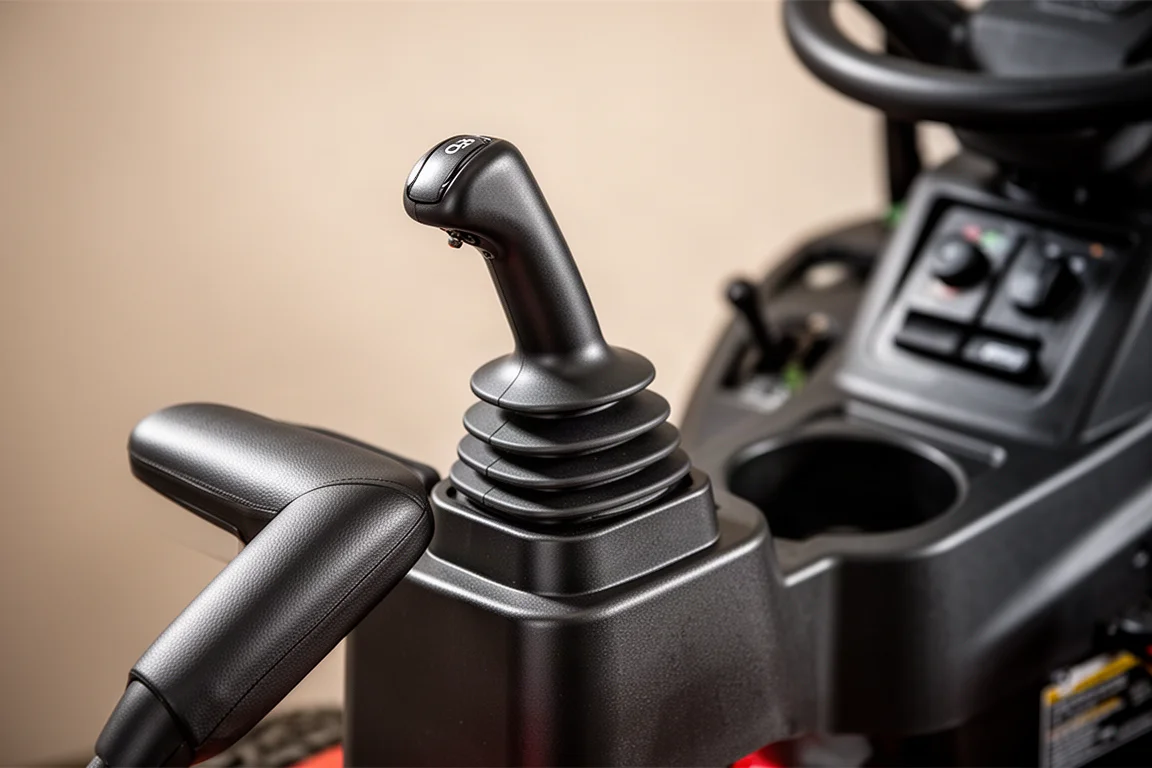
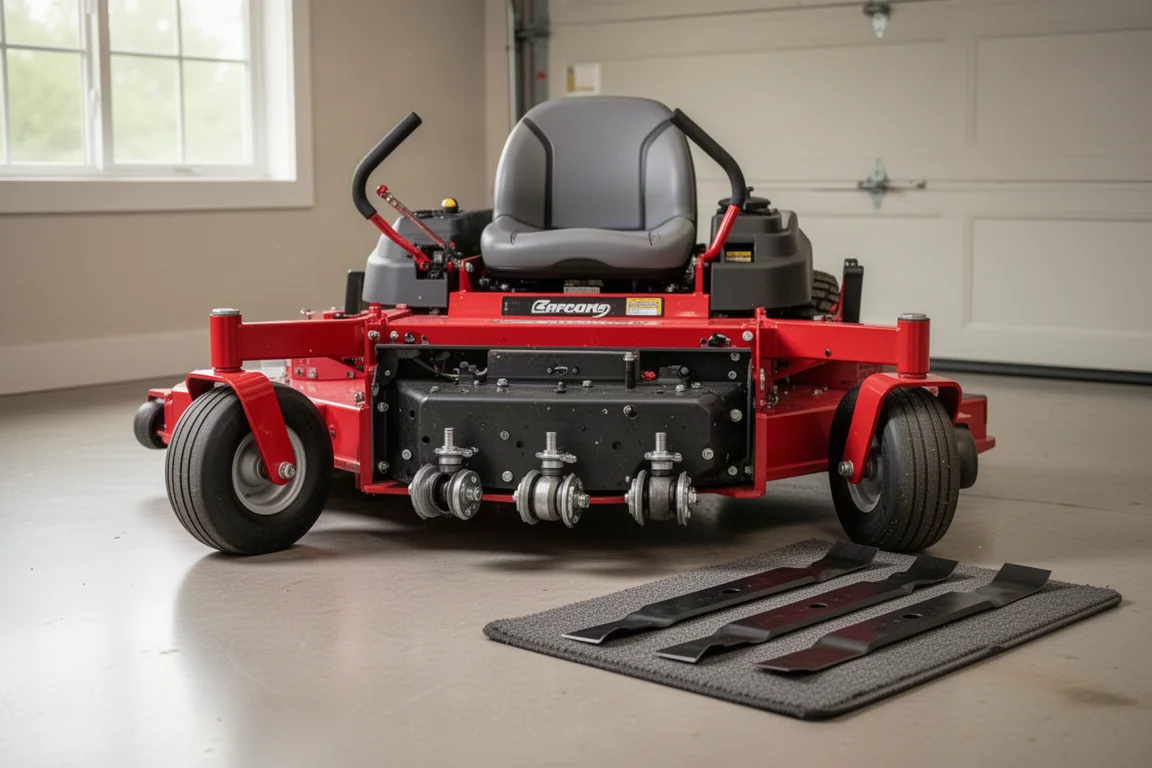
Elsewhere, the details are thoughtful. The 54” aluminum stamped deck is heavy duty and has shrugged off rough use. Six blades sit underneath. The seat is genuinely comfortable, adjustable in multiple ways, with a knob for firmness and armrest positioning for different body sizes. There are cup holders, a storage compartment for a phone and small items, a rear hitch for a utility trailer, an emergency stop button, and a phone charging area. The deck height adjusts easily, with a stopper that locks in your preferred cutting height. A safety system shuts the mower off automatically if it is left running unattended.
Where It Excels
Comfort is the first thing you notice. The seat is cushioned and supportive enough for long sessions without complaint.
Speed and power come next. Battery torque delivers strong acceleration, and with six blades underneath, the mower powers through thick, wet, nasty grass without stalling or leaving clumps behind. It has also handled mud and constantly wet ground without getting stuck, which is surprising given its weight.
Cut quality is excellent. Even damp, dense spring growth gets cleaned up properly rather than left as trailing strands.
Maintenance is nearly nonexistent. No oil changes, no gas to go stale, no carburetor trouble. Turn the key after a winter of storage and it is ready to cut. Noise is another quiet win: you hear the blades, but no engine roar, which makes early morning or evening mowing much more pleasant.
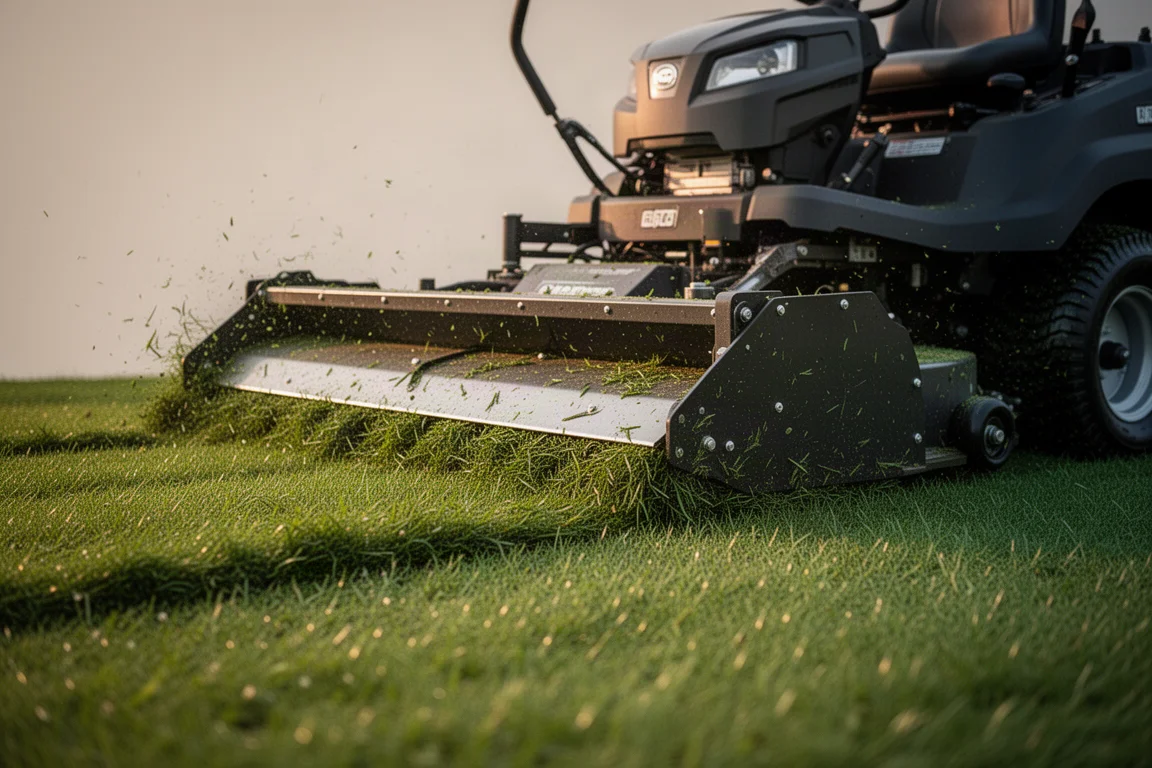
Serviceability is refreshingly simple. The deck removes in about five minutes, so you can power wash it or change blades without a lift. The overall engineering is straightforward enough that most owners could handle basic mechanical work themselves. Build quality has held up with no rust after three seasons of hard use.
Things to Consider Before Buying
The joystick’s straight-line limitation is the most consistent annoyance. No amount of practice fully eliminates the slight zigzag.
Charging is the bigger structural compromise. A full charge from zero takes a couple of hours, and unlike a gas can, you cannot top up mid-job in seconds. There is also a charging quirk: the charger normally draws around 1,500 watts, but occasionally it drops to 500 watts after the first hour. Unplugging and replugging restores full charging speed, though it requires you to notice and intervene.
Occasionally the display screen shows no information at all. The fix is simple, essentially a reboot: unplug the 80 volt and 40 volt batteries and pop the three disconnects, then reconnect everything. It resolves the issue every time.
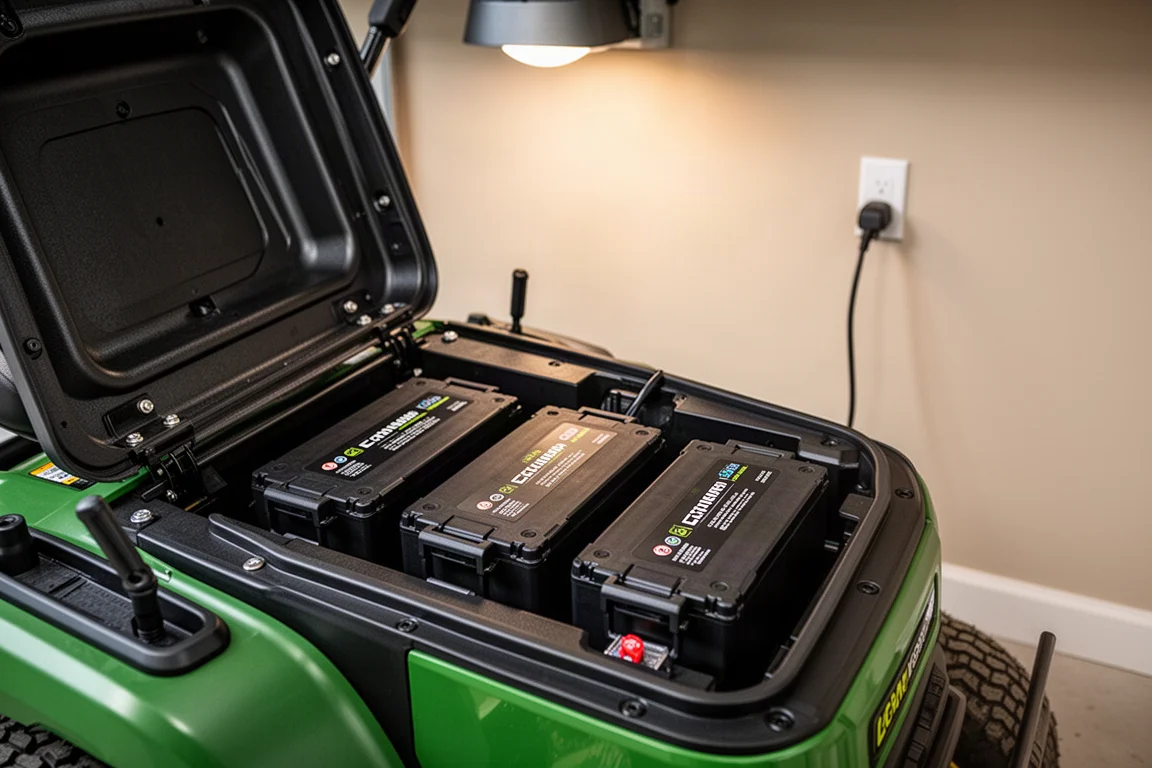
Battery replacement cost is the financial risk to keep in mind. Replacing a single 80 volt battery runs roughly $900, and the 80 volt platform has not expanded across tools as much as many owners would like. After three years of constant mowing, the original batteries still hold around 90 to 95 percent of their original capacity, which is a good sign, but eventual replacement is inevitable.
Repairs and Parts Availability
Real repairs over nearly three years have been minimal. A front tire came off its rim after sitting underinflated through temperature swings, fixed in minutes with a rope and an air compressor. Blades damaged on stumps and branches cost about $60 to replace, roughly $10 per blade, with six new ones delivered within two days from a major home improvement retailer.
The frustrating part was the blade adapter. A snapped adapter was nearly impossible to find on the retailer’s site and had to be sourced from a third-party seller of Homelite accessories, Homelite and Ryobi both being part of TTI. Even then, the replacement’s stem was too long and had to be cut down with a band saw to fit. That part availability gap is a known frustration among owners online and is worth knowing before you buy.
On warranty support, the concern about where to take a broken mower has a simple answer: you do not take it anywhere. A technician comes to your home or workshop and repairs it on site.
Buying Advice
The “won’t last a year” claim appears to stem from confusion with the older lead-acid version of this mower, which had a poor reputation. This lithium-ion machine is an entirely different product, and three seasons of heavy use back that up.
Choose this mower if you have one to three acres, want near-zero maintenance, value quiet operation, and can live with a couple of hours of recharge time. Skip it if you manage large acreage or need all-day runtime without interruption.
Conclusion
After three cutting seasons, the Ryobi 54” battery zero turn has proven more durable than its online reputation suggests. Comfort, cut quality, power, and near-zero maintenance are genuine strengths, offset by joystick steering that struggles with straight lines, slow charging, occasional minor electronic quirks, and expensive replacement batteries. For the right size property, it is a platform worth serious consideration.
Product link
View more details for Ryobi 54" Electric Battery Zero Turn Lawn Mower
This product is mentioned in the review. Check the specifications, options, and compatibility before buying.
View more details for Ryobi 54" Electric Battery Zero Turn Lawn MowerFurther reading
Related Reviews

Lawn Care
Best Robot Lawn Mowers 2026: 13 Models Tested for Real-World Performance
We tested 13 robot lawn mowers across battery life, cut quality, navigation, object avoidance, and edging to find the best options for different yards and budgets.

Lawn Care
DeWalt 21-Inch 196cc RWD Self-Propelled Lawn Mower Review
A closer look at a gas-powered self-propelled mower with a commercial-grade engine, variable speed drive, and three-in-one cutting flexibility.
Lawn Care
Best Battery-Powered Self-Propelled Lawn Mowers: 10 Flagship Cordless Models Compared
Ten flagship cordless self-propelled mowers from DeWalt, Echo, Ego, Greenworks Commercial, Makita, Milwaukee, Ryobi, Skil, Stihl, and Toro, compared on build, ergonomics, noise, and runtime.