Lawn Care
Ryobi 40V HP Brushless Self-Propelled Lawn Mower Review: Gas-Like Power Without the Gas
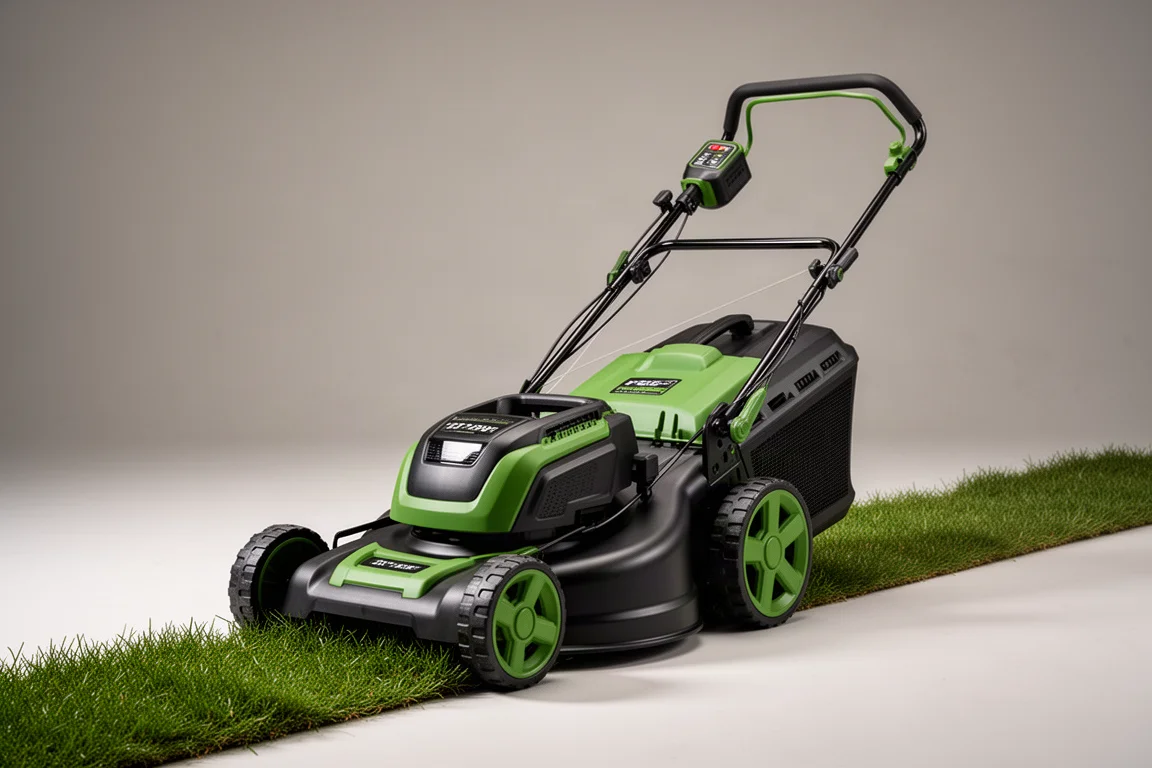
The Ryobi 40V HP brushless self-propelled mower pairs dual crosscut blades with smart turbo mode and a refined control panel, making it a strong pick for battery-powered mowing.
Introduction
Ryobi launched its first crosscut lawn mower back in early 2021, and it was a clear hit: a big improvement over previous mowers, though with room to grow. The latest generation, the Ryobi 40V HP Brushless Self-Propelled Lawn Mower RY40HP LMO2, builds on that foundation with more power, smarter load management, and a noticeably more refined control setup. After putting it through thick, overgrown grass, here is how it stacks up.
Cutting Power and Performance
At the heart of this mower is a brushless motor producing 9.7 ft-lb of torque, nearly matching Milwaukee Tool’s commercial mower. Ryobi rates it as equivalent to a 170cc gas-powered model, which tops the 160cc threshold most people consider the starting point for high-performance mowers. That extra muscle shows up in practice.
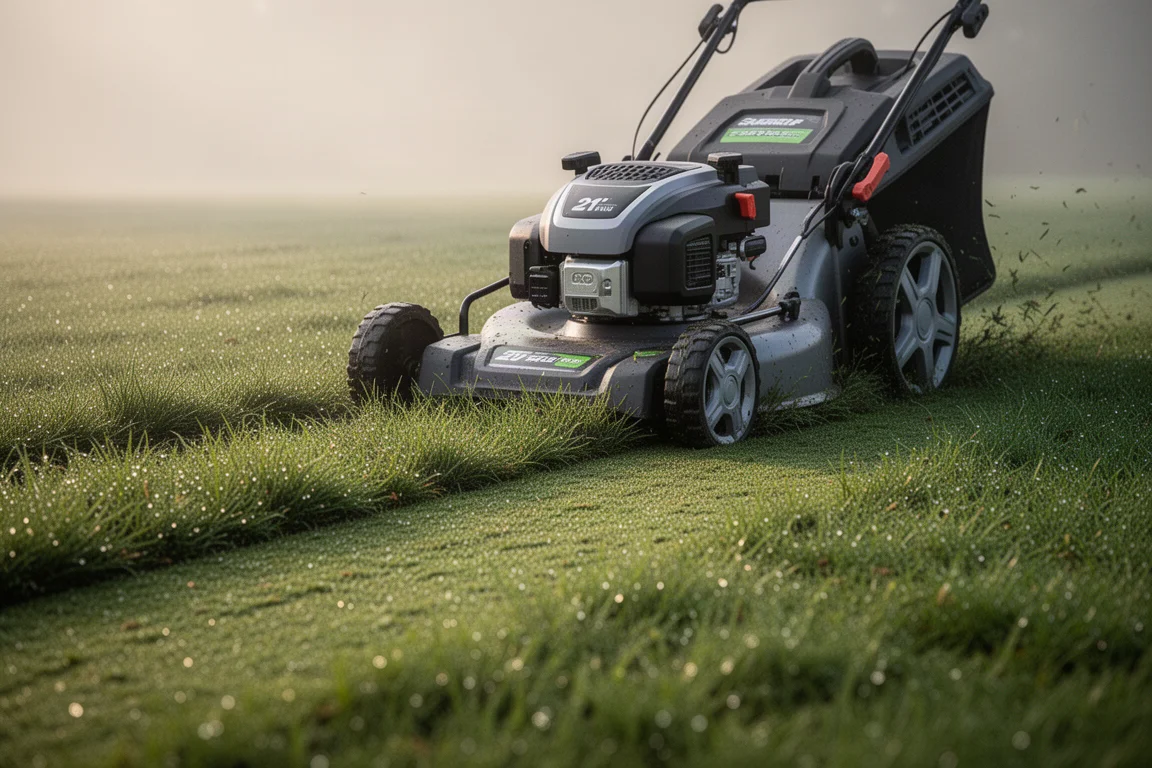
In testing on an overgrown section of lawn with the deck set to around 3 inches, the mower cut confidently and left a clean path with few, if any, stickups remaining. In the thickest areas, turbo mode needed to be engaged manually, and that is exactly why Ryobi added the extra power. The intelligent electronics also activate turbo mode automatically when they sense increased load on the blade, then drop back to normal speed once through, conserving battery while maintaining a consistent, effective blade speed.
The LMO2 version tested here includes dual crosscut blades, while the LM1 does not. It also adds 8-inch front wheels with larger 11-inch rear drive wheels and a two-position adjustable handlebar. The added torque costs a negligible 5 minutes of run time compared to the LM1.
Cut Quality: Mulching, Bagging, and Side Discharge
Ryobi equipped this 21-inch mower with its dual stacked crosscut blade system, which serves two purposes: better mulching results and, if you bag, more airflow and lift to gather up to two bushels of clippings or make better use of the side discharge outlet.
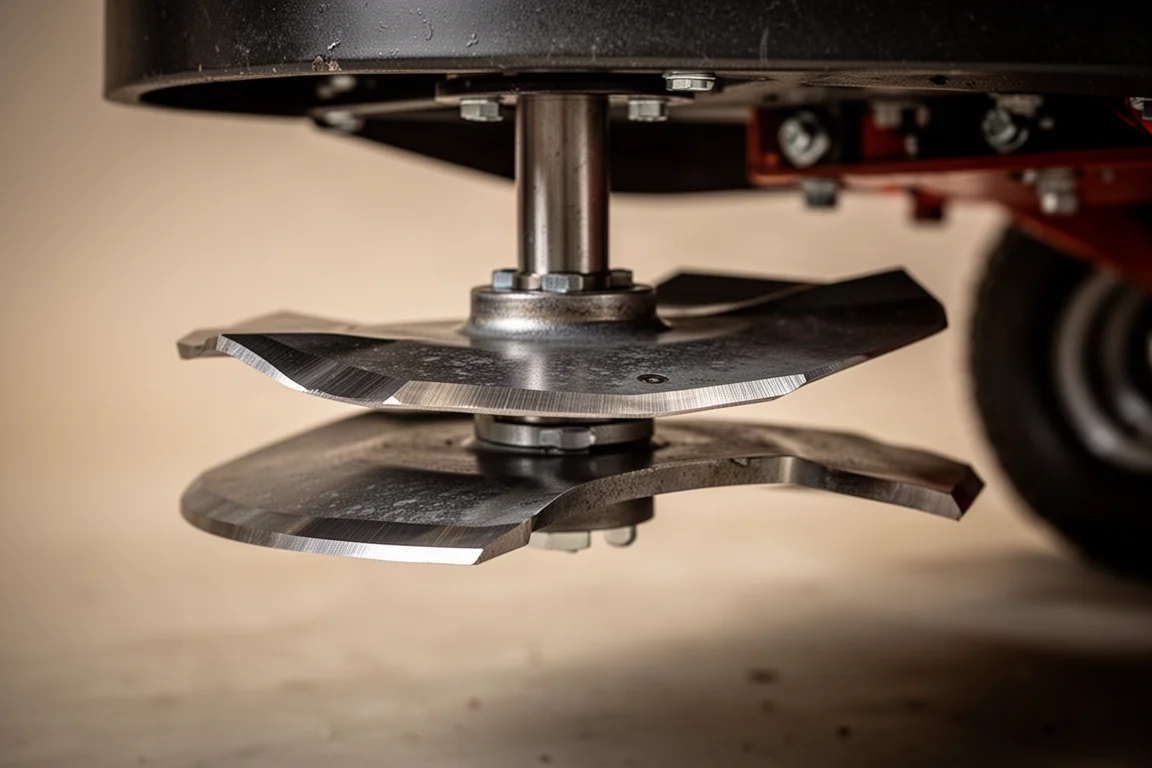
The results were strong. This mower bagged and mulched very effectively, and the side discharge spread clippings further and more evenly than many battery-powered or even gas mowers. It is not flawless: clogs are still possible in taller, wet grass. Engaging turbo mode early helped expel most clippings when conditions got rough.
Run Time and Battery Setup
A dual battery bay runs two batteries in parallel. You only need one to operate the mower, but running both increases run time and keeps each battery at a lower temperature under heavy loads. Exact run time depends on mulching versus bagging, temperature, and grass type, but Ryobi’s estimates proved reasonable:
- Two 6Ah batteries: about 75 minutes
- Two 8Ah batteries: around 100 minutes
- Two 12Ah batteries: up to 150 minutes
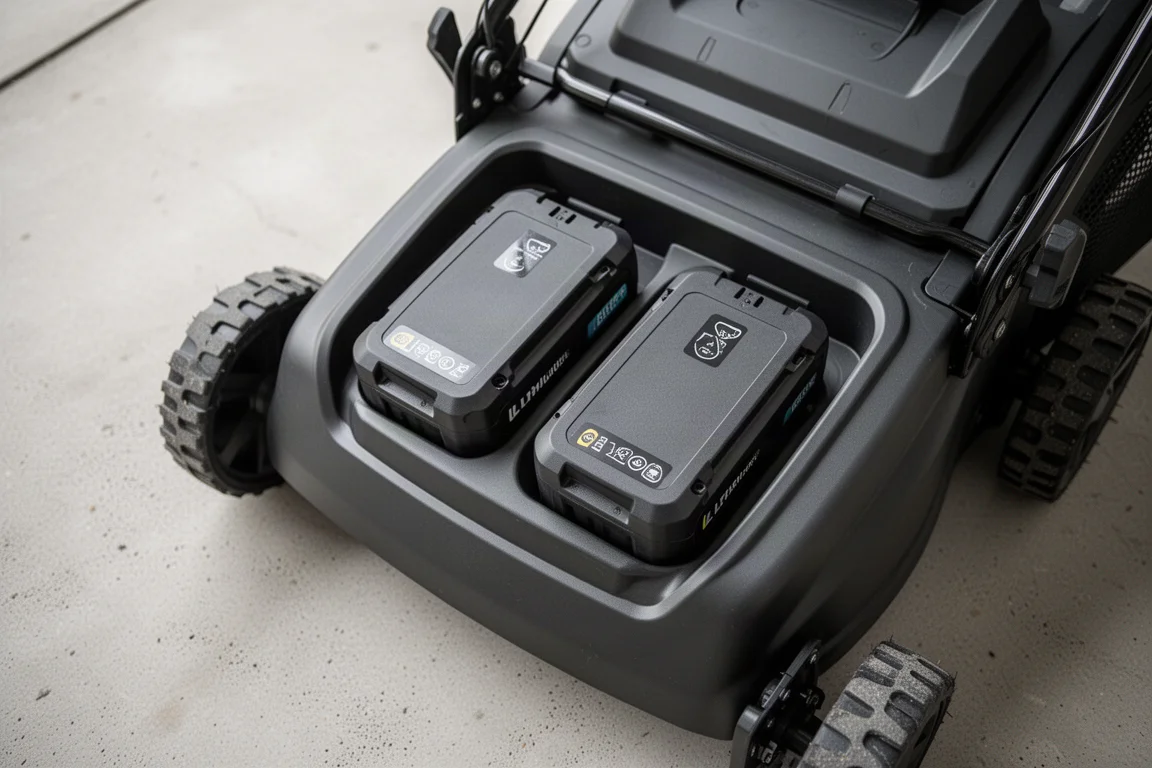
Ryobi recommends this mower for yards up to 3/4 acre using the kitted 6Ah batteries, though a realistic ceiling is closer to half an acre. Walking behind a 21-inch mower until the batteries die is exhausting, especially in heat, so half an acre is a sensible max for a mower this size. For larger lawns, Ryobi’s 30-inch self-propelled model or its 80V lawn tractors are the upgrade paths.
Everyday Use and Controls
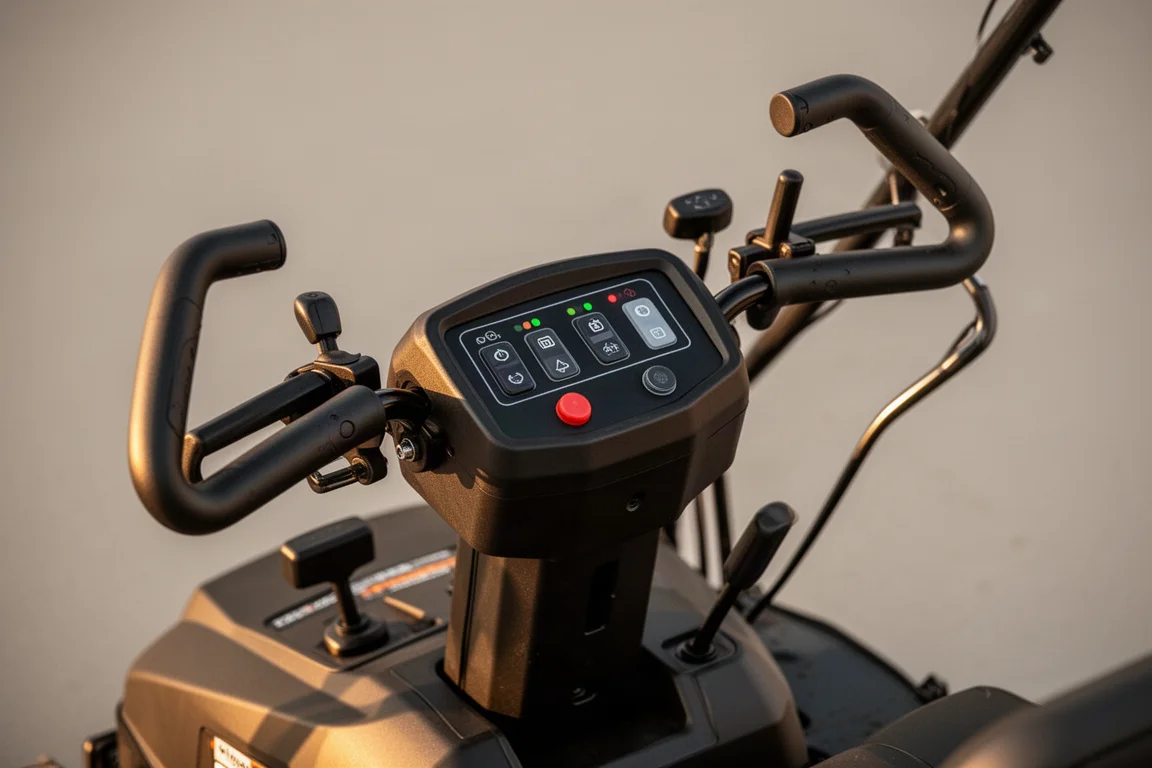
Everything starts with a centralized control center. Rather than its usual design, Ryobi opted for an advanced control panel that lets you incrementally adjust drive speed and activate turbo mode and LED headlights at will. There is also a unified battery life meter and a blade replacement indicator light.
The drive levers adjust up and down to fit different heights and hand sizes, and the presence bar folds down into a recessed groove for a more comfortable grip. One useful touch: you can set a maximum drive speed with the arrows on the control system, then feather the drive levers against that limit when navigating obstacles.
Ryobi went with a molded poly deck instead of steel or aluminum. Landscapers debate plastic deck durability, but there are real benefits: the deck keeps weight low at around 79.2 lb, the mold allows engineers to optimize airflow and structural integrity, and it will not rust out under repeated wet mowing like steel. Across more than a decade of mower testing, a poly deck has yet to break.
Ryobi also simplified the mulch plug mechanism. The older all-wheel drive model used a large lever that frequently got stuck; here, a small dial reliably opens and closes the mulch plug door, making transitions between mulching and bagging seamless.
Things to Consider Before Buying
The LMO2 kit retails for $649 and includes two 6Ah batteries, a charger, a grass bag, and a side discharge chute. Ryobi backs the mower with a 5-year tool warranty and a 3-year battery warranty. The main trade-offs are the realistic half-acre coverage ceiling and the possibility of clogs in tall, wet grass, though turbo mode mitigates the latter.
Buying Advice
If you want to ditch gas this year, this mower makes a compelling case. Confident cutting power, long run time potential, thoughtful design, and advanced controls come together in a package that improves on an already successful platform. For lawns up to about half an acre, it should be at or near the top of your shortlist.
Conclusion
The Ryobi 40V HP brushless 21-inch self-propelled mower takes what worked in the first-generation crosscut design and elevates it with more torque, smarter turbo management, and better ergonomics. For battery-powered mowing with gas-like capability, it is an easy recommendation.
Product link
View more details for Ryobi 40V HP Brushless Self-Propelled Lawn Mower RY40HP LMO2
This product is mentioned in the review. Check the specifications, options, and compatibility before buying.
View more details for Ryobi 40V HP Brushless Self-Propelled Lawn Mower RY40HP LMO2Further reading
Related Reviews

Lawn Care
Best Robot Lawn Mowers 2026: 13 Models Tested for Real-World Performance
We tested 13 robot lawn mowers across battery life, cut quality, navigation, object avoidance, and edging to find the best options for different yards and budgets.

Lawn Care
DeWalt 21-Inch 196cc RWD Self-Propelled Lawn Mower Review
A closer look at a gas-powered self-propelled mower with a commercial-grade engine, variable speed drive, and three-in-one cutting flexibility.
Lawn Care
Best Battery-Powered Self-Propelled Lawn Mowers: 10 Flagship Cordless Models Compared
Ten flagship cordless self-propelled mowers from DeWalt, Echo, Ego, Greenworks Commercial, Makita, Milwaukee, Ryobi, Skil, Stihl, and Toro, compared on build, ergonomics, noise, and runtime.