Power Tools
Ryobi 18V Brushless Track Saw Review: A Solid Pick for DIYers, Not Pros
We put the Ryobi 18V brushless track saw through cuts, plunges, and track setup to see where it shines and where it falls short for hobbyists and job-site users.
Introduction
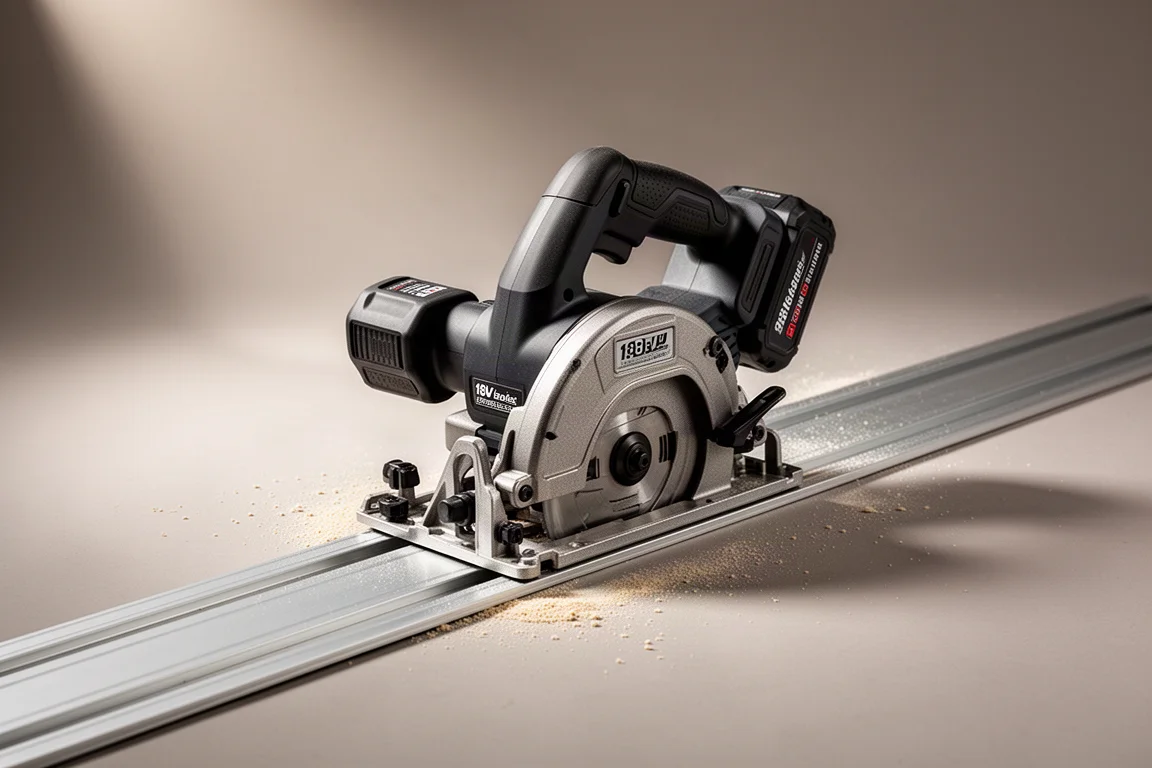
Ryobi has entered the cordless track saw space with an 18V brushless model that comes as a kit including the saw, a two-section guide track, and clamps. It is aimed squarely at the DIY and hobbyist crowd rather than full-time carpenters, and after putting it through a range of cuts, that positioning matters a lot for how you should judge it.
The short version: it cuts well, the track system is genuinely good, and for occasional use it is easy to recommend. But there are real trade-offs in power and build quality that weekend users can accept and daily professionals cannot.
Key Features and Controls
The saw runs on Ryobi’s 18V platform, and the high-performance battery is the one to use here since this is part of the high-performance brushless line. Adjustment is straightforward: a bevel adjustment knob at the front with a second locking knob at the back, plus a depth adjustment you loosen, set, and tighten back down.
The depth stop locks into place automatically, and you press a button to release it and move the saw up or down. There is also an anti-slip knob that keeps the saw from sliding on the track, along with a track adjustment dial.
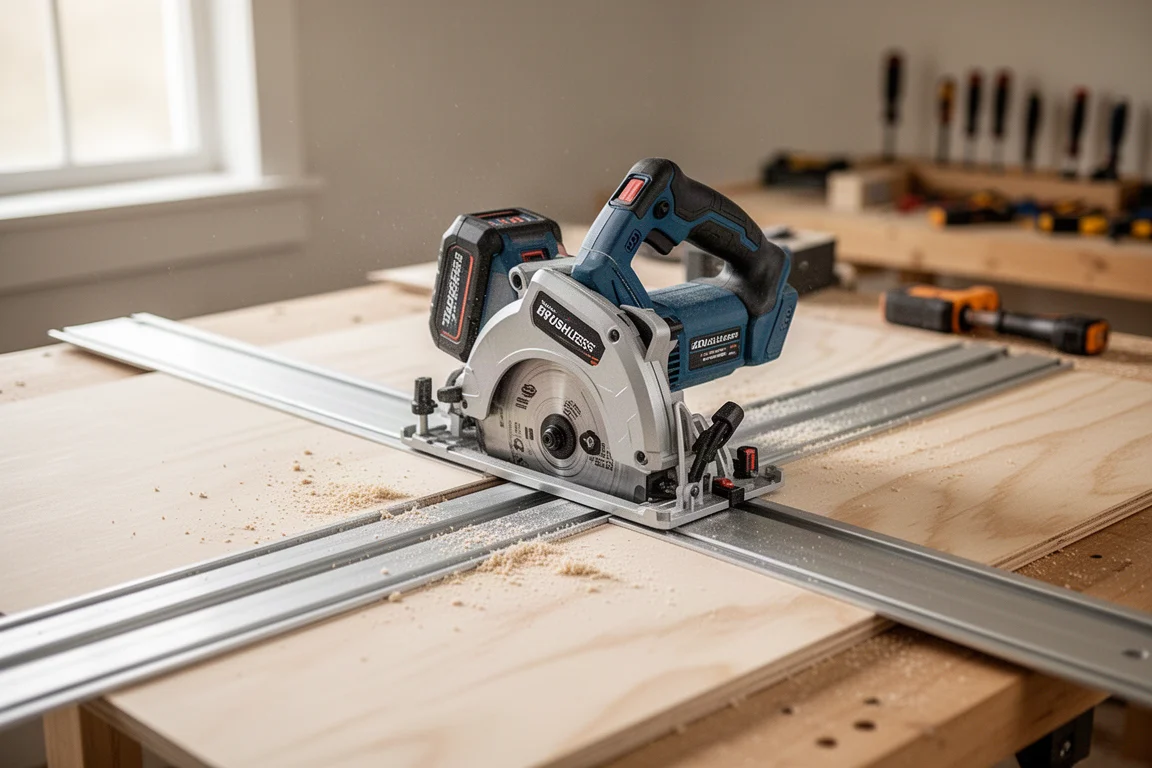
The blade lock lever has three positions: one for changing the blade, one for a scoring position, and one for full plunge. Most users will spend nearly all their time in the full plunge position, which works smoothly.
Track Setup and Assembly
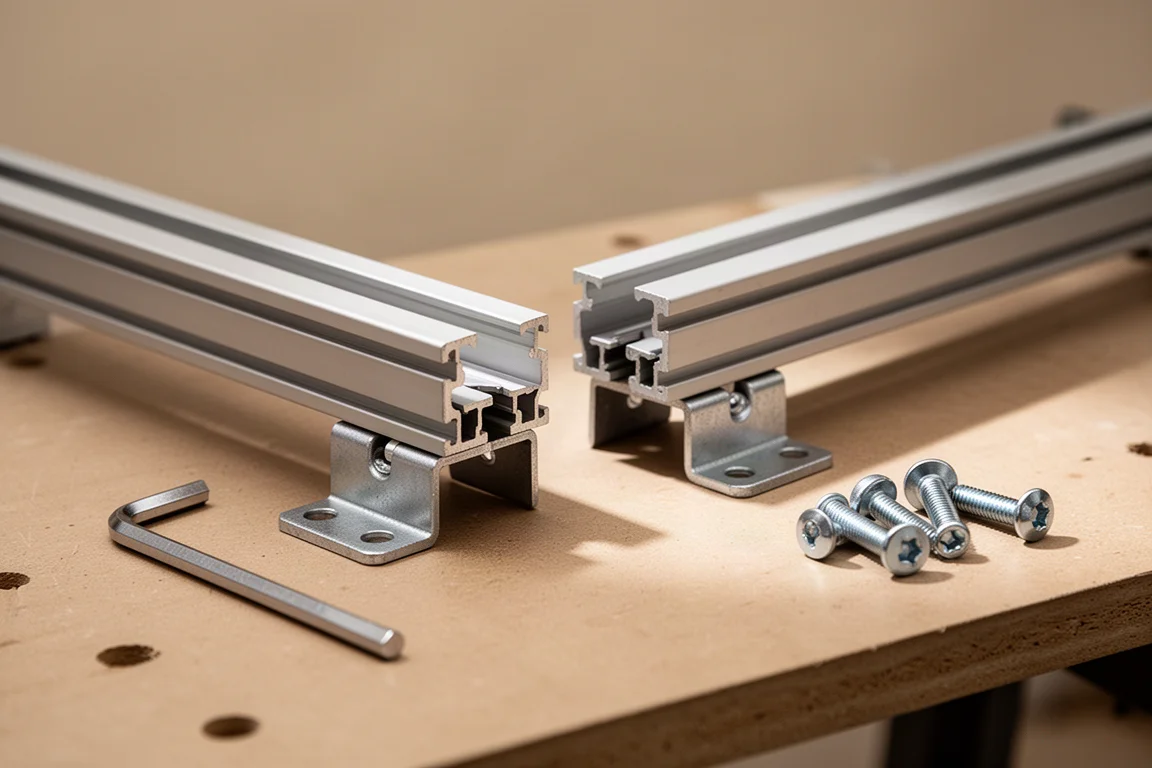
The kit includes two track sections that join into one longer guide, and extension tracks are available if you need more length. Assembly is genuinely simple: the sections only fit one way, with a thick end and a skinny end that slot together.
Underneath the track are locking brackets held by four bolts. You loosen all four, slide the brackets into position on the joined track, and tighten them back down. It takes minutes and holds together solidly.
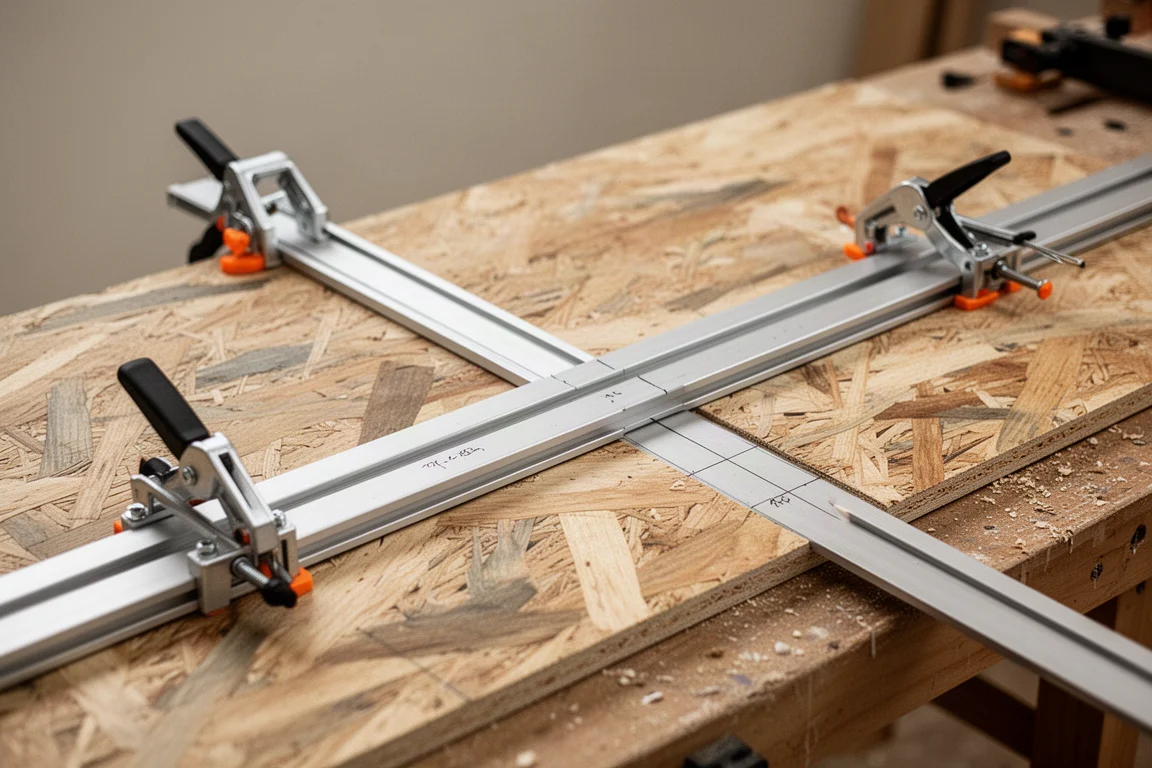
The included clamps are equally easy to use. Open them up, slide them into the track channel, and then use a standard trigger clamp to secure the other end. The track itself is one of the highlights: it is heavy duty, stays exactly where you put it, and the clamping system works well.
Real-World Cutting Performance
For the first test, the saw was used straight out of the kit, including the blade it ships with, on a rough sheet of plywood that needed a bow sliced off. The cut was good: it stayed in the track, ran smoothly, and the plunge action felt nice.
It was not perfect, though. There is some audible bogging under load, and the stock blade holds the saw back. Swapping in a higher-quality blade, something like a Diablo, would make this saw run noticeably better. The anti-tip function performed acceptably, keeping the saw seated in the track throughout.
Power-wise, it did bog down a little, but nobody should expect this to be the most powerful track saw on the market. For typical DIY cuts, there should not be any power-related issues. The bottom line on cutting: it did the job, and it cut the way it was supposed to cut.
Build Quality and Durability Concerns
This is where the Ryobi shows its market positioning. There is metal around the guard area, which is a nice touch for keeping fingers protected, but nearly everything else is plastic. That raises a legitimate concern: drop this saw the wrong way or use it carelessly, and something could definitely break off.
One detail worth flagging is a set of pins in the adjustment mechanism that catch when the depth is moved. If those pins break off, the saw is in trouble, and they feel like the kind of part that would not survive heavy abuse.
The plastic-heavy construction is the main reason this saw earns a very different score depending on who it is for. If it were marketed to professionals, it would land around a 4 out of 10. Marketed for DIYers, it earns a solid 8 out of 10.
Who Should Buy It
If you use a track saw all day, every day, this is not the saw for you. The plastic construction and modest power will not hold up to that kind of workload.
If you are a hobbyist, a DIYer, or someone who reaches for a track saw only occasionally, this is much easier to recommend. It did everything asked of it in testing, it has been used to make doors with good results, and it arrived on the market before the comparable Milwaukee offering, which gives Ryobi platform owners a head start. Just budget for a better blade right away, because the included one is the saw’s weakest link.
Conclusion
The Ryobi 18V brushless track saw is a well-thought-out kit for occasional users: the track is heavy duty and easy to assemble, the clamping system works, and the saw cuts accurately for DIY projects. Accept the plastic-heavy build and modest power, upgrade the blade, and it is a very capable addition to the Ryobi 18V platform.
Product link
View more details for Ryobi 18V Brushless Track Saw
This product is mentioned in the review. Check the specifications, options, and compatibility before buying.
View more details for Ryobi 18V Brushless Track SawFurther reading
Related Reviews

Power Tools
Best 1-Inch Pistol Impact Wrenches: Three Heavy-Duty Options Compared
We compare three 1-inch pistol impact wrenches, from a budget-friendly Harbor Freight model to a premium Caterpillar unit, to help you choose the right one.

Power Tools
Best 3/4-Inch Impact Wrenches 2026: Five Contenders Compared
We compare five 3/4-inch impact wrenches across price and performance, from a budget Amazon option to Snap-on's most powerful model yet.

Power Tools
Best Budget Cordless Tools 2026: Walmart Finds That Punch Above Their Price
We tested five cordless tools from Walmart, including a high-torque impact wrench that trades blows with Milwaukee and a $35 duster that outperforms its price class.