Power Tools
Ryobi 18-Gauge Brushless Brad Nailer vs Milwaukee M18 Fuel: Which Cordless Trim Nailer Fits Your Work?
A hands-on look at Ryobi's 18-gauge brushless brad nailer, with a size and handling comparison against the Milwaukee M18 Fuel nailer for trim, molding, and DIY work.
Introduction
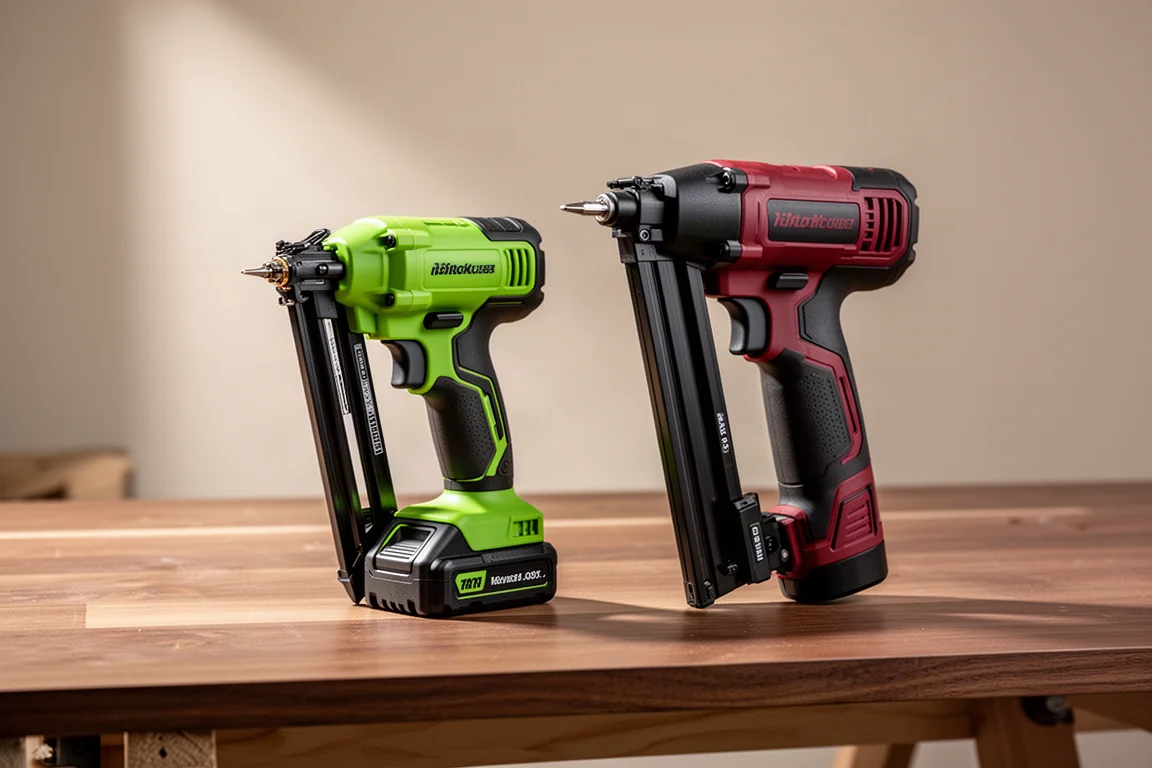
Ryobi’s 18-gauge brushless brad nailer has picked up a loyal following among both professionals and weekend DIYers, and after putting it through trim work and molding tasks, it is easy to see why. It runs on any Ryobi One+ battery, fires consistently flush nails, and keeps things simple with straightforward controls. To put its size and feel into context, we also compared it directly against the Milwaukee M18 Fuel nailer.
This comparison is most useful if you are choosing between a value-focused cordless nailer for home projects and a slimmer, more compact option for professional trim work.
Key Features of the Ryobi 18-Gauge Brushless Brad Nailer
The Ryobi is fully brushless and is claimed to deliver up to 2,250 nails per charge, a figure that likely assumes a 5Ah battery or larger rather than a compact 1.5Ah pack. The magazine holds 105 nails, and it accepts brads from 5/8 inch up to 2-1/8 inch in length.
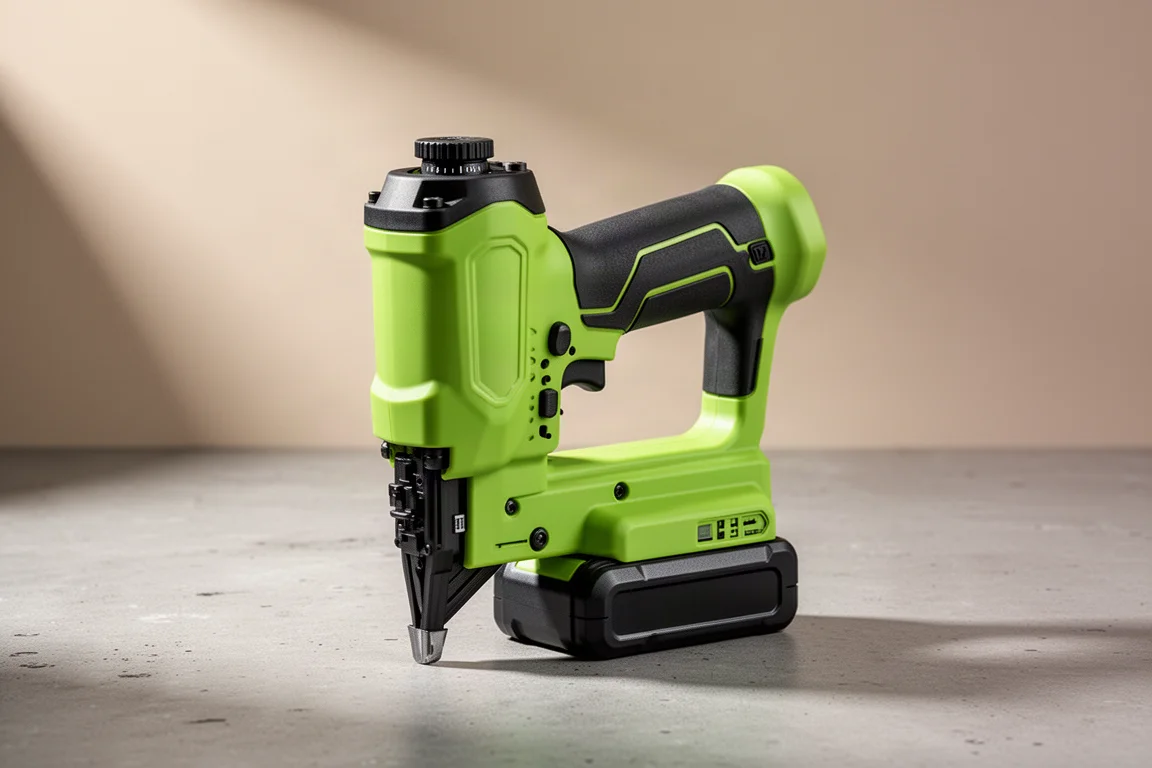
Controls are refreshingly simple. A switch at the base toggles between rapid mode and single-shot mode, there is a bump-fire trigger on top, and a depth adjustment knob lets you sink nails slightly past the surface or keep them flush depending on the task. An LED light near the handle activates with a button press and stays lit for about five seconds, and the tool includes one bump pad installed plus a spare.
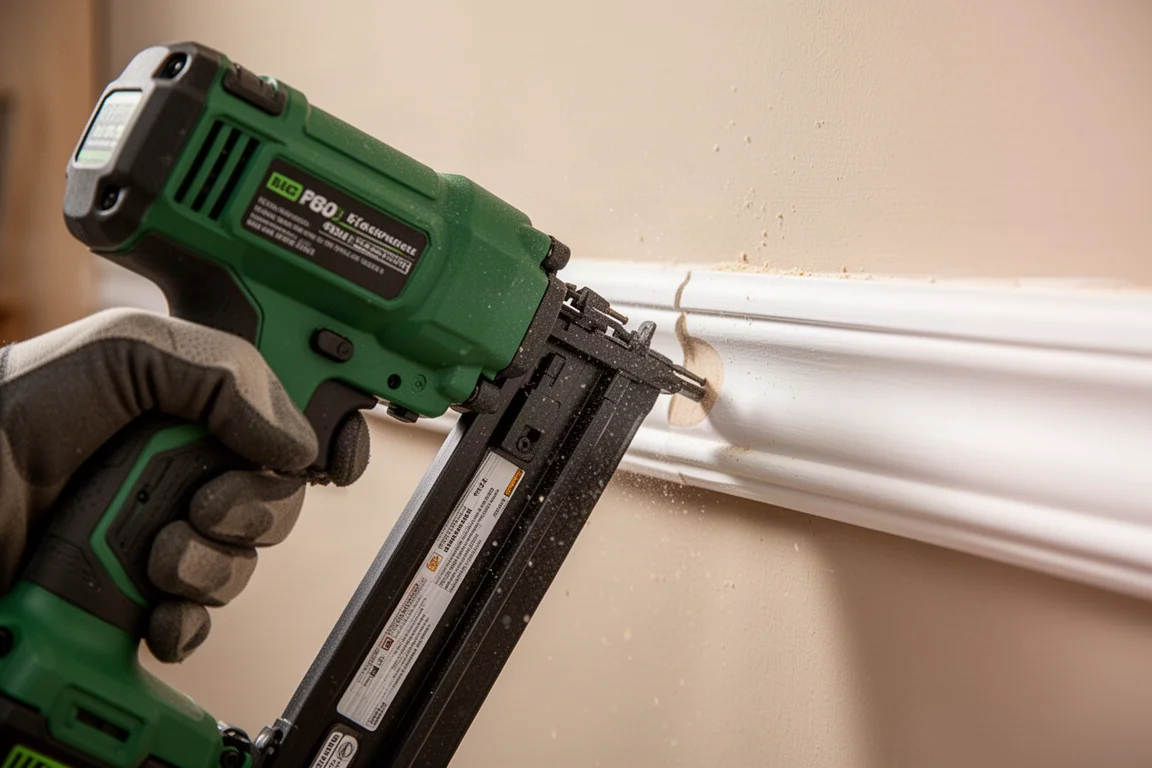
In use, it drove every nail straight and left heads flush at the lightest depth setting, then sank them cleanly when dialed all the way down. There is also a small air pressure adjustment on the back for fine-tuning, though simply using the depth knob at the top worked reliably in testing.
Loading, Jams, and Everyday Handling
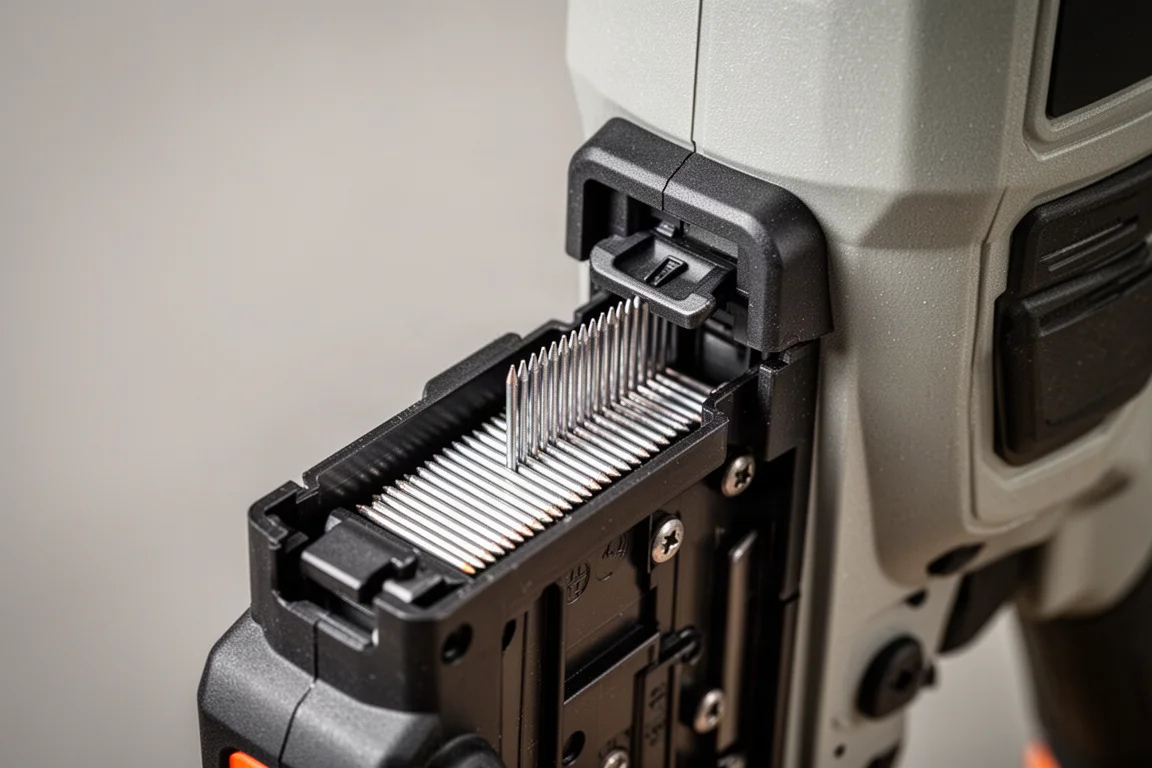
Loading is genuinely easy: press the release button, slide the magazine out, drop in a strip of nails, and slide it back. The quick-release nose comes in handy if you do get a jam, though no jams occurred during testing, which matches the general reputation these nailers have earned.
With a 4Ah battery attached, the tool weighs just over seven pounds. It is a little bulky and noticeably front-heavy, but even for overhead work like crown molding it stayed comfortable and felt well built. A long-term durability check is planned with basement molding installation, since that is where these tools prove whether they hold up over time.
Ryobi vs Milwaukee: Size and Handling
Placed side by side, the Milwaukee M18 Fuel nailer is clearly thinner, which helps in tight spaces, but it is also noticeably longer than the Ryobi. In practice you are trading some length for girth: the Ryobi is bulkier in the hand, while the Milwaukee is more slender but stretches further along the workpiece.
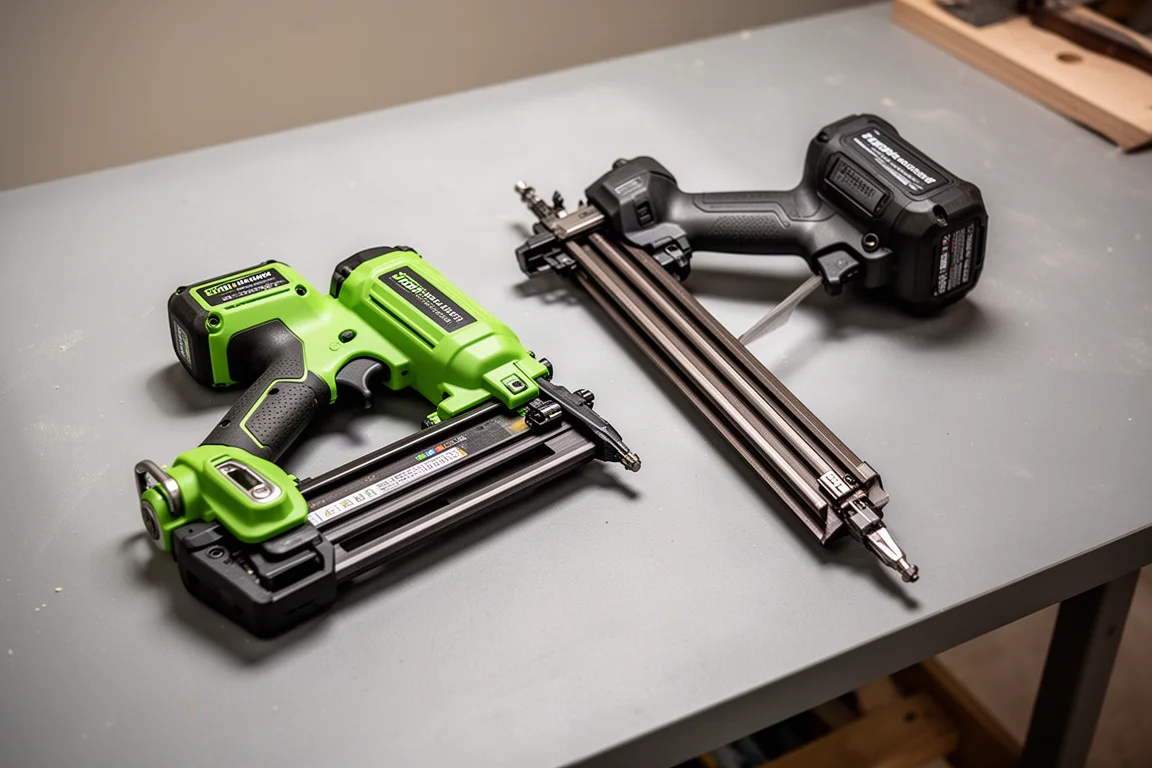
For most trim and molding tasks, that trade-off comes down to where you work most often. The Ryobi rewards you with battery versatility and a lower entry cost within the Ryobi One+ platform, while the Milwaukee suits users already invested in M18 who need the slimmer nose.
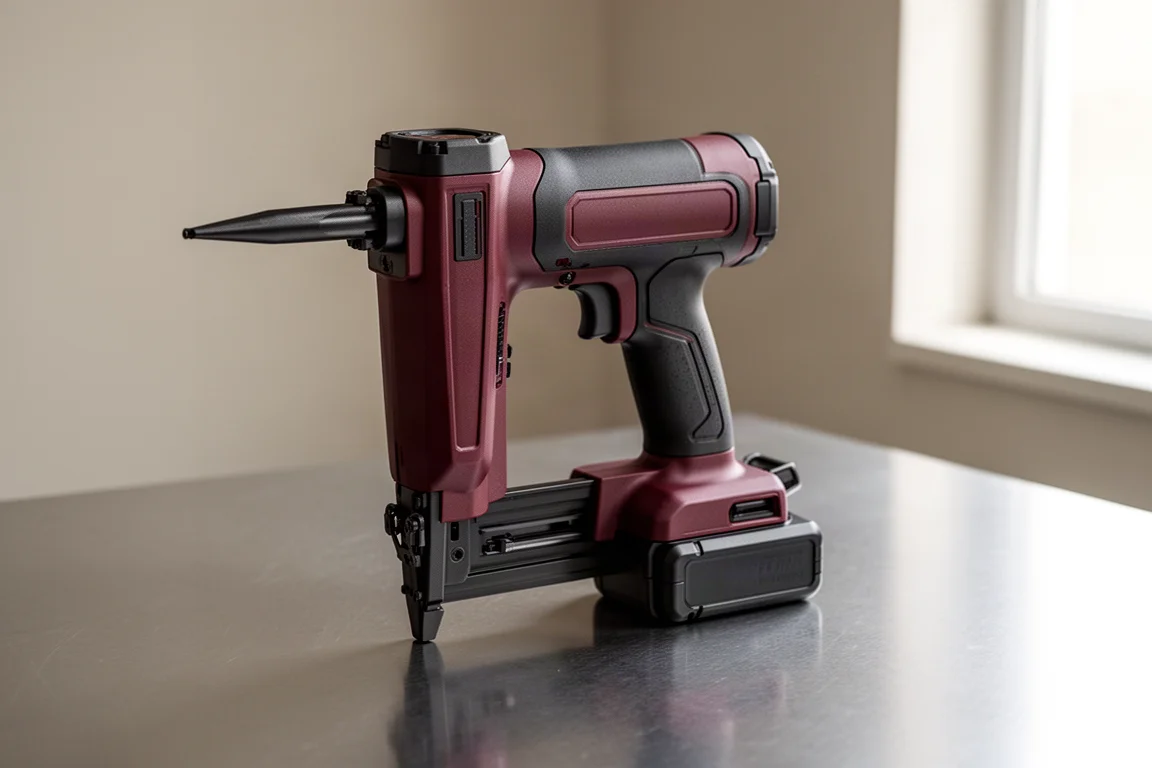
Things to Consider Before Buying
The Ryobi is a little heavy and front-loaded, so if you spend hours doing delicate overhead trim, test how it feels in hand first. The claimed nail-per-charge figure also depends on using a larger battery, so plan on a 4Ah or 5Ah pack for full-day projects. Finally, Ryobi’s finish nailer lineup is strong, but the brand does not yet offer a framing nailer, which remains the most requested gap in the lineup.
Who Should Buy Which
The Ryobi 18-gauge brushless brad nailer is the obvious pick for DIYers, weekend builders, and anyone already using Ryobi One+ batteries who wants a dependable trim nailer at a friendly price. It drives straight, flush nails, loads easily, and handles crown molding without complaint.

The Milwaukee M18 Fuel is the better fit for professional trim carpenters and M18 battery owners who value a slimmer, longer-bodied tool and are willing to work within its different proportions. If nailer reliability matters most to you, Ryobi has a strong track record in this category, so neither choice should feel risky.
Conclusion
The Ryobi 18-gauge brushless brad nailer delivers easy loading, consistent flush nail placement, useful mode and depth controls, and flexible battery compatibility in a package that is only slightly bulky and front-heavy. The Milwaukee M18 Fuel counters with a thinner, longer body that suits tighter professional work. Choose the Ryobi for value and versatility, and the Milwaukee if a slimmer profile and M18 batteries already fit your workflow.
Further reading
Related Reviews
Power Tools
Best 1-Inch Pistol Impact Wrenches: Three Heavy-Duty Options Compared
We compare three 1-inch pistol impact wrenches, from a budget-friendly Harbor Freight model to a premium Caterpillar unit, to help you choose the right one.
Power Tools
Best 3/4-Inch Impact Wrenches 2026: Five Contenders Compared
We compare five 3/4-inch impact wrenches across price and performance, from a budget Amazon option to Snap-on's most powerful model yet.
Power Tools
Best Budget Cordless Tools 2026: Walmart Finds That Punch Above Their Price
We tested five cordless tools from Walmart, including a high-torque impact wrench that trades blows with Milwaukee and a $35 duster that outperforms its price class.