Power Tools
Run DMC 300 Compact Cut-Off Tool Review: Small Head, Big Surprises
A tiny 76mm cordless cut-off tool with 20,000 RPM, reversible spin, onboard tool storage and a dust shroud that turns it into a mini circular saw. Here is how it performs on steel, PVC, ACM and tile.
Introduction
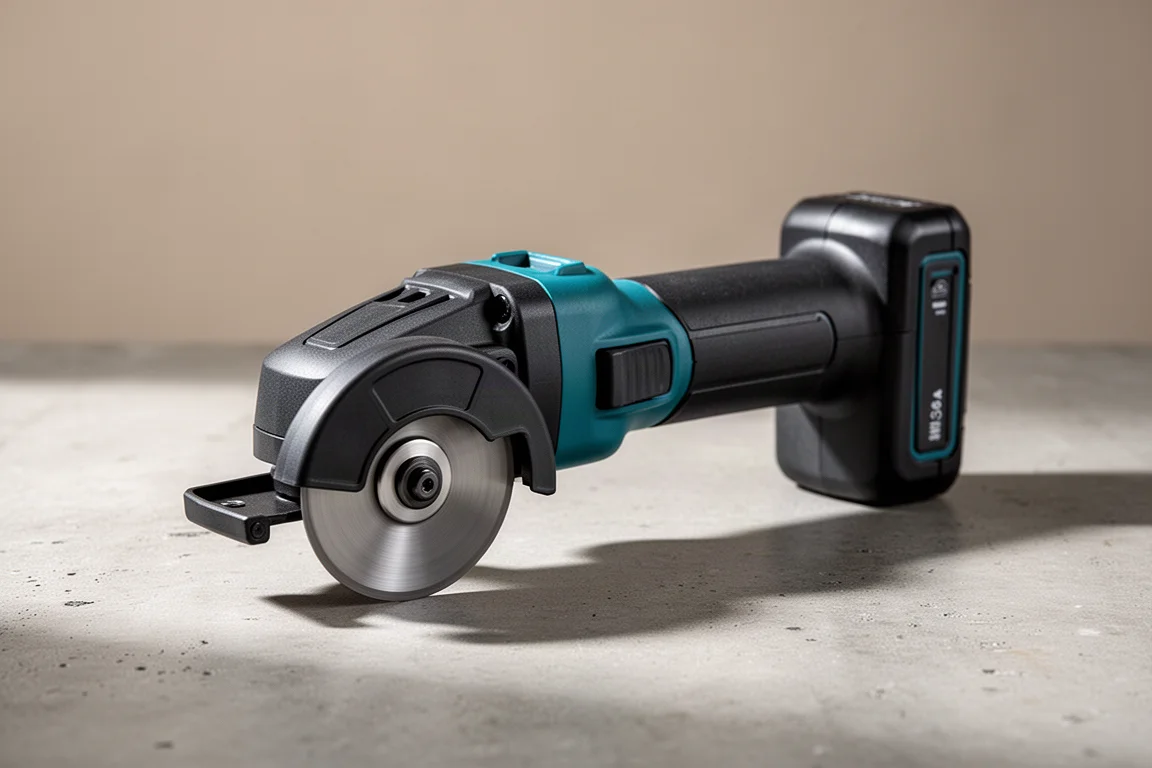
Compact cut-off tools tend to make one of two trade-offs: they are either small and gutless, or capable and bulky. The Run DMC 300 tries to split the difference, and after putting it through stainless steel, PVC, ACM sheeting and hard ceramic tile, it earned far more respect than its size suggested it would.
Key Features at a Glance
The tool runs a 76mm (three inch) wheel at up to 20,000 RPM, and it can spin in either direction. That reversible spin matters more than it sounds, especially once you fit the dust shroud. A quick safety lock sits on the handle, there is a built-in light for dim corners, and the mesh filter is removable for cleaning.
Wheel changes are handled well too. A wheel lock secures the disc for changes, and the hex tool for swapping discs stores onboard. The safety guard moves easily and clicks through several positions, so repositioning it mid-job takes seconds rather than minutes.
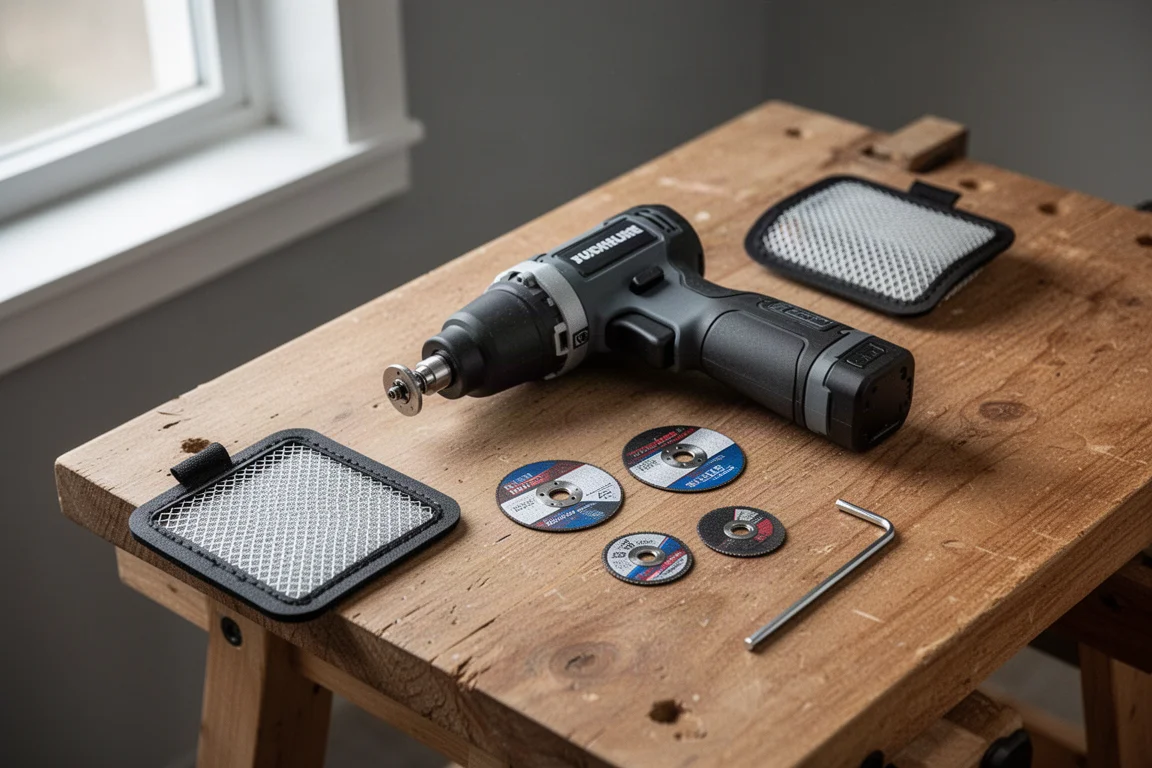
Physically, the tool is genuinely tiny. The head is almost comically small, and the biggest part of the whole package is the battery on the back end. That compactness is the whole point, but it does impose real limits, which we will get to.
Size and Cutting Depth Limits
Because the wheel is only 76mm, the maximum cutting depth is 16mm, or 14mm when using the shroud. That is the practical ceiling for this tool, and it shapes what you should buy it for. If your work regularly demands deeper cuts, this is not the machine.
The discs themselves are slender, and the arbor is a small 9.5mm (3/8 inch). One thing worth noting: the tool runs at 20,000 RPM while the supplied discs are rated at 20,100 RPM. That is right on the edge, so it is worth keeping an eye on disc condition and working at a sensible pace rather than stalling the wheel into the material.
The Dust Shroud: A Hidden Bonus
The included dust shroud converts the tool into something closer to a mini circular saw, with dust extraction capability and a depth gauge marked in both millimeters and inches. Fitting it is refreshingly simple: the whole tool pops through the hole, pulls up until it clicks, and locks in place. Removal is just unlock and drop out.
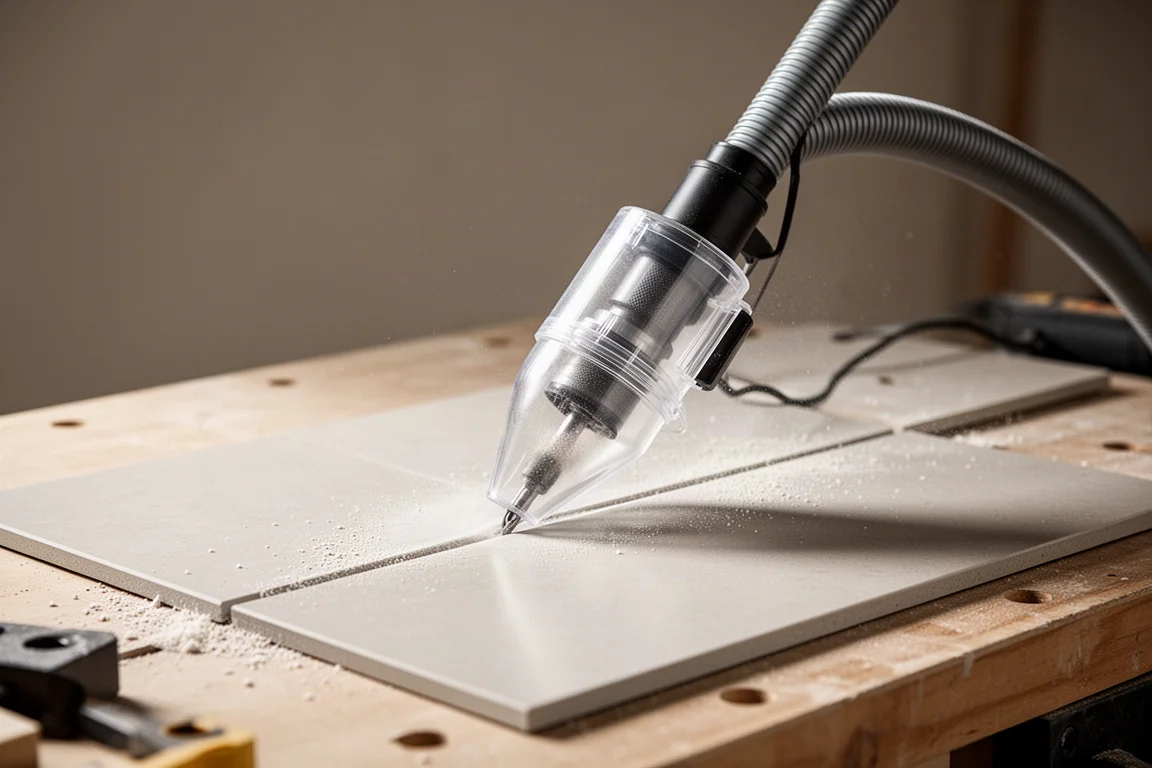
Depth is set anywhere between nothing and the 14mm maximum. There is no bevel function, which makes sense since a bevelled base would leave almost no usable cut depth. Because the tool spins in both directions, extraction behaviour differs depending on spin direction. With the shroud fitted, running the tool in reverse throws dust and sparks out the front rather than the back, which many users will find is the better setup.
Cutting Performance
This is where the tool quietly won us over. The expectation going in was that such a small head would starve for torque the moment it met real material. In practice it sustained its high RPM far better than anticipated.
On 2mm stainless steel, using a 1mm thin stainless cut-off disc, it cut quickly and cleanly. The comparison that matters: it felt quicker than a five inch grinder on the same sheet, helped by the thinner kerf of the small discs. A 4mm thicker steel section also went through without serious complaint, as long as you work at a reasonable pace rather than forcing the tool.
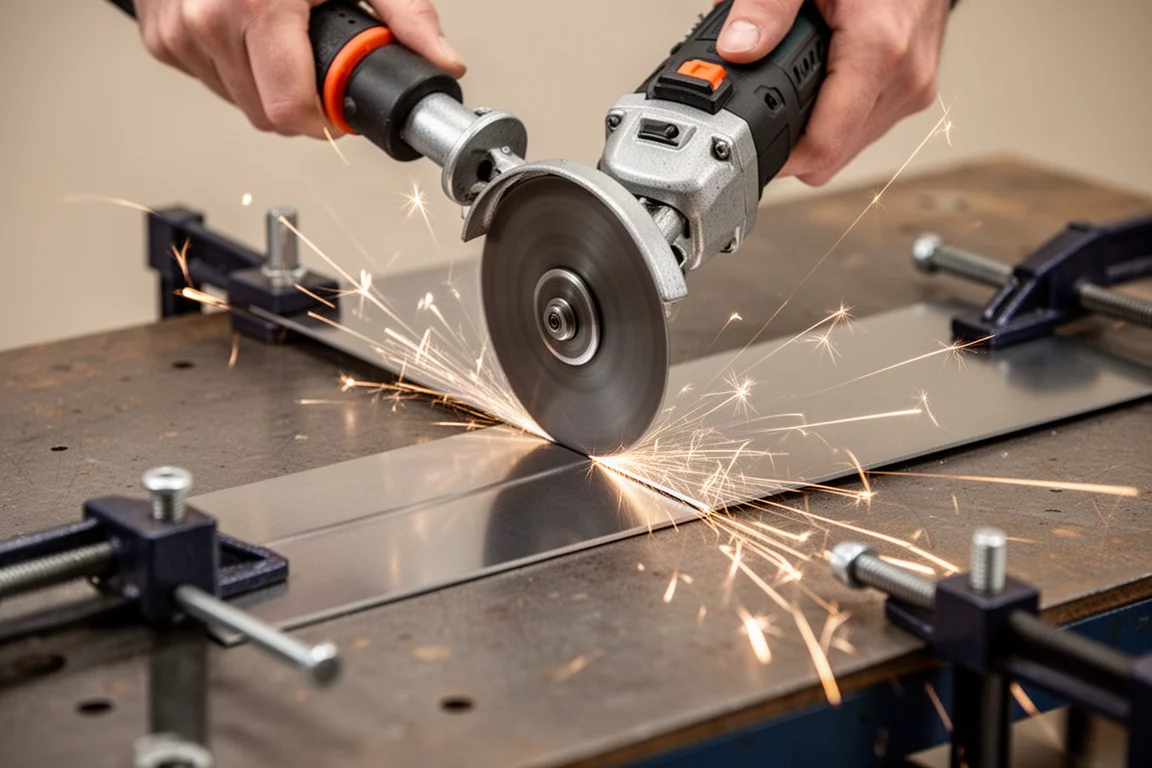
PVC was effortless with the dedicated blade, and ACM sheeting was no trouble at all on a standard metal cut-off disc. Straight cuts were easy to follow, and visibility is noticeably better with the shroud removed. The tool also has a satisfying amount of momentum when the trigger is released, which is worth getting used to before your first precise cut.
Tile Work and Precision Nicks
The tile and concrete blade is where the compact form factor genuinely shines. On a very hard ceramic tile, with the shroud and extraction hose hooked up and full depth engaged, the tool handled the cut well.
Because the head is so small, it reaches into tight spaces that a grinder simply cannot. Taking corners off tiles, cutting small nicks, and making short controlled cuts in confined areas is exactly the kind of work this tool is built for. For anyone doing tile or masonry touch-ups, that alone justifies a spot in the kit.
Who Should Buy It
The verdict is easy to summarise: this is a good toolbox tool for almost anyone, precisely because it accepts so many different blade types. Like a grinder, it covers a wide range of tasks, but in a far smaller and lighter package.
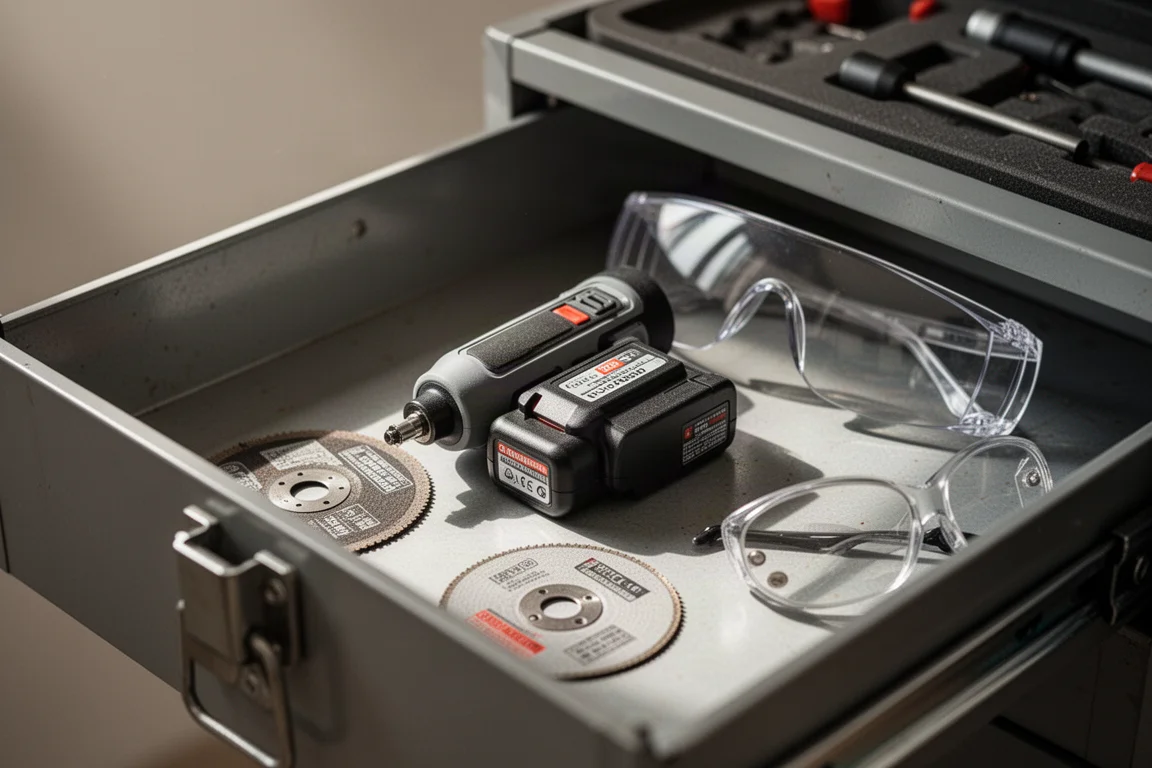
If there is one wish for a future version, it would be a 12V platform option. As it stands, the battery is the largest part of the tool, and a more compact slide-pack on the rear would make an already tiny machine even easier to handle. Availability is also still limited, as the tool is fairly new to the market, so stock may take time to appear in different regions.
Conclusion
The Run DMC 300 compact cut-off tool is more capable than its size suggests. It cuts stainless steel quickly, handles PVC, ACM and hard tile without fuss, and its reversible spin plus dust shroud give it flexibility most cut-off tools lack. The 16mm depth limit and small battery are the honest trade-offs, but for tight-space cuts, tile nicks and thin material work, it is a genuinely useful addition to the toolbox.
Product link
View more details for Run DMC 300 Compact Cut-Off Tool
This product is mentioned in the review. Check the specifications, options, and compatibility before buying.
View more details for Run DMC 300 Compact Cut-Off ToolFurther reading
Related Reviews
Power Tools
Best 1-Inch Pistol Impact Wrenches: Three Heavy-Duty Options Compared
We compare three 1-inch pistol impact wrenches, from a budget-friendly Harbor Freight model to a premium Caterpillar unit, to help you choose the right one.
Power Tools
Best 3/4-Inch Impact Wrenches 2026: Five Contenders Compared
We compare five 3/4-inch impact wrenches across price and performance, from a budget Amazon option to Snap-on's most powerful model yet.
Power Tools
Best Budget Cordless Tools 2026: Walmart Finds That Punch Above Their Price
We tested five cordless tools from Walmart, including a high-torque impact wrench that trades blows with Milwaukee and a $35 duster that outperforms its price class.