Flashlights
Rovyvon Angel Eyes E30 Pro Review: A Do-It-All Flat EDC Flashlight With an Identity Crisis
A 3,500-lumen flat wedge flashlight packing EDC, tactical, and utility side lights into one aluminum body. Impressive hardware, but a UI that asks a lot of its owner.
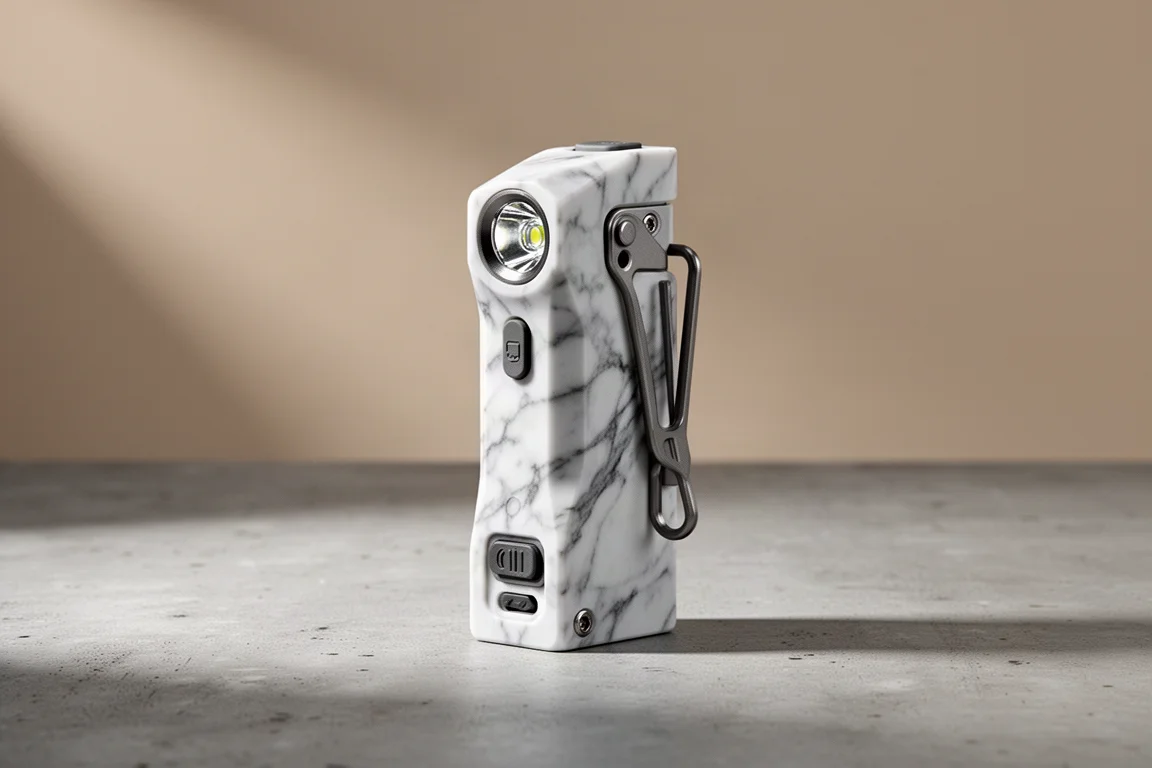
Introduction
The Rovyvon Angel Eyes E30 Pro is part of the new wave of flat-design everyday carry flashlights, and it does something a little different with that trend. Instead of keeping things simple, it packs an EDC light, a dual-stage tactical switch, a proximity sensor, and a configurable side light into one wedge-shaped aluminum body. The result is a flashlight that is genuinely impressive on hardware but asks a lot of you when it comes to controls. Is it trying to do too much? Let’s break it down.
What’s in the Box
The E30 Pro ships in a plain box with a type-A to type-C charging cable, a lanyard, and a user manual. It is available in two colors: black and the marble finish shown here. You can also choose the side light configuration: either three warm white lights, or a version with one warm white light, a red light, and an ultraviolet light. That side light choice matters more than it sounds, and we will come back to it.
Design and Build Quality
Almost everything about the physical product feels high quality. The body is aluminum alloy, with hard anodization on the black version and microarc oxidation on this marble version, and the finish feels genuinely nice in hand. The switches are metal rather than plastic, which adds to the premium feel. The removable pocket clip is comfortable in the pocket and sits nearly deep carry, with only about a quarter inch poking above the pocket line. Removing it is simple: peel back one tab, pull the other, and it slides off.
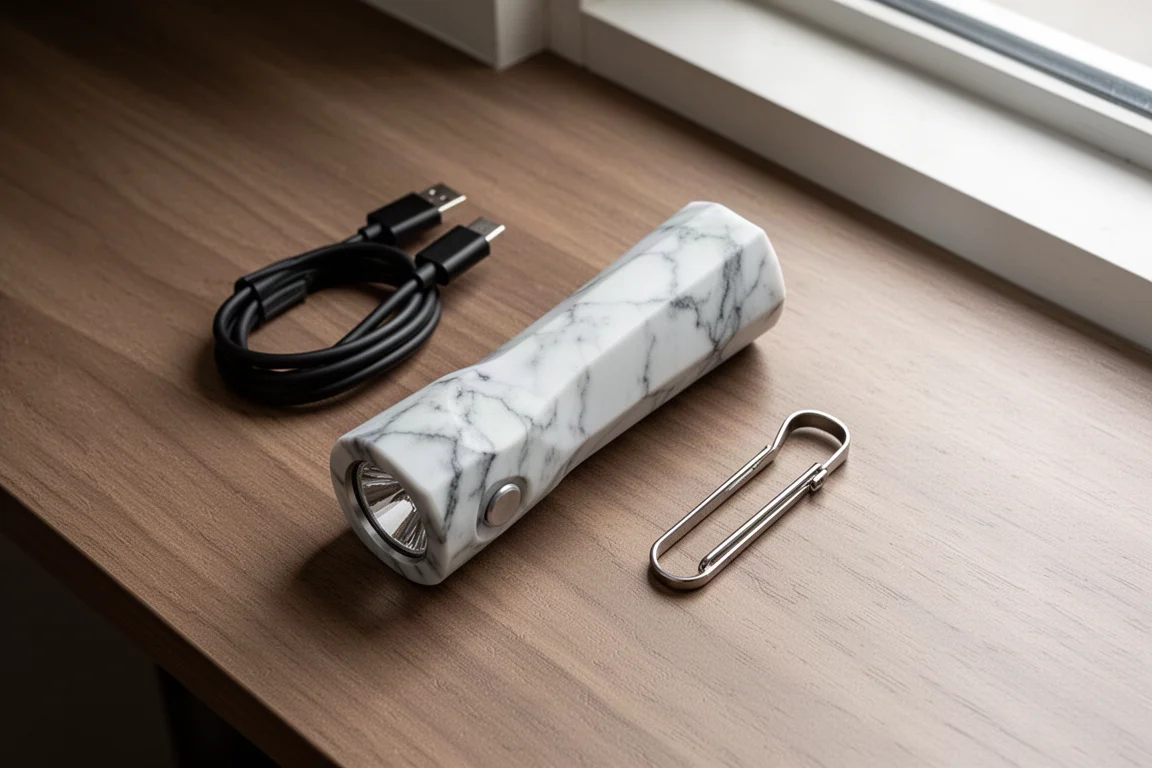
Dimensions come in at 4.88 inches long, 1.14 inches wide, and 0.83 inches thick, weighing 3.7 ounces (104.8 grams). It carries beautifully. The flat wedge shape sits nicely in a pocket because it is not round, and that is one of the most appealing things about this whole design trend.
Inside is a built-in 3,000 mAh lithium polymer battery, charged through a type-C port on the side behind a small rubber flap. Built-in batteries are not for everyone, but with flat flashlights there is realistically no way around it. You are not fitting an 18650 or 21700 cell in a body this thin, so you are taking your chances: when the battery eventually wears out, there is no swapping it.
On top, four small LEDs next to the main emitters act as a battery indicator. They light up on boot for about four seconds and then shut off, which is a smart touch. The system is dual-stage: four blue LEDs means 60 to 100 percent, three means 40 to 59, two means 20 to 39, one means 5 to 19, and under 4 percent it turns red.
Ratings are listed as IP68 in the user manual with 1.5 meter impact resistance, though some online listings say IPX8. The X would mean dust proofing was not tested, so there is conflicting information there. Either way, the “8” means it is submersible up to 6 feet of water.
Output, Beam, and Runtime
The headline numbers: a maximum of 3,500 lumens from dual Luminus SST40 LEDs at roughly 7,000 to 7,500 Kelvin cool white, a 200 meter maximum throw, and 10,000 candela max intensity. The 200 meter figure is not great for a thrower, but this is not meant to be one. The emitters sit forward behind a TI optic lens, which is part of why the throw is limited.
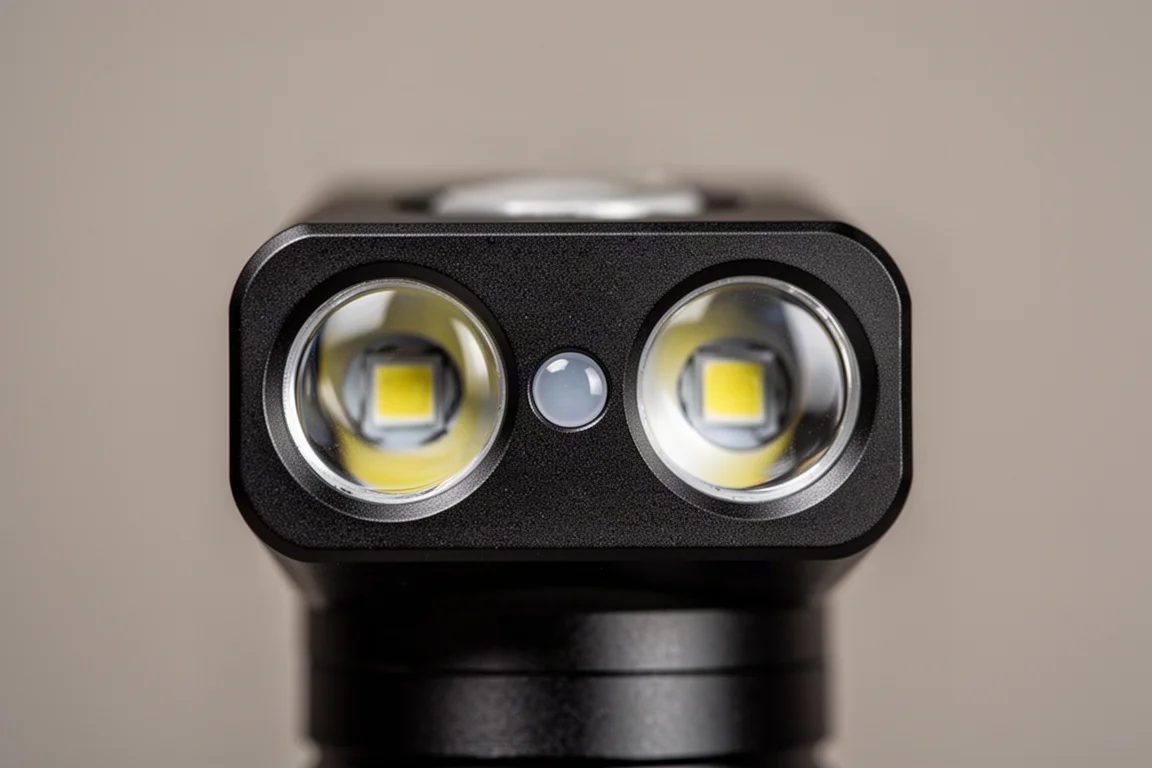
There are five front brightness levels:
- Eco: 10 lumens, 67 hours
- Low: 60 lumens, 23 hours
- Medium: 200 lumens, 8.5 hours
- High: 1,000 lumens, 1.7 hours
- Turbo: 3,500 lumens marketed, 10,000 candela, no listed runtime
That no-runtime figure tells the real story. Turbo is a burst mode that drops to 1,000 lumens in about 10 seconds. In practice this is a sustainable 1,000-lumen flashlight with a 3,500-lumen burst, and the marketing number is doing the usual heavy lifting. Heat testing confirmed the 10-second turbo window almost exactly, with the body reaching around 102 degrees and climbing to about 128 degrees Fahrenheit if you keep re-triggering turbo back to back. It gets very hot. If you insist on repeating turbo, gloves would not be a bad idea, and repeated overheating will wear down the internals.
On the beam itself: the hotspot is fairly wide with decent, somewhat floody spill. Eco is usable even at just 10 lumens, medium at 200 lumens is the sweet spot for most tasks, and high at 1,000 lumens is genuinely bright for a light this size. Turbo, while it lasts, is impressive and will easily pick out eyeshine across a yard. This is a flood-leaning all-rounder, not a thrower.
The Side Lights: Warm White, Red, and UV
The side light is where the configuration choice pays off. The warm white light runs at about 4,500 Kelvin: 1 lumen low with a 500-hour runtime, 20 lumens medium (78 hours) on the three-white version, and 100 lumens high (14 hours). It works well as a soft reading light or mini lantern, and 100 lumens from the side is surprisingly capable around a campsite or desk.
The red and ultraviolet version reviewed here matches the white output (1 lumen low, 100 lumen high) and adds red low, red high, red flash, and red beacon modes, plus UV with a 10-hour runtime. The red light looks great and will suit people who need to preserve night vision or want a signaling mode. Honestly, though, the three warm white configuration is probably the safer pick for most buyers. The red and UV are nice to have, but many people will rarely use them.
The UI: Too Many Buttons?
Everything is controlled by three switches near the tail: an EDC switch, a dual-stage tactical switch, and a side switch. And this is where the identity crisis lives. Is this an EDC flashlight, a tactical flashlight, or a lantern? It is trying to be all three.
The EDC switch is the confusing part. A single press turns the light on, but it goes straight to Eco, and that is all single press does. To reach the four cyclable brightness levels, you have to double press, then single press to cycle with mode memory. That is backwards. On virtually every flashlight you already own, a single press cycles brightness. Here, muscle memory pulls it from the pocket, clicks once, and you are stuck in Eco. Press and hold turns it off. It took days to get used to, and fumbling still happens.
The tactical switch is more straightforward and well executed: a half press gives instant turbo, a full press gives strobe. Just be warned that the proximity sensor is one of the most sensitive ever fitted to a flashlight. Hold the light about a foot from a surface and turbo will step down, first to 1,000 lumens and then to 10, sometimes from two or even three feet away. It is a safety feature, but it is borderline absurd at this sensitivity. The good news: you can disable it by press-and-holding the EDC switch for about 10 seconds until the light flashes.
There is also a button lockout from off: rapid press the EDC switch five times to lock, three times to unlock. Given how bright turbo is, lockout is practically essential if you disable the sensor, unless you want to burn holes in your pocket.
Things to Consider Before Buying
- The built-in lithium polymer battery cannot be replaced. When it dies, the flashlight dies.
- The UI has a real learning curve, especially the single-click-to-Eco behavior.
- The proximity sensor is extremely sensitive, though it can be turned off.
- The 3,500-lumen figure is a 10-second burst; sustainable output is 1,000 lumens.
- 200 meters of throw means this is a floody generalist, not a long-range light.
- IP68 versus IPX8 listings conflict on whether dust resistance was actually tested.
Who Should Buy the E30 Pro
If you want a single all-in-one flashlight that covers EDC, tactical, and utility lighting, this can genuinely be that light. Every individual feature does its job well: the half-press turbo and full-press strobe are nicely done, the double-press-plus-cycle brightness system works once learned, and the side light with red and UV will benefit plenty of users. At the roughly $90 price Rovyvon asks online, the build quality absolutely justifies the money.
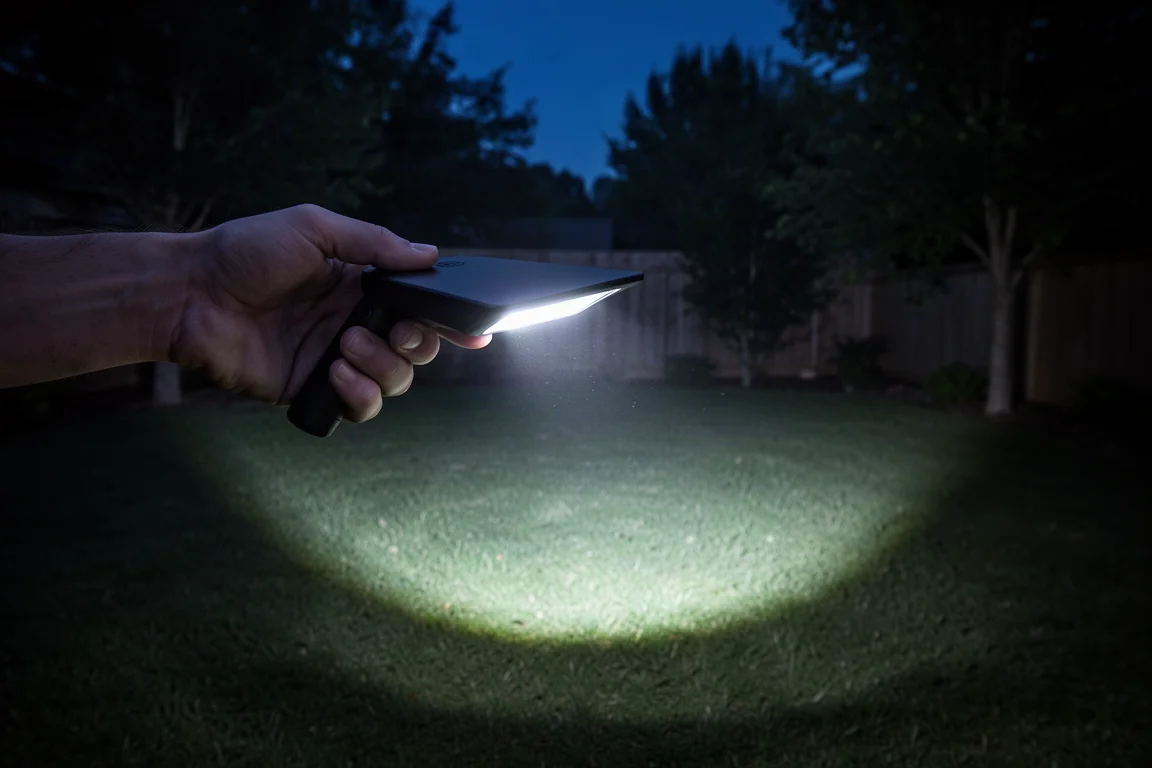
But if you are someone who rotates between a simplified EDC light and a dedicated tactical light, this light may frustrate you. Too many features is not always a good thing, and the E30 Pro is a very cool flashlight with an identity crisis: it does not quite know what it wants to be. Competition in the flat EDC space is getting fierce, and simpler options exist.
Conclusion
The Rovyvon Angel Eyes E30 Pro is a fantastically well-built flat EDC flashlight with serious output, a clever dual-stage battery indicator, a great pocket shape, and a genuinely versatile side light. Its weaknesses are all about focus: a busy three-button UI, an overeager proximity sensor, and a feature set that tries to serve EDC, tactical, and utility users at once. If all-in-one versatility appeals to you and you are willing to climb a small learning curve, it is easy to recommend at its price. If you prefer a dead-simple interface and swappable batteries, look at a more focused light instead.
Product link
View more details for Rovyvon Angel Eyes E30 Pro
This product is mentioned in the review. Check the specifications, options, and compatibility before buying.
View more details for Rovyvon Angel Eyes E30 ProFurther reading
Related Reviews
Flashlights
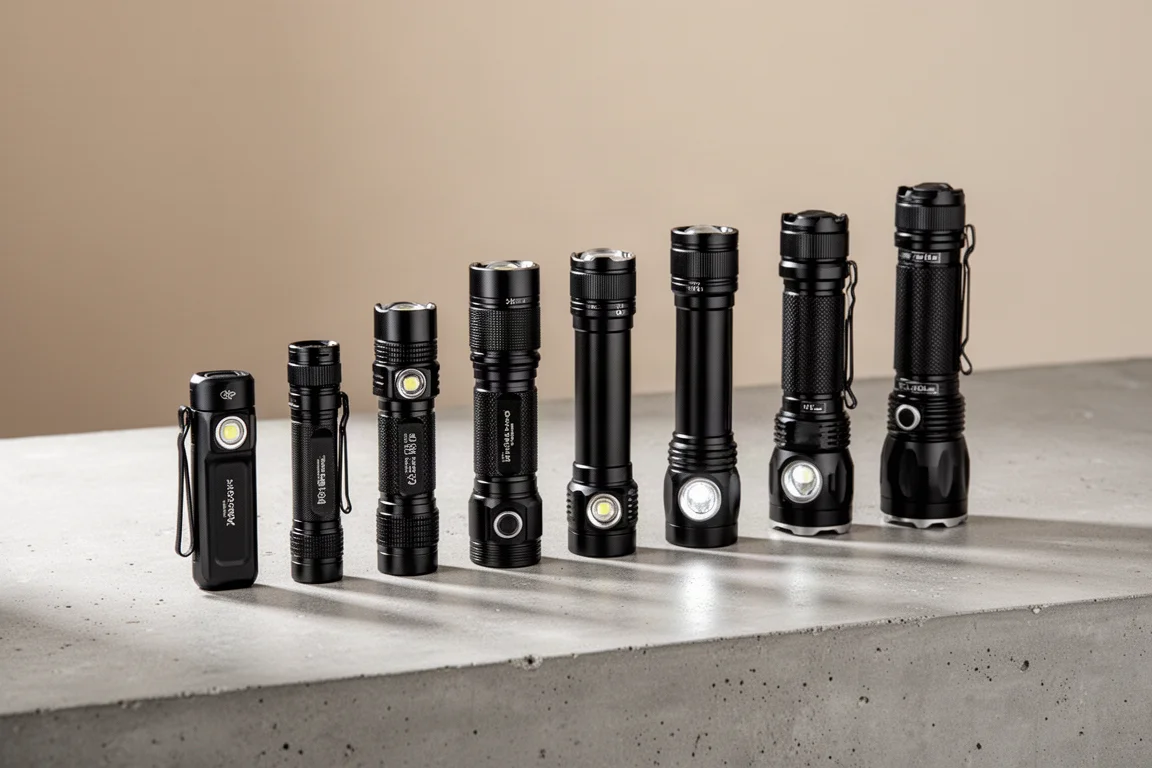
Best Flashlights 2026: Brightness, Battery, and Value Compared
We tested 18 flashlights across a wide price range to find the best performers in brightness, battery life, and durability.
Flashlights
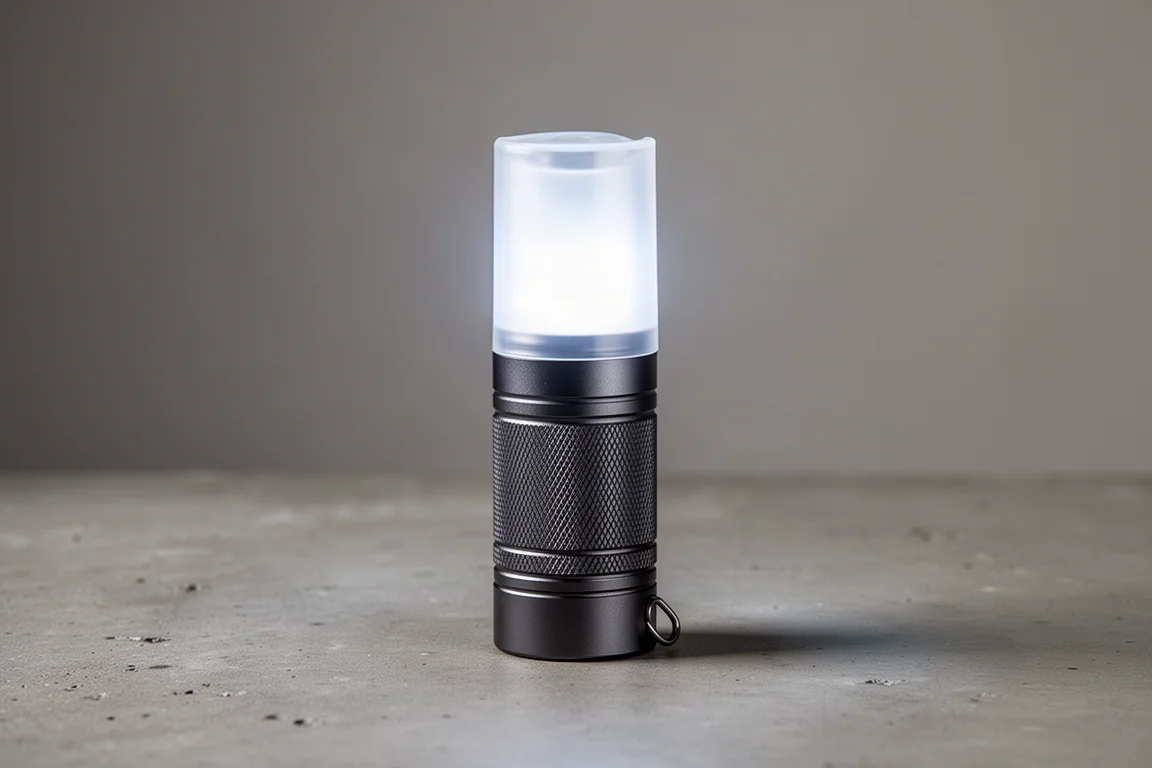
Nitecore LA10 Review: A Tiny 2-in-1 Lantern That Nails the Basics
The Nitecore LA10 pairs a pocket-sized lantern with a single AA battery, a magnetic tail cap and a five-year warranty. Here is where it shines and where it struggles.
Flashlights
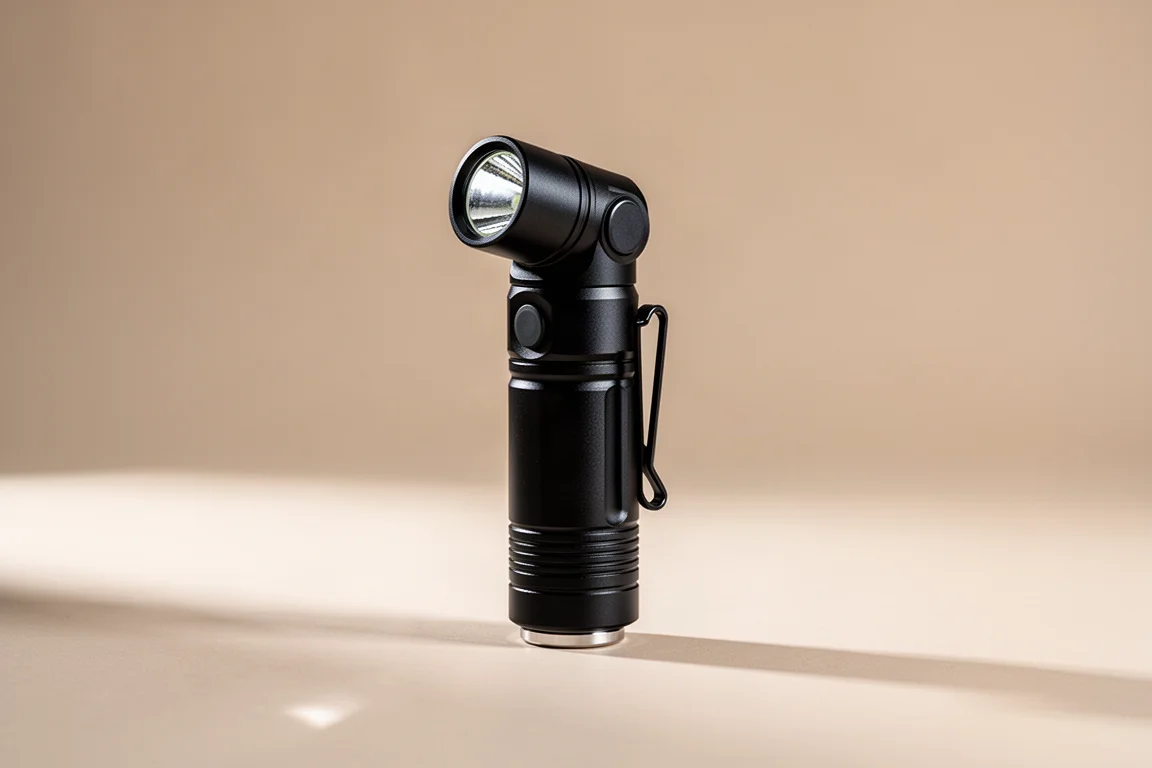
Wuben G5 Review: A Compact Everyday Carry Flashlight
The Wuben G5 is a small, rechargeable flashlight with a pivoting head, magnetic base, and color modes. Here is how it performs as an everyday carry light.