Groupsets
Rotor 1x13 Groupset Review: Hydraulic Shifting for 1x Road and Gravel Bikes
A practical look at the Rotor 1x13 groupset after real road and bikepacking miles, covering hydraulic shift feel, braking strength, gearing range, and what to weigh before buying.
Introduction
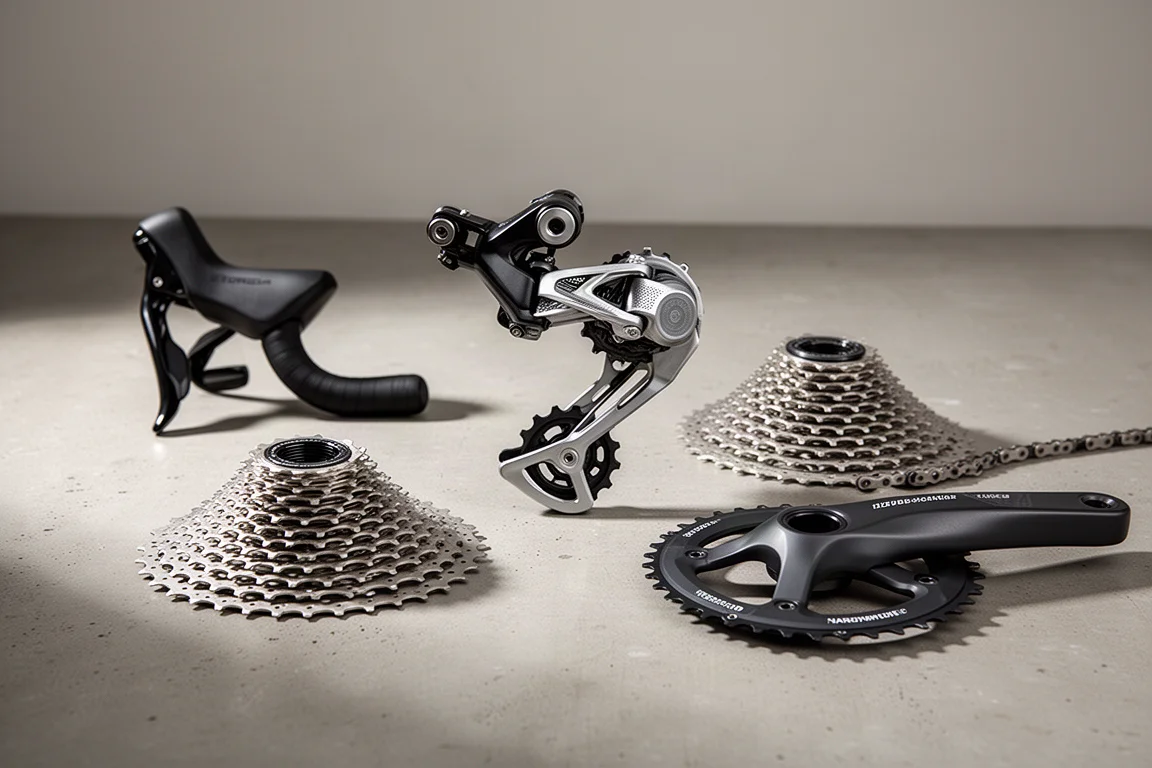
The Rotor 1x13 groupset is a 13-speed, single-ring drivetrain that replaces a mechanical shift cable with hydraulic actuation. It is an unusual approach in a market where most one-by systems still move the derailleur with a cable, and that difference shapes almost everything about how it feels to ride.

Over a mix of flat road miles and loaded bikepacking preparation, the system proved consistent. Gears arrived without skipping, and there was no need to nudge the lever to settle a shift. This review covers what stood out, what asks for a little adaptation, and who the groupset genuinely suits.
Who the Rotor 1x13 Groupset Is For
This is a groupset for riders who have already committed to a single chainring. It pairs naturally with road and gravel framesets designed around one-by from the outset, where removing the front derailleur frees up frame design rather than simply leaving an empty mount behind.
It also suits riders who want climbing gears without adding a second ring up front. A 42-tooth chainring with a 42x11 biggest gear handled flat and rolling terrain comfortably, and the same setup was considered a good match for multi-week bikepacking with a loaded bike.
Riders who race and spend long stretches in their biggest gear may want to think carefully about chainring size. For most other riding, the range on offer is less limiting than it first appears.
Shifting Feel and Lever Logic
The lever layout follows a familiar pattern: one paddle, a longer push to move into an easier gear, and a shorter click to move into a harder one. That logic is easy to pick up for anyone coming from a mechanical single-ring system.
The difference is in the feedback. Because the shift is operated hydraulically rather than by cable, the lever does not deliver the same firm, definite click associated with mechanical road groupsets. The shift still happens, but the confirmation at the lever is softer and less pronounced.
On the road, that translated into consistent, accurate shifting. There was no gear skipping, no hesitation between sprockets, and none of the small corrective bumps that mechanical drivetrains sometimes need to land cleanly in gear. Every shift settled where it should.
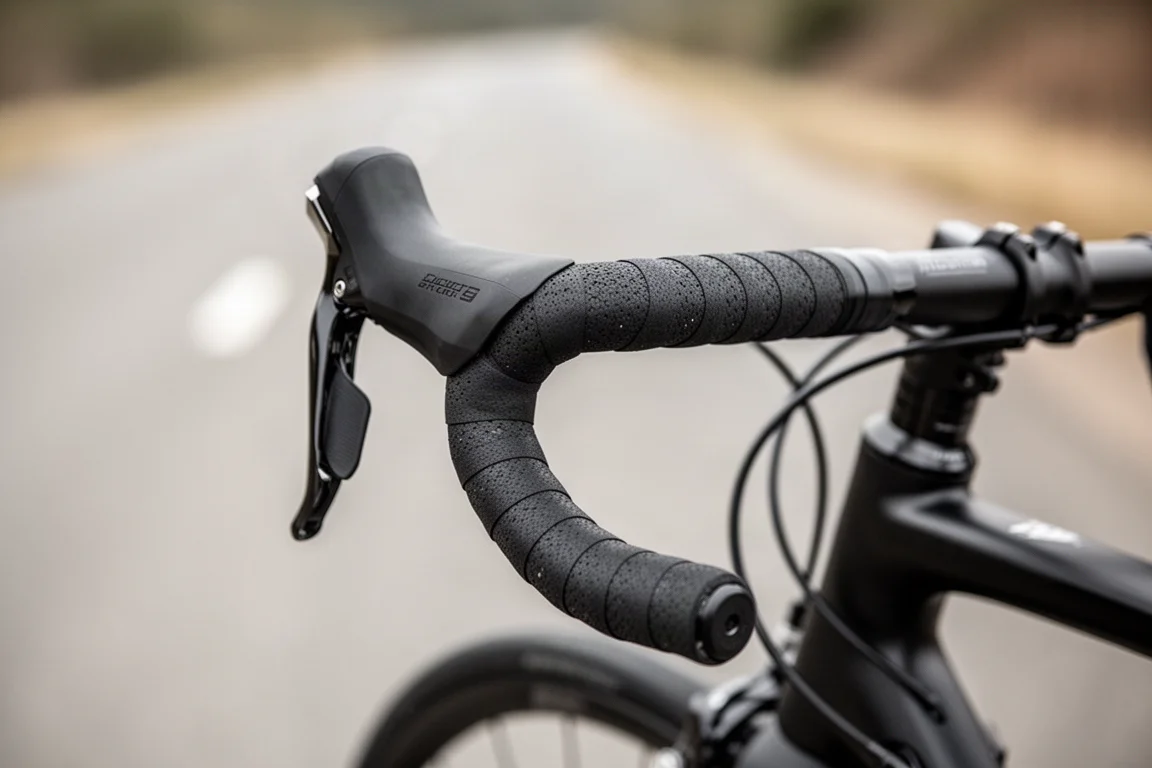
One behaviour is worth noting. Pushing the lever too far when requesting a harder gear can cancel the shift, because the system reads the longer travel as a request in the opposite direction. It may simply be a matter of learning the lever’s travel, but it is the one part of the interface that asks for practice.
Braking Performance
The brake calipers carry Rotor branding but were developed in collaboration with Magura, and the result is a notably strong brake. After bedding in, stopping power was immediately confidence inspiring, with plenty of authority at the lever.
The setup ran 160mm rotors front and rear. That combination matters on a bike that will carry luggage: with bikepacking bags adding significant weight, strong and predictable braking becomes a safety feature rather than a luxury.
For riders planning loaded trips, this is one of the clearest arguments in the groupset’s favour. The brakes felt secure on steep, technical descents and remained easy to modulate.
Gearing, Range, and the 42T Front Ring
The test bike ran a 42-tooth front ring, making 42x11 the biggest gear available. On flat terrain that proved entirely workable, and it was judged a good fit for bikepacking rather than a compromise.
Typical road builds around this system often use a 44 or 46-tooth ring, with a 44 paired to a 10-36 cassette for most riding in the UK. Riders heading to the Alps or travelling further afield might prefer a smaller front ring to open up a lower climbing gear.
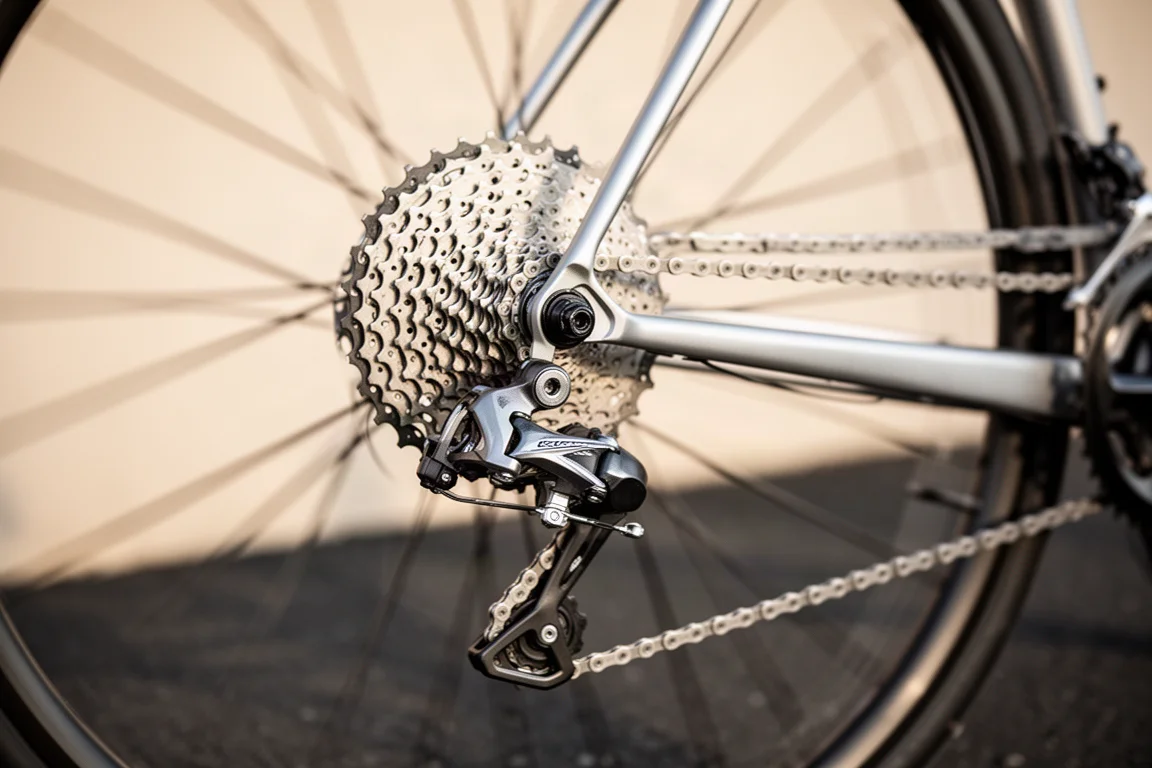
The cassette is where the 13-speed layout earns its keep. The steps are close together through the middle of the range, with one-tooth increments, before opening into larger jumps for the climbing gears. That means no awkward gaps in the cruising range, and the bigger jumps arrive when cadence is already high.
Bikepacking and Long-Distance Use
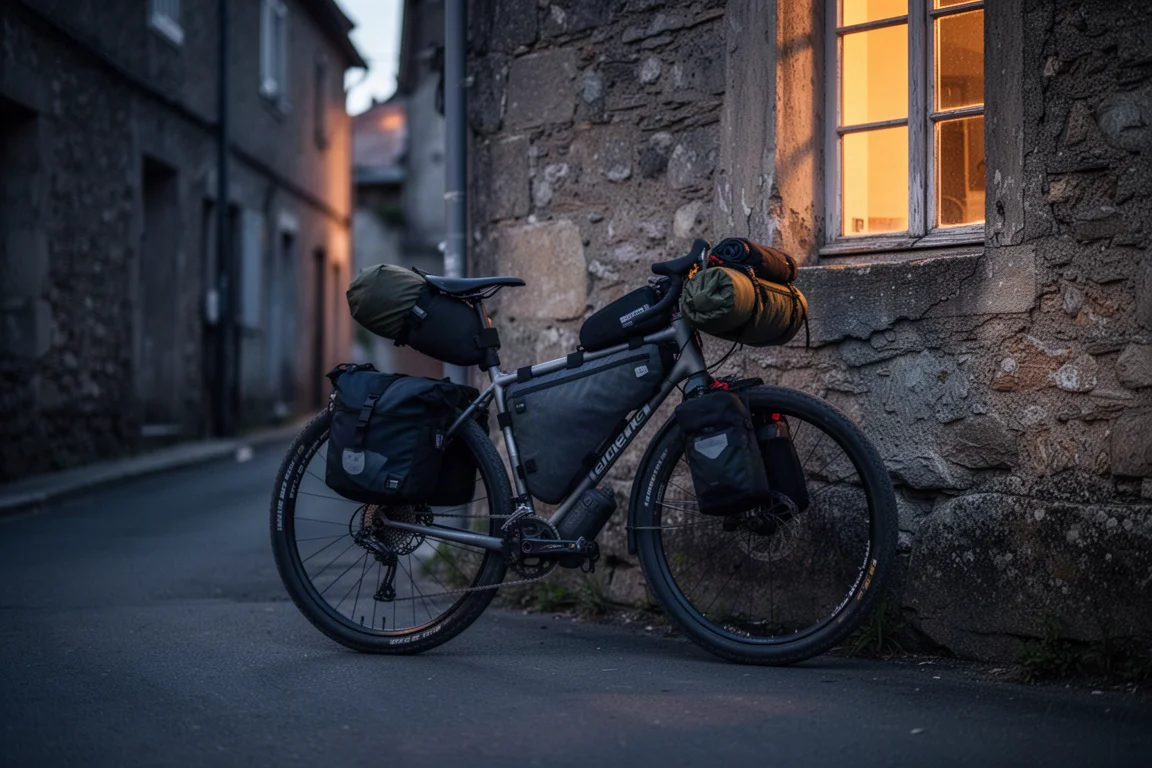
The system was prepared for three weeks of bikepacking, and that context explains several design choices. A single chainring simplifies a loaded bike, removing a front derailleur and its cable from a setup that already carries bags, tools, and spares.
The 42x11 top gear was considered sufficient for that kind of trip. There is a broader point here about gear range anxiety: many riders assume they need a bigger top gear than they actually use, and unless racing, the largest sprocket is rarely where most miles are spent.
A 42x11 setup has also been used on a cyclocross bike for a fast group ride, which suggests the range is not as restrictive as the numbers alone imply.
Things to Consider Before Buying
The most obvious adjustment is the lever feel. Anyone moving from a mechanical road groupset should expect a softer, less mechanical click at the shifter, which takes a ride or two to trust.
Lever travel is the second consideration. Over-shifting into a harder gear can result in no shift at all, so a measured push is better than a firm one until the lever’s behaviour becomes second nature.
Finally, think honestly about your terrain and chainring choice. A 42-tooth ring with a 42x11 top gear worked well on flat roads and loaded trips, but riders heading into long alpine climbs may prefer a smaller ring, and riders who race may want a larger one. The rest of the system is designed to work within whichever range you choose.
Buying Advice
This groupset makes the most sense for riders who have already decided that a single chainring is right for them, particularly on frames designed around one-by from the start. It rewards a rider who wants clean, repeatable shifts and powerful braking on a bike that will be loaded and ridden far.
If you value a hard, mechanical click at the lever, or you want the most familiar setup experience, a cable-operated system will feel more natural. If you want a wide 13-speed spread with tight mid-range steps, strong brakes, and a lever that shifts the same way every time, this is a genuinely convincing option.
It is also worth matching the chainring to your riding before you commit. Get that right and the rest of the system behaves.
Conclusion
The Rotor 1x13 groupset is a distinctive take on the single-ring drivetrain, using hydraulic actuation to deliver consistent, accurate shifts and a very strong brake package. Its mid-range gearing is tight, its climbing gears are sensibly spaced, and a 42-tooth ring proved more capable than the numbers suggest.
The trade-offs are the softer lever feedback and the need to learn the lever’s travel. Neither is a dealbreaker, but both are worth understanding before buying. For riders building a one-by road or gravel bike for long days and loaded trips, this is a groupset that earns its place.
Product link
View more details for Rotor 1x13 Groupset
This product is mentioned in the review. Check the specifications, options, and compatibility before buying.
View more details for Rotor 1x13 GroupsetFurther reading
Related Reviews
Groupsets
Campagnolo Super Record 13-Speed Groupset Review: Iconic Shifting, Real Trade-Offs
An early look at Campagnolo's 13-speed wireless groupset, covering shift layout, ergonomics, braking performance, and what to weigh before buying.
Groupsets
L2 RX 2x12 Groupset Review: A £200 Cable-Operated 12-Speed Build Kit
A first look at the L2 RX 2x12 groupset bundle, covering shifter feel, derailleur quality, real component weights, and what to budget for.
Groupsets
L2 RX Hydraulic Group Set Review: Strong Brakes, Fragile First Impressions
A 12-speed hydraulic groupset with excellent braking and easy multi-gear shifting, held back by a snapped left lever and a fiddly reach adjustment.