Cycling Tech
Road Bike Tech Roundup: Seven Recent Launches Worth a Closer Look
Seven recent road cycling launches, from a long-awaited Campagnolo power meter and value-focused Hunt wheels to the tenth-generation Giant TCR.
Introduction
New road cycling hardware tends to arrive in waves, and the most recent one has been unusually varied. There is a long-awaited power meter from one of the sport’s most storied component makers, a refreshed wheel range aimed at riders who want more speed without a five-figure spend, and a tenth-generation race frame that quietly resets what a lightweight all-rounder can be.
There is also the stranger end of the spectrum: a real-time aerodynamic measurement system that until now has belonged mostly to wind tunnels, a Swiss watch collection that borrows its dials from cycling’s golden era, and a police fleet of Italian race bikes that raises more questions than it answers.
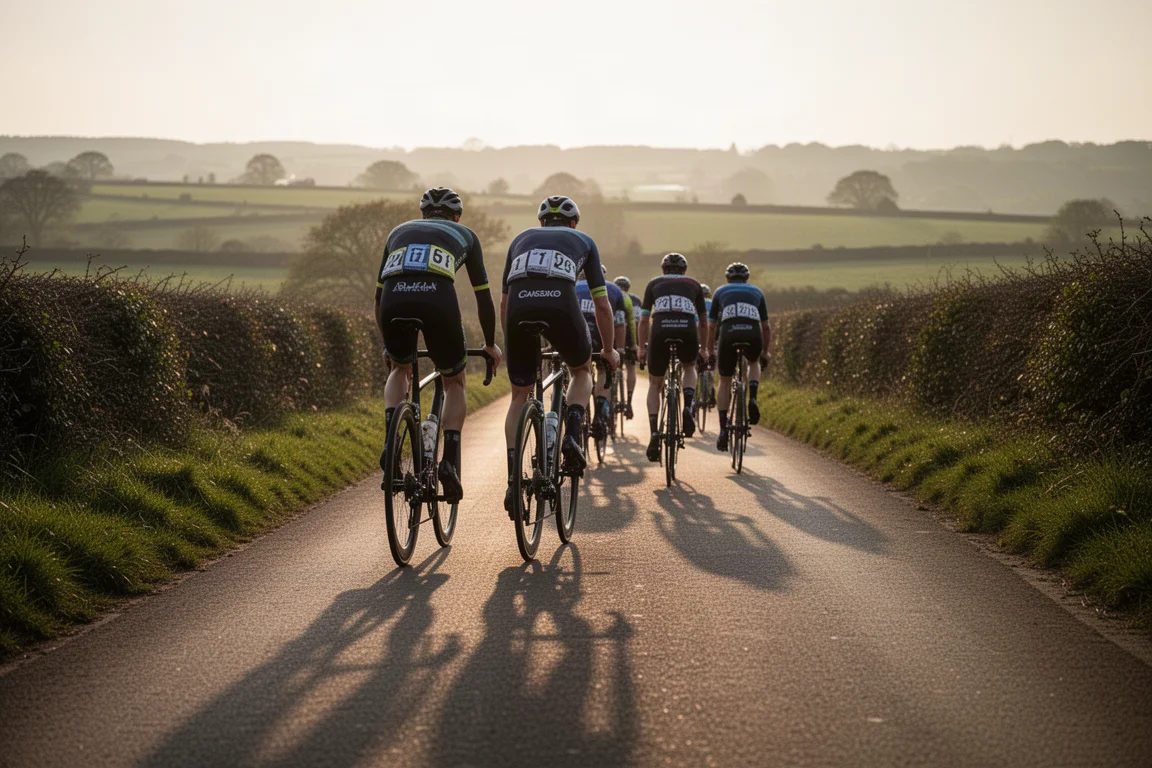
This roundup covers seven launches worth knowing about. Some are straightforward purchases, others are signals of where the sport is heading, and one or two are simply interesting to watch.
How We Assessed These Launches
We looked at four things: what is genuinely new, how it fits a real riding need, what the numbers claim, and what remains unproven. Where a figure is a manufacturer claim, we treat it as a claim rather than a measured result. Where pricing was not confirmed, we say so.
Colnago V3Rs: Police Fleet Paint, Race Bike Bones
Dubai Police have added a fleet of custom-painted Colnago V3Rs road bikes, finished to match the paint schemes of the force’s patrol cars. The department is well known for running an unusual fleet of supercars, so the bikes fit a familiar pattern of visible, image-led equipment.
The choice of the V3Rs rather than the newer V4Rs is notable for anyone who follows Colnago’s range closely, since the V3Rs is the older of the two platforms. No details have been shared about the riding kit that accompanies the bikes, which matters as much as the frame when it comes to covering ground quickly.
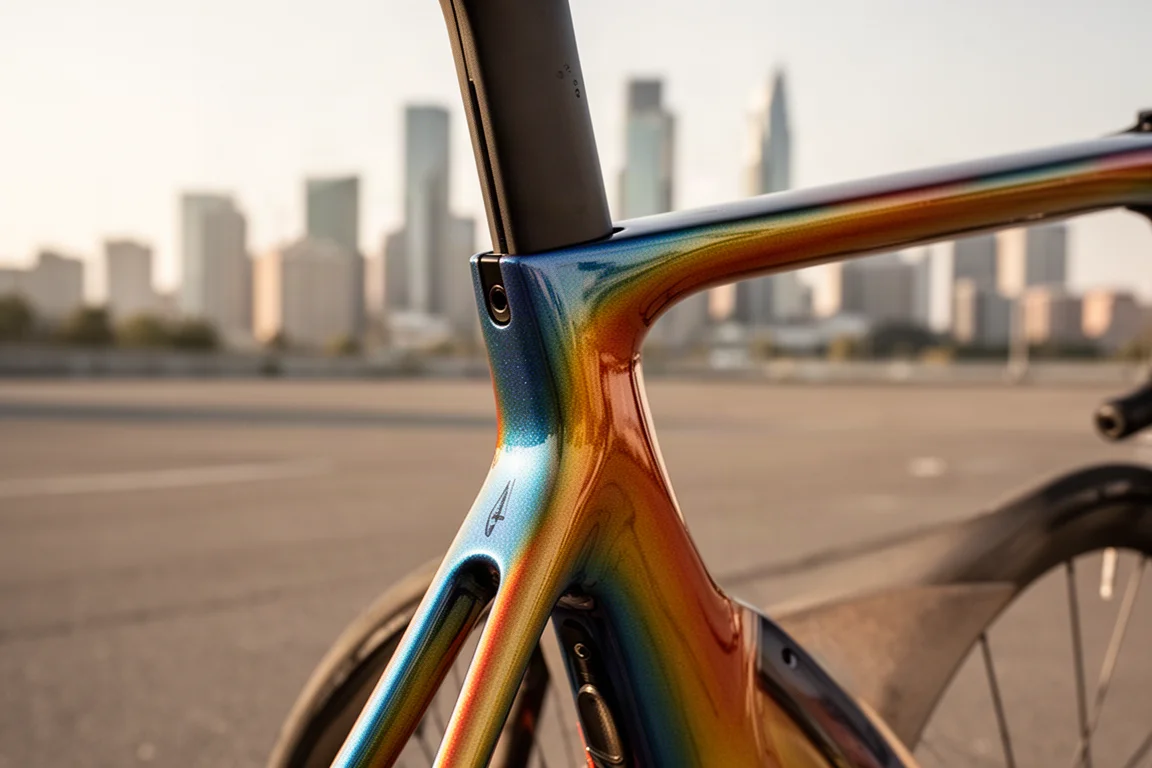
For most riders this is a curiosity rather than a buying signal. The takeaway is simpler: the V3Rs is a proven Colnago race frame that is still being specified for high-profile fleets, and it remains a credible choice for a rider who wants a classic Italian race bike.
Campagnolo Super Record Wireless Power Meter: Finally Here
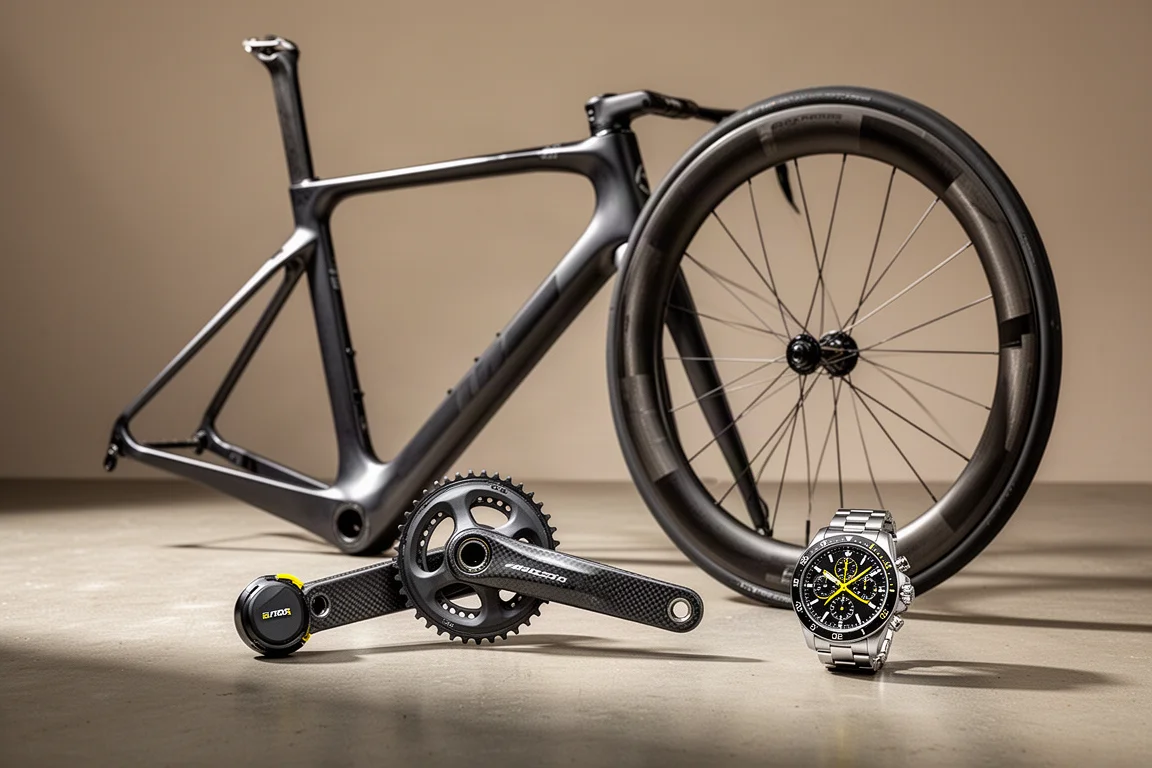
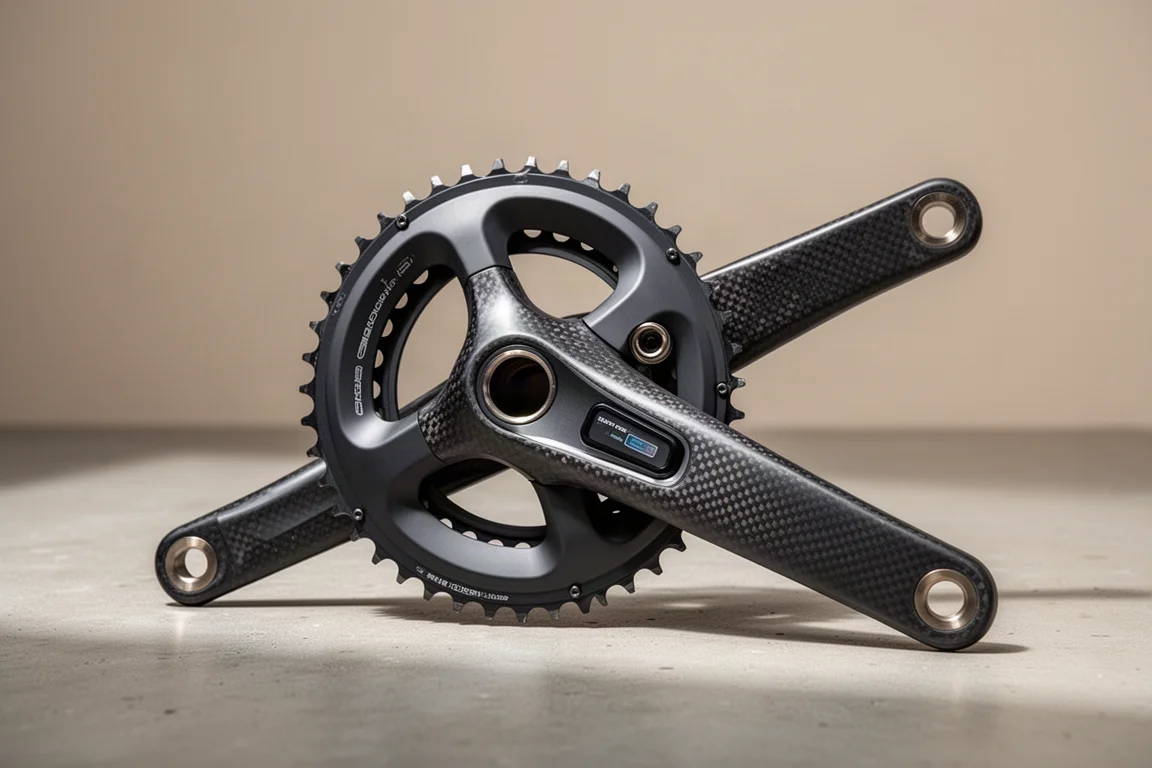
Campagnolo has released a power meter for its Super Record Wireless groupset, a product that was teased when the groupset launched and has taken a long time to arrive. The unit sits on the drive side of the crankset.
The headline claims are a plus or minus 1% accuracy figure, a hollow carbon crankset with a titanium axle, and a claimed weight of 656g for a 172.5mm crank arm length with 29/45 chainrings. Available crank lengths are 170mm, 172.5mm and 175mm. For context, comparable Dura-Ace cranksets are quoted between 685g and 696g, while SRAM’s Red comes in at around 570g for a 175mm crank with 48/35 chainrings. Crankset weights are never a perfect like-for-like comparison, because gearing choices and chainring sizes differ between brands.
The battery is rechargeable and serviceable, charged by a magnetic cable that attaches to the outer face of the outer chainring, and it uses the same charger as the Super Record Wireless groupset. Claimed runtime is five weeks per charge, based on a 500km riding week at 20°C.
Two things are worth flagging before buying. The power meter is an additional cost on top of an already expensive groupset, and pricing was not confirmed at launch. Real-world accuracy and how cleanly the unit integrates with the My Campy app are the two areas that will decide whether it justifies the outlay.
Hunt Carbon Disc Wheels: Sensible Speed for Less
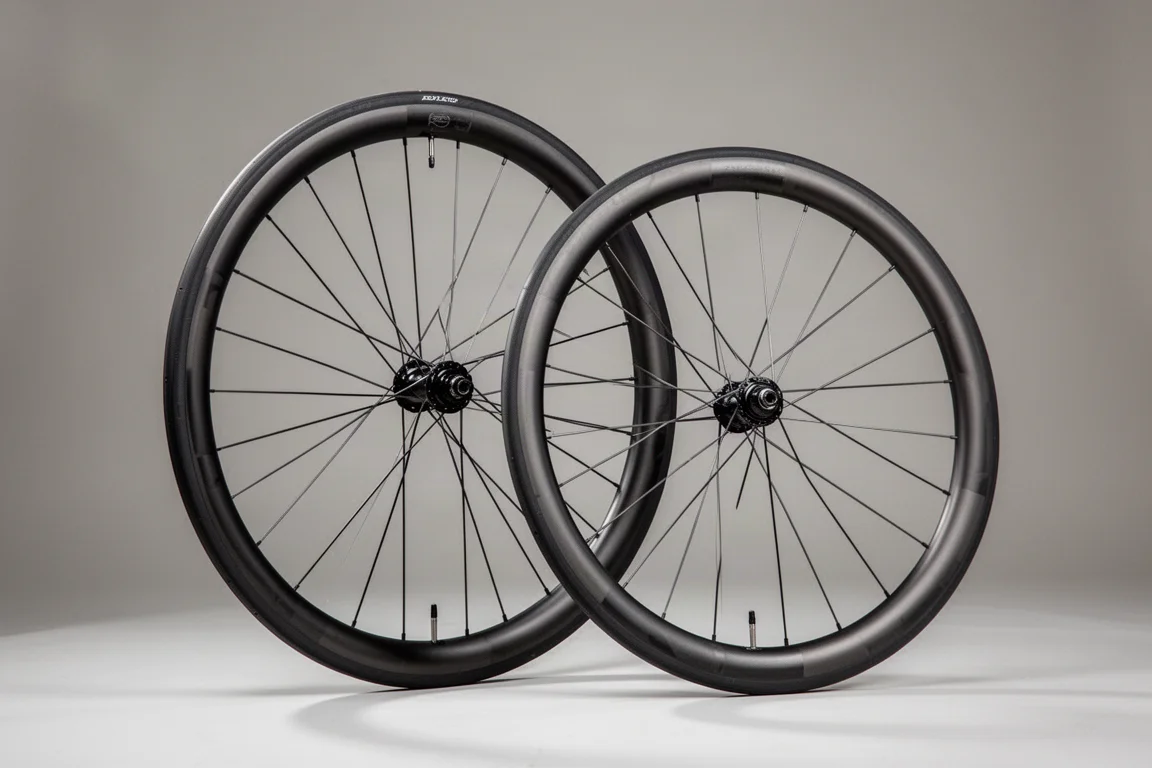
Hunt has refreshed its Carbon Disc range, previously known as the Carbon Aero Disc range. The headline numbers are a 22mm internal rim width that accommodates tyres from 25mm up to 50mm, and a 30mm external width. That tyre range makes the wheels unusually flexible across road, endurance and light gravel setups.
The rims are hooked rather than hookless, which plenty of riders still prefer. Spokes are triple butted, the freehub offers 36 teeth and 10 degrees of engagement, and the range comes in 30mm, 40mm and 50mm depths with claimed weights between roughly 1,433g and 1,464g.
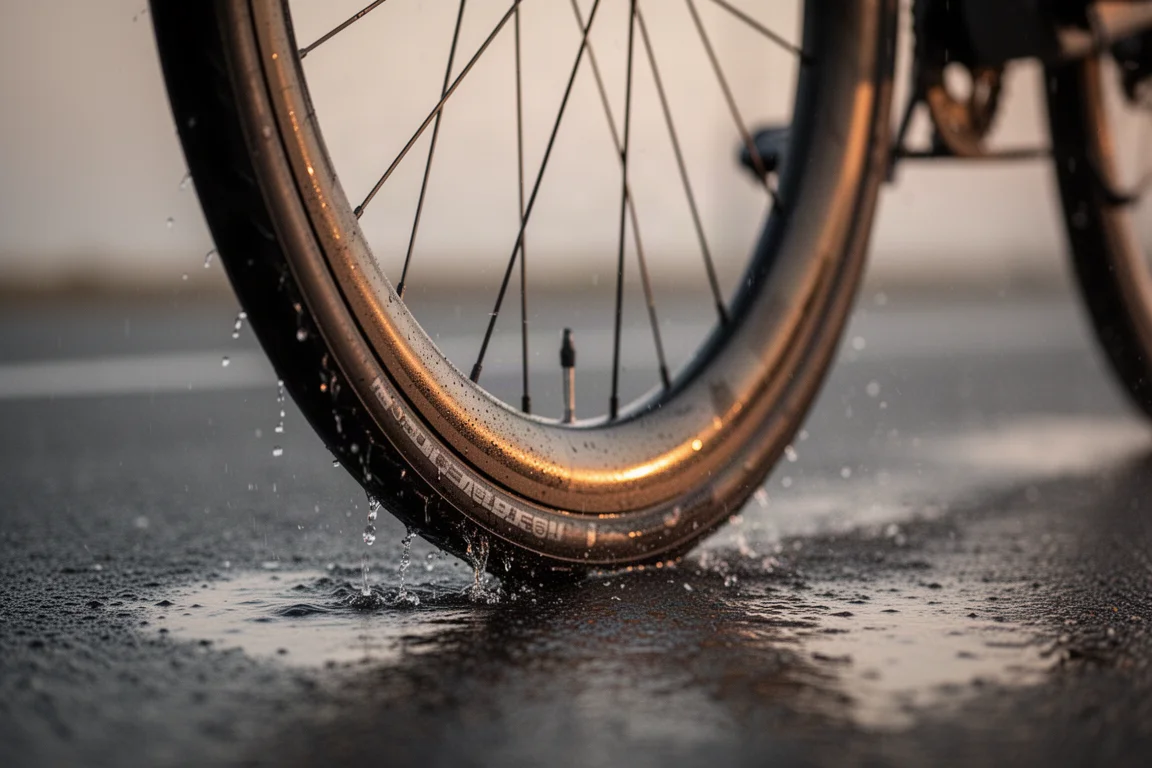
What you give up compared with the top of the market is mostly carbon spokes and a slightly narrower internal width than the fastest rims. In practice that is a reasonable trade. Pricing starts around £779 or $979 for the 30mm depth, which places the range firmly in upgrade territory for riders on stock wheels rather than in the super-wheel bracket. Engagement is a little slower than premium hubs, though it is unlikely to be something most riders notice on a club run.
Body Rocket: Real-Time Aero Feedback
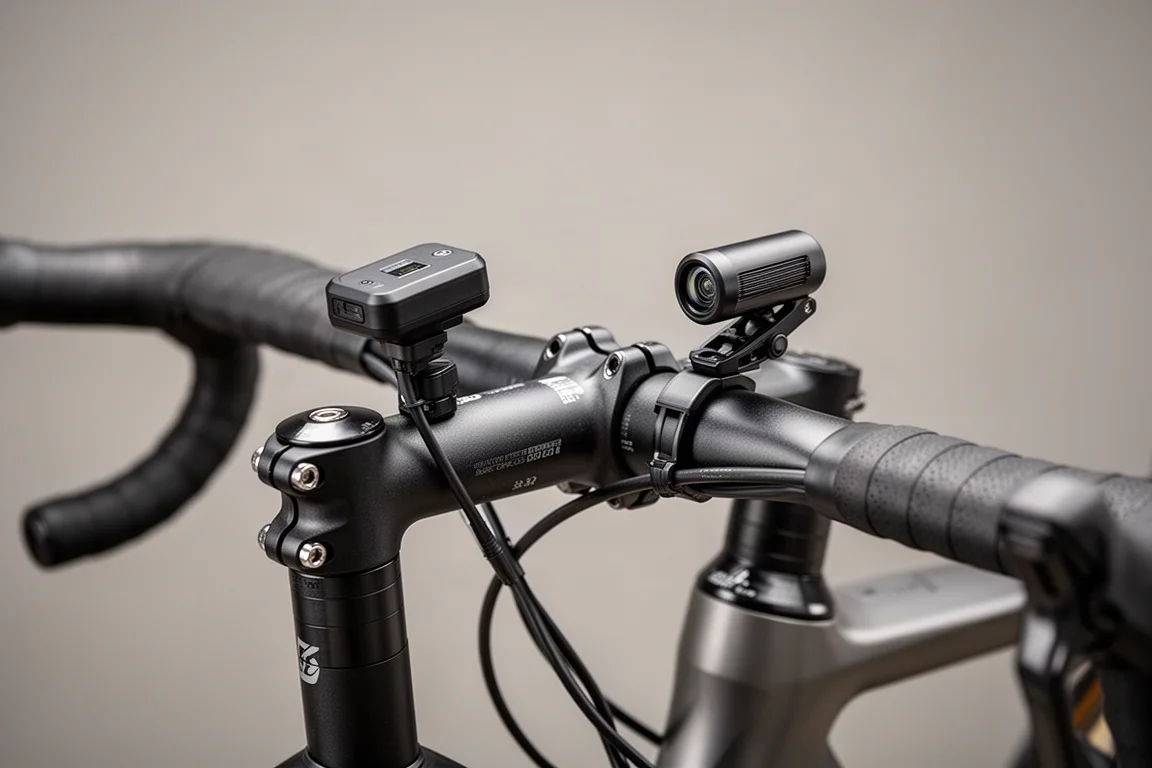
Body Rocket is described as the first and only real-time aerodynamic drag force measurement system. It uses four sensors at the bike’s contact points, including one on the stem and one on the saddle, paired with an out-front air speed sensor. By combining air speed with the force applied to the rider by air resistance, the system calculates a CdA number.
The system was developed initially for time trial use, and it is now being used by Olympic triathlete Christian Blumenfeld on a Giant Propel, since road bikes feature in triathlon competition. The appeal is practical: wind tunnel time is expensive, and it is common to pay around $1,000 an hour once engineers and facilities are accounted for. It is also limited by time, because a short session makes it hard to build a feel for a position, and small movements of the head or shoulders can change the numbers significantly.
Training with live drag numbers offers a constant feedback loop and the ability to fail fast, testing many positions rather than guessing. The system is not something most riders can adopt today. The more interesting question is how quickly this kind of measurement shrinks and integrates into ordinary road bikes over the next five to ten years.
Bravur Team Heritage: Cycling History on the Wrist
Bravur, a Swedish watch brand, has released a Team Heritage collection of three watches whose dials take inspiration from iconic cycling team kits. The designs reference teams from cycling’s past, including the squad that Raymond Poulidor rode for, and the connection to the sport runs deeper than colour alone.
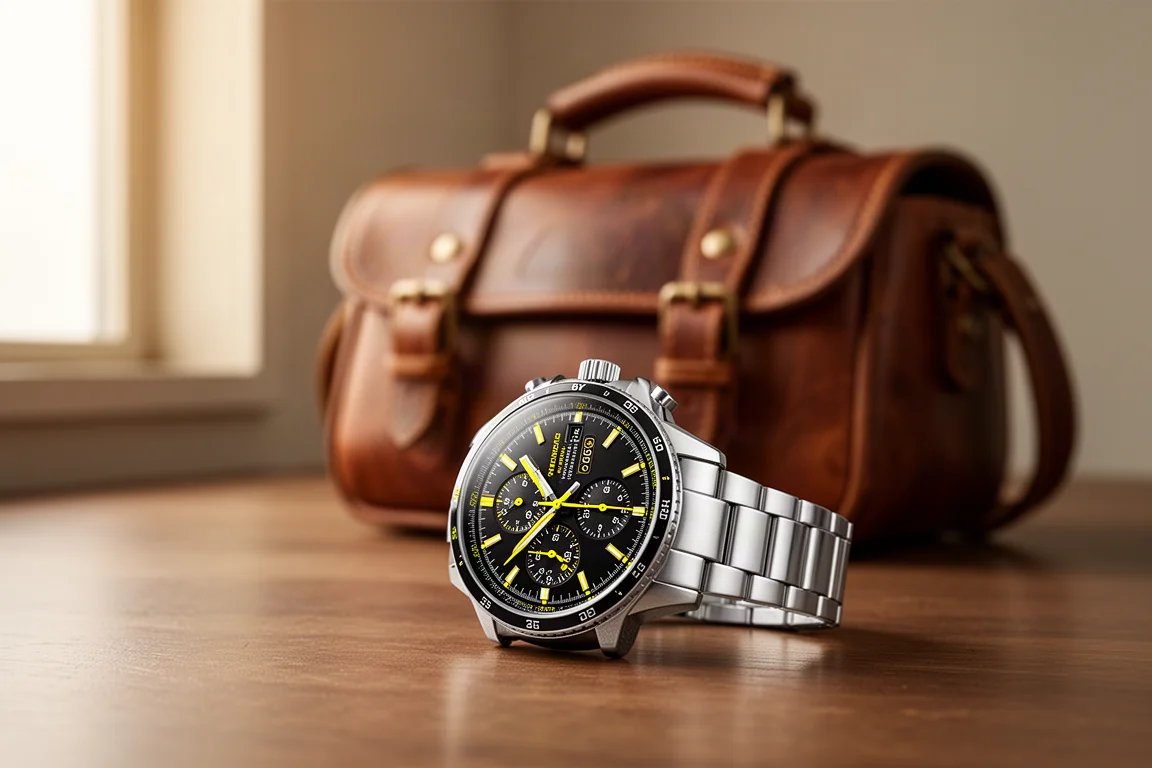
Details include an upside-down 13 on the dial, a Team Heritage logo on the case back, and a Swiss automatic movement. One of the three has a black and yellow dial with two levels of depth. Each watch is delivered in a real leather Team Heritage handlebar bag, which doubles as the packaging and can be used on the bike.
That bag is a leather clamshell and not particularly waterproof, so it suits a fair-weather cafe ride rather than daily commuting. The collection is a small, well-considered nod to cycling culture, and it will appeal most to riders who already know the teams the dials reference.
Giant TCR: Tenth Generation Refinement
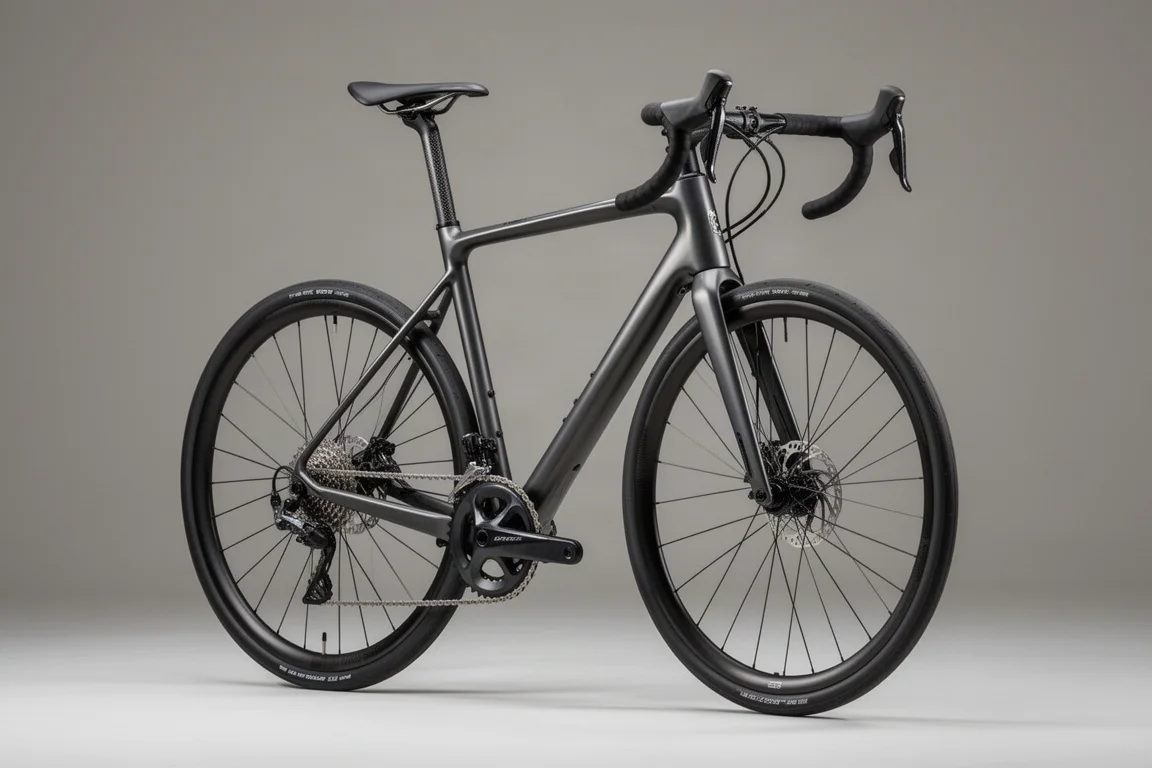
The tenth generation Giant TCR is a facelift rather than a redesign on the surface, with most of the changes hidden under the paint. Giant claims the new frameset is 10% lighter, 5 watts faster and slightly stiffer than the ninth generation. Claimed frameset weight is 690g without paint, 75g less than before. There is also a claim of 12 watts faster total system efficiency, which covers the frame plus everything attached to it rather than the frame alone. Integrated cables and hoses at the front contribute to that.
The TCR now sits closer than ever to the Propel: just 155g lighter and 5 watts slower. Giant’s own product planning has acknowledged the question of when the two platforms might converge. As a complete build, the TCR comes in at around 6.4kg, against roughly 6.23kg for an S-Works Aethos with Dura-Ace.
Part of the story is manufacturing. Giant owns its factories in Taiwan and has moved from laser cutting carbon fibre pieces to a cold blade cutting process, which avoids exposing the material to excess heat. Prices range from $3,200 or £2,699 for a mechanical 105 12-speed build up to around $12,500 or just under £12,000 for the flagship model.
Cadex Max 40: Light, Stiff and Integrated
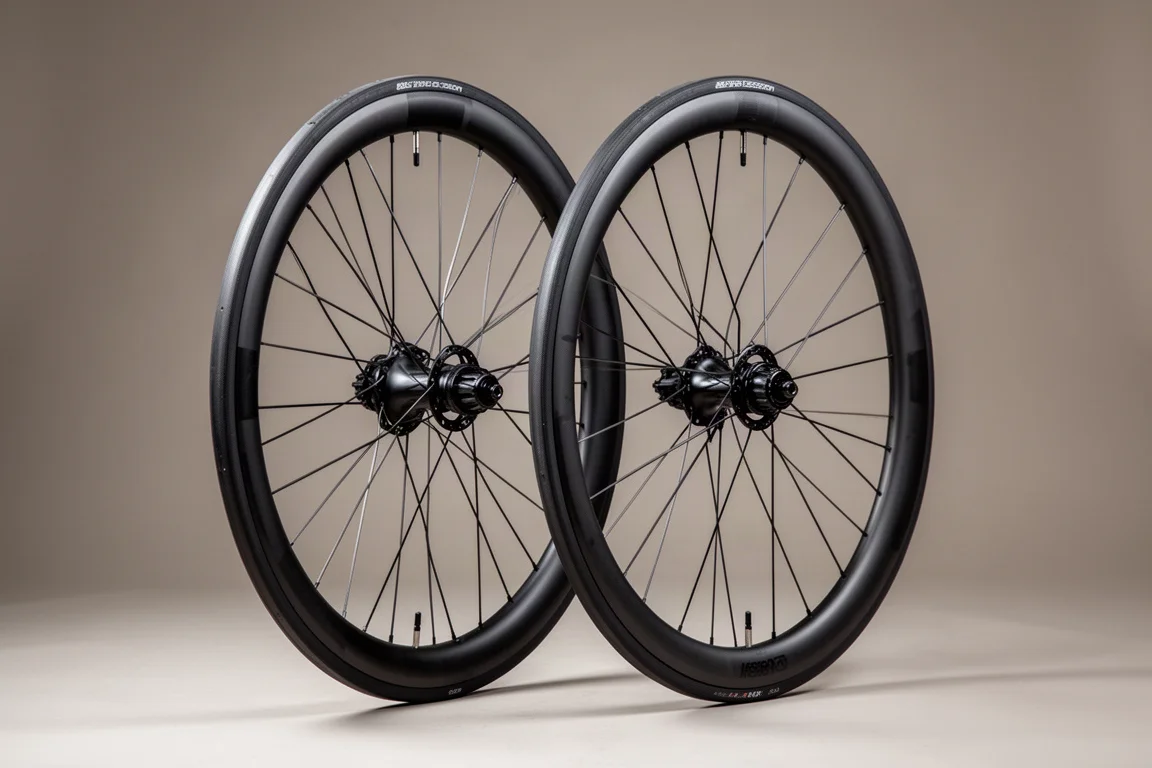
The Cadex Max 40 wheelset is fitted to the flagship TCR build, and it is available aftermarket for around £3,500. The construction is unusual: the hub flange is integral to the spokes, which helps keep weight down and stiffness up.
Claimed weight sits in the 1,200g region, which is very light for a road wheelset. That combination of low weight and high stiffness is what gives the flagship build its character, and it is the part of the package that stands out most on the road. The trade-off is that an integrated spoke and flange design leaves little room for an inexpensive repair if a spoke is damaged.
Buying Advice
Of the seven, two are straightforward purchases for the right rider. The Hunt Carbon Disc range is the easiest recommendation: hooked rims, a versatile 22mm internal width, three depths, and pricing that starts around £779 or $979. If you are on stock wheels and want a meaningful step up without super-wheel money, that is the sensible place to start.
The Giant TCR is the other clear option, with a price spread that runs from a mechanical 105 build up to a flagship model. Riders who want the lightest and stiffest version should look at the top of the range, while most riders will get the majority of the experience further down the line-up.
The remaining products are more specialised. The Campagnolo power meter makes sense if you already run Super Record Wireless and want native integration, but pricing and real-world accuracy are still open questions. Cadex Max 40 wheels reward riders who want the lightest possible build and can accept the repair implications. Body Rocket is a training tool for athletes chasing aerodynamic detail rather than a consumer upgrade. The Bravur Team Heritage watches and the Colnago V3Rs police fleet are, in different ways, about enthusiasm rather than necessity.
Conclusion
This batch of launches shows a category in good health: lighter frames, more capable mid-priced wheels, and measurement tools moving out of the wind tunnel and onto the road. The safest buys are the ones with clear use cases and confirmed pricing, while the more experimental products are worth watching as the technology matures. If you are upgrading this season, start with wheels or a frame that fits how you actually ride, and treat the rest as optional extras.
Further reading
Related Reviews
Cycling Tech
Best Cycling Tech: Nine Standout Products Worth Considering
Nine pieces of cycling kit that earned their place through long-term use, from a keenly priced World Tour race bike to a multi-tool that has survived two years of hard riding.
Cycling Tech
Best Pro Peloton Bikes and Components 2023: 8 Standout Upgrades
A roundup of the most technically interesting pro peloton bikes and components for 2023, from the Cannondale SuperSix EVO to Shimano Dura-Ace and Continental GP5000 S TR tires.
Cycling Tech
Bike Tech Roundup: Five Standout Upgrades Worth a Closer Look
A four-season tubeless tire, a featherweight climbing wheelset, a hangar-free drivetrain and two pairs of gravel shoes, assessed on the details that matter.