Gravel Bikes
Ridley Astr RS Review: A Fast, Stiff Gravel Race Bike With Big Tire Clearance
The Ridley Astr RS pairs Falcon RS aerodynamics with clearance for very wide gravel tires. Here is what it does well, and where it asks for compromises.
Introduction
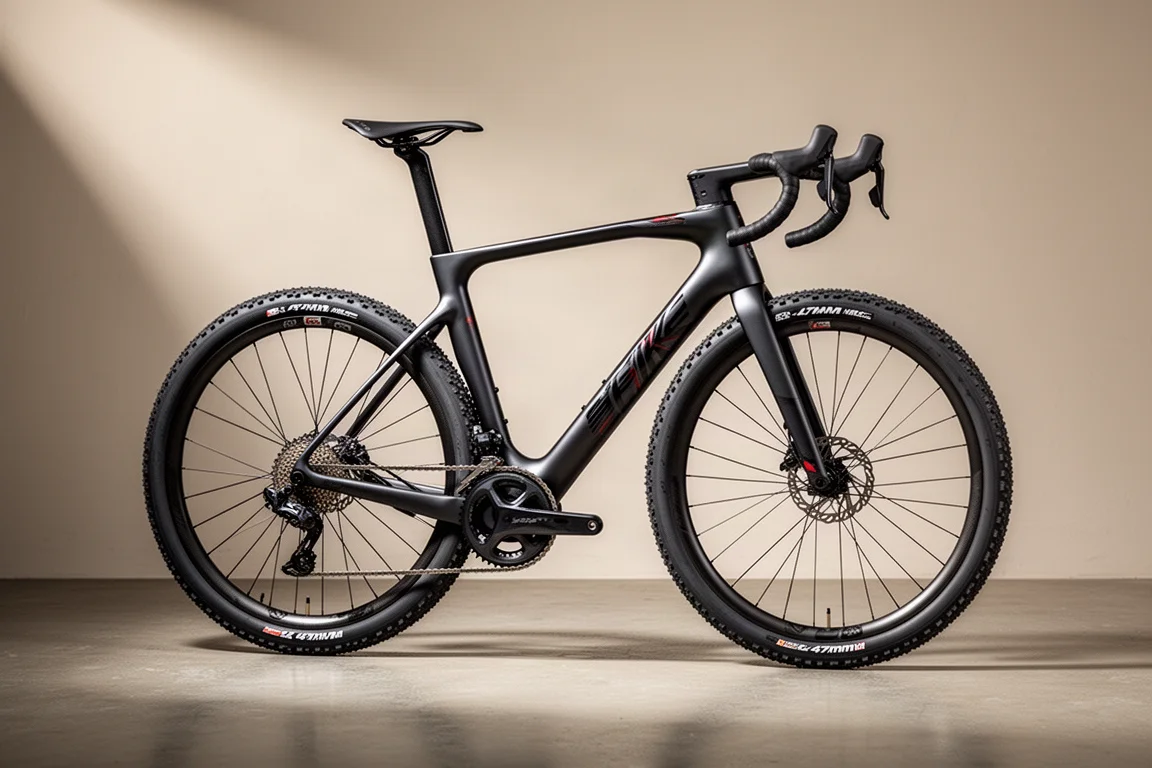
The Ridley Astr RS is the Belgian brand’s newest and fastest gravel race bike, and it joins the Kanzo Adventure and Kanzo Fast in a freshly developed family of models. It first appeared in prototype form at Unbound a few months ago, and the production version keeps the same brief: aerodynamic efficiency borrowed from the Falcon RS race bike, full internal routing, and clearance for genuinely wide gravel tires. Ridley places it at the sharp end of gravel racing, alongside bikes such as the Canyon Grail, Enve MOG, BMC Kaius, Wilier Rave SLR, and Trek Checkmate.

The line-up starts with the Astr Essential and runs up to the range-topping RS build tested here, which arrived with a SRAM Red AXS Explore groupset, new wide carbon wheels, 47mm tires, a 3D printed saddle, and a one-piece carbon aero handlebar and stem. Ridley prices the family from 3,300 at the Essential end up to over 11,500 for the RS model.
Who This Bike Is For
This is a bike for riders who race gravel, or who ride fast gravel the way a race demands. Every design decision points that way: the narrow one-piece cockpit, the aero tube profiles, the stiff frame, and the wide tire clearance all serve speed over long distance rather than comfort or cargo capacity.
Ridley is explicit that the Astr line trades versatility for pace. Riders who want bikepacking mounts, fork mounts, or a more relaxed all-round character are pointed toward the Kanzo Adventure instead. If your priority is turning a fast group ride or a race into a personal best, the Astr RS is built for exactly that job.
Main Strengths and Straight-Line Stability
The Astr RS carries obvious visual evidence of its Falcon RS heritage. The deep head tube, the way the fork crown flows into the down tube, the kinked down tube profile, the oversized bottom bracket area, and the dropped rear stays and chainstay all exist to move air efficiently around the frame.
On the road and on gravel, the result is a bike that feels rock solid in a straight line. It holds its line with very little input, which is exactly what you want when you are travelling fast in a tight bunch or threading a narrow rut. The narrow handlebar stretches the rider out into a compact, aerodynamic position, and the swept-back tops, flared drops, and grippy bar tape make that position easy to live with. The fit is well judged too: a size medium measures around 56cm and gave a comfortable reach to the hoods for a 181cm rider. The complete size medium build weighed 7.6 kg without pedals, which is light for a gravel bike with this specification and comparable to many road bikes.
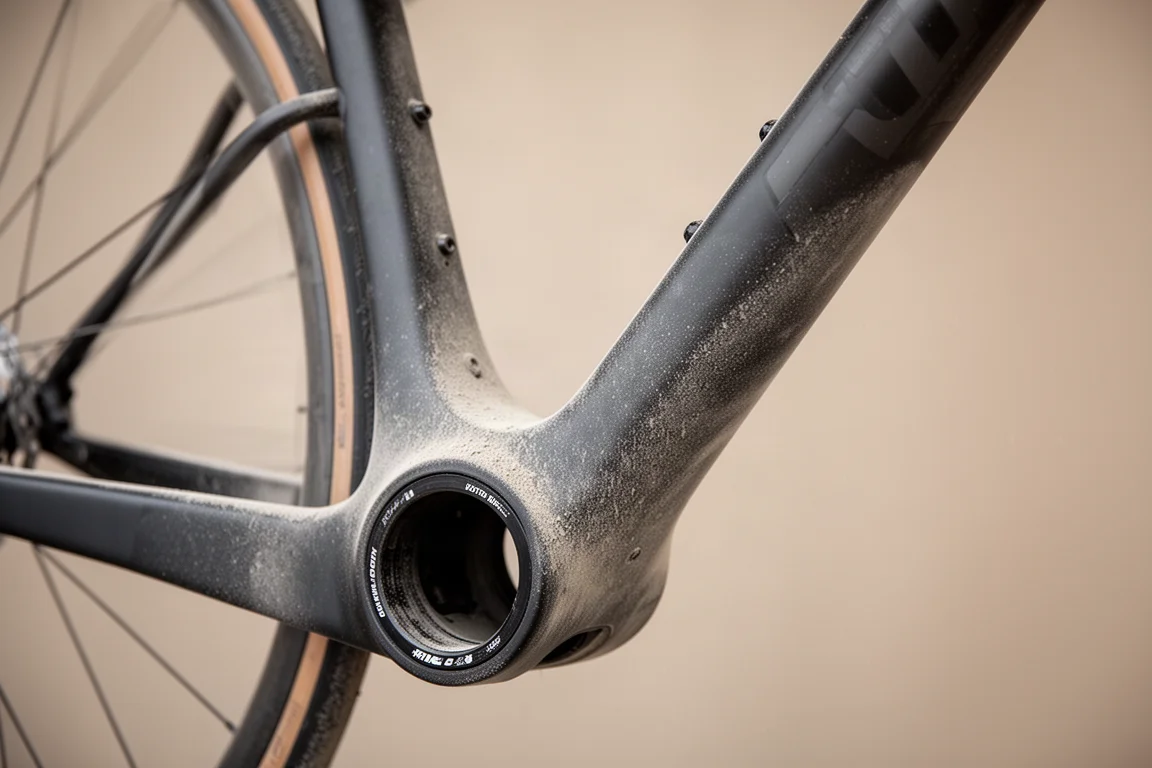
Stiffness is the other defining trait. Even with 47mm tires run at low pressures of around 20 psi, the frame stays firm and direct, so power goes where you put it and the bike never feels vague under load. For a gravel race machine, that combination of aerodynamic positioning and drivetrain stiffness is the core of the appeal.
Frame Details and Tire Clearance
Tire clearance is where the Astr RS makes its strongest practical case. In a 1x setup the frame accepts tires up to 52mm wide, and it ships with 47mm rubber. Fit a front derailleur for a 2x drivetrain and clearance drops to 47mm, which is still a meaningful margin over the 42mm limit of the Canyon Grail. For riders who have watched gravel tires grow from 36mm to 40mm to today’s 45mm standard, that headroom matters.
Mounting points are deliberately limited. There are top tube mounts with a cover that keeps the profile smooth, though the cover is not colour matched. There is a third bottle cage position and three mounts on the down tube, with lower and higher positions so you can run a bottle low when a frame bag is fitted. Ridley also developed an optional frame bag with Apidura in a wind tunnel, available later this year, which bolts to three points on the frame and acts as an aerodynamic fairing. There are no fork mounts and no fender or mudguard mounts.
The Astr Essential shares the same frame shape, details, and tire clearance but uses a lower grade carbon fibre, which takes frame weight to around 1,000g against the sub-900g figure of the RS. The Essential also uses a round seat post instead of the D-shaped aero post on the RS, which makes it easier to fit a standard or suspension post.
Ride Quality and Handling Trade-offs
The narrow cockpit and heavy, stable steering that make the Astr RS so quick in a straight line do cost agility. Turn-in feels slow, and when riding on the hoods the bike can feel ponderous through tight, technical corners. It rewards commitment to a fast line rather than playful direction changes.
Ride quality over rough surfaces is the other point to weigh. With 47mm tires run at pressures around 20 psi you might expect a plush feel, but the frame stays firm, and high-speed sections over exposed rock can feel jarring. It is not as smooth as a Giant Revolt or an Enve MOG. That stiffness is a deliberate part of the race-focused design, but it is worth understanding before you commit.

For riders who spend most of their time on fast, flowing gravel, those characteristics are a fair trade for the speed and stability on offer. For riders who mix in rough, technical terrain, the compromise is more noticeable.
Price and Value
Because Canyon sells direct to customers, an equivalent Canyon Grail costs considerably less. The Astr RS is also around 700 more than a Trek Checkmate with a comparable groupset, though it undercuts a BMC Kaius. That places it firmly at the top end of what buyers expect to pay for a carbon gravel race bike with a new SRAM Red AXS Explore groupset.
The absence of mudguard mounts is also a missed opportunity. The Astr is designed for racing, but plenty of buyers of this model and the cheaper builds will use it for fast local rides rather than competition, and other brands have shown that fender mounts can be added without a real penalty.
Buying Advice
If your riding is defined by fast gravel, long race days, and aerodynamic efficiency, the Astr RS delivers the fundamentals convincingly. Wide tire clearance, a stiff frame, and a narrow aero cockpit are all genuinely useful in that context, and the frame weight is competitive with many road bikes of similar specification.
If you want the same frame shape and clearance for less money, the Astr Essential is the more sensible route, trading a little weight and the aero seat post for a lower outlay. Riders who need mounts, fenders, or a more forgiving ride should look at the Kanzo Adventure, or at bikes such as the Enve MOG, which pairs similar tire clearance with more versatility.

It is also worth deciding which groupset and wheel specification you actually need. The RS build tested here is the halo model, and a more affordable build in the range will be the fairer comparison for most riders working out where the value sits.
Conclusion
The Ridley Astr RS is an impressive, speed-focused gravel race bike. Its aero shapes, stiff frame, wide tire clearance, and narrow cockpit make it a convincing tool for racing and fast gravel riding, and it sits comfortably among the quickest bikes in the category. The trade-offs are clear: slow steering at low speed, a firm ride over rough ground, no mudguard mounts, and a price that sits above several direct-sale rivals. For racers who know exactly what they want, those are acceptable costs. For everyone else, the Astr Essential or a more versatile platform may make more sense.
Product link
View more details for Ridley Astr RS
This product is mentioned in the review. Check the specifications, options, and compatibility before buying.
View more details for Ridley Astr RSFurther reading
Related Reviews

Gravel Bikes
3T Exploro Ultra Review: A Fast Gravel Bike Built for Big Tyres
A close look at the 3T Exploro Ultra, an aero carbon gravel bike designed around wide tyres, with road-like handling, a 980 g frame and genuine rough-terrain capability.

Gravel Bikes
3T Extrema Italia Review: Aero Gravel Speed With Room for 57 mm Tires
The 3T Extrema Italia pairs an aero frame with huge tire clearance, Italian-made carbon and a more comfortable ride than the RaceMax. Here is what to know before buying.

Gravel Bikes
3T Race Max 2 Italia Review: An Aero Gravel Race Bike Made in Italy
A closer look at the second-generation 3T Race Max 2 Italia, covering its aero updates, ride character, tire clearance, internal storage and who it suits.