Retro Handhelds
Retroid Pocket Nova Review: The Best 4:3 Retro Handheld Yet
A deep look at the Retroid Pocket Nova, an Android retro handheld with an OLED display, powerful chipset, and a laser focus on 4:3 gaming.
Introduction
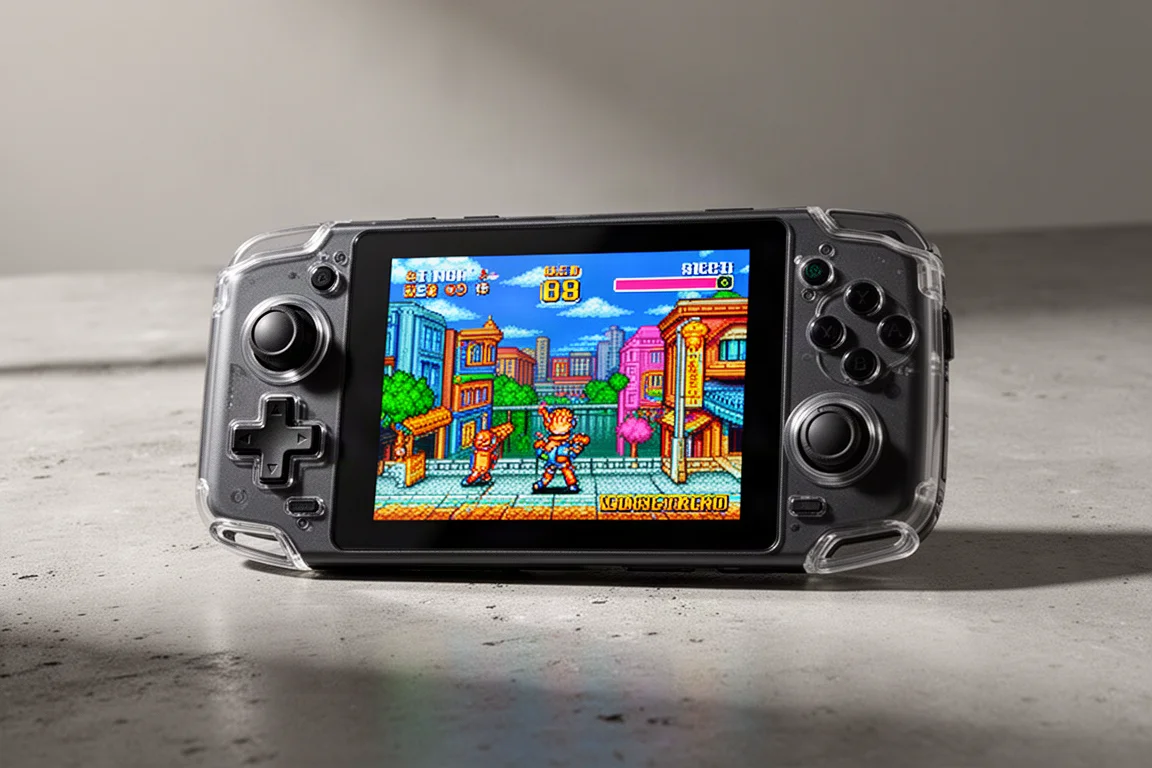
The Retroid Pocket Nova is an Android-based retro handheld that has quickly become one of the most talked-about devices in the space. It is powered by a chipset equivalent to the Snapdragon 8 Gen 2, giving it enough power to handle just about anything you can throw at it. It starts at $230 with 8 GB of RAM and 128 GB of internal storage, expandable via micro SD. A higher tier is available for $270 with 12 GB of RAM and the same storage. For most users, 8 GB of RAM is plenty, and the $40 upgrade is only worth considering for high-end PC gaming, which is not a great fit for the 4:3 screen anyway.
The device is a little larger than a typical smartphone and a bit thicker due to stacked shoulder buttons and analog sticks that protrude slightly from the shell. It sits right at the edge of being pocketable, but it is definitely bigger than a phone. For medium-sized hands, it is a comfortable fit, roomy enough to avoid discomfort during long sessions.
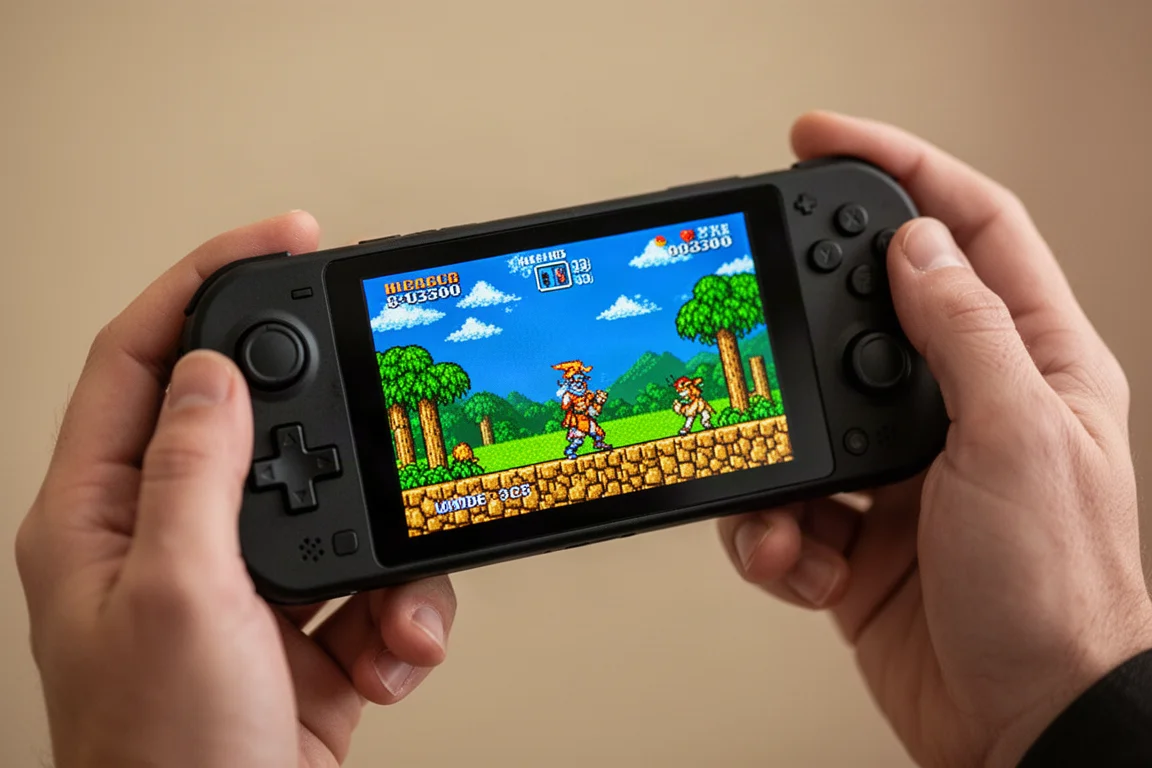
The standout feature is the display: a 4.5 inch OLED panel with a resolution of 1280 by 960 and a 120 Hz refresh rate. Inside, there is a 5,000 mAh battery. Battery testing showed that lightweight retro gaming, such as Super Nintendo or Game Boy Advance, can yield upwards of 20 hours of gameplay. For more demanding systems like PS2 and GameCube, the average is around 6 hours. In the worst case, pushing settings on a game like Skyrim Special Edition, the device lasted about 2.5 hours. For mixed gameplay, most users can expect between 6 and 8 hours of average battery life, which is excellent for a handheld of this size.
Because it runs Android, the device functions like a phone or tablet. Tapping the power button puts it to sleep, and it drains about 2% battery overnight in that state. Charging from zero to 100% takes about an hour and a half.
What Is the Retroid Pocket Nova?
The Retroid Pocket Nova is designed with a clear focus on 4:3 retro gaming. Its D-pad-centric layout means the D-pad sits up top, providing a natural resting place for your thumbs when playing classic titles. Systems that use a single stick, such as arcade games or Nintendo 64, are also a natural fit because the device is small enough to shift your hand over to the thumb stick easily.
All of the controls feel great. The face buttons, D-pad, and analog sticks are well positioned and responsive. From a controls perspective, this is excellent for retro gaming.
The visual presentation is one of the most important separating factors of the Retroid Pocket Nova. The OLED screen delivers a high contrast ratio, beautiful saturation, and deep blacks. The 120 Hz refresh rate makes menu navigation feel ultra smooth and reduces input latency during gameplay. Because this is a native landscape screen, it avoids the input latency penalty that comes with rotating a portrait display in driver firmware, which is common in many other retro handhelds.
When all of these factors come together, the Retroid Pocket Nova achieves the lowest input latency ever seen on an Android-based handheld. Preliminary testing showed about 50 milliseconds of overall input delay, which is roughly the same as an original console hooked up to a CRT television.
Retro Gaming Performance
The Retroid Pocket Nova excels at retro gaming in many ways. The 1280 by 960 resolution works well for higher-end systems like Dreamcast, Nintendo 64, PS2, and GameCube. For older classic systems like NES, Super Nintendo, and Genesis, the resolution is not a perfect integer scale, but CRT shaders can help balance out the pixels.
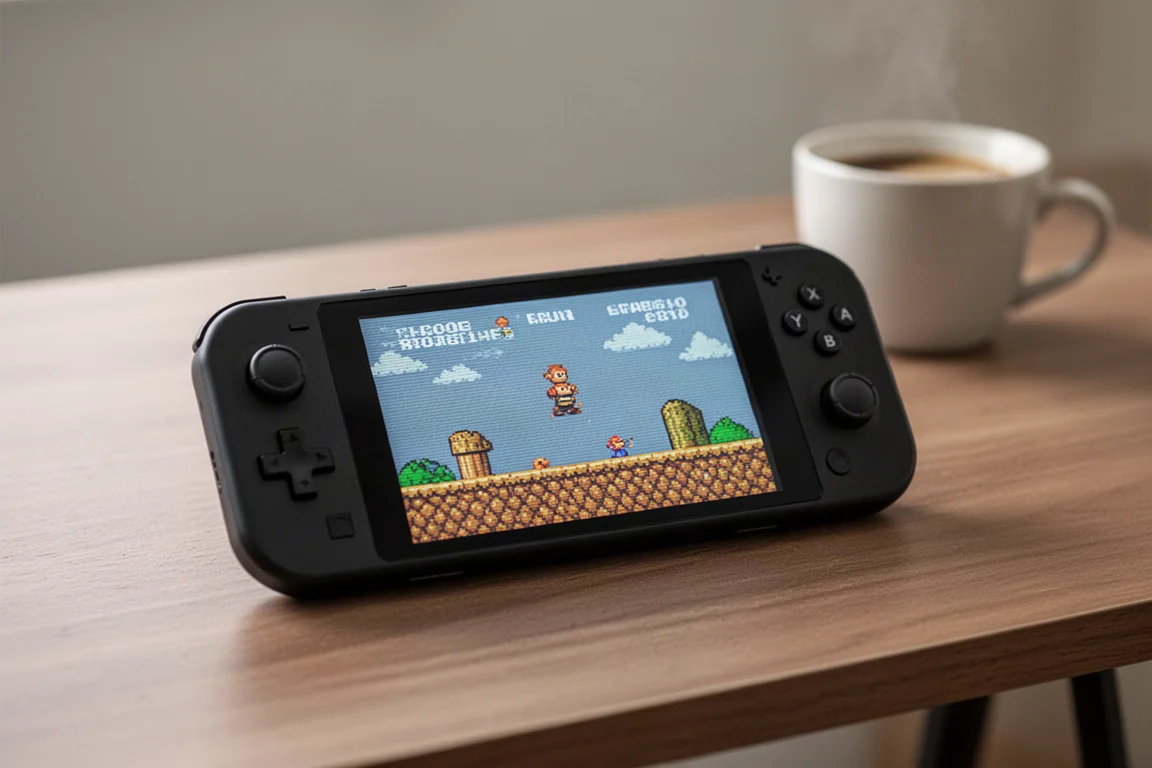
Using a CRT beam simulator shader combined with a heavy-duty shader like CRT GDV Mini Ultra, which mimics Sony Trinitron televisions, adds a softer, more lived-in look to the image. This shader combination also balances out pixels on older systems, making elements like life bars appear perfectly aligned. The ability to toggle shaders on and off with a dedicated hotkey makes it easy to compare looks and find your preference.
Game Boy and Game Boy Color games, which use a 10:9 aspect ratio, have slightly bigger black bars on the left and right but still look great. Game Boy Advance games, which are slightly wider than 4:3, have smaller black bars at the top and bottom. The only aspect ratio that is not a clear winner is 16:9 content on the 4:3 screen. For example, PSP games display at about 4.1 inches, which is smaller than the original PSP screen but bigger than the PSP Go screen. If you plan to focus on 16:9 content, there are better handhelds out there, but this might be good enough for some users.
GameCube and PS2 Emulation
GameCube games are a natural fit for the Retroid Pocket Nova. The display resolution is almost a perfect 2x match to the original console, and the Snapdragon 8 Gen 2 equivalent chipset handles these games with no problem. Playing GameCube games is essentially plug-and-play, with no need for extensive settings adjustments.
Wii games can also be played through the same emulator. There is an easy toggle in the settings to prefer 4:3 versions of games when available, and many titles like Mario Galaxy 2 or Mario Kart Wii play naturally in 4:3. The device has a decent gyro, so you can even use it like a Wii remote for games that support gyro controls. For games locked to 16:9, some have gecko codes that can force 4:3, though not all codes work on the Android version of the emulator.
PS2 emulation is similarly effortless. Using a 2.25x resolution upscale fits the screen nicely, and performance is stable without needing adjustments. A newer emulator app called ARMS SX2, still in beta, has shown promising results and is worth trying if you do not mind dealing with occasional bugs.
Beyond Retro: Android and PC Games
Beyond classic retro systems, the Retroid Pocket Nova can access the entire Android game ecosystem. Many Android games naturally scale to a 4:3 aspect ratio, and those with controller support are a very natural fit.
PC games can also be played via Steam, GOG, and Epic using apps like Game Native. A vast majority of old and classic PC games have 4:3 support, making them a great match for this device. Modern indie titles with 4:3 support also work well. A Steam curator list called Does It 4:3 can help you identify which games in your library support 4:3.
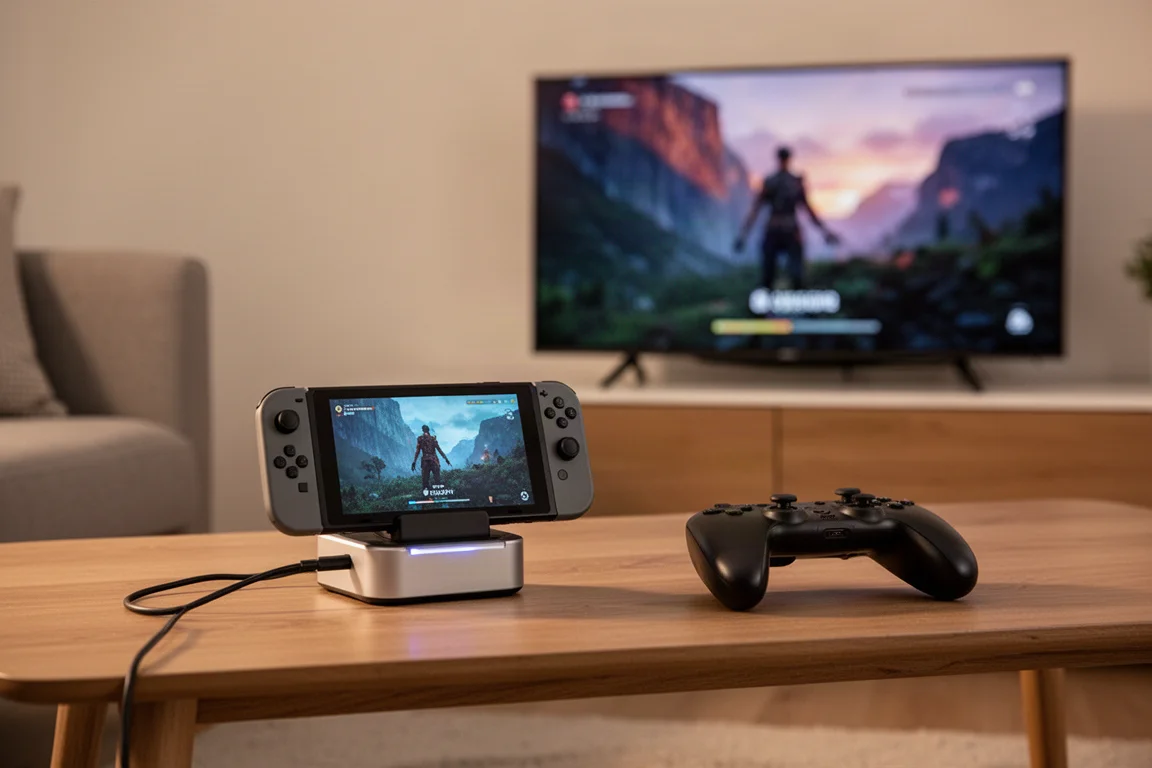
Playing PC titles on a 4.5 inch display is quite small, so this is not recommended for everyone, especially those with poor eyesight. It is more of a thrilling novelty than a primary reason to buy the device. The focus here is clearly on 4:3 retro gaming, but the PC game support is a handy bonus.
Accessories and Docked Play
The official Retroid dock costs $30 and provides a typical USB-C docking experience. It sits nicely, allows charging while docked, and has four USB ports for connecting controllers. This makes it easy to play classic games on a bigger display without buying a separate emulation system. In docked mode, you can expand the external screen to 16:9, which makes all those 16:9 games that are not a great fit for the built-in screen work perfectly on a monitor or TV.
The Retroid Dual Screen add-on, priced at $70, is a more niche accessory. It attaches to the device and functions like a clamshell, adding a 5.5 inch AMOLED top display at 1080p with a 60 Hz refresh rate. It works well for DS and 3DS emulation, with the bottom screen on the device and the top screen on the attachment. There is some latency on the top display because it is a native portrait panel that has to rotate the image, but in practice, most users will find it playable. If you want a more natural dual-screen experience, a dedicated dual-screen handheld might be a better fit, but this add-on does expand the usability of the Nova in a unique way.
How It Compares to the Competition
The Retroid Pocket Nova faces stiff competition in the 4:3 space. The Anbernic RG476H is significantly cheaper, usually around $150 depending on sales. It has a 4.7 inch display at the same 1280 by 960 resolution with a 120 Hz refresh rate, but it is an LCD panel, not OLED. It is also less powerful, handling many GameCube and PS2 games but not as effortlessly. If budget is a primary concern, the RG476H is a solid alternative.
The Anbernic RG477M is more expensive, usually around $280, and has the same LCD screen as the RG476H. It is powerful, close to the Nova in raw performance, but it uses Mali drivers, which are not as compatible as the Snapdragon drivers in the Nova. This means it will not play as well overall. In side-by-side comparisons, the Nova’s OLED display offers deeper blacks and more saturated colors, while the RG477M has a slightly greener tint. For most people, the OLED panel will be more pleasing, and the Nova is also cheaper, making it the better choice between the two.
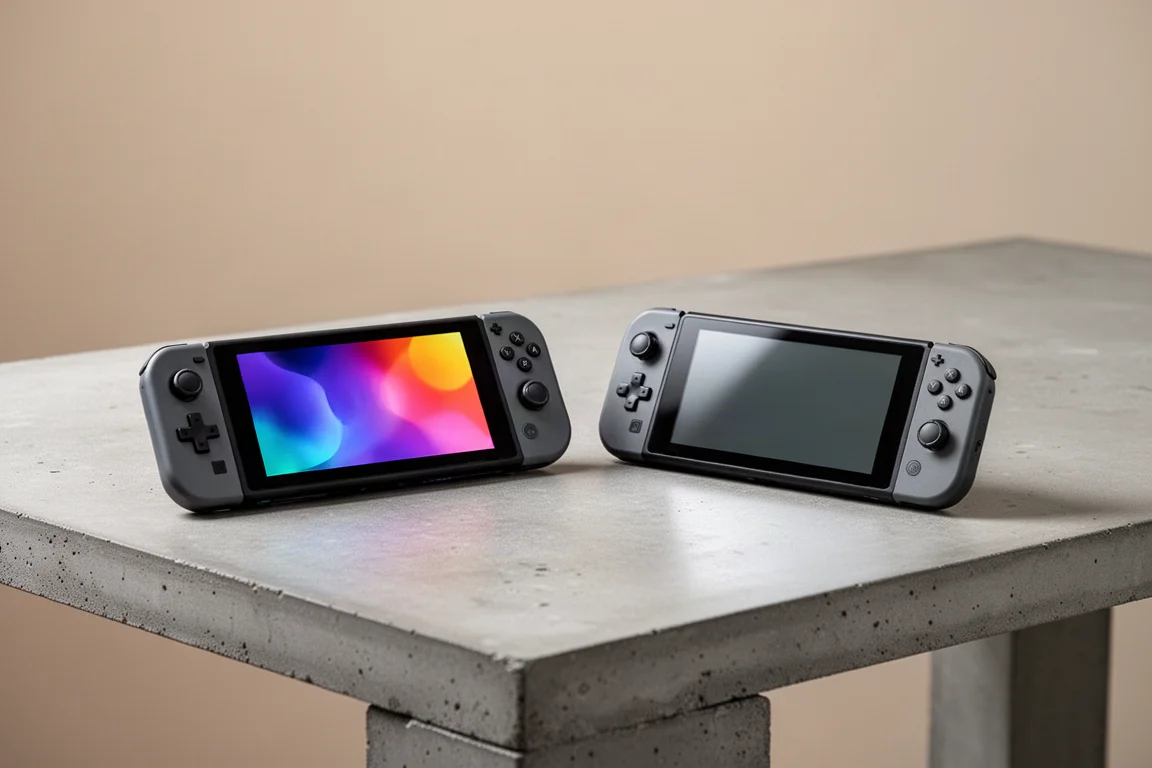
For a more all-around device, the Retroid Pocket 6 is worth considering. It has the same processor as the Nova and a very similar feel, but it costs $15 more. Its 5.5 inch display shows 4:3 content at the exact same size as the Nova, just with larger black bars on the sides. The Retroid Pocket 6 screen is native portrait, which means it may have slightly more input delay. However, for 16:9 content like PSP, Nintendo Switch, or Wii U games, the Pocket 6 is a much better fit because it can use the full 5.5 inches of screen real estate.
Buying Advice
The Retroid Pocket Nova is firmly a 4:3 enthusiast device. If you plan to play mostly 4:3 content, especially PS2 and below, this is an excellent fit. The combination of the beautiful OLED display, great controls, and powerful chipset makes it the best 4:3 handheld available today.
The main downsides are the somewhat whiny fan noise, which is audible even in quiet mode, and the slightly sharp edges on the crystal buttons found on transparent models. The fan noise is the one thing that could have been done better, but it does keep the device cool. The button sharpness can be avoided by choosing a model with painted matte buttons, like the 16-bit color option, or by purchasing alternative buttons for $5 on the Retroid website.
If you are willing to spend $230 or more for a nearly perfect 4:3 experience, the Retroid Pocket Nova is a fantastic choice. For those who want a more all-around device that handles both 4:3 and 16:9 content comfortably, something like the Retroid Pocket 6 might be a better recommendation.
Conclusion
The Retroid Pocket Nova is the best 4:3 handheld that has been released to date. It brings together a stunning OLED display, comfortable controls, and enough power to play just about anything you want. It is not perfect, with the fan noise being the most notable flaw, but for 4:3 enthusiasts, there has never been a better time to play retro games. If your gaming focus is on classic 4:3 content, this device is an exceptional choice.
Product link
View more details for Retroid Pocket Nova
This product is mentioned in the review. Check the specifications, options, and compatibility before buying.
View more details for Retroid Pocket NovaFurther reading
Related Reviews

Retro Handhelds
Anbernic RG SP Review: A Faithful Clamshell Tribute to the GBA SP
The Anbernic RG SP brings back the classic clamshell form factor with a modern 3.4-inch IPS display and dependable retro performance.

Retro Handhelds
Anbernic RG477M Review: A Year Later, Still One of the Best Retro Handhelds
After a year of use, the Anbernic RG477M remains a standout 4:3 retro handheld thanks to its screen, controls, and third-party software. We break down what still holds up and what to consider.

Retro Handhelds
Anbernic RGSP Review: A Focused Game Boy Advance Handheld for 2026
The Anbernic RGSP refines the clamshell formula with a centered screen, no analog sticks, and a design that closely mirrors the original Game Boy Advance SP.