Kitchen Knives
Top 5 Rare Japanese Knives Worth a Look: From Nakiri to Honyaki Yanagiba
Five standout Japanese knives, including rare one-of-a-kind pieces, with prices, steels, and who each blade really suits.
Introduction
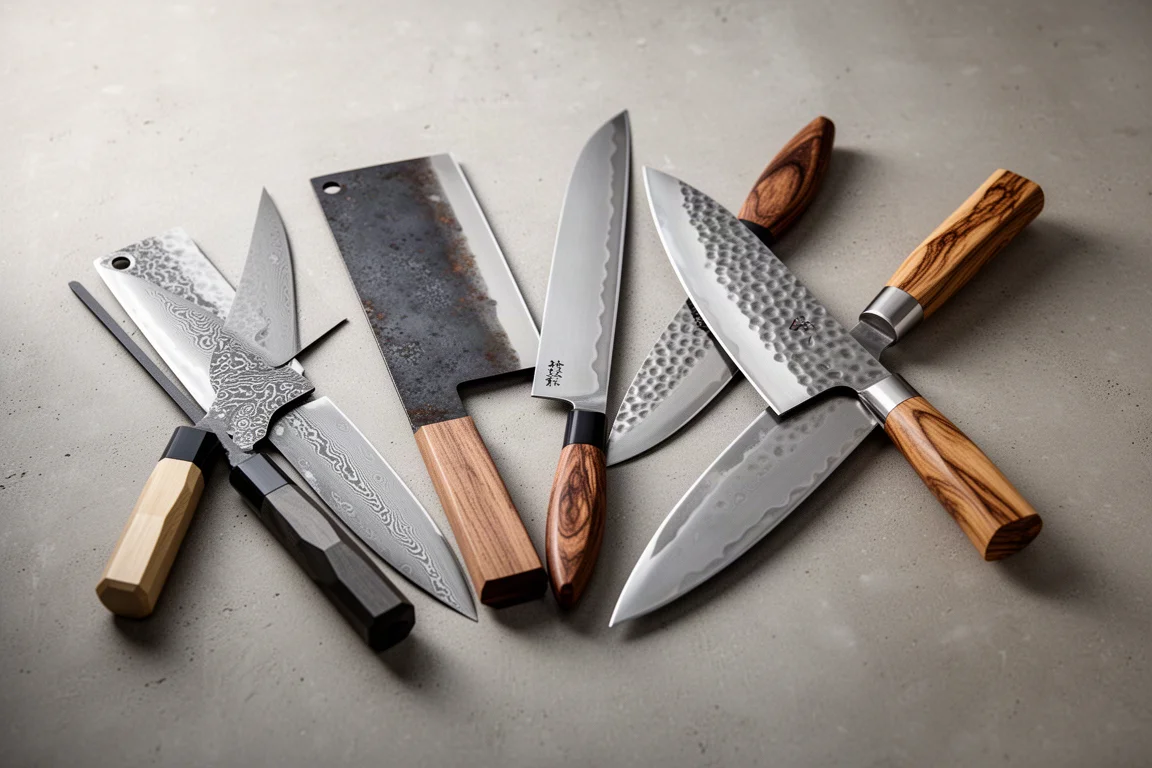
Some Japanese knives only surface in limited quantities, and the pieces in this roundup are exactly that kind: rare, one-of-a-kind blades from blacksmiths working in traditional Japanese knife-making regions. The selection spans a wide range of prices and use cases, from an easy-care damascus kiritsuke suited to gifting, to a hand-forged honyaki masterpiece at the top of the list. Here is a closer look at five favorites, in countdown order, so you can judge which one fits your kitchen and your budget.
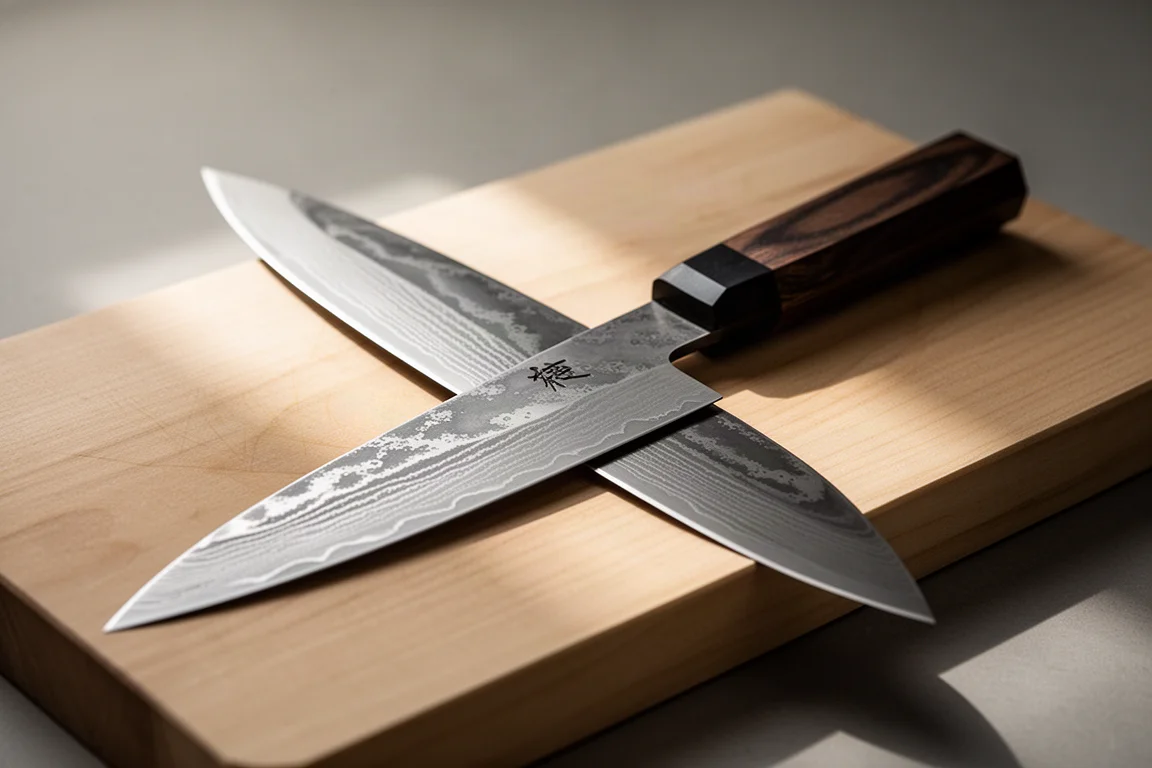
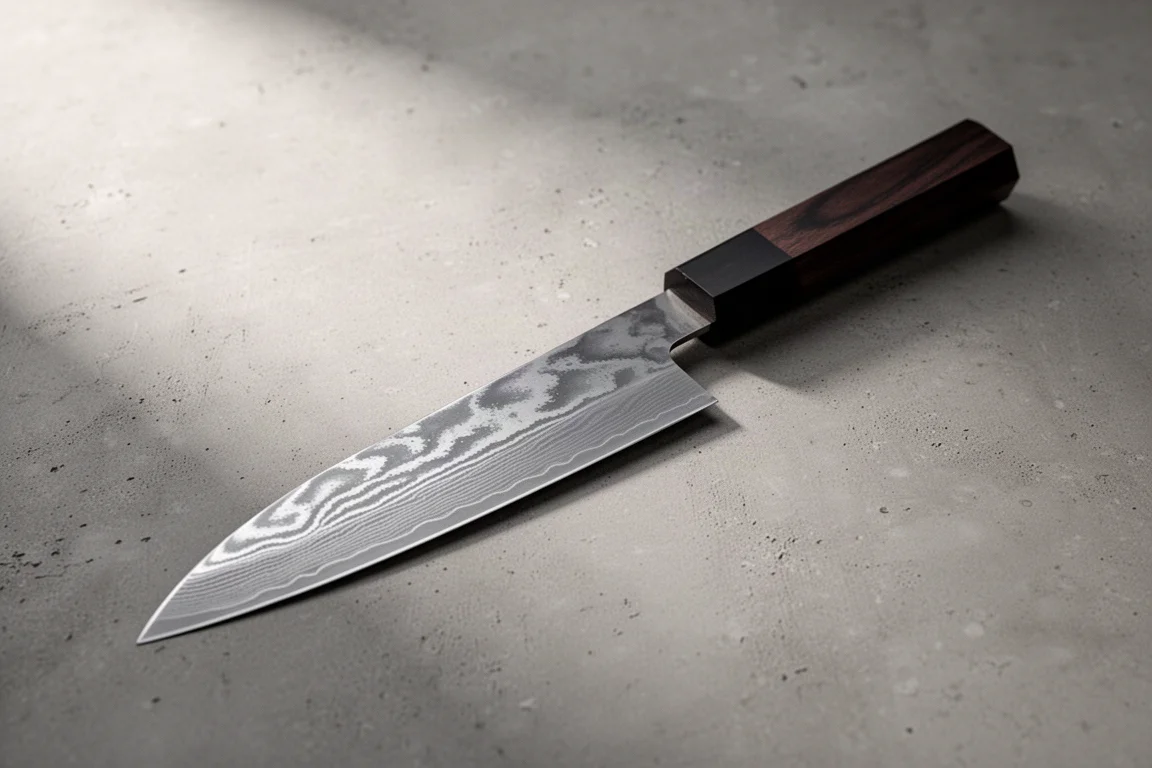
5. Tsunahisa VG-10 Damascus Kiritsuke 210
At $388, this kiritsuke pairs a beautiful damascus finish with a comfortable octagonal wa handle. It is built around VG-10 stainless steel, which is a genuinely practical choice: it resists rust, holds a good edge, and is relatively easy to take care of compared with carbon steel options. That combination of striking looks and low-maintenance steel makes it a strong pick as a gift knife, or as a first premium Japanese blade for someone who does not want to worry about patina and corrosion.
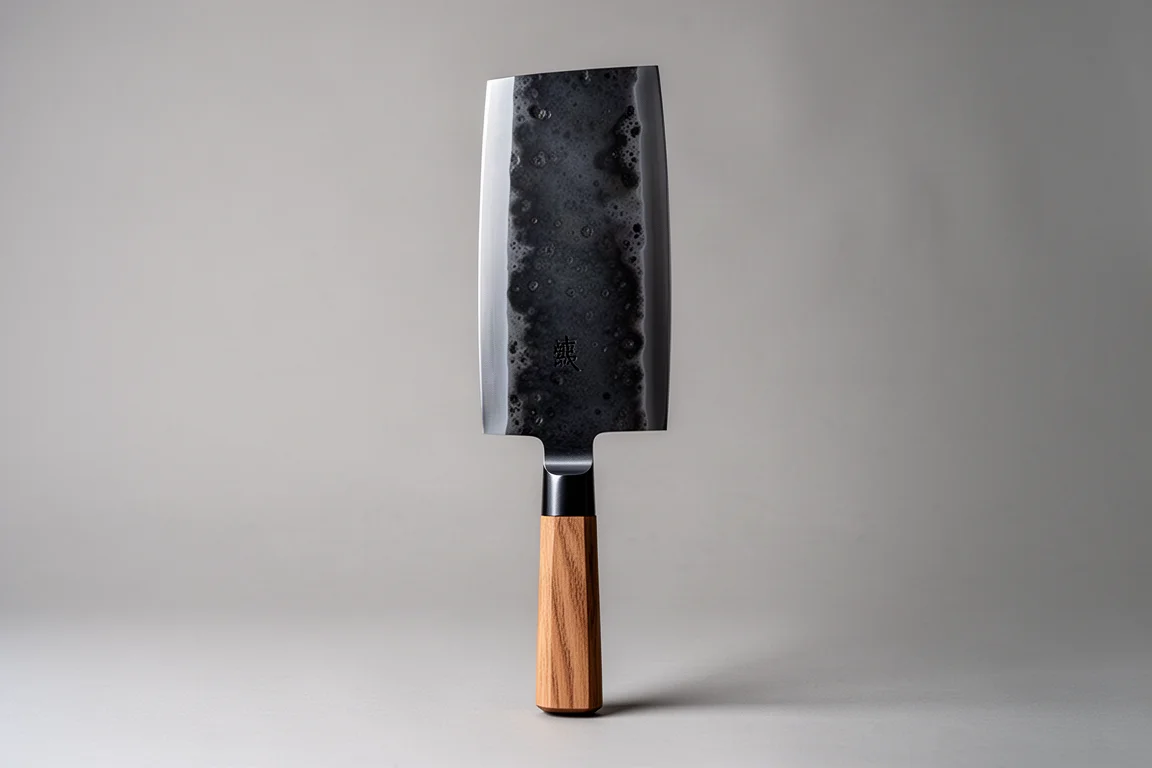
4. Hinokuni Sakai Shirogami Nakiri
Priced at $192, this nakiri comes from a relatively young blacksmith who learned his techniques from Dai Nishida in Kumamoto and still produces these knives in the Kumamoto region. It is made from Shirogami, or white carbon steel, with a kurouchi finish, and it is a genuinely affordable entry into that steel type. White carbon steel takes a very fine edge, holds it nicely, and is relatively easy to sharpen.
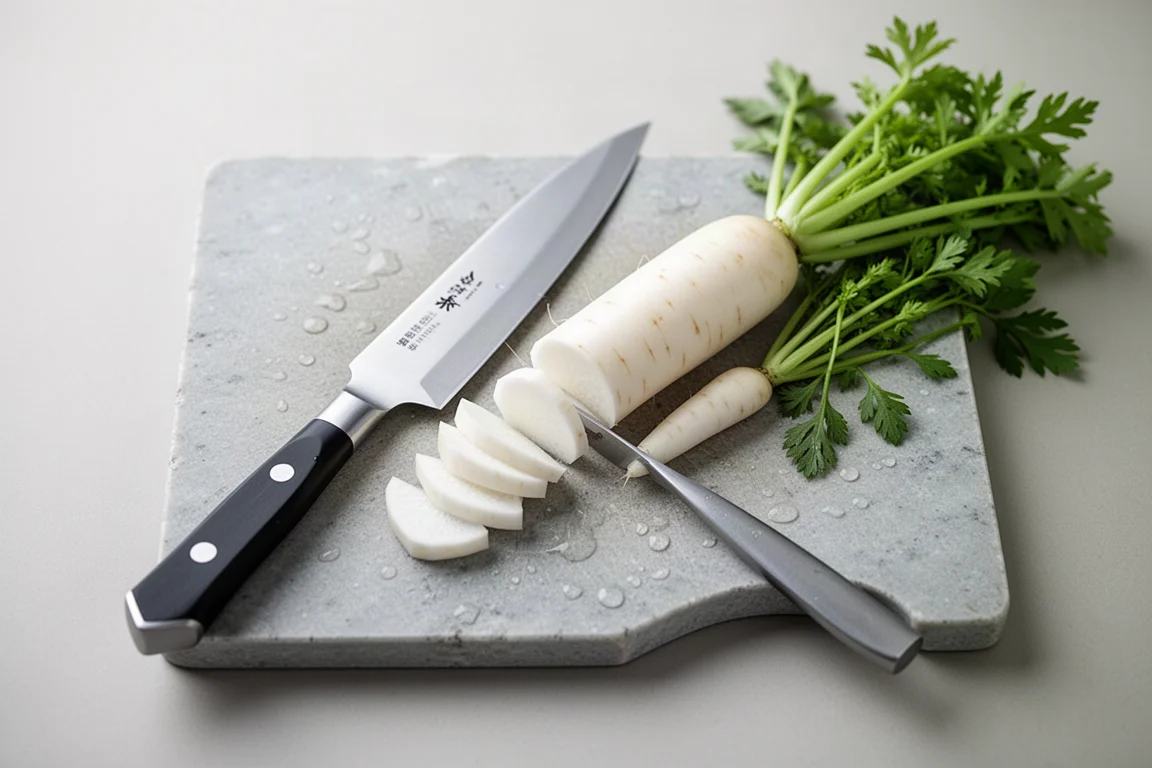
The important caveat is that this is a carbon steel knife. If you dislike the idea of a blade that can rust, this one is not for you. But for those who enjoy caring for carbon steel, it represents a fantastic deal at this price.
3. Akira Sasaoka Shirogami Damascus Yanagiba 240mm
This 240mm yanagiba, listed at $356, is sharpened by Akira Sasaoka, a sharpener based in the Tosa area known for masterfully finished edges. Like the nakiri above, it uses white carbon steel, which makes it limitingly easy to sharpen. The blade combines a beautiful damascus finish with a clean white bevel, and its single-bevel geometry, with a flat or slightly concave middle, is designed to slice raw fish for sashimi and sushi very cleanly and easily.
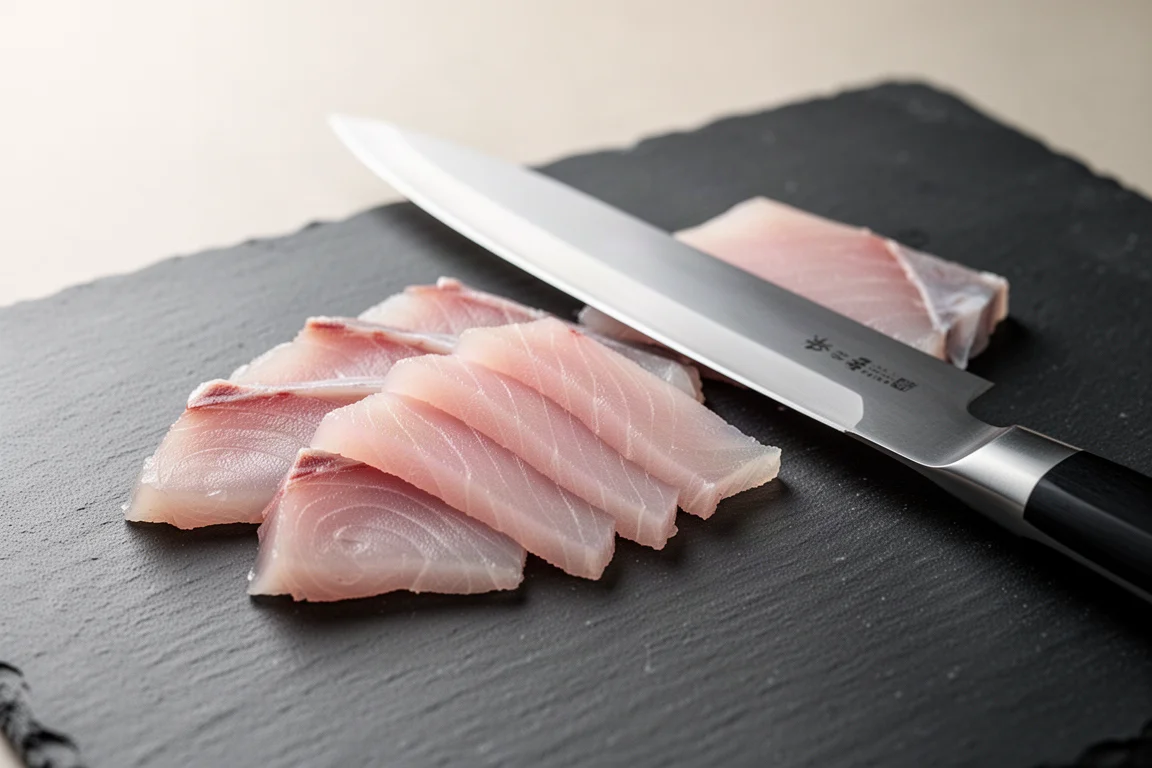
A yanagiba is a specialized tool: if you regularly prepare sashimi or sushi at home, this is the kind of blade that pays off. If not, it remains a striking piece for a collection.
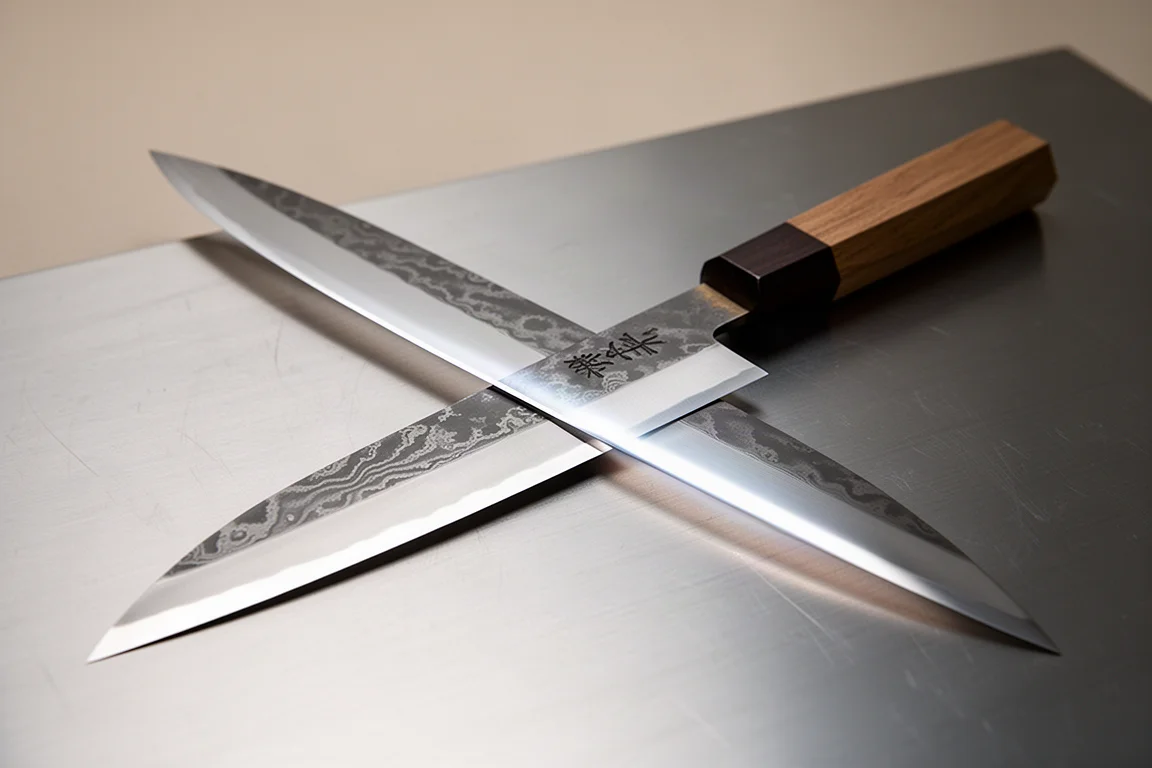
2. Yoshimi Kato R2 Hishime Santoku
At $689, this western-handled santoku stands out for its hishime finish, a hammer pattern made of square marks rather than the round dimples you see on many hammered knives, which gives it a distinctive look. The blade is made from R2, also known as SG2, a high-speed powder stainless steel that holds an edge very well while still sharpening with a feel closer to carbon steel.
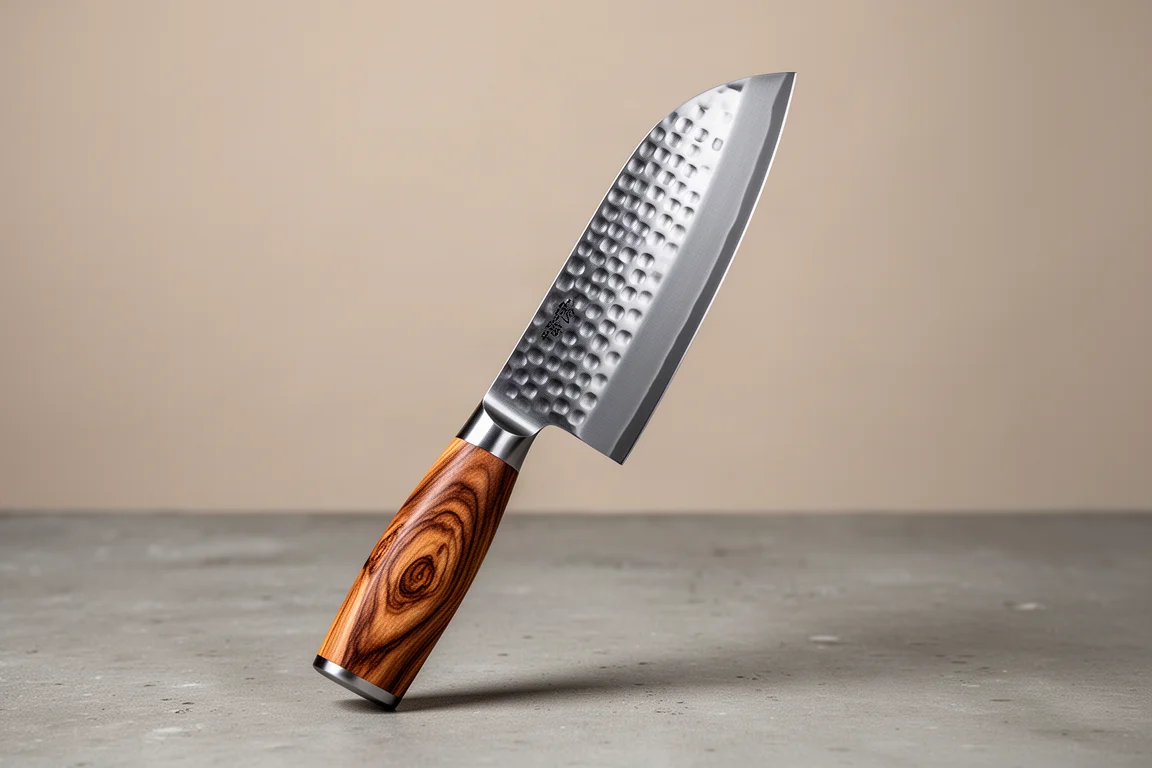
The stabilized maple handle is another highlight. Each of the limited four pieces has a slightly different grain, reflecting the natural character of the wood. Yoshimi Kato is a highly regarded blacksmith whose work appears in lines such as Masakage Yuki, Masakage Koichi, and Masakage Kiri, and this santoku shows him working with modern powder steels rather than traditional carbon options.
1. Satoshi Nakagawa Aogami #1 Honyaki Jihada
The top pick, at $2,900, is a honyaki blade forged by Satoshi Nakagawa, a relatively young but very talented blacksmith from Sakai. Honyaki blades are made from a single piece of steel using a differential heat treatment technique, and they are famously difficult to make, with a high failure rate that demands masterful skill. That difficulty is a big part of why pieces like this are so rare.
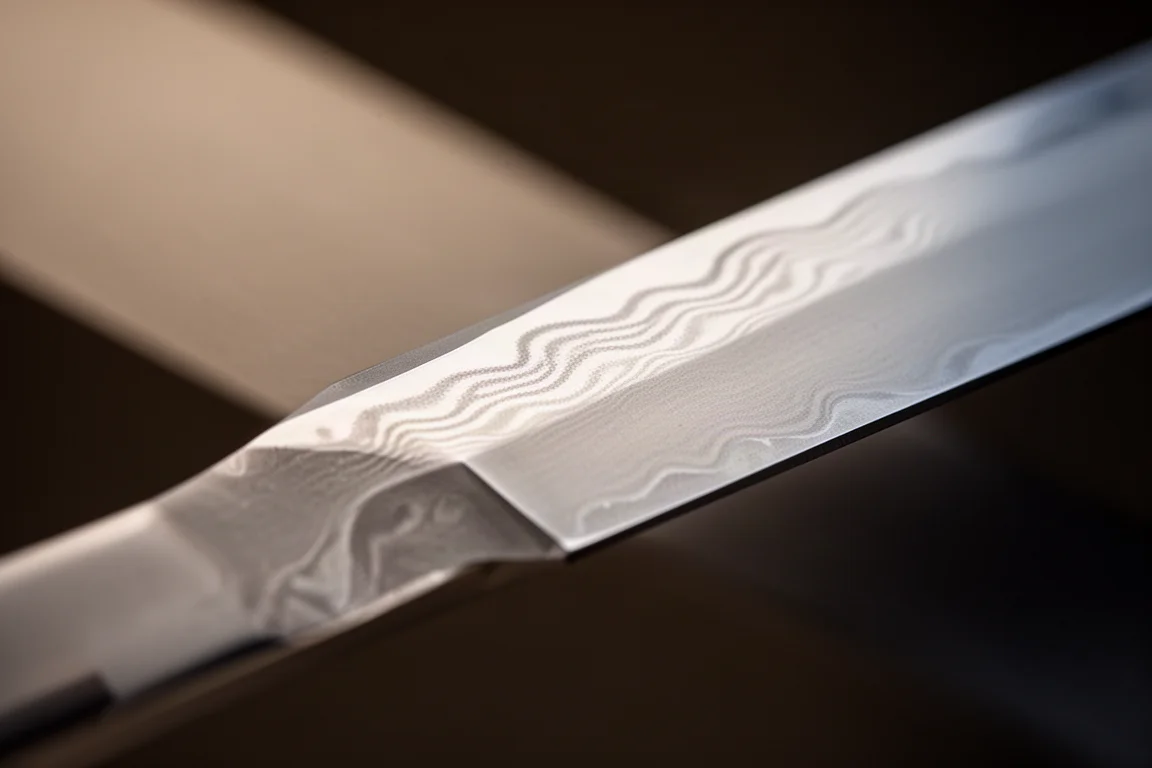
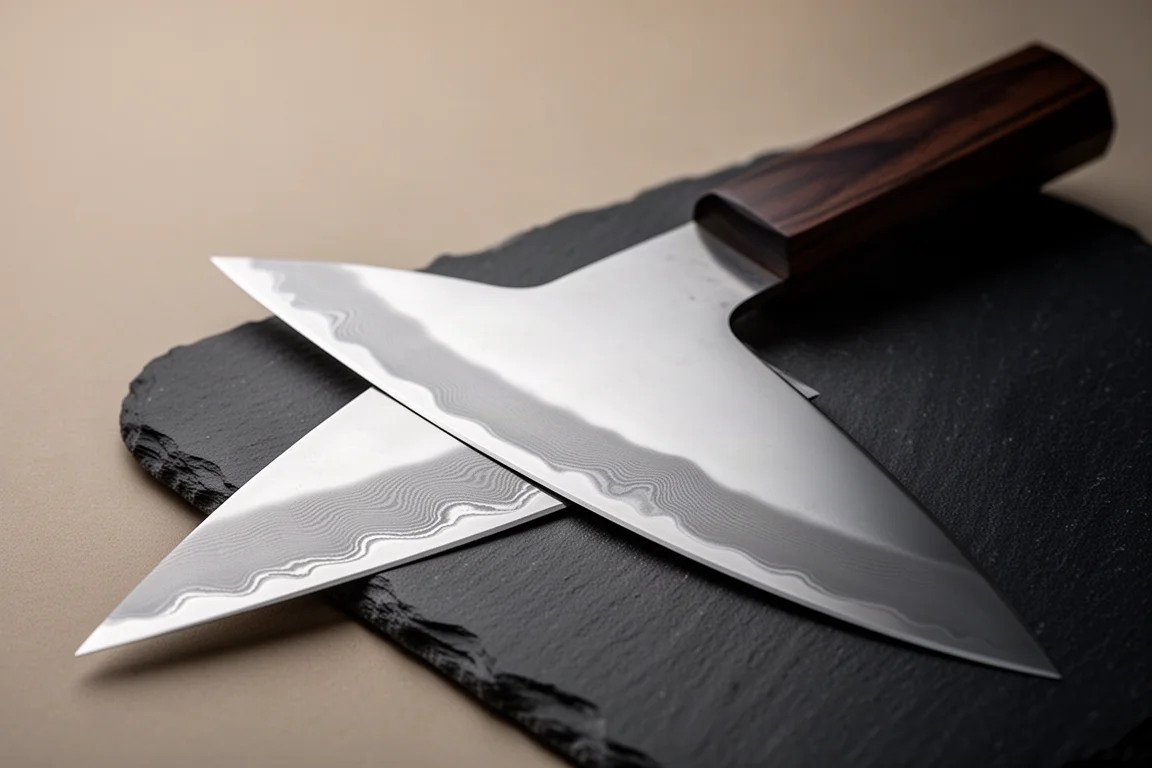
The jihada finish here is not damascus: this is a single piece of steel, but the finish showcases the old grain of the steel through very subtle lines running along the blade. The execution details are what set it apart, including a graceful taper along the spine toward the tip, a very thinly ground edge, and a beautiful hamon marking the boundary of the differential heat treatment where the thicker clay was applied. This is a collector’s knife first and a cutting tool second, and it is the kind of piece that rarely appears for sale.
Overall Buying Advice
These five knives cover very different needs. If you want an impressive but low-maintenance blade or a gift, the Tsunahisa kiritsuke is the safest choice. For vegetable prep on a budget, the Hinokuni nakiri is the standout value, provided you accept carbon steel maintenance. Sashimi enthusiasts should look hard at the Sasaoka yanagiba. The Kato santoku suits cooks who want a premium powder-steel daily driver with a distinctive finish, while the Nakagawa honyaki is for serious collectors who appreciate forging at its most demanding. Rare pieces like these tend to sell quickly, so if one speaks to you, it is worth acting on it.
Conclusion
From a $192 carbon steel nakiri to a $2,900 honyaki masterpiece, this lineup shows how wide the world of Japanese knives really is. Match the steel and the shape to how you actually cook, and any of these five can be a rewarding addition to the kitchen or the collection.
Further reading
Related Reviews

Kitchen Knives
Best Chef's Knives 2026: 27 Popular Options Tested and Ranked
A comprehensive review of 27 chef's knives ranging from $18 to $380, with honest assessments of handle comfort, blade balance, and real-world performance.

Kitchen Knives
Best Chef's Knives Under $75: Two Tested Recommendations
Two practical 8-inch chef's knives that balance sharpness, comfort, and durability without premium pricing.

Kitchen Knives
Best Chef's Knives 2026: 27 Options Tested and Ranked
A comprehensive review of 27 chef's knives ranging from $18 to $380, with honest assessments of handle design, balance, blade profile, and real-world performance.