Power Tools
Racine Model 9171 Review: A Gas-Powered Railway Impact Wrench That Mostly Backs Up Its Numbers
A 44 lb, 1-inch drive two-stroke impact wrench built for railroad crews, tested against cordless 1-inch giants to see how its real output compares to the claim.
Introduction
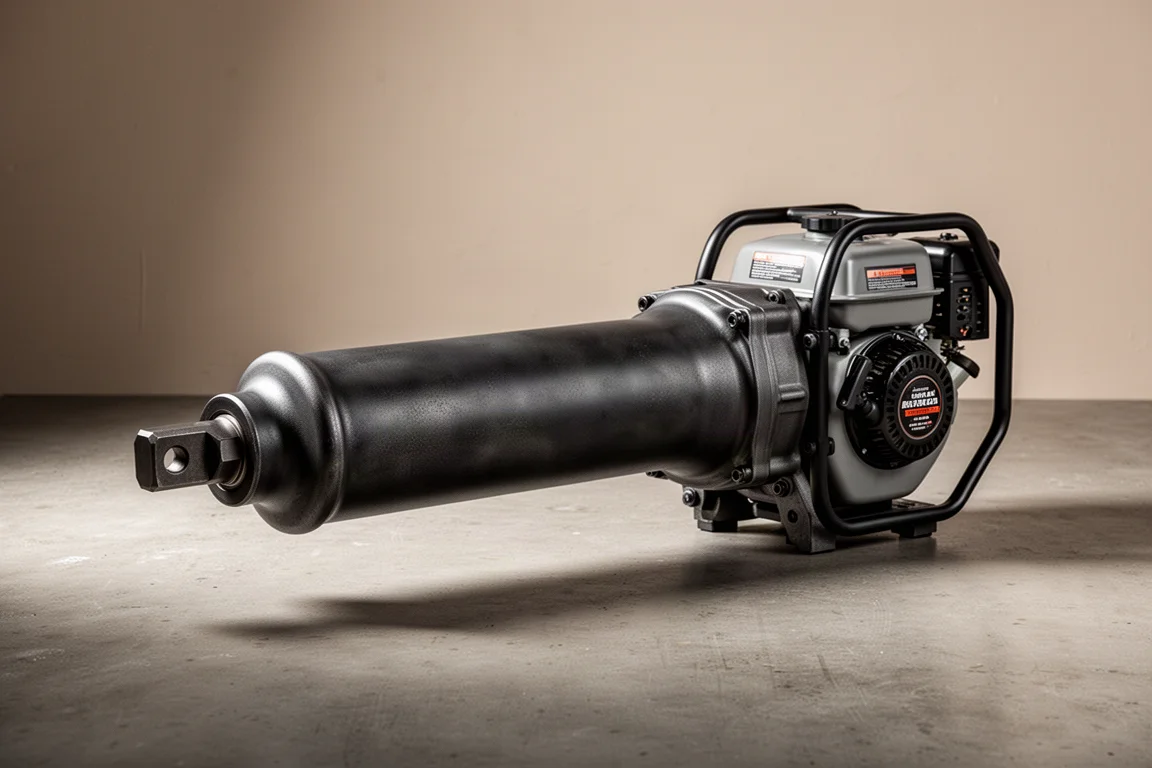
It turns out that if you want a gas-powered impact wrench like the ones railroad construction crews use, the companies that make them will simply sell you one. All they ask for is an address and a credit card number. Our example is a Racine Model 9171, a made-in-the-USA 1-inch square drive impact wrench that runs on a two-stroke gasoline engine. Fresh units of this class have been quoted as high as $3,800, and on average these US-built railway models run about $3,600.
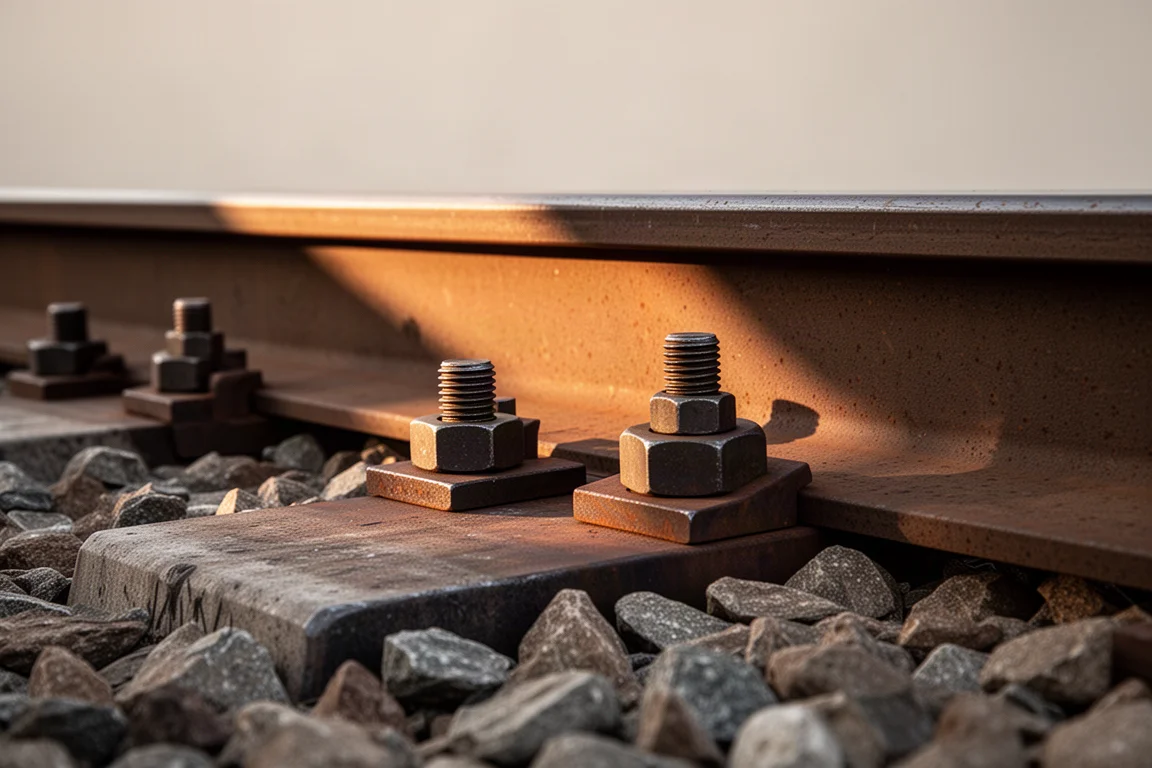
The silhouette leans more ordnance than tool, and the reason is simple: these wrenches are made for railway crews to assemble and, more to the point, disassemble rail fasteners. They pair with unusual sockets for four-point or square-headed bolts and nuts, an old-school design that persists because at this scale of hardware it is cheap to make in volume.
Who This Product Is For
This is a purpose-built tool first and a general-purpose monster second. Railway work is the design brief, and the engine calibration reflects that. The manual suggests running the tool for about five seconds of impacting, which should cover most rail jobs, and it clearly needs to run all day, every day, with fuel rather than batteries.
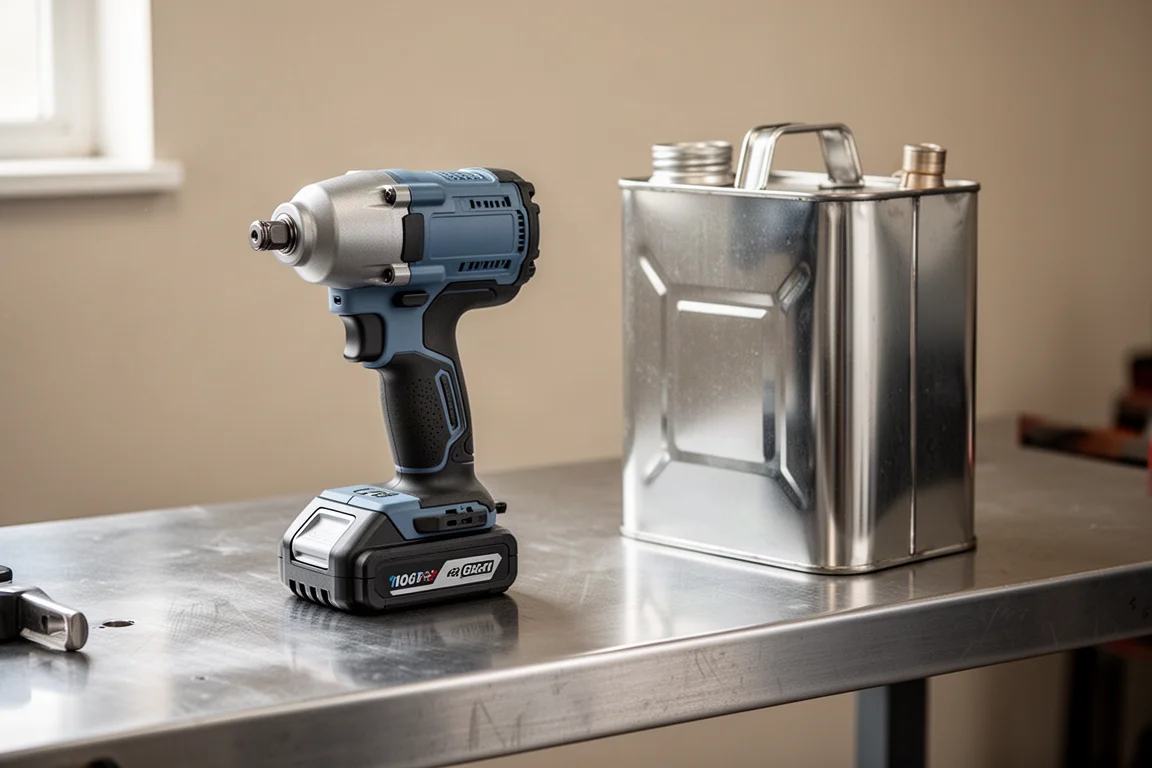
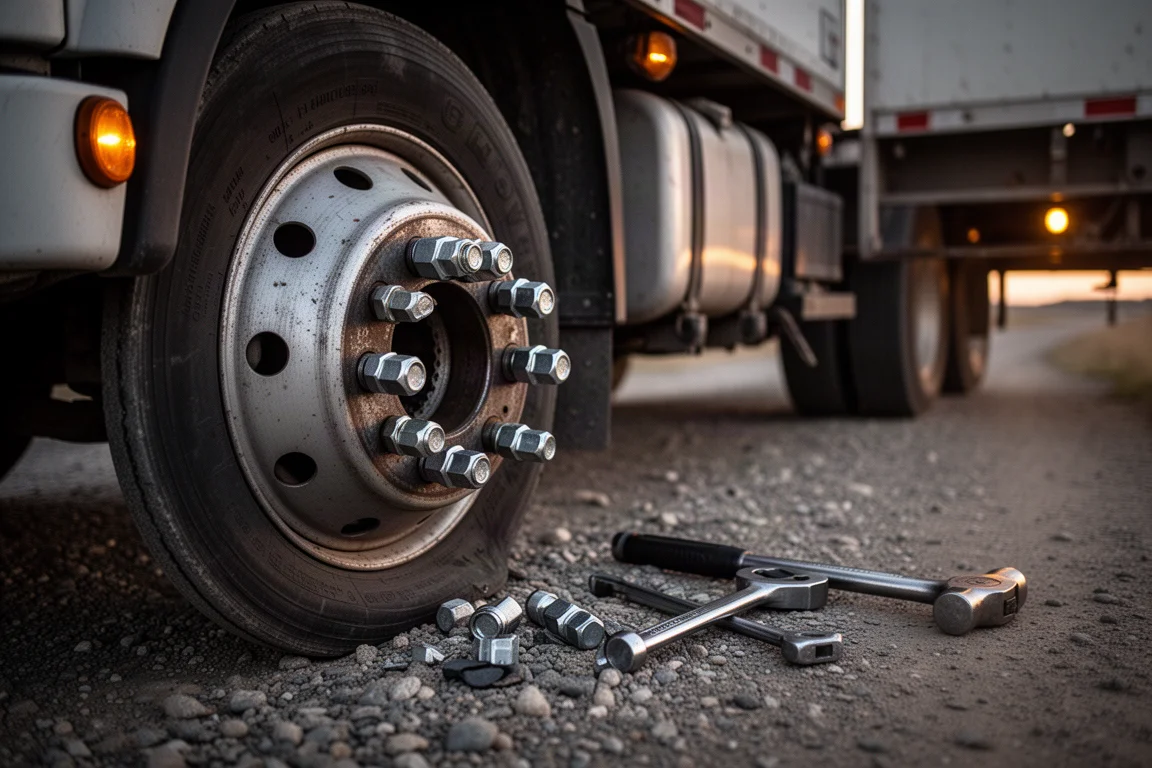
That said, there is a compelling side use case. If you service heavy trucks or run a roadside emergency or rescue rig that faces a whole row of 33 mm lug nuts, a tool that runs for most of the day on a couple of gallons of fuel, with no charging and no expensive spare batteries, starts to look genuinely interesting.
Main Strengths
The Model 9171 uses a two-stroke gasoline engine with a gearbox that allows starting in idle or neutral, plus forward and reverse. That bidirectional capability is something purpose-built designs sometimes skip, and it matters both for breaking loose rusted hardware and for proper tightening work.
The engine is a Japanese Tanaka two-stroke of just 46.5 cc. That modest displacement is a deliberate choice: Racine has to consider maximum displacement allowed on the job site, vibration for the worker, fuel consumption, and enough power to do the work all day, rather than chasing maximum output on a spec sheet.
It also delivered the most honest claimed number we have measured in this class. Of its advertised 1,255 ft-lbs, it produced 1,113 in tightening, a rare 89 percent of the claim. That old-school, honest rating style stands out next to modern marketing numbers.
Things to Consider Before Buying
Weight is the obvious compromise. At 44 lb loaded with fuel, you feel every ounce, and it manages only about 25 ft-lbs of torque per pound, a low figure in this category. It is largely used vertically in its intended role, which softens the pain, but it is not a lightweight by any stretch.
Compare that with a modern cordless 1-inch wrench such as the Milwaukee 2868: about 24 lb, a 12 amp-hour battery, a claimed 1,900 ft-lbs in tightening (of which we measured 1,400), and far more sectors it can be sold into. The more torque a tool makes, the more industries a manufacturer can sell it to. Racine does not care about that. It does its designed job very well, and that is enough.
Real-World Test Results
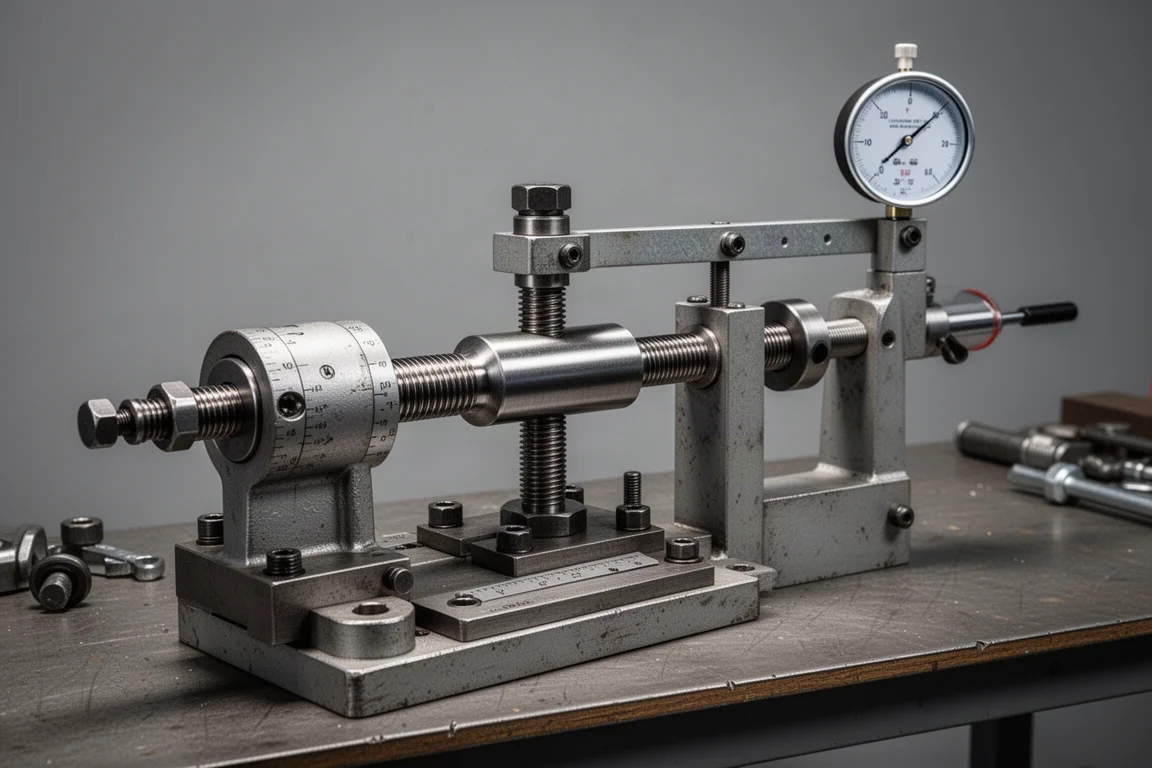
On a standard 5-second tightening dyno test, the Model 9171 posted 778 ft-lbs, a strong result for a tool of this class. In the 10-second max torque test it climbed to 1,113 ft-lbs, surpassing the much newer Milwaukee 1-inch D-handle, which managed 1,081 on the same bench. The power delivery curves of the two tools were strikingly similar despite being about as different as two 1-inch impacts can realistically be.
In the 15-second run it held at 1,113, identical to its 10-second figure. We saw the same plateau with our own gas-fed half-inch build, the 60 cc M60, which beat the Racine in short 5-second runs thanks to a small hammer mass and early out-of-the-gate progress, but ran out of steam on longer pulls. Pushed to the 15-second ceiling on a large Skidmore-Wilhelm style rig, the Milwaukee topped out at 1,460, while the Racine held its 1,113.
Buying Advice
If your job is railway fasteners or sustained heavy-duty bolting far from power and chargers, the Model 9171 is exactly what it was designed to be: reliable, honest, and capable. At roughly $3,600 on average, though, buying one is something you may be glad you do not have to do yourself.
For truck service or rescue work, the calculus is murkier. The Milwaukee’s higher measured output means it will handle a larger percentage of rusted 18-wheeler lug nuts in our experience, while the Racine’s 1,100 ft-lbs covers most, though likely not as high a share.
The real question is the task at hand. This gun makes plenty of power for what it was built to do, and that is the crux: it is a railway tool that happens to be purchasable by civilians, not a spec-sheet warrior.
Conclusion
The Racine Model 9171 is a rare honest number in a market of inflated claims: 1,113 measured against a 1,255 advertised rating, the best percentage we have recorded in this category. It is heavy, expensive, and unapologetically specialized. For its intended purpose, it is excellent, and for anyone fascinated by maximum-output tools, it is a fascinating piece of engineering in its own right.
Product link
View more details for Racine Model 9171
This product is mentioned in the review. Check the specifications, options, and compatibility before buying.
View more details for Racine Model 9171Further reading
Related Reviews
Power Tools
Best 1-Inch Pistol Impact Wrenches: Three Heavy-Duty Options Compared
We compare three 1-inch pistol impact wrenches, from a budget-friendly Harbor Freight model to a premium Caterpillar unit, to help you choose the right one.
Power Tools
Best 3/4-Inch Impact Wrenches 2026: Five Contenders Compared
We compare five 3/4-inch impact wrenches across price and performance, from a budget Amazon option to Snap-on's most powerful model yet.
Power Tools
Best Budget Cordless Tools 2026: Walmart Finds That Punch Above Their Price
We tested five cordless tools from Walmart, including a high-torque impact wrench that trades blows with Milwaukee and a $35 duster that outperforms its price class.