Camping Chairs
Quechua Reclinable Camping Chair Review: Fast Setup, Seven Recline Positions, Budget Price
A practical look at the Quechua Reclinable Camping Chair from Decathlon, covering setup speed, seat dimensions, recline angles, mesh coverage, portability, and who it suits.
Introduction
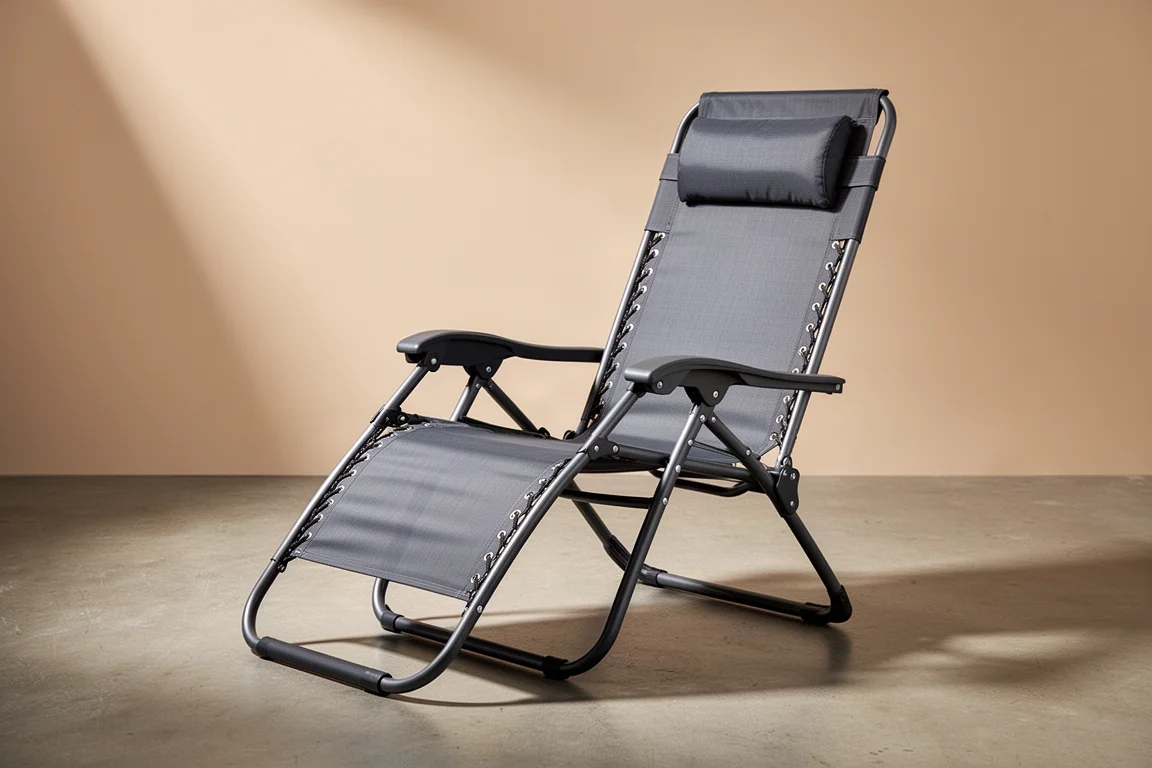
The Quechua Reclinable Camping Chair from Decathlon is a folding camp chair built around a reclining backrest, a tall frame, and a fold-flat mechanism that opens and closes in seconds. Setup measured at roughly four seconds and pack-away at about five seconds, which is quicker than the average camp chair and noticeably quicker than most folding designs.
What makes it interesting is the combination of a real reclining function and a price that sits below the average camp chair. Reclining camp chairs usually cost more, and this one offers seven distinct backrest positions rather than the fixed, mildly angled back that most basic camp chairs provide.
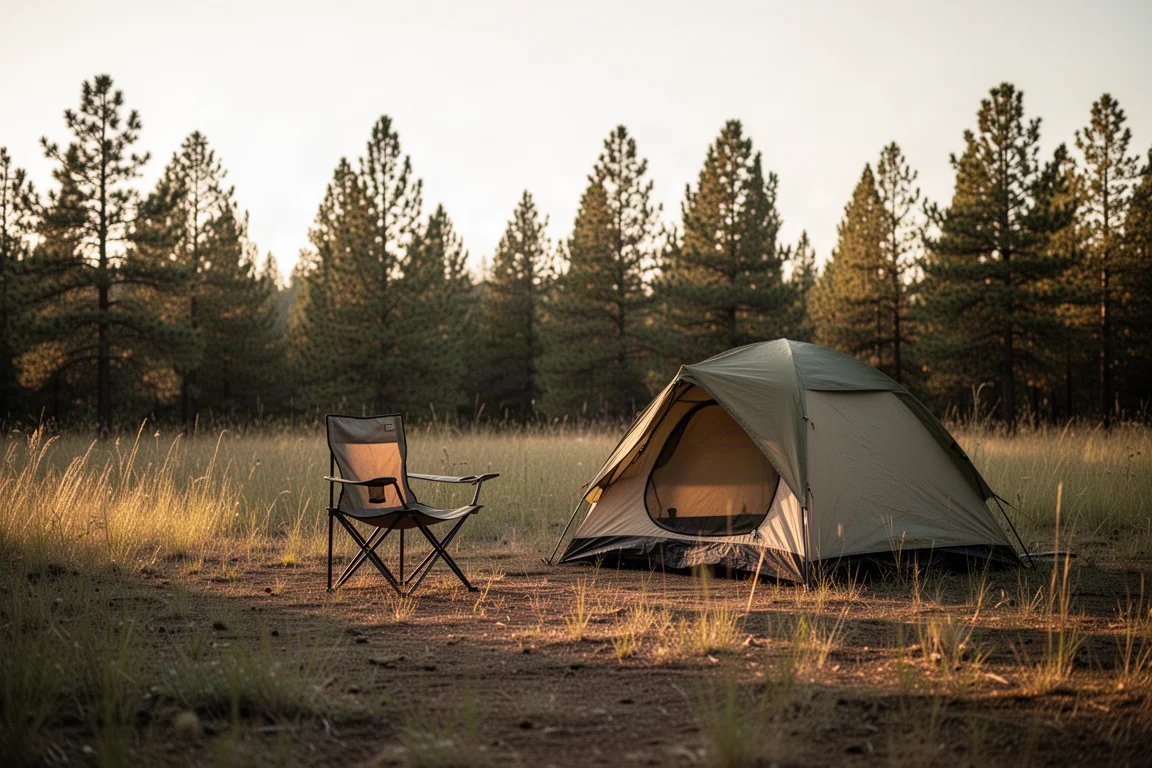
This article covers the measurements that matter most in daily use: seat size and height, backrest height, mesh coverage, packed dimensions, weight, and the trade-offs that come with the lower price.
Who This Chair Is For
This chair suits campers who want to lean back properly at the end of the day without paying premium prices for a branded zero gravity recliner. The seven recline positions, the tall backrest, and the head support make it a comfortable place to sit for long stretches, and the seat height puts you at a comfortable level for a camp table.
It also suits hot-weather campers. Around 62% of the seating surface is mesh, so air moves through the seat and backrest instead of trapping heat.
It is less suited to campers who want pockets, a cupholder, or a carry bag, because this chair has none of those. It is also less suited to anyone who needs to carry a chair a long distance, since it packs flat rather than compact and weighs close to 12 pounds.
Setup and Pack-Away Speed
Setting the chair up takes three movements. Stand it upright on its legs, place one hand on the top of the backrest and the other on the seat, then pull them apart until the legs lock into a stable position. From there, the armrests control the recline angle.
Packing away takes a few more steps. Lift an armrest so the chair is not locked, put one hand on the top of the backrest and the other on the seat, and rest a foot on the metal bar at the back of the chair on the ground. Tilt the chair so it balances on its back legs, push the seat as far to one side as it goes, then push the backrest down until everything collapses flat.
The sequence takes a little practice to memorise, but once the order is familiar it becomes quick. Measured setup was about four seconds and pack-away about five seconds.
Seat Dimensions and Comfort
The seat is about 19 inches wide and 15 inches deep, which is an average camp chair seat size. Seat height is where the chair stands out. Measured at the front of the seat with nobody sitting in it, the height is about 17.25 inches, close to the 17.3 inches listed by Decathlon. Once seated, the same measurement drops to roughly 14.25 inches, because the seat slopes gently from front to back. That is around three inches lower than the unoccupied front edge.
That height still sits well above the typical camp chair, which averages about 11 inches at the seat. Sitting at a camp table is comfortable as a result, and the position is closer to a dining chair than to a low camp lounger.
The seat surface is also taut. It barely gives under weight, while many camp chairs sag by five inches or more once you sit down.
Reclining Function and Seven Positions
The armrests are the control for the recline. Lift them, slide the backrest down, then press them back into place to lock the chair at the angle you want. Releasing the recline works the same way in reverse.
There are seven recline positions to choose from, which is a clear step up from the average camp chair. Most basic camp chairs have no adjustable recline at all and hold a fixed back angle of roughly 20 degrees.
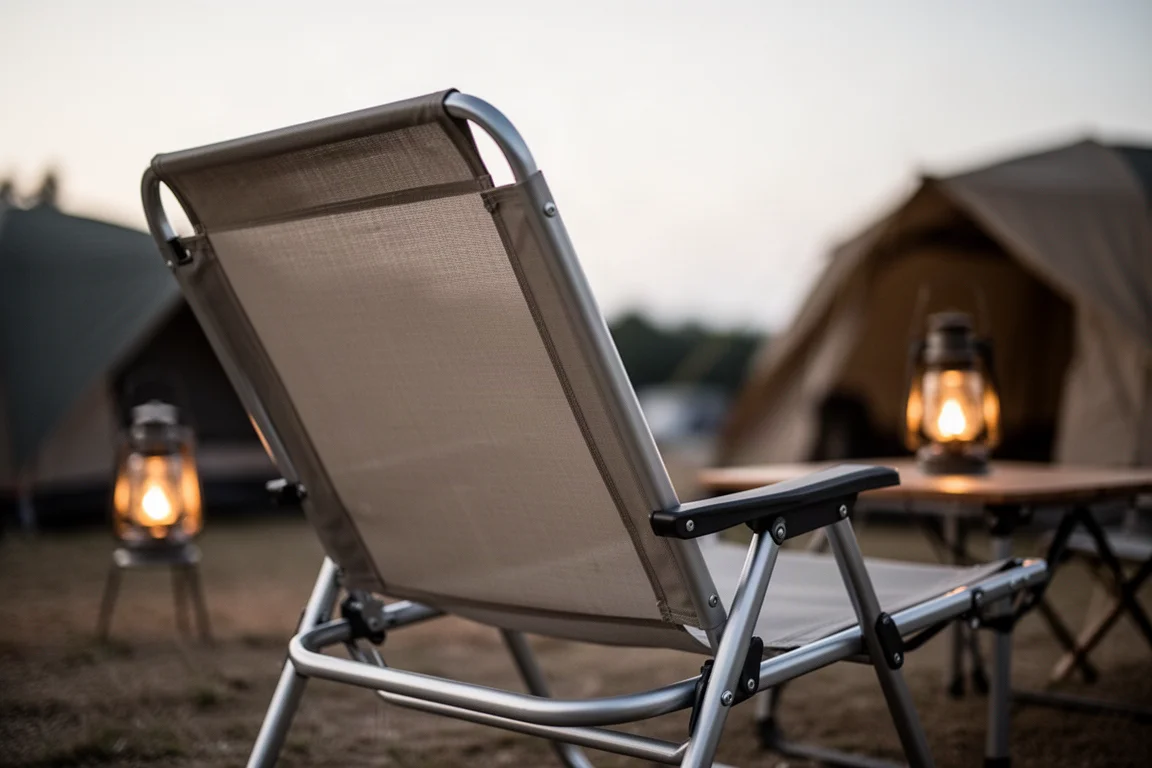
The armrests themselves are made from a high-grade plastic. They are not padded and not height-adjustable, so the seating position is fixed apart from the backrest angle.
Materials, Mesh, and Build Quality
The fabric is a blend of 90% polyester and 10% nylon, and the frame is mostly steel. The poles measure about 0.85 inches thick across the whole chair, which is a reasonable gauge, and the stitching is tidy and consistent throughout.
Mesh coverage is generous. Of the roughly 19 inches of total seating width, about 11.75 inches is mesh, which works out to around 62% of the chair. That makes a real difference in summer, and the chair feels breezy rather than clammy.
Stability is good. The feet spread wide, and the chair stays planted without wobble in normal use.
On longevity, a chair kept in regular indoor use for about two years showed some scuffing on the arms and legs and slight wear in the fabric, but the frame and stitching held up well overall.
Portability and Weight
Packed down, the chair measures about 33.75 inches long, 23.75 inches wide, and 3.5 inches tall, which matches the packed size listed by Decathlon. It folds flat rather than into a compact bundle. For scale, the packed volume is roughly 2.2 times that of a two-person tent.
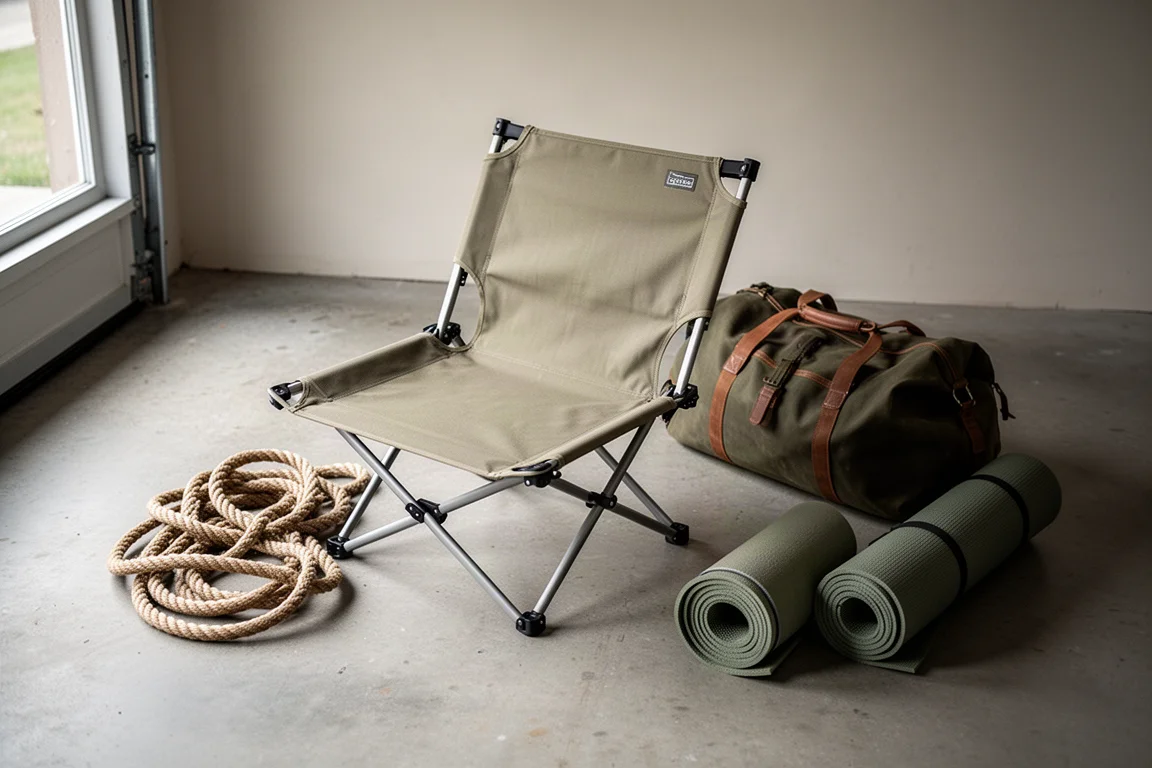
There is no carry bag. To move it, the chair is rotated 90 degrees and carried horizontally under one arm. With a packed weight close to 12 pounds, which is heavier than the marketed weight, that is manageable over short distances but awkward over longer ones, particularly for anyone with a shorter reach.
Main Strengths
The strongest argument for this chair is the combination of fast handling and a genuine reclining function at a price below the average camp chair. Setup and pack-away are quicker than a typical folding camp chair once the steps are learned.
Comfort is the second argument. The high seat height works well with a camp table, the seat stays taut instead of sagging, the backrest is tall enough to support the head, and the mesh keeps things cool in hot weather.
Things to Consider Before Buying
There are no pockets, no cupholders, and no carry bag. Small items have nowhere dedicated to go, and the chair has to be carried by hand.
The armrests are unpadded and fixed in height, so the only adjustment available is the backrest recline.
The chair also depends on its headrest for comfort at the top of the backrest. Beneath the headrest sits a solid metal bar, and without the headrest in place that bar is uncomfortable against the head, so an alternative pillow would be needed if the headrest is ever lost.
Finally, this is a budget recliner rather than a premium zero gravity chair. It will not match the feel or finish of a branded premium model, which is the expected trade-off at this price.
Buying Advice
Buy this chair if you want a reclining camp chair without paying premium prices, and if fast setup and a high, table-friendly seat matter more to you than accessories. The seven recline positions, the tall backrest, and the mesh coverage are the reasons it earns its place at a campsite.
Skip it if you need pockets and cupholders, if you want a compact packed size for backpacking or long walks to a pitch, or if you need padded and height-adjustable armrests.
As with any camp chair, it is worth checking the packed dimensions against your vehicle and the seat height against the table you plan to use. On both counts, this chair is straightforward to place.
Conclusion
The Quechua Reclinable Camping Chair gets the fundamentals right. It opens in about four seconds, packs away in about five, reclines through seven positions, sits high enough for a camp table, and keeps a taut, well-ventilated seat. It lacks pockets, cupholders, and a carry bag, and at close to 12 pounds it is not light, but for campers who want a comfortable recliner on a budget it is a sensible choice.
Product link
View more details for Quechua Reclinable Camping Chair
This product is mentioned in the review. Check the specifications, options, and compatibility before buying.
View more details for Quechua Reclinable Camping ChairFurther reading
Related Reviews
Camping Chairs
ALPS Mountaineering Rendezvous Chair Review: Fast Setup, Compact Pack, Real Trade-Offs
A practical look at the ALPS Mountaineering Rendezvous Chair: measured seat dimensions, setup and pack-away speed, materials, and who it genuinely suits.
Camping Chairs
Best Lightweight High-Back Camping Chairs: Helinox Sunset vs REI Flexlite Camp Dreamer vs Big Agnes Big Six
A measured comparison of three lightweight high-back camp chairs, covering setup times, seat dimensions, breathability, storage, materials, warranty, and price positioning.
Camping Chairs
Best Oversized Camp Chairs: ALPS King Kong vs Coleman vs YETI Trailhead
Four of the largest camp chairs compared on seat size, seat support, materials, storage, portability, and price, with clear guidance on which one is worth buying.