Running Accessories
ProFoot Heel Lifts: A Simple Fix for Achilles-Friendly Running in Low Drop Shoes
An inexpensive, well-fitting heel lift that adds 8 to 10mm of heel height to low drop shoes and helps take stress off the Achilles tendon.
Introduction
Heel lifts are one of those unglamorous accessories that can quietly solve a real problem. As running shoes trend toward lower and lower drop, high drop options have largely disappeared from the market. For most runners a moderate drop in the 6 to 8mm range works well, and research suggests mechanics do not change dramatically anywhere from 0 to 6mm. But for runners dealing with Achilles tendon issues, especially insertional Achilles tendinopathy, a low drop shoe can make things significantly worse.
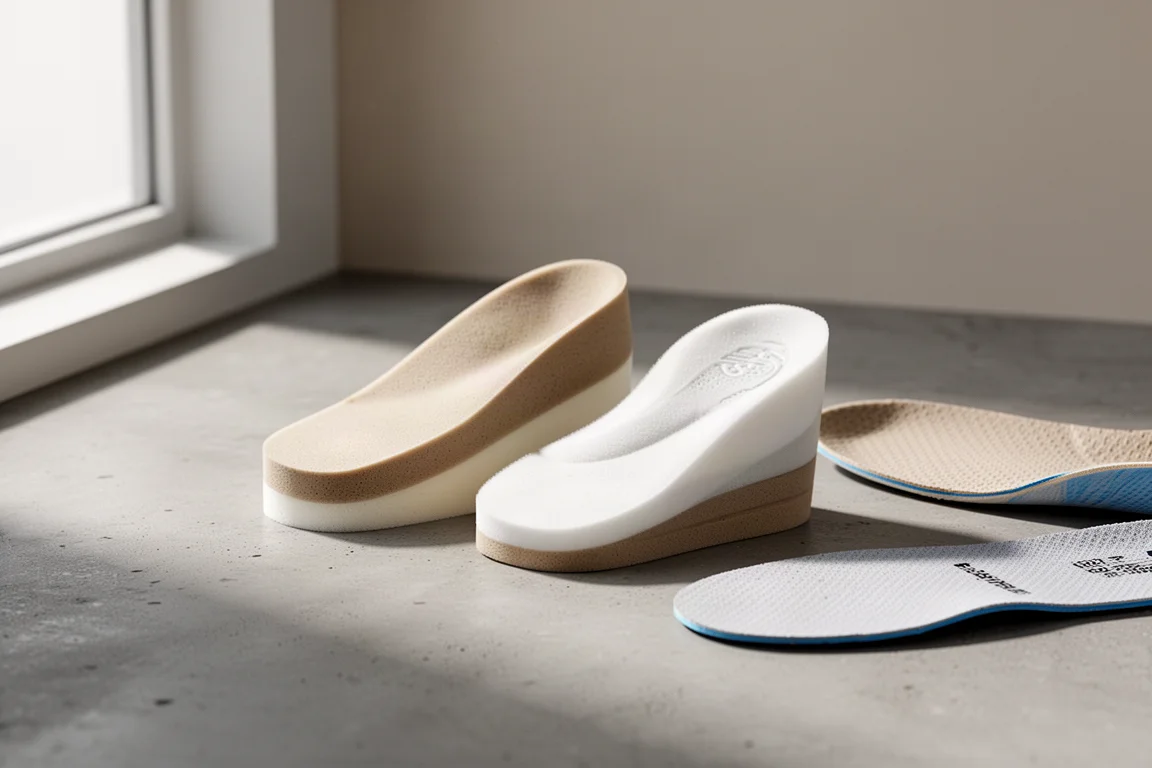
That is where an affordable heel lift earns its place. The ProFoot heel lift is a simple wedge that adds roughly 8 to 10mm of heel stack height to almost any shoe with a removable insole, and it has become a go-to tool for keeping low and zero drop shoes usable without aggravating the Achilles tendon.
Why Heel Lifts Matter Right Now
The Achilles tendon is the extension of the calf muscle that anchors into the heel bone, and it is the primary source of propulsion for most types of running. Keeping it healthy matters, and it is one of the most common running injuries, particularly as runners age into Masters competition.
A heel lift is not about fixing anything. It restricts how much the ankle dorsiflexes under load, which reduces stress on the Achilles tendon. This is especially valuable for insertional Achilles tendinopathy, where the tendon meets the bone and reacts badly to tension. With that condition, lower drop shoes demand more ankle motion, roughly 20 degrees of dorsiflexion for normal running, and a heel lift helps limit that motion to reduce irritation.
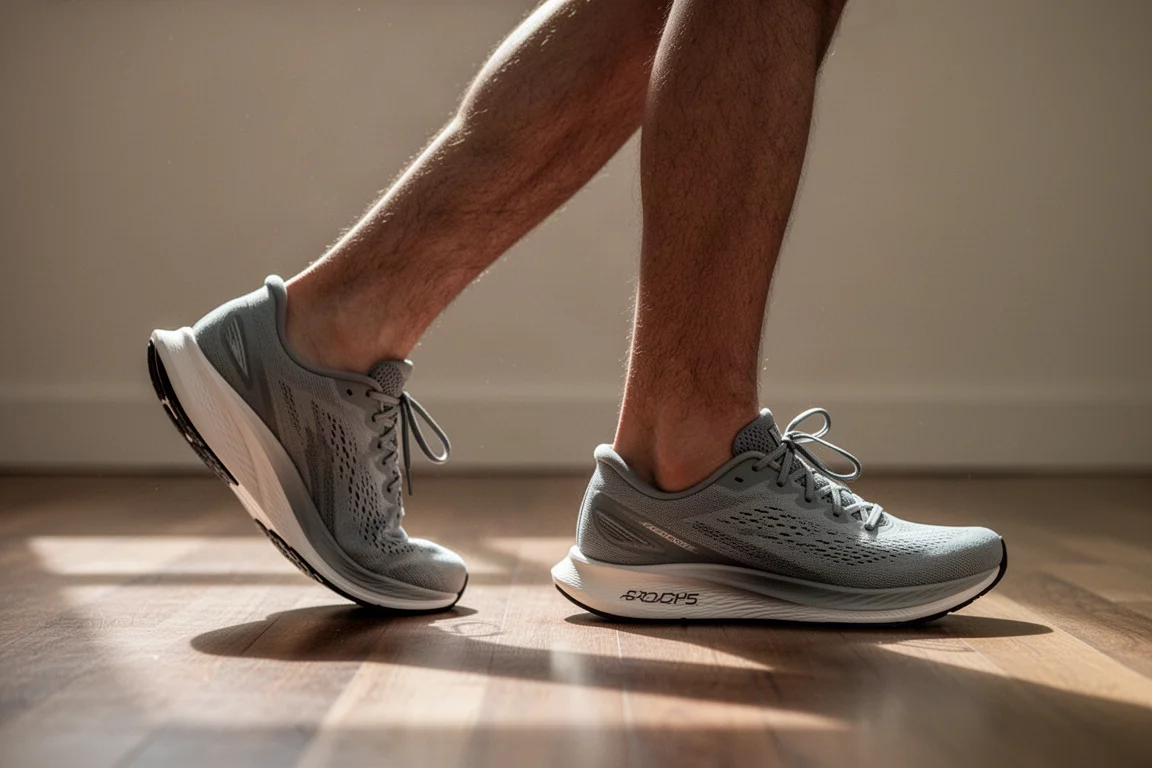
It is worth being honest about the trade-off: the load is not removed, only shifted. A higher heel position moves more stress into the knee and hip. With adequate strength there, that is usually fine, but some initial patella tendon soreness would not be surprising.
How They Fit and Stay in Place
There are a couple of practical requirements. The shoe needs a removable insole. If the insole is glued or sealed in, the lift either has to be forced out or the shoe simply is not a good candidate, and many racing shoes fall into that category. Placing the lift on top of the insole is not recommended; it slides around and becomes uncomfortable, especially during workouts or races.
When placed underneath the insole and set back properly, these lifts stay put impressively well. They are labeled left and right, with the longer side typically oriented on the medial side, though the orientation can be adjusted to personal preference.
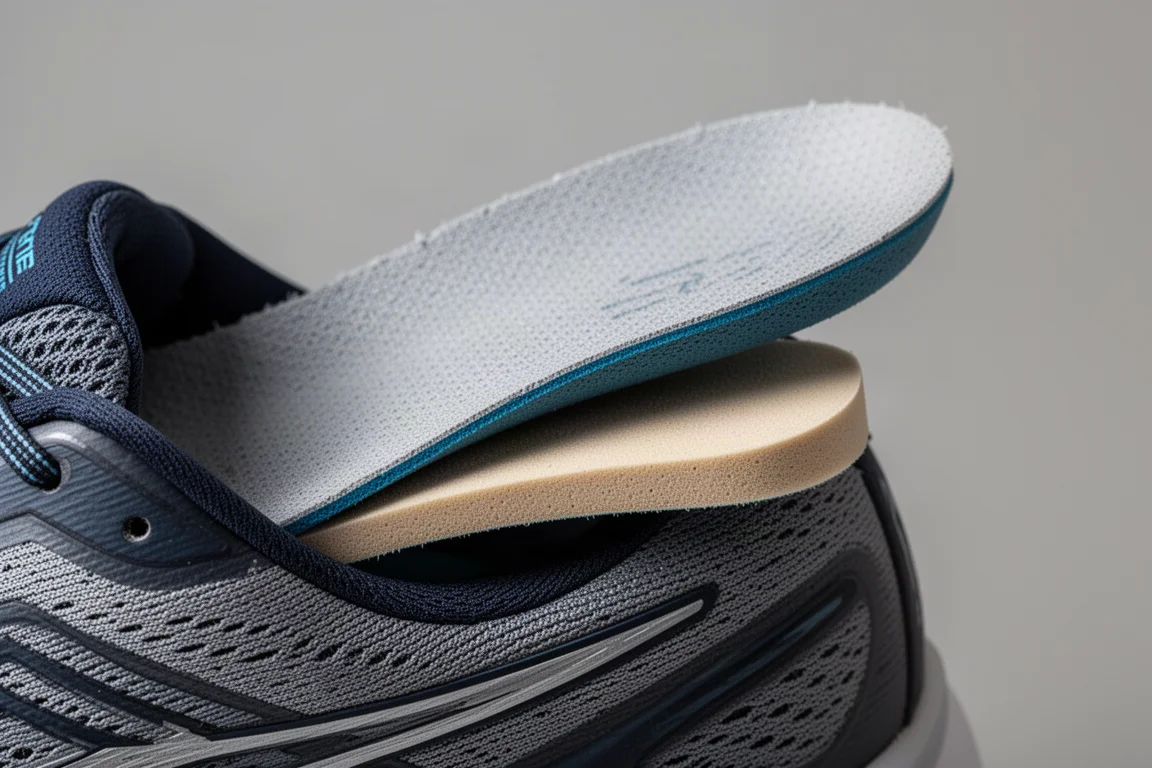
Because the material is somewhat soft, the lift compresses under load, so the effective added height is probably closer to 5 to 6mm once the shoe is loaded rather than the full 8 to 10mm measured statically. Either way, it adds a meaningful amount of heel drop and has proven durable, holding up well past 60 miles of use in testing.
Best Shoes to Use Them In
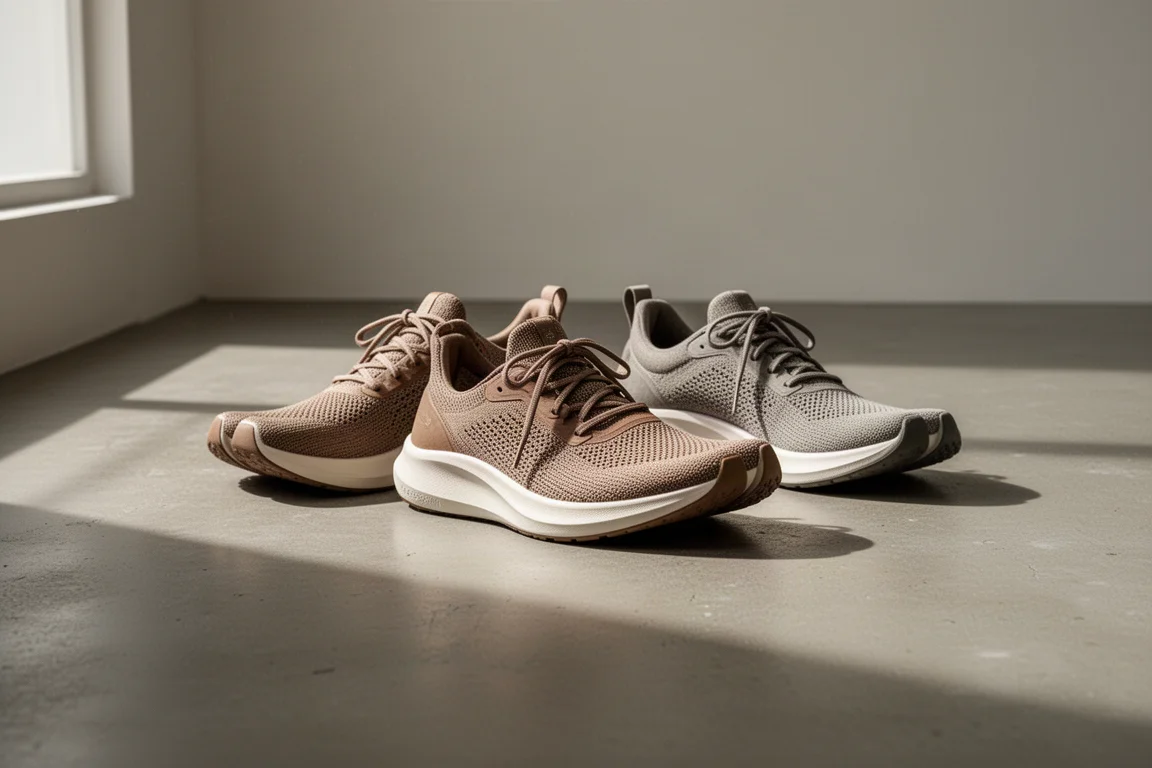
These lifts work best in low drop shoes, ideally somewhere in the 0 to 4mm range, perhaps up to 6mm. Adding one to a shoe that already has 8 or 10mm of drop would push things uncomfortably high. They pair particularly well with zero drop trainers and with tall, soft super trainers, where soft foam compresses so much under a heel strike that the real-world drop ends up far lower than the listed spec.
They have also proven versatile beyond running, fitting comfortably into everyday and even dress shoes, which makes them easy to keep wearing consistently throughout the day.
Things to Know Before You Buy
A few things to keep in mind. Heel lifts do not replace proper rehabilitation. Tendons respond to slow, heavy loading rather than rest, and symptoms that persist or make walking difficult call for input from a medical professional who specializes in runners. If running is possible and symptoms ease as things warm up, a heel lift can be a sensible way to keep moving while rehab progresses.
They also tend to shine for people who simply have limited ankle mobility, whether from a tendon issue or the ankle joint itself, and need an interim way to reduce stress while working on range of motion.
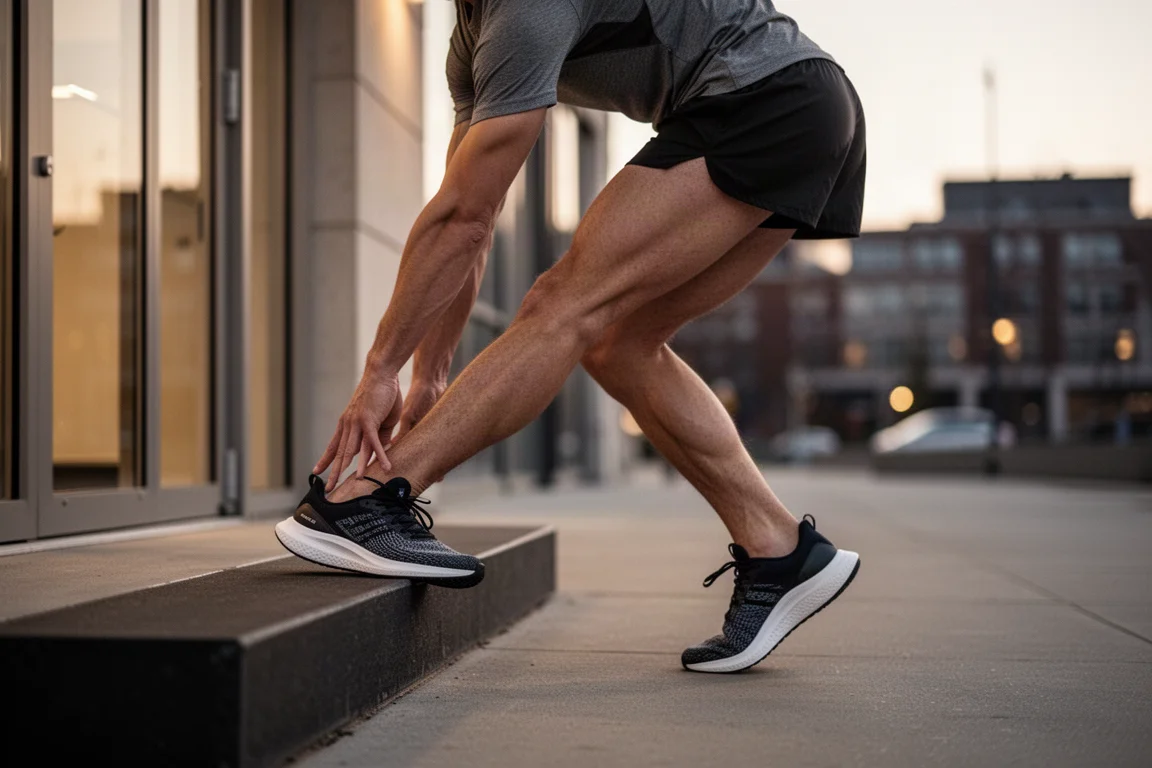
At around ten dollars a pair, the ProFoot lifts are inexpensive enough to experiment with across several pairs of shoes. After testing a range of competing options, these stand out for their price, their fit inside shoes, and their reliable grip once seated under the insole.
Conclusion
Heel lifts will never be exciting, but for runners managing Achilles tendon problems in an era of ever-lower drop shoes, the ProFoot heel lift is one of the simplest and cheapest tools available. Just remember that it shifts load rather than eliminating it, it needs a removable insole, and it works best paired with a proper rehab plan rather than as a substitute for one.
Product link
View more details for ProFoot Heel Lifts
This product is mentioned in the review. Check the specifications, options, and compatibility before buying.
View more details for ProFoot Heel LiftsFurther reading
Related Reviews
Running Accessories
Best Running Accessories: 20 Tried-and-Tested Picks Worth Your Money
Twenty running accessories that have proven themselves over years of daily training, racing, and long-distance testing.
Running Accessories
Best Running Picks This Month: Six Accessories Worth a Look
A filtered soft flask, running sunscreen, a featherweight race vest, a 4L hydration pack, race socks, and a parkrun memento band: six running picks we rate this month.
Running Accessories
Best Winter Running Gloves: 7 Pairs Our Testers Reach For Year After Year
Seven winter running gloves and mitts covering everything from cheap knitted classics to waterproof nuclear options for the coldest, wettest runs.