Kitchen Knives
Building a Professional Kitchen Knife Kit: The Gyuto and a Budget Bread Knife Worth Owning
The core knives and maintenance tools worth bringing to a professional kitchen, featuring a 240mm gyuto and an affordable 10-inch bread knife.
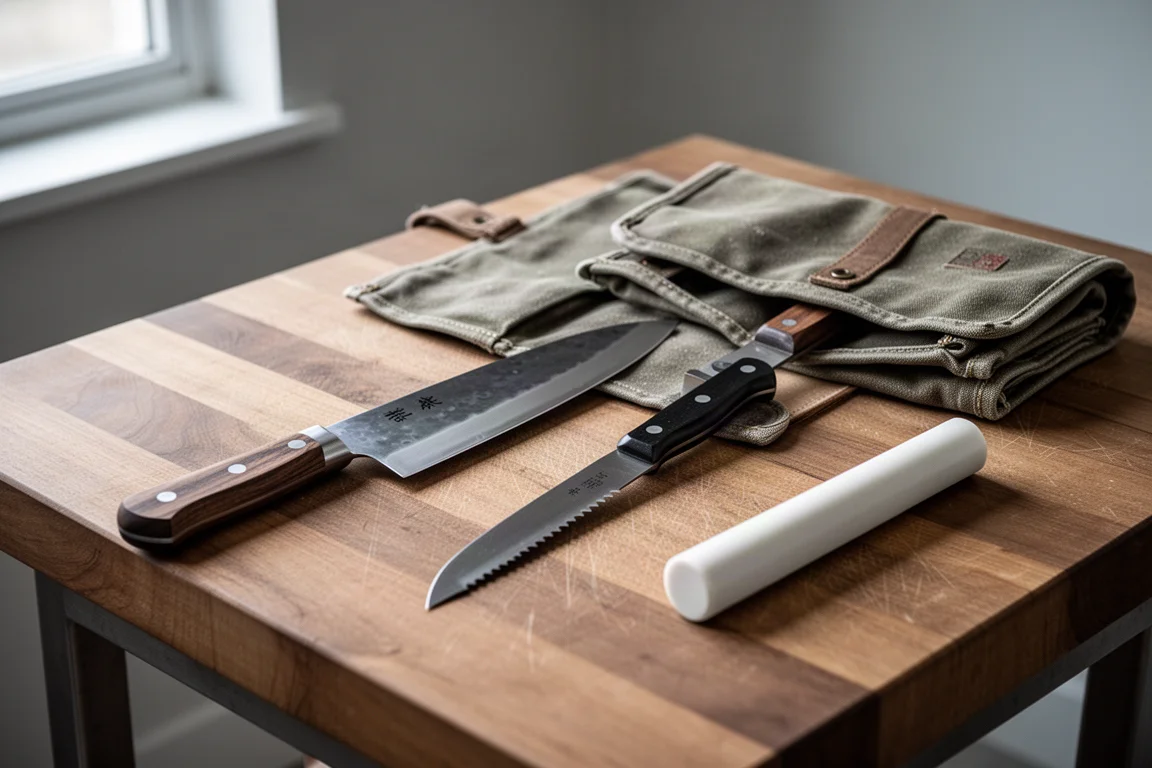
Introduction
If you were walking back into a professional kitchen tomorrow, what would you actually bring with you? Building a personal knife kit is about choosing a small number of versatile tools you trust, plus the maintenance gear to keep them performing shift after shift. Below we break down the essentials, the hand tools that make your station more efficient, and the honorable mentions that depend on where you work.
The Core Three-Knife Kit
A well-rounded professional knife kit really comes down to three knives: a gyuto, a petty knife, and one mid-sized knife in between. With those three, there is essentially nothing you cannot do in a kitchen.
The gyuto, the Japanese equivalent of a chef’s knife, is the most important knife in anyone’s toolkit and the most versatile blade you will own. The petty handles the small stuff throughout the day: opening vacuum-packed bags, butchery detail work, garnish, brunoise, shallots, garlic and chilies. Between the two of them, the only real gap is bread.
For that middle slot, you only need one of three options: a bunka, a santoku, or a nakiri. It slots in between the 240mm gyuto and the petty for smaller vegetables and more intricate tasks. Spreading your work across three knives also has a practical bonus: your edges last longer and you sharpen less often.
The Most Important Knife: a 240mm Gyuto
The Hatsukuro Shin Gyuto 240mm is the knife we would put at the top of any professional kit. The 240mm size is the recommendation for working chefs because it is long enough to handle slicing tasks and cut through larger vegetables easily, and once you get comfortable with it, it works well for more intricate tasks too. It is also great for breaking down fish and butchering larger cuts of beef.
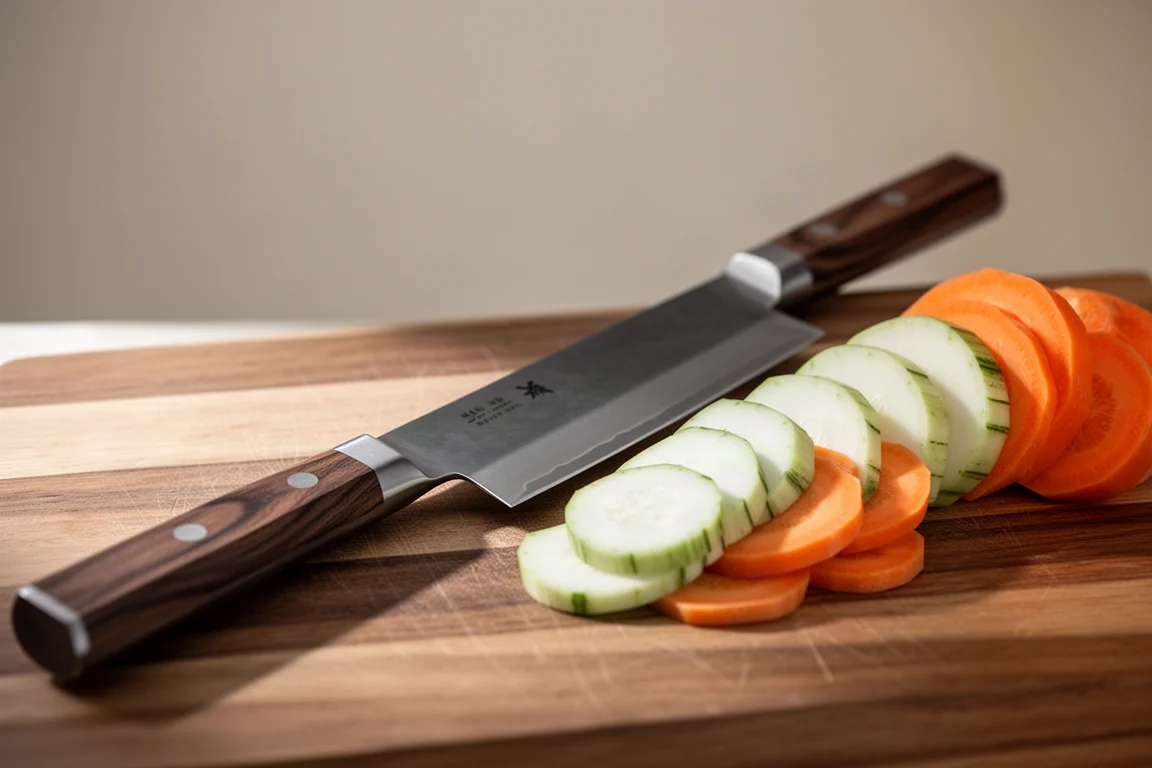
If 240mm feels a little too long for your hand, the 210mm version will do the job fine. But the 240 is worth trying first: it covers so many tasks that it arguably earns its place as the single most versatile knife you can carry.
Hand Tools Worth Keeping on Your Person
Beyond knives, a few small tools are worth owning yourself, because these are exactly the items you end up fighting other cooks over in a busy kitchen. A good peeler, your own microplane (many restaurant ones have flattened teeth that cannot zest anything), a dough scraper or bench scraper to keep your station clean without dragging your knife edge across the board, and a Sharpie for labels and FIFO rotation are all essentials.
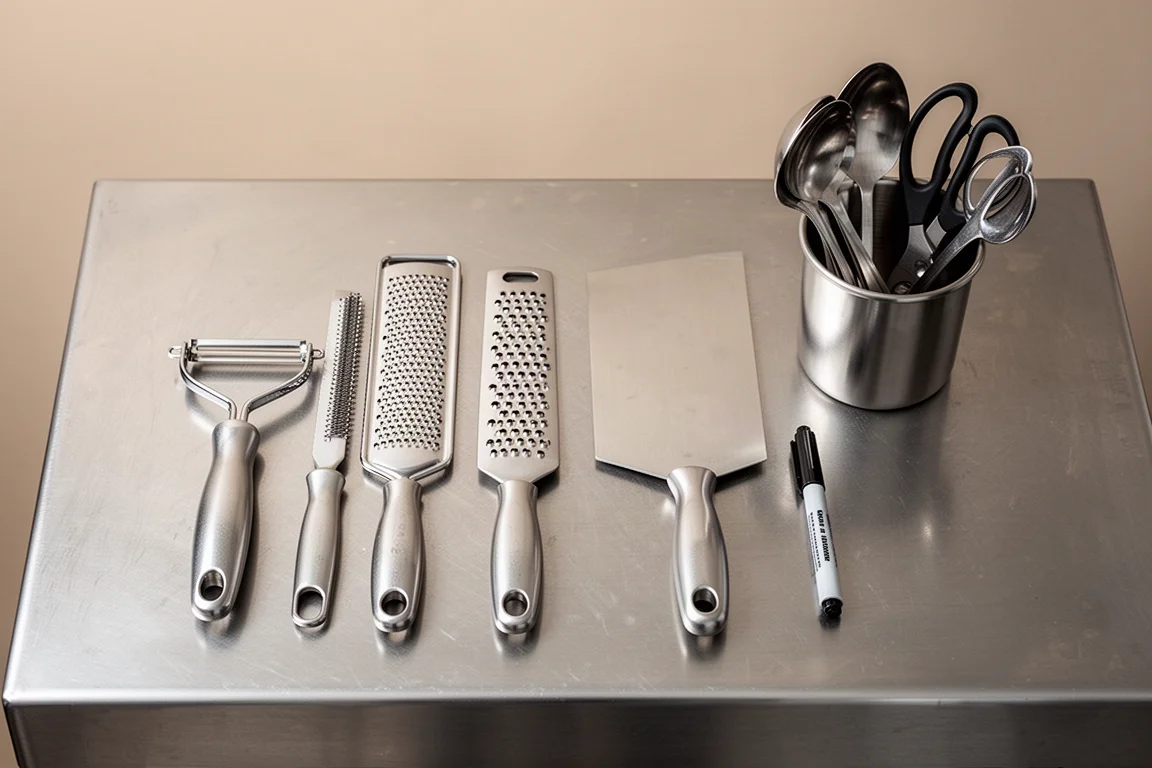
A receptacle or utensil crock is also worth having. Filling it with your own whisk, slotted spoon, spatulas, shears and a small pocket knife makes you noticeably faster during service, because everything you need is at arm’s reach on your own station. One caveat: this works best if you have your own station and can trust nothing will walk away overnight. Tweezer tongs are more situational, mainly useful in fine-dining settings for plating and delicate flipping.
Keeping Your Edges Sharp: Honing Rod and Whetstone
Two maintenance tools belong in every kit. The first is a ceramic honing rod. Ceramic is the right choice for Japanese knives because it is harder than the steel you are honing, while typical German honing rods are softer than Japanese steel and often carry ridges that can damage the edge.
The second is a whetstone, and 1000 grit is the right first stone. It is the middle-of-the-road workhorse grit. If you keep up with sharpening on new knives, you should rarely need to go coarser, since lower grits remove a lot of steel from the blade.
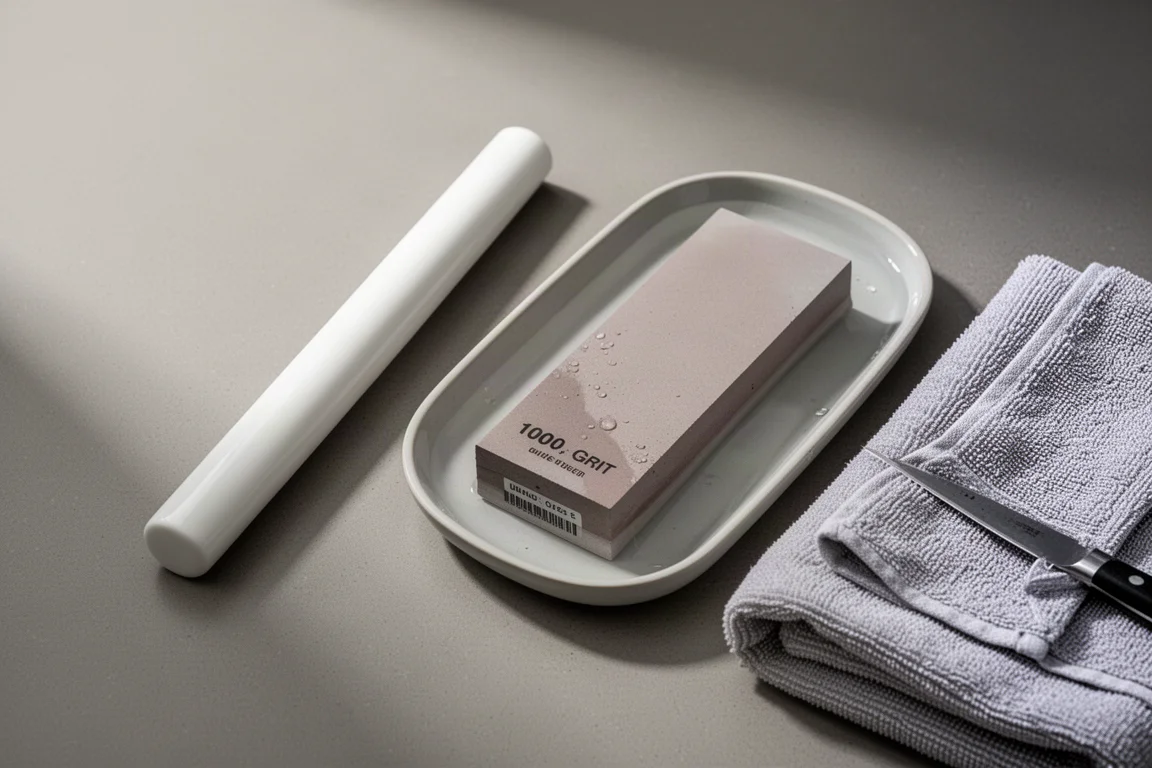
The two tools work together. Mid-shift, the honing rod quickly realigns your edge so the knife feels sharp again without the labor-intensive whetstone process, which can take anywhere from 10 to 15 minutes if you are practiced, or up to an hour if you are not. But honing only works so many times before the edge rolls over completely. A good rule: if seven to ten strokes on the rod are not bringing the edge back, it is time to remove steel on the stone. A knife roll and knife guards round out the kit, protecting your edges in transit and keeping blades from dinging against each other.
Honorable Mentions: Bread Knife and Beater Knife
Two knives earn honorable mention status rather than essential status, mostly because there is usually one hanging around the kitchen already. A beater knife is nice to have for any task you would not trust your Japanese knives with, but there is almost always one available at work.
The bread knife is a similar story, though having your own is admittedly nicer, since the communal one is not always the sharpest. You also should not spend much on it. The Mercer 10-inch bread knife is the pick here: it costs around $28, will last a good four or five years, and once it goes dull it becomes the beater bread knife in the kitchen while you buy your own nice one. The circle of life.
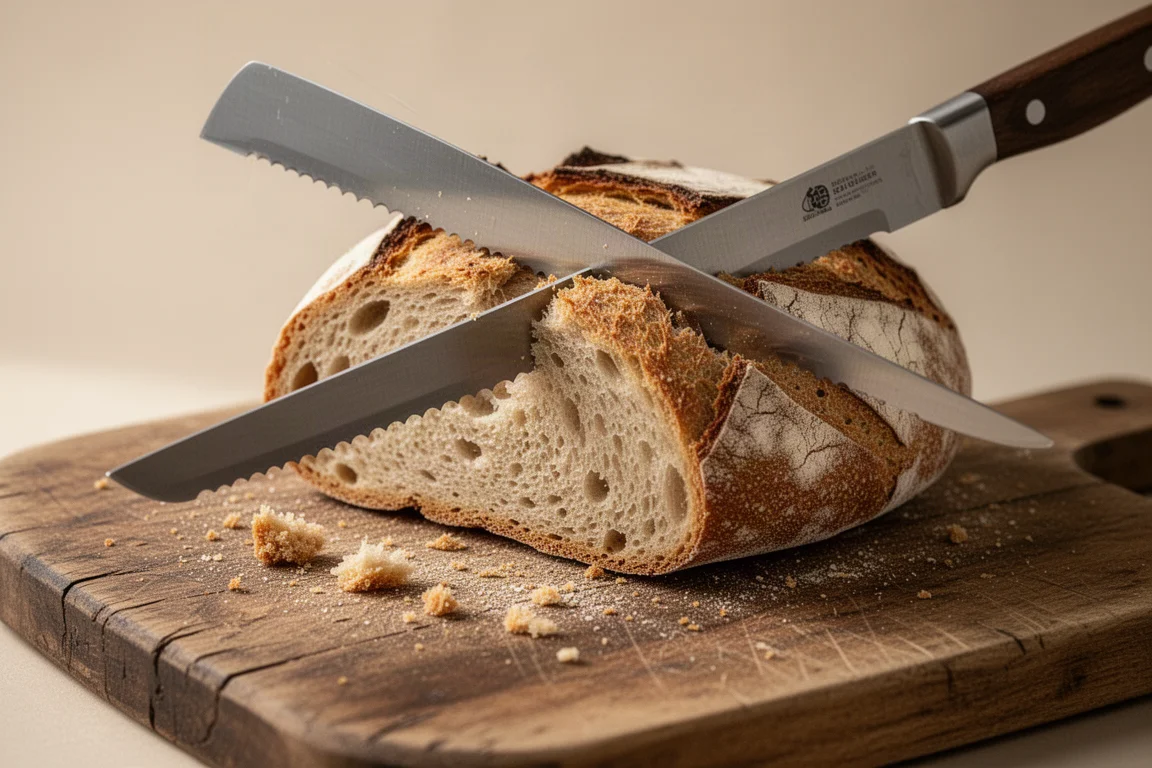
Beyond these, a few other knife shapes are worth considering as your kit grows: a honesuki for butchery, a sujihiki or yanagiba for slicing, a small paring knife for off-board trimming, or even a bird’s beak tourney knife if you ever find yourself turning potatoes into little footballs.
Buying Advice
If you are assembling a kit from scratch, start with the three-knife core: a 240mm gyuto, a petty, and one bunka, santoku or nakiri. Add the ceramic honing rod and a 1000 grit whetstone, because the sharpest knives in the world will not stay sharp without maintenance. Then fill in the hand tools that make your station self-sufficient, and only add the honorable mentions where your workplace actually calls for them.
Conclusion
A professional kitchen kit does not need to be large to be effective. A versatile 240mm gyuto, a mid-sized knife, a petty, proper maintenance gear, and a handful of personal hand tools cover nearly every task in a working kitchen. Save your budget for the knives you use every day, and let something affordable like the Mercer bread knife handle the rest until it earns its retirement.
Product link
View more details for Hatsukuro Shin Gyuto 240mm
This product is mentioned in the review. Check the specifications, options, and compatibility before buying.
View more details for Hatsukuro Shin Gyuto 240mmFurther reading
Related Reviews

Kitchen Knives
Best Chef's Knives 2026: 27 Popular Options Tested and Ranked
A comprehensive review of 27 chef's knives ranging from $18 to $380, with honest assessments of handle comfort, blade balance, and real-world performance.

Kitchen Knives
Best Chef's Knives Under $75: Two Tested Recommendations
Two practical 8-inch chef's knives that balance sharpness, comfort, and durability without premium pricing.

Kitchen Knives
Best Chef's Knives 2026: 27 Options Tested and Ranked
A comprehensive review of 27 chef's knives ranging from $18 to $380, with honest assessments of handle design, balance, blade profile, and real-world performance.