Gravel Bikes
Priority Gemini Smart Shift Review: A Belt-Drive Gravel Bike With a Sealed Gearbox
An aluminium gravel bike built around a 600% Pinion Smart Shift gearbox and a Gates belt drive, with very low maintenance and a premium price to match.
Introduction
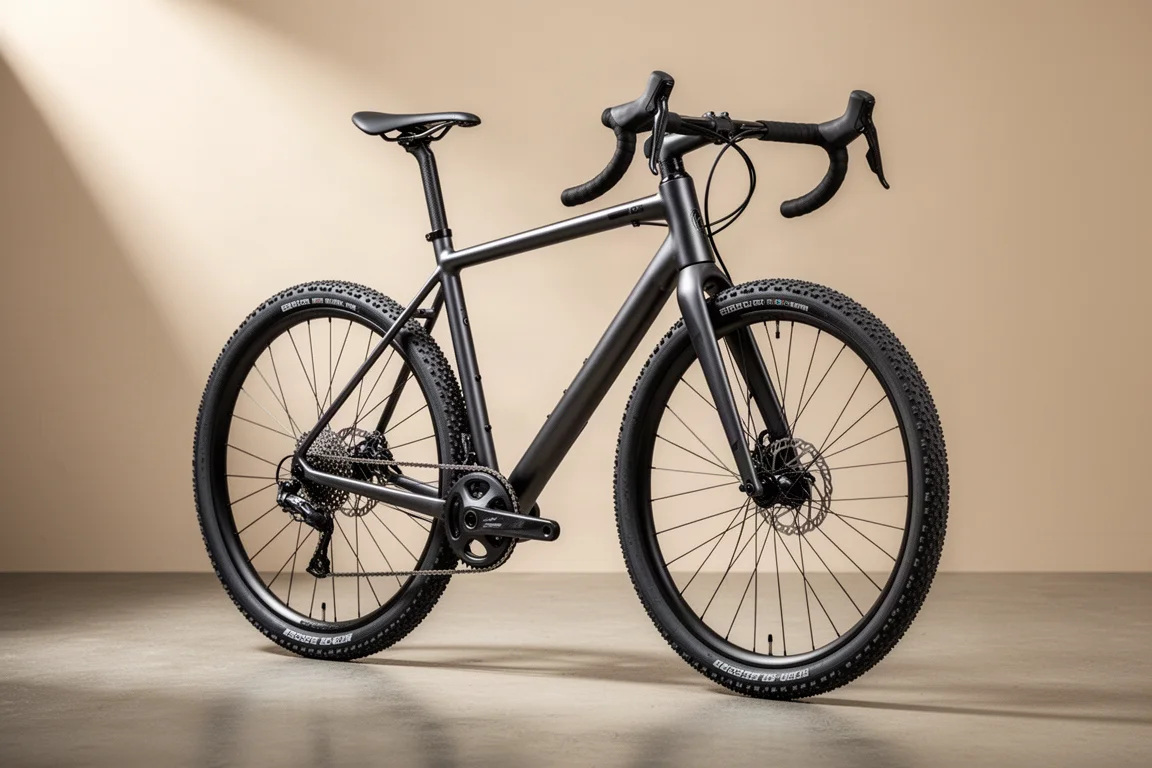
From a distance, the Priority Gemini Smart Shift reads as an ordinary gravel bike. Get closer and the details start to add up: there is no chain, no rear derailleur, and a sealed gearbox sits where a conventional crankset would be. Priority is a New York City based brand, and this aluminium gravel model is built around a Pinion Smart Shift gearbox paired with a Gates belt drive.
The medium frame used for this assessment weighs 11.82 kg, or 26 lb 4 oz, and the bike is priced at $3,499. A titanium version is also offered at $5,499. Those numbers place it firmly in luxury territory, so the question is whether the unusual drivetrain earns its keep.

The short answer is that this bike trades outright performance and familiarity for a level of drivetrain maintenance that very few conventional bikes can match. Understanding where that trade pays off, and where it does not, is the whole story of this bike.
Who This Bike Is For
This is a gravel bike, so the obvious starting point is riders who want to leave paved roads but still travel efficiently on them. The drop handlebars put the rider in a more aerodynamic position than a flat-bar mountain bike, which makes mixed-surface riding less of a slog.
The 600% gear range changes the picture further. That much range suits riders who carry luggage, tackle long climbs, or simply prefer to hold a comfortable cadence and power output rather than grind or spin. It is a natural fit for bikepackers covering long distances with everything attached to the bike, and the sealed gearbox is a large part of why round-the-world riders gravitate toward this style of drivetrain.
It also makes a strong case as a commuter, particularly for anyone riding through a wet winter or living near the sea. Salty air and road salt have far less to attack on this bike, and the gears sit sealed in oil. A rider who wants to spend a few minutes wiping down a frame instead of cleaning and lubricating a chain every week is the clearest candidate here. It also appeals to anyone who genuinely enjoys talking about gearboxes and belt drives, because on any outdoor ride this bike invites questions.
Main Strengths
The drivetrain is the reason this bike exists, and it deserves to be examined in two parts: the gearbox and the belt.
Pinion Smart Shift Gearbox
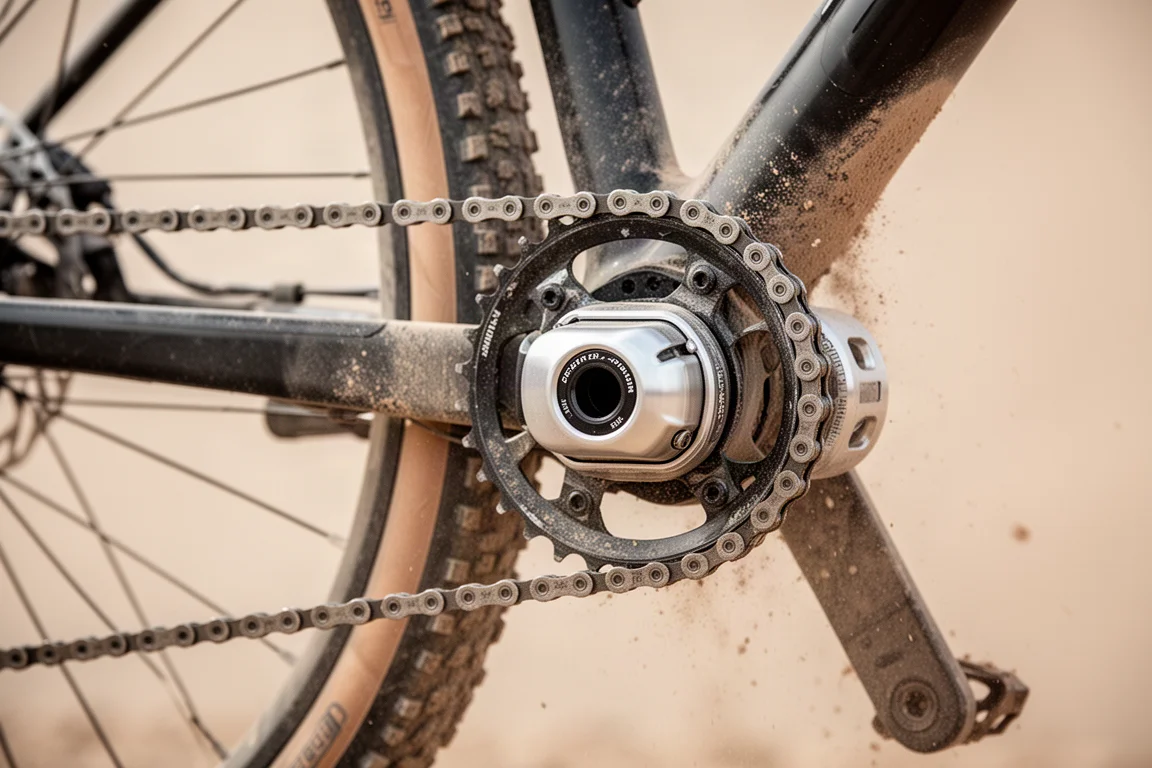
Pinion is a German company founded by former Porsche engineers, and its gearbox is essentially a car-style transmission shrunk down for a bicycle. All of the gears live in a sealed unit mounted at the bottom bracket, bathed in oil, fully protected from dirt, water, and weather. The only recommended service is an oil change every 10,000 km.
The claimed gear range is 600%, which is enormous. For context, comparable Shimano and SRAM drivetrains sit around 455% and 520% respectively, so the Pinion genuinely goes further. Because the weight is centralized at the bottom bracket, the bike carries a low centre of gravity, and removing the derailleur from the equation frees up ground clearance.
This version is electronic, so instead of the grip shift that older Pinions used, it pairs with TRP electronic levers and shifts at the press of a button. You can shift while stationary, which is genuinely useful if you stall on a steep climb and want to select an easier gear before setting off again. According to Priority, the battery lasts around 20,000 shifts.
One expectation needs correcting, though. The gearbox does not reliably shift under heavy load. There is a failsafe built into the system that prevents a shift once torque passes a certain threshold, which protects the mechanism. In practice, dropping into easier gears requires backing off the pedals noticeably, while shifting into harder gears tends to work with less interruption. It is a different rhythm from a derailleur, and it is the single habit most riders will need to relearn.
Belt Drive and Low Maintenance
The Gates CDX belt is made from nylon and carbon fibre and replaces the chain entirely. Priority states it can last three to four times longer than a chain, which works out to roughly 20,000 miles. Belt-drive bikes use sprockets designed specifically to mesh with the belt rather than chain-shaped teeth.
The practical benefits are straightforward. There is no oil, no degreaser, and no black marks on your calf. You hose the belt off and ride, and only in genuinely dusty conditions would a silicone-based lubricant be worth adding. The belt does not rust, so rain, snow, road salt, and grit are not a problem, and it runs quietly. It also looks distinctive.
There are trade-offs. Belts are expensive up front, and the frame must be belt-compatible, which means a split somewhere in the rear triangle so the one-piece belt can be installed. Traditional derailleurs cannot be used with a belt, so gearing comes from an internal hub, a gearbox, or a single speed. Because the belt is a single loop, a failure cannot be patched with a spare link. If it snaps, you are walking unless you are carrying a replacement, and a belt is unlikely to be sitting on a local shop shelf without being ordered in. Belts are also slightly less efficient than a chain at lower power outputs, evening out once you get past roughly 200 watts.
Ride Feel and Handling
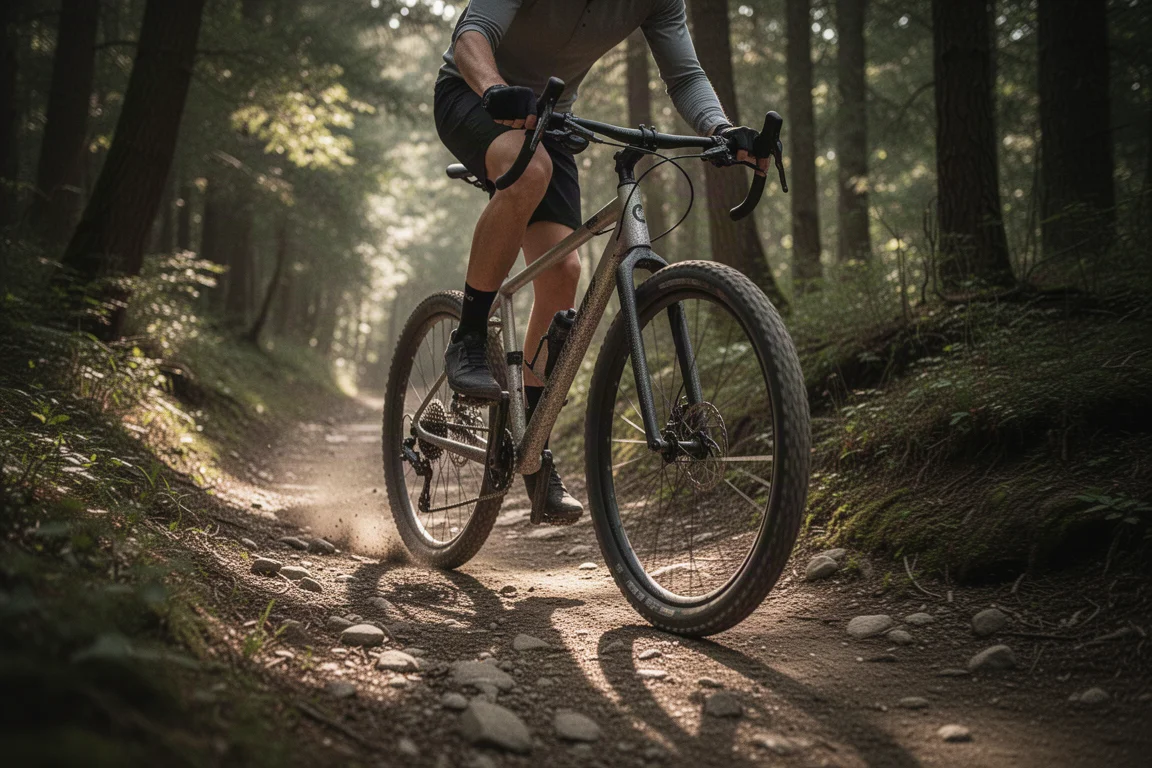
On the road, the weight distribution is the standout quality. The bike corners very well, and despite being heavy overall, it never feels awkward through turns. Riders coming from performance road bikes will find it feels substantial by comparison. Riders used to touring bikes, loaded commuters, or bikes carrying bags will notice far less of a penalty: you pedal, it moves forward, and it does so without drama. What it will not do is set records, and riding alongside people on performance bikes will feel like a disadvantage.
The frame carries rack and mudguard mounts plus several additional mounts, a carbon fork, a carbon seat post, and a frame that is dropper compatible. Wheels are 700c alloy with 40mm WTB gravel tyres, and the drop bars have 12 degrees of flare. The TRP levers are comfortable, hand-shaped, and offer lever reach adjustment, which matters on a component that sells for around $300 per lever.
Shifting speed is part of the ride character as well. Changing gear is slower than on a derailleur system, but the flip side is that you can request several shifts in a row without the drivetrain feeling like it might destroy itself. Nothing slips or churns, and the bike stays composed even when you press the buttons repeatedly.
Things to Consider Before Buying
Weight is the first thing to accept. At 11.82 kg in a medium frame, this is heavier than a comparable derailleur gravel bike, which is a direct consequence of the gearbox and belt system. None of that weight disappears with upgrades.
The shifting behaviour under load is the second consideration. Marketing material often implies that Pinion Smart Shift can shift under load, and the reality is more nuanced. Most of the time the pedals need to be backed off noticeably, particularly when dropping into easier gears. The failsafe is there to protect the gearbox, but it does mean the experience differs from what the marketing suggests, and it takes time to adjust.
Servicing is mostly a non-issue, with one important exception. Everything routine is simple, and the gearbox oil change is an easy job at 10,000 km intervals. If something internal does go wrong, the unit has to go back to Pinion. Those gearboxes have a strong reputation for reliability, which is why long-distance riders trust them, but the repair path is not local. Replacement belts run around $100.
Upgradability is better than many expect. There is no internal cable routing faff at the handlebars, the seat post is a standard item, and the wheels can be upgraded with either a single-speed rear hub or a Shimano free hub plus a single-speed spacer kit. That opens up plenty of wheel options.
Sizing deserves attention. Cranks are 170mm across all frame sizes because that is the only length available on this Pinion crank arm, although Pinion does offer a lower-priced crank set with far more length options down to 155mm. Handlebar width scales with frame size, with a 42cm flared bar on the medium that measures slightly narrower at the hoods because of the flare. Smaller riders would likely be better served by narrower bars and shorter cranks than the current range offers.
Buying Advice
At $3,499, this is a luxury purchase, and it is worth putting that number in perspective. The Pinion gearbox alone costs over a thousand dollars, so when the individual components are added up, the bike is well specified for the money. The titanium version at $5,499 is more expensive again, as expected, and it looks the part.
The sizing calculator put a 5’9 rider on a medium, which turned out to be accurate even for someone who normally ends up on small frames. That is worth noting, because bike sizing varies so much between brands that a straightforward fit is refreshing.

Availability is another factor. Priority is US-based and ships internationally, but shipping to the UK runs around £150 by air freight and import duty applies on top. That varies by country, so it is worth checking before committing. It is also worth planning ahead on consumables: a replacement belt is inexpensive, but it is not something most local shops keep in stock, so carrying one on long trips is sensible. Riders who mostly want low maintenance at a lower price should know that Priority also offers cheaper belt-drive models that share the same low-maintenance philosophy without the gearbox.
Conclusion
The Gemini Smart Shift is a genuinely unusual bike, and it is built well. The 600% gear range is remarkable, the sealed gearbox and belt drive deliver maintenance that most bikes cannot approach, and the frame carries mounts and components that make it practical for commuting and bikepacking alike.
It is not, however, a bike that will suit everyone. Riders raised on well-tuned derailleur systems will find it heavy, slower to shift, and different in ways that take real adjustment. The shifting-under-load limitation is the most notable gap between expectation and reality. For riders who value durability, weather resistance, and near-zero drivetrain upkeep, those compromises are reasonable ones. For riders chasing speed and familiar shift feel, derailleurs still make more sense.
Product link
View more details for Priority Gemini Smart Shift
This product is mentioned in the review. Check the specifications, options, and compatibility before buying.
View more details for Priority Gemini Smart ShiftFurther reading
Related Reviews
Gravel Bikes
3T Exploro Ultra Review: A Fast Gravel Bike Built for Big Tyres
A close look at the 3T Exploro Ultra, an aero carbon gravel bike designed around wide tyres, with road-like handling, a 980 g frame and genuine rough-terrain capability.
Gravel Bikes
3T Extrema Italia Review: Aero Gravel Speed With Room for 57 mm Tires
The 3T Extrema Italia pairs an aero frame with huge tire clearance, Italian-made carbon and a more comfortable ride than the RaceMax. Here is what to know before buying.
Gravel Bikes
3T Race Max 2 Italia Review: An Aero Gravel Race Bike Made in Italy
A closer look at the second-generation 3T Race Max 2 Italia, covering its aero updates, ride character, tire clearance, internal storage and who it suits.