Camping Stoves
Primus Micron 3 vs Primus Ulti: Two New Stoves for Two Very Different Trips
A lightweight 58 g backpacking stove and a 600 g expedition system with an infrared burner, compared for the trips each one actually suits.
Introduction
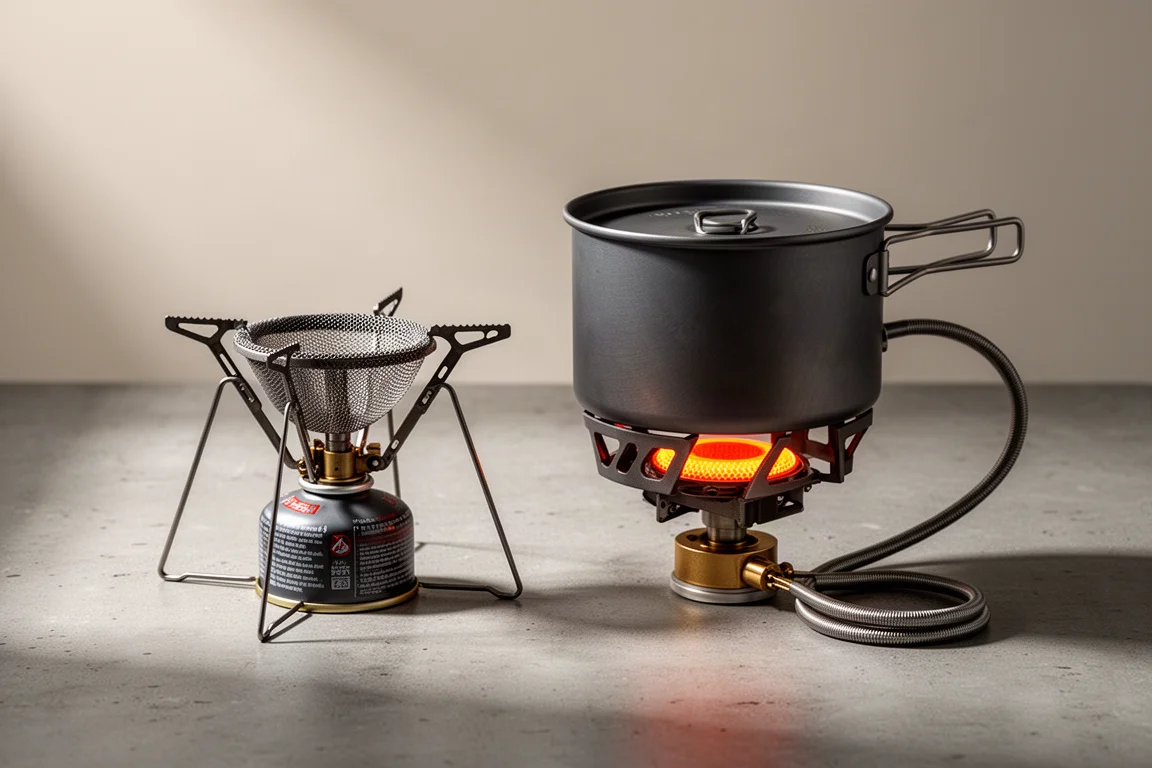
Primus has a long history in outdoor cooking, and the brand is associated with early soot-free stove designs and with equipment used on the first ascent of Everest. Its two newest additions, however, could hardly be aimed at more different trips. The Micron 3 is the lightest stove Primus has ever made at a claimed 58 g, while the Ulti is a 600 g expedition system built around a pot with an integrated heat exchanger.
One is designed for people who count every gram. The other is designed for people who want fast boils in genuinely cold conditions, whether that means melting snow or rehydrating meals at altitude. Neither is trying to be the other, and understanding that split is the fastest way to work out which one belongs in your pack.
What Sets These Two Stoves Apart
The clearest dividing line is weight and purpose. The Micron 3 is a bare burner that you pair with your own titanium mug or pot, and it folds down small enough to carry in a back pocket. It suits solo travel and lightweight backpacking, where the rest of your kit is already pared back to the minimum.
The Ulti takes the opposite approach. It is a complete cooking system with its own pot, an external fuel line, and a burner that produces no visible blue flame at all. Instead it uses infrared combustion, which makes it windproof and gives it a distinctive glowing element. It is heavier because it is built for multi-day trips, shared use, and conditions where a lightweight stove would struggle.
That difference in philosophy also shows up in how each stove handles wind, cold, and stability, which is where the practical comparisons begin.
Primus Micron 3: The Lightest Stove Primus Has Made
At a claimed 58 g, the Micron 3 is the lightest stove in the Primus range. It is a canister-mounted design that takes a standard screw-thread gas canister, and it is intended to be paired with your own cookware, typically something like a titanium cup. If you already carry an ultralight tent and a lightweight sleeping bag, this is the stove that matches that approach rather than undermining it.
Despite the size, output is rated at 2,600 W, which is genuinely powerful for something this small and translates into a reasonable cook time. Primus suggests roughly three and a half minutes to boil a litre of water, though that figure depends heavily on water temperature, wind, the gas you are using, and altitude.
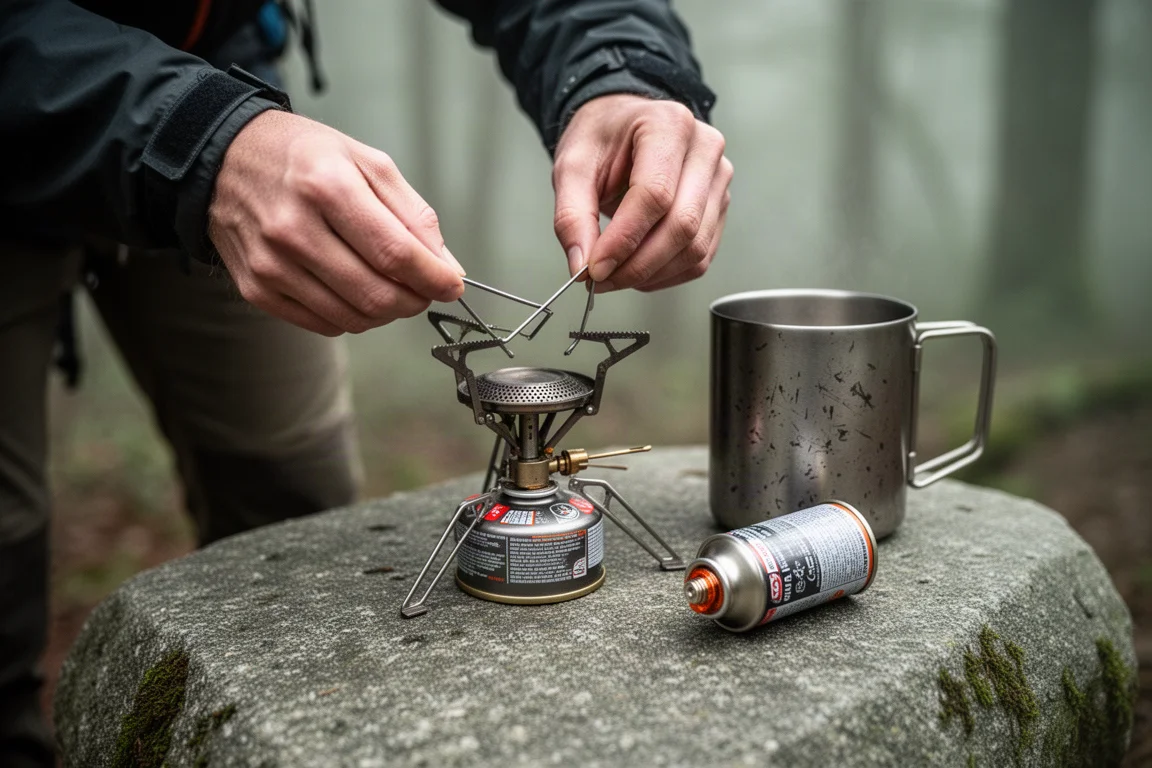
Wind has traditionally been the weak point of stoves this light, because a small burner leaves plenty of open space for airflow. Primus has addressed that with a mesh or gauze element on top of the burner, and the design holds up well in breezy conditions. The folding pot supports and handle pack down neatly, and the build quality is a step above the flex and rattle that often comes with stoves in this class.

Stability is better than the size suggests, though like any small canister stove it benefits from level ground. A separate gas stand is available that supports the whole canister and stove assembly and reduces the chance of a tip-over. The control handle is ergonomic and gives useful range between a fast rolling boil and a gentler simmer, so simple cooking is realistic rather than just water heating.
There is no built-in Piezo igniter, and that is deliberate. Many users find integrated igniters fail over time, so the stove can be bought with or without a separate Piezo, and a lighter works perfectly well. It ships with a small stuff sack that underlines how little space it takes up.
Primus Ulti: Fast Boils in Cold Conditions
If the Micron 3 is about saving grams, the Ulti is about speed and reliability in hard conditions. Its output is rated at 3,000 W, and its main selling point is how quickly it brings water to a boil, which matters most when you are melting snow or preparing dehydrated meals in the cold. It can also be turned down to a simmer.
The Ulti is built around an external fuel line, which brings several practical advantages. The folding legs allow the burner to sit low and close to the ground, which makes the whole setup noticeably more stable, so adjusting output is less likely to knock anything over. The fuel line also lets you invert the gas canister once the stove has warmed up, and a brass pipe running into the flame pre-warms the gas before it is burned. That pre-warming is critical in cold conditions and helps the stove burn efficiently when temperatures would otherwise suppress performance.
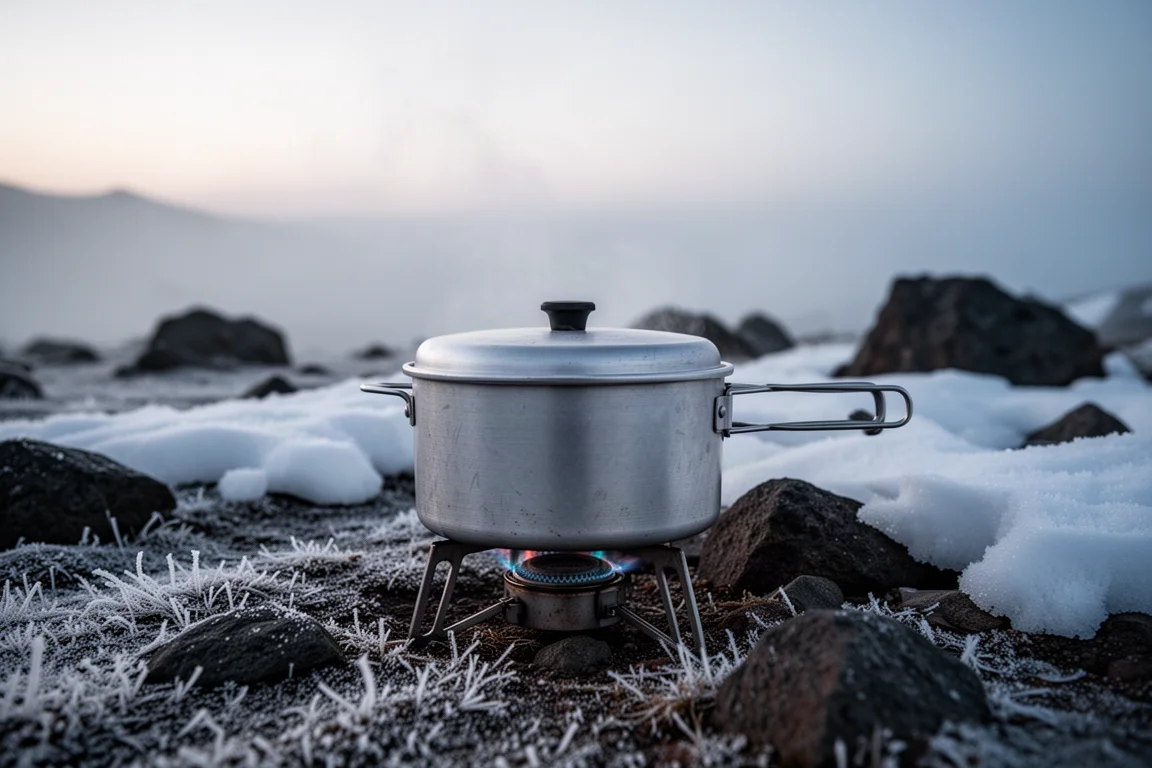
The burner itself is the most distinctive feature. There is no blue flame; combustion is infrared, which makes the stove windproof and visually striking. For an environment where lightweight burners can be rendered nearly useless by a gust, that is a meaningful advantage rather than a novelty.
The Ulti does not clip onto the base of the canister, and again that is intentional. With large gloves on, it is far easier to lift and reposition the setup using the substantial handle, which sits down securely and includes a small lip. Even when the pot is part loaded with water, the arrangement is more stable than it looks and less likely to be blown over.
One caution is worth repeating: the Ulti runs hot and sits relatively close to the ground. In dry conditions, place it on something solid and fire retardant such as a rock, and never on dry grass or a dry field.
Pot, Lid, and Heat Exchange
The Ulti’s pot is made from anodised aluminium and feels solid, with a well-made integrated heat exchanger that improves efficiency and works particularly well with the low burner base. The lid comes off with moderate effort rather than popping loose, which is the right balance in the field. There is a large grab handle, a small strainer for draining when you have been boiling, and a divot for pouring water cleanly, which is useful if you are making coffee.
The one-litre pot is the standard size, and Primus offers 1.7-litre and 2.5-litre versions separately if you need more capacity for a group. Like the Micron 3, the Ulti has no built-in Piezo igniter, for the same practical reason: if an integrated igniter fails you still need a backup way to light the stove, so a separate lighter is the simpler arrangement.
Packing and Portability
The Ulti’s burner and fuel line fold up and store inside the pot. A standard gas canister will not fit in there, but that is not much of a limitation, since this stove is aimed at multi-day trips and group use where you would carry a larger canister anyway. The leftover space is enough for a Piezo, the supplied stuff sack, and a few small extras.
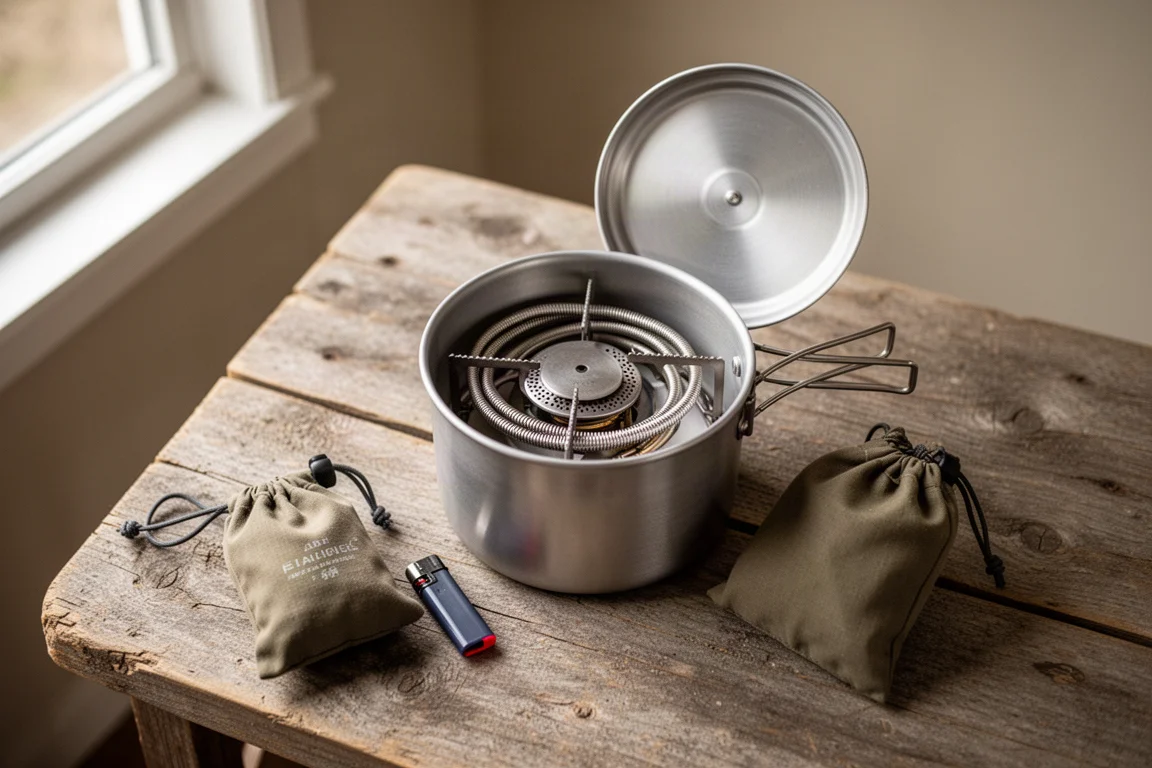
Once everything is packed, the handle comes over the top and clips down, and a sliding catch locks the handle in place so the contents stay put. The Micron 3 takes the opposite route to portability: the supports and handle fold in, the whole thing drops into its tiny bag, and it disappears into a pocket or a corner of a pack.
Buying Advice
The decision comes down to how you travel. Choose the Micron 3 if you are hiking solo or lightweight, already carry compact cookware, and want the lightest possible option that still delivers strong output and respectable wind resistance. It is the stove for a titanium cup and a small canister.
Choose the Ulti if you are heading out for several days, travelling with others, or operating in cold and exposed conditions where fast boils, windproof combustion, and a stable base matter more than pack weight. At 600 g it is not the lightest on the market and it is not trying to be. It is a durable system that will last, and it is often shared between a few people.
For a middle path, the Ulti works well for solo camping too, where a little more comfort and a quick, efficient cook are worth carrying. If every gram is being counted, the Micron 3 is the one to look at.
Conclusion
Two new stoves, two clear purposes. The Micron 3 is a 58 g canister burner with 2,600 W of output and a wind-resistant mesh head, ideal for ultralight backpacking and solo travel. The Ulti is a 600 g expedition-ready system with 3,000 W of output, an external fuel line, an infrared windproof burner, and an anodised aluminium pot with an integrated heat exchanger, built for cold conditions, snow melting, and group use. Match the stove to the trip and either one will earn its place in your kit.
Product link
View more details for Primus Micron 3
This product is mentioned in the review. Check the specifications, options, and compatibility before buying.
View more details for Primus Micron 3Further reading
Related Reviews
Camping Stoves
BCB Fire Dragon Mini Cooker Review: A Tiny Folding Stove With Real Trade-Offs
A palm-sized, fuel-flexible folding stove that heats water well enough, but brings flame control, stability, and fuel cost questions worth understanding first.
Camping Stoves
Boundless Voyage Titanium Alcohol and Wood Stove Review: Ultralight Cooking, Two Ways
A titanium alcohol and wood burning stove kit that weighs 4.5 oz complete, boils two cups of water in about 10 minutes, and costs $36.
Camping Stoves
BRS 32 Dual Burner Stove Review: A Folding Two-Burner That Packs Down Flat
A detailed look at the BRS 32, a slim folding dual burner camping stove that expands into a stable cooking platform for around $60.