Camping Stoves
Primus Express Spider 2 Review: A Lightweight Stove Built for Cold Mornings
A practical look at the Primus Express Spider 2, covering cold weather performance, build quality, fuel options, and the trade-offs worth knowing before you buy.
Introduction
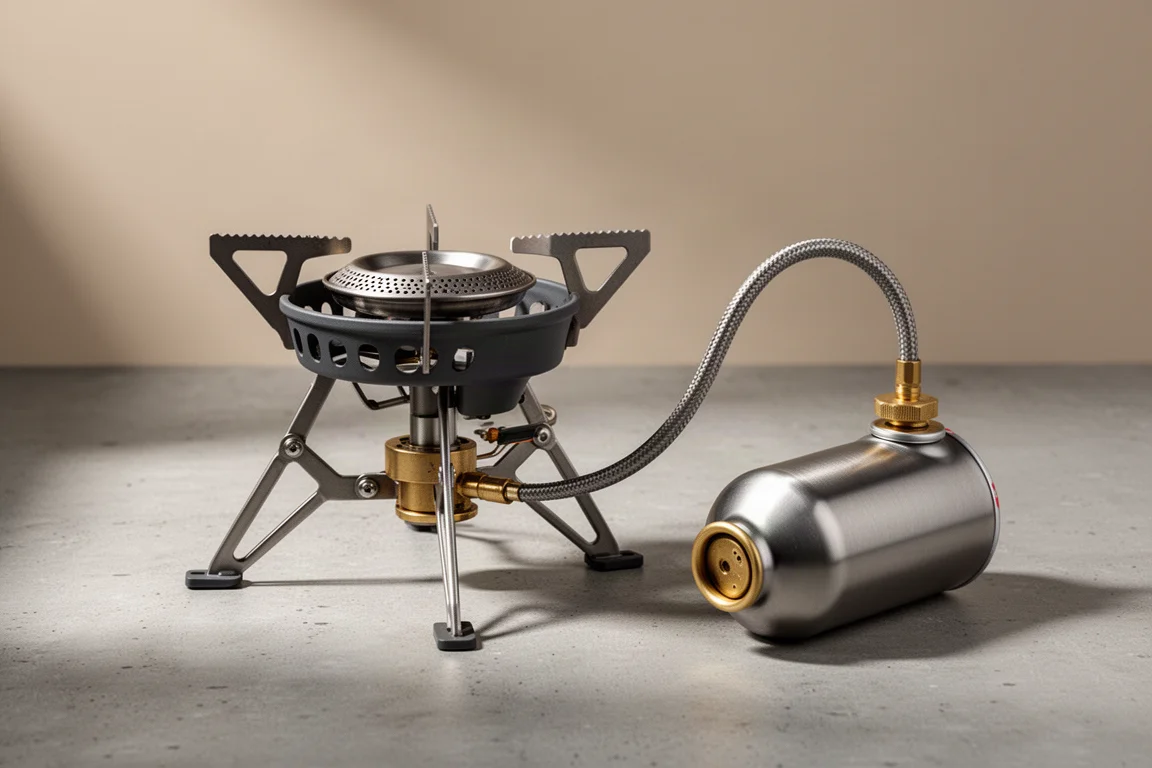
The Primus Express Spider 2 is a remote canister camping stove that has built a quiet reputation among backpackers for three things: power, efficiency, and a small packed size. It is an unfolding design with a separate burner head, a 12 inch fuel hose, and folding pot supports that hold a kettle or pan firmly in place.
What makes it more interesting than a basic canister stove is what sits inside the housing. Alongside the burner head and preheat tube, Primus fits a built-in regulator, a component that matters a great deal once temperatures drop or a canister starts to run low. The stove is rated at 7,150 BTU, weighs 7.1 oz on its own, and sells for roughly $80 to $84 depending on where you buy it.
What Comes in the Box and How It Works
Out of the box you get the stove itself, a nylon roll top storage bag with a buckle closure, a heat reflector, and a set of instructions. The heat reflector is not a windscreen, and it is worth being clear about that distinction from the start.
The stove is a remote canister design, which means the burner sits on its own legs while the fuel canister stays off to the side. A 12 inch hose connects the two, with a valve adjuster positioned along it. That adjuster has enough tension to feel precise: it turns smoothly enough to crank up for a fast boil and holds steady enough to dial back to a simmer.
Pot supports unfold from the burner housing and fold flat again for storage. The stove stands about 3 inches tall and roughly 5.5 inches wide when deployed, and packs down to about 5 inches long by 3 inches thick. The body uses a combination of aluminum, stainless steel, and brass, while the storage bag is nylon and the heat reflector is aluminum.
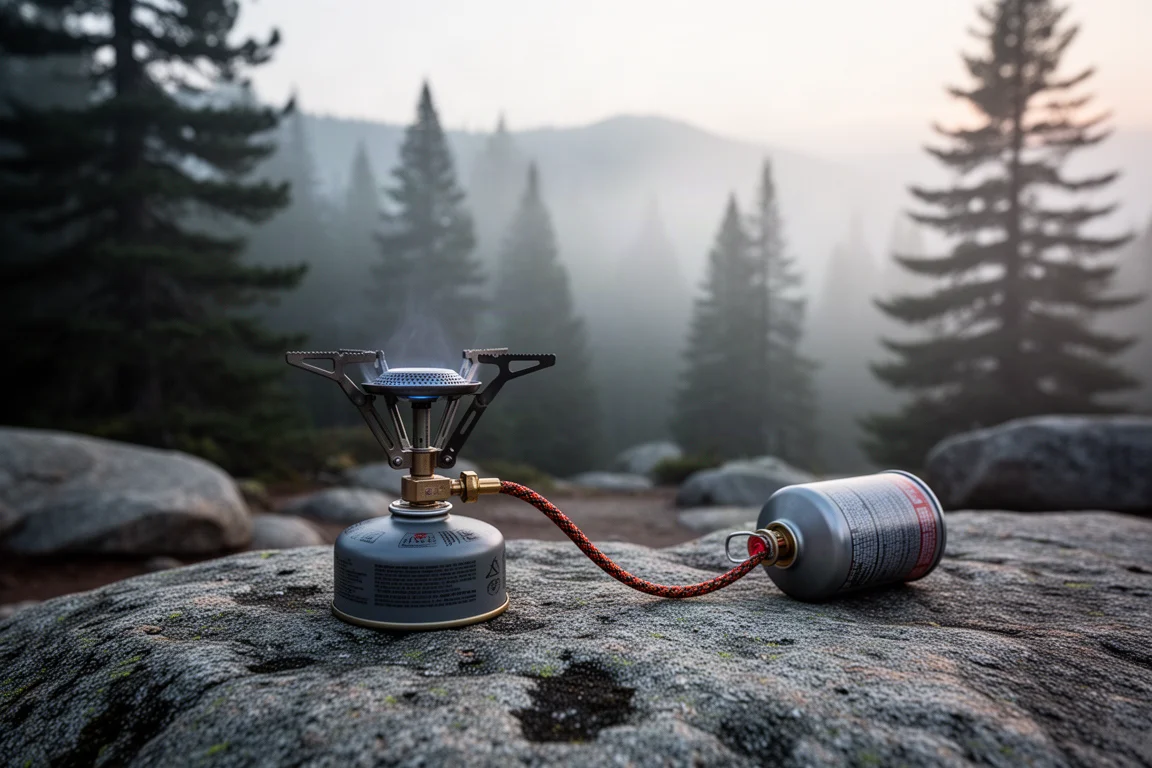
In practice, setup is quick. Connect the canister to the hose, unfold the supports, open the valve, and light it. There is no electronic igniter, so a lighter or a match is simply part of the routine.
Who This Stove Is For
This is a stove for backpackers and campers who cook in cool to cold conditions and want something light enough to carry without a second thought. At 7.1 oz for the stove alone, or 9.1 oz with the storage bag and heat reflector included, it stays comfortably in lightweight territory for a stove that carries a regulator and a preheat tube.
It also suits anyone who wants fuel flexibility over the long term. Out of the box it runs on isobutane, but with an additional purchase it can be adapted to run on liquid fuels such as petrol or kerosene, which is useful for very high elevations or extreme cold. It is a less natural fit for anyone who wants a built-in igniter or expects the stove to shield its own flame from wind, because neither is included.
Main Strengths: Build Quality and Pot Stability
The construction is the first thing that stands out. The machining is clean, with no rough edges anywhere on the stove body, and the components feel dense and deliberate rather than flimsy. Aluminum, stainless steel, and brass is a sensible material mix for something that gets packed and unpacked trip after trip.
The pot supports deserve specific credit. They are gimped, which gives a pot, kettle, or pan something to bite into, so cookware stays where you put it instead of sliding around. The feet and legs are spaced well, and that spacing translates into a genuinely stable platform on uneven ground. Folding and unfolding the supports is smooth and predictable, and that smoothness says as much about manufacturing quality as anything else here.
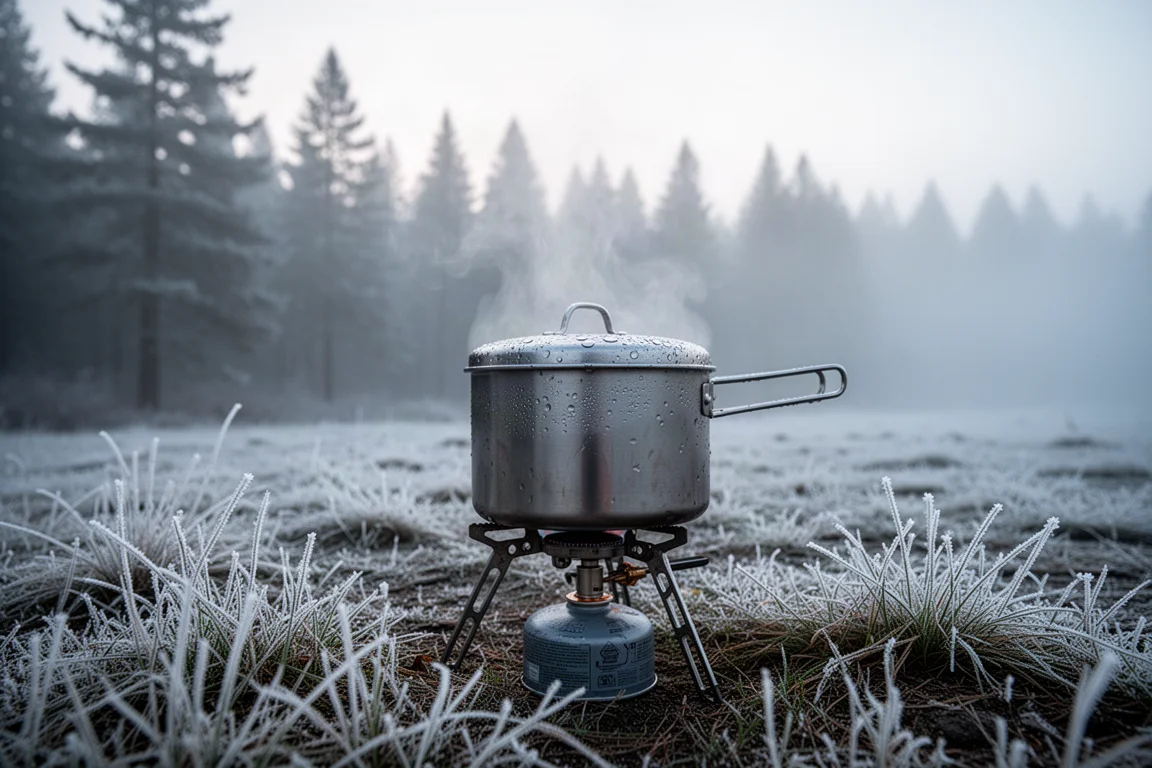
At 7.1 oz for the stove alone, this is a light system for something with a regulator and a preheat tube built in, and that combination is what separates it from simpler canister stoves.
Cold Weather Performance and Fuel Versatility
Cold is where the Express Spider 2 makes its case. The built-in regulator helps hold performance steady when temperatures fall and when the fuel level in the canister drops, two conditions that degrade the output of unregulated stoves. The preheat tube adds to that by warming the fuel before it burns.
In testing at around 45°F, two cups of cool water reached a boil in 4 minutes and 4 seconds, a solid result for an isobutane stove. On a separate outing at roughly 35°F, after a hike, the stove boiled water for coffee and cooked lunch without the canister being warmed first, and it performed well throughout. The burner head spreads heat evenly across the base of a pot or pan rather than concentrating it in one spot.
Fuel flexibility is the second half of the story. Isobutane works out of the box, and an additional purchase opens up liquid fuels such as petrol and kerosene. Liquid fuel stoves are considered a last resort for good reason: they are finicky, cumbersome, smelly, and maintenance heavy. But for extreme cold and high elevation, having the option matters. Primus makes no mention of running this stove on propane or butane, so isobutane and liquid fuels are the realistic choices.
Things to Consider Before Buying
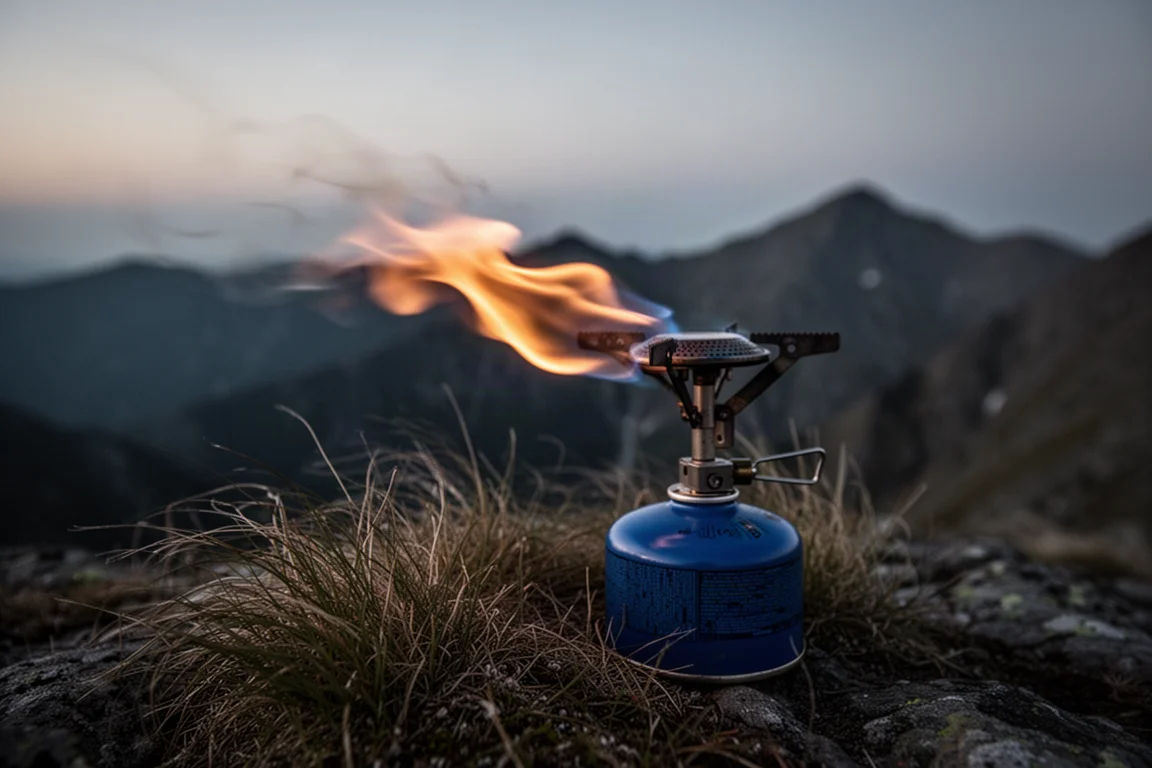
The most significant omission is wind protection. There is none on this stove, which means an external windscreen is effectively part of the kit list. On an exposed campsite, that is the difference between a predictable boil time and a frustrating one.
The heat reflector is the weak point of the package. It unfolds awkwardly and sharply into a circle, the edges are sharp enough to cut, and placing the stove on top of it takes a level surface and makes it unlevel, which undermines stability. It is a sensible idea executed poorly, and a windscreen would have been a far more useful inclusion.
There is also no electronic igniter, and Primus has largely avoided fitting igniters to its stoves. A lighter solves the problem, but it is worth knowing before you buy. The storage bag does its job and protects the stove, though the stitching leaves loose threads and the finish is not especially tidy.
Finally, treat manufacturer performance figures as best case. Primus claims one liter of water can boil in four minutes, which assumes ideal conditions and likely a proprietary pot with a heat spreader. The company also claims 119 minutes of runtime on an 8 oz canister without specifying whether that is at high or low output.
Fuel Efficiency and Real World Expectations
Fuel efficiency is one of the hardest things to measure honestly in a stove, because ambient temperature, wind, altitude, cookware, and burner setting all shift the result. Manufacturer runtime numbers are useful as a rough guide rather than a promise.
What can be said with confidence is that the regulator and preheat tube give this stove an advantage in exactly the conditions where efficiency usually falls apart. Cool mornings, a part empty canister, and a sheltered spot are the scenario this design was built for.
Buying Advice and Value
At $80 on the Primus website plus shipping, or around $84 on Amazon with free shipping, the Express Spider 2 sits at a reasonable price for what it delivers. It is light, it is well made, and it holds up in cool to cold weather without requiring any special handling of the fuel canister.
The value case gets stronger if you plan to use it across seasons or want the option of liquid fuel later. It gets weaker if you want an all-in-one package with ignition and wind protection built in, because you will be adding both separately.

Even so, for a stove that performs this well in the cold and packs down this small, the asking price is not hard to justify. If your trips involve cold mornings and light packs, it deserves a place on your shortlist. If your cooking happens mostly in mild, sheltered conditions, a simpler stove will do the same job for less.
Conclusion
The Primus Express Spider 2 is shaping up to be a genuinely good cold weather stove. The regulator and preheat tube deliver where it counts, the pot supports and legs make it stable, and the whole system weighs very little for what it offers. Its weaknesses are specific and easy to work around: bring a windscreen, leave the heat reflector at home, and pack a lighter.
Product link
View more details for Primus Express Spider 2
This product is mentioned in the review. Check the specifications, options, and compatibility before buying.
View more details for Primus Express Spider 2Further reading
Related Reviews
Camping Stoves
BCB Fire Dragon Mini Cooker Review: A Tiny Folding Stove With Real Trade-Offs
A palm-sized, fuel-flexible folding stove that heats water well enough, but brings flame control, stability, and fuel cost questions worth understanding first.
Camping Stoves
Boundless Voyage Titanium Alcohol and Wood Stove Review: Ultralight Cooking, Two Ways
A titanium alcohol and wood burning stove kit that weighs 4.5 oz complete, boils two cups of water in about 10 minutes, and costs $36.
Camping Stoves
BRS 32 Dual Burner Stove Review: A Folding Two-Burner That Packs Down Flat
A detailed look at the BRS 32, a slim folding dual burner camping stove that expands into a stable cooking platform for around $60.