Kitchen Gadgets
Four Design-Forward Kitchen Gadgets Tested: Stunning, Strange, or Status Symbols
A citrus squeezer that looks like an alien, a kettle that sings, a mozzarella bowl, and a leaf-to-cup matcha maker go under the spotlight.
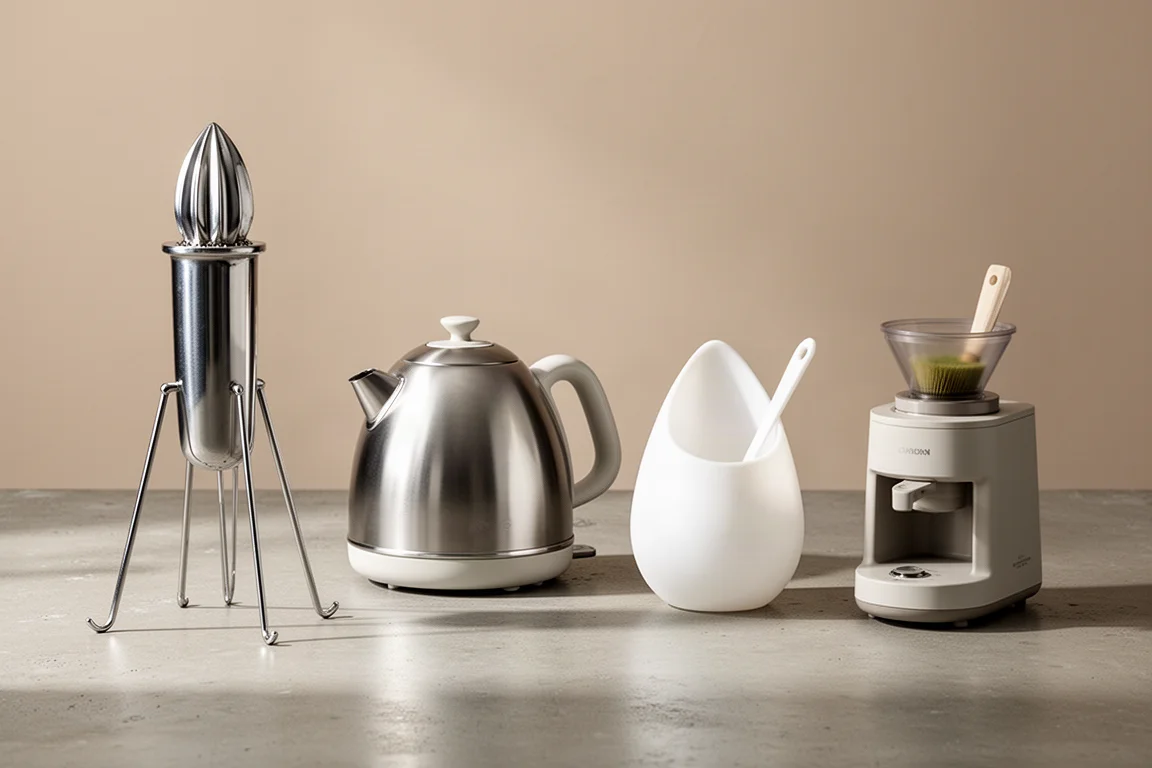
Introduction
Some kitchen gadgets earn their counter space through pure utility. Others earn it through conversation. We put four design-led products through hands-on use to find out which ones are genuinely worth your money and which ones are buying you a look rather than a function. The short answer: one of them is an icon for good reason, one is a lovely way to boil water at a steep price, one divides opinion sharply, and one quietly creates an entirely new category at home.
Alessi Juicy Salif Citrus Squeezer
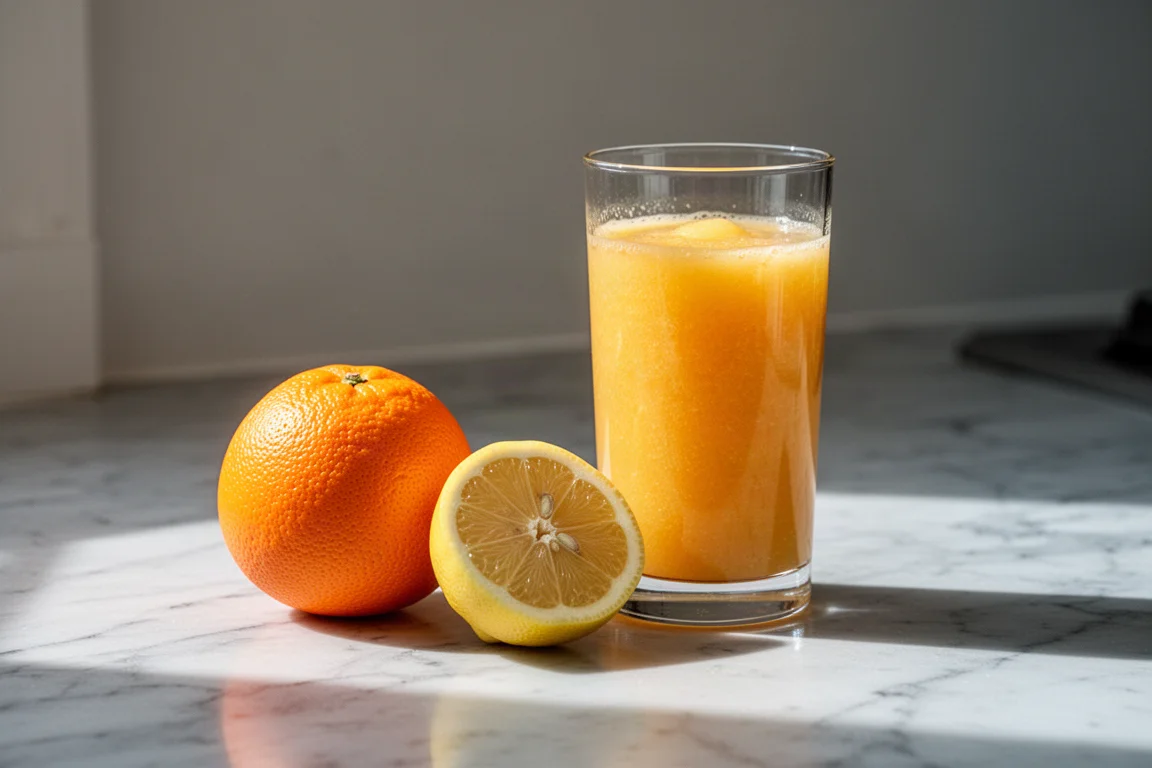
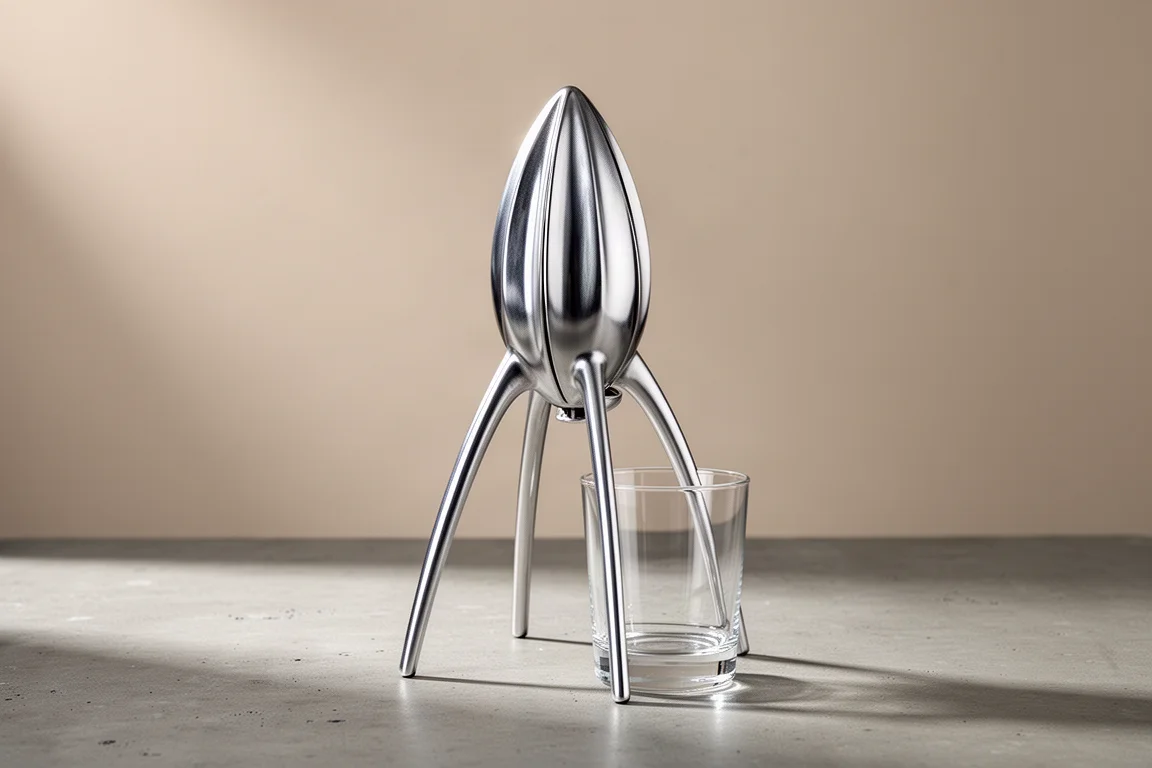
Designed by Philippe Starck in 1990, the Juicy Salif is an icon of contemporary kitchenware. It is made from mirror-polished cast aluminium and stands on long, splayed spider legs, tall enough to perch over a glass so juice runs straight down the ribbed body and into your drink. In practice, it works well with oranges: the ribbed surface channels juice effectively, and a good orange yields a surprising amount.
The catch is pips. There is no strainer, so seeds from lemons slide straight into the glass alongside the juice. With seedless fruit, this becomes a non-issue. Starck himself reportedly said the piece is not meant to squeeze lemons but to start conversations, which sums up its character: it is a sculpture that happens to juice. Two practical drawbacks emerged: it will not fit in any drawer, so it lives on the counter, and it has no drip tray, so it keeps dripping after you lift the fruit away. At around 80 pounds it is hard to call affordable, and select editions of the same design range up to 1,050 pounds depending on the material. It is unapologetically a status piece, and it looks best left out rather than used. The verdict from our kitchen test: pretentious, but effective on oranges.
Balmuda Moonkettle
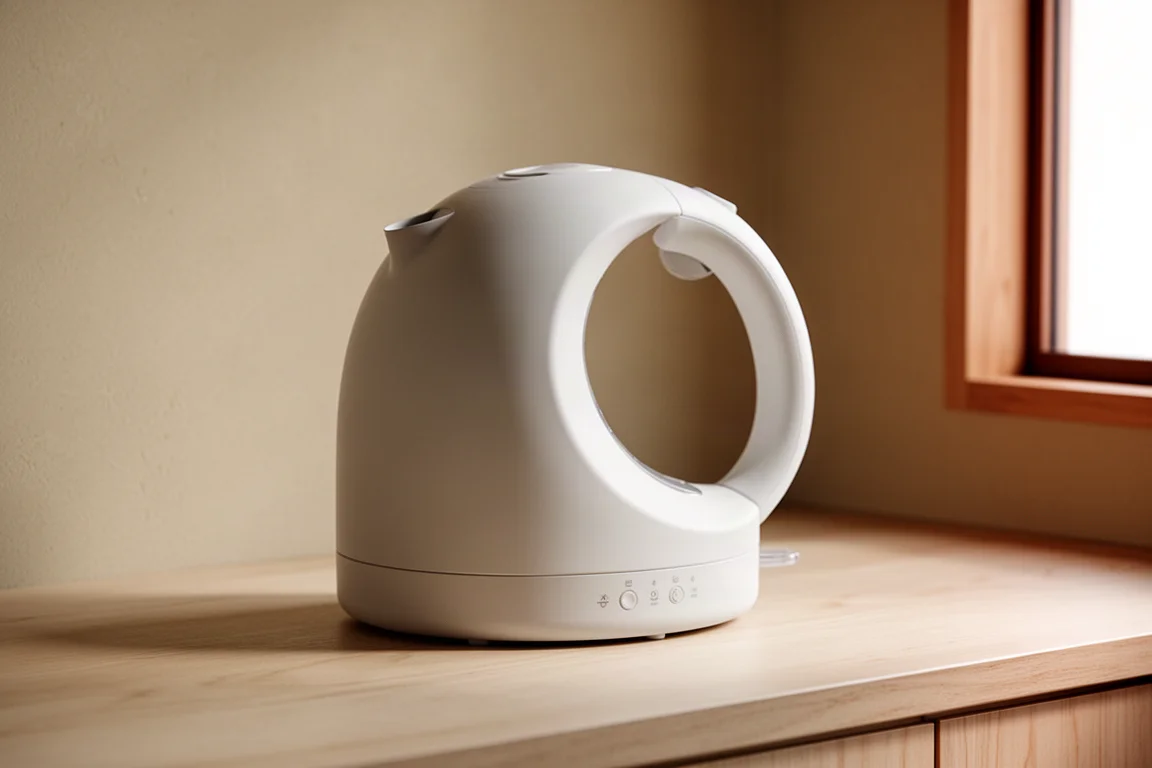
The Moonkettle is Balmuda’s take on the humble electric kettle, with a rounded, orbital silhouette inspired by a famous Chinese medicinal kettle design. Balmuda is a Japanese company, and the approach here is very deliberate: precise temperature control via simple buttons, gentle pulsing lights, and soft sounds that turn boiling water into a quiet ritual. The heat rises about a degree at a time, which makes the process feel calm rather than the usual click-and-roar.
The sounds can be switched off if the ticking metronome ambience is not for you, though the thoughtful option to silence it says a lot about the design care involved. A kettle is one of the few gadgets that permanently lives on the countertop, so having one that is genuinely beautiful is a legitimate argument. The problem is the number attached to it: 194 pounds to boil water. Nobody pretends otherwise, and that honesty is part of its charm, but value for money is not the Moonkettle’s strength. As one tester put it, it is not pretending to be anything it is not; it is just not worth it for everyone. Verdict: pretentious, but beautifully so.

Alessi Nunziatella Mozzarella Server
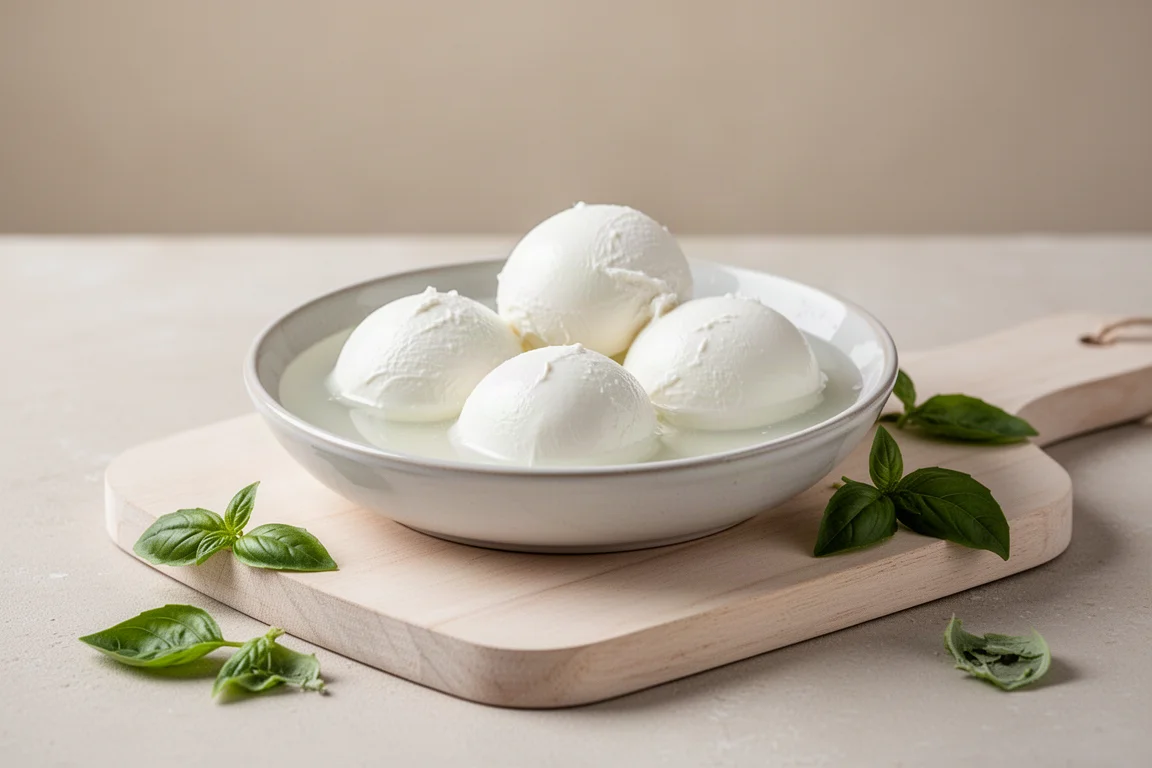
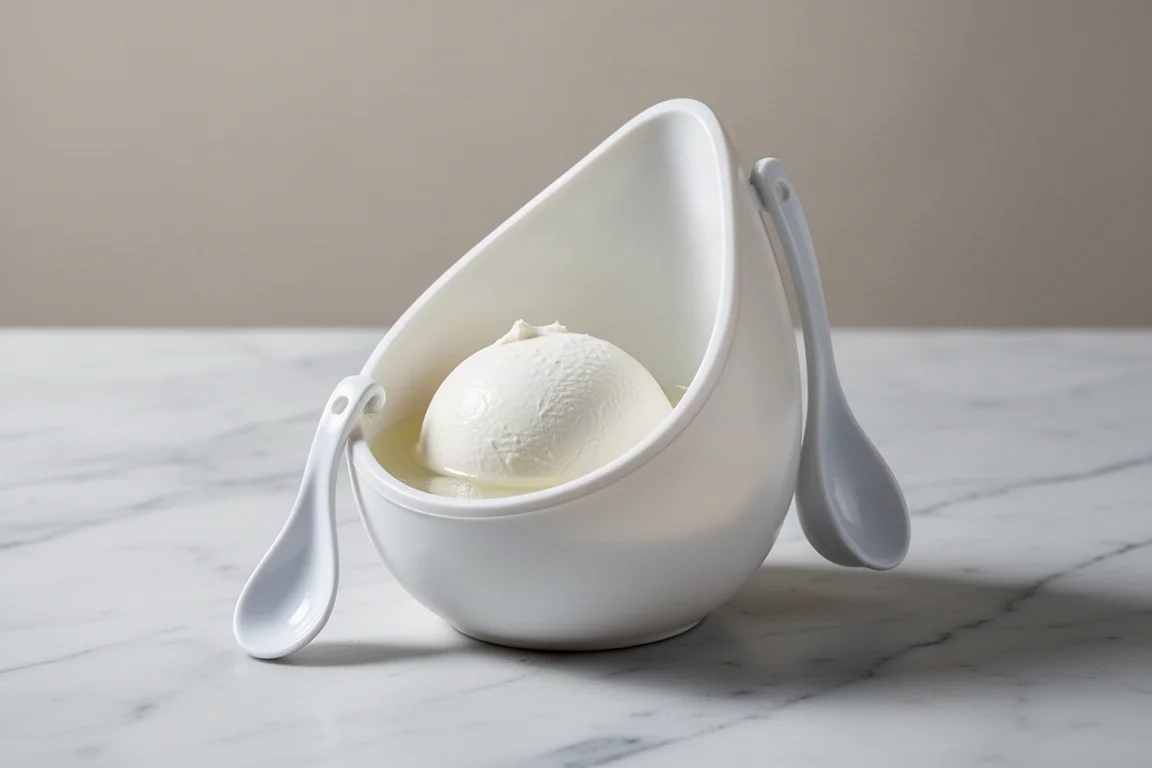
The Nunziatella, designed by Emma Silvestris, is a plastic serving vessel shaped like a swollen drop of milk, with contours that nod to the horns of Italian buffaloes. It is intended to serve and preserve mozzarella: the ball sits in its whey inside the teardrop, a matching teardrop spoon hooks to the side of the bowl, and the whole thing comes to the table so the cheese can be served at room temperature rather than fridge-cold and stiff.
That logic is sound. Mozzarella does prefer to be kept in its liquid and served fresh at room temperature, and most people ruin it by throwing it in the fridge. But at 65 pounds for what is essentially a moulded plastic bowl with a spoon, the value question gets uncomfortable fast. Our testers admired the concept of bringing proper serving temperature to the table while struggling with the execution and the price. If mozzarella is a daily ritual in your kitchen, it might justify itself; for everyone else, it is a hard sell. Verdict: pretentious.
Cuzen Matcha Starter Kit
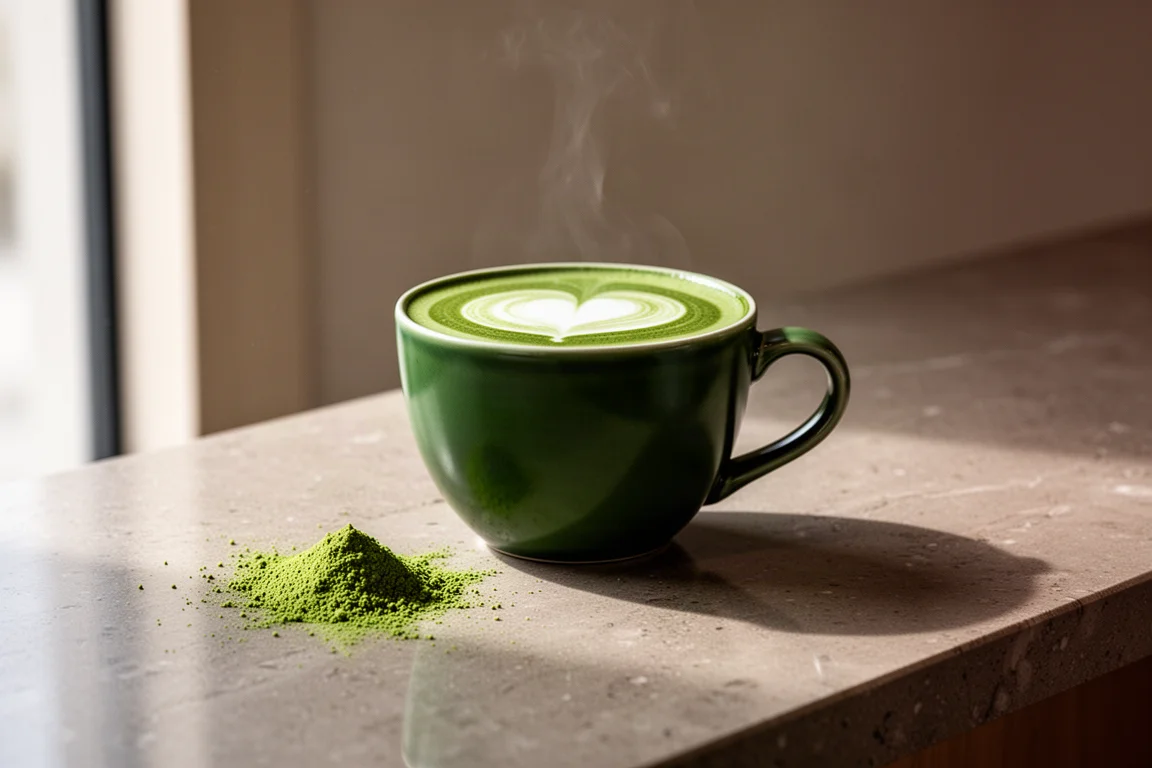
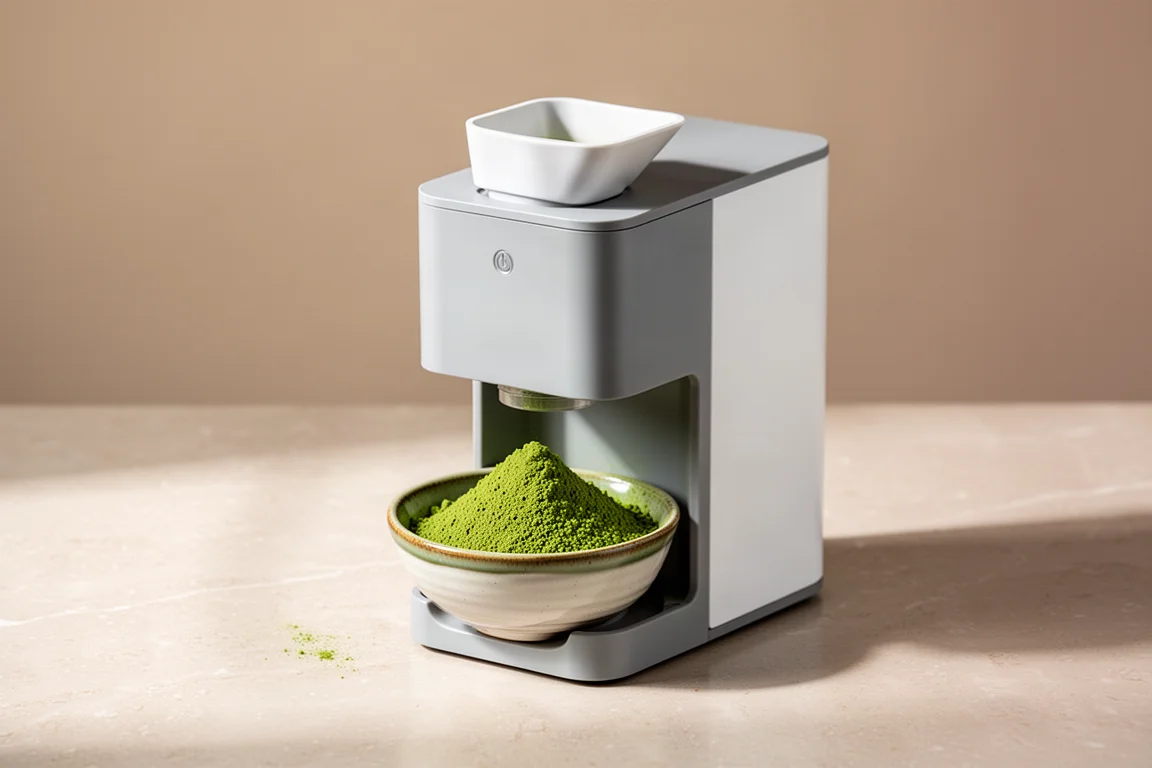
The Cuzen Matcha Starter Kit is the standout of the group and the only product our testers agreed was premium rather than pretentious. It is a leaf-to-cup machine: organic matcha leaves go into a hopper, the machine grinds them fresh into fine, vividly green powder, and then whisks it with water. Four grams of leaf makes four portions, and freshly ground matcha is said to retain the finest characteristics of the tea for longer than pre-ground powder, much like freshly ground coffee beans.
The kit includes everything needed to start a daily matcha ritual, with plenty of guidance on provenance: healthy soil, harvest seasons, storage, and the grinding process. The grinding itself is reasonably quiet, especially compared with a coffee grinder. Notably, the machine uses room temperature or lukewarm water to preserve the qualities of the matcha; you add the shot to hot water or steamed milk afterward, since hot water straight into the mill could cause problems. It is clearly aimed at matcha lattes, and a milky version worked well in testing.
Two things to know before buying. First, Cuzen recommends sticking to their own leaves, and using others can affect the warranty; the leaves cost roughly a pound per gram, and the starter kit includes enough for about 12 cups of matcha latte. Second, this is a 228-pound commitment to a drink many people only have occasionally. If you drink matcha regularly, it is a special, well-built machine with no real equivalent; if you do not, it will gather dust. Verdict: premium, not pretentious.
Overall Buying Advice
If you want a piece of design history that actually functions on oranges, the Juicy Salif delivers, provided you accept the pip situation and the price. If your kettle is the hardest-working object on your counter and aesthetics matter to you, the Moonkettle is lovely, just know you are paying a premium for calm. The Nunziatella only makes sense for serious mozzarella enthusiasts. The Cuzen kit is the easiest to recommend, but only for households that genuinely drink matcha often enough to justify both the machine and the ongoing leaf supply.
Conclusion
Design-led kitchen gadgets occupy a strange space between art and appliance. The Juicy Salif and Moonkettle are conversations first and tools second; the Nunziatella is a concept whose price outpaces its plastic; and the Cuzen Matcha Starter Kit is the rare pretension-adjacent product that earns its keep through genuine innovation. Match the purchase to your actual habits and none of these will disappoint.
Further reading
Related Reviews

Kitchen Gadgets
Kitchen Gadgets Tested 2026: Five Tools Worth Considering
A practical look at five kitchen gadgets, from egg shapers to peanut butter stirrers, with honest assessments of what works and what doesn't.
Kitchen Gadgets
Best Electric Wine Openers: Our Top Picks From Eight Tested Models
We tested eight electric wine openers priced from $20 to $110 on hundreds of bottles. The Secura came out on top, with a Peugeot and a Rabbit model also worth knowing about.
Kitchen Gadgets
Best Kitchen Gadgets Under $15: Eight Small Tools That Earn Their Keep
Eight kitchen tools that cost less than $15 but perform like far more expensive gear, from a razor-sharp peeler to a champagne saver that really works.