Workshop Tools
Portable Clamp Stand Comparison: Ridgid Super Clamp vs Rockwell JawHorse vs SheetMaster
Three nearly identical one-ton clamp stands compared on stability, portability, capacity, and long-term durability.
Introduction
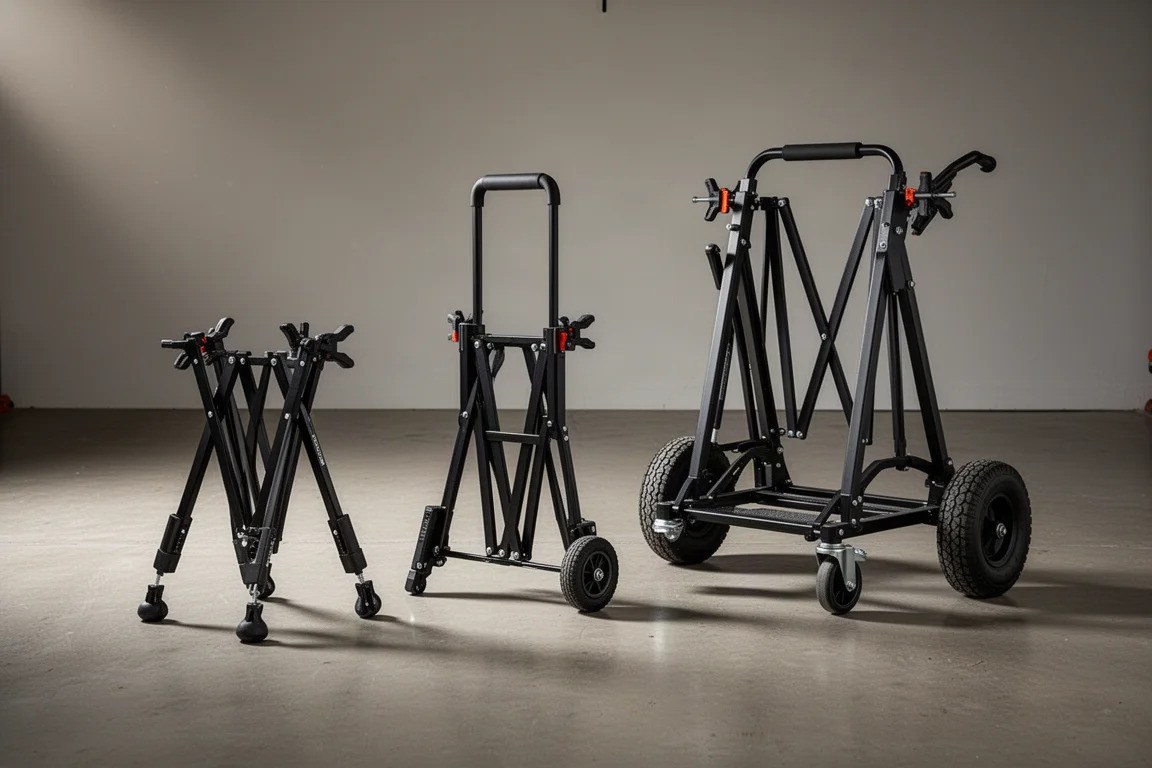
Portable clamp stands have become a popular alternative to traditional saw horses, and three models come up again and again: the Ridgid Super Clamp, the Rockwell JawHorse, and the Rockwell SheetMaster. On paper they look nearly identical, and in most ways they are. All three offer one-ton clamping force, fold down for storage, and operate the same way. The differences that matter come down to stability details, portability, capacity, and how they hold up over time.
This comparison is based on extended use of all three stands, including a follow-up check roughly two years in.
Stability and Leg Play
One early observation set this comparison in motion: the Ridgid Super Clamp’s legs have noticeable play when locked open. The Rockwell stands were ordered specifically to see whether they were sturdier, and for the most part they are. The JawHorse and SheetMaster legs show no play when locked, with only a little movement in the rear legs.
In practice, though, it barely matters. Once all the legs are flipped open and kicked apart, all three stands feel equally stable under load.
Clamping Force and Operation
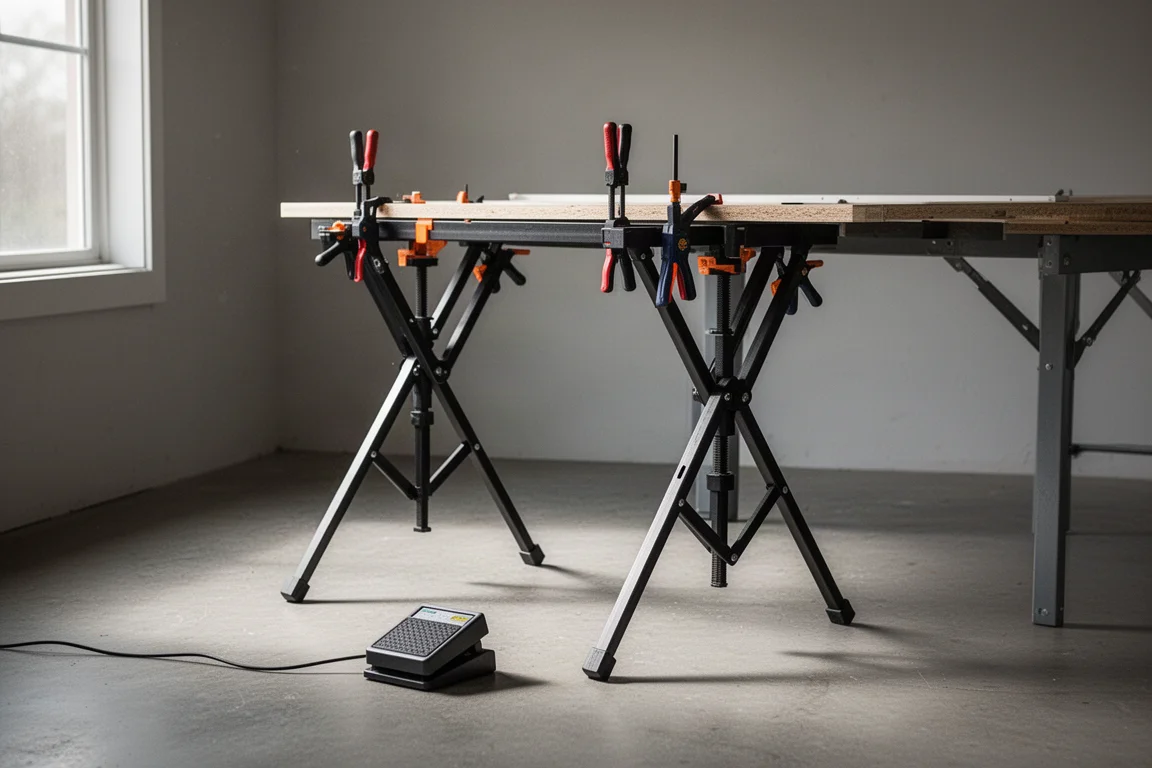
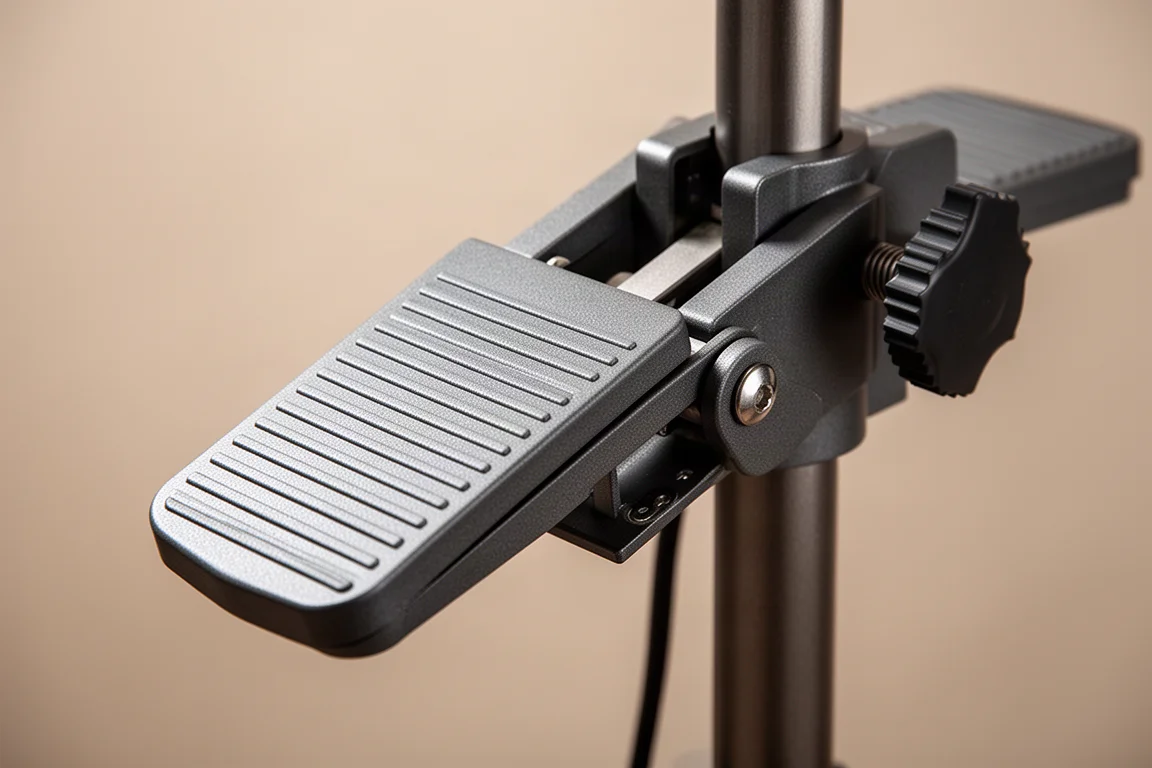
All three stands deliver one-ton clamping force and work in exactly the same way: place your workpiece on the bench, slide the clamp closed, lock it, and press down on the foot pedal to clamp. To release, unlock the clamp and press the pedal again.
Weights are close as well. The Ridgid weighs 42 pounds, the JawHorse 43 pounds, and the SheetMaster 53 pounds.
Portability: Wheels vs Carry Handle
This is where the designs genuinely diverge. Both Rockwell units have a pull handle and wheels. The SheetMaster uses two wheels with more ground clearance than the JawHorse’s single rolling pin-style wheel. The Ridgid has no wheels at all, relying on its third leg doubling as a carry handle.
The Ridgid does have two genuine advantages: a slide lock the Rockwells lack, and a proper front finger grip where the Rockwells only offer a smooth ledge.
Setup Mechanisms
Folding the stands works similarly across the board, using slide levers and pull tabs. The Rockwells use a twist lock to secure the third leg and carry handle. On the JawHorse, that twist lock needs a serious crank to keep the leg from sliding; the SheetMaster is a bit smoother. The Ridgid, by contrast, uses metal flip locks that are much easier to use, and that ease of use is a real differentiator.
Sheet Material Capacity
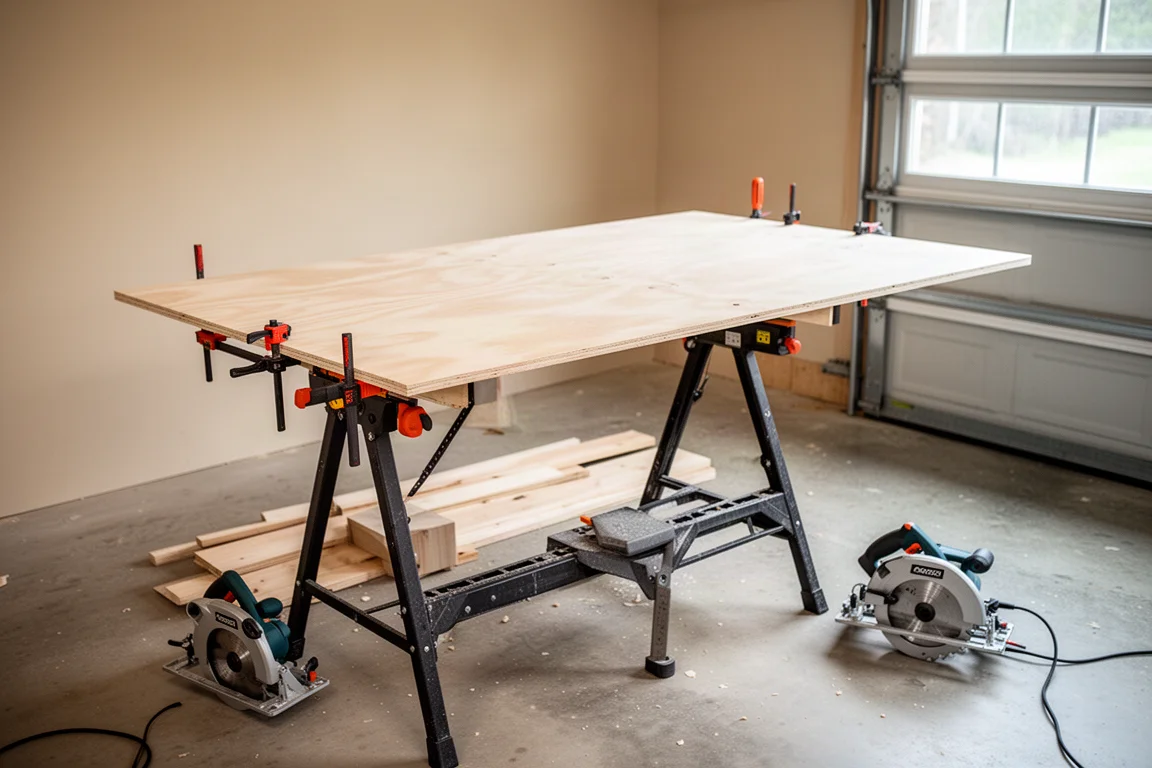
The SheetMaster’s extra 10 pounds buys real capability: up to 49 inches of clamping range, enough to hold four-foot-wide sheet material of any length. The Ridgid and JawHorse both extend to only 37 inches. Rockwell once sold an accessory that extended the JawHorse to 48 inches, but it has been discontinued.
That said, a reality check is worth making. Even with the extra range, a single clamp stand does not replace two saw horses for cutting full 4x8 sheets. It handles end cuts well, but so do two saw horses, which also handle lengthwise rip cuts. Two lightweight plastic Stanley folding saw horses can hold a combined 1,000 pounds, where each Rockwell holds 600 pounds and the Ridgid 550 pounds. All three clamp stands have holes in the front feet so they can be screwed to the floor.
Foot Pads and Small Details
The Rockwell feet use rubber pads with the harsh chemical smell common to rubber dolly wheels. The Ridgid’s soles are either a hard rubber or a soft plastic that carries no such smell.
Long-Term Durability and Lessons Learned
About two years in, the picture changed. Ridgid has discontinued the Super Clamp, and looking back, the wheeled units are the ones worth buying. Carrying a 42-pound stand around by a third-leg handle gets old fast.
A weak point also surfaced: while working on a slope with one leg propped on a block of wood, the clamp would not engage. Repeated pedal pumping revealed that the rack teeth had bent out of shape where they failed to engage the holes. The same failure has been reported on the JawHorse, and the Ridgid could not be repaired. As a replacement, a Harbor Freight Franklin model, a near carbon copy of the Ridgid, was picked up for $150, along with another Rockwell for $200 (previously $150).
The follow-up comparison is telling: with equal use, the Franklin copy has already started bending the same way the Ridgid did, while the Rockwell looks nearly brand new with hardly a scratch. And the wheel remains worth the extra $50 for your back. Realistically, these stands are also not suited to the tasks shown on the box art, like holding doors; they simply are not good for that kind of work.
Conclusion
These three clamp stands are nearly identical tools, and any of them will clamp with a ton of force. The Ridgid Super Clamp has the nicest locks but no wheels and has been discontinued, and its early failure is a genuine concern. If you need the extra capacity, the SheetMaster’s 49-inch range has you covered for wide sheet material. For most buyers, a wheeled Rockwell is the practical choice, with the JawHorse offering the lighter, cheaper entry point.
Product link
View more details for Ridgid Super Clamp
This product is mentioned in the review. Check the specifications, options, and compatibility before buying.
View more details for Ridgid Super ClampFurther reading
Related Reviews

Workshop Tools
Best Drill Tap Sets 2026: Top Picks Tested for Speed and Strength
We tested 17 drill tap sets to find the fastest drilling, strongest threading, and most durable options for your workshop.

Workshop Tools
Cool Shop Tools 2026: Five Clever Upgrades Worth a Closer Look
A practical look at five workshop tools that solve real problems, from smarter drill bits to a safer table saw guard.

Workshop Tools
Cool Tools for the Workshop: Five Smart Upgrades Worth Trying
A practical look at five workshop tools that make measuring, drilling, marking, and sawing easier, from a clever square to a top-tier bandsaw fence.