Everyday Carry
Popov Leather Money Clip Wallet vs Ashland Leather Capone: Two Takes on the Same Idea
A close look at two handcrafted leather money clip wallets, covering build quality, capacity, design details, and pricing to help you pick the right one.
Introduction
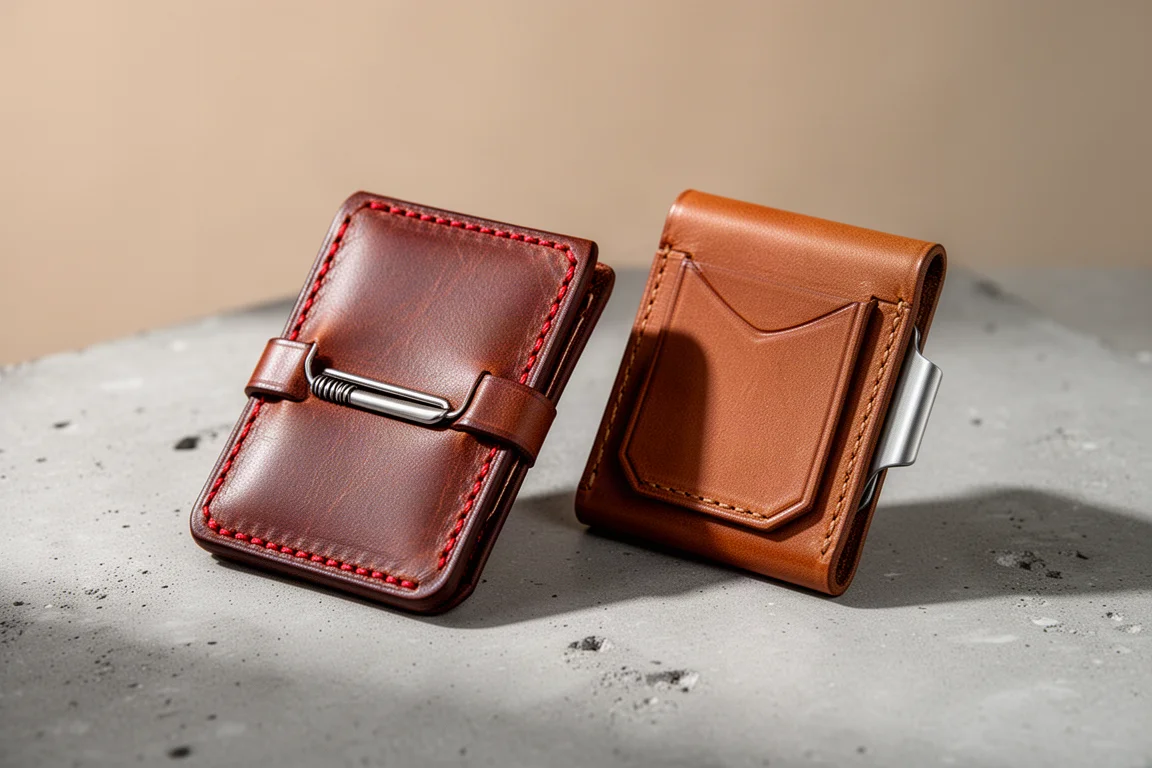
If you carry a modest stack of cards plus a few bills and dislike bulky bifold wallets, the money clip wallet format is one of the most satisfying ways to slim down your everyday carry. Today we are looking at two handcrafted versions of this idea: the Popov Leather Money Clip Wallet and the Ashland Leather Capone. They share the same general style, but there are meaningful differences in finish, thread choice, clip design, and price that could decide which one belongs in your pocket.
What’s in the Box
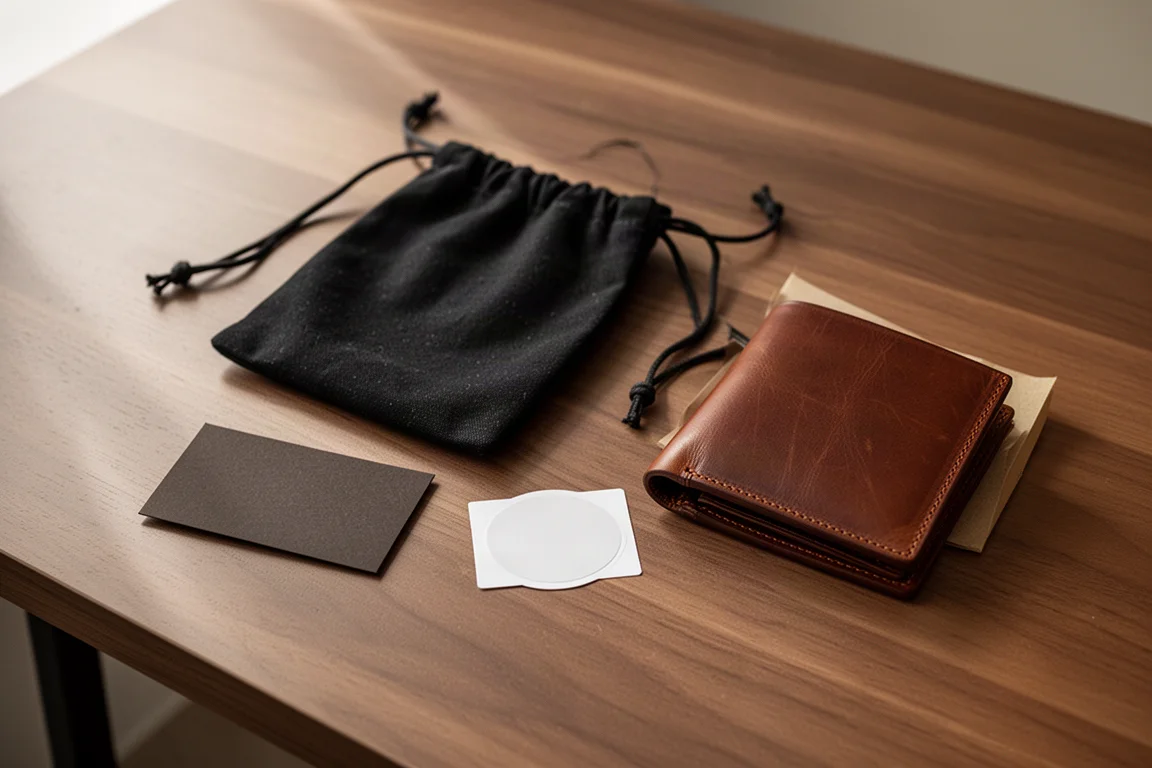
The Popov Leather Money Clip Wallet arrives in a black fabric pouch, with everything laid out neatly inside. Alongside the wallet you get an informational insert explaining common leather characteristics such as scarring, marbling, and tannery stamps, plus a card noting the brand has been handmade since 2013. A sticker rounds out the package as a small bit of swag.
It is a tidy, thoughtful unboxing experience that sets the tone before you even touch the leather.
Build Quality and Materials
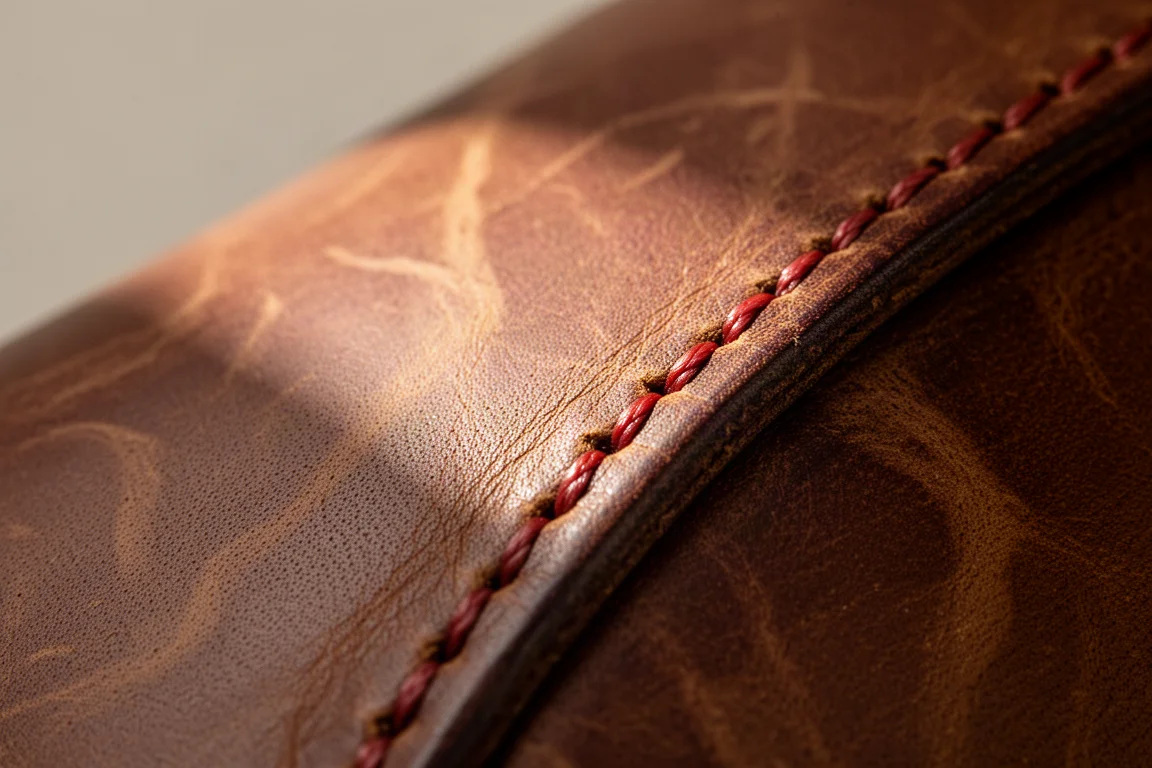
Popov uses full grain Horween Derby vegetable-tanned leather, and it is a genuinely appealing choice. The grain is prominent and characterful; if you appreciate the natural texture of quality leather, this wallet delivers it in spades. It is hand stitched with thick tiger thread, available in different color pairings depending on the leather you choose.
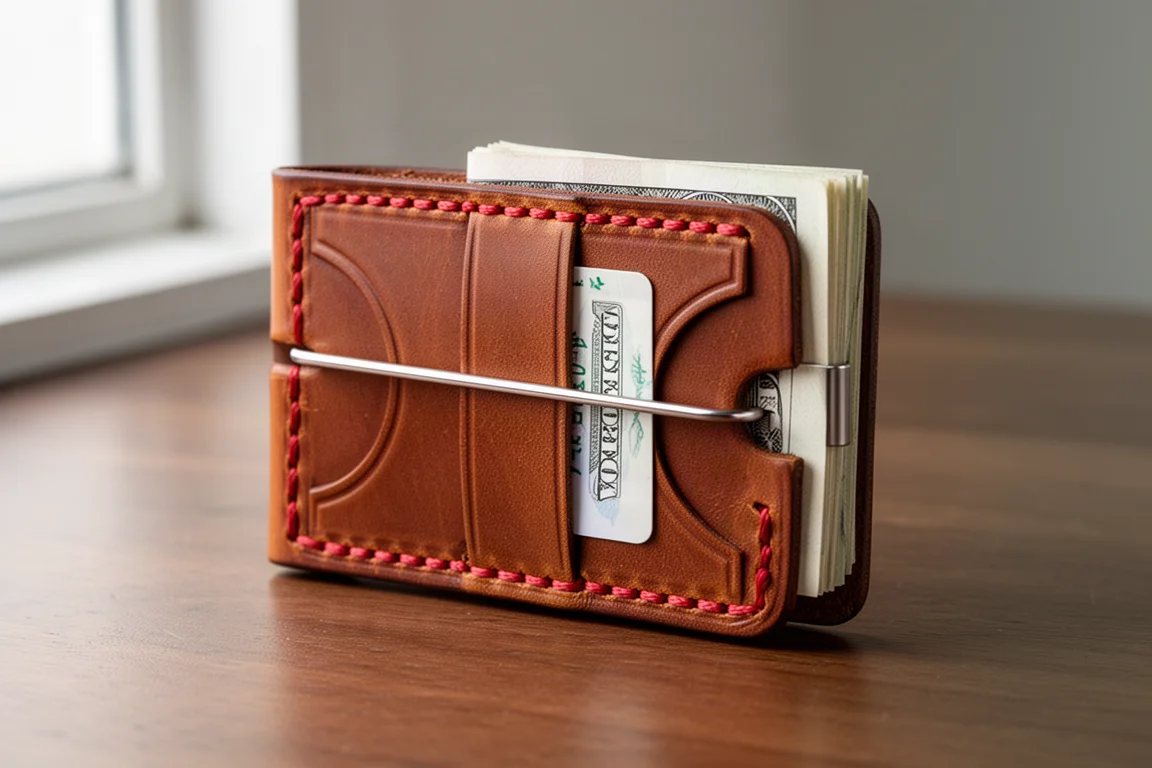
Construction is mostly excellent. The cuts look clean and symmetrical, including the semi-circular cutouts for the card pockets, and the stitching shows no visible flaws. Edge burnishing and polishing around the wallet body is handled nicely too.
One detail lets it down: the cuts on the card pockets are never burnished, which makes those inner edges look a bit unfinished. It is a small thing, but at this price it is worth calling out.
The wallet measures 4.3 by 2.8 inches, is 0.4 inches thick when empty, and weighs 2.4 ounces (68 grams). Popov backs it with a lifetime guarantee.
Design and Everyday Use
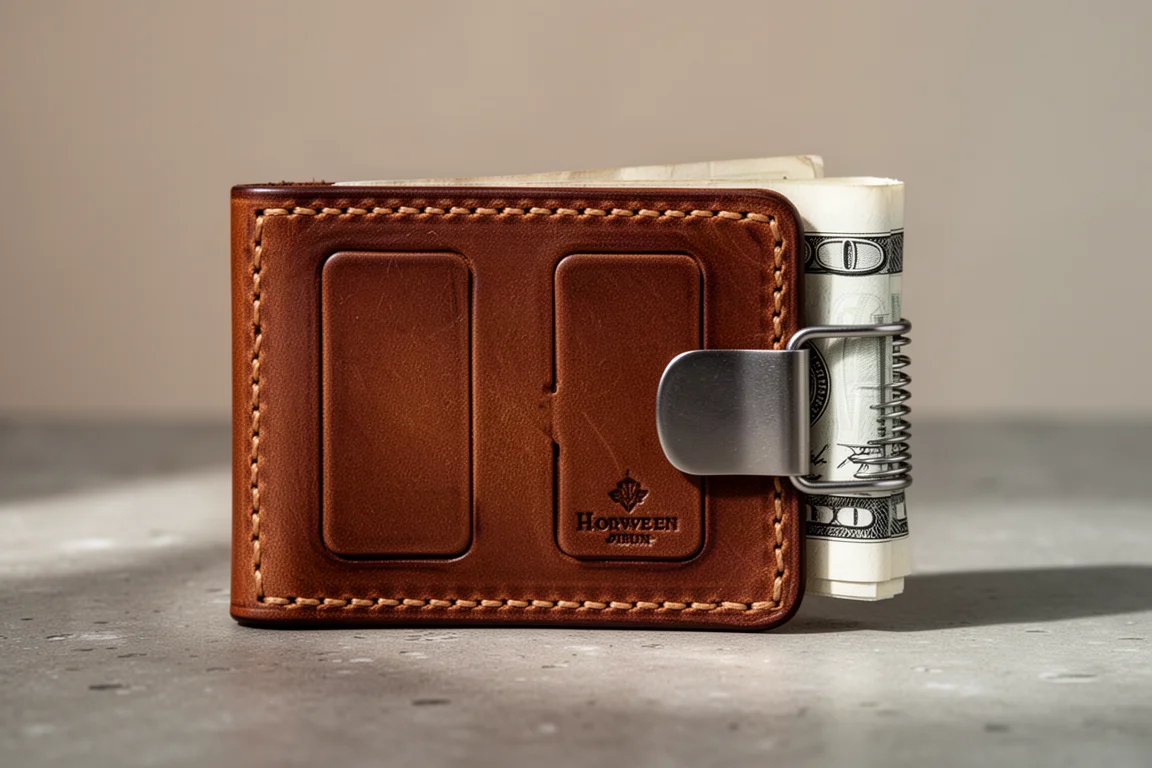
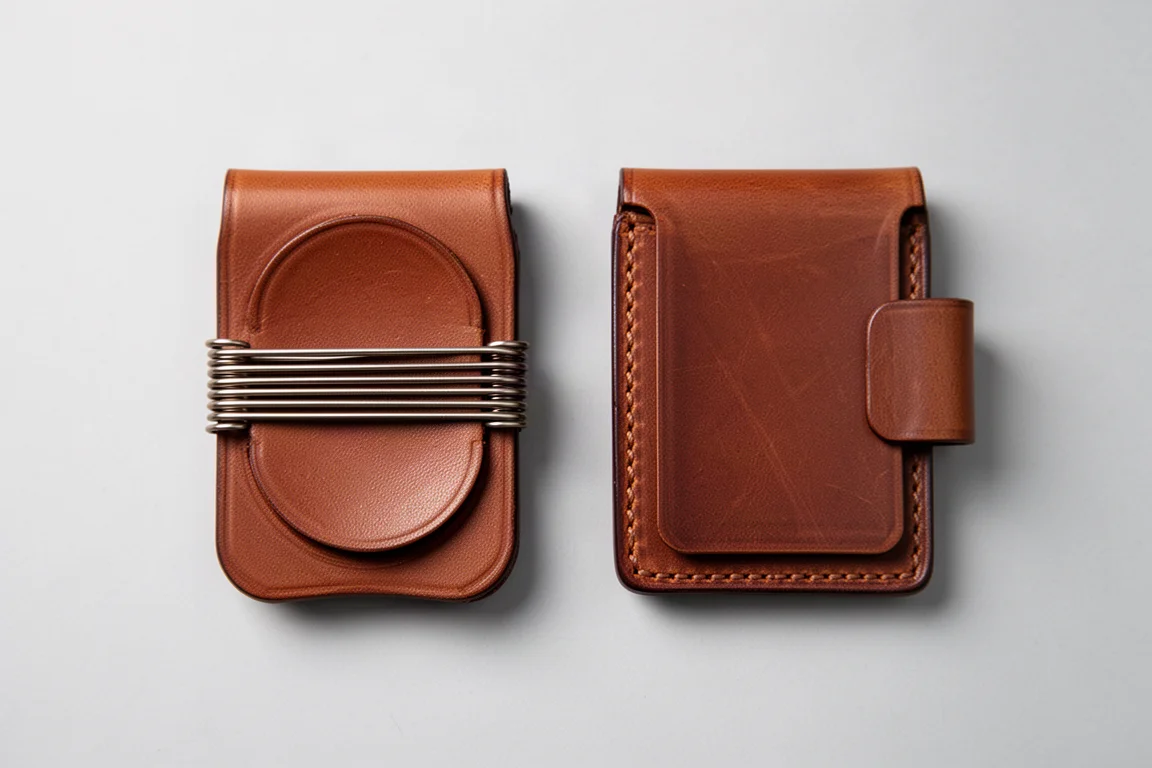
If the design looks familiar, that is because it follows the same style as the Ashland Leather Capone almost exactly. The differences are subtle: the Capone’s pocket cutouts are more squared off, while the Popov version rounds them. The clip treatment differs too. Popov’s spring bar hugs the inside of the wallet for a very clean look, barely visible at the center, while the Capone’s clip juts out slightly. Neither approach is wrong; the Popov looks tidier, while the exposed clip has its own charm.
Functionally they work the same way. Cards insert from the same directions on both, with two quick-access pockets on the outside and two internal pockets, and the spring bar money clip sits dead center for cash. One note: the launch run included a black PVD spring bar, but that was limited and has sold out, so new orders get an antique brass clip.
There is no branding anywhere on the wallet. If you prefer a clean, unmarked look, that is a plus; if you like showing off where your wallet came from, you are out of luck.
Card and Cash Capacity Test
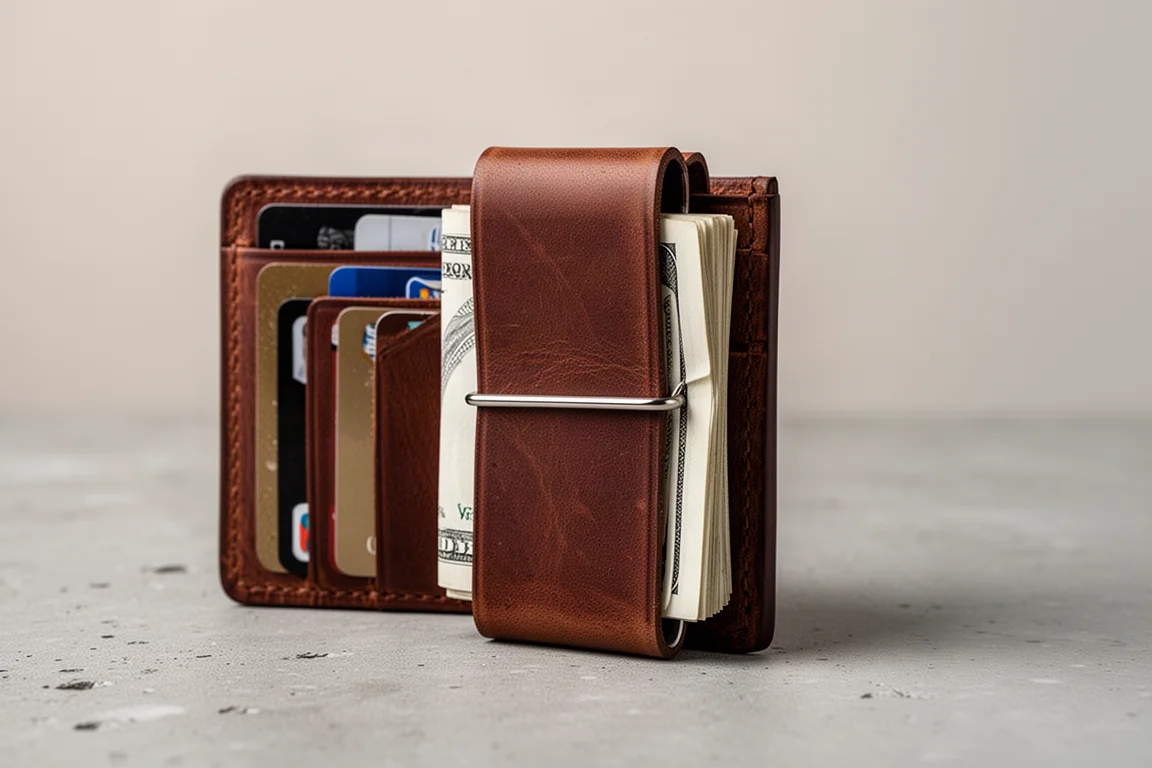
Popov rates the wallet for up to eight cards and ten bills. In practice it handles that load easily. With one card per pocket, insertion is simple thanks to the semi-circular cutouts. Loading the full eight cards posed no problems at all, and the wallet still manages the bulk gracefully.
On the cash side, the spring bar has plenty of tension. It held a single bill securely, and the full rated ten bills without the stack sticking up dramatically. Pushing past the rating to fifteen bills still worked comfortably, though the wallet gets noticeably fatter at that point. The rated capacity is conservative, which is better than the alternative.
The Ashland Leather Capone
The Capone is the wallet many people will compare this against, and for good reason. It uses the same money clip wallet format, the same four-pocket layout, and the same card insertion style, in Horween Dublin leather. Its clip protrudes slightly from the body, which some people prefer visually. The thread is thinner than Popov’s tiger thread, so if you like chunky, visible stitching, the Popov has the edge there.
It is also the cheaper of the two, which matters when the designs are this similar. As an everyday carry it has proven itself for extended daily use.
How They Compare
Both wallets function identically, so the decision mostly comes down to finish details and price. The Popov offers thicker tiger thread, four consistent color options, and a cleaner clip integration. The Capone offers squared-off pocket cutouts, an exposed clip look, and a lower price.
At around 99 dollars, the Popov sits above the Capone at roughly 85 dollars, which is a little surprising since Popov’s wallets are usually quite affordable. At the 100 dollar mark, it is fair to ask whether another wallet at the same or lower price does the same job, and the Capone shows that one exists. Popov does run periodic discounts, so patient buyers may be able to close the gap.
Buying Advice
If you love the Horween Derby grain, prefer thick stitching, and want the cleanest clip integration available in this style, the Popov Leather Money Clip Wallet is worth the stretch, especially if you catch a sale. If you want the same functionality and look for less money, and do not mind a thinner thread and a slightly more exposed clip, the Ashland Leather Capone remains an excellent, proven pick.
Conclusion
These two wallets prove there is real appeal in a well-executed money clip wallet format. The Popov version impresses with its leather, stitching, and tension on the spring bar, marred only by unfinished pocket edges and a higher price. The Capone matches it functionally at a friendlier price. Choose based on which details matter more to you: Popov’s refined finish touches, or the Capone’s value.
Further reading
Related Reviews

Everyday Carry
Everyday Gear That Deserved a Second Look
A roundup of solid everyday carry items: watches, pens, a pencil, a knife, and a smart ring that each earned a place on the table.

Everyday Carry
KORE Tactical Bifold Wallet Review: A Durable Everyday Carry Option
A close look at the KORE Tactical Bifold Wallet, a reinforced nylon wallet with magnetic closure and room for cards, cash, and IDs.

Everyday Carry
Krabby Wallet Review: A Slim, Simple Carry That Has Stood the Test of Time
A closer look at the Krabby Wallet, a slim canvas and elastic design with a loyal following and a simple, functional approach to everyday carry.