Kitchen Knives
Pomelo Knife Showdown: Takamura Kyoto 240mm vs Takeda 87mm Petty vs Shindo Funayuki 165mm
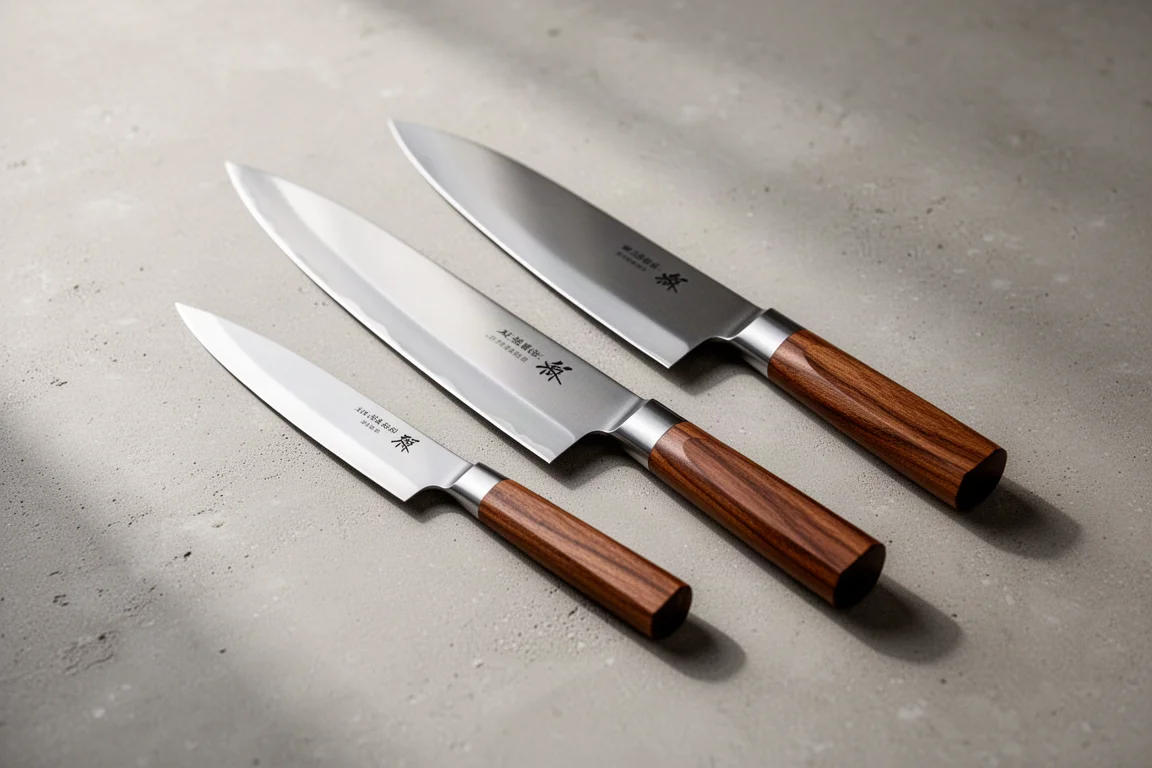
Three Japanese kitchen knives, one giant citrus fruit. We compare a long slicer, a small petty, and a mid-size funayuki on a real-world pomelo prep test.
Introduction
Head-to-head knife comparisons usually happen on onions and carrots. This one went a different route: a pomelo, a fruit that is essentially a giant grapefruit with a much thicker rind, tighter-attaching pith, and plenty of seeds. The question was simple. Does a long 240mm slicer, a tiny 87mm petty, or a mid-size 165mm funayuki handle this oversized citrus better?
The honest conclusion up front: there was no single clear winner. What the test did show is that the right answer may be two knives, each doing the part it is best at.
The Test: One Giant Fruit, Three Very Different Knives
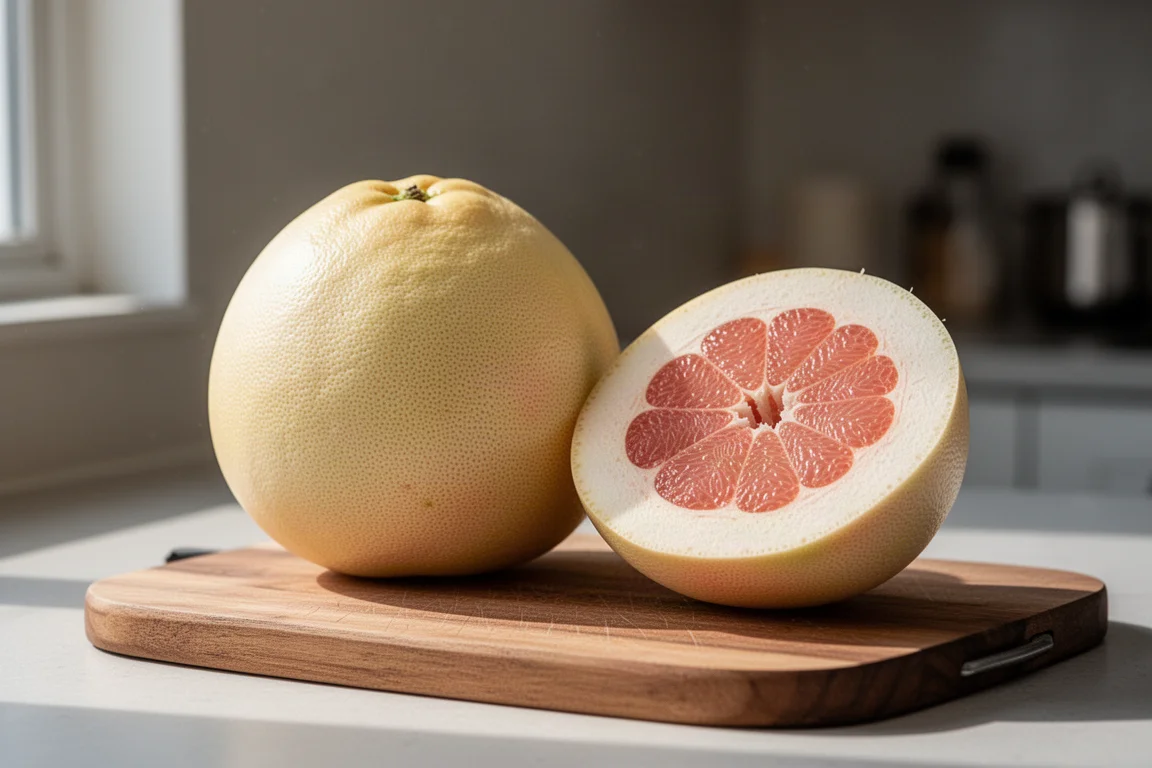
A pomelo behaves like an orange scaled up: it has flesh, rind, and pulp, just in larger proportions. The difference is that the pith and rind cling to the flesh more stubbornly, which makes cleanup slower than citrus you might be used to. The thick membranes between segments are also tough and chewy, so how much of them you remove changes the eating experience significantly.
The test was not about producing perfect fruit salad. It was about seeing whether knife length and blade height actually matter on a task this awkward, and whether a knife far outside its usual job can still do it safely and comfortably.
One more ground rule worth repeating: a dull knife is more dangerous than a sharp one. A sharp blade tends to make a cleaner cut with less tissue damage, so keeping your knives sharp is part of safe cooking, not an optional extra.
Takamura Kyoto Uchigumo no Hana 240mm
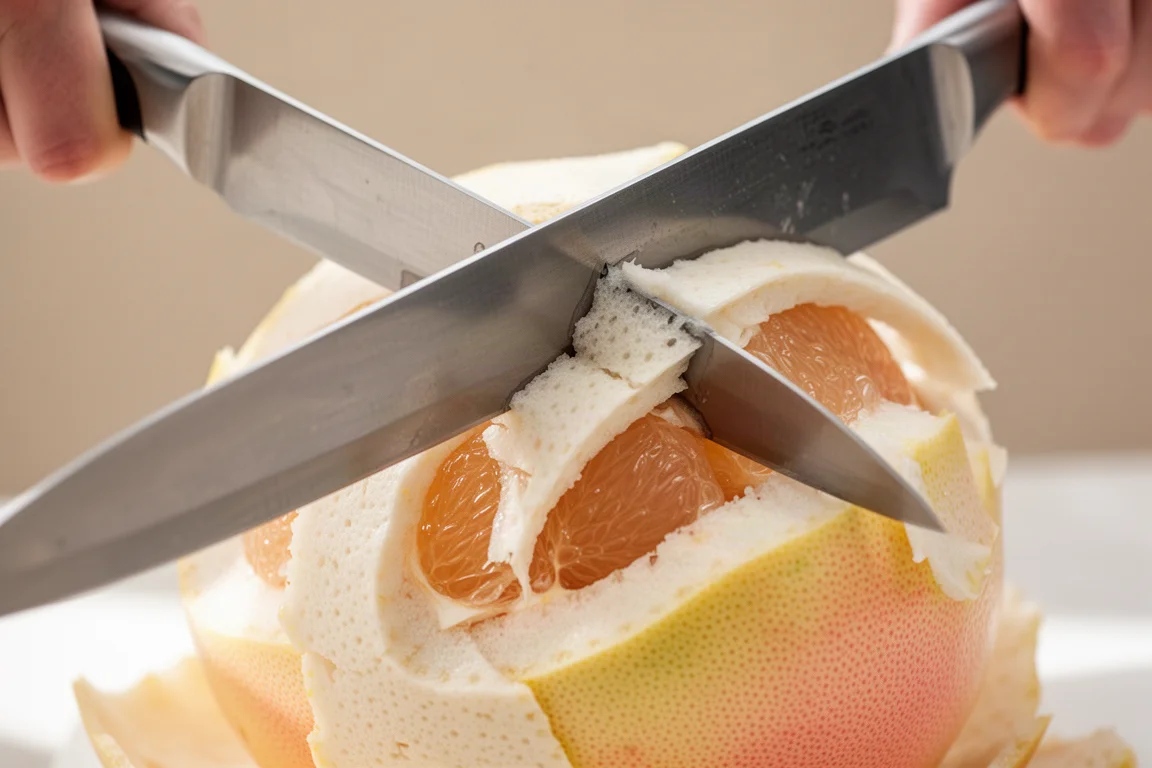
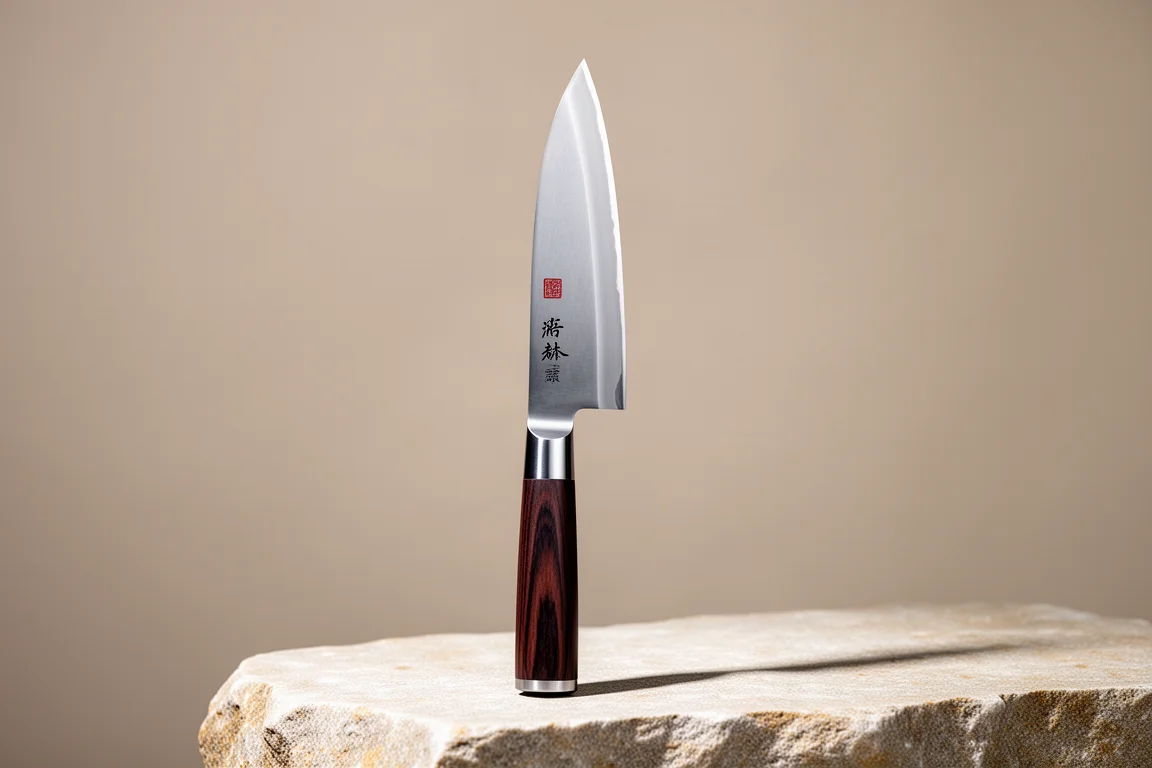
The longest blade in the test made the outside work noticeably easier. With 240mm of edge to work with, there was far less sawing needed to remove the rind, and the peeling stage went quickly. The blade is a true laser profile: thin behind the edge, which helps it slip through dense fruit with minimal wedging.
The trade-off showed up later. When it came time to work inside the fruit, trimming segments in hand, the sheer length worked against precision. Holding the fruit and maneuvering a long blade at the same time felt clumsy compared to a shorter knife. Still, the test proved the underlying point of these comparisons: a long knife is a tool, not a single-use instrument, and it can absolutely handle fruit work even if that is not what it was designed for.
If you want one knife that moves fast through big jobs and you accept some awkwardness on detail work, this is the profile that does it.
Takeda 87mm Petty
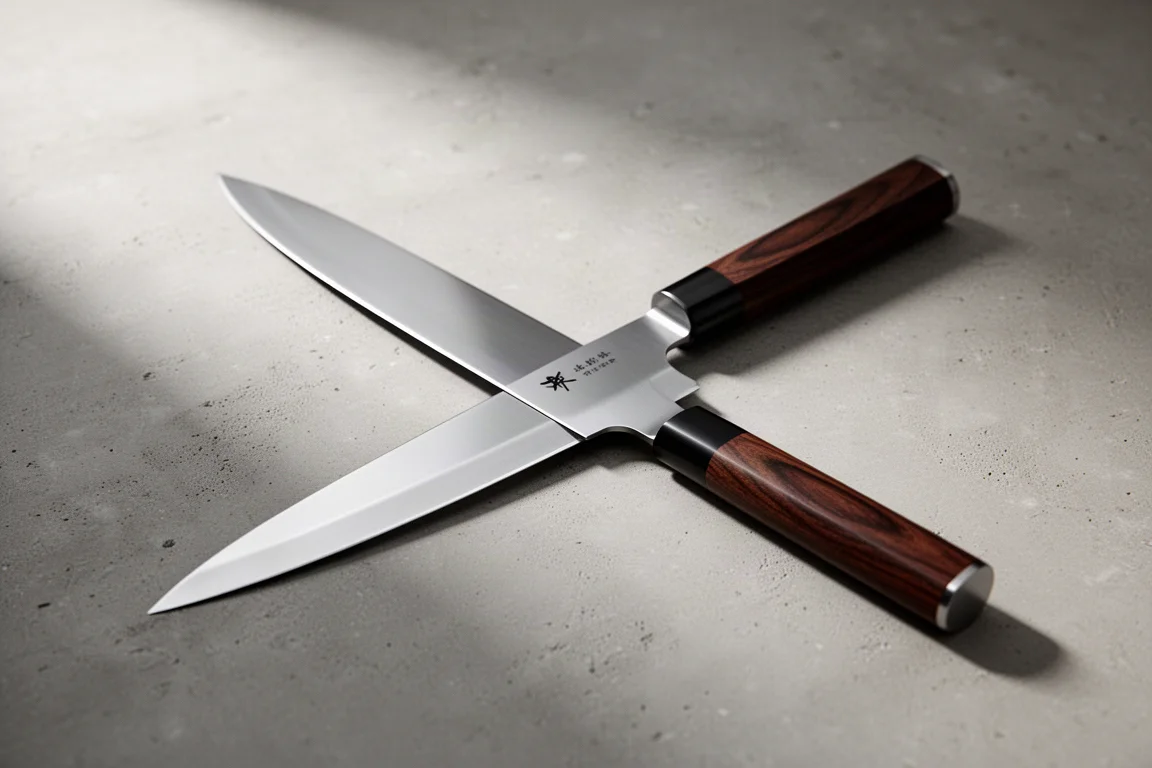
The shortest knife in the test was, unsurprisingly, the most dexterous. Its small size makes it easy to control in hand, especially for paring-style work where you choke up close to the choil, thumb nearly parallel to the spine, feeding fruit into the shallow belly of the blade. The shorter blade height leaves room for your thumb to guide the item into the heel, which a tall blade simply does not allow.
It was also noticeably better at producing clean, thin slices. The preference for small knives is partly habit, but the dexterity advantage is real: getting into herbs, trimming membranes, and working around seeds all feel easier with a blade this size. The downside is pace. Covering the same distance on the rind takes longer, and there is more sawing involved on thick peel.
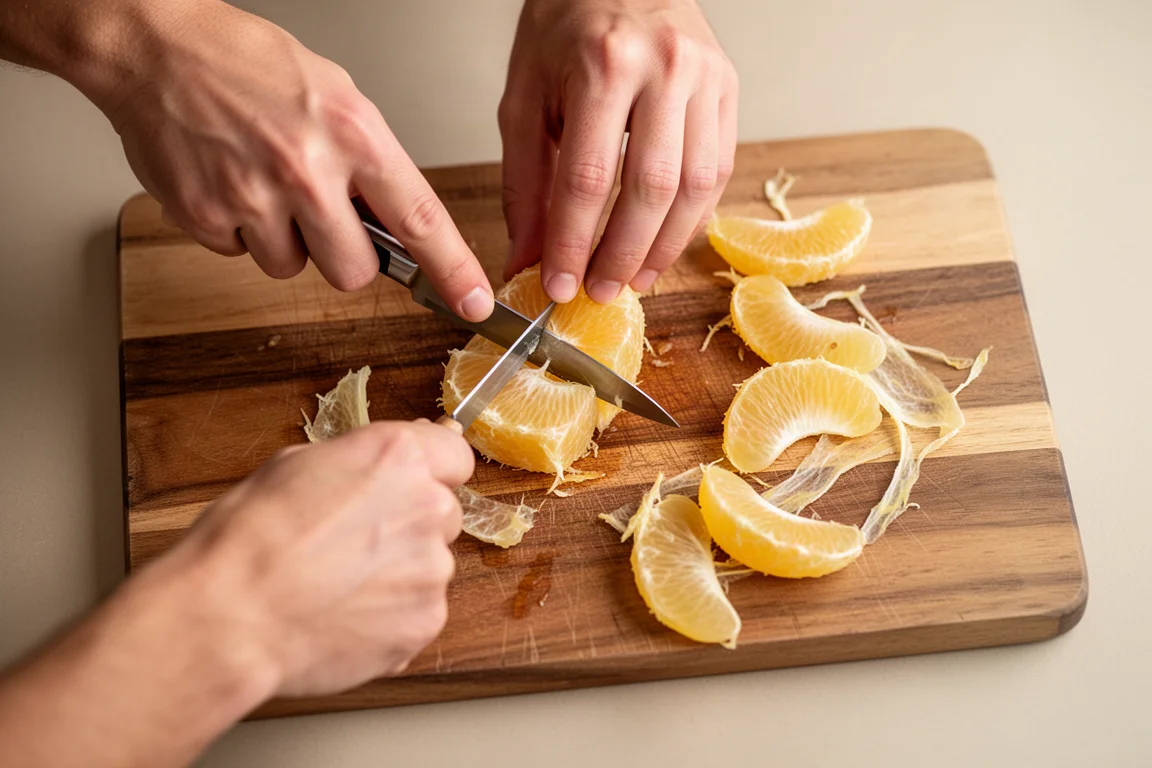
One paring tip worth borrowing: cutting toward yourself while paring in hand is one of the few exceptions to the never-cut-toward-yourself rule, because you can see exactly what you are feeding into the blade and keep control of it. It carries more risk, so it demands attention.
Shindo Funayuki 165mm
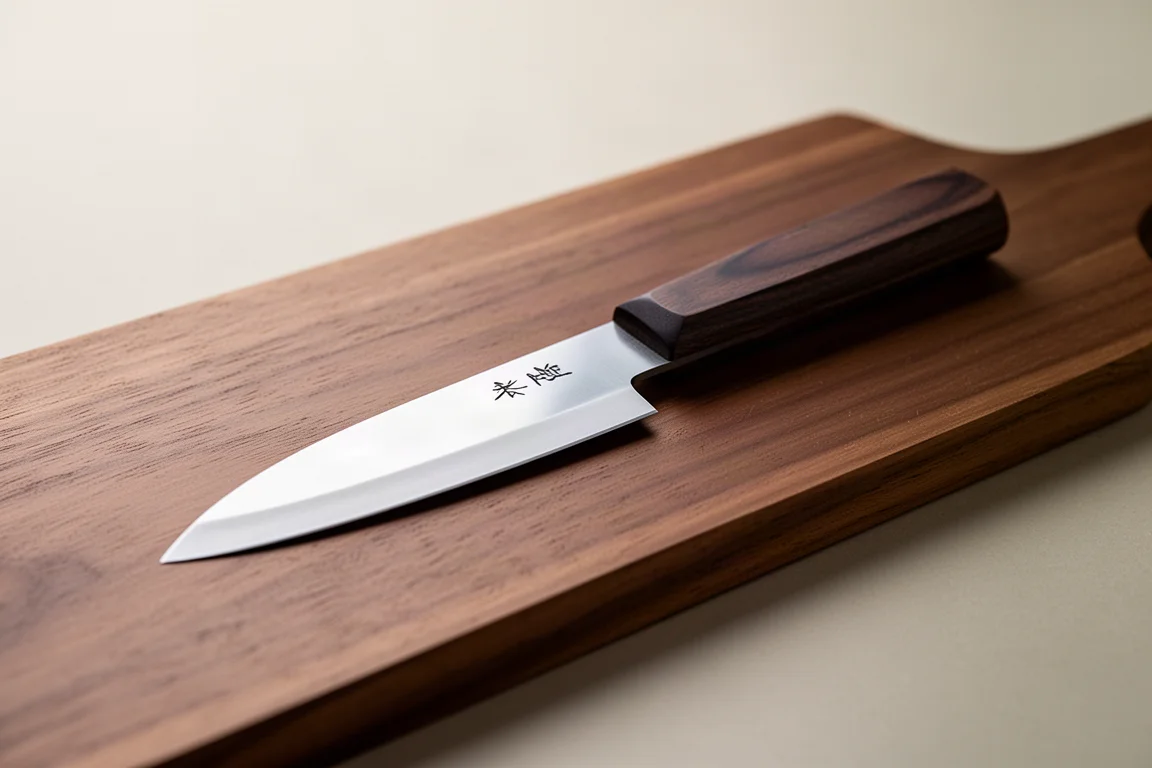
The mid-size option filled the gap between the two extremes. On its own cleaning run, the 165mm funayuki made quick work of the outer skin, but once it came to trimming individual slices, even 165mm still felt too long for delicate in-hand work. That observation is what pushed the overall conclusion toward a two-knife approach: something in this range for the initial breakdown, then a short blade for the finishing.
The funayuki profile sits nicely between a petty and a deba in spirit, with enough blade height for confident cutting on the board and enough length to get through thick rind without constant repositioning. For cooks who own only one Japanese knife and want a single blade that handles a wide range of tasks, this length range is a very defensible choice.
Stainless Steel Matters More Than You Think
A detail that mattered in this test: every knife involved was at least stainless clad, and one is fully stainless. Fruit is highly acidic, and acid exposure can cause a patina to form quickly on reactive steel. Left unaddressed, that can progress toward rust, which nobody wants on a fine blade.
The practical takeaway: wipe your blade down before setting it on the board, and if you plan to work with citrus regularly, a stainless or stainless-clad knife is a genuinely smart choice. If you are running a two-knife workflow, the first knife needs to be bone dry before it goes down anyway, so stainless removes a whole category of worry.
Practical Takeaways for Your Kitchen
The fastest way through a pomelo turned out to be a two-knife workflow. The long blade, like the 240mm Takamura, strips the outer rind quickly with less sawing. Then a short knife, like the 87mm Takeda, takes over for segmenting and cleaning, where its dexterity and shallow belly shine. A mid-size blade like the Shindo funayuki covers the initial breakdown well but still benefits from a shorter partner for detail work.
A few other observations from the test are worth carrying into any fruit prep:
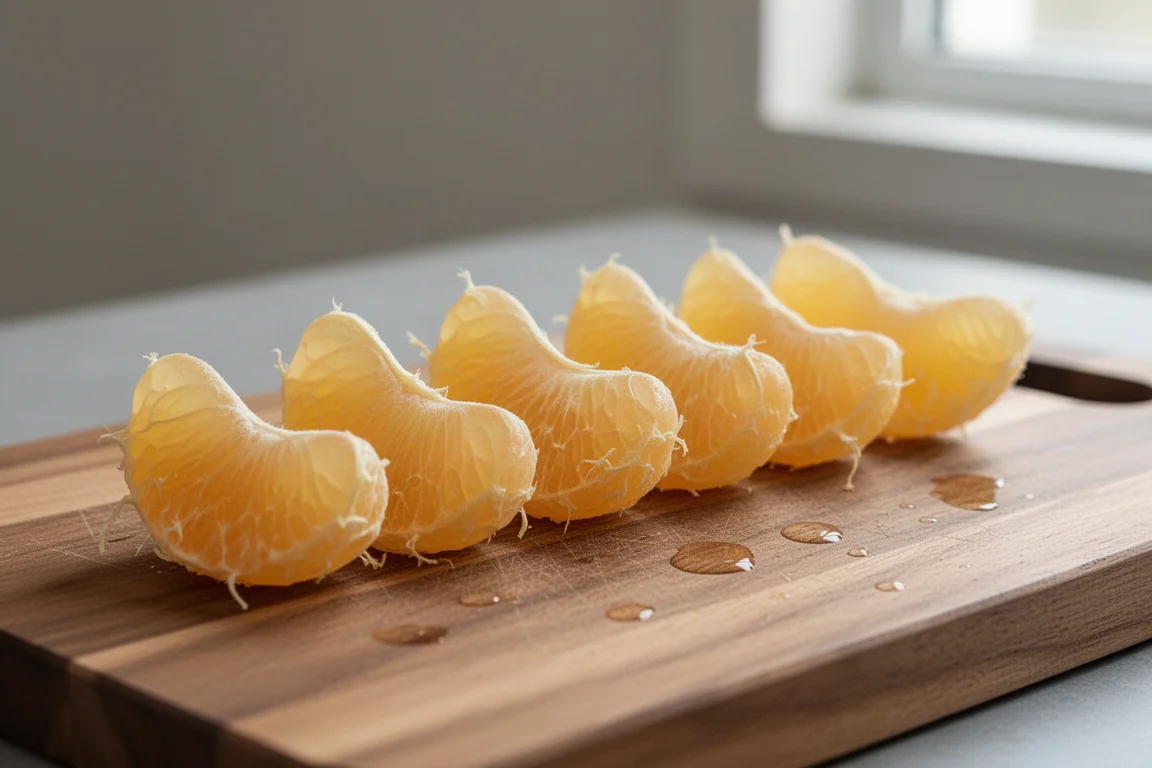
- Leave a little extra rind on the flesh if you would rather not sacrifice fruit to over-trimming. Some membrane left on a slice is still perfectly edible.
- The seeds cluster near the center, and cutting between the natural segment lines first means less cleanup later.
- The center portion of the fruit is generally the least tasty part, so do not feel bad about discarding it.
Most importantly, treat your knives as tools meant to be used. A knife designed for one task can still do plenty of others if you keep it sharp and use it with respect. Collecting knives is a fine hobby, but for the people who use them, the only wrong way to use a sharp, well-maintained knife is not to use it at all.
Conclusion
There was no runaway winner in this pomelo showdown, and that is the useful result. If speed on the outside is what you need, the long Takamura Kyoto takes it. If precision and in-hand control matter most, the tiny Takeda petty wins that round. The Shindo funayuki sits in between, strong on the initial breakdown but still a touch long for the finest work. For most kitchens, the real lesson is to pair a longer blade with a short one and let each do what it does best.
Further reading
Related Reviews

Kitchen Knives
Best Chef's Knives 2026: 27 Popular Options Tested and Ranked
A comprehensive review of 27 chef's knives ranging from $18 to $380, with honest assessments of handle comfort, blade balance, and real-world performance.

Kitchen Knives
Best Chef's Knives Under $75: Two Tested Recommendations
Two practical 8-inch chef's knives that balance sharpness, comfort, and durability without premium pricing.

Kitchen Knives
Best Chef's Knives 2026: 27 Options Tested and Ranked
A comprehensive review of 27 chef's knives ranging from $18 to $380, with honest assessments of handle design, balance, blade profile, and real-world performance.