Gravel Bikes
Pivot Les SL Drop-Bar Build Review: A Hardtail Approach to Ultra Gravel
A Pivot Les SL hardtail converted to drop bars for 350 miles of self-supported gravel racing, with a 100mm fork, 2.1in tires, and clearance to spare.
Introduction
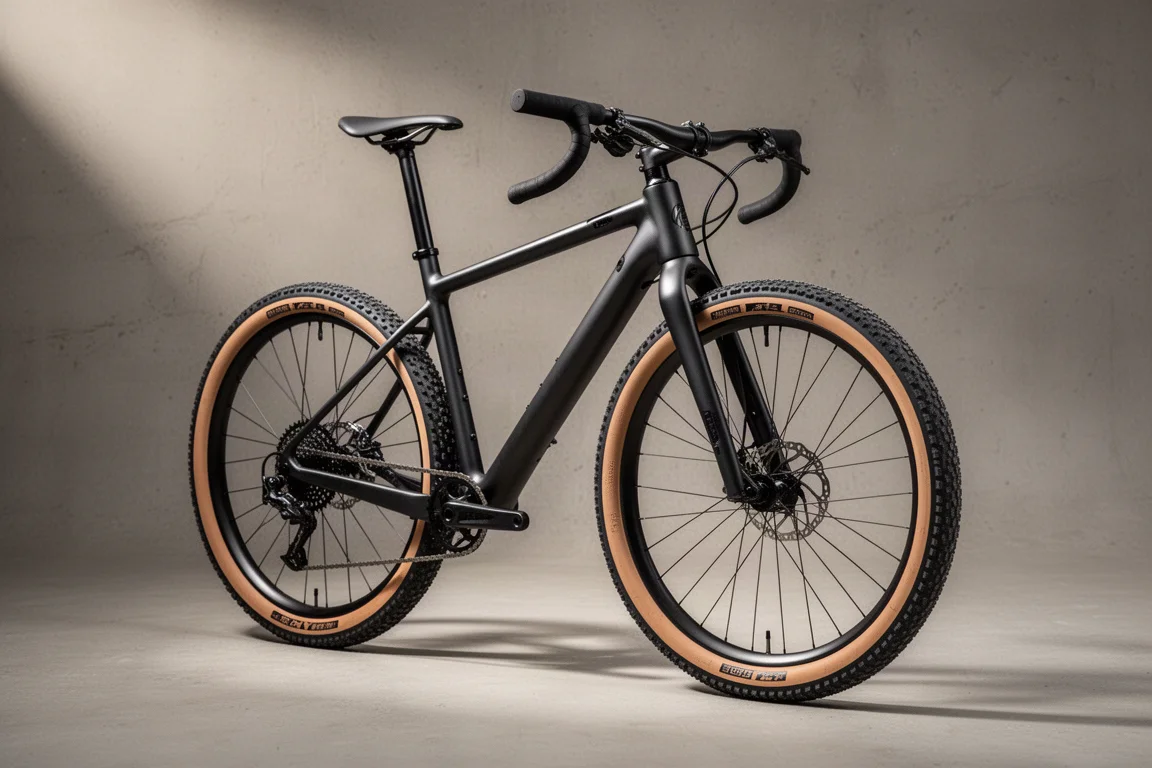
Ultra-distance gravel racing rewards a different set of priorities than a fast 100-mile event. Across 350 self-supported miles, the quickest setup on paper is rarely the setup that reaches the finish first. This build follows that logic to its conclusion: a Pivot Les SL hardtail mountain bike converted to drop bars, running a 100mm cross-country fork and 2.1in tires, assembled specifically for Unbound XL.
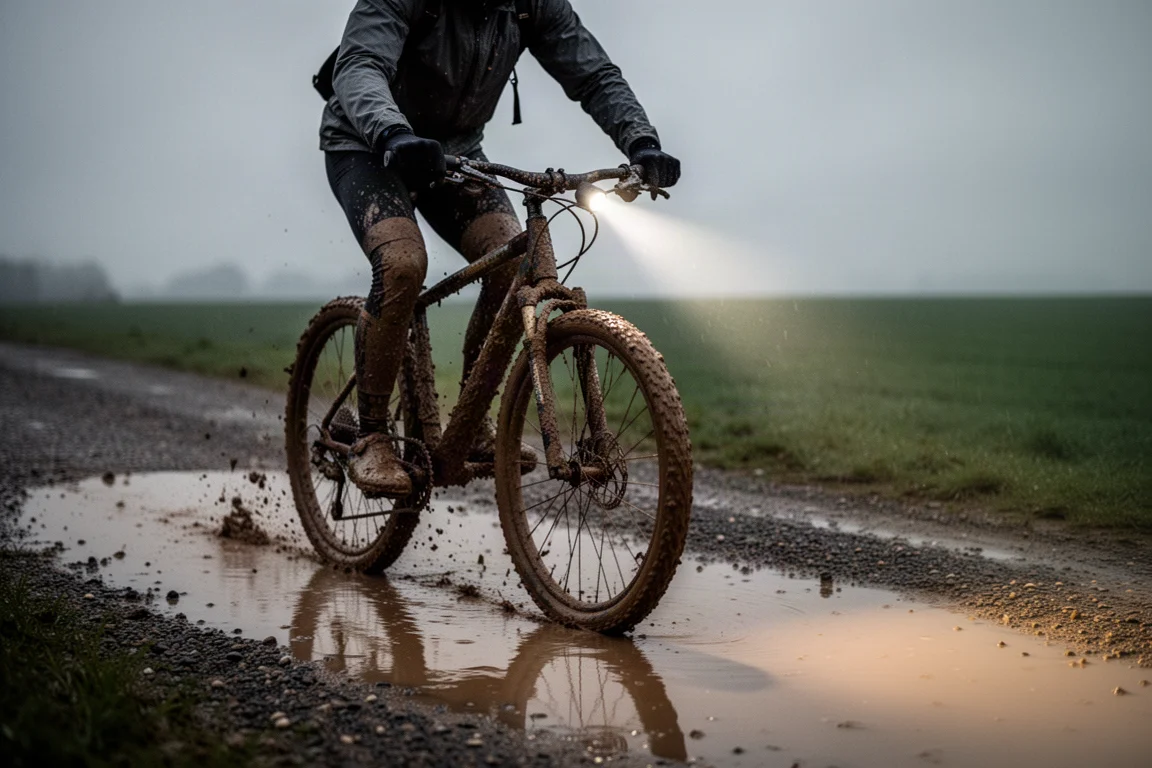
The reasoning is straightforward. Kansas gravel is rough, chunky, and unpredictable, and when it turns wet the surface becomes a cement-like mud that packs onto tires and clogs frames. A hardtail brings wide tire volume, suspension, and genuine clearance to spare rather than a few millimetres of margin.
Who this product is for
This is a build for riders whose events are measured in hundreds of miles rather than hours. It suits anyone whose priority is finishing, and finishing without wrecking their hands, back, or wheels on terrain that never lets up.
It also suits riders who race on surfaces that vary wildly within a single course. The same bike has to handle fast, straight gravel, chunky rock sections, and, if the weather turns, mud deep enough to stop a bike. A drop-bar hardtail trades outright speed for durability, comfort, and clearance, which is a sensible trade when a mechanical or a hike-a-bike section costs far more time than a slightly heavier frame.

Riders who mainly race smooth, fast gravel or short events will likely find a dedicated gravel bike lighter and simpler. The value of this approach grows with distance, roughness, and the risk of bad weather.
Main strengths
The case for this build rests on three things: tire volume with room to spare, suspension that reduces fatigue, and gearing that still supports high speeds on flat roads.
Tire clearance and mud management
The Les SL was designed around 2.4in mountain bike tires, and this build runs 2.1in Vittoria Terreno Zero tires on rims with a 29mm internal width. On those rims the tires measure closer to 2.15in, and there is still plenty of clearance left in the frame.
That margin is the point. Fitting a wide tire is not the same as having clearance to spare. On a wet course, mud builds on the tire and passes through the frame, and a few millimetres of gap can disappear quickly. With a hardtail, a 2.1in tire is not a stretched limit, it is a comfortable fit.
The tire choice supports the same goal. The Terreno Zero is the slickest gravel tire in its range, with a broad slick centre and only light tread at the shoulders. It uses one of the thicker tread casings available, and the sidewall is robust as well. On loose rock, tread does not dig into anything meaningful, so contact patch and casing durability matter more than knobs. Run at low pressure with Airliner Gravel inserts, the wide slick offers a large contact patch and good protection against punctures.
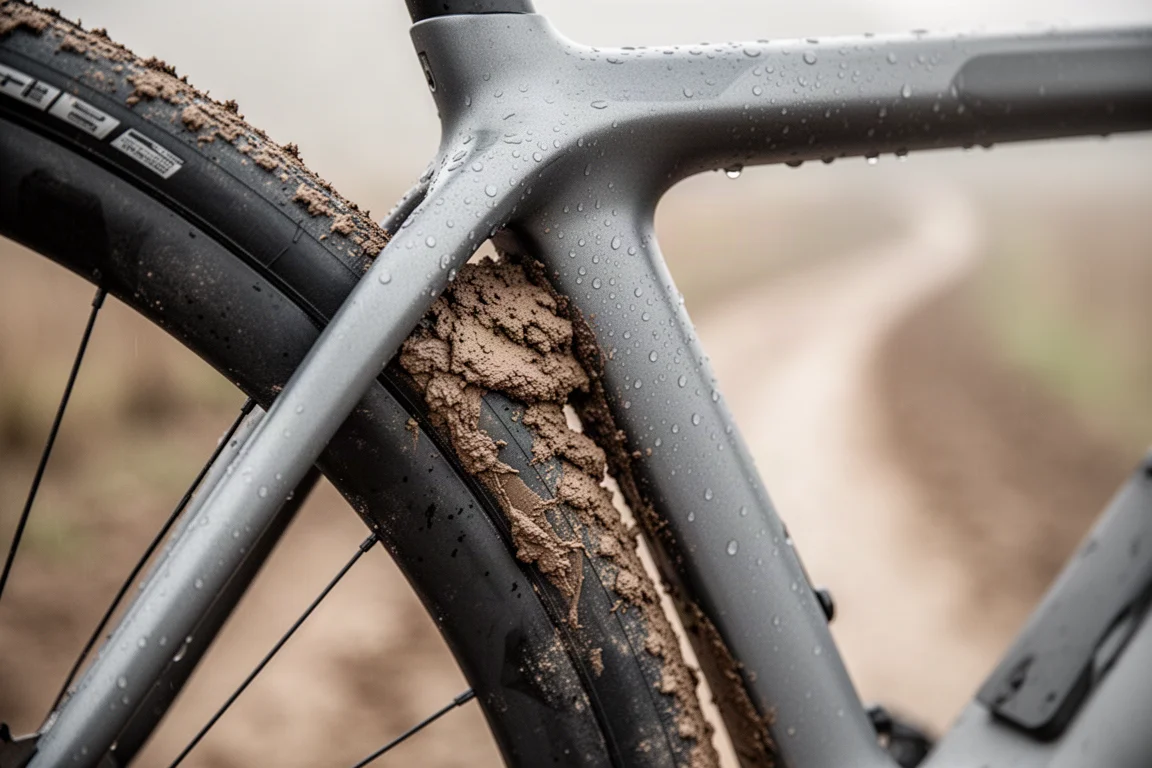
Sealant gets the same treatment. A custom high-latex blend seals aggressively but only lasts about a week, which is exactly the window that matters for a single event. Standard endurance sealants last far longer but seal less effectively, so the trade-off is deliberate rather than accidental.
Suspension and cockpit comfort
A 40mm gravel suspension fork was a turning point on rough courses, smoothing chatter and leaving hands far less numb after a long day. This build goes further with a 100mm cross-country fork from 2019. It is heavier than a modern equivalent, but it works, and there is a practical argument for running older hardware on a mud-heavy course.
The difference between the two is mostly about feel. A short-travel gravel fork subtly softens the surface, while a 100mm fork is clearly felt, particularly out of the saddle. Because the frame geometry is corrected for 100mm of travel, fitting a shorter gravel fork would steepen the head tube angle and upset the handling, so the longer fork is the right match for the frame.
The cockpit is built around drop bars on a mountain bike frame, which requires a short stem to keep the reach manageable. The bars use a modest 12mm flare, enough for control without feeling unwieldy, and clip-on aero bars add both an aerodynamic position and a genuine comfort option late in a long ride. Thick silicone-style bar wrap adds cushioning and can be rewrapped and reused.
Shifting comes from SRAM Force levers, which offer reliable braking with a familiar feel. A 450mm alloy seatpost extends well out of the sloping seat tube, and that length allows useful flex, which matters when you are seated on rough terrain for hours.
Gearing built around a 42T chainring
Most hardtails are designed around a 38T chainring, which is not enough for the flat, fast roads that make up much of a long gravel race. This build runs a 42T Garbaruk chainring on a 104 BCD zero-offset spider, paired with a SRAM XXSL crank chosen for its 55mm chainline and 168mm Q factor.
The result is gearing that supports around 35mph at roughly 100 to 110 rpm. The chainring sits at the practical limit of what the frame will take, with the crank spaced slightly to the drive side to keep everything clear, and the setup has been tested for clearance.
Things to consider before buying
A drop-bar hardtail is a compromise, and the compromises are real even when the overall package makes sense.
Handling and geometry compromises
Mountain bike frames are designed for flat bars, so converting to drop bars means a longer effective reach, a very short stem, and a longer wheelbase than a gravel bike. That makes the bike exceptionally stable in a straight line, which is exactly what long, chunky, flat roads demand, but noticeably less agile in tight, technical sections.
Riders coming from a gravel bike will also notice the front end feels loose or floppy for the first few seconds out of the saddle before it settles into a natural feel. It is a handling character to get used to, not a fault.
Fitting and component availability
Sizing takes experimentation. Dropping the frame size can help correct the reach, but it also means a very long seatpost to reach the right saddle height, and the post needs enough insertion to pass the top tube and seat tube junction for frame integrity.
Chainring options are another constraint. A 42T ring in this bolt pattern is uncommon, and the clearance is close enough that it is worth checking carefully on any similar build. Sealant choice is also a trade-off: a fast-sealing blend will need replacing far more often than an endurance formula.
Buying advice
Start with the course, not the bike. If your events are long, rough, and likely to be wet, the case for a drop-bar hardtail is strong: wide tires with clearance to spare, suspension that keeps your hands and shoulders working, and stability on straight, chunky roads. If your riding is mostly smooth gravel and shorter distances, a dedicated gravel bike will be lighter and quicker to handle.
Wherever you land, prioritize durability and comfort over the fastest setup on paper. The setup that finishes is the one that keeps rolling when the surface turns bad. Carry more water than you think you need, keep resupply simple, and build a consistent pocket system so you never have to search for tools, cash, or food mid-ride.

Component choices are personal, and there is no single correct build. What matters is that every decision, from tire volume to gearing to bag layout, is made for the conditions you actually expect to meet.
Conclusion
This Pivot Les SL build is a clear example of matching the bike to the race rather than the race to the bike. A hardtail frame with drop bars, a 100mm fork, 2.1in tires, and a 42T chainring is not the lightest or most aerodynamic answer to gravel, but it is a durable and comfortable one, and on a 350-mile course those qualities often decide the outcome.
For riders whose ambitions run long and whose courses run rough, the approach is worth serious consideration.
Product link
View more details for Pivot Les SL Drop-Bar Build
This product is mentioned in the review. Check the specifications, options, and compatibility before buying.
View more details for Pivot Les SL Drop-Bar BuildFurther reading
Related Reviews
Gravel Bikes
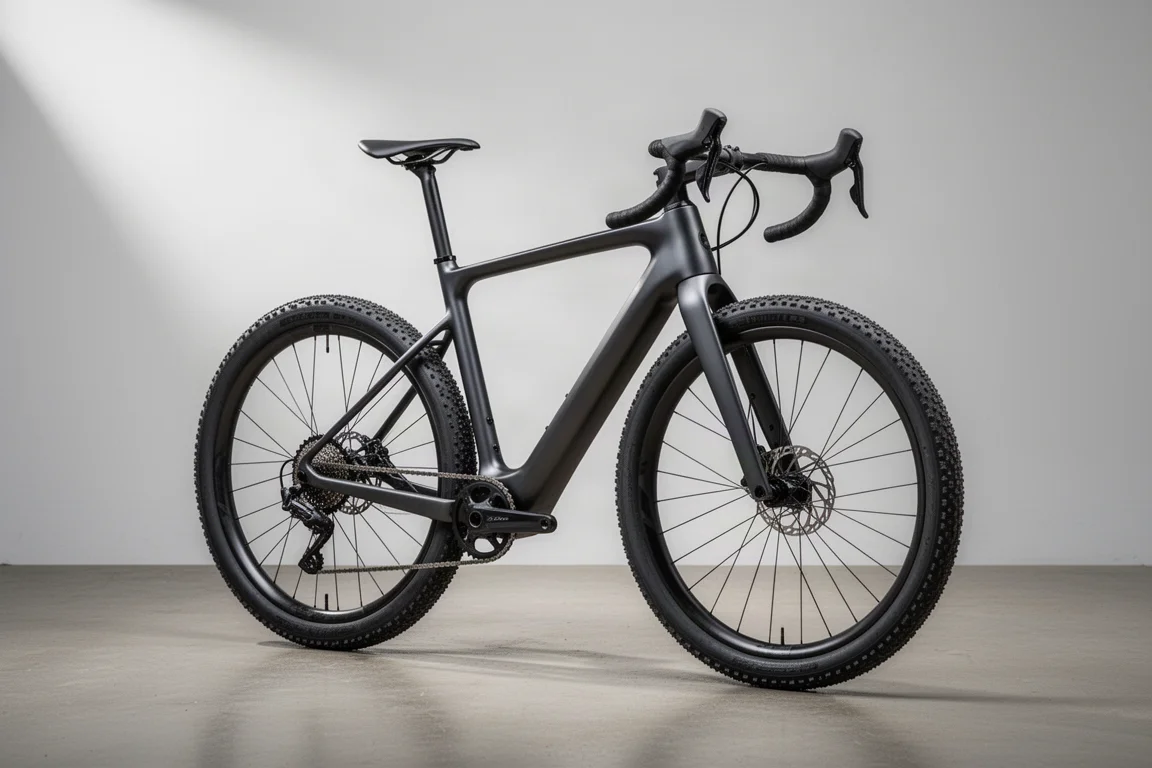
3T Exploro Ultra Review: A Fast Gravel Bike Built for Big Tyres
A close look at the 3T Exploro Ultra, an aero carbon gravel bike designed around wide tyres, with road-like handling, a 980 g frame and genuine rough-terrain capability.
Gravel Bikes
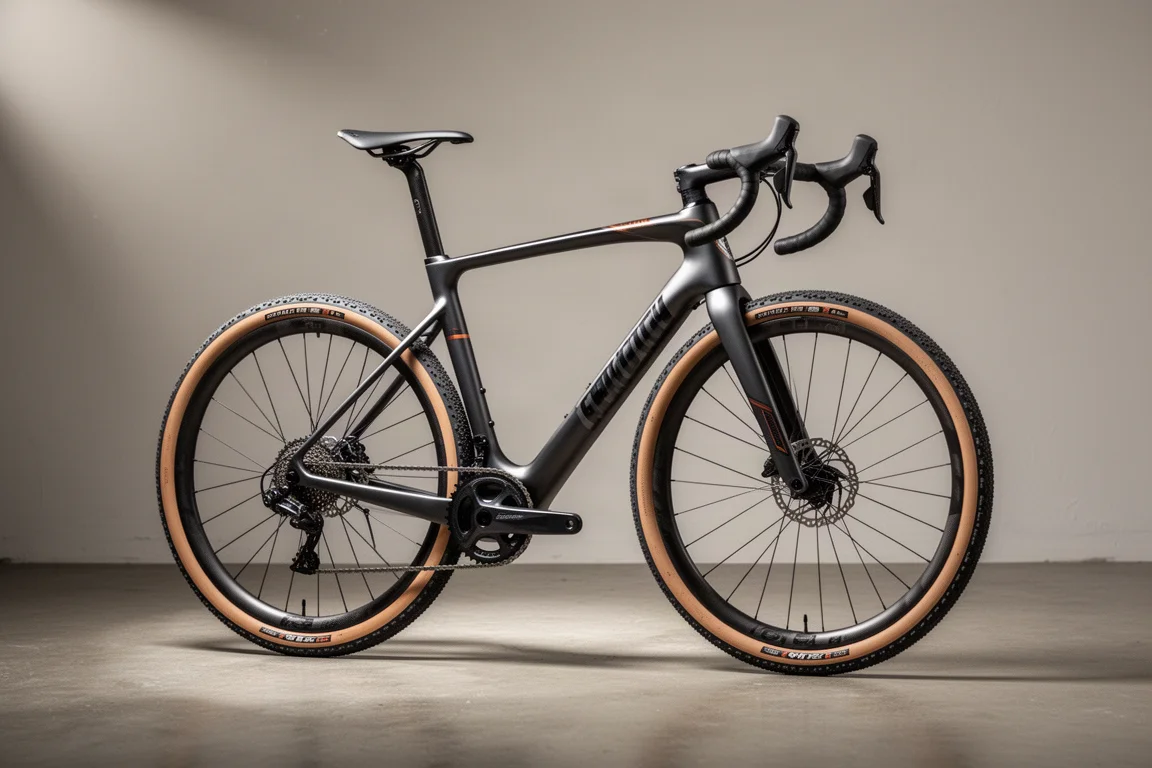
3T Extrema Italia Review: Aero Gravel Speed With Room for 57 mm Tires
The 3T Extrema Italia pairs an aero frame with huge tire clearance, Italian-made carbon and a more comfortable ride than the RaceMax. Here is what to know before buying.
Gravel Bikes
3T Race Max 2 Italia Review: An Aero Gravel Race Bike Made in Italy
A closer look at the second-generation 3T Race Max 2 Italia, covering its aero updates, ride character, tire clearance, internal storage and who it suits.