Flashlights
Phoenix HT30R Review: A 1,500-Meter LEP Thrower Built for Serious Searching
A Class 1 LEP flashlight with a broad spectrum white laser, up to 1,500 meters of throw, IP68 sealing, and a 5,000mAh 21700 battery. Here is what works and what does not.
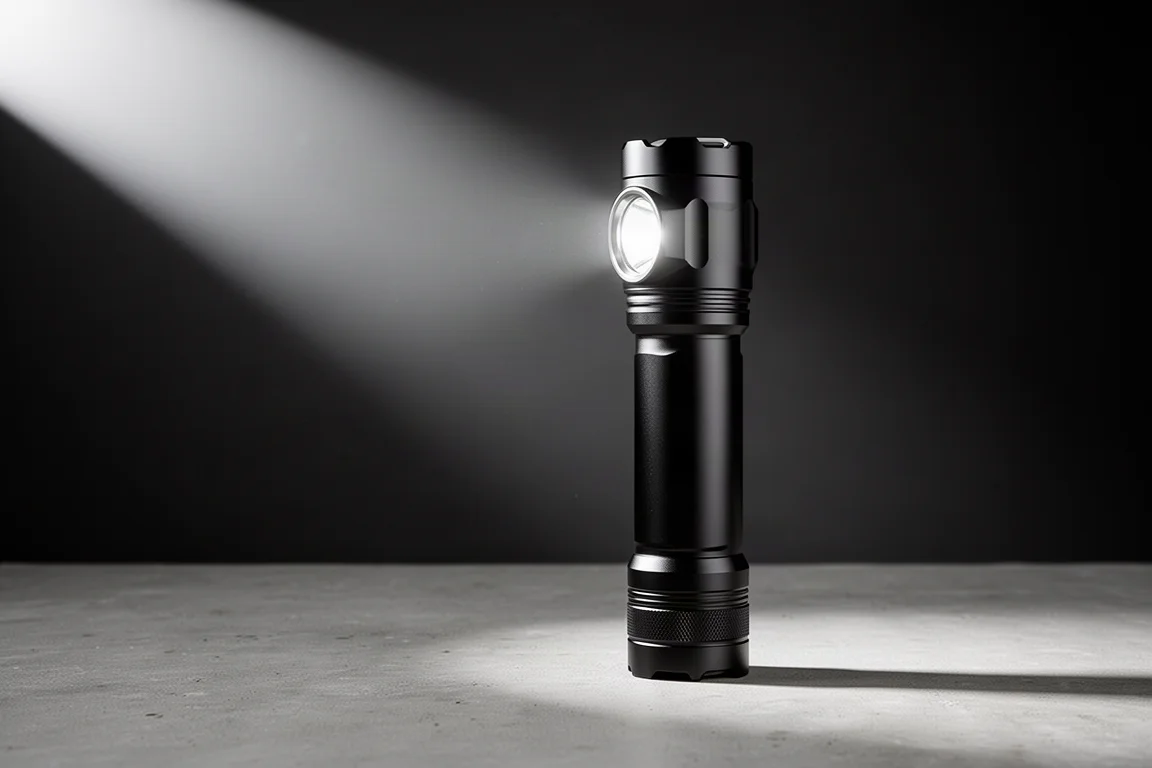
Introduction
The Phoenix HT30R sits firmly in the specialty category. This is a Class 1 LEP flashlight with a broad spectrum white light, and that class one laser lets it throw up to 1,500 meters with a maximum output of 500 lumens. If you are shopping here, you likely already know what an LEP is: an extremely concentrated spotlight with barely any spill, built for seeing far rather than lighting your surroundings.
That focus shapes this entire review. The HT30R is excellent at one job, and understanding whether that job is yours matters more than any spec sheet.
Who This Flashlight Is For
Phoenix positions the HT30R squarely for search and rescue, law enforcement, and hunters. Basically anyone who needs a very powerful spotlight rather than a general-purpose light. Fifteen hundred meters is roughly 4,921 feet, almost a mile of throw, which instantly takes everyday carry off the table.
LEP lights produce a tiny, concentrated hot spot with almost no spill. Something up close simply gets blown out, and there is almost no peripheral illumination to work by. If you need light around you, this is not your light. If you need to identify something a long way off, it is exactly that.
Design, Charging, and Battery
The body is typical Phoenix quality: 6061 T6 aluminum with a type 3 hard anodized finish, rated IP68 for dust and water resistance and submersible to one meter. The battery is a 5,000mAh, 3.6V, 18Wh rechargeable lithium-ion 21700 cell, held by a double spring system in the tail cap and body.
Charging happens two ways. A hidden USB Type-C port under a twist cap accepts the included USB Type-A to Type-C cable, or you can slot-charge the battery itself. I like the hidden port, but the battery indicator shares that twist-cap space, and that is less convenient. Checking your charge means twisting the head open, reading the LED, and twisting it shut again.
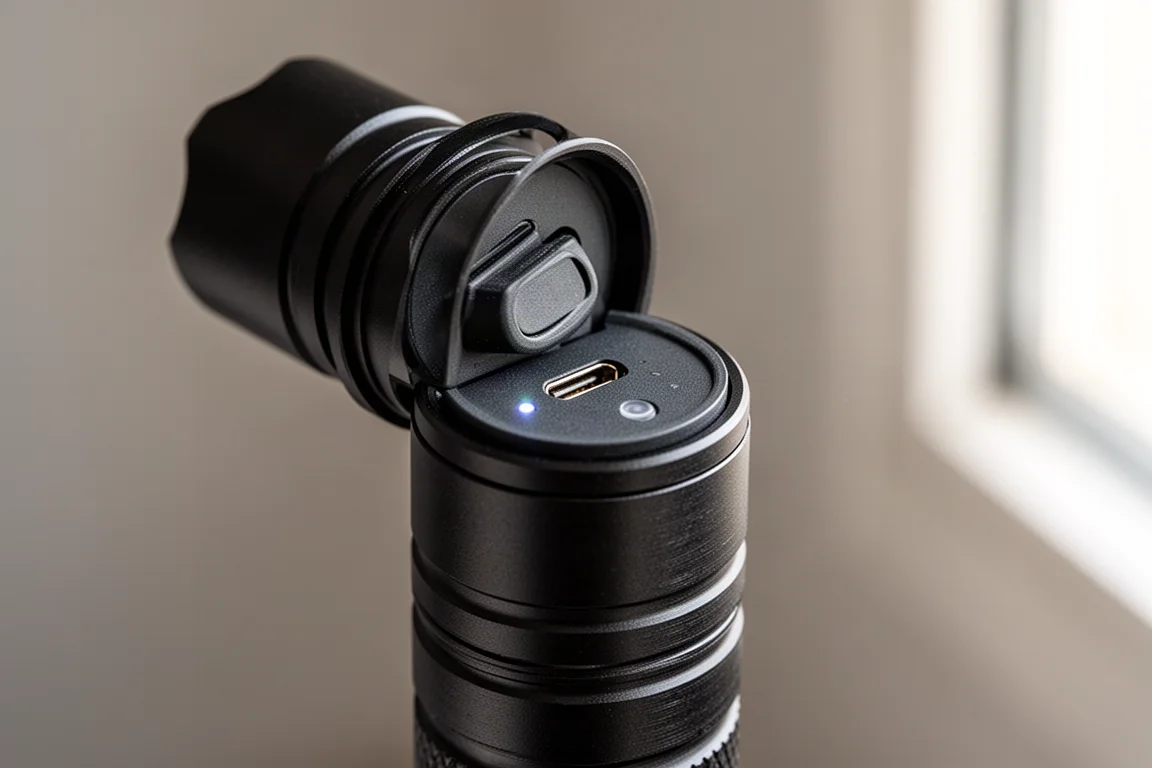
The indicator itself is also broad. Green blinking means somewhere between 30 and 100 percent, red flashing means 30 percent down to 1. A green light could mean a mostly full battery or a third of one, and you just cannot tell. In the box you also get a lanyard, two spare O-rings, a warranty card, a user manual, and a holster that is genuinely the worst I can remember in recent memory. The material feels like a reusable grocery bag, and since this flashlight is far too big for pockets anyway, a proper holster would have made carrying it in a bag or backpack much easier.
Simple UI With Useful Touches
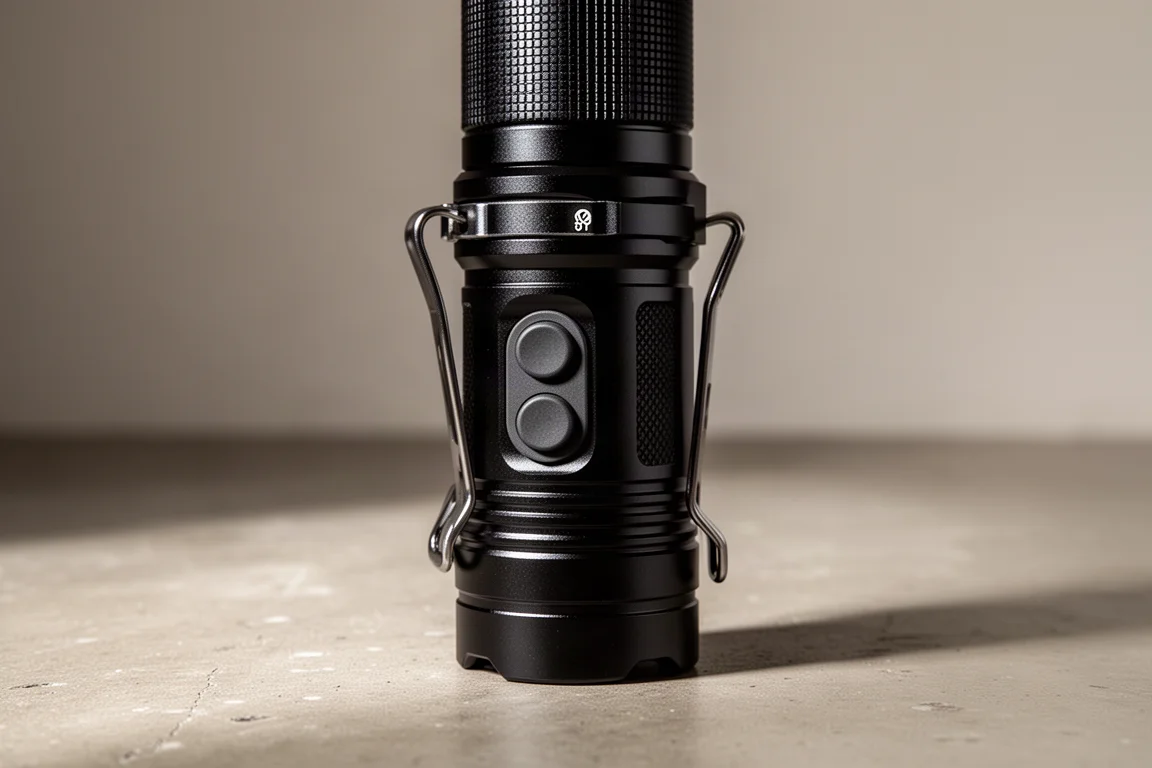
Everything runs through dual tail switches: a tactical switch and a functional switch. Half-press the tail switch for momentary on, full press for constant on. The functional switch toggles between low and high.
Strobe is handled cleverly. From on, press and hold the function button for constant strobe at the full 500 lumens. From off, press and hold the same button for momentary strobe, which gives you instant access when it matters.
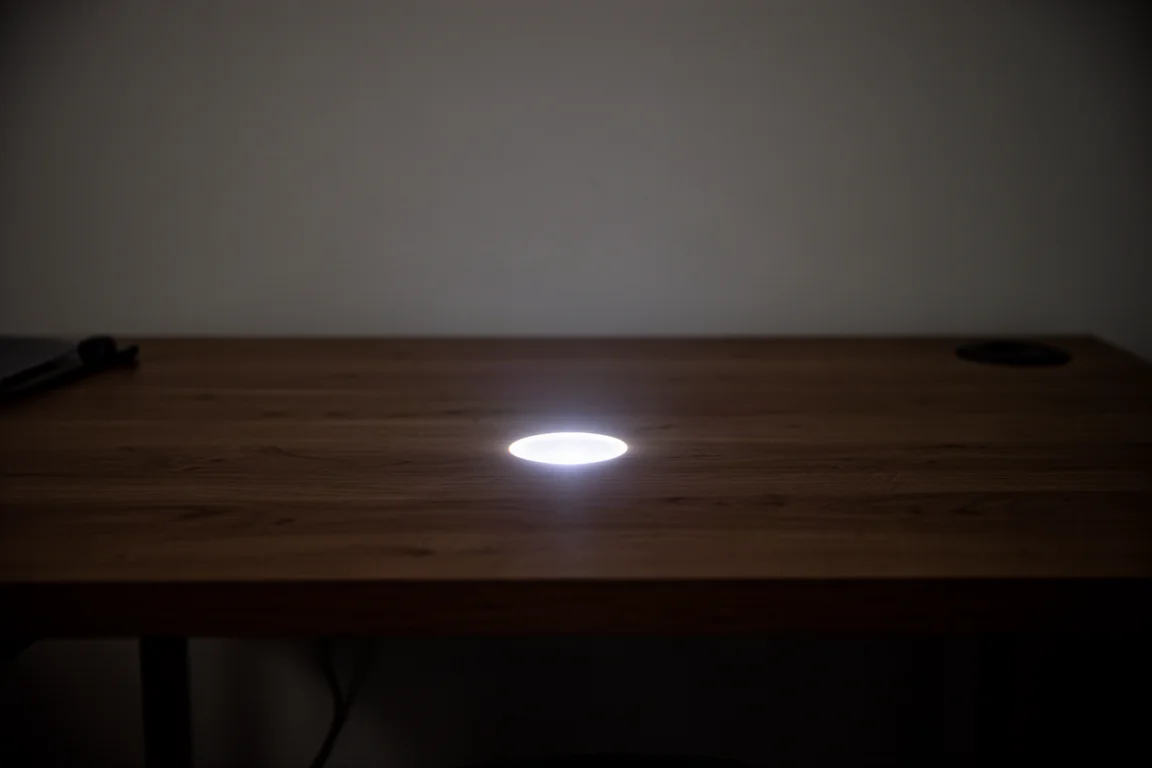
There is mode memory, so turning the light back on returns it to the last mode used. There is no electronic lockout as far as I can tell, but a quarter twist of the tail cap locks it out mechanically. The removable split ring pocket clip exists, but with lens-down carry that stops about an inch short of the tail, pocket carry is more theoretical than practical on a light this size.
Output, Runtime, and Heat
Low mode delivers 100 lumens with a runtime of 7 hours 15 minutes, a throw of 630 meters, and 100,000 candela. High delivers the maximum 500 lumens with a runtime of 2 hours 20 minutes, a maximum throw of 1,500 meters, and 600,000 candela.
In my two-minute heat test on high, temperatures stayed completely manageable: 84 degrees Fahrenheit at the head after one minute, rising only 5.4 degrees to 89.4 after two, with the body going from 79.7 to 81.6. No uncomfortable heat buildup at all, though with such a concentrated hot spot and no spill, any step-down is hard to see from the beam itself.
Real-World Beam Impressions
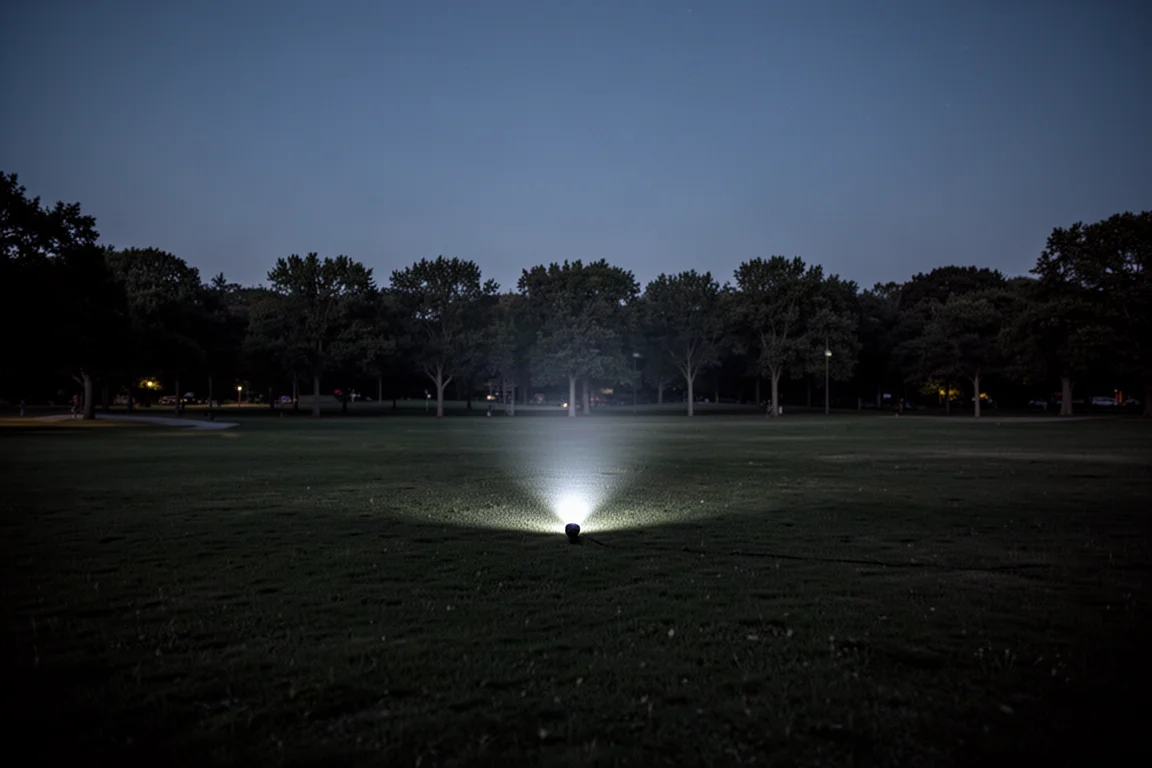
No test location gives you 1,500 meters, so expectations should be calibrated. Even on low, the beam easily reached a distant treeline at the far end of a large park, and scanning an open field lit up distant targets without any problem. The spot is small, round, and intensely bright, exactly what LEP fans expect.
On high, the beam is frankly phenomenal. A tightly focused column of white light that punches across the entire field, with so little spill that anything next to the target stays dark. That is the trade-off in one image: a brilliant long-distance spotlight that does nothing for your immediate surroundings.
Buying Advice
At around $280, the HT30R is pricey, but it sits in the same price range as other LEP flashlights with similar specs. If you are in the market for a long-range LEP thrower, you are probably already prepared for that number.
Buy it if you need a dedicated spotlight for search work, patrol, or hunting and will carry it in a vehicle or pack. Skip it if you want a light with usable spill for close-range tasks, or if the hidden battery indicator and included holster would bother you as much as they bother me.
Conclusion
The Phoenix HT30R does one thing superbly: throwing a focused beam a very long way, with solid build quality, IP68 sealing, sensible runtimes, and manageable heat. The cheap holster and the twist-cap battery indicator are real annoyances, but neither undermines what this light is built to do. For anyone who needs a serious long-throw spotlight, it is an easy recommendation.
Product link
View more details for Phoenix HT30R
This product is mentioned in the review. Check the specifications, options, and compatibility before buying.
View more details for Phoenix HT30RFurther reading
Related Reviews
Flashlights
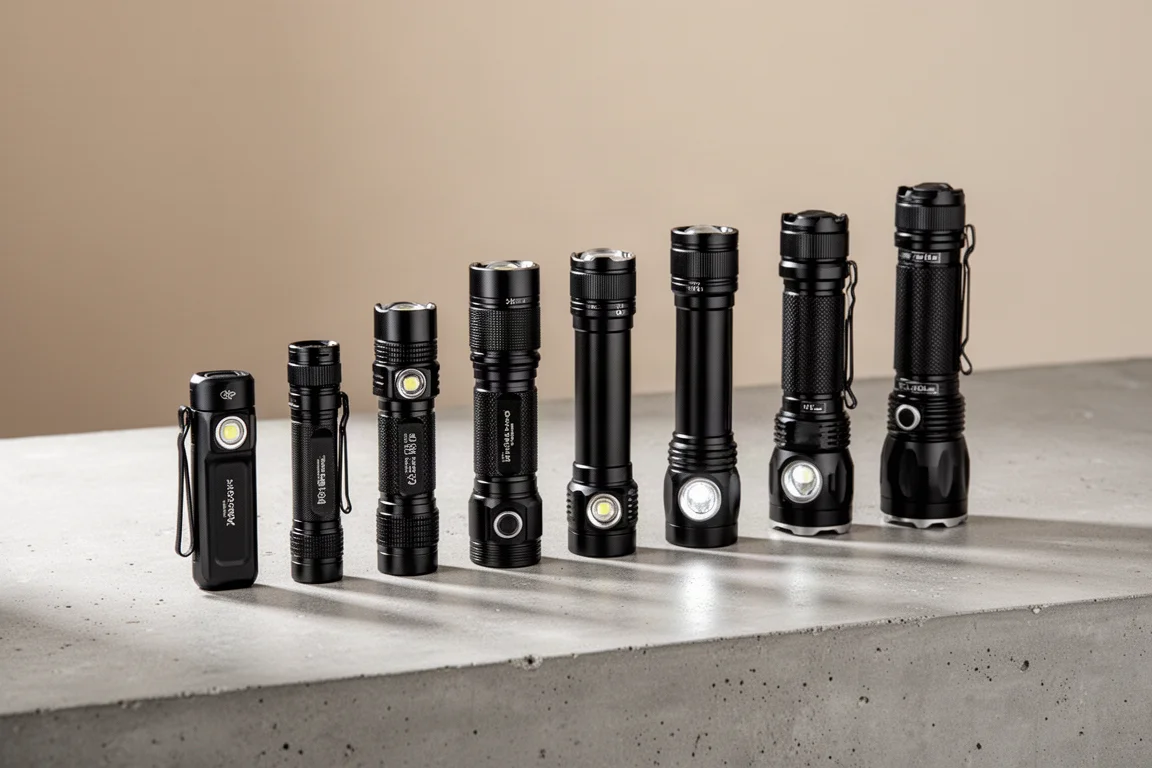
Best Flashlights 2026: Brightness, Battery, and Value Compared
We tested 18 flashlights across a wide price range to find the best performers in brightness, battery life, and durability.
Flashlights
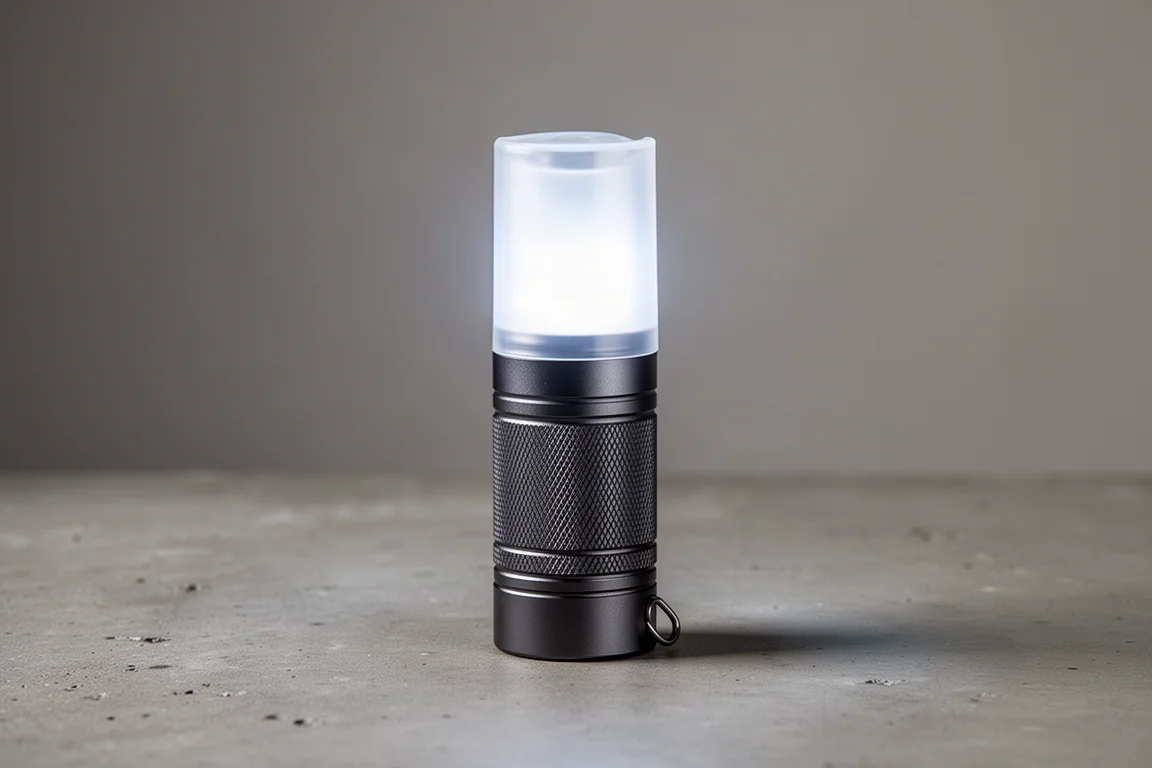
Nitecore LA10 Review: A Tiny 2-in-1 Lantern That Nails the Basics
The Nitecore LA10 pairs a pocket-sized lantern with a single AA battery, a magnetic tail cap and a five-year warranty. Here is where it shines and where it struggles.
Flashlights
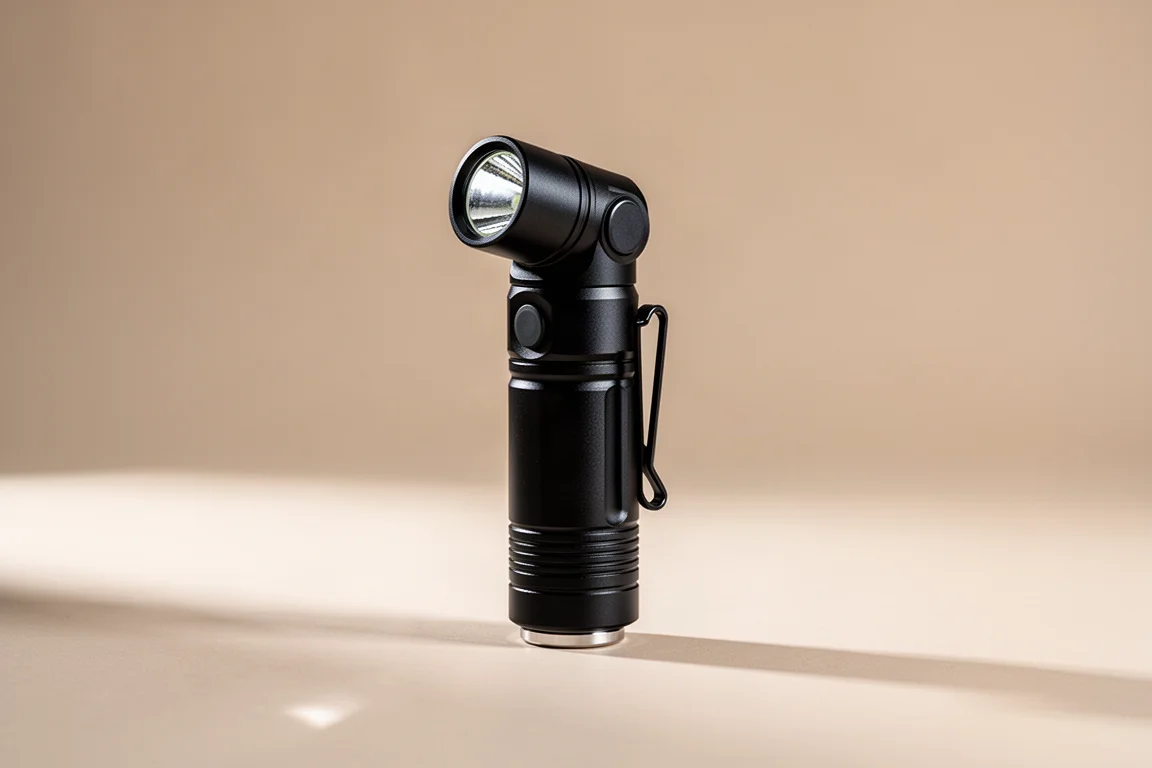
Wuben G5 Review: A Compact Everyday Carry Flashlight
The Wuben G5 is a small, rechargeable flashlight with a pivoting head, magnetic base, and color modes. Here is how it performs as an everyday carry light.