Everyday Carry
Phoenix E18R V2 vs Olight Baton 3: Two Tiny EDC Flashlights, One Big Output
A compact 1,200-lumen EDC flashlight compared directly with the Olight Baton 3, covering build, modes, runtime, heat, and real-world beam performance.
Introduction
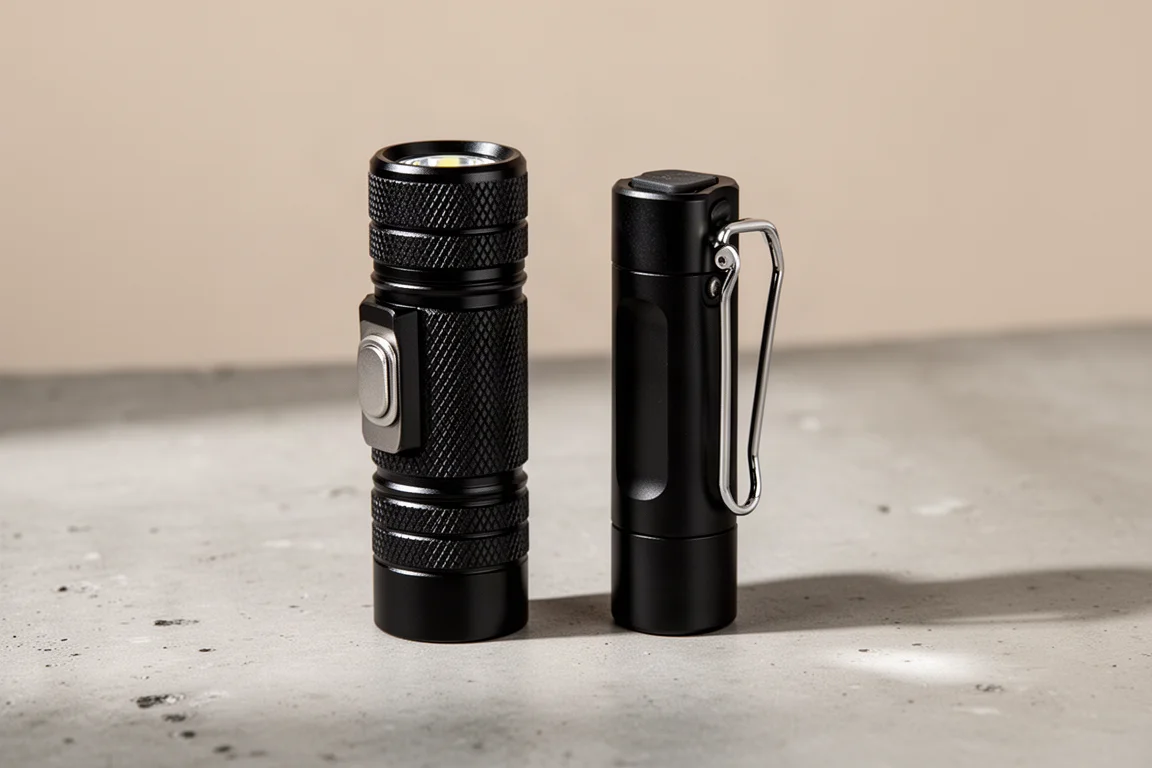
Small flashlights that can still punch out serious output have become the sweet spot of the everyday carry market, and the Phoenix E18R version 2 lands right in the middle of it. With a maximum output of 1,200 lumens from a body just 2.64 inches long, it goes head to head with the Olight Baton 3, which also tops out at 1,200 lumens. This comparison walks through build quality, controls, battery behavior, heat, and real-world beam performance so you can decide which of the two fits your pocket and your habits.
Phoenix E18R Version 2: Build and Features
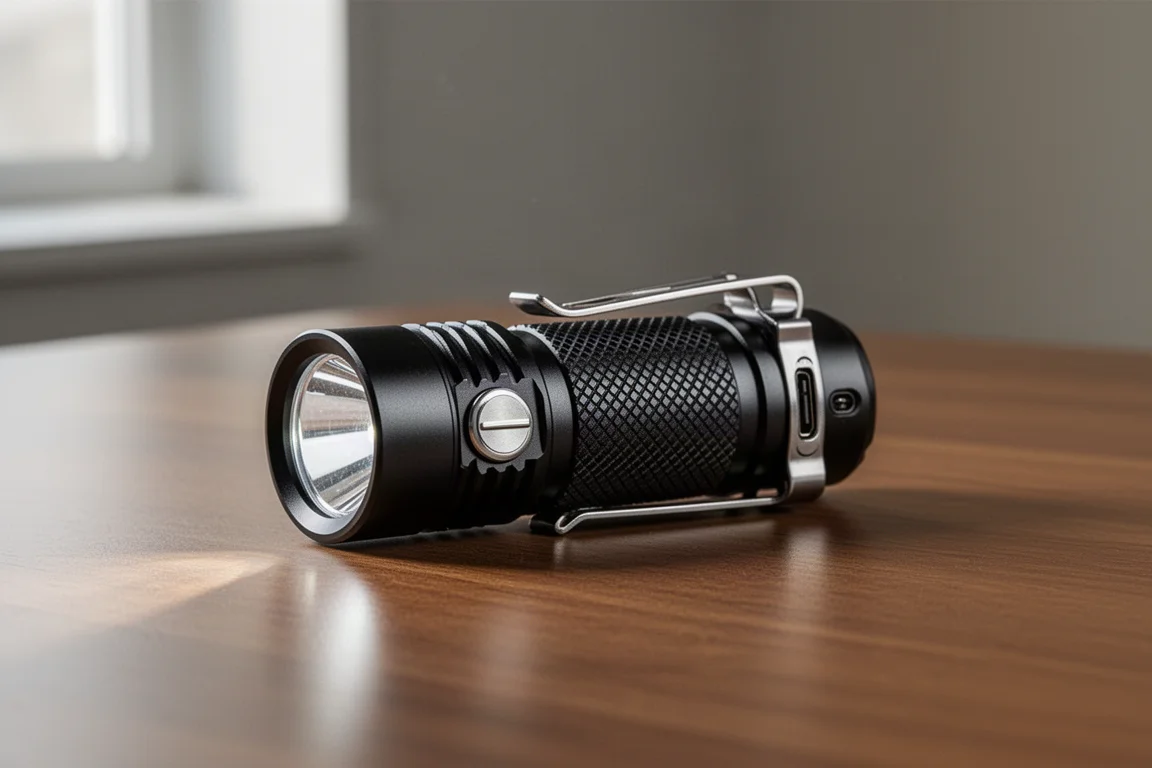
The E18R version 2 is built from 6061-T6 aluminum with a type III hard anodized finish, and it feels solid in the hand. The main body section has tight knurling that offers a genuinely good grip, and the metal side switch sits slightly proud of the body, no longer inset like the previous version. In the center of the switch, a small LED reports battery level for about three seconds whenever you press the button or turn the light on.
Spec-wise, Phoenix rates it at 1,200 lumens maximum, a 146-meter throw, and 5,397 candela, driven by a single Luminus SST40 cool white LED rated for 50,000 hours. It is impact resistant to 1 meter and IP68 rated, meaning it is fully dust proof and submersible in up to 6 feet of water. At 2 ounces (56 grams) with the battery installed, it disappears in a pocket.
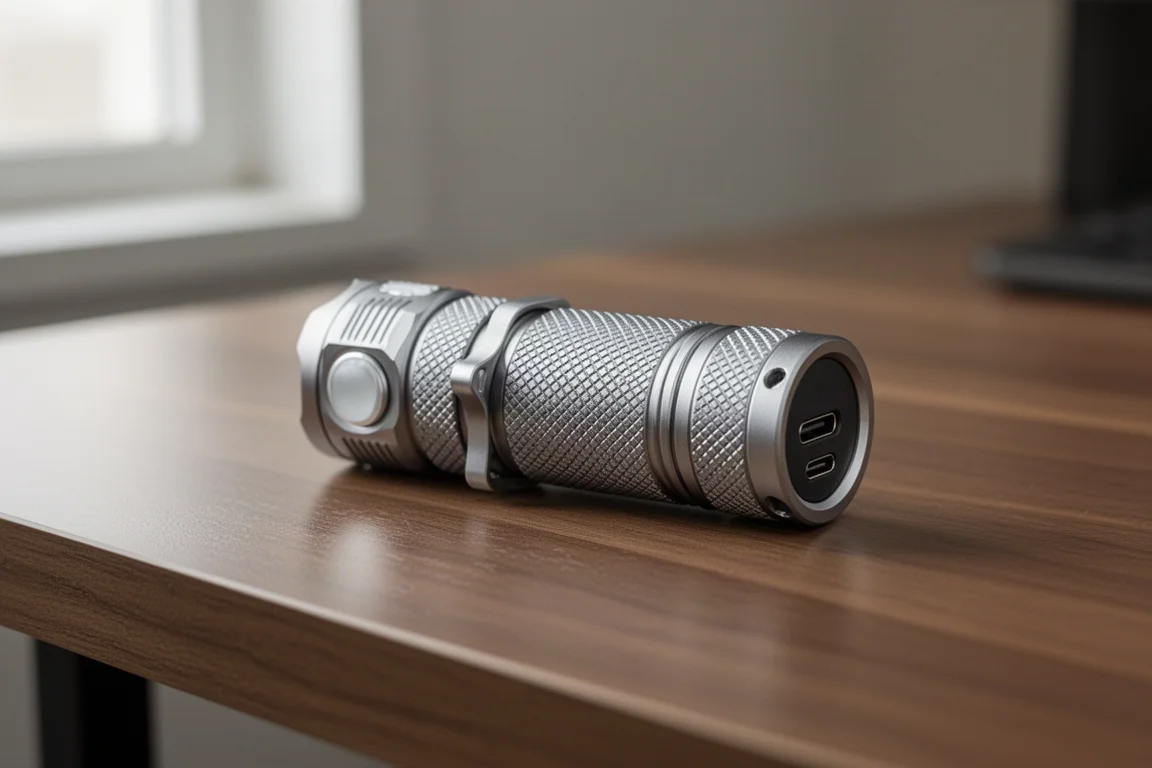
There are thoughtful touches everywhere. The two-way pocket clip is removable via a split ring, the tail is flat so the light can tailstand, and the tail cap is magnetic and strong enough to hold the light horizontally against a steel surface, which is handy for mounting it on a car hood while working on an engine. Compared with the earlier E18R, the upgrade is significant: output jumps from 750 to 1,200 lumens, and charging moves to a USB type-C port on the outside of the body.
Controls and Mode Spacing
Operation follows the usual Phoenix pattern. Hold the side switch for about half a second to turn the light on, then short-press to cycle through five modes: 1-lumen Moonlight, 30-lumen Low, 150-lumen Medium, 350-lumen High, and 1,200-lumen Turbo. Holding the switch for about 1.2 seconds activates strobe.
One thing to know upfront: there is no instant access to Turbo. If you turn the light off while in Turbo and switch it back on, it resumes at High. There is instant access to Moonlight, however, which is a genuinely useful feature at 1 lumen. Mode memory works for everything except Turbo, and mode spacing is strong from Moonlight through High. The main gap is between High at 350 lumens and Turbo at 1,200; a mid-step around 600 lumens would soften that jump.
Lockout is handled three different ways, and all of them are welcome: a double short-press on the side switch, a quarter twist of the tail cap, or simply sliding the pocket clip over the switch so it cannot be pressed. Having three independent lockout methods on a light this small is a real advantage.
Battery and Charging Behavior
The included battery is a 3.6V, 700mAh ARB-L16-700P 16340 rechargeable lithium-ion cell, charged through the USB type-C port on the light itself. The battery indicator LED only reports charge level with this Phoenix battery installed.
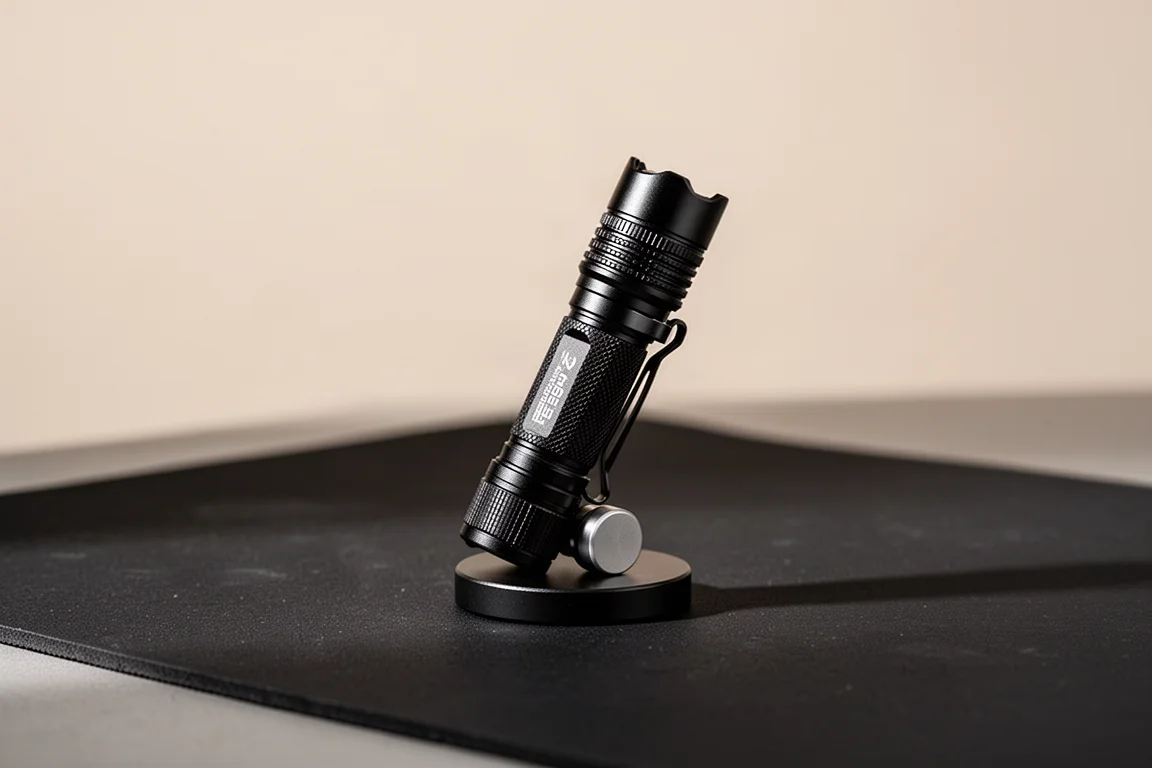
Using a CR123A lithium battery also works, but with two catches worth knowing. First, the battery level indication stops working, flashing red instead of showing status. Second, Turbo is unavailable; the light runs Moonlight, Low, Medium, and High only, so a CR123A effectively turns this into a 350-lumen flashlight. If backup disposable cells are part of your plan, keep those limits in mind.
Turbo Runtime and Heat
Phoenix lists Turbo at a 30-minute runtime with an asterisk, which usually signals a stepped runtime that blends Turbo with lower modes rather than a true constant 1,200-lumen run. In testing, the head reached about 100.7°F after one minute on Turbo and roughly 101.3°F at two minutes, while the body climbed from 102.7°F to about 104.3°F. The light gets noticeably hot to hold but remains manageable bare-handed, and no obvious step-down was observed during the short test window. With a body this small, there is simply nowhere for the heat to go, so treat the 1,200-lumen output as a burst mode and the 350-lumen High as the practical everyday level.
Beam Test: How the Two Compare Outdoors
In the field, the E18R version 2 puts out a wide beam with a large, well-defined hotspot and a fairly soft outer edge rather than a sharp cutoff. Medium comfortably lights up nearby benches, High adds a clear center hotspot, and Turbo reaches deep into a dark park, coming close to but not fully reaching distant treelines. Even at 350 lumens on High, the light surveys an open field with ease, and that is the mode most people will actually live on given the shorter Turbo runtime.
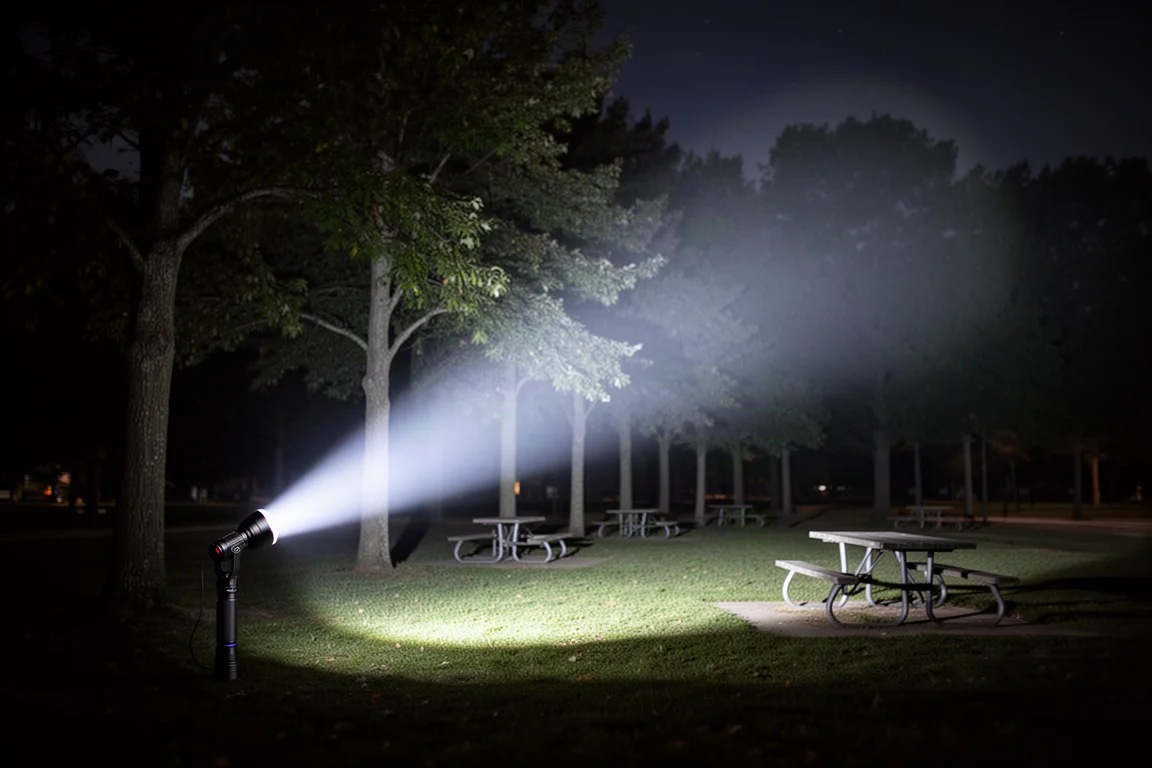
Side by side with the Olight Baton 3, the two are remarkably close. The Phoenix is slightly longer, but not by much, and both claim 1,200 lumens. In direct beam comparisons at Turbo, the throw, hotspot shape, and even the color temperature look nearly identical. The Baton 3 also shares the magnetic tail cap feature, so the two really are in direct competition on design as well as output.
Olight Baton 3: The Direct Rival
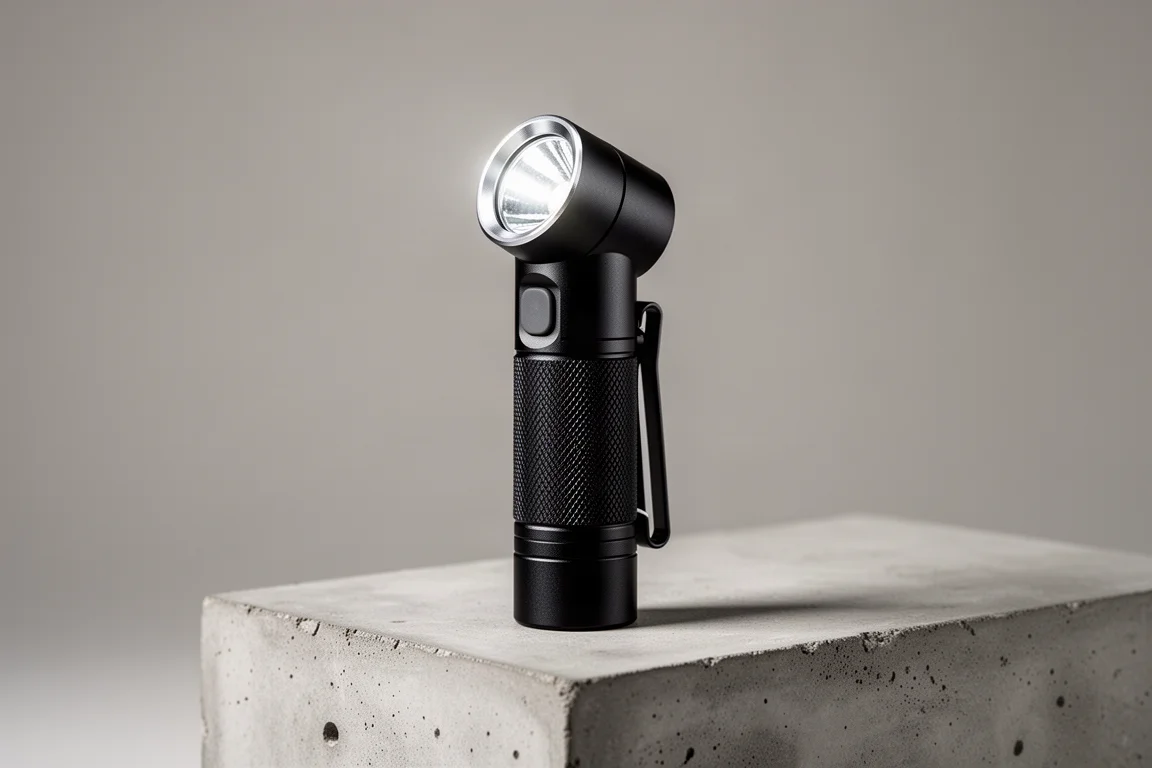
The Baton 3 matches the E18R version 2 on headline output at 1,200 lumens, offers the same magnetic tail cap trick, and comes in a nearly identical pocketable footprint. Its beam performance mirrored the Phoenix almost exactly in side-by-side testing, making the choice between them less about raw performance and more about interface preferences, charging style, and which brand’s battery ecosystem suits you better.
Buying Advice: Which One Should You Pick?
If you want USB-C charging built into the light, three lockout options, instant Moonlight access, and the option to run CR123A cells in a pinch, the Phoenix E18R version 2 makes a very strong case. If you prefer Olight’s ecosystem or already own Baton-series accessories, the Baton 3 delivers effectively the same real-world performance. Both are excellent everyday carry lights: super bright for their size, simple to operate, and genuinely pocketable.
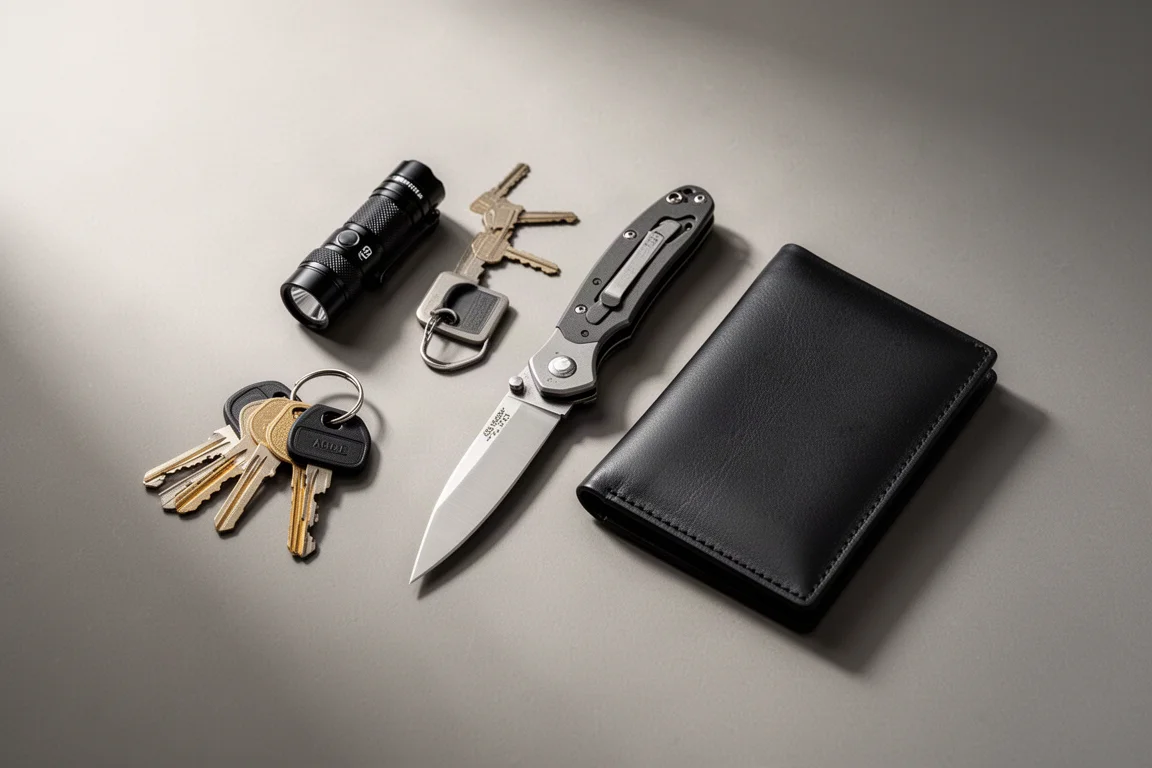
Whichever you choose, plan to run it mostly on High at 350 lumens for longer runtimes, and save Turbo for the moments when you genuinely need the full 1,200-lumen burst.
Conclusion
The Phoenix E18R version 2 is an impressive everyday carry flashlight: 1,200 lumens from a 2.64-inch body, thoughtful lockout options, instant Moonlight access, and a beam that matches the Olight Baton 3 almost identically. Its quirks, like no instant Turbo access and limited CR123A functionality, are minor against how much usable light it packs into such a small, well-built package.
Further reading
Related Reviews

Everyday Carry
Everyday Gear That Deserved a Second Look
A roundup of solid everyday carry items: watches, pens, a pencil, a knife, and a smart ring that each earned a place on the table.

Everyday Carry
KORE Tactical Bifold Wallet Review: A Durable Everyday Carry Option
A close look at the KORE Tactical Bifold Wallet, a reinforced nylon wallet with magnetic closure and room for cards, cash, and IDs.

Everyday Carry
Krabby Wallet Review: A Slim, Simple Carry That Has Stood the Test of Time
A closer look at the Krabby Wallet, a slim canvas and elastic design with a loyal following and a simple, functional approach to everyday carry.