Wallets
Patina Wallet Review: A Swiss-Folded Metal Wallet Made From One Sheet
A brass and titanium wallet bent from a single sheet of metal into two working springs. Here is how it holds cards and cash in daily use.
Introduction
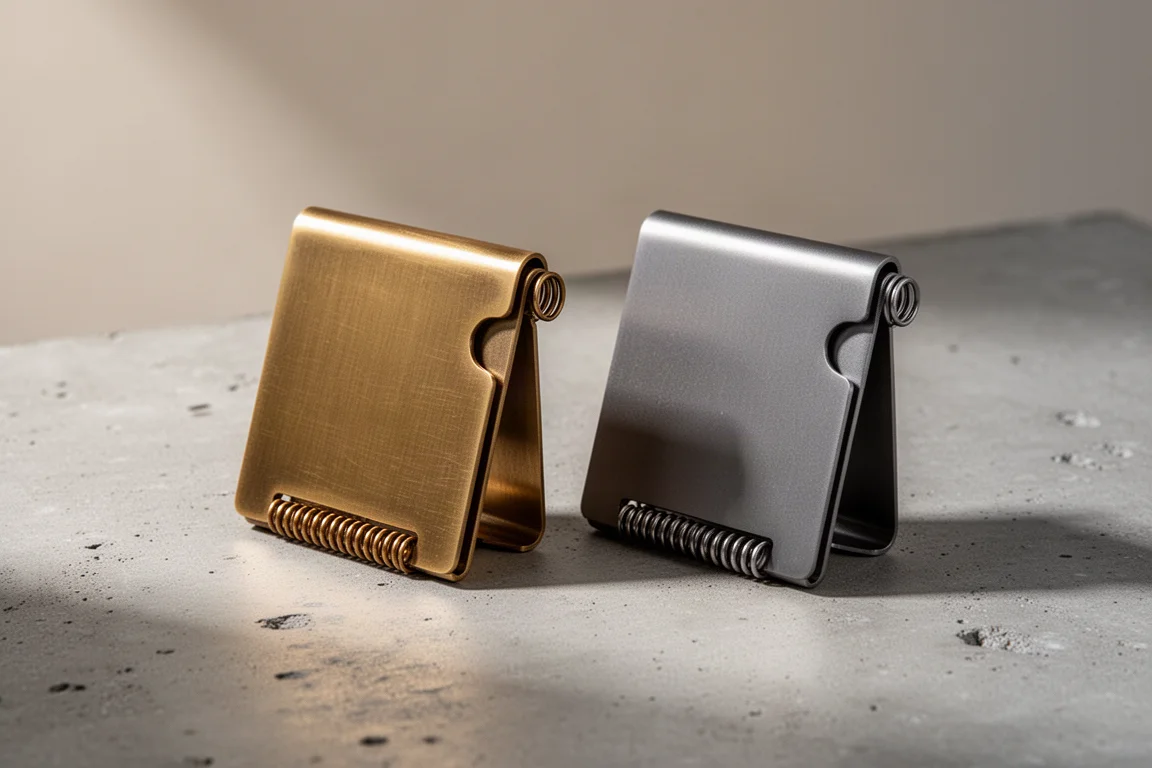
Metal wallets are usually predictable: a block of aluminum, an elastic band, a tray of cards. The Patina Wallet throws all of that out. Designed and handcrafted in Switzerland, it is bent from a single sheet of brass or titanium into a shape that spirals around and forms two working springs, one for your cards and one for your bills. After carrying it for a week, it is easily one of the most original wallets I have handled in a long time.
The folding process reportedly takes around 18 steps, and the result is genuinely intricate. There is almost no branding, just a small “Patina Swiss Handmade” marking on the spring, and engraving is available above the cutout if you want a personal touch.
Specs at a Glance
The wallet measures 2.54 by 3.38 inches. In a weight test, the brass version came in at 3.1 ounces (86 grams), while the titanium version weighed 1.7 ounces (48 grams). Despite being bent from solid metal, the wallet does not get any thicker as you add cards or bills, which is one of the quiet design wins here.
Design and Build
The whole concept rests on that single folded sheet. The metal curls into a first spring, and that spring is angled to create a second one. It is a simple idea on paper but genuinely clever in the hand. One thing to note on early units: the cutout edge can feel slightly sharp on pre-production samples, and the maker has said this will be refined on the production run.
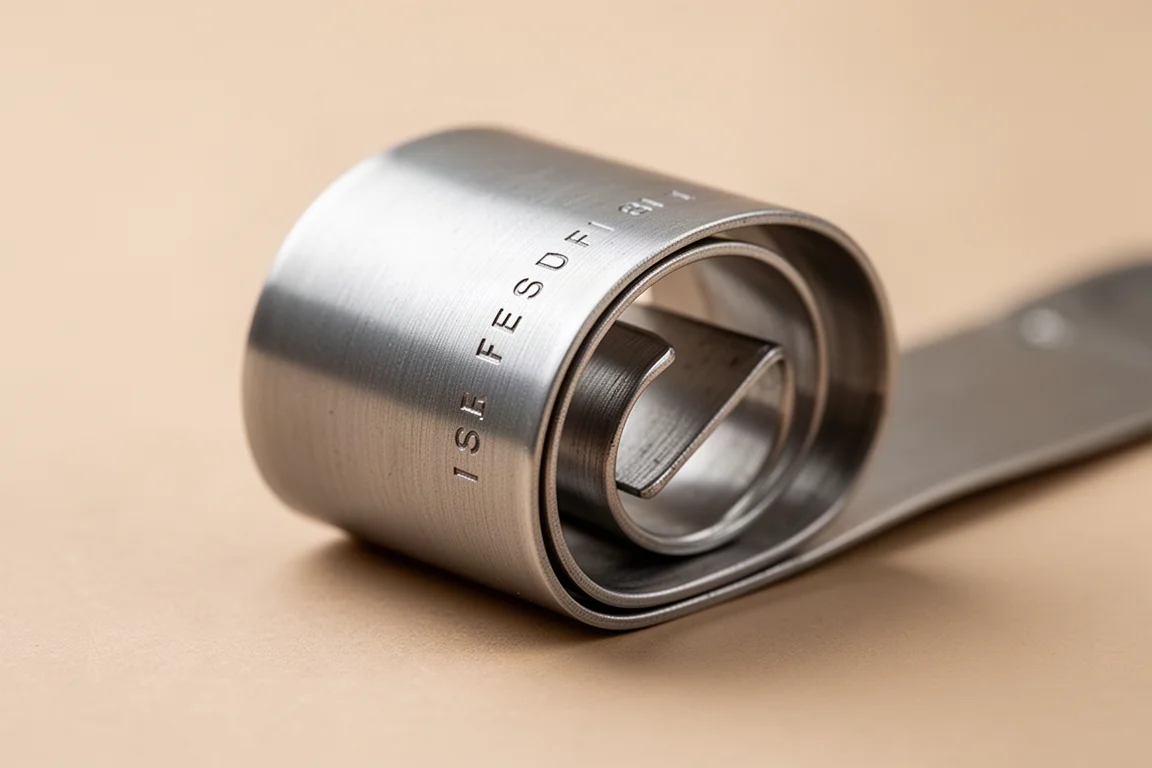
If you already carry metal wallets, you know the routine: scratches happen. I picked up a light mark on the brass version after reaching into a pocket that also held a pocket knife. Keep it away from keys, coins, and knives and the surface will stay cleaner, though some wear is part of the charm with these materials.
Card Capacity and Everyday Handling
The rated capacity is 10 cards, and it genuinely takes them. I tested with seven flat and three embossed demo cards, and the spring held them without issue. Getting cards in and out worked flawlessly once I learned the technique. The large cutout acts as a thumb slot, so you swipe through and pull out whichever card you need.
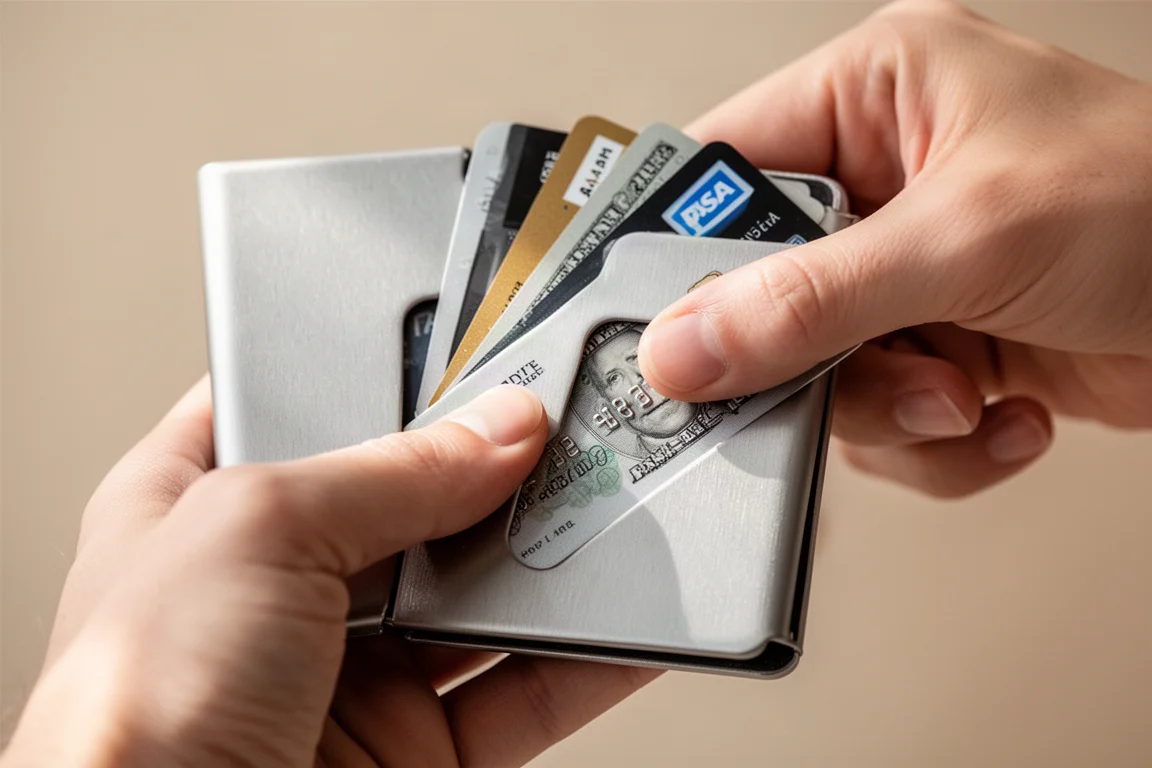
There is a small learning curve. My first instinct was to aim the card precisely at the curl, which felt awkward. The trick is to slide the next card up with your thumb, use it as a stopper, and push the new card in against it. After a week this became second nature.
Two small gripes: you cannot fan the cards out, so swiping through the cutout is the only way to browse, and a tiny thumb cutout on the bottom edge would make that easier. Neither is a deal breaker. Also, a single card works fine. It passes the shake test with no movement at all.
Carrying Cash
The bill storage is the make-or-break feature. Bills go into a narrow slot formed by the fold, and the wrong technique makes it feel impossible. Pushing down with one thumb creates a natural stopping point. The method that works: turn the wallet horizontal, use both thumbs, and gently roll the bill in.
For one to three bills, a normal roll works. At the maximum of six bills, the stack gets thick and you need to wiggle it in after the initial roll. The manual suggests folding each bill individually so you can pull out one note without removing the stack. That technique works, but I preferred keeping my bills in a single fold, sliding the stack out halfway, and rolling off the top bill.
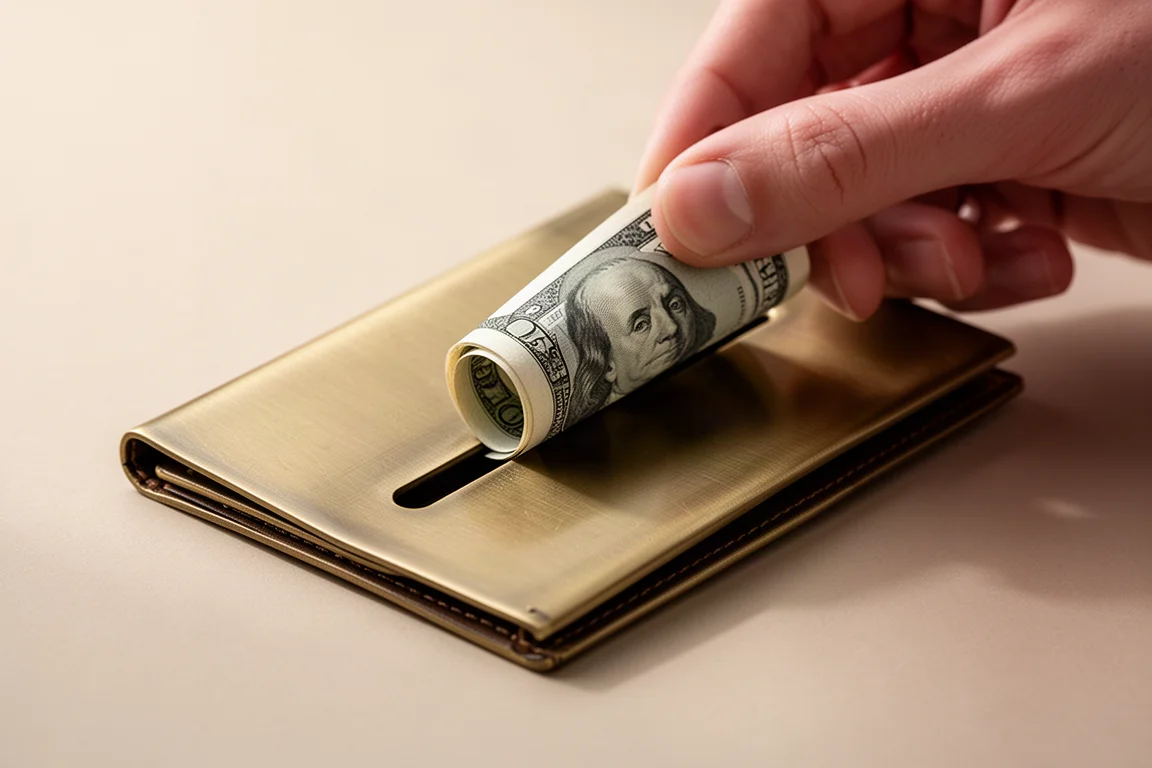
Two things worth knowing. First, insert bills end first with the fold at the back, otherwise the ends start to bend and curl from pocket use. Second, if you push bills too far in to hide them, they peek out of the cutout on the other side, and the wallet’s curl also leaves bills slightly bowed when you take them out. That last one is the only real negative I found, and it is minor.
Brass vs Titanium: Which One to Pick
Both versions share the same design, capacity, and dimensions, so the choice comes down to material feel and weight. Titanium weighs noticeably less at 48 grams versus 86 grams for brass, which matters if you are weight-sensitive about pocket carry. Brass has the warmer look and will develop patina over time, which is clearly part of the appeal and the inspiration for the name. Titanium is the lighter, more understated option.
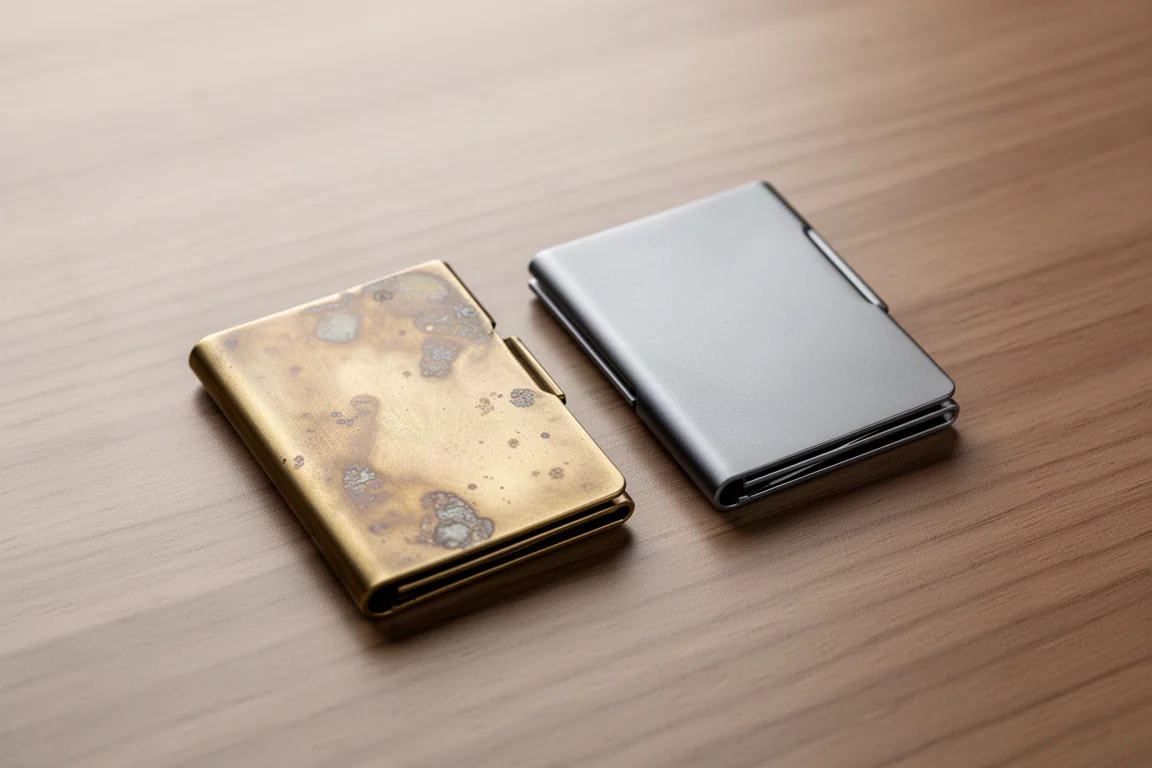
The packaging is worth mentioning too. It is entirely cardboard, including a clever fingerprint-style push tab on the titanium box, and it is as thoughtfully designed as the wallet itself. The company emphasizes recyclable materials, and the fold-out instructions inside double as a diagram of how the wallet actually works.
Buying Advice
If you carry more than six bills regularly, this wallet is not for you; the six-bill limit is the one hard constraint. If you are mostly a card carrier who likes a little cash on hand, it works beautifully. It suits minimalists, metal wallet fans, and anyone who wants a genuine conversation starter rather than another rubber-banded block. Patina was running a crowdfunding campaign around the time of this review, so check current availability if you are interested.
Conclusion
The Patina Wallet is beautifully designed, intricately made, and surprisingly functional once the techniques click. Card access is flawless, the wallet never gets thicker no matter what you carry, and the whole thing has a high-quality feel that matches its price positioning. The bill curling is a small trade-off, and the six-bill cap is the real limit to weigh. For anyone after something truly original, it is one of the most distinctive wallets I have come across in a long time.
Product link
View more details for Patina Wallet (Brass)
This product is mentioned in the review. Check the specifications, options, and compatibility before buying.
View more details for Patina Wallet (Brass)Further reading
Related Reviews

Wallets
Allett Coin Wallet Review: A Slim, High-Capacity Wallet Built for Coins
The Allett Coin Wallet combines a quiet coin slot, generous card capacity, and durable nylon construction in a slim package designed for international travel.

Wallets
ALPAKA ARK Bifold Wallet Review: A Light, Water-Resistant Card Holder
The ALPAKA ARK Bifold Wallet offers a thin, water-resistant design with five card slots and a reasonable price. Here is a closer look at what it does well.

Wallets
Bellroy Card Sleeve 2 Review: A Slim Wallet That Refines a Classic
The Bellroy Card Sleeve 2 is a slim, leather wallet with quick-access slots and a refined build. Here is how it compares to the original.