Workshop Tools
Parkside Plasma Cutter with Integrated Compressor: Hands-On Review
An all-in-one plasma cutter that skips the external compressor, with practical findings on setup, power settings, and cut quality on mild steel.
Introduction
Plasma cutters are one of those tools that promise a lot, but the setup is often what lets them down. Most models need a separate air compressor, which means more hoses, more settings, and more gear to drag around. The Parkside plasma cutter with integrated compressor takes a different approach: everything you need is built into one box, so you just add power and start cutting.
After spending an afternoon cutting up whatever steel I could find, here is how it performed, including one important electrical caveat you should know about before buying.
Who This Product Is For
This is a tool for home workshops and property maintenance rather than heavy fabrication. If you occasionally need to cut steel bar, plate, or scrap around a property and you do not want to own and maintain a separate compressor, the integrated design is the main draw. You pick up the box, connect three lines, plug into a supply, and you are working.
It is less suited to anyone planning prolonged cuts on very thick material at maximum output, for reasons covered below.
How Plasma Cutting Works
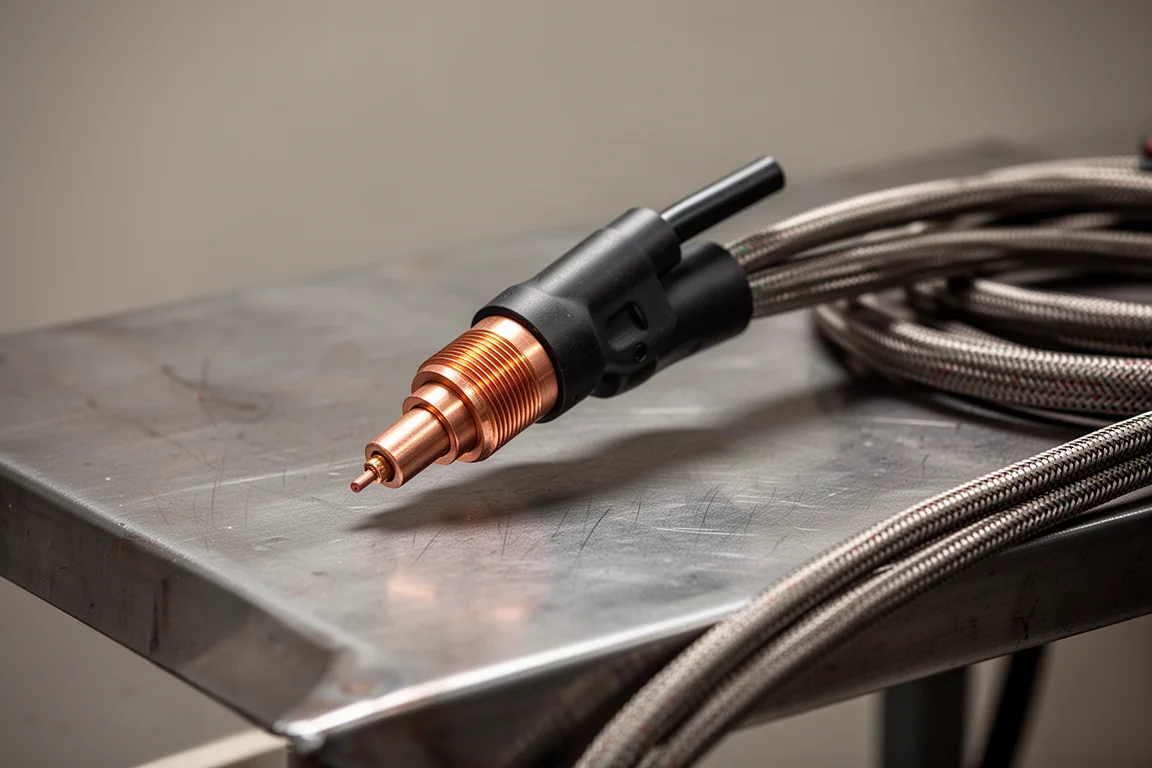
The principle is simple. Compressed air is forced through a small pipe in the center of the torch. Behind that pipe sits a negatively charged electrode positioned directly above the nozzle, and the vortex ring causes the plasma to rotate quickly. That reaction creates a current from the controller, allowing the arc to occur, and the plasma stays in contact with the metal being cut.
In practice, you create a spark that gets extremely hot, then compressed air moving at roughly six meters per second exits the tip and blows the molten metal away. Every plasma cutter needs a compressor to push that air out, which is exactly why having one built in makes this unit so convenient.
What’s in the Box and How It Connects
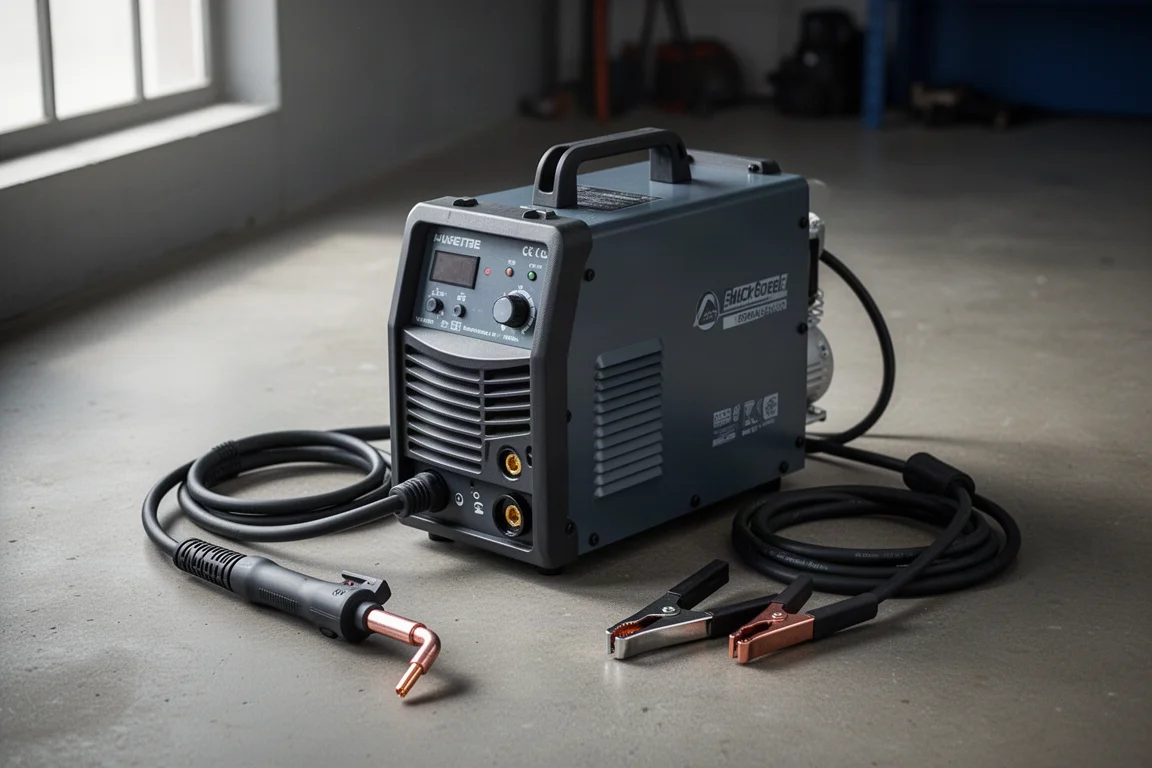
Setup is genuinely straightforward. On the bottom of the unit there are three outputs: one for compressed air, one for the electricity supply to the gun, and one for the earth lead that clamps to the metal you are cutting. Everything uses keyed plugs, so you cannot confuse one input for another.
The front panel has an internal/external compressor switch, meaning you can connect an external compressor at the back if you ever wanted to, though it is hard to see why you would, since the whole point is having everything self-contained. The only other control is the power setting, which sets the amperage. Higher amps mean a stronger, hotter arc for thicker material.
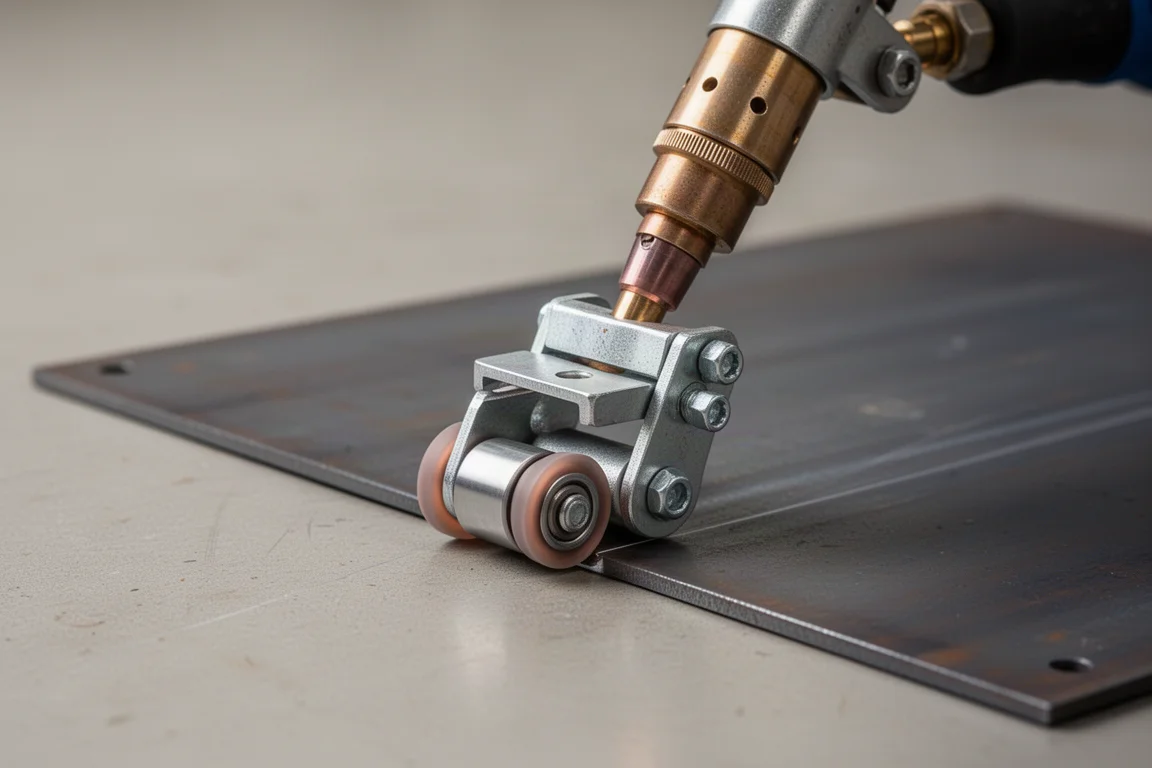
The package includes the earth clamp, the torch itself with two built-in safety features (a safety tab so the switch cannot be toggled accidentally, and a trigger lock), two spare consumable cutting heads on top of the one already fitted, and a roller attachment that clamps onto the front of the torch to help you roll along the material for a straighter cut. The back of the unit holds just the on/off switch and the external compressor inlet.
The Electrical Caveat
Here is the detail worth knowing before you buy. Although the unit runs on 240 volts, the supplied cable ends in a 16-amp plug rather than a standard household 13-amp plug. That means it is really intended for a properly rated workshop supply. The unit was previously supplied with a 13-amp plug, but this appears to have been changed because it often tripped the supply, even though the product was still advertised for home use.
The honest advice: get a proper supply sorted out and do not rewire the plug yourself. On a domestic 13-amp circuit there is a real risk of tripping the MCB during prolonged or high-amperage use, which is exactly the kind of experiment not worth running.
Cutting Performance and Technique
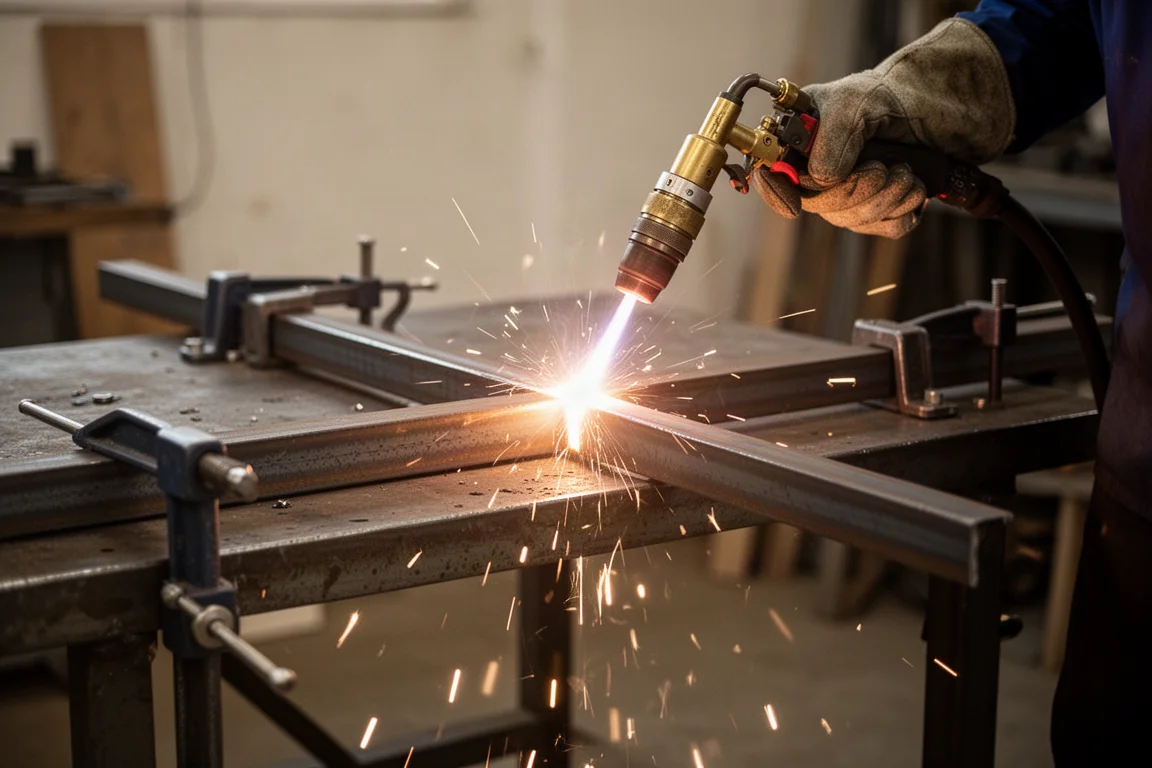
Testing started on 5mm mild steel bar at the lowest 15-amp setting. The arc was cutting but not going all the way through, and lingering too long just produced globules of molten steel. Turning the power up made an immediate, noticeable improvement, and at 30 amps the cuts became considerably cleaner.
That is the essence of plasma cutting: you have three variables, the travel speed, the amperage, and the steel thickness, and the skill is dialing them in together. Go too slow and the cut fails to penetrate and the molten swarf re-fuses itself. Go too fast and you will not cut all the way through either.
On 2mm plate, the material cut through easily once the earth clamp had a good contact. The supplied roller attachment made an immediate difference too, relieving friction so the torch glides across the surface, which makes a smooth, consistent line noticeably easier to achieve.
Compared with a separate compressor setup, the integrated design removes an entire layer of complexity. There is only one knob, the amperage, and the machine supplies the right amount of air automatically. No pressure settings to worry about, no hoses to a separate compressor.
Cut Results and Real-World Verdict
Between 2mm plate and 5mm bar, the unit worked well. The cuts themselves were reasonably clean, with one consistent flaw: molten swarf forms on the underside of the cut, especially when moving slowly, and it can stick the cut piece together so it will not drop free. That ragged underside is easily cleaned up with a grinding disc, but it is worth knowing it is part of the process rather than a defect.
The maximum setting is 40 amps. Prolonged cutting near the top of that range on a standard domestic supply is where the electrical limitation becomes relevant, and material in the 10 to 12mm range, as suggested on the box, would realistically need the maximum setting.
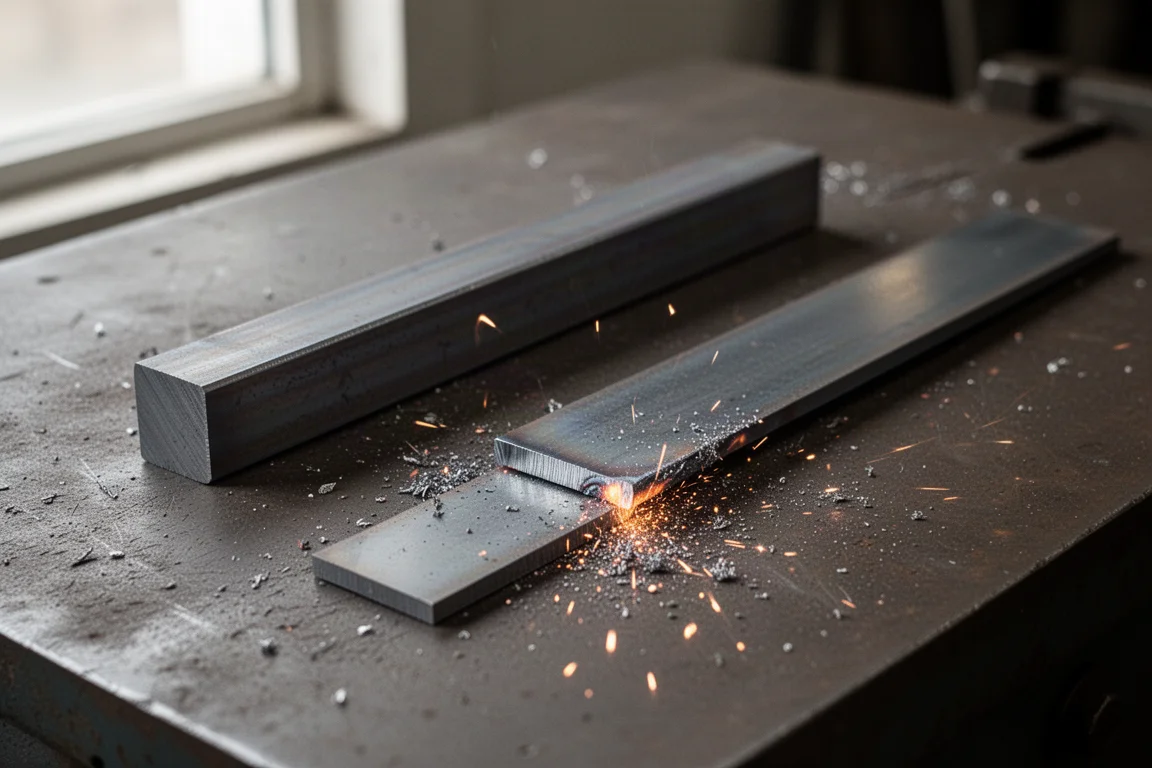
The single biggest takeaway is that an integrated compressor is definitely the way to go if you have the choice. The unit is grab-and-go, has one control, and simply does its job. With proper supply wiring, thicker material, and more practice on travel speed, this looks like a tool that will keep earning its shelf space.
Buying Advice
If you are shopping in this category, prioritize the integrated compressor version over a separate-compressor setup. Match the amperage range to the steel thickness you actually cut, and confirm your electrical supply can handle the rated plug before purchase. Budget for a grinding disc to tidy the underside swarf, and expect a short learning curve on speed and power settings.
Conclusion
For occasional steel cutting around a home or property, the Parkside plasma cutter with integrated compressor is a success: simple to set up, easy to control, and capable of clean cuts in 2 to 5mm steel once you dial in the amperage and speed. Just make sure your power supply is rated for it before you buy.
Product link
View more details for Parkside Plasma Cutter with Integrated Compressor
This product is mentioned in the review. Check the specifications, options, and compatibility before buying.
View more details for Parkside Plasma Cutter with Integrated CompressorFurther reading
Related Reviews

Workshop Tools
Best Drill Tap Sets 2026: Top Picks Tested for Speed and Strength
We tested 17 drill tap sets to find the fastest drilling, strongest threading, and most durable options for your workshop.

Workshop Tools
Cool Shop Tools 2026: Five Clever Upgrades Worth a Closer Look
A practical look at five workshop tools that solve real problems, from smarter drill bits to a safer table saw guard.

Workshop Tools
Cool Tools for the Workshop: Five Smart Upgrades Worth Trying
A practical look at five workshop tools that make measuring, drilling, marking, and sawing easier, from a clever square to a top-tier bandsaw fence.