Travel Gear
Osprey Transporter 36 vs Osprey Farpoint 40: Which Carry-On Travel Pack Fits Your Style?
Two popular Osprey carry-on travel packs compared on materials, external organization, carry comfort, and interior design to help you pick the right one.
Introduction
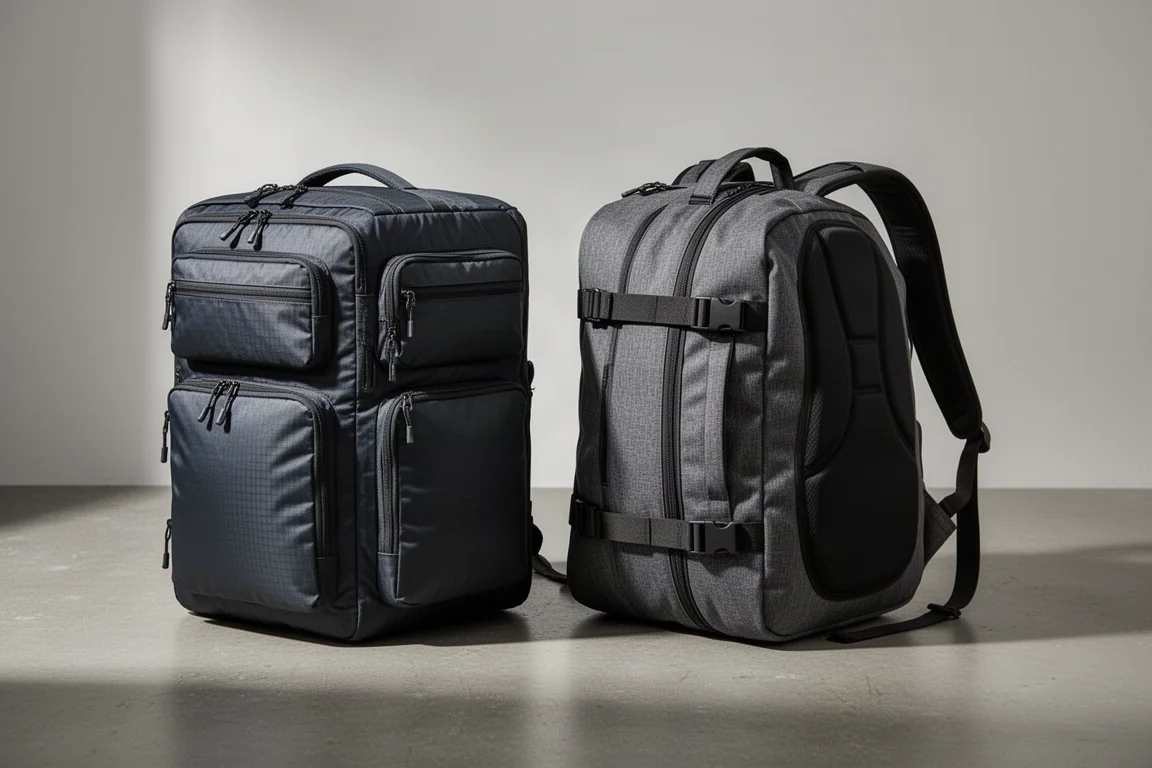
Osprey makes two of the most popular carry-on travel packs on the market, and the Transporter 36 and Farpoint 40 take noticeably different approaches to the same job. The Transporter is a boxy, organization-forward clamshell pack, while the Farpoint leans on a duffel-style main compartment with a more supportive carry system. After carrying both on real trips, the differences come down to how you like to pack and how much comfort matters on longer hauls.
Size and Materials: A 36L Sweet Spot
The Transporter travel pack is designed as a mid-size carry-on: not max capacity, but not too small either. Its 36 liters are large enough to carry your gear for long-term travel while staying manageable when you are walking long distances with it fully loaded.
On materials, the Transporter uses a mid-weight plastic-coated ripstop fabric. It is a little thicker and more water resistant than the DWR-treated fabric on the Farpoint. That said, neither bag has waterproof zippers, so neither does a great job of keeping heavy rain out. This is a weather-resistant pair, not a waterproof one.
External Organization: Where the Transporter Wins
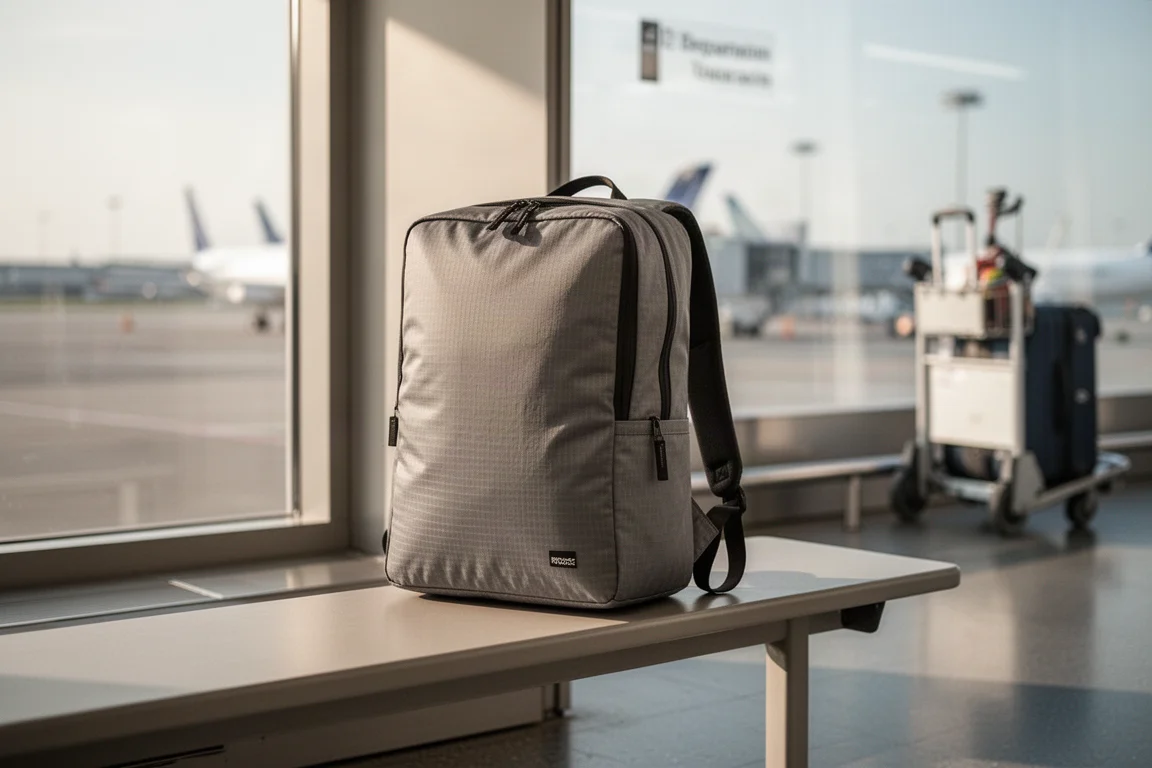
If you like keeping small gear accessible from the outside, the Transporter is the clear winner here. It has a large front pocket with internal dividers, plus side volume big enough for a light jacket. There is a top slash pocket with a fuzzy lining for sunglasses, a side zippered pocket large enough to work as a regular water bottle pocket or general gear storage, and an external laptop compartment.
The Farpoint has much less external organization. After Osprey removed the large front organizational panel in an earlier update, the current version is left with two stretchy front pockets, the top slash pocket, and the laptop compartment, and that is about it.
Carry Comfort: Frame and Straps Make the Difference
This is where the two packs diverge most sharply. The Transporter has a flat back, thinner shoulder straps, ridged back padding, and little weight adjustability. There are no top load adjusters and no optional hip belt. Structurally it relies on foam padding alone.
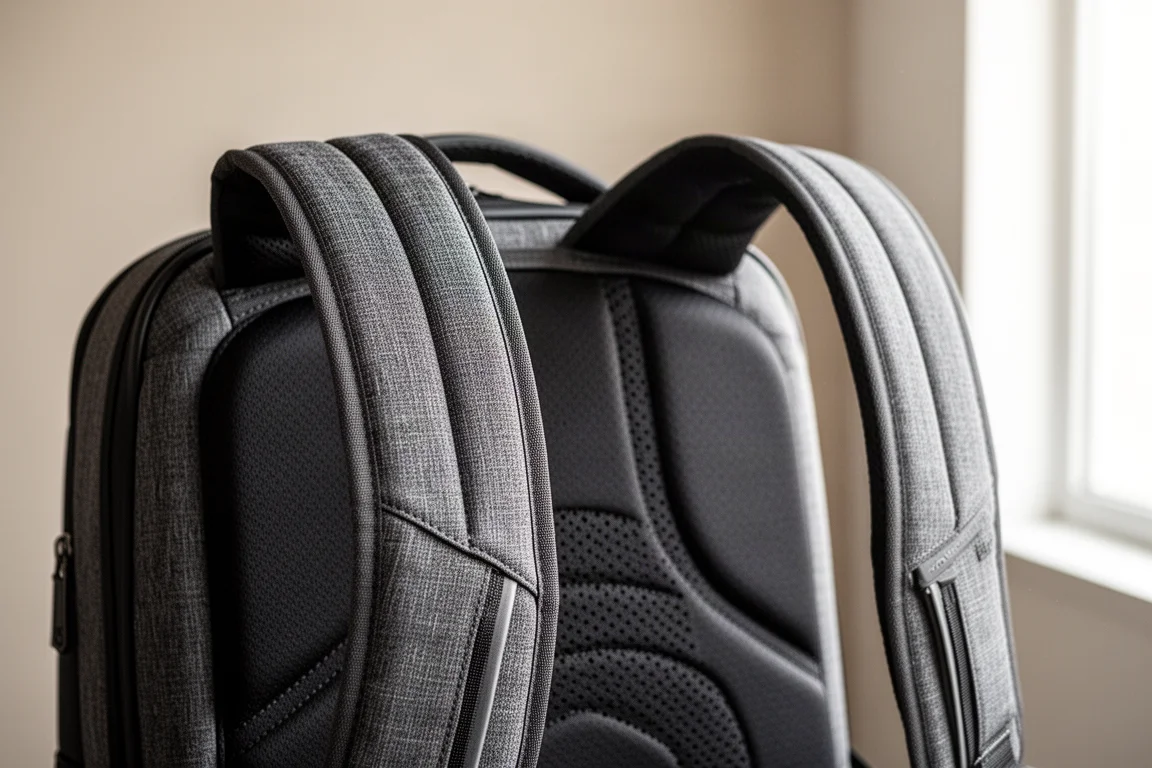
The Farpoint 40, by contrast, has a rigid metal frame around the outside that gives the bag much more structure. Its shoulder straps are wider and thicker padded, the back padding is slightly curved with more airflow, and the adjustability is far better thanks to removable top load adjusters and built-in padded hip belts that take a lot of weight off your shoulders. Overall, the Farpoint is the much more comfortable bag to carry, especially fully loaded or on longer trips.
Interior Design: Clamshell vs Duffel Packing
Neither interior is strictly better; it comes down to personal preference. The Transporter opens from the side with a full clamshell zipper connected on one side, giving you two separate compartments, each with a zippered mesh divider and two more zippered mesh pockets on the inside divider. This setup suits packers who like gear organized, separated into its own space, and not shifting around inside the bag.
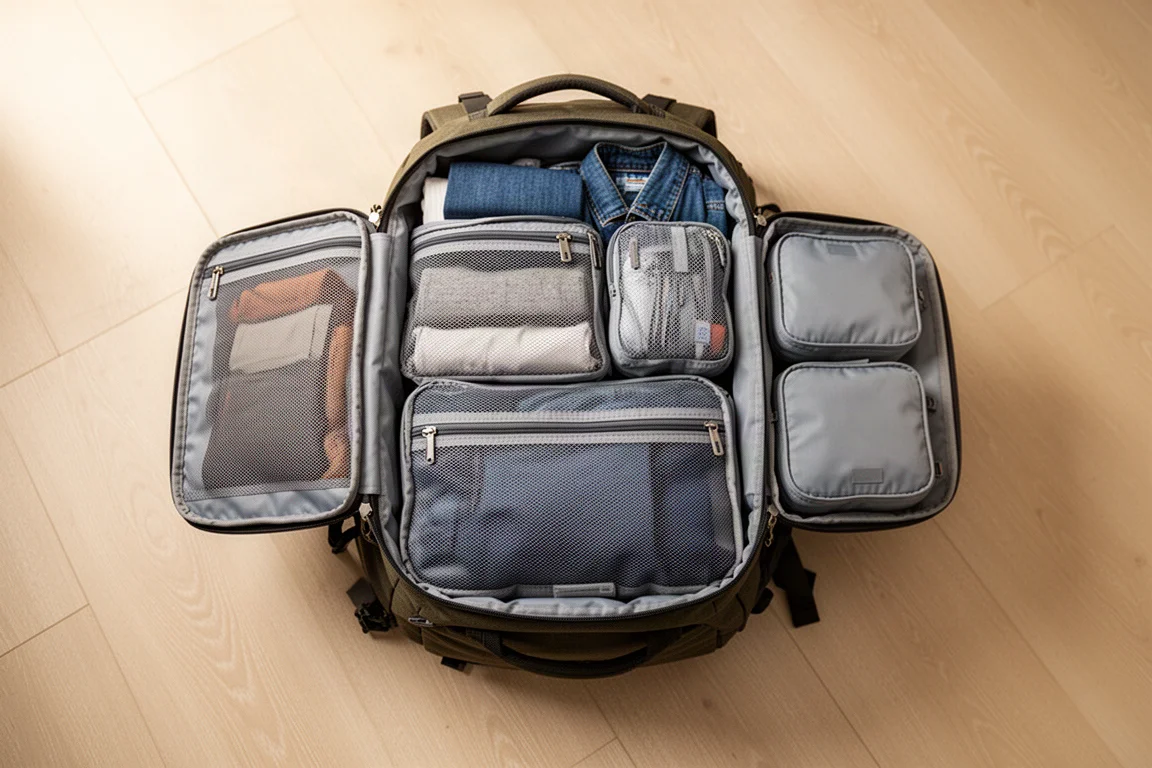
The Farpoint opens with one large duffel-style panel, which makes packing genuinely easy, but you are more limited on where things go and will likely rely on packing cubes and pouches to stay organized. Interior organization is minimal: one zipper pocket in the lid, with the top slash pocket and laptop padding eating into the main compartment. Anything in the stretchy external pockets also presses inward and competes with volume.
The Farpoint’s big advantage is that it is forgiving. You can throw everything in, zip it up, and cinch down the two large compression straps that fold over the sides and zip together on top. It keeps overpacked gear compact no matter how you pack it. The trade-off: once cinched down, opening the bag to grab something mid-transit is a bit more complicated.
Laptop Storage Compared
The Farpoint’s laptop sleeve sits inside the main compartment but is accessed from a separate top zipper, which is convenient because the opening is a little shorter and easier to slide a laptop in and out. The bag’s metal frame keeps the sleeve well protected.
The Transporter’s laptop compartment is much larger, essentially an open main compartment with a thinner sleeve at the back, roomy enough for extras like a second device. Both bags have a false bottom for protection, but because the Transporter has no frame and relies only on foam padding, you need to be a bit more careful about how the bag is handled so your laptop stays safe.

Which One Should You Buy?
Having taken both on carry-on flights, the Farpoint edges ahead as the overall pick. The large duffel packing style is easy and forgiving, and the compression straps rescue chronic overpackers. The downside is that cinched-down straps make the bag slightly fiddly to open when you need something on the road.
The Transporter is the better choice if external organization is your priority. More outside pockets mean easier separation and faster access to small gear while traveling. Its biggest weaknesses are shape and carry comfort: it is essentially a giant rectangle with foam pads for structure, a bit blocky, and not especially comfortable to carry, with smallish straps and limited adjustability.
Conclusion
Both packs are capable carry-ons, but they serve different travelers. Pick the Farpoint 40 if carry comfort and forgiving, easy packing matter most. Pick the Transporter 36 if you value external organization and a compartmentalized clamshell layout. Matching the bag to your packing style is what makes either one work.
Product link
View more details for Osprey Transporter 36
This product is mentioned in the review. Check the specifications, options, and compatibility before buying.
View more details for Osprey Transporter 36Further reading
Related Reviews
Travel Gear
12 Essential Travel Items That Make Every Trip Better
After traveling to over 150 cities worldwide, here are the practical items that have become indispensable for modern travel.
Travel Gear
Best One-Bag Travel Gear for Long Trips: 8 Essentials
A practical guide to the travel gear that proved its worth over 30 days of one-bag travel in Southeast Asia, from the pack to the power bank.
Travel Gear
Best Shoes for Camino de Santiago: Hiking Boots, Trail Runners, or Barefoot
A practical guide to choosing the right footwear for the Camino de Santiago, comparing hiking boots, trail running shoes, and minimalist barefoot options across different routes and seasons.