Travel Gear
Packing the Osprey 26 Plus 6 Expandable Travel Backpack: What Fits and How
A practical packing walkthrough of the Osprey 26 Plus 6 in regular and expanded mode, plus how Eagle Creek compression packing cubes help keep it under personal item limits.
Introduction
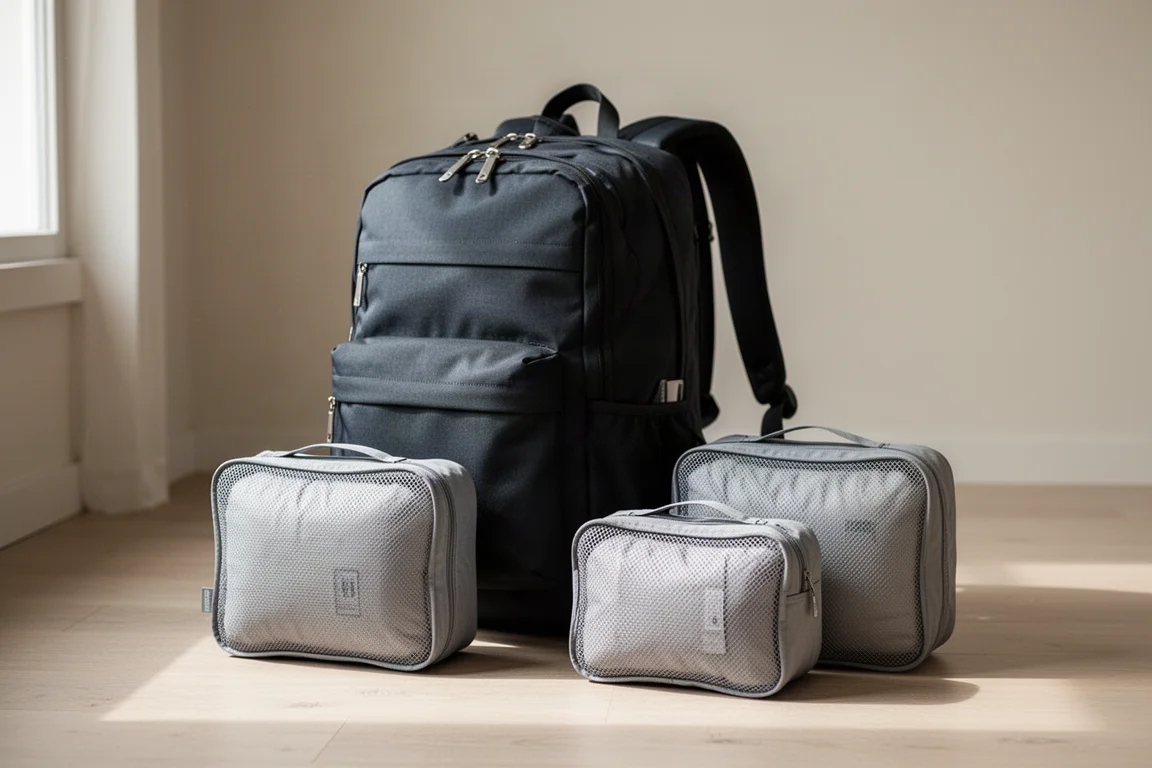
The Osprey 26 Plus 6 Expandable Travel Backpack is one of those bags that rewards a bit of planning. Its headline trick is the expandable top section, which lets you switch between a compact 26-liter mode that fits personal item limits and a deeper expanded mode for trips where size rules are less strict. Paired with a good compression packing cube, it can swallow a surprising amount of gear for its footprint.
This guide walks through what actually fits, where it fits, and how to keep the bag within airline personal item dimensions.
What Fits in the Main Compartment
In unexpanded mode, the main compartment measures roughly 16 by 13 by 4 inches deep, and it is not a perfect rectangle: the top of the space is slightly narrower with a curve. A medium Eagle Creek compression packing cube, about 13 inches long by 9.5 inches wide, fits almost perfectly in the bottom of the compartment. Because of that narrower top area, you cannot fit two medium cubes in here; the upper zone is better used for bulky soft items like a jacket, daypack, or toiletry kit.
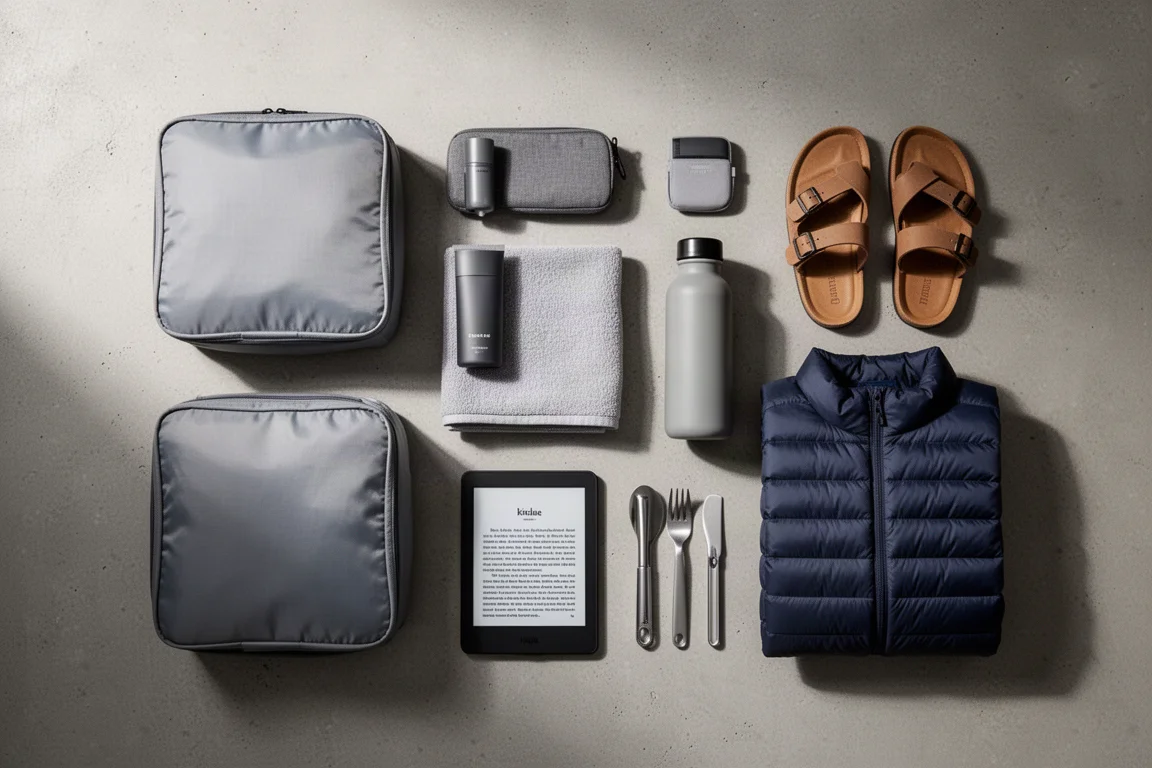
In one realistic loadout, the main compartment held sandals, a puffy jacket, a light windbreaker, a foldable water bottle, a small daypack, a utensil set, and one medium compression cube.
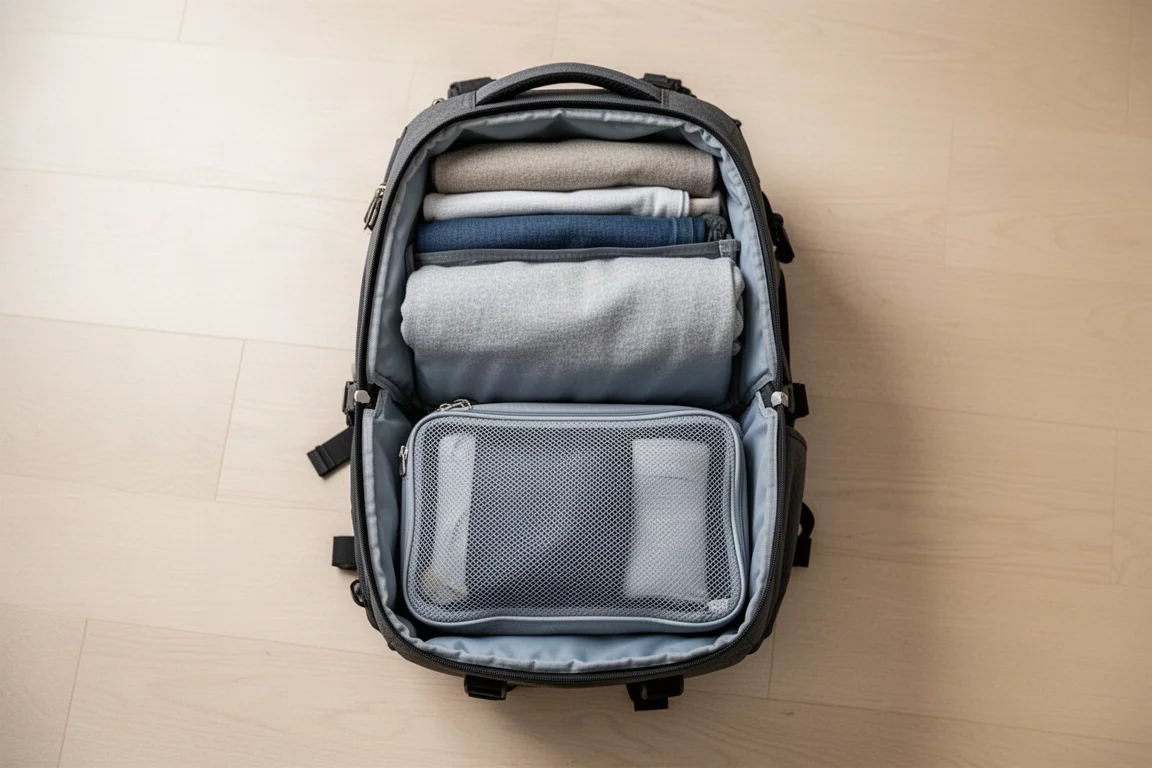
A small Eagle Creek compression cube, roughly 6.5 by 9.5 inches, also fits perfectly lengthwise in the upper area, with room to lay a pair of pants or thin shoes on top. The cubes are about 3 inches deep while the pocket is about 4 inches deep, so there is a little spare room above them.
The Lid Section
The lid pocket in unexpanded mode is about 2 inches deep and is deliberately thin. It works best for flatter items: rolled-up pants, a travel towel, a slim toiletry kit, a small dry bag, or even the same small packing cube. It has little standalone volume, so think of it as a shallow organizer rather than a second main compartment.
When the bag is expanded, the lid becomes much more useful. A zipper runs around the outside of the top section and expands it from roughly 2 inches to 3 or 4 inches deep, deep enough to swallow an entire packing cube. Even expanded, though, the smaller upper space remains, so two medium cubes still will not fit in the main compartment.
Why Compression Cubes Matter in This Bag
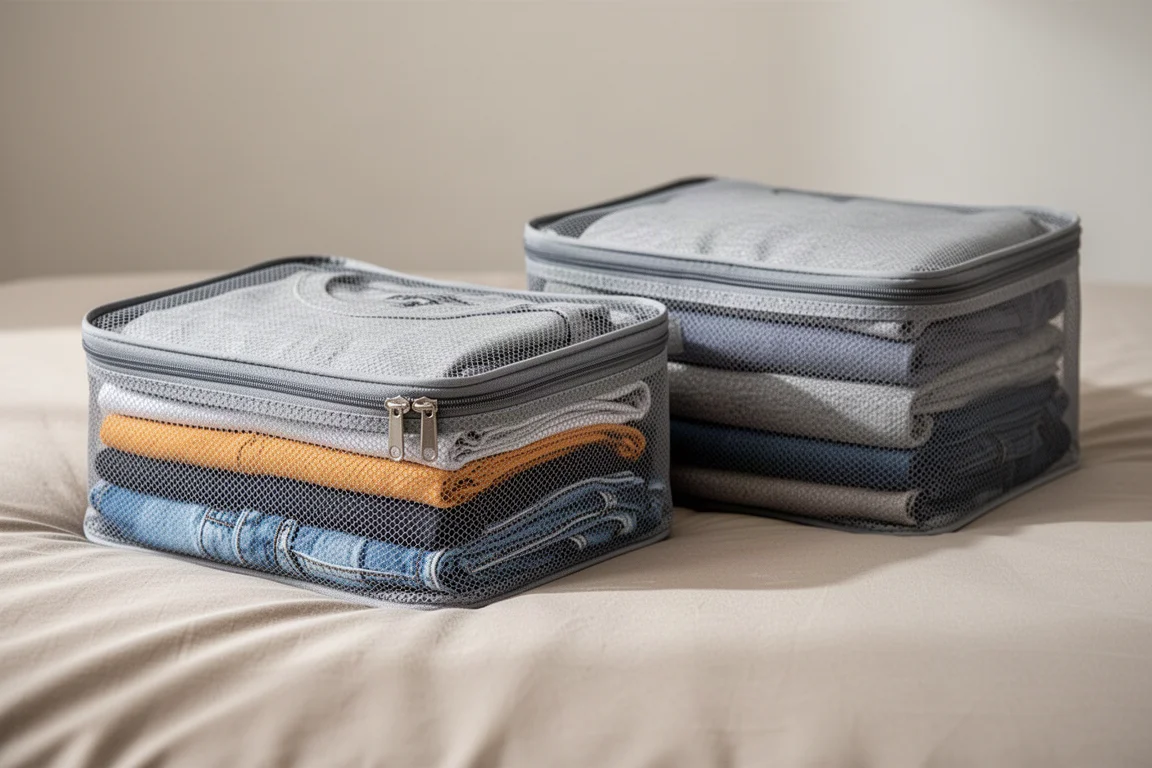
A medium compression cube holds a lot: in the demo loadout, two pairs of shorts, three t-shirts, three pairs of underwear, two pairs of socks, and a long-sleeve button-up shirt. Uncompressed, the cube measures about 14 by 10 inches; compressed, it shrinks to roughly 13 by 9.5 inches and becomes noticeably thinner.
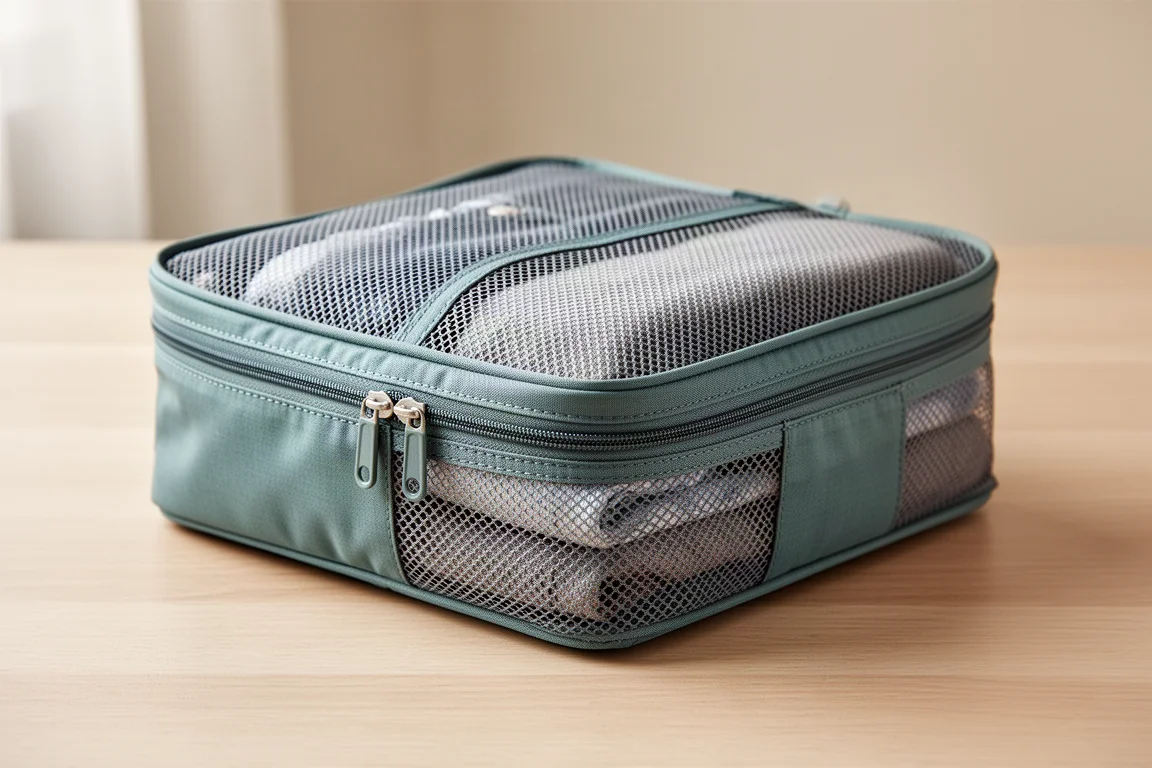
If you plan to use this pack as a personal item, compression cubes are close to essential. The difference between a fully packed regular cube and a compressed one is significant, and compressing everything down as much as possible is the single easiest way to keep the bag’s depth under airline limits.
Exterior Pockets and the Overpacking Trade-Off
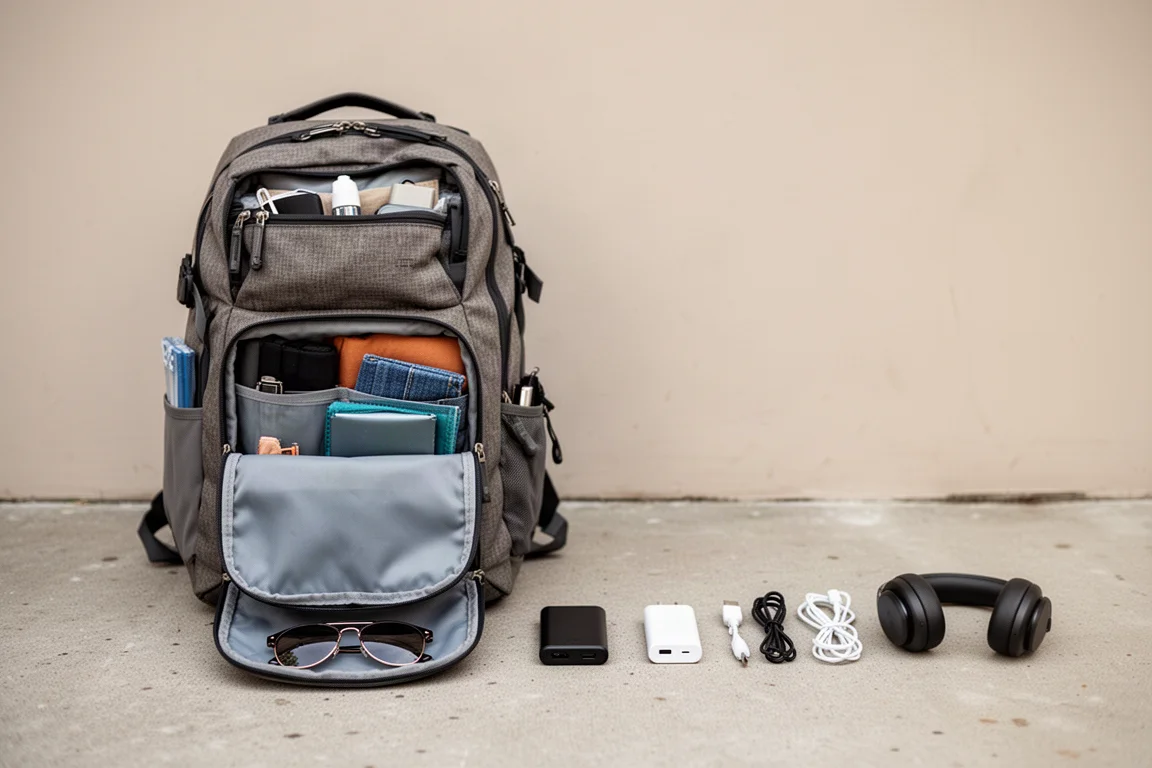
Here is the catch: when the inside is fully packed, the outside pockets barely work. The front pocket has almost no room left, and even a pair of sunglasses ends up bulging out and making the pack wider. The top pocket also loses most of its capacity.
The water bottle pockets are the exception. They are stretchy, and stuffing them does not really affect the rest of the bag’s capacity.
The fix is simple: underpack the inside at least a little. In the reorganized loadout, moving the puffy jacket to the lid and shifting the toiletry kit freed up enough room in the front pocket for sunglasses, a battery pack, a charger, pens and pencils, a few cords, and headphones with space to spare.
Expanded Mode: When to Use It
Fully packed in expanded mode, the bag measures about 9 to 9.5 inches deep versus roughly 7 inches unexpanded. That extra depth is too wide to count as a personal item on most budget airlines, so expanded mode is best treated as overflow space for trips where the size rules are looser.
There is also a comfort consideration. The shoulder straps are comfortable when the bag is in its smaller mode, around 26 liters and 7 inches deep. But once you load it heavy and push the weight away from your back, the straps are not thick enough and it stops being comfortable. Packing in unexpanded mode and saving the expansion for water, snacks, or a shoe swap is the more reasonable long-term approach.
Keeping It Under Personal Item Size
Airline rules vary, so the first step is always checking your airline’s dimensions. For budget carriers, the personal item depth limit can be as strict as 8 inches, which is roughly what the bag measures when maxed out in unexpanded mode.
A few tactics help:
- Wear your bulkiest items on the plane: biggest shoes, pants, long-sleeve shirt or jacket.
- Move small items into your pockets.
- Remember the bag only needs to be personal item size at boarding, when it gets measured and weighed, not for the entire trip.
A Minimalist Trip Loadout That Actually Works
The demo builder aims for three outfits on a minimalist trip: enough for a short three-day getaway, or a longer trip if you wash every two to three days. The full kit looks like this:
- Packing cube: two shorts, three t-shirts, three pairs of underwear, two pairs of socks, one long-sleeve shirt
- Main compartment: the cube, toiletry kit, windbreaker, a 16-liter travel backpack, travel towel, foldable water bottle, topped with sandals
- Lid: the folded puffy jacket (bulky but packs down small), small baggies, and a universal sink stopper for laundry
- Lid pocket: electronics, sunglasses, charger, battery pack, three cords, a pen and pencil, a car adapter, and headphones
- Water bottle pocket: a compact knife, fork, and spoon utensil set
- Laptop sleeve: a small e-reader, with travel wallet and phone in pockets
All in, minus worn clothing, the packed bag weighs about 11.3 pounds (5.1 kg) and measures roughly 17 inches tall, 13 wide, and 8 deep in unexpanded mode. That is small enough to qualify as a personal item on most US budget airlines.
Conclusion
The Osprey 26 Plus 6 works best when you respect its design: pack in the unexpanded 26-liter mode, lean on compression cubes to slim everything down, and treat the expansion as bonus space rather than default capacity. Do that, and it comfortably covers a minimalist multi-day trip while still sliding under personal item limits on strict carriers.
Further reading
Related Reviews
Travel Gear
12 Essential Travel Items That Make Every Trip Better
After traveling to over 150 cities worldwide, here are the practical items that have become indispensable for modern travel.
Travel Gear
Best One-Bag Travel Gear for Long Trips: 8 Essentials
A practical guide to the travel gear that proved its worth over 30 days of one-bag travel in Southeast Asia, from the pack to the power bank.
Travel Gear
Best Shoes for Camino de Santiago: Hiking Boots, Trail Runners, or Barefoot
A practical guide to choosing the right footwear for the Camino de Santiago, comparing hiking boots, trail running shoes, and minimalist barefoot options across different routes and seasons.