Power Tool Accessories
Diablo vs Ezark Oscillating Multi-Tool Blades: Is the Premium Blade Worth It?
We compare a budget titanium blade 3-pack against Diablo's carbide universal fit blade across wood, PVC, nails, screws, and drywall fasteners.
Introduction
Oscillating multi-tool blades come in two flavors: the cheap no-name packs that cost a few dollars each, and premium blades that can run five times as much. The question is simple. Does the expensive blade actually last longer and cut better, or are you just paying for a name? To find out, we put the Ezark titanium 3-pack, the cheapest option we could find, up against Diablo’s universal fit carbide blade for general purpose cuts across wood, PVC, nail-embedded lumber, wood screws, lag screws, and the notorious drywall screw.
The Contenders
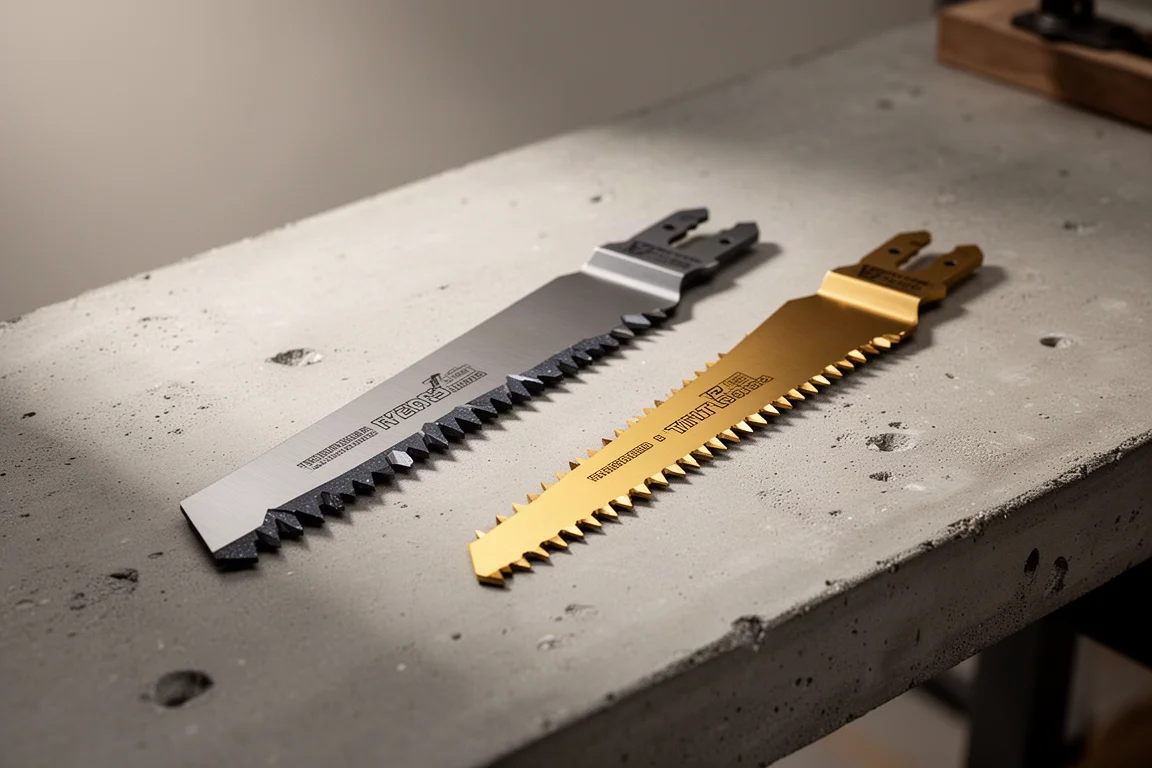
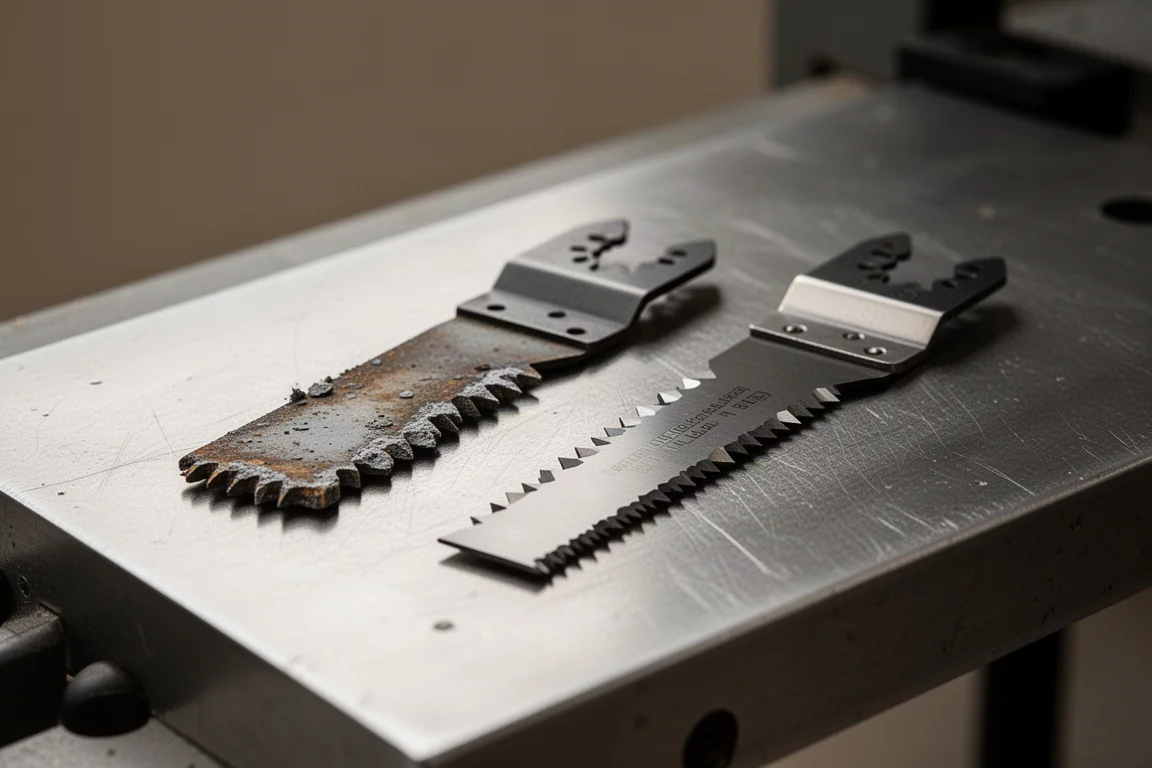
Diablo Universal Fit Carbide Blade. A general purpose carbide-tooth blade rated for clean wood, nail-embedded wood, metal, PVC, and plastics. Diablo claims that one blade, at an average retail price of $21.97, equals roughly 50 standard oscillating blades that would cost around $698, a potential saving of up to $676. In practice we found it on clearance as a two-pack for $8.48, which works out to $4.24 per blade, less than the budget option.
Ezark Titanium Oscillating Saw Blades (3-Pack). A set of three bimetal blades with titanium-coated teeth, sold for $14.97, or $4.99 per blade. Ezark says the titanium coating adds heat resistance, strong wear resistance, and roughly twice the life of standard blades, with applications in wood, metal, non-hardened nails and screws, plastic, and plasterboard. The pack includes adapters, and the blades mounted securely on our multi-tool with no wiggle. One design note: the tooth arrangement appears to be directional, meaning the blade is designed to cut in one direction only.
How We Tested
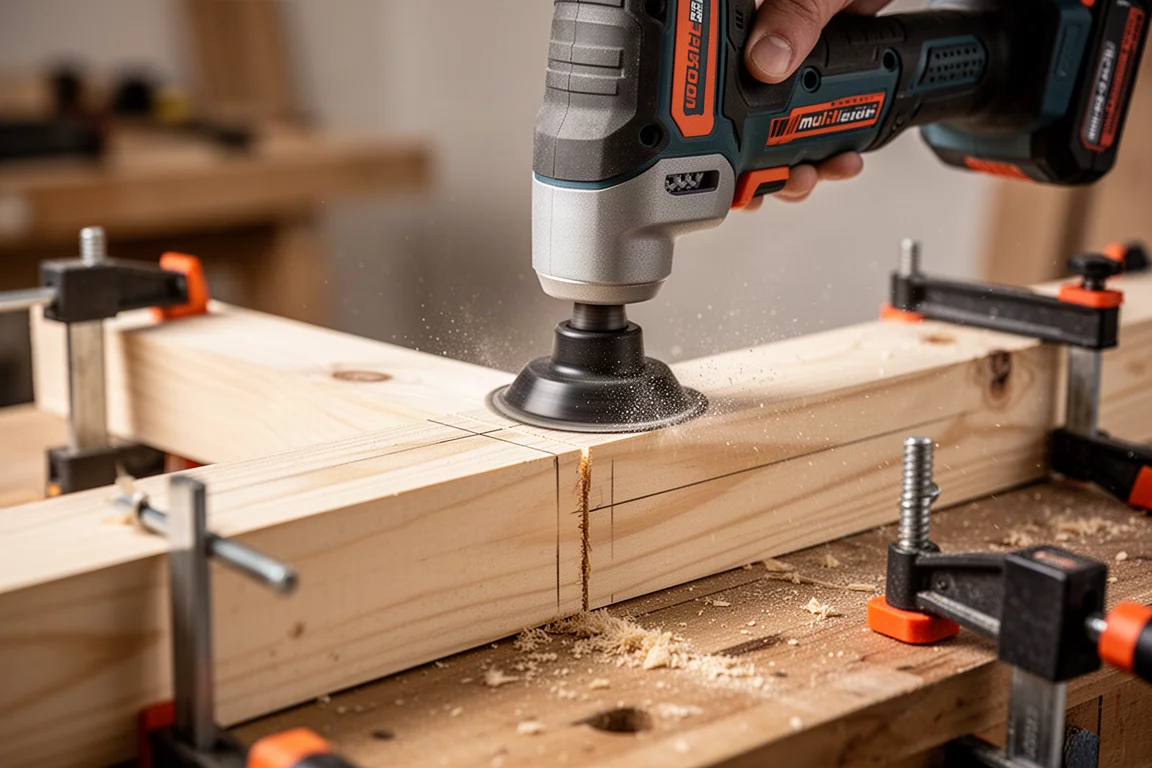
We ran both blades through a series of cuts on real job-site materials: clean pine 2x4, PVC pipe, a board loaded with 28 nails, wood screws, structural lag screws, and drywall screws. For each material we judged cut quality, heat buildup, gumming, cut straightness, and tooth condition afterward.
Clean Wood
The Ezark blade struggled on its first cuts. There was visible smoking and burning of the 2x4, some gumming on the blade, and a lot of heat, enough that moisture from a hand touching the blade turned to vapor. Applying more pressure helped: the second and third cuts were progressively better, and the third was the cleanest of the three.
The Diablo blade was a different story. No smoking, no burning, teeth intact, and the cut line stayed dead straight even with aggressive pressure. The only gripe is blade length. There is a small lip where the blade welds to the mounting interface, and depth just barely makes it through standard 2x material. A slightly longer blade would cut through faster. Even so, the cuts needed far less effort and produced a better finish.
PVC Pipe
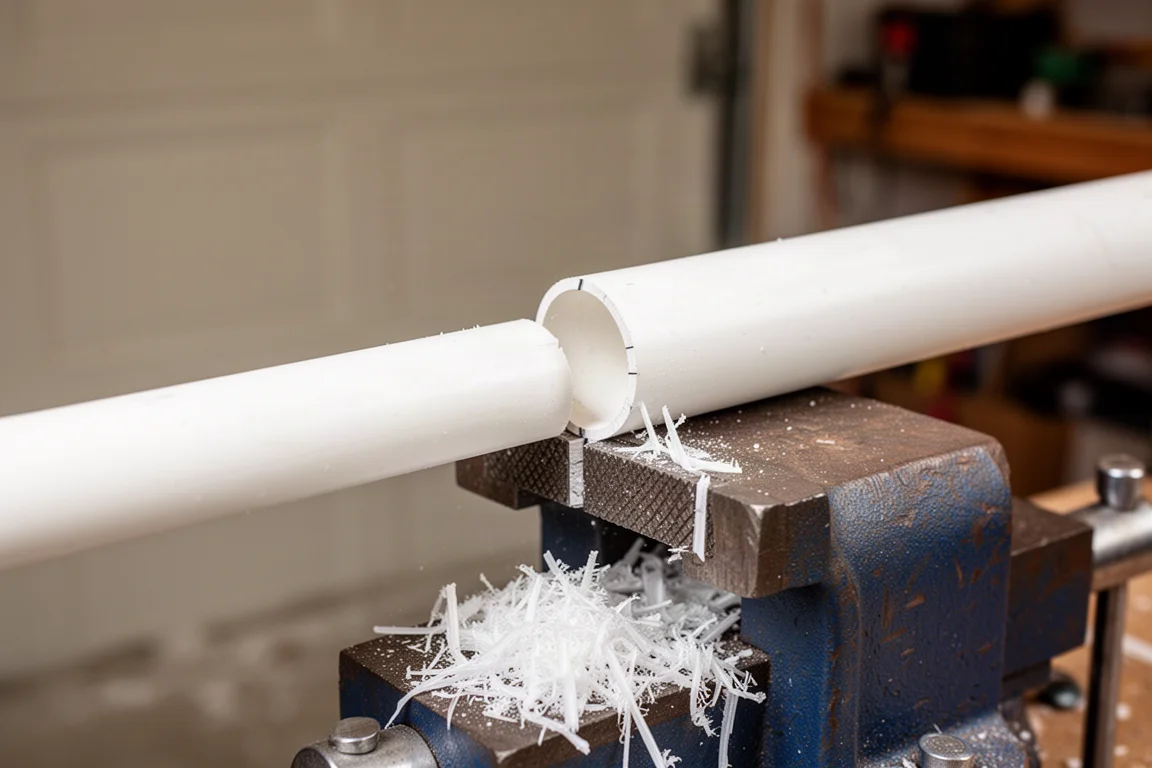
PVC is a material where a multi-tool is genuinely handy, but only if the cut is clean enough to mate a coupling afterward. The Ezark blade showed some flex and a tendency to catch and kick out of the material, possibly due to the one-directional teeth. A second attempt went better, and honestly, it did a fine job cutting PVC. It would not be a problem to use it for that.
The Diablo blade cut better still, though on this tubing size we simply wanted a wider blade. For 2, 3, or 4 inch pipe you would need to rotate the tool or the pipe anyway, so the width matters less in real use.
Nail-Embedded Wood
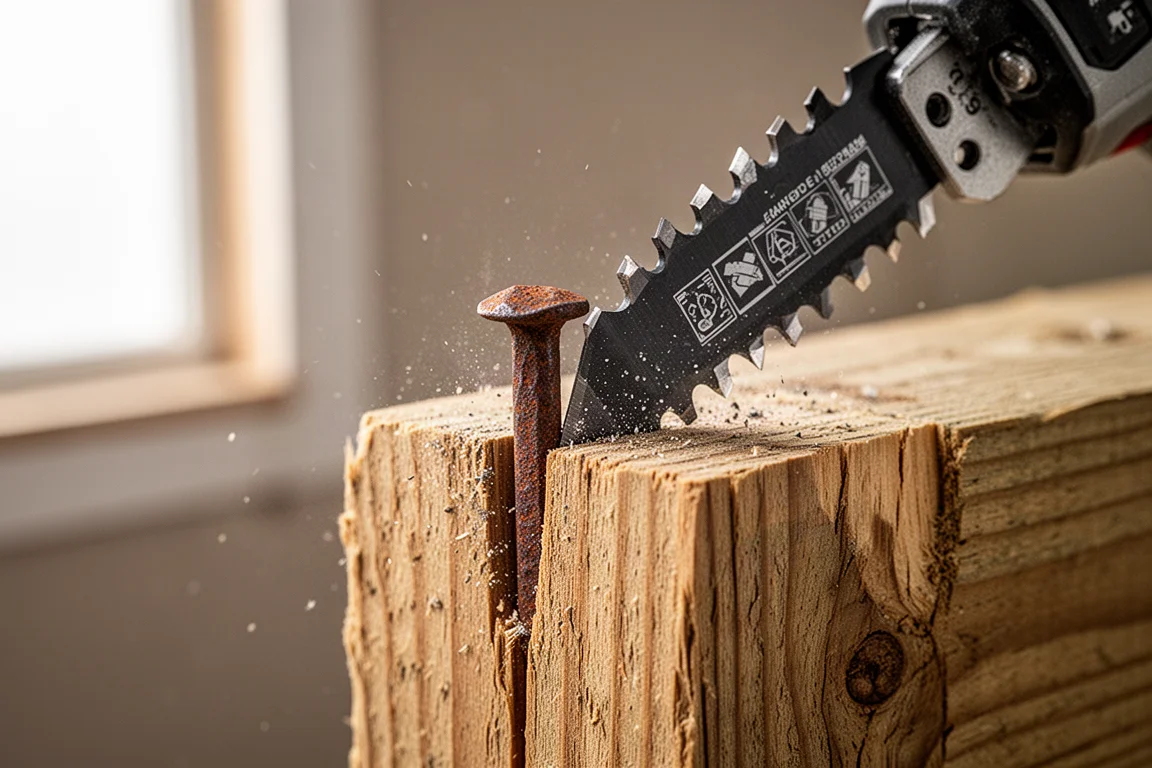
This is where blades usually go to die. Ezark advertises their blades for nails in wood, and across 28 nails the result was pretty impressive: all teeth intact afterward. Our one complaint is that we would have liked the cuts to sit closer to the material, and there was some burning where the blade rode against the wood.
Diablo’s blade is narrower, which puts more load on each tooth, but it powered through all 28 nails with no damage to the teeth and clean, flush cuts. Where the blade rode against the wood, there was no burning, and the cutting speed was noticeably faster than the Ezark.
Wood Screws and Lag Screws
On five softer wood screws, the Diablo blade cut through all five with a super flush result, no burning, and all teeth intact. The Ezark, with its wider blade as its one advantage so far, also got through all five, but the screws started to heat up and melt, and some teeth were lost along the way.
Next came two heavy structural lag fasteners. The Diablo went through with no burning at the 2x4, a flush cut, and every tooth still intact. The Ezark lost all its teeth on the first lag screw. To be fair, a second Ezark blade from the pack got through its lag screw with teeth mostly intact, which is the practical argument for buying a 3-pack: you have backups.
Drywall Screws: The Blade Killer
A single drywall screw is widely considered the end of an oscillating blade. The Ezark rounded over and lost several teeth, though it did manage three drywall fasteners before giving up the ghost, which is better than the reputation suggests.
The Diablo blade cut through three drywall screws with every tooth still intact, ready for more cuts, and practically no burning in the surrounding wood. The old rule that a drywall screw kills your blade simply did not apply here.
Which One Should You Buy?
If you only occasionally cut soft materials like plastic or clean wood and the lowest upfront cost matters most, the Ezark 3-pack is usable. It handles PVC fine, survived nails reasonably well, and having three blades in the pack softens the blow when one dies. But in our initial wood tests it burned and gummed, it melted screws, and it lost teeth on a lag screw, so you are getting what you pay for.
The Diablo blade earned its keep in every test. It cuts wood cleanly with less effort, nails without tooth damage, lag screws flush, and it survived three drywall screws that should have killed it. For remodelers who encounter all of these materials and do not want to swap between specialty blades, this general purpose blade is the one that stays on the tool. And while the sticker price sits near $22, clearance two-packs have brought the per-blade cost down to around $4.24, cheaper than the budget option. Waiting for a deal on the premium blade is the smart move.
Conclusion
The premium blade is not a luxury here; it is the better instrument at a comparable or lower real-world cost if you buy it on sale. The Ezark pack makes sense as a disposable backup set for light duty, but for anyone who pushes a multi-tool through nails, screws, and mixed materials, the Diablo universal fit carbide blade is the clear pick.
Product link
View more details for Diablo Universal Fit Carbide Oscillating Multi-Tool Blade
This product is mentioned in the review. Check the specifications, options, and compatibility before buying.
View more details for Diablo Universal Fit Carbide Oscillating Multi-Tool BladeFurther reading
Related Reviews

Power Tool Accessories
Best Drill Attachments 2026: Three DeWalt Tools Worth Buying
A practical look at three DeWalt drill attachments that deliver real value, plus the sketchy options you should skip.

Power Tool Accessories
Best Drill Bits 2026: 14 Sets Tested on Mild Steel, Spring Steel, and AR500 Armor
We tested 14 drill bit sets across mild steel, spring steel, and AR500 armor plating to find the best value, speed, and durability.

Power Tool Accessories
Best Right Angle Impact Adapters 2026: Five Options Tested for Speed, Torque, and Durability
We tested five right angle impact adapters from DeWalt, Milwaukee, Warrior, Titan, and Milescraft to see which ones deliver real performance without failing early.