Power Tools
Makita vs Fein: Three Oscillating Multi-Tools Worth Comparing Before You Buy
Two Makita multi-tools, one 18V and one 40V, go up against the Fein MultiMaster 700, the original name in oscillating tools. Here is how they compare on size, vibration, blade changes and cutting.
Introduction
Oscillating multi-tools earn their place in a toolkit by doing what nothing else can: getting into awkward, tight spaces and cutting, sanding or scraping with control. Choosing one, though, is trickier than it looks, because the differences between good tools only show up in use.
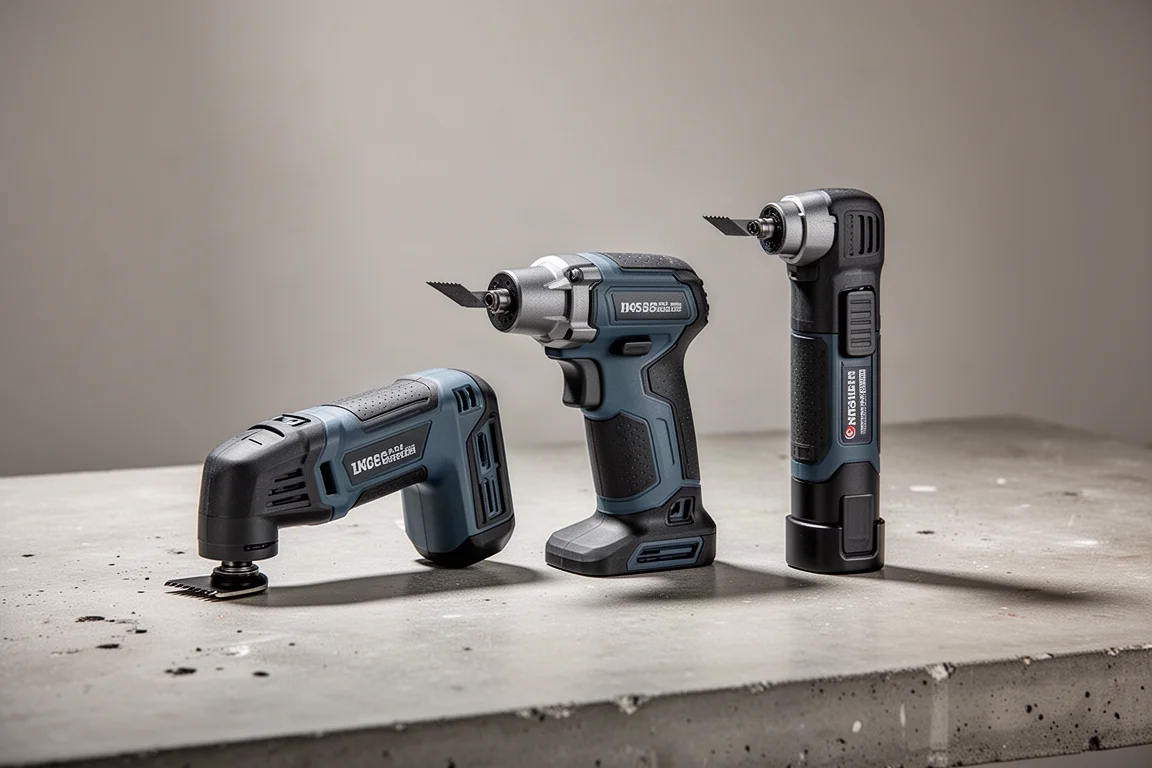
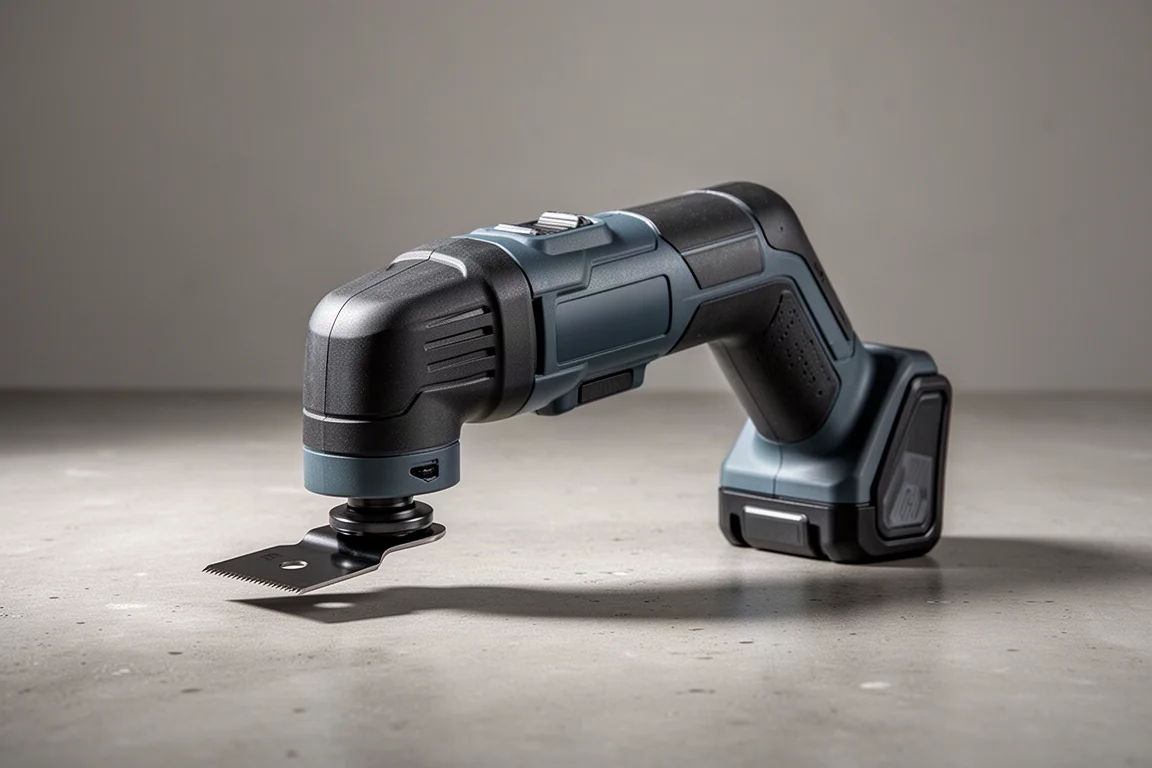
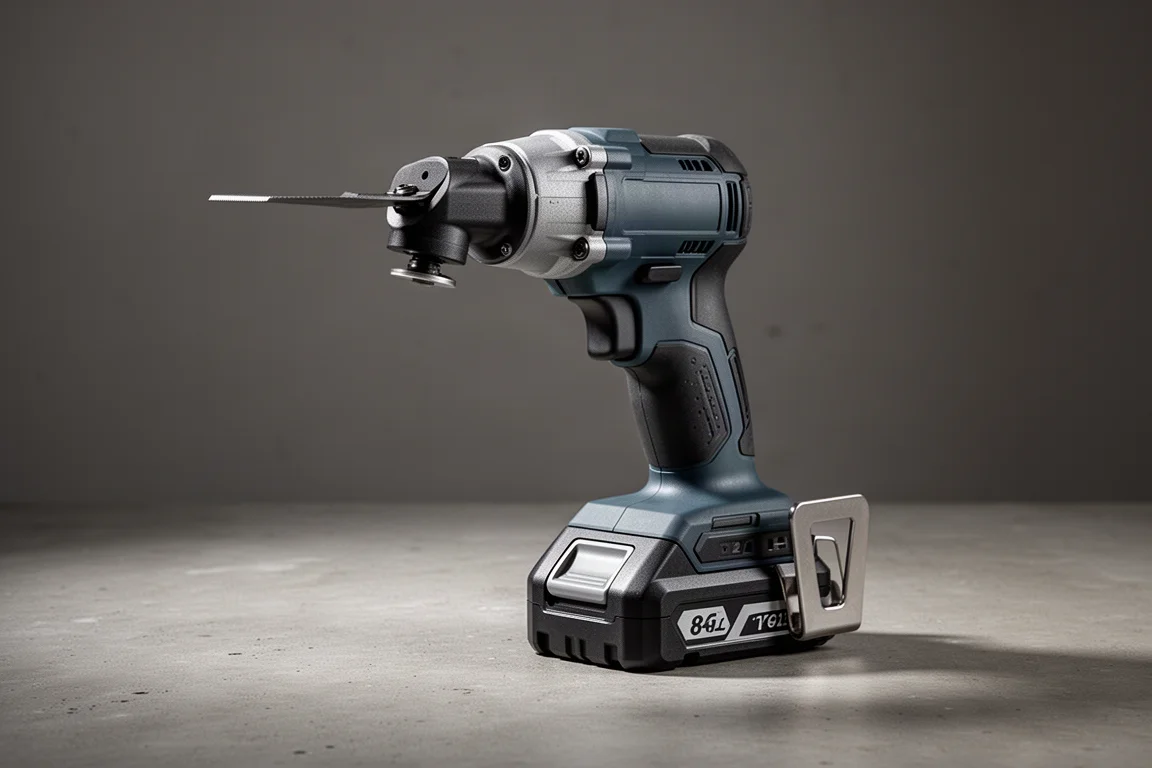
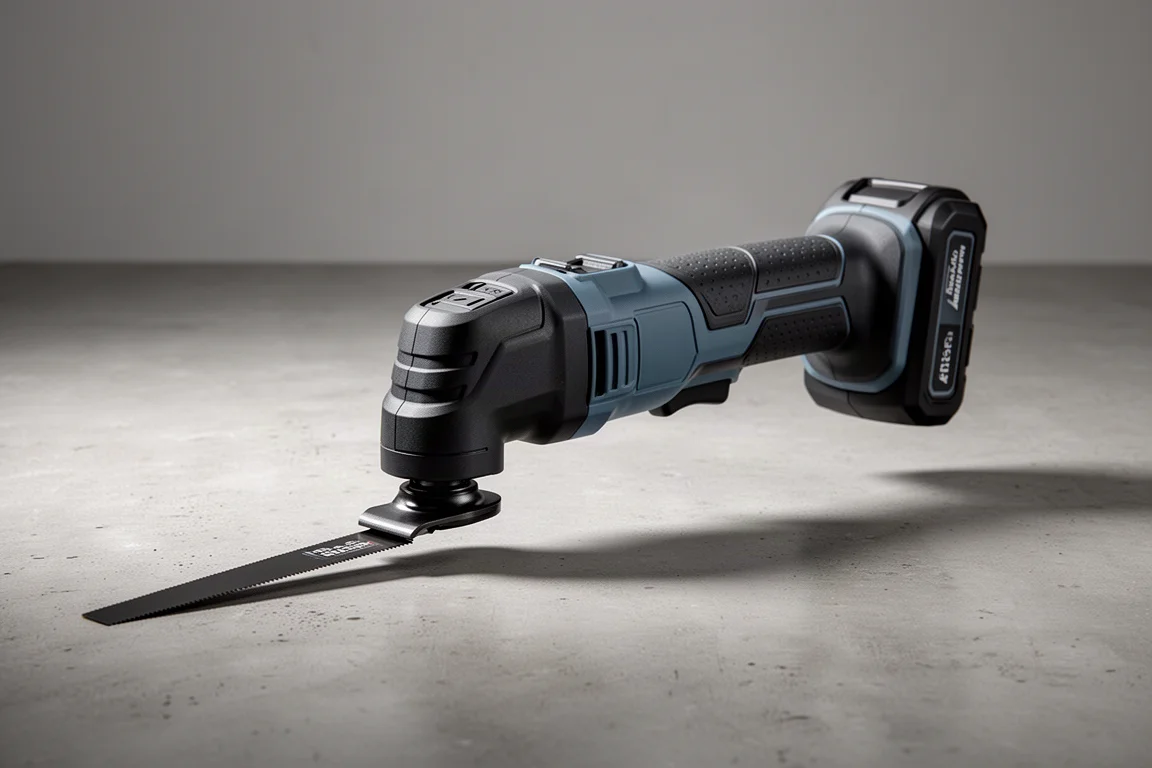
This comparison brings together three well-regarded cordless options: the Makita DTM52 on the 18V LXT platform (sold in the US as the XMT04 in a black sub-compact body), the 40V XGT Makita TM01G, and the Fein MultiMaster 700 Max. Fein invented the oscillating multi-tool in the late 1960s, originally as a safe way to cut plaster casts, so the MultiMaster carries some serious heritage. All three are variable speed, all three use a slide switch in roughly the same place, and all three accept Starlock, Starlock Plus and Starlock Max blades.
Three Tools, One Category
Before the cutting starts, the physical differences matter. The Fein MultiMaster 700 is an AmpShare tool, meaning it runs on the same slide-on battery format used by Bosch, so existing Bosch batteries work on it. It is also the lightest of the three at around 1,833g, noticeably shorter and significantly narrower at the cutting head than either Makita.
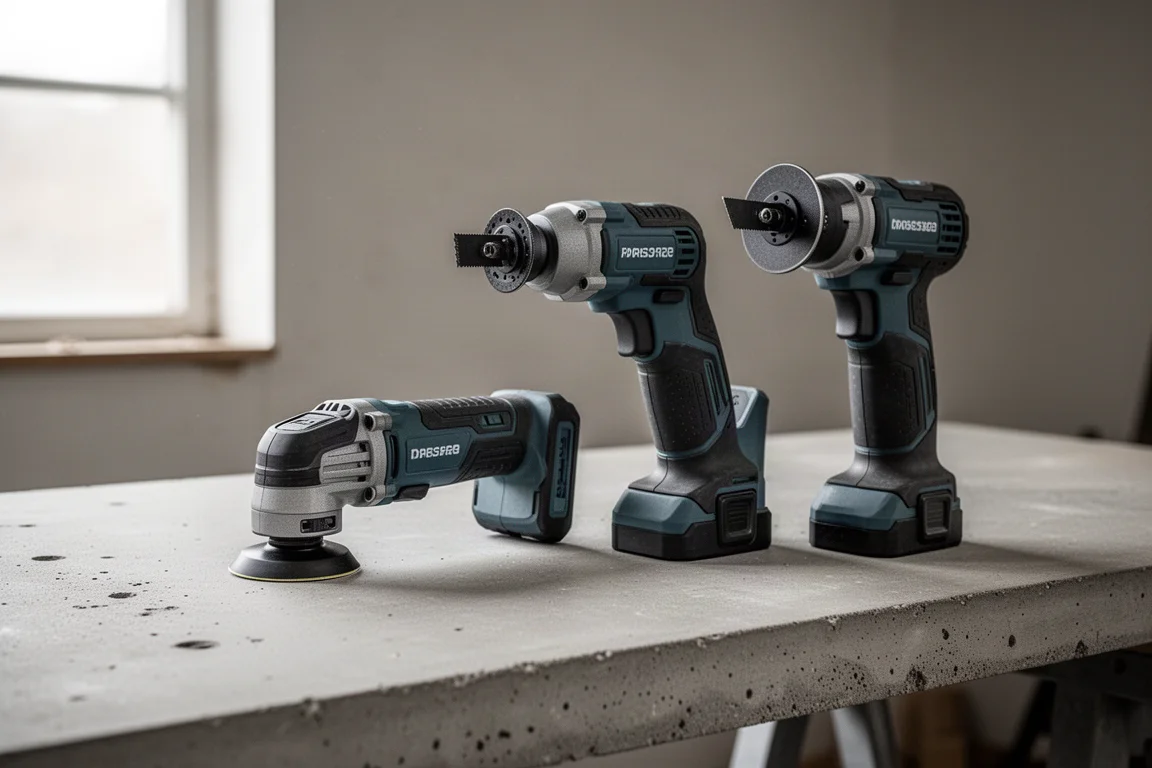
The Makitas are heavier, with the 40V TM01G at around 2,115g and the 18V DTM52 just over 2,000g, but they are easier to stand upright on a bench with the battery fitted and they offer a more comfortable grip. The Fein has a chunkier handle that does not suit every hand size, though it is better balanced front to back with a battery attached, while the Makitas sit a little back-heavy.
Where the Fein really pulls ahead is head size. At its narrowest point it measures about 35mm, roughly the width of the blade itself, and around 62mm at its widest. The Makita heads run from 49 to 50mm at the narrowest and about 67 to 77mm at the widest. If tight gaps between walls or joists are your main use case, that is a significant advantage.
Blade Changes and the Starlock Interface
All three tools take Starlock, Starlock Plus and Starlock Max blades, but the mounting experience differs sharply. On the Fein, a blade simply clips straight on and pulls straight off. On the Makitas, you have to open a lever, remove a pin, insert the blade, replace the pin and close the lever.
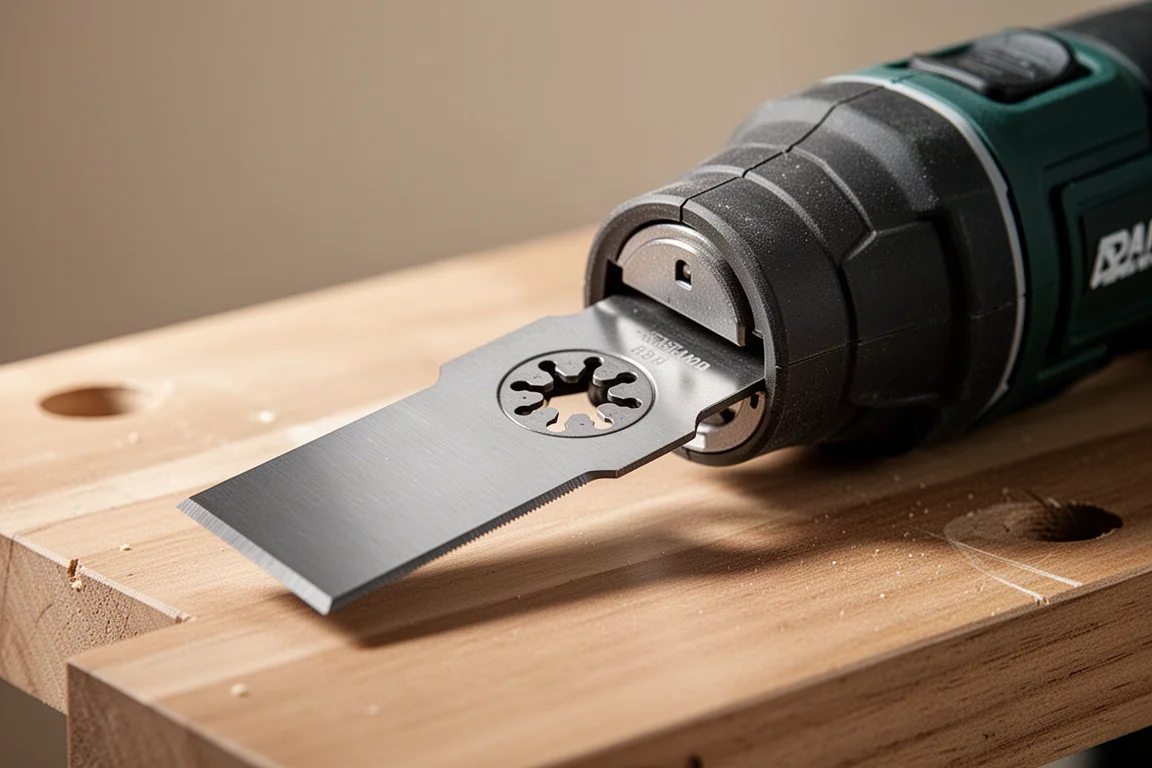
That extra few seconds is not a big deal once you are used to it, but the pin is a small part you can drop on a roof or in mud, which can genuinely derail a job. The same pin also means you must remove the sandpaper to swap accessories on the Makita, whereas the Fein lets you pop the sanding pad on and off around other blades. It is a small thing, but it adds up over a working day.
One caveat worth knowing: cheap unbranded blades with poorly punched star patterns may not seat correctly, particularly on the Fein’s clamping mechanism. A blade that sits on an angle will vibrate more and potentially damage the tool, so genuine or well-made blades are worth the extra cost.
Cutting, Stalling and Vibration
On paper, the tools are close. All three run at 10,000 oscillations per minute at the low setting; the Makitas reach 20,000 at the top, the Fein 19,500. The oscillation arc favours the Fein at 4 degrees (2 degrees each side) versus 3.6 degrees for both Makitas, which in theory lets it cut further per stroke, though a smaller arc gives finer control on narrow plunge cuts.
In practical testing on timber, the Makita felt slightly quicker, though cutting results were broadly similar. Under a stall test, both tools behaved gracefully: the Fein stalls and restarts as soon as pressure eases, while the Makita dramatically reduces vibration and stops cutting effectively until you back off, without fully cutting out. The 40V TM01G behaved the same way as the 18V.
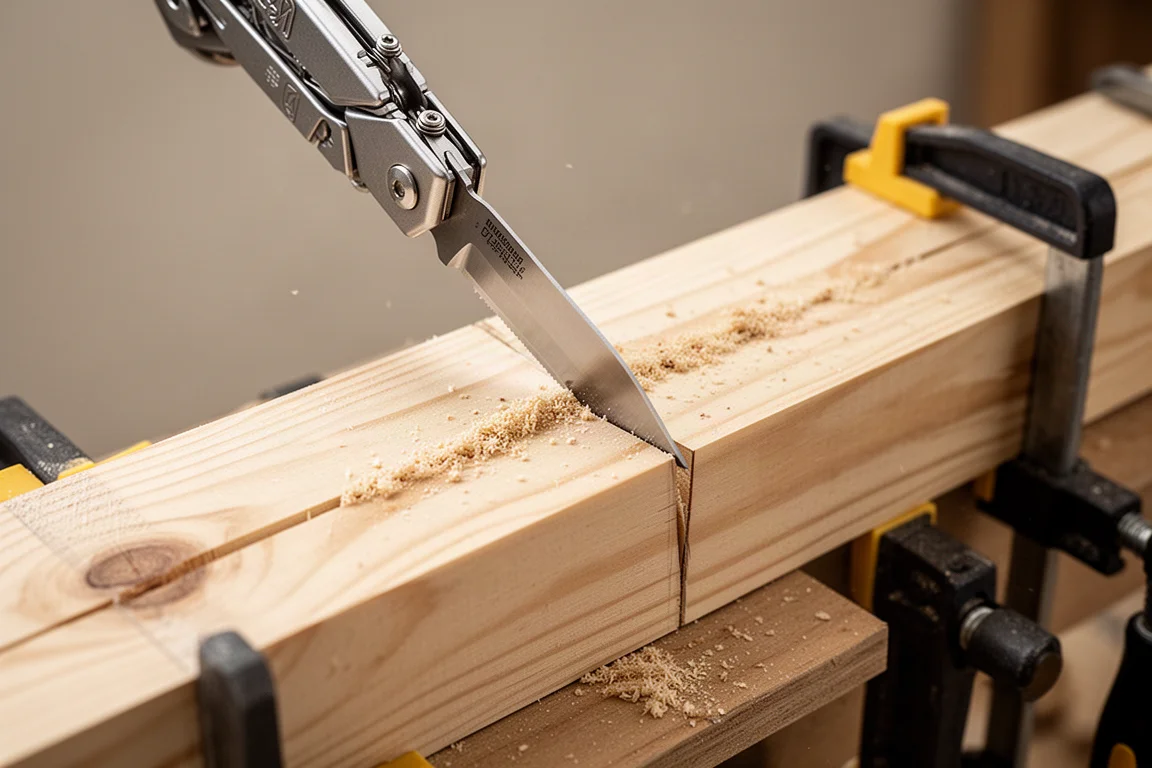
Vibration is where the separation is clearest. The Makita, particularly the 18V DTM52, is remarkably smooth, with barely perceptible vibration at top speed when not cutting. The Fein transmits noticeably more tingling vibration into the hand and wrist, even accounting for fatigue over repeated tests. For anyone using a multi-tool for long stretches, that difference alone may decide the purchase.
Build Origins and Sanding
There is an origin story difference too: both Makitas are made in China, while the Fein is still made in Germany. Neither tells you much on its own, but it is part of the overall picture. Both come with optional dust extraction accessories, though dust extraction on a multi-tool is of limited value except with long blades in open cuts.
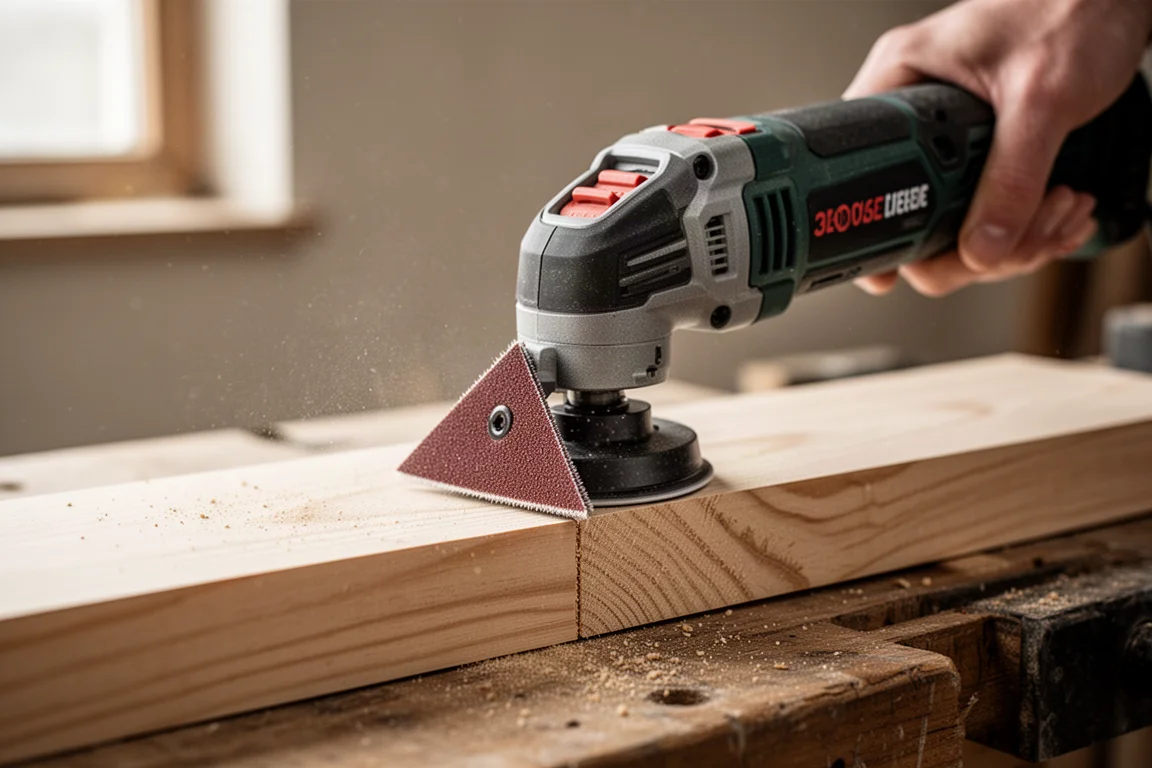
For sanding, the Fein was the more pleasant tool to use. Its shorter body and weight closer to the hand made one-handed work easier, and it felt like it did a better job with a delta pad. The pad-swapping flexibility mentioned earlier also makes it the more convenient sander overall. One thing to watch on the Fein is the rubberised clamping area around the mount, which shows slightly uneven moulding; it may be nothing, but if it wears out, blades would sit wobbly and lose vibration transfer. The Makita has its own small weaknesses, as one test unit had a pin that was damaged and jamming after being clamped incorrectly.
Which One Should You Buy?
If you already own Makita batteries, the DTM52 is the natural pick: smooth, quiet, comfortable and proven. If you want maximum power on the XGT platform, the TM01G performs identically to the 18V in these tests with the added headroom of the 40V system. If you already own Bosch batteries, the Fein MultiMaster 700 is a far stronger choice than the Bosch multi-tools themselves, and its AmpShare compatibility makes it a smart way to put those batteries to work.
And if tight-space access is your priority above all else, the Fein’s slimmer head is simply in a different league, despite the extra vibration. Blade changes are faster too, once you accept the chunkier grip.
Conclusion
There is no single winner here. The Fein MultiMaster 700 wins on size, weight, blade changes and sanding comfort, while the Makitas win on grip comfort, vibration, quietness and familiarity if you are already in their battery ecosystem. Match the tool to the batteries you own and the spaces you need to reach, and any of these three will serve you well.
Further reading
Related Reviews

Power Tools
Best 1-Inch Pistol Impact Wrenches: Three Heavy-Duty Options Compared
We compare three 1-inch pistol impact wrenches, from a budget-friendly Harbor Freight model to a premium Caterpillar unit, to help you choose the right one.

Power Tools
Best 3/4-Inch Impact Wrenches 2026: Five Contenders Compared
We compare five 3/4-inch impact wrenches across price and performance, from a budget Amazon option to Snap-on's most powerful model yet.

Power Tools
Best Budget Cordless Tools 2026: Walmart Finds That Punch Above Their Price
We tested five cordless tools from Walmart, including a high-torque impact wrench that trades blows with Milwaukee and a $35 duster that outperforms its price class.