Gravel Bikes
Orbea Terra vs Terra Race: How to Ride Your Gravel Bike Faster Off-Road
Two Orbea gravel bikes share a core design but split into two personalities, plus practical guidance on setup, tire tread and the skills that actually make you faster off-road.
Introduction
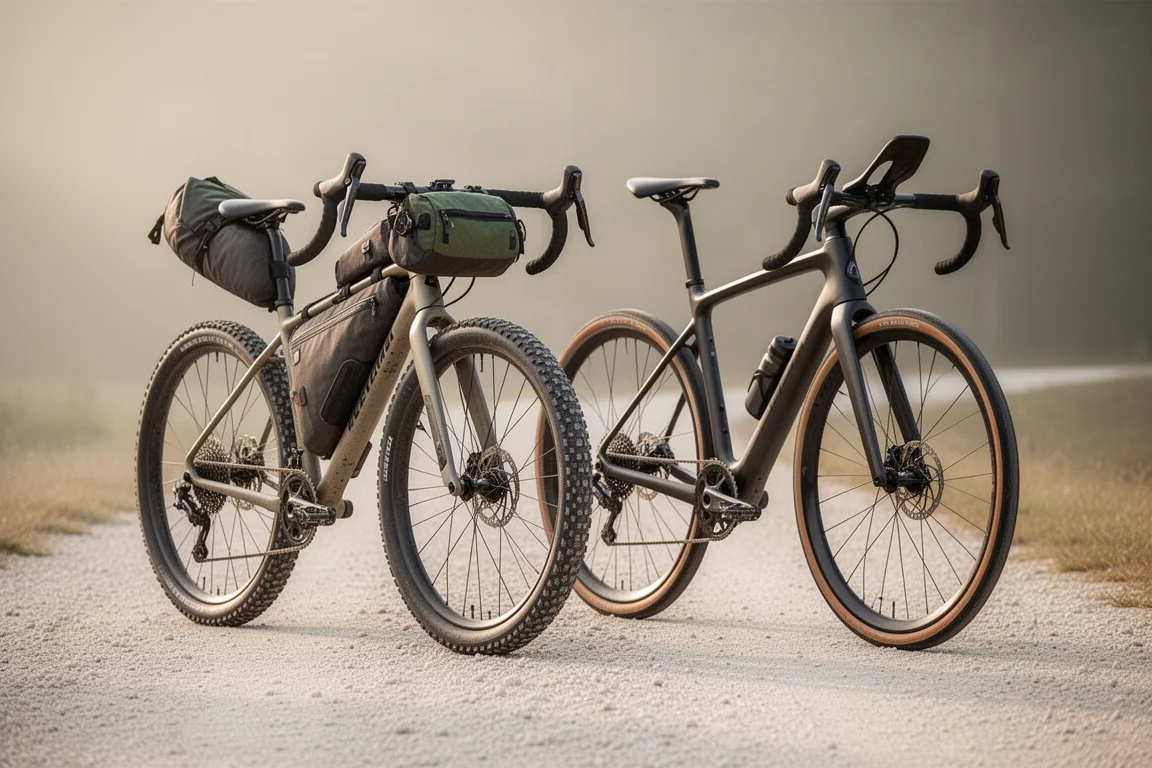
Orbea builds the Terra as a family of gravel bikes that share a core design but split into two distinct personalities. The Terra is set up for adventure. The Terra Race is set up for pace. Choosing between them comes down to one question that matters more than any spec sheet: what does speed mean for the riding you actually do?
That question is worth unpacking, because speed on gravel is not a single thing. For a one-hour blast it means outright pace and aerodynamics. For a ten-hour day it means holding a position you can still tolerate at hour eight. For a multi-day ultra it often means simply not stopping, and comfort becomes the fastest upgrade available.
What follows covers how the two bikes differ, how tire choice changes your pace, and three skills that make a genuine difference off-road. The principles apply to any gravel bike, not only these two.
What Speed Actually Means on Gravel
Speed looks very different to different riders. Someone riding for an hour is chasing a different kind of speed from someone riding for ten hours, or for three weeks. A record ride around Great Britain by bike took 21 days, 10 hours and 48 minutes. At that scale, not stopping matters more than peak power.
Position is the clearest illustration. The position you can hold for an hour is not the position you can hold for a full day. The balance between aerodynamics and power output on one side, and comfort and carrying capacity on the other, shifts as the event gets longer.
That has a practical consequence. Slamming the stem to get as aerodynamic as possible is a poor trade if your neck gives out after five hours and you have to abandon the ride or the race. Over long distances, comfort is not a compromise on speed. It is part of how you achieve it.
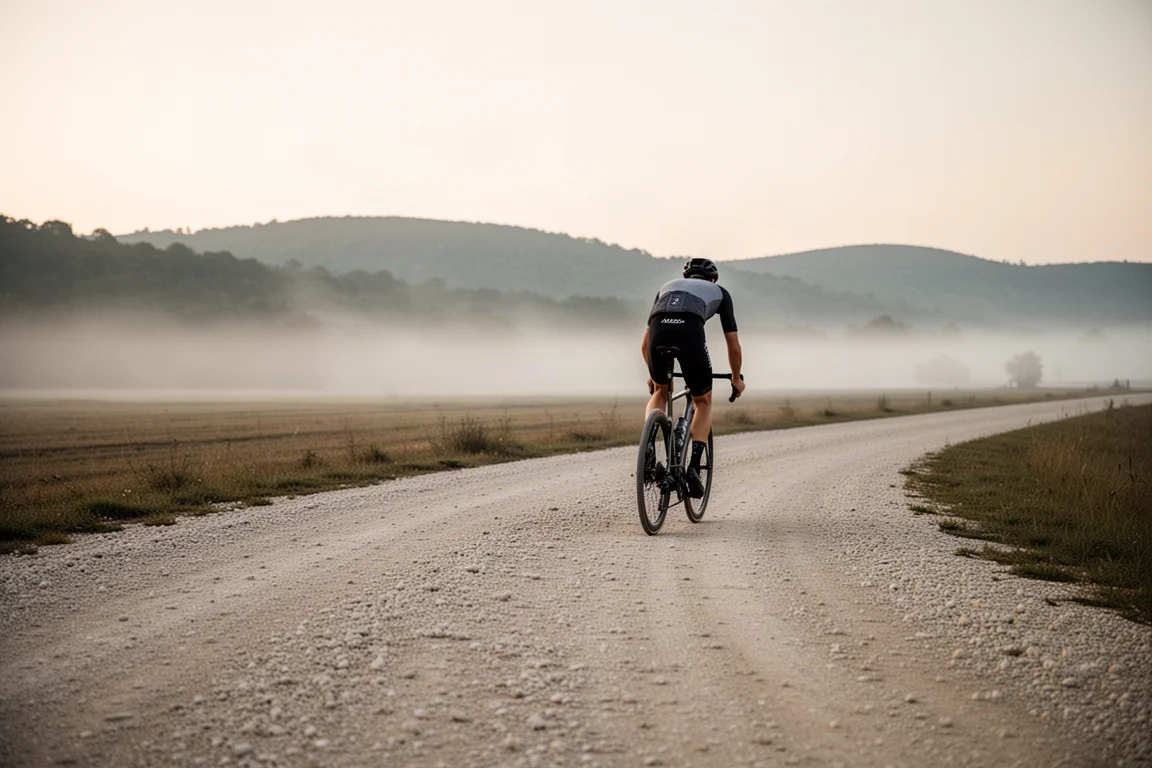
Setup should follow duration as well. There is no reason to pack the kitchen sink for a one-hour ride, and no reason to travel light on a week-long one. Once you know what kind of speed you are chasing, the rest of the setup falls into place.
Orbea Terra: Built for Adventure and Long Days
The Terra is aimed at more adventurous riding. Its riding position is more upright, with a shorter reach and a higher stack, so you can stay comfortable for longer instead of folding into a race tuck.
The details support that intent:
- An easier gear ratio, so you can keep turning the pedals up steep climbs while carrying a heavy load.
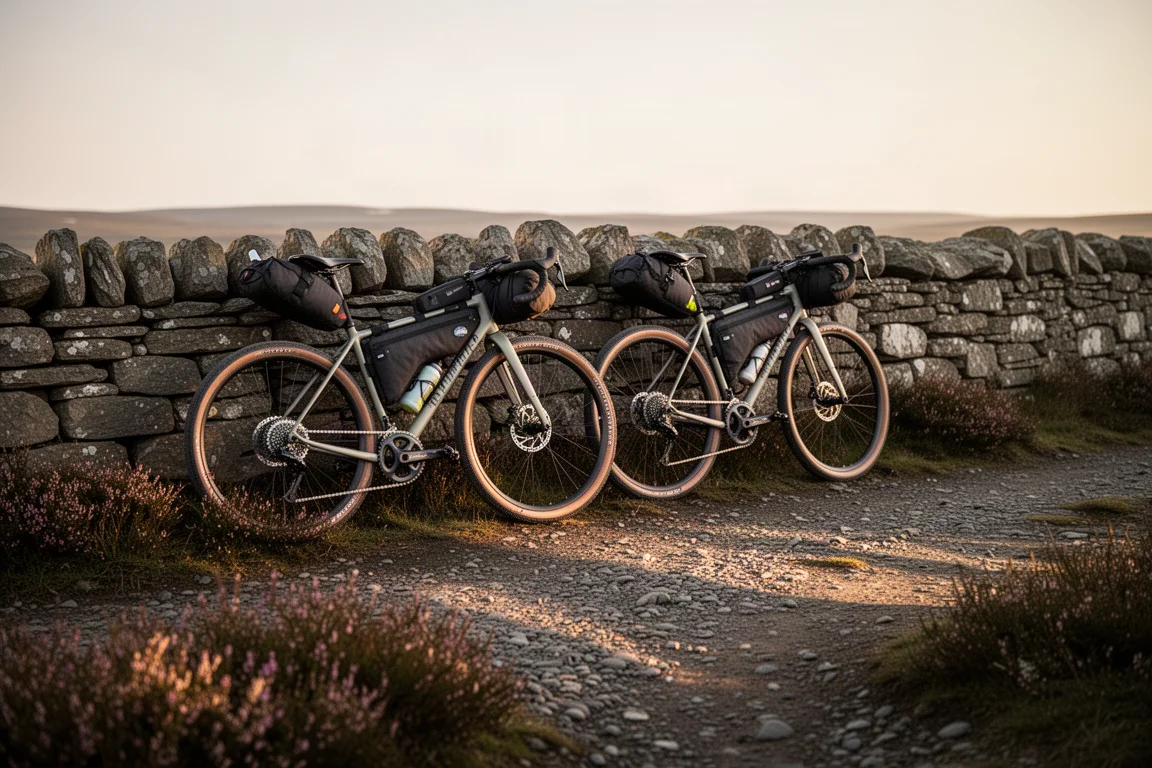
- Mounting points across the frame and fork for bags, so more kit can come with you on longer trips.
- Internal frame storage for spares, keeping tools and tubes out of your pockets and bags.
- More tire clearance, so you can fit fatter rubber for rockier, more demanding terrain.
- Wider, flared handlebars, which add stability when the surface turns loose.
Taken together, those choices point at multi-day bikepacking and ultra-distance racing, where the ability to keep going matters more than the last few watts.
Orbea Terra Race: Built for Speed and Race Day
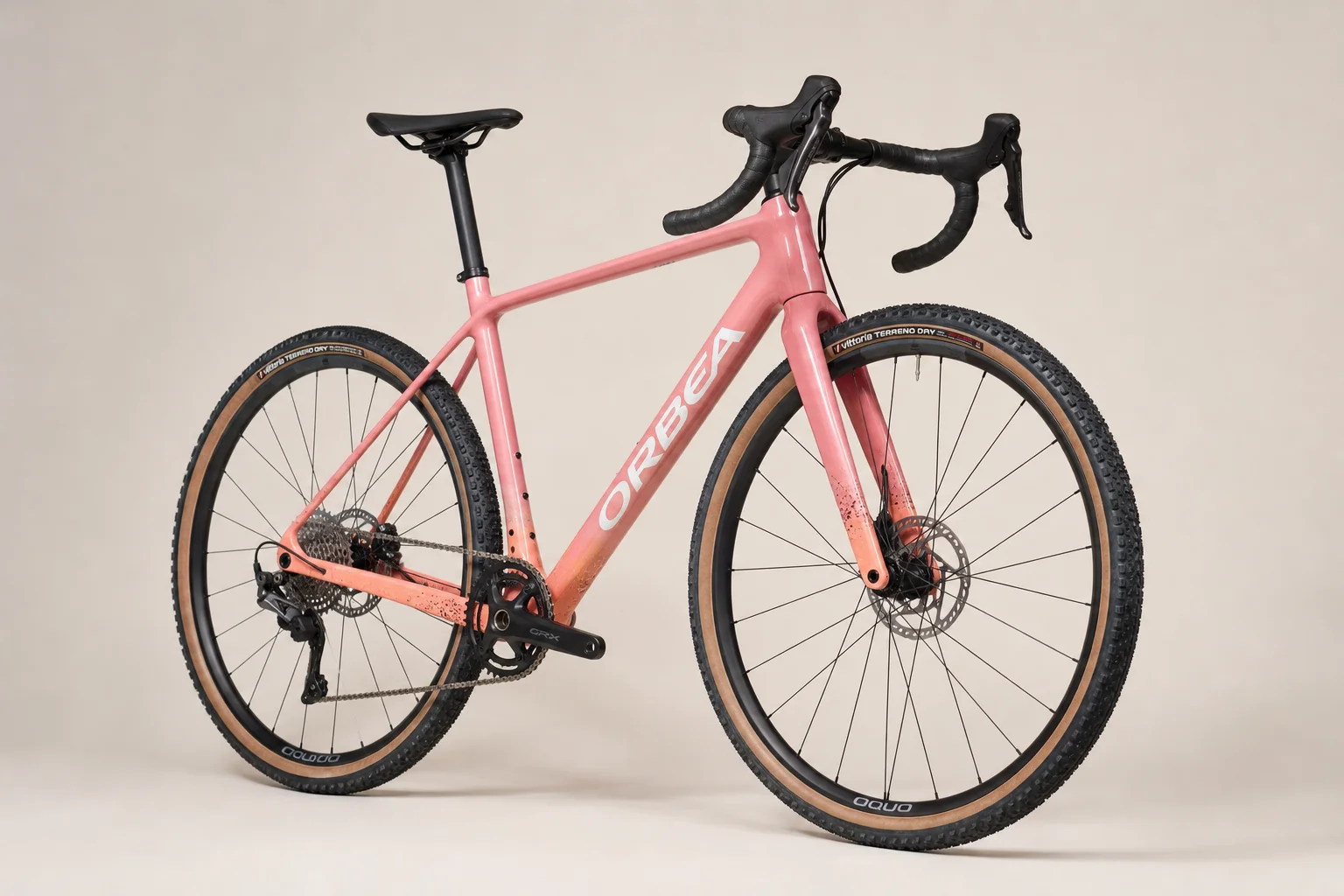
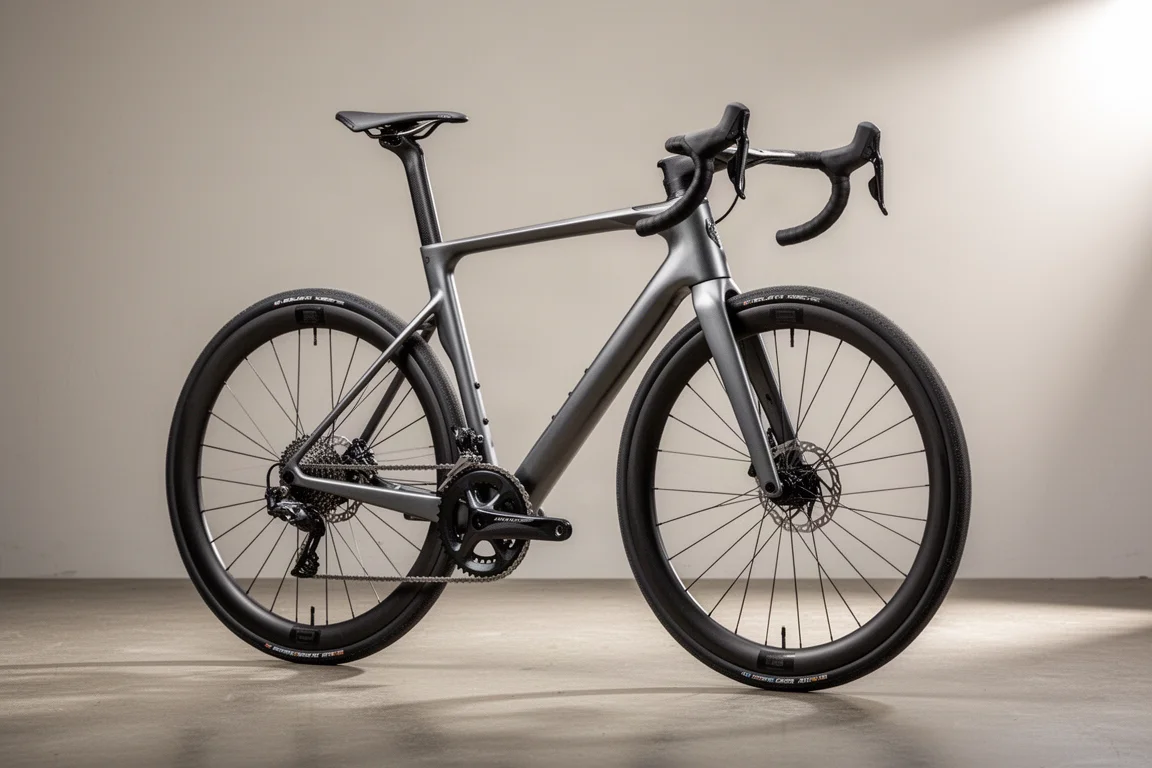
The Terra Race keeps the same core DNA but reworks the details around pace. Reach is longer and stack is lower, which lets you settle into a more aerodynamic position when you want one.
The frame is more aerodynamically shaped, the wheels are deeper, and the gearing is bigger for racing. Up front sits a one-piece carbon cockpit with slightly narrower handlebars, which helps you stay tucked in and out of the wind.
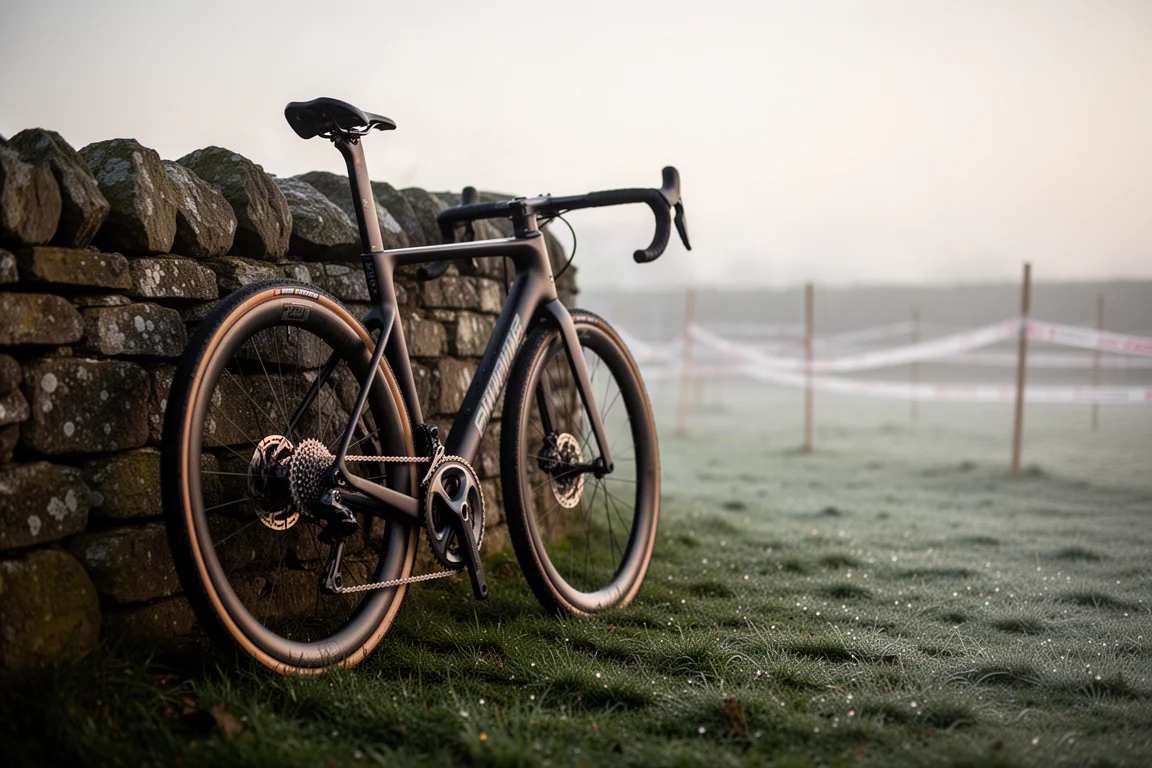
If the target is a UCI gravel race, this is the setup that matches it. The Terra Race is built to be ridden hard for the length of an event rather than loaded up and pointed at a week of trails.
Both bikes can race and both can cover long rides. The difference lies in what each one is optimised for.
Tire Tread and Setup Choices That Change Your Pace
Tire tread is one of the few equipment choices that is specific to off-road riding, and it has a direct effect on speed.
A slicker tread rolls faster, but grip runs out quickly once the surface turns loose or muddy. An intermediate tread is a little slower and offers more grip when the going gets rough. Full mud options exist for riders who know they will be out in genuinely boggy conditions.
If you know the course and the weather in advance, you can choose a tire for those exact conditions. For multiple days in unpredictable weather, it is usually better to err on the side of more puncture protection and a little more grip than to chase the fastest rolling option available.
Three Skills That Make You Faster Off-Road
Setup and equipment only take you so far. Three habits account for most of the difference between a rider who is quick on gravel and one who is not.
Pick the Best Line
Look ahead and scan the trail for the smoothest patch of gravel rather than reacting to whatever is directly under the front wheel. On descents, where speed is higher, a looser and wider line can let you skate across the surface and control the bike more easily. On climbs, a smoother and narrower line usually works better.
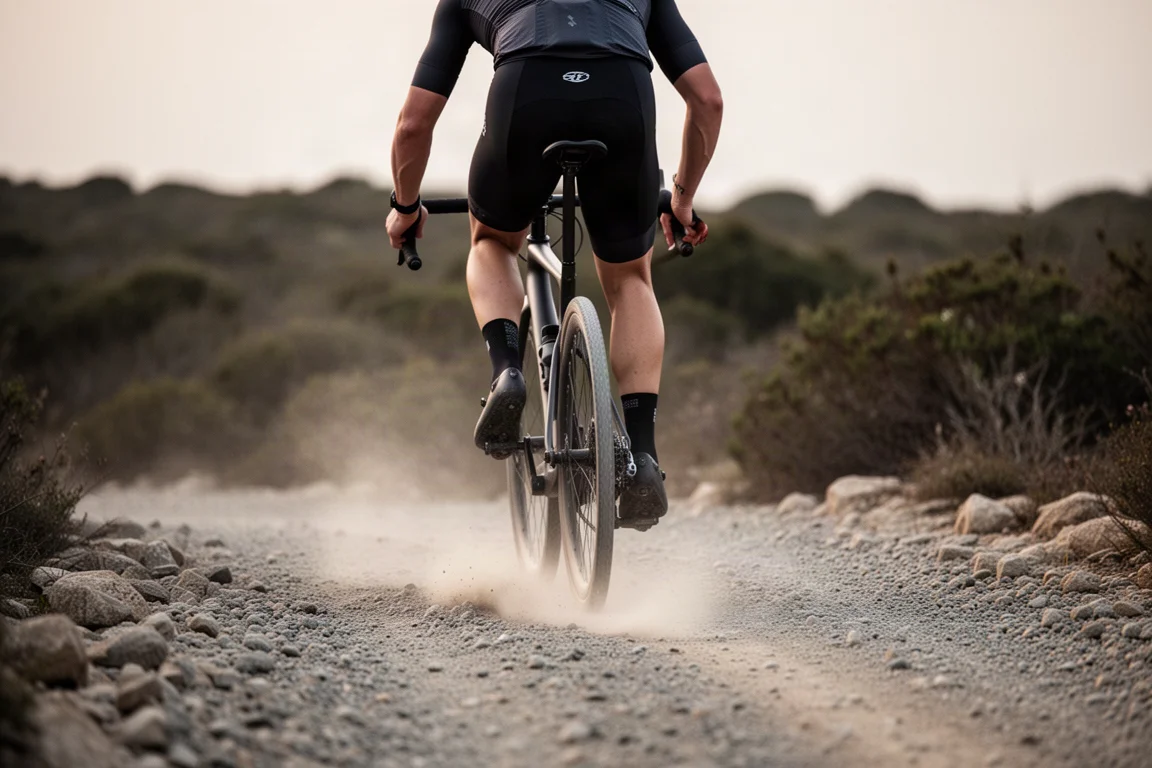
Line choice improves with practice, and it is worth deliberately riding sections you know well to test how different lines feel at different speeds.
Stay Relaxed on the Bike
Do not grip the bars too hard. Keep your shoulders and arms loose so you can absorb the small bumps and knocks that the surface throws at you. Smooth is fast, and tension in the upper body is what turns a rough patch into a loss of control.
Look Ahead
This sounds obvious, but it is worth being precise about. Keep your eyes forward and look at the gap you want to take rather than the rock you do not want to hit. Look at the obstacle and you will ride straight into it.
Buying Advice: Which Orbea Terra Is Right for You?
The decision is simpler than the spec lists make it look.
Choose the Terra if your riding leans toward multi-day bikepacking, ultra-distance events, or long days where comfort and carrying capacity decide whether you finish. The upright position, easier gearing, wider tire clearance and mounting points are all there to keep you moving.
Choose the Terra Race if you are lining up for gravel races and want the aerodynamic frame, deeper wheels, bigger racing gear ratio and one-piece carbon cockpit that come with it.
Both bikes share the same foundation, so the honest answer is that either can do a bit of everything. What separates them is the kind of speed each one was built around, and that should be the deciding factor.
Conclusion
The Orbea Terra and the Orbea Terra Race are two answers to the same question, and the question is what speed means for the riding you do. If it means not stopping, the Terra’s comfort, gearing and carrying capacity are what keep you moving. If it means going fast for the length of a race, the Terra Race’s aerodynamic frame, deeper wheels and race gearing are the tools for the job.
Whatever you ride, the same fundamentals apply: match your setup to the duration and the terrain, pick tire tread for the conditions you expect, and work on line choice, relaxation and looking ahead. Those skills cost nothing, and they are where most of the speed off-road actually comes from.
Further reading
Related Reviews
Gravel Bikes
3T Exploro Ultra Review: A Fast Gravel Bike Built for Big Tyres
A close look at the 3T Exploro Ultra, an aero carbon gravel bike designed around wide tyres, with road-like handling, a 980 g frame and genuine rough-terrain capability.
Gravel Bikes
3T Extrema Italia Review: Aero Gravel Speed With Room for 57 mm Tires
The 3T Extrema Italia pairs an aero frame with huge tire clearance, Italian-made carbon and a more comfortable ride than the RaceMax. Here is what to know before buying.
Gravel Bikes
3T Race Max 2 Italia Review: An Aero Gravel Race Bike Made in Italy
A closer look at the second-generation 3T Race Max 2 Italia, covering its aero updates, ride character, tire clearance, internal storage and who it suits.