Camping Stoves
OneTigris Rocky Boy vs Bushbox: Two Flat-Pack Wood Stoves Compared
A practical comparison of the OneTigris Rocky Boy and the Bushbox wood stove, covering weight, assembly, fuel flexibility, and which one suits which kind of camper.
Introduction
Flat-pack wood stoves have earned a place in a lot of packs because they do one job well: they give you a small, contained fire for boiling water without carrying a full cooking system. Two stoves that come up again and again in that conversation are the OneTigris Rocky Boy and the Bushbox, and they solve the same problem in very different ways.
The Rocky Boy is the cheaper option and arrives as a set of separate stainless steel panels that slot together. The Bushbox costs more and folds open in seconds thanks to its hinged design. Both burn twigs and small wood, and both can be used to shelter a small burner instead of running on wood.
This comparison looks at weight, assembly, fuel flexibility, and the details that actually matter when you are standing on a cold hillside with numb fingers.
What to Look For in a Flat-Pack Wood Stove
Three things tend to decide whether a stove like this earns a permanent place in your pack: packed weight, how quickly it goes together, and how many ways it can be used.
Weight matters because a wood stove is usually carried as a backup rather than the main cooking method. Assembly matters because a stove that is fiddly to build is a stove you eventually leave at home. Fuel flexibility matters because being able to drop in a small burner, rather than relying on finding dry wood, widens the conditions where the stove is genuinely useful.
Material thickness is worth a look too. Thinner steel keeps weight down, but it can be more prone to distortion after repeated hot burns, so it is worth thinking about how hard you plan to use the stove.
OneTigris Rocky Boy Wood Stove
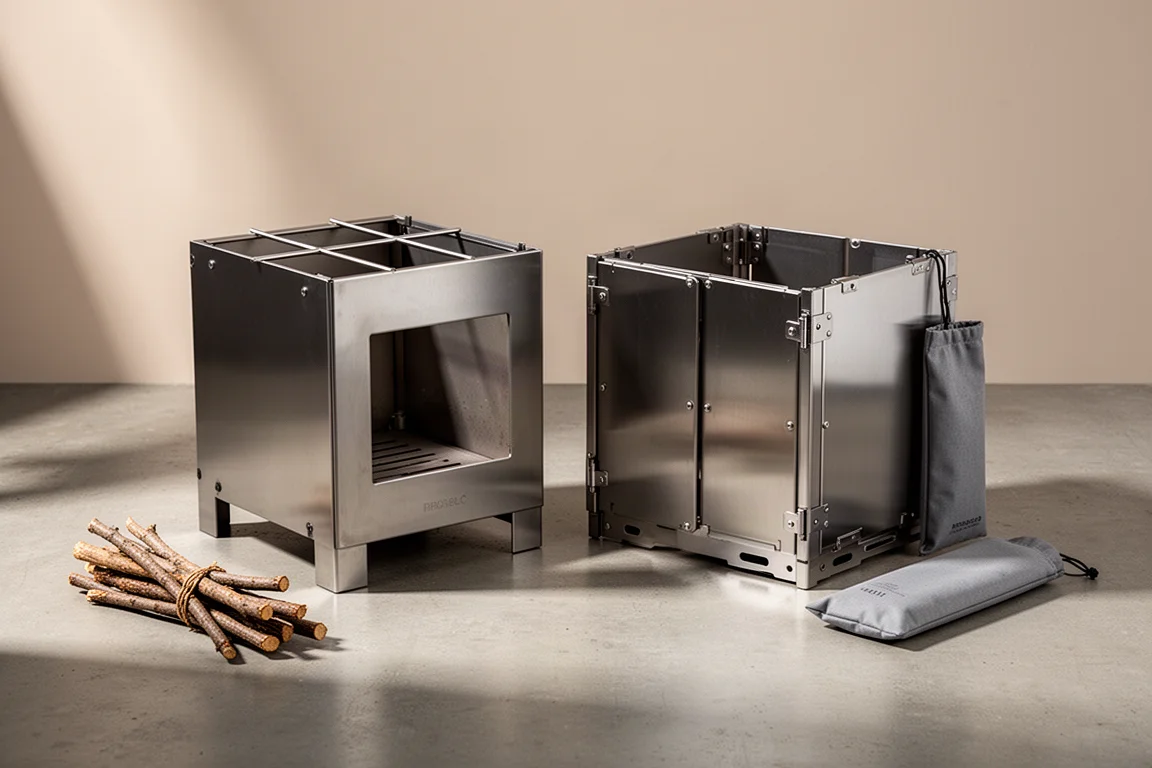
The Rocky Boy is a stainless steel flat-pack stove that arrives as individual panels rather than a hinged unit. It ships in a zip-lock bag inside a small wallet printed with the OneTigris insignia, so there is a pouch for storage straight out of the box.
On the scales it comes in at 550 grams, heavier than the Bushbox. That extra weight buys a larger footprint and a noticeably larger fuel window at the front, which makes feeding twigs into the fire easier. The front panel also gives the stove a distinctive look, with cut-outs that read a little like a face.
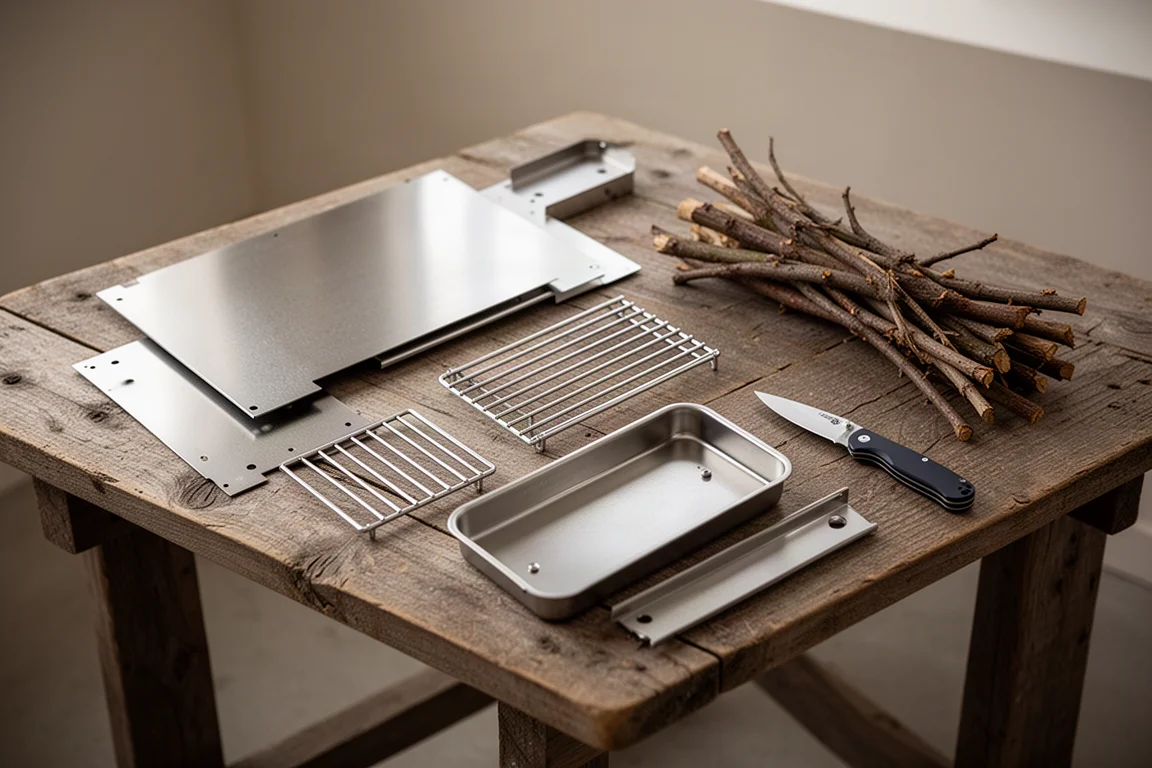
Assembly is the biggest difference between the two. Because the panels are separate, the Rocky Boy has to be built each time: the back and the sides slot together, the grate drops in, the bottom tray lines up, and the front panel goes on last. It is not difficult once you know the order, and the finished stove feels solid and robust enough to take a pot.
One detail worth knowing is that the grate can sit at more than one height. Set high, it gives a raised fire bed; set low, it opens up enough room inside the box to house a small burner instead. That flexibility is a real advantage if you want one stove to cover both wood and a backup fuel.
Bushbox Wood Stove
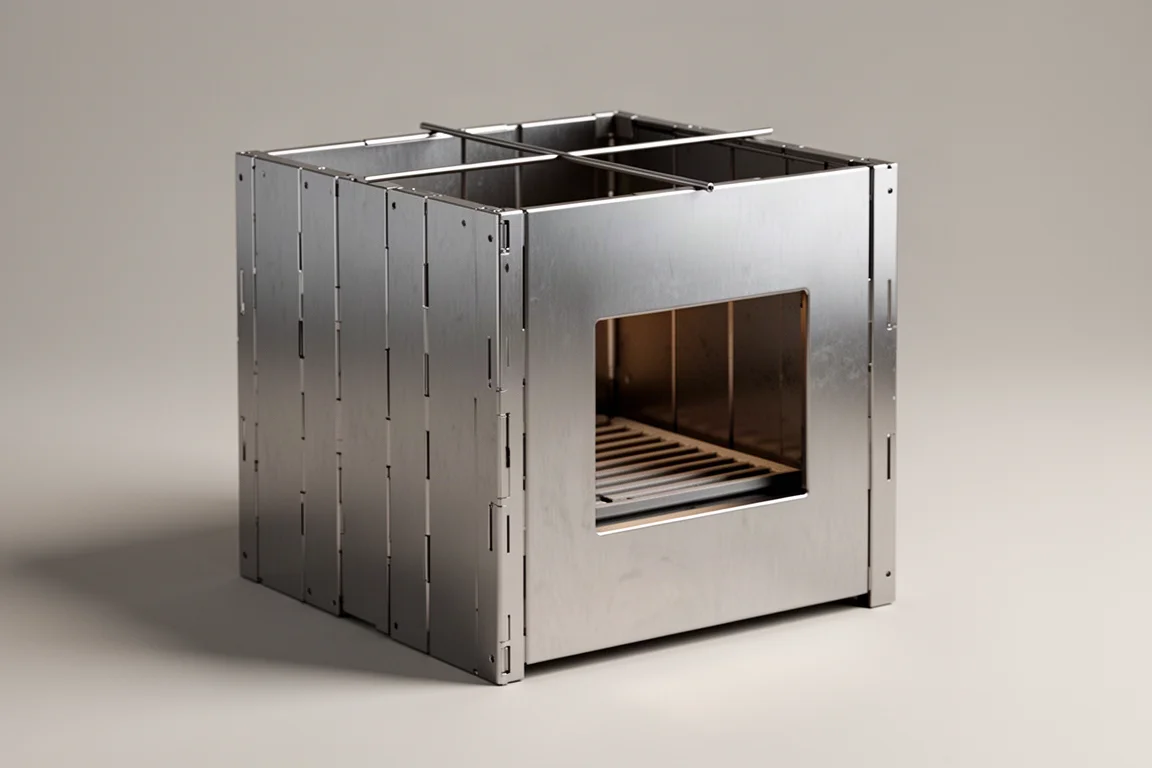
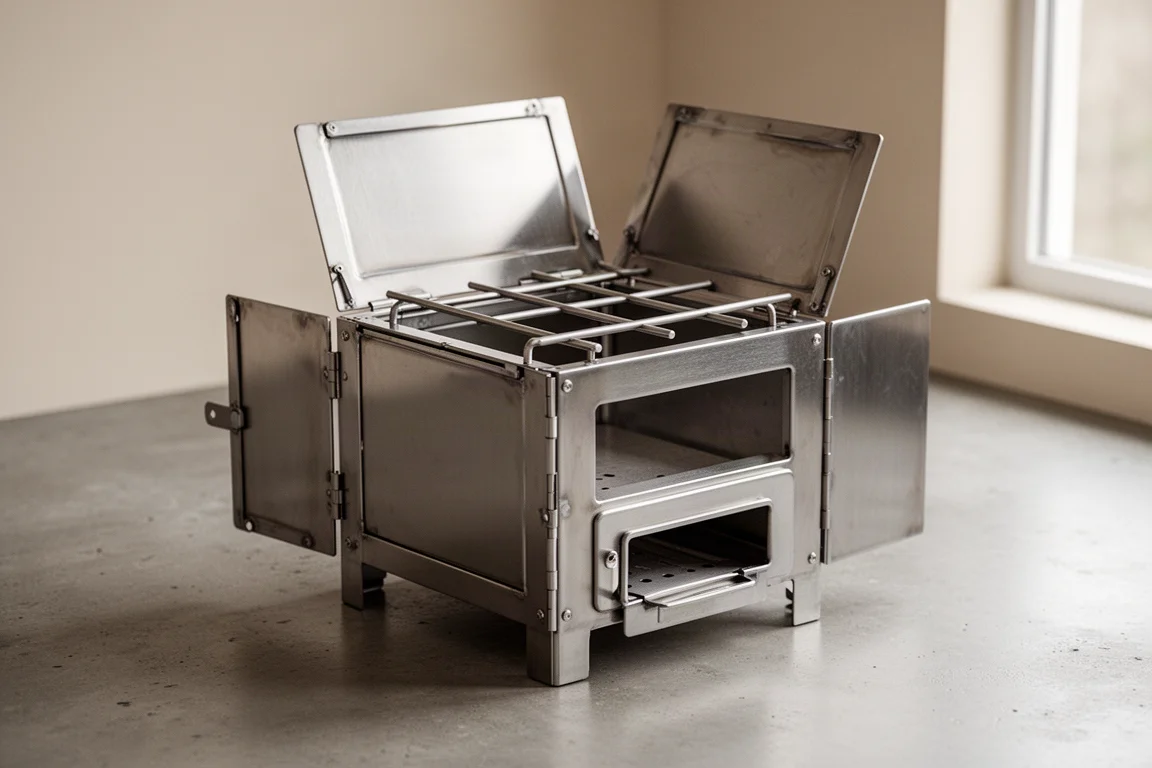
The Bushbox takes the opposite approach. It is a folding stove: open it up, the panels snap into place, the cross bars go over the top, and the cooking surface is ready. The whole thing goes together in seconds, and that speed is the single strongest argument in its favour.
It weighs 480 grams, so it is lighter than the Rocky Boy as well as quicker to deploy. It is also the more expensive of the two, and it is available in a range of sizes, including larger and smaller versions than the model compared here.
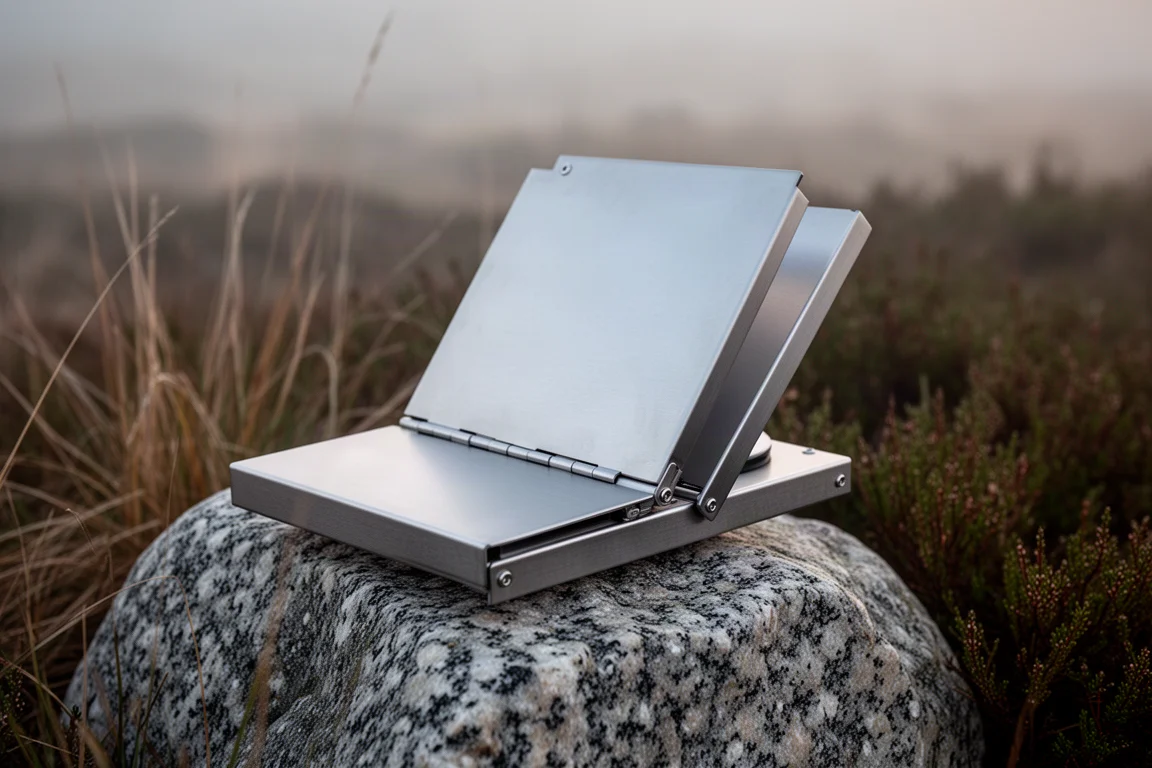
The trade-off is that the folding design leaves less choice about how the inside of the stove is configured. Where the Rocky Boy lets you move the grate to make room for a burner, the Bushbox is more fixed in how it sets up, and its fuel window is smaller.
How the Two Stoves Compare
| Detail | OneTigris Rocky Boy | Bushbox |
|---|---|---|
| Weight | 550 g | 480 g |
| Assembly | Flat-pack, several separate panels to slot together | Folds and snaps into place in seconds |
| Price position | Lower | Higher |
| Size | Larger of the two compared here | Available in several sizes, larger and smaller |
| Fuel window | Larger | Smaller |
| Grate position | Two heights, leaving room for a small burner | Fixed setup |
The headline is straightforward: the Bushbox is lighter and faster to assemble, while the Rocky Boy is cheaper and more configurable. Neither advantage cancels the other out, which is why the choice comes down to how you plan to use the stove rather than which one is objectively better.
Fuel Options and Cooking Flexibility
Both stoves are designed to burn twigs, small wood, and other natural fuel you can gather on site. Both can also be used to hold a small burner instead of burning wood directly, which keeps the burner up off the ground and protected from the wind.
The Rocky Boy goes further here. Because the grate can be set low, there is room inside the box for a burner, and the grate can also be raised to create a conventional fire bed. You also get a larger opening at the front for feeding fuel, which matters more than it sounds when your hands are cold.
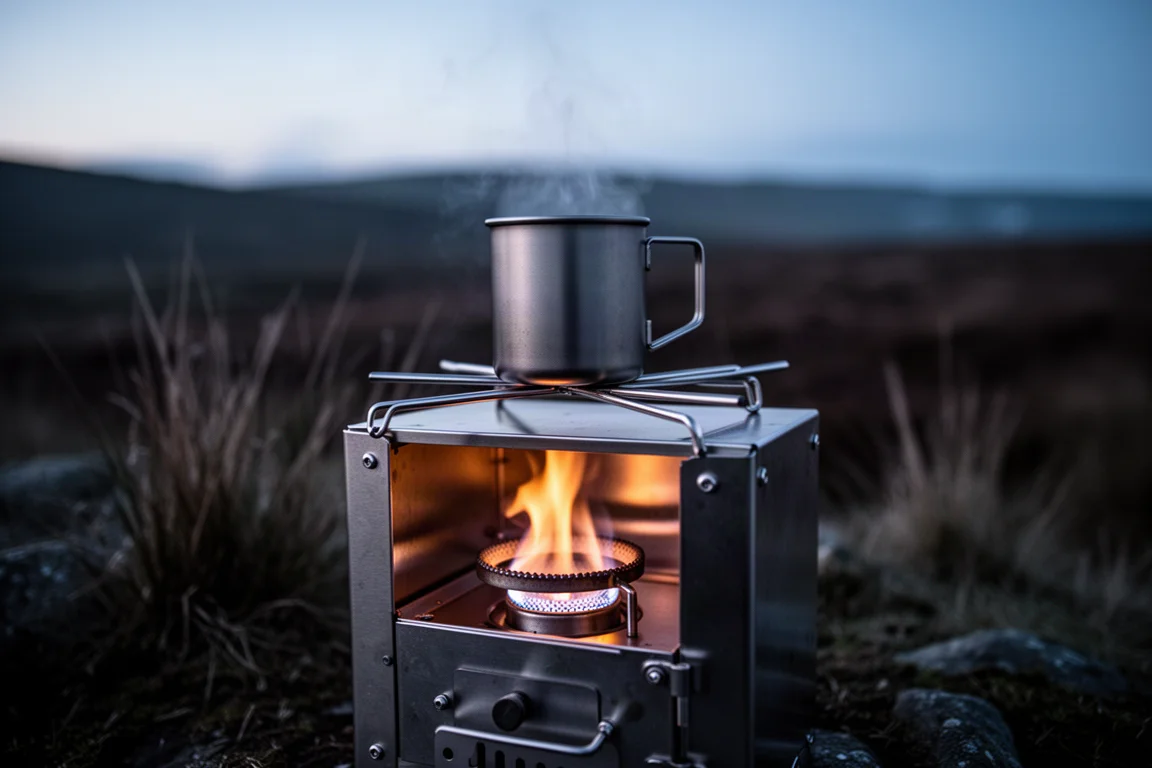
The Bushbox handles the same jobs, just with less adjustment. It folds out, it holds a pot, and it works with gathered fuel or with a small burner placed inside.
Safety and Responsible Use
A wood stove is still an open fire, and it should be treated like one. These stoves are not intended for use as wood burners on Dartmoor or in national parks, where open fires are restricted. If you are cooking in a sensitive area, a small burner inside the stove is the more appropriate option.
As a general rule, keep the stove on bare ground or another stable, non-flammable surface, keep it well away from dry grass and overhanging branches, and make sure everything is cold before it goes back in the pack.
Overall Buying Advice
Choose the Bushbox if speed and weight are your priorities. It folds out in seconds, it is the lighter of the two at 480 grams, and it is the more refined piece of kit. That convenience is what you are paying the higher price for.
Choose the OneTigris Rocky Boy if value and flexibility matter more. At 550 grams it is heavier and it takes longer to build, but it costs less, it is larger, and the adjustable grate lets you run it as a wood stove or as a housing for a small burner. The metal is thinner than on the Bushbox, so if you plan to burn hard and often, that is the one thing worth keeping an eye on.
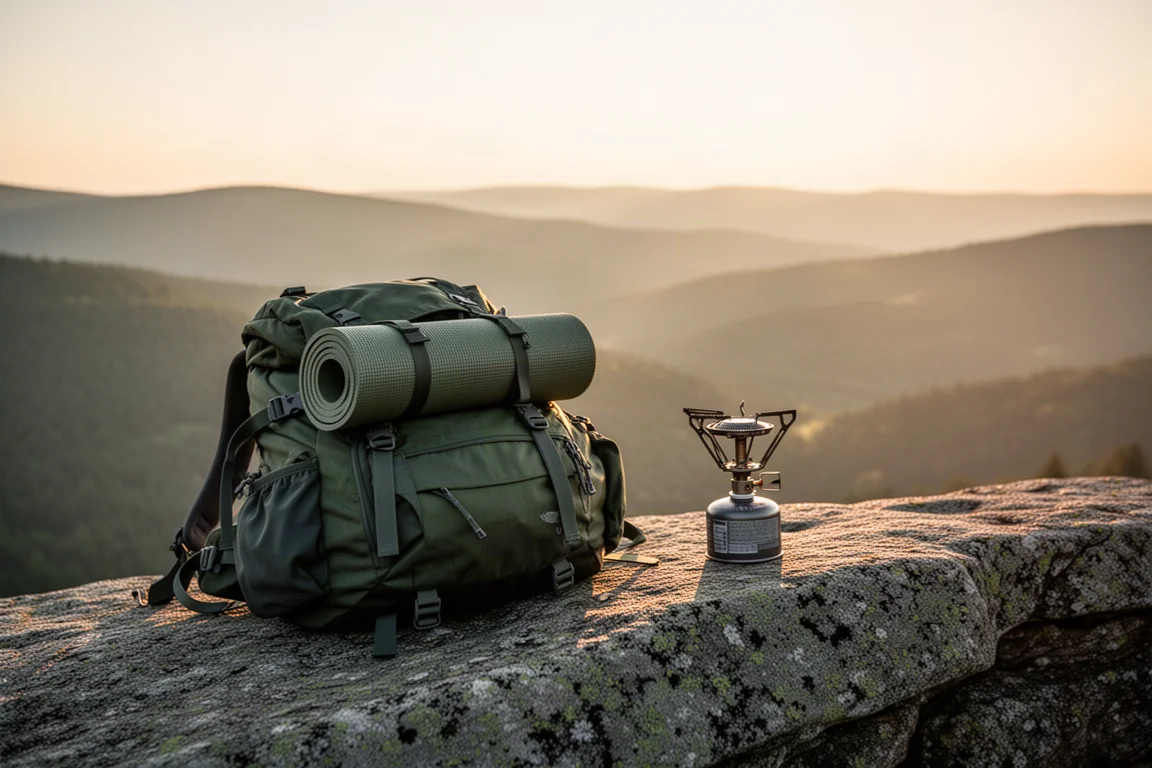
Either way, both are compact, packable stoves that make a small fire practical without carrying a full cooking setup.
Conclusion
The Bushbox and the OneTigris Rocky Boy are both good answers to the same question, and the right one depends on what you value. For fast setup and lower weight, the Bushbox is the more polished choice. For a lower price, a larger fire box, and the ability to switch between wood and a small burner, the Rocky Boy makes a lot of sense.
Check the rules where you plan to use either stove, and if open fires are restricted, keep a small burner inside the box instead.
Further reading
Related Reviews
Camping Stoves
BCB Fire Dragon Mini Cooker Review: A Tiny Folding Stove With Real Trade-Offs
A palm-sized, fuel-flexible folding stove that heats water well enough, but brings flame control, stability, and fuel cost questions worth understanding first.
Camping Stoves
Boundless Voyage Titanium Alcohol and Wood Stove Review: Ultralight Cooking, Two Ways
A titanium alcohol and wood burning stove kit that weighs 4.5 oz complete, boils two cups of water in about 10 minutes, and costs $36.
Camping Stoves
BRS 32 Dual Burner Stove Review: A Folding Two-Burner That Packs Down Flat
A detailed look at the BRS 32, a slim folding dual burner camping stove that expands into a stable cooking platform for around $60.