Flashlights
Olight Seeker 4 vs Seeker 4 Pro: Which Flashlight Should You Buy?
A side-by-side look at Olight's Seeker 4 and Seeker 4 Pro, covering beam patterns, output, charging, and the small details that decide which one fits your needs.
Introduction
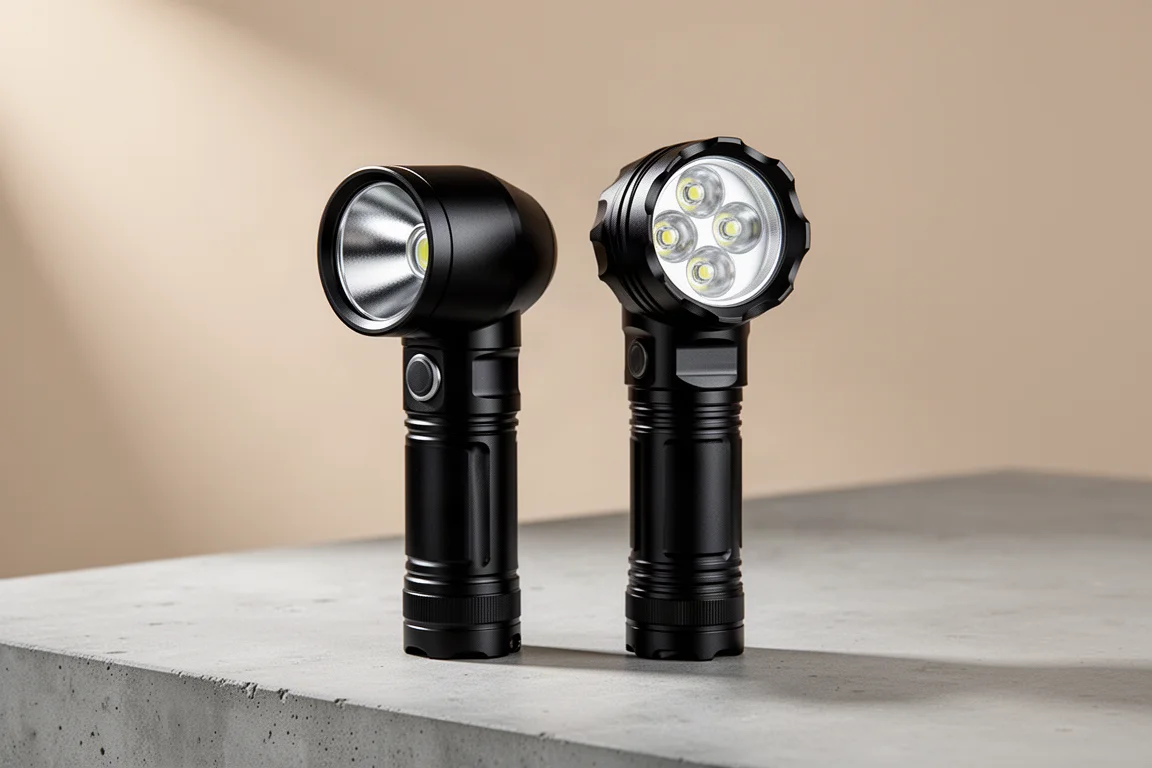
If you have been shopping for a high-output flashlight, chances are you have come across the Olight Seeker 4 and the Seeker 4 Pro. They look almost identical, share the same battery and user interface, and yet they behave very differently once you switch them on at night. The short version: the Seeker 4 is built to throw light at distance, while the Seeker 4 Pro floods a wide area with more raw output. This comparison walks through the specs, the handling differences, the charging setups, and what the beams actually look like outdoors, so you can pick the one that matches how you plan to use it.
Key Differences at a Glance
The headline numbers tell most of the story. The Seeker 4 tops out at 3,100 lumens with a maximum throw of 400 metres and a peak intensity of 4,260 candela. The Seeker 4 Pro pushes 4,600 lumens with a 260 metre throw and a much higher 16,898 candela maximum intensity. In the simplest terms, the Pro is more of a flood light and the standard Seeker 4 is more of a thrower.
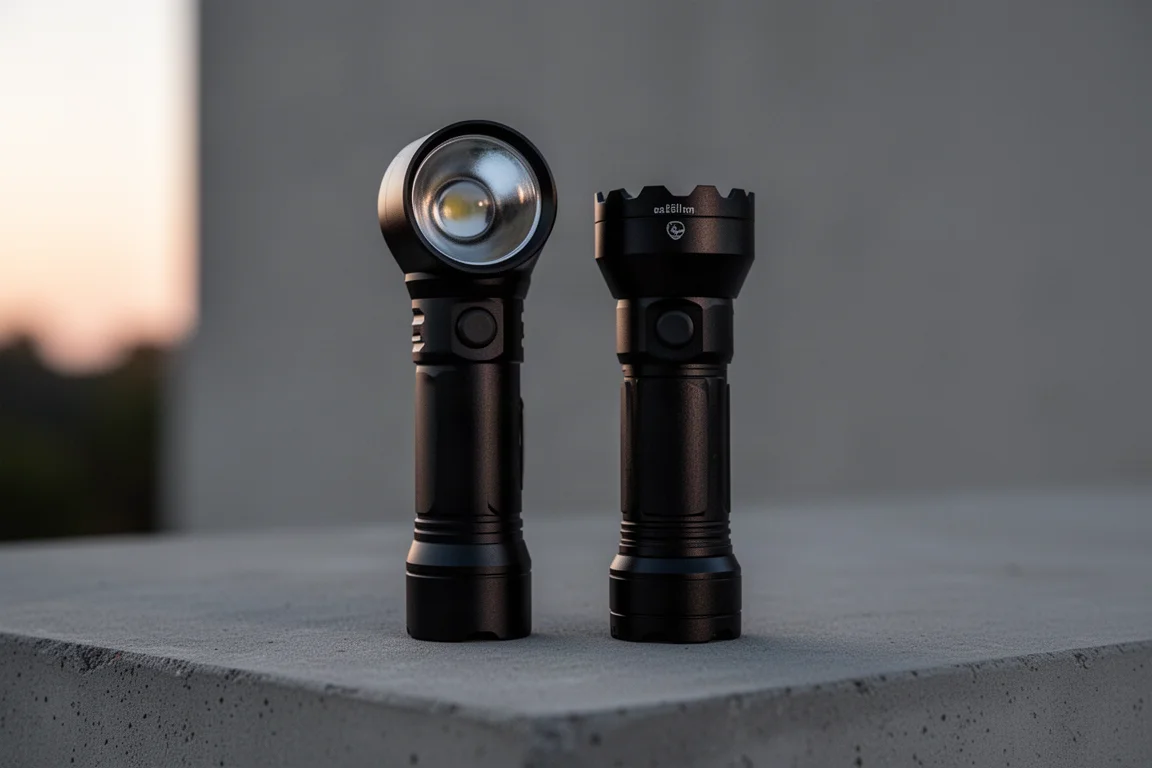
The reason sits right behind the lens. The Seeker 4 uses a single LED paired with a deep reflector, which concentrates the beam into a defined hotspot for distance. The Pro uses four LEDs with shallower reflectors, spreading light across a much wider area. Battery life is identical on both: a 3.6V 5,000mAh 21700 rechargeable lithium-ion cell delivering up to 15 days of maximum runtime. Both offer six modes total, five brightness levels plus strobe, aluminum alloy bodies with a Type III hard anodized finish, and IPX8 waterproofing, meaning they are submersible up to six feet of water, though dust proofing was not tested.
Color temperature is another fork in the road. The Seeker 4 is currently available in one cool white option, while the Pro comes in two: a neutral white at roughly 4,000 to 5,000 Kelvin and a cool white between 5,700 and 7,000 Kelvin.
Size and Build
On paper the Seeker 4 measures 5.28 inches long versus 5.24 inches for the Pro, and that tiny difference comes from the Seeker 4’s ridged striking bezel. In practice the difference is nearly imperceptible without close inspection. Everything else matches: the same 1.38 inch bezel diameter, the same 1.10 inch maximum body diameter, and the same 7.23 ounce weight with the battery installed. The Pro does carry a noticeably more aggressive serrated striking bezel than the standard model, which gives it a slightly more tactical look.
Controls and Dimming
Both lights are operated by a single side switch, but the implementations differ in a meaningful way. The Seeker 4 uses a stainless steel switch with a tricolored battery indicator LED dead centre that stays lit the whole time the light is on. The Pro has a more elaborate side switch with stepless dimming: rotating the switch gives you continuous control over brightness rather than jumping between presets.
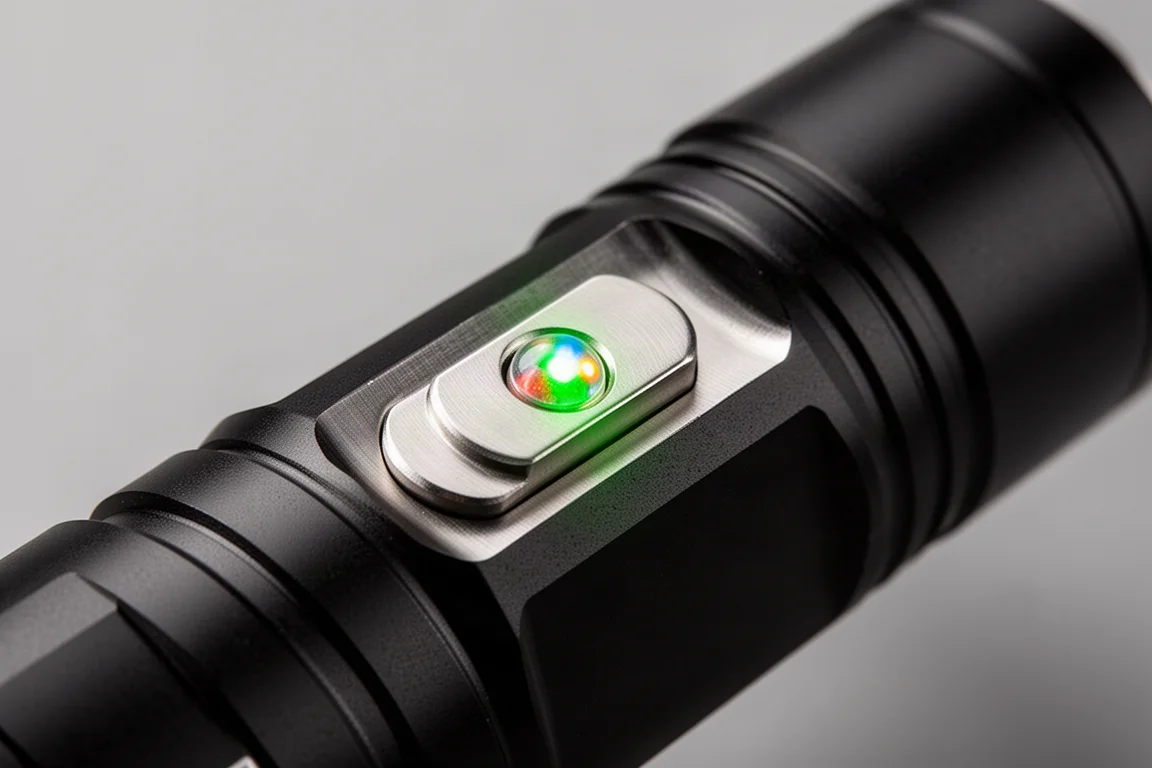
The Pro also lets you preset your brightness level before the light is even switched on. When the LEDs go dark, rotating the switch sets your starting output, and a small dashboard of LEDs shows both brightness level and battery status, illuminating briefly before fading away. If you value fine-grained control, the Pro is the clear winner here. Both lights share the same interface familiar to anyone who already owns an Olight.
Handling and Grip
The Pro wraps its body in a silicone cover, which improves grip, acts as an anti-slip feature, and helps dissipate heat when running turbo for extended periods. The Seeker 4 instead uses three finger grooves on each side of the body. Neither approach is wrong; it mostly comes down to whether you prefer a soft grippy surface or a more traditional knurled feel.
Charging and Holster
Charging is where the two models diverge the most. The Seeker 4 hides a USB Type-C charging port under a small lever on the tailcap, and that port is the only way to charge it. The Pro retains magnetic charging and also ships with a charging holster, one of the more useful accessories Olight includes. The light charges via the USB Type-C port on the bottom of the holster if you do not own a magnetic charging cable, which is included.
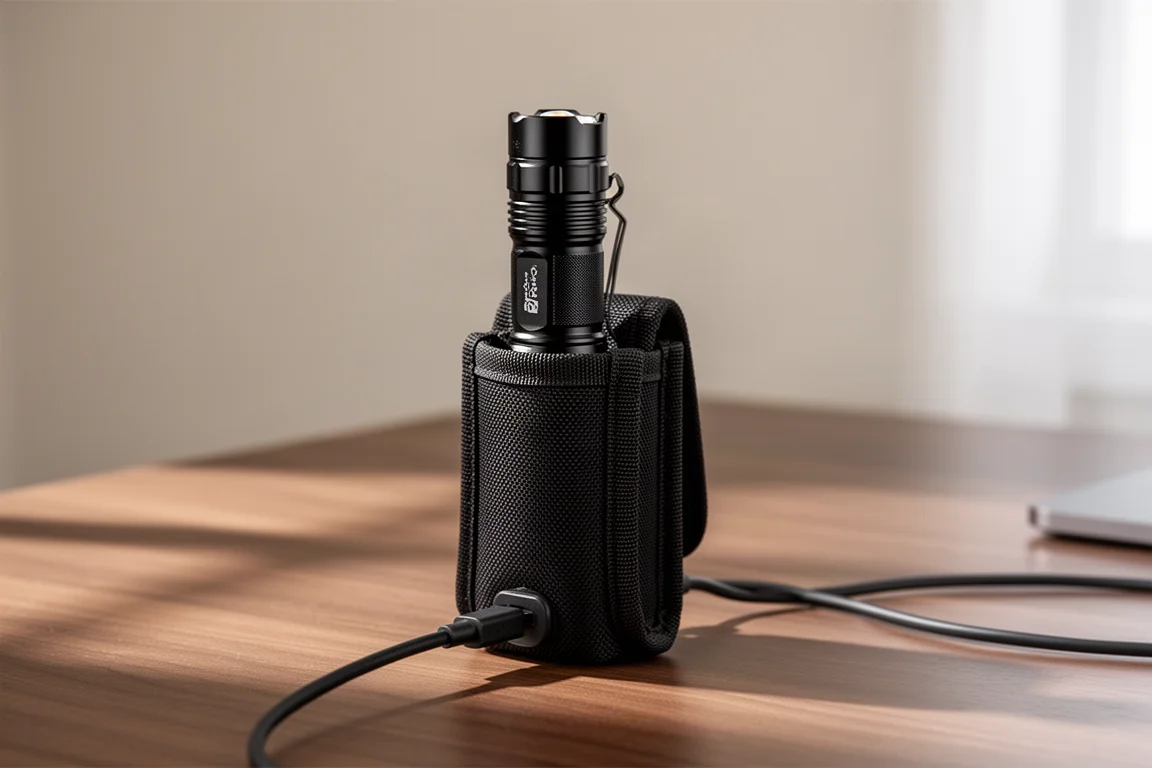
The holster has a clever bonus: placing the light inside automatically locks it out so the switch cannot be pressed accidentally. Removing it unlocks the light, and if you want to use it while holstered, a press and hold releases the lockout. The Seeker 4 ships without a holster or pocket clip, though Olight now sells a pocket clip for either model for $5.95 on its website.
Beam Test: How They Compare Outdoors
Out in the yard, the difference between the two beams is immediately obvious. The Seeker 4 produces a much more intense, tightly defined hotspot thanks to its deep reflector. On medium it lights up individual trees with ease, and on turbo the full 3,100 lumens reach out toward the 400 metre mark, keeping a crisp perimeter around the hotspot all the way out.
The Pro takes a different approach. Even on low, its hotspot is large and softly spread rather than defined. On high and turbo, the full 4,600 lumens wash a far wider area in light, easily illuminating a barn roughly 130 metres away and lighting up everything in between. It is the better choice when you want to see your whole surroundings at once rather than punch a beam downrange.
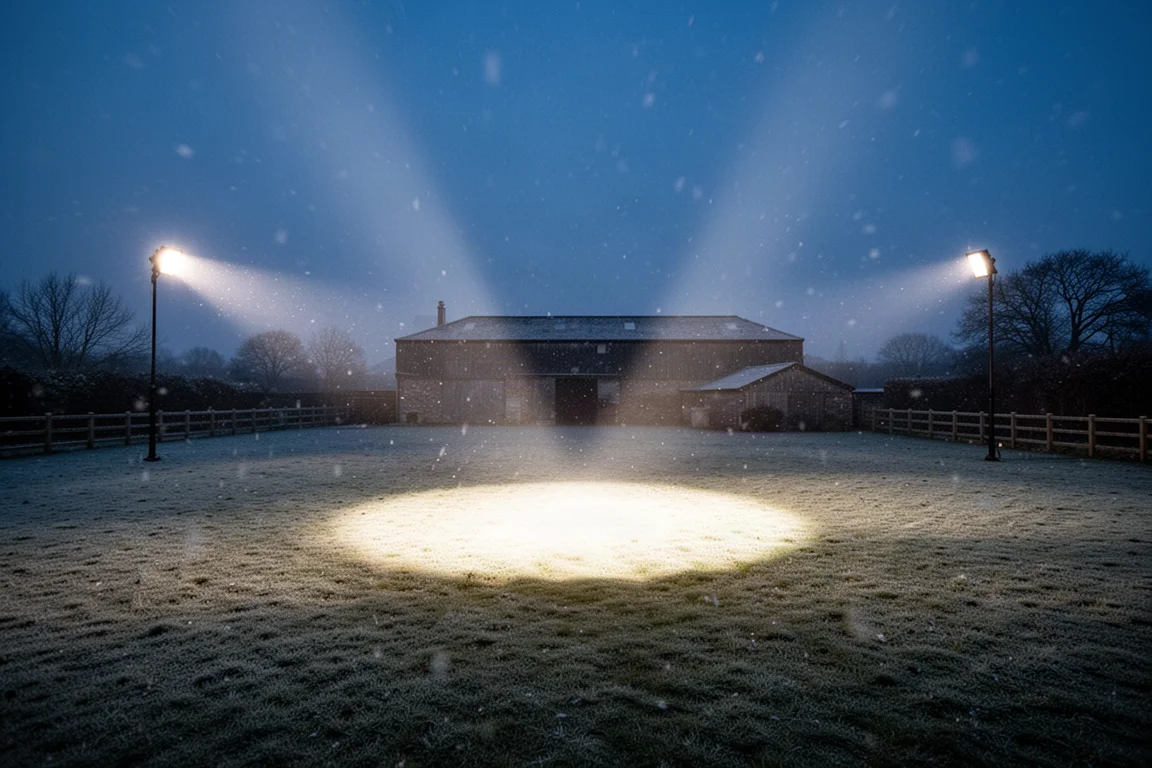
Think about your typical use case: walking property lines or checking distant treelines favors the Seeker 4’s throw, while camping, yard work, or general-purpose illumination around a property favors the Pro’s wider flood.
Which One Should You Buy?
Choose the Seeker 4 if you prioritize distance. Its 400 metre throw, defined hotspot, and single-LED deep reflector make it the better pick for spotting things far away. Choose the Seeker 4 Pro if you want maximum brightness spread across a wide area, plus stepless dimming, the silicone grip, magnetic charging, and the included charging holster. Both share the same battery, runtime, waterproofing, and familiar Olight interface, so you are not sacrificing core quality either way.
Conclusion
The Seeker 4 and Seeker 4 Pro are closer siblings than their specs suggest, but they serve different jobs. One throws a tight beam downrange; the other floods everything around you with light. Match the beam pattern to how you actually use a flashlight, and either choice will serve you well.
Product link
View more details for Olight Seeker 4
This product is mentioned in the review. Check the specifications, options, and compatibility before buying.
View more details for Olight Seeker 4Further reading
Related Reviews
Flashlights
Best Flashlights 2026: Brightness, Battery, and Value Compared
We tested 18 flashlights across a wide price range to find the best performers in brightness, battery life, and durability.
Flashlights
Nitecore LA10 Review: A Tiny 2-in-1 Lantern That Nails the Basics
The Nitecore LA10 pairs a pocket-sized lantern with a single AA battery, a magnetic tail cap and a five-year warranty. Here is where it shines and where it struggles.
Flashlights
Wuben G5 Review: A Compact Everyday Carry Flashlight
The Wuben G5 is a small, rechargeable flashlight with a pivoting head, magnetic base, and color modes. Here is how it performs as an everyday carry light.