Flashlights
Olight Seeker 4 and ArkFlex: Two New Flashlights Worth a Look
Olight's Seeker 4 delivers 3,100 lumens in a familiar Seeker body, while the new ArkFlex adds a 90-degree articulating head to a flat EDC format.
Introduction
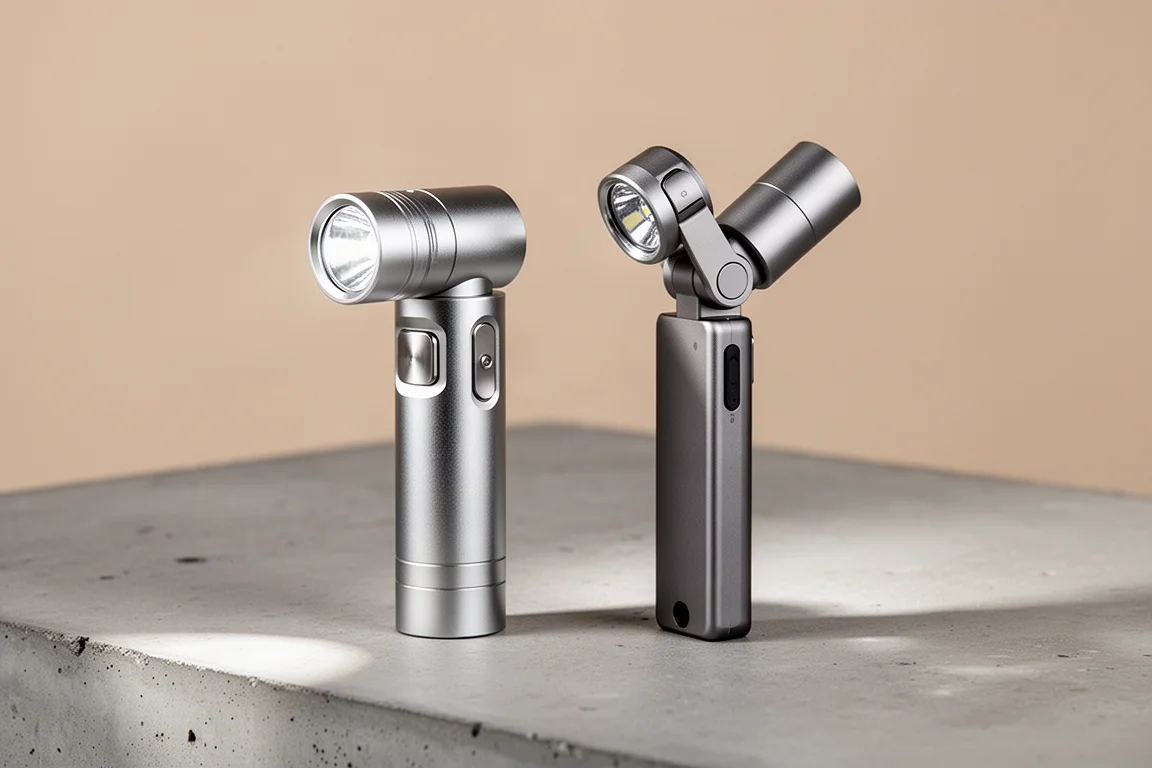
Olight has two new flashlights on the shelf, and they cover two very different jobs. The Seeker 4 is the non-Pro version of the familiar Seeker series, pushing 3,100 lumens from a single LED. The ArkFlex is the more interesting debut: Olight’s first flashlight with a 90-degree articulating head, built into a slim flat everyday carry body. Here is how each one is put together and who they make sense for.
Olight ArkFlex: Olight’s First Articulating-Head Flashlight
The ArkFlex looks a lot like Olight’s Arkfeld, but with one defining difference: the head swivels forward 90 degrees. The hinge feels well damped, with enough tension to hold any angle you set it at, and Olight has put the mechanism through 10,000 swivel tests, which should ease any concerns about long-term durability.
That articulating head is what makes the light genuinely versatile. Press the head flat and the ArkFlex slides into a shirt pocket with its two-way deep carry pocket clip riding right to the top. Open the head to 90 degrees and set it on its magnetic tail, and you can attach it to any ferrous surface and aim the beam wherever you need it. The magnet is strong enough to hold the light’s own weight without slipping.
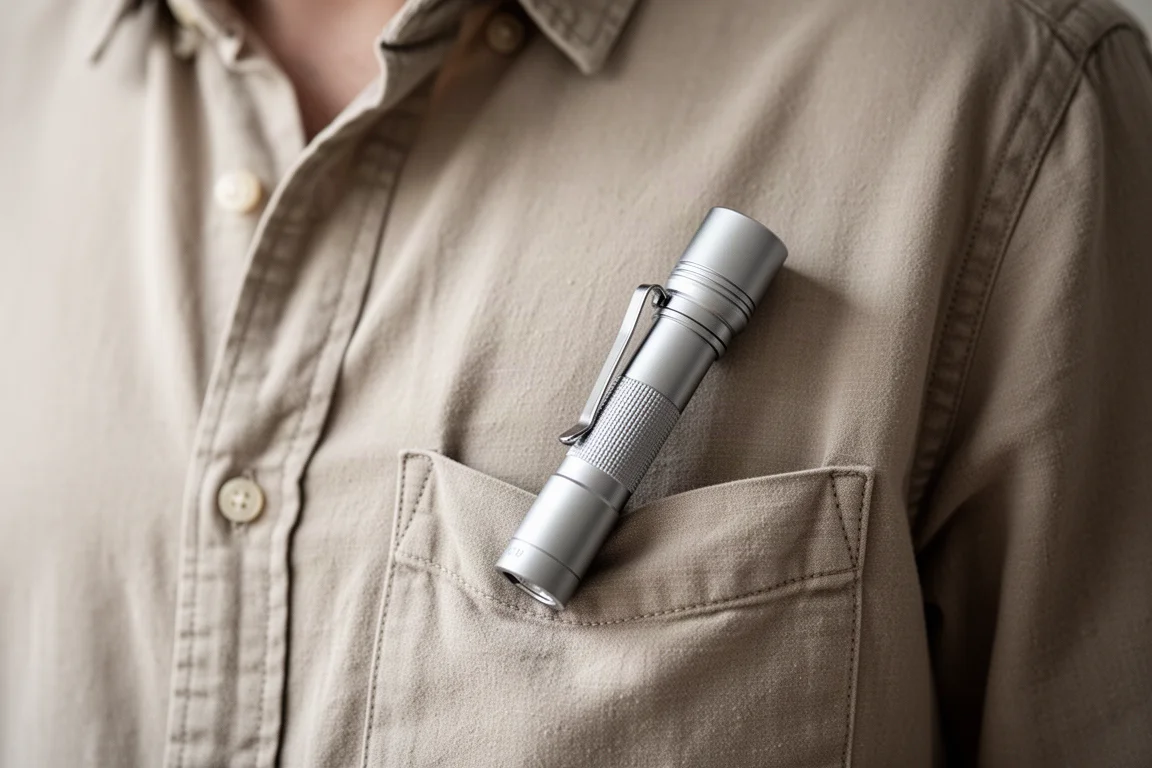
The body is aluminum alloy with parallel top-to-bottom lines and knurling for grip. A single stainless steel side switch with light texturing handles everything, and it is easy to find by feel when you pull the light from a pocket. At the head sit dual LEDs producing a cool white beam at roughly 6,500 Kelvin.
Specs are solid for an EDC light: a maximum output of 1,000 lumens, an 85-meter maximum throw, and 1,900 candela of intensity. There are five brightness levels (Moonlight, Low, Medium, High, Turbo) plus a strobe mode, and Moonlight sits at a very usable 1.5 lumens. The built-in 1500mAh 3.7V lithium-ion battery recharges through the magnetic tail switch, and a four-bar battery indicator stays lit while the light is on. Dimensions are 4.25 inches long, 1.18 inches wide, and 0.47 inches thick, weighing 3.56 ounces (101g). It is IPX7 waterproof, impact resistant to 1 meter, and carries a lifetime warranty in Australia, China, France, Germany, and the USA.
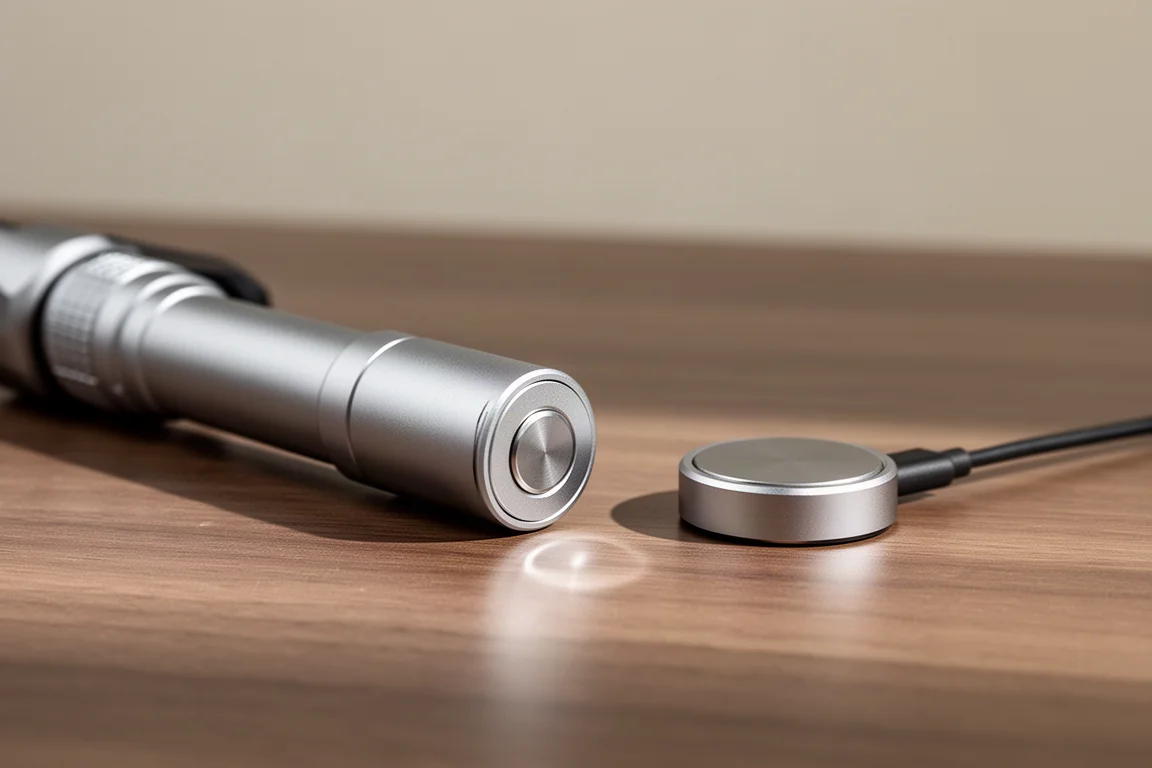
If you liked the flat Arkfeld format but never wanted the green laser or UV extras, the ArkFlex strips it back to a pure everyday carry light with one clever party trick. During Olight’s sale period it is available at a discount, and it seems likely to be a popular seller.
Olight Seeker 4: Big Output, Familiar Seeker Design
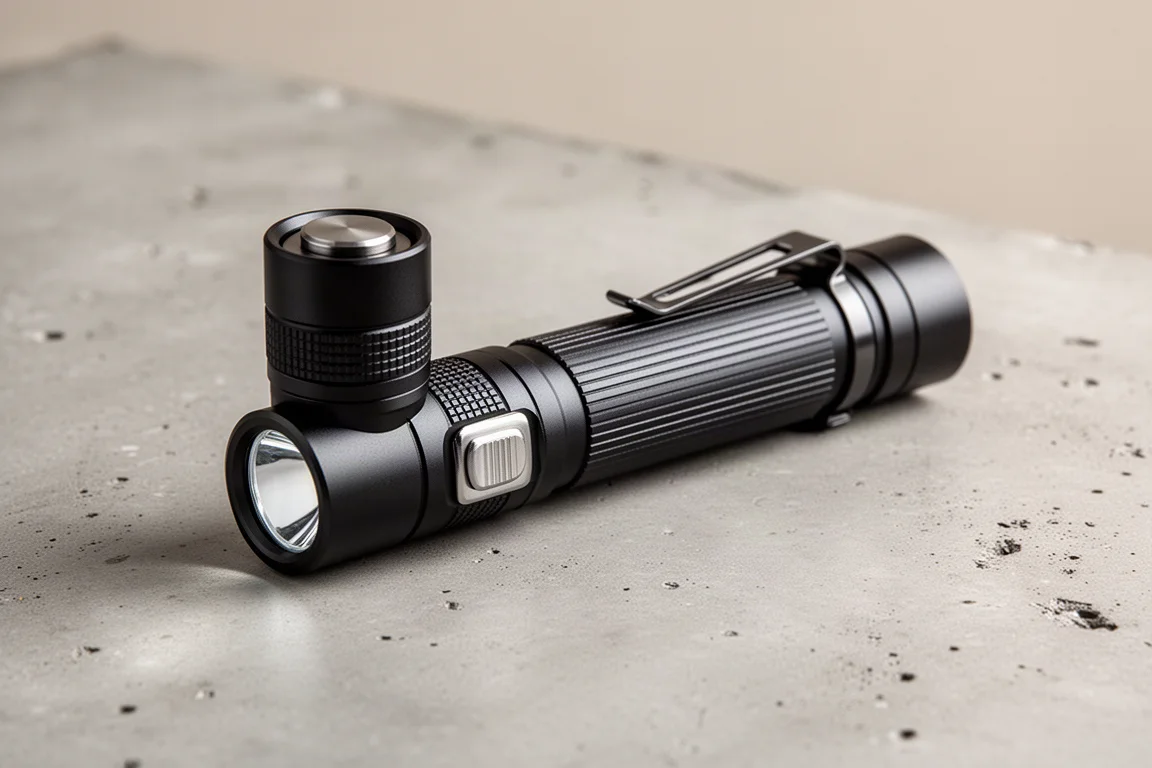
Next to the Seeker 4 Pro, the standard Seeker 4 looks similar but trades some hardware. Where the Pro uses four LEDs, the Seeker 4 runs a single XHP 50.3 High LED pushing a maximum of 3,100 lumens, with a 400-meter max throw and 4,260 candela of intensity. The beam sits between 5,500 and 6,500 Kelvin with a CRI of 70, and the sample leans closer to neutral white, which reads noticeably warmer than the ArkFlex’s cool beam.
The body gets finger grooves on the sides instead of the Pro’s rubberized finish, and a new flat stainless steel side switch houses a tricolor battery indicator. The most notable change is at the tail: the Seeker 4 moves to USB Type-C charging via a rotating bow-tie-shaped tail cap that exposes the port, part of a broader shift away from magnetic charging across Olight’s newer lights.
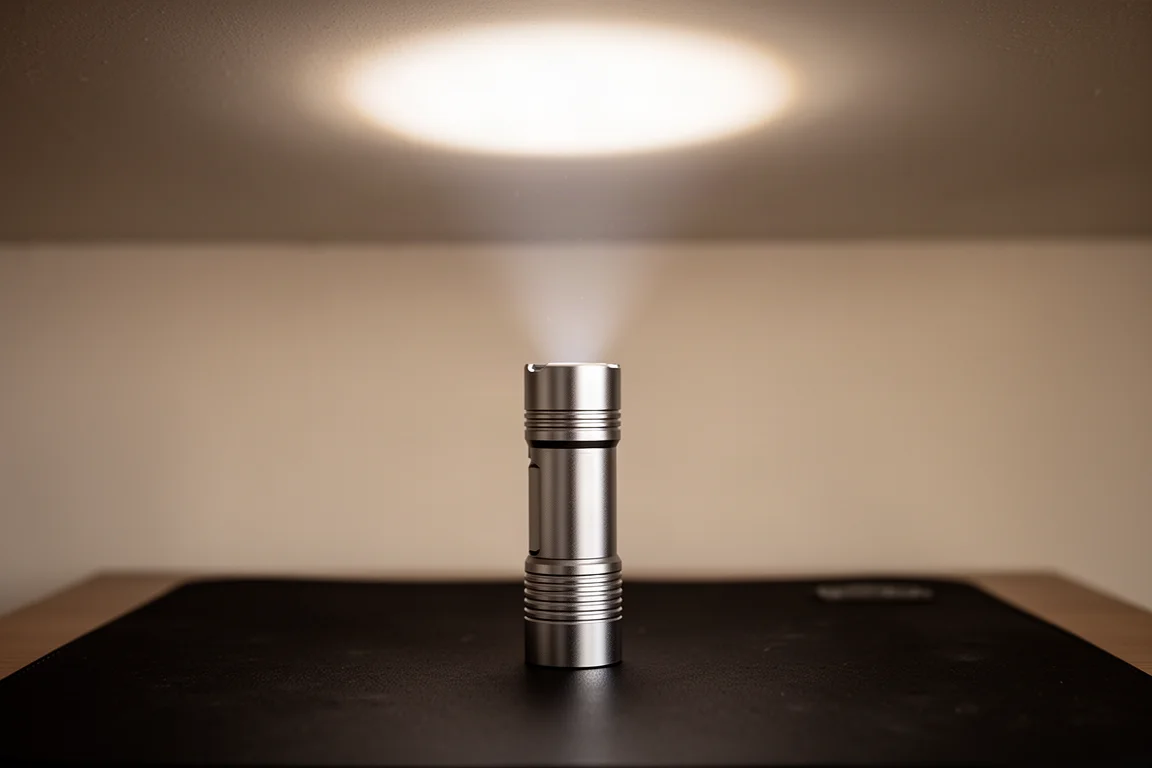
The flat tail also means the Seeker 4 tail stands properly, a small but genuinely useful trait. Despite the semi-exposed charging port, it still carries an IPX8 waterproof rating, plus 1.5 meters of impact resistance and the same lifetime warranty restricted to Australia, China, France, Germany, and the United States.
Inside is a 3.6V 5000mAh 21700 rechargeable lithium-ion battery, giving up to 15 days of runtime on Moonlight. The body is 6061-T6 aluminum alloy, measuring 5.28 inches long with a 1.38-inch head diameter and 1.10-inch body diameter, weighing 7.23 ounces (205g) with the battery installed. The striking bezel from the Pro has been toned down into a wave-like profile, still distinctive but less aggressive.
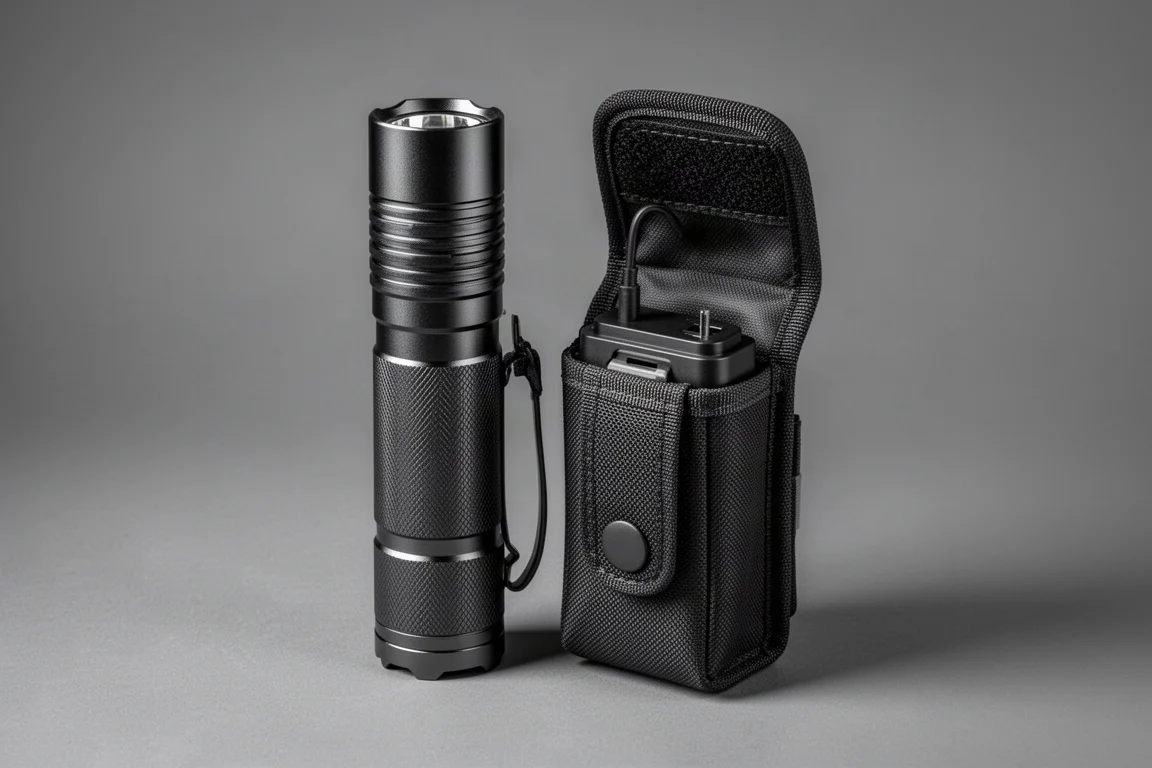
One real frustration: the Seeker 4 ships without a pocket clip or a holster. That leaves few carry options beyond a bag, a car, or a desk, unless you buy an aftermarket holster or borrow the one bundled with the Seeker 4 Pro, which fits but cannot charge the light. The UI matches other Olight lights, including a button-press lockout on both the Seeker 4 and the ArkFlex.
How They Perform Outdoors
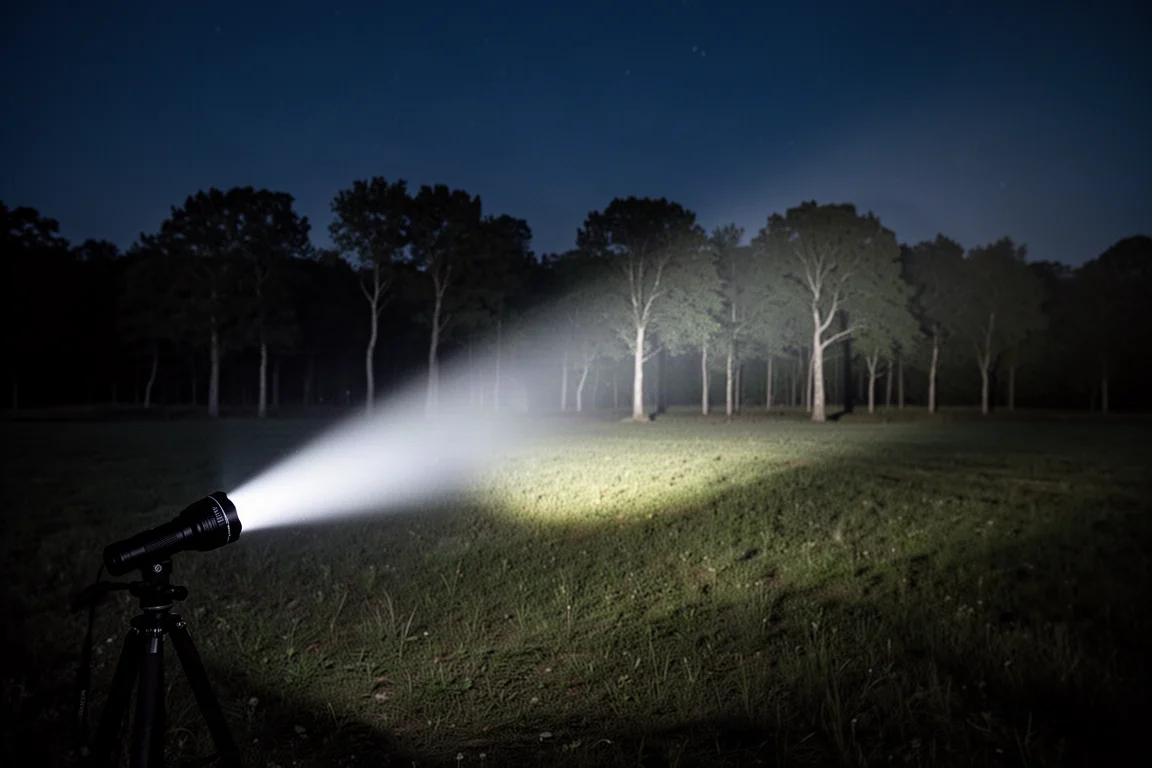
Out in the dark, the ArkFlex on High already covers everyday tasks comfortably, with a fairly wide beam and enough reach to light up a nearby tree or a barn across the way. Turbo stretches a little further, but with an 85-meter ceiling this is clearly not a thrower, and that is fine: it is an EDC light, and 1,000 lumens is plenty for most daily use.
The Seeker 4 is the more capable beam by a clear margin. It has a defined hotspot with a wide perimeter, and the neutral white color temperature makes for a pleasant beam profile. On Medium it reaches nearby trees easily; on High and Turbo it approaches them properly, and the generous hotspot size makes the output feel practical rather than just impressive on paper.
Which One Should You Buy?
If you want a compact flat flashlight for pockets and everyday tasks, the ArkFlex is the obvious pick, and the articulating head plus magnetic tail give it mounting flexibility most EDC lights cannot match. If you want serious output for home, camp, or property use and do not mind the missing clip and holster, the Seeker 4 delivers a strong 3,100-lumen package with modern USB-C charging. Both were discounted during Olight’s sale period, and the ArkFlex in particular looked poised to sell out quickly.
Conclusion
The Seeker 4 and ArkFlex show Olight working both ends of the carry-light market: one delivers familiar high output with a refreshed design and USB-C charging, while the other introduces a genuinely new form factor with the 90-degree articulating head. Either way, both are easy to recommend if they match the job you have in mind.
Further reading
Related Reviews
Flashlights
Best Flashlights 2026: Brightness, Battery, and Value Compared
We tested 18 flashlights across a wide price range to find the best performers in brightness, battery life, and durability.
Flashlights
Nitecore LA10 Review: A Tiny 2-in-1 Lantern That Nails the Basics
The Nitecore LA10 pairs a pocket-sized lantern with a single AA battery, a magnetic tail cap and a five-year warranty. Here is where it shines and where it struggles.
Flashlights
Wuben G5 Review: A Compact Everyday Carry Flashlight
The Wuben G5 is a small, rechargeable flashlight with a pivoting head, magnetic base, and color modes. Here is how it performs as an everyday carry light.