Flashlights
Olight Odin vs Odin GLM: Two Mountable Flashlights, One Surprising Choice
Two rail-mountable flashlights with very different personalities. One is brighter and floody, the other adds a green laser and a cooler beam. Here's how to pick the right one.
Introduction
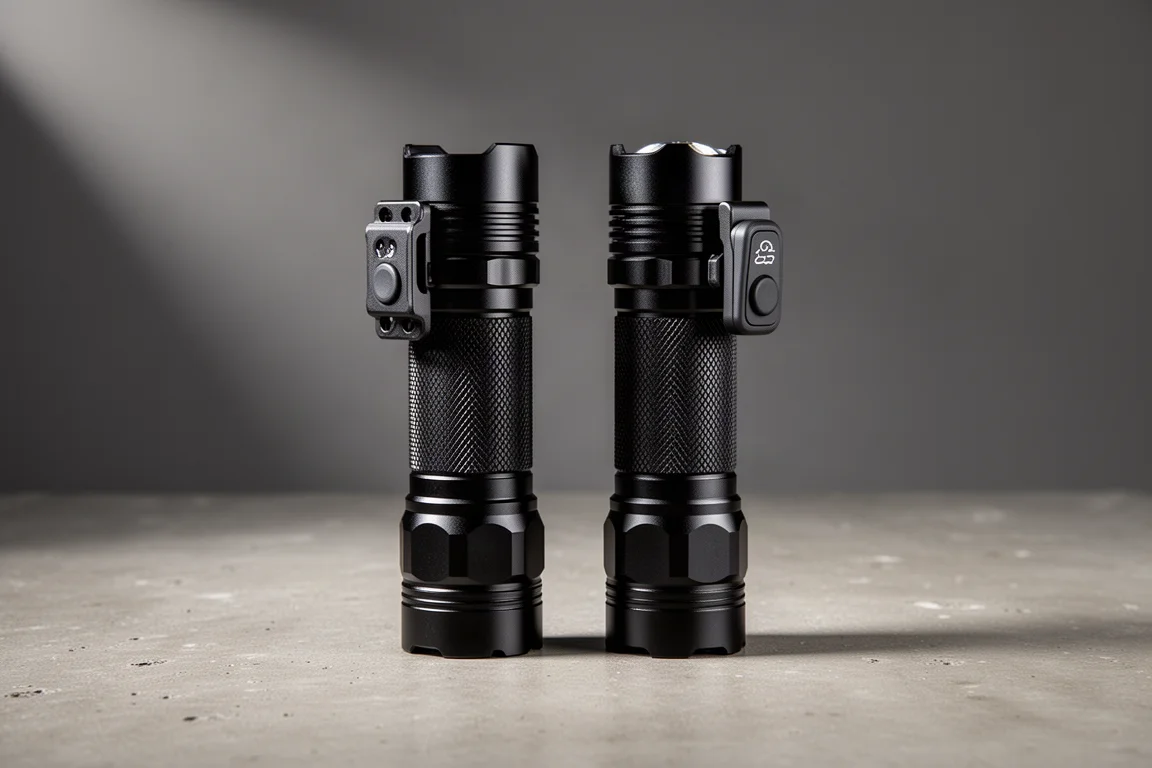
Two flashlights, one name, and a genuinely tricky buying decision. The Olight Odin and the newer Odin GLM are both rail-mountable lights that can be detached from their mounts and used as ordinary handheld flashlights. On paper they look nearly identical, but the specs tell two different stories, and if you only skim the numbers you could easily end up with the wrong one for your needs.
One of these lights has a green laser built in. The other has more lumens, more candela, and a floody beam. Which one is “better” depends almost entirely on where and how you plan to use it.
Evaluation Criteria
Both lights share the same core idea: a quick-detach rail mount, available in Picrail, M-LOK, or Keymod depending on the version, plus a body that works standalone. That flexibility is what makes them appealing beyond a single use case. They can be mounted on a bike, sporting goods setups, or anything else you can attach them to, and removed just as easily for regular flashlight duty.
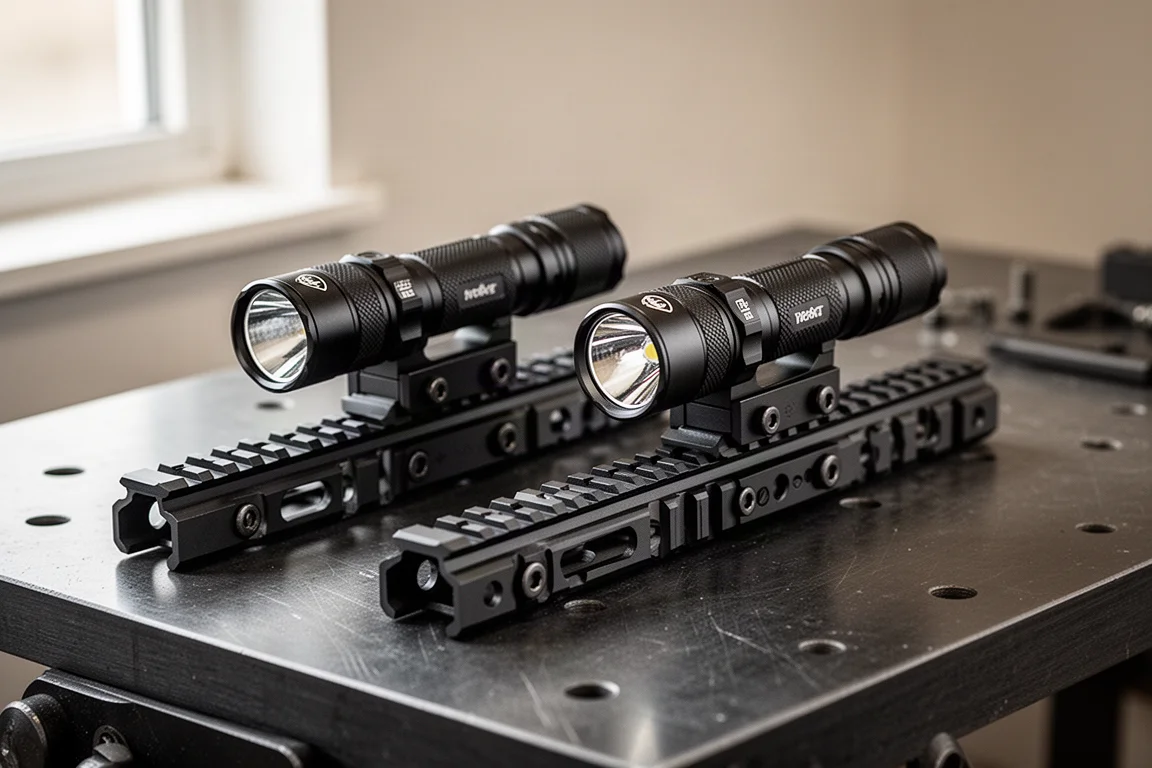
For this comparison, the deciding factors are mounting and switching, beam color temperature, raw output, the laser feature, and long-term durability.
Olight Odin
The original Odin has been around for a while, and its design reflects that maturity. It comes in Picrail mounting, with M-LOK and Keymod versions available in the accessories. It slides in and off the mount easily, and removing the mount for handheld use takes just two Allen nuts. Simple, no fuss.
The control scheme is straightforward but limited: a light push gives you low, a hard push gives you Turbo. Those are the only two modes. The remote auxiliary switch behaves similarly, with a long push for momentary activation and a short push for Turbo only. Notably, you do not get the low mode from the switch on this model.
In terms of raw numbers, the Odin is the stronger performer: 2,000 lumens and roughly double the candela of the GLM at 20,000 compared to 11,000. The beam runs at around 4,500 to 5,000K, producing a warm, floody profile similar to the M2R Pro, with a bright central circle surrounded by plenty of spill.
Olight Odin GLM
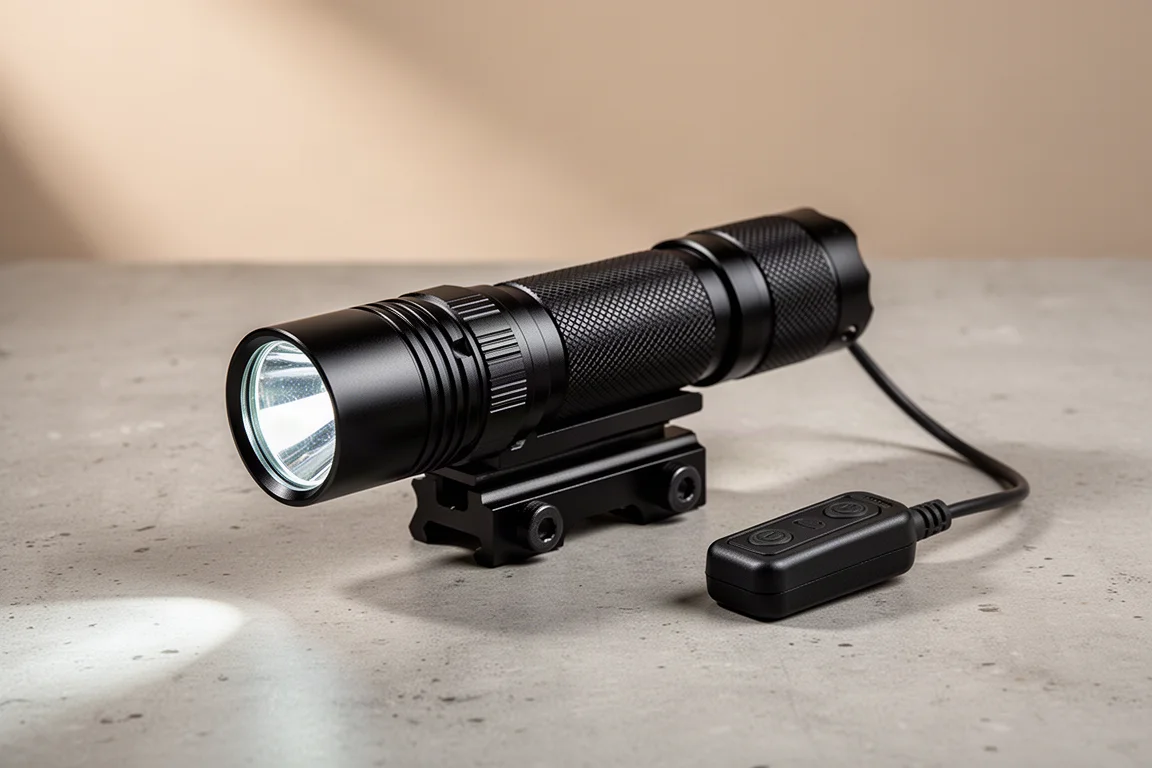
The Odin GLM is the newer take, available with Keymod or M-LOK attachment. The mounting works the same way: unlocked, you push it in and slide it off; to install, slide it on and turn to lock, and it will not come off no matter what happens. Different rail keys sit inside for different attachment types.
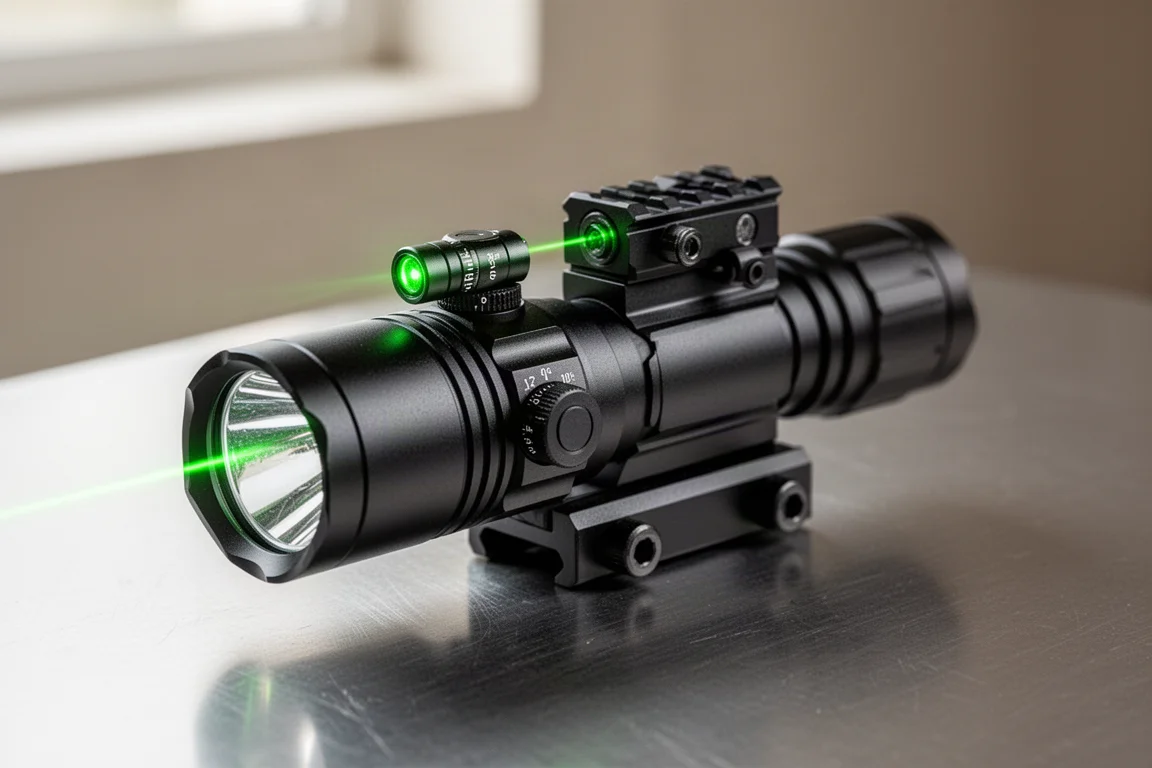
The big headline is the built-in green laser. You can run laser-only, light with laser, or just the light, and elevation and windage adjustments are located right on the light so you can zero the laser onto a target. In testing, the laser spot was consistently easy to get on target, and it holds there.
The auxiliary switch is also upgraded. Unlike the original, you get both low and high from the switch, with a long push for momentary and a short push to lock on. That dual-mode access is something more up-to-date users will appreciate, especially if you find yourself on Turbo constantly with the older model.
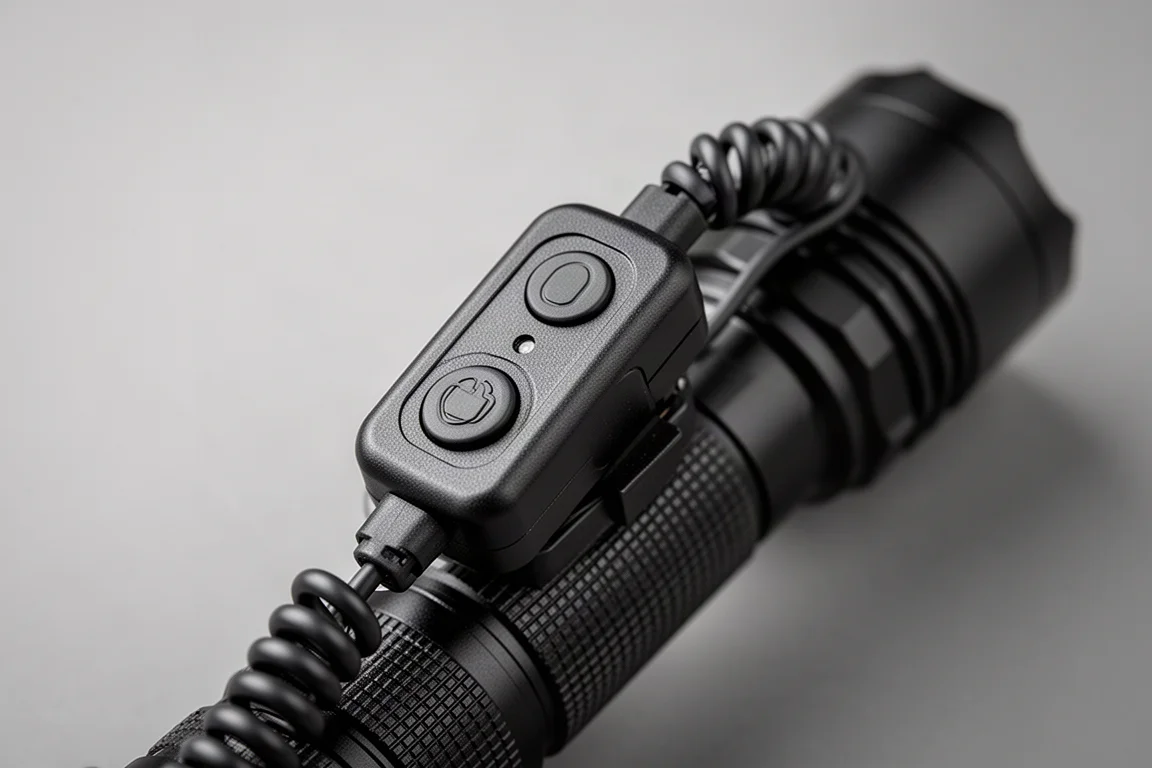
One critical caveat: the switches are not interchangeable between the two lights. If you swap mounts or switches between an original Odin and a GLM, the wrong switch simply will not work. Keep each light paired with its own switch.
Beam Performance: Color Temperature and Output
This is where the choice gets genuinely interesting. The older Odin runs at roughly 5,000K with a warm, flood-heavy beam and higher lumens and candela. The GLM runs at 6,500K, a much cooler light that looks less intense on camera but behaves differently in real conditions.
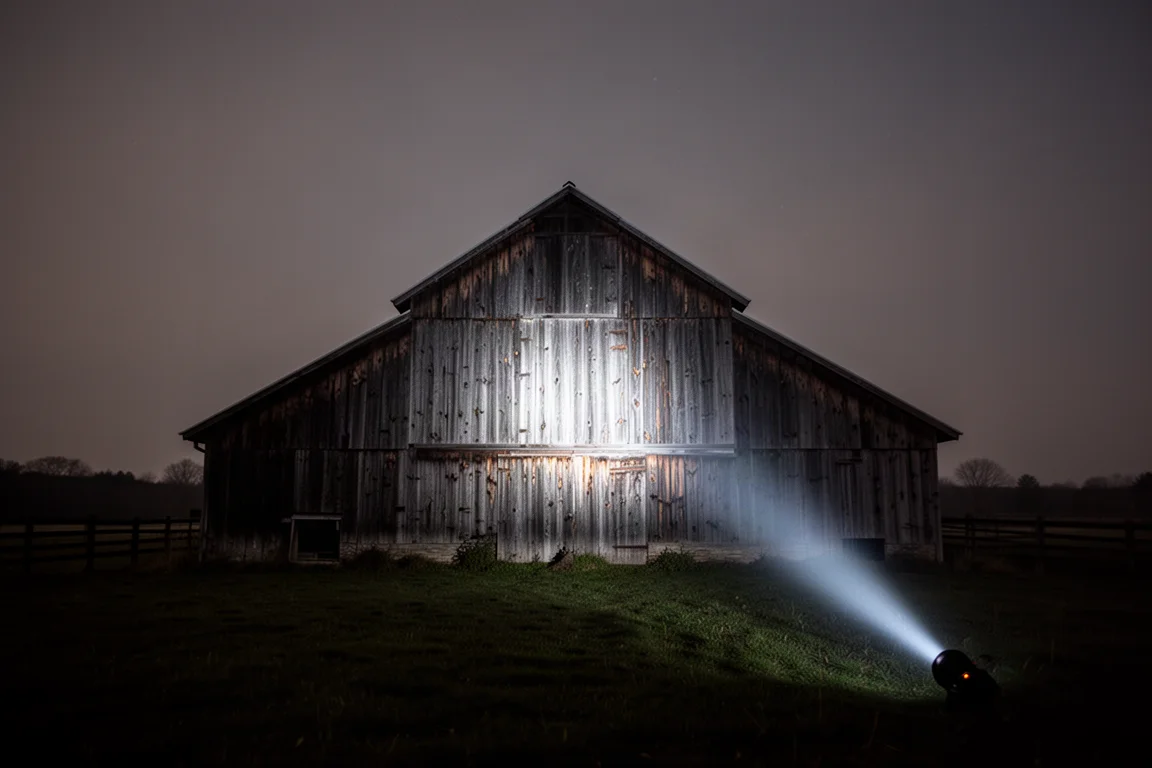
Standing about 100 meters from a barn, the original Odin lights things up well, but the GLM actually lit the scene up a little better, especially on a higher-moisture night. The cooler 6,500K beam cut through more clearly in hunting-type situations, revealing detail that the warmer beam washed out. On camera the difference is hard to prove, but outdoors at longer ranges it is real.
Indoors, the equation flips. The more floody, higher-output original Odin stands out and works slightly better, even if the difference is negligible. If your use is primarily indoor, the standard Odin is the safer pick.
Durability and Support
Both lights feel built for the long haul. The original Odin has taken an estimated 5,000 hits without issue and is holding up well, and the warranty coverage is a genuine comfort for a light you plan to depend on. The GLM’s laser has held zero reliably across multiple attempts, which matters if you actually intend to use it for aiming rather than as a gimmick.
Which One Should You Buy?
If you will use the light primarily indoors, or you simply want maximum brightness and flood, the original Odin remains the stronger choice. If you spend time outdoors, especially in humid conditions, at longer ranges, or in hunting scenarios, the 6,500K GLM earns its place, and the laser plus dual-mode switch make it the more modern package.
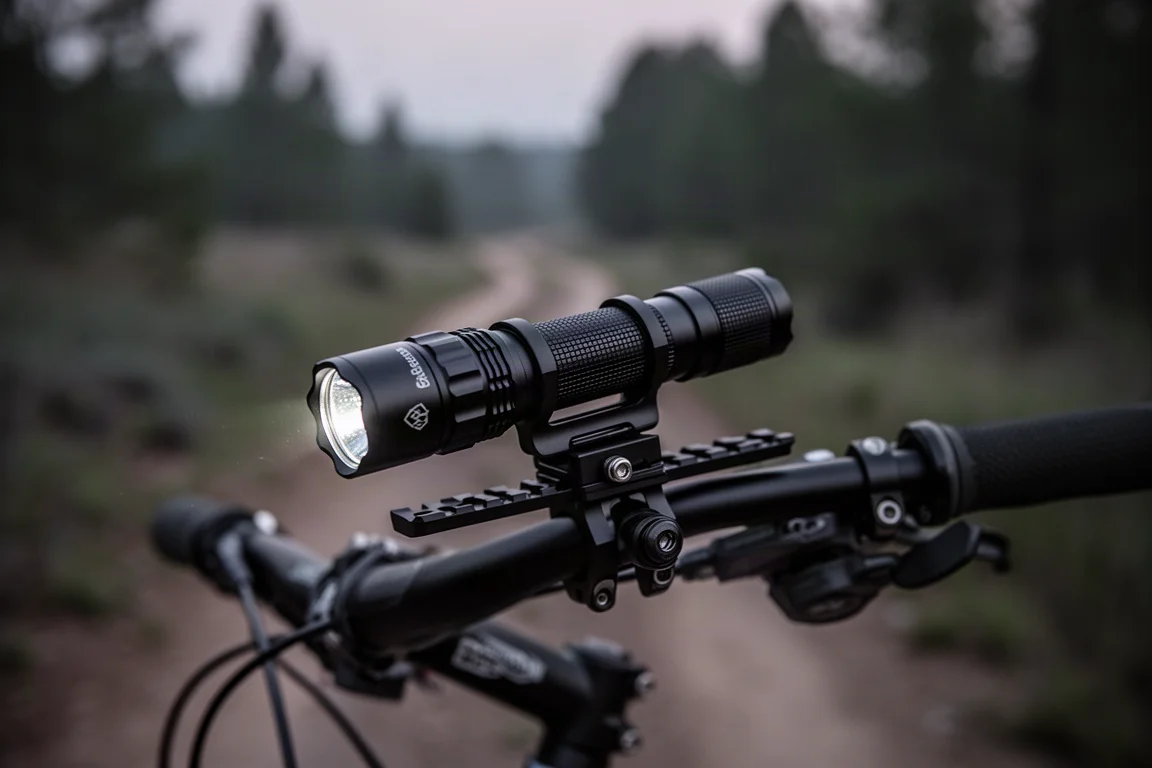
Beyond their intended mounting roles, both work well as general-purpose lights for bikes, sporting goods, and everyday carry. Whichever you choose, double-check which light goes on which mount, because the switches will not cross over.
Conclusion
The Odin and Odin GLM are not simply old and new versions of the same product. One is the raw-output champion with a floody warm beam, the other adds a green laser, a cooler beam that excels outdoors, and a more flexible switch. Match the light to your environment and both are easy to recommend.
Further reading
Related Reviews
Flashlights
Best Flashlights 2026: Brightness, Battery, and Value Compared
We tested 18 flashlights across a wide price range to find the best performers in brightness, battery life, and durability.
Flashlights
Nitecore LA10 Review: A Tiny 2-in-1 Lantern That Nails the Basics
The Nitecore LA10 pairs a pocket-sized lantern with a single AA battery, a magnetic tail cap and a five-year warranty. Here is where it shines and where it struggles.
Flashlights
Wuben G5 Review: A Compact Everyday Carry Flashlight
The Wuben G5 is a small, rechargeable flashlight with a pivoting head, magnetic base, and color modes. Here is how it performs as an everyday carry light.