Flashlights
Olight Marauder Mini vs Olight Freyr: Which RGB Flashlight Deserves Your Money?
A direct comparison of two RGB flashlights: the 7,000-lumen Marauder Mini and the more compact, car-kit-friendly Freyr.
Introduction
These two lights sit in very different price brackets, but they share one thing that makes a direct comparison worthwhile: RGB modes. The Olight Marauder Mini costs around $199.99, while the Olight Freyr comes in at $129.95. That $70 gap is exactly why the question keeps coming up: if the Freyr costs significantly less, do its RGB modes hold up against the Marauder Mini?
This is not a versus shootout in the traditional sense. It is a side-by-side comparison of specs, real-world RGB output, and everyday practicality, so you can decide whether the extra money for the Marauder Mini actually buys you something you need.
Size, Design, and Everyday Handling
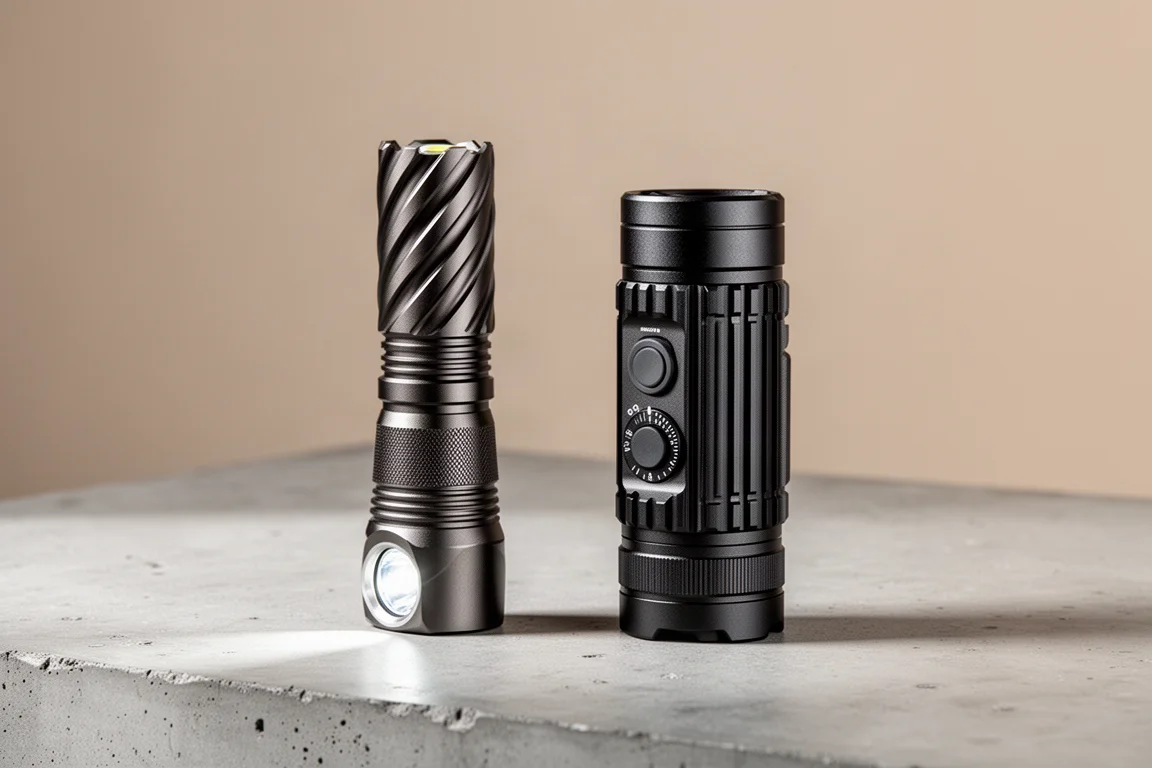
The size difference is immediately obvious. The Marauder Mini is a little tank: much smaller than its bigger brother, the Marauder 2, but still big and beefy for its class. It is not an everyday-carry flashlight. It belongs in a backpack or a car kit, where its heft is an acceptable trade for its output.
The Freyr, on the other hand, is closer to a true EDC size, though still slightly large for some people’s pockets. Both lights share a twisted head design with heat dissipation fins around the body, which gives them a distinctive, well-built look.
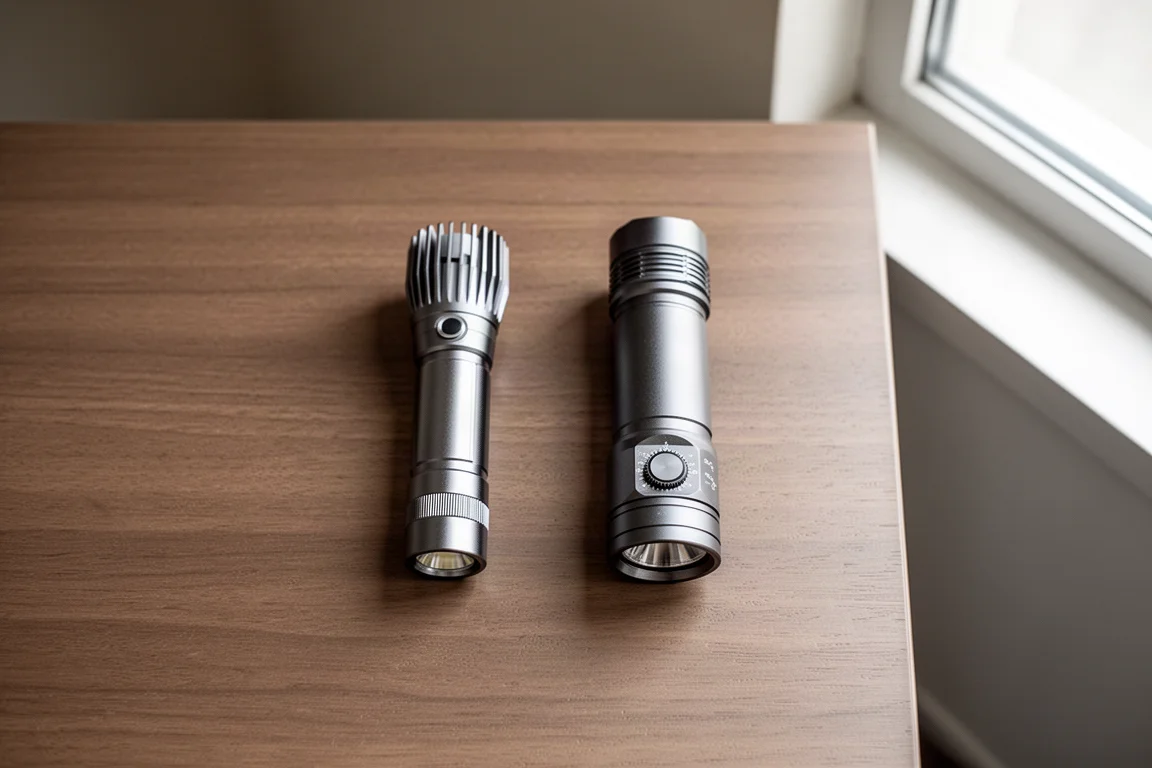
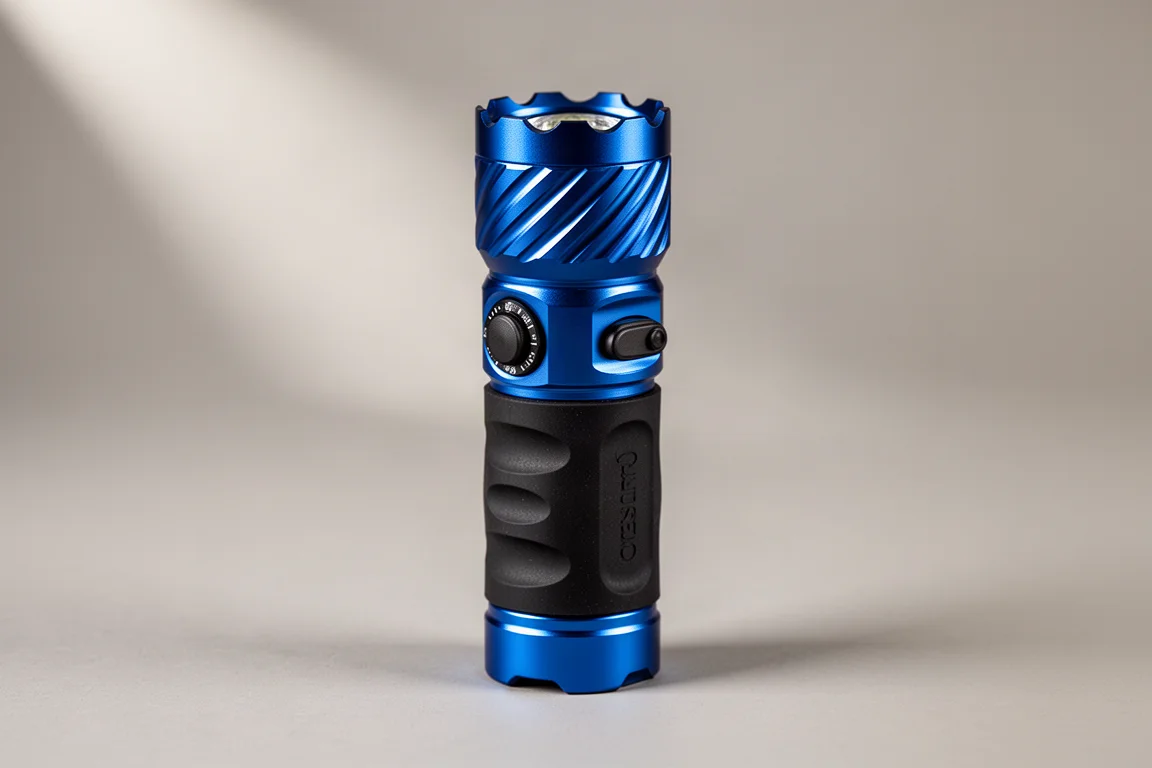
On the control side, the two lights take different approaches. The Freyr offers dual switches, a tail switch and a side switch, plus a proximity sensor. The Marauder Mini uses a single side switch paired with a rotatable dial for changing intensity levels, a flood and spot toggle switch, and a light color indicator under the dial that shows whether you are in white, red, green, or blue mode.
Specs at a Glance
The Freyr’s headline numbers: a maximum output of 1,750 lumens, 360 meters of throw, a 15-day runtime, and a max intensity of 32,400 candela. It has three white lighting modes plus strobe and SOS. For the RGB modes, red is 30 lumens with 12 meters of throw, green is 60 lumens with 19 meters, and blue is 25 lumens with 8 meters. Notably, the Freyr has memory for the RGB modes, meaning it can pick up where you left off.
The Marauder Mini operates in two modes. In flood mode it reaches 7,000 lumens with 310 meters of throw. In spot mode it outputs 900 lumens with a 600-meter throw and a max intensity of 90,000 candela. There are seven brightness levels in both flood and spot modes.
Where the gap really widens is the RGB output. The Marauder Mini offers four brightness levels for red, green, and blue, while the Freyr only gives you one level per color. Red hits 200 lumens with a 90-meter throw, green reaches 220 lumens with 90 meters, and blue manages 120 lumens with 70 meters. One trade-off: the Marauder Mini has no memory function for its RGB modes, unlike the Freyr.
RGB Beam Comparison: What You Actually See
On the Freyr, the RGB modes are wide and diffuse. Red, green, and blue all flood a broad area with no real hotspot, which is useful for coloring a nearby scene but limited for distance. Pointed at the ground, the beams spread out evenly without a concentrated center. The white modes, though, are genuinely strong: the full 1,750-lumen output reaches out well past 300 meters, and this remains a solid flashlight even before you touch the RGB modes.
Switching to the Marauder Mini, even the lowest red level is noticeably brighter than the Freyr’s red, with a clearly visible hotspot that reaches the house and the trees. Stepping up through the levels to the fourth setting produces a genuinely intense red beam that scans the entire field.
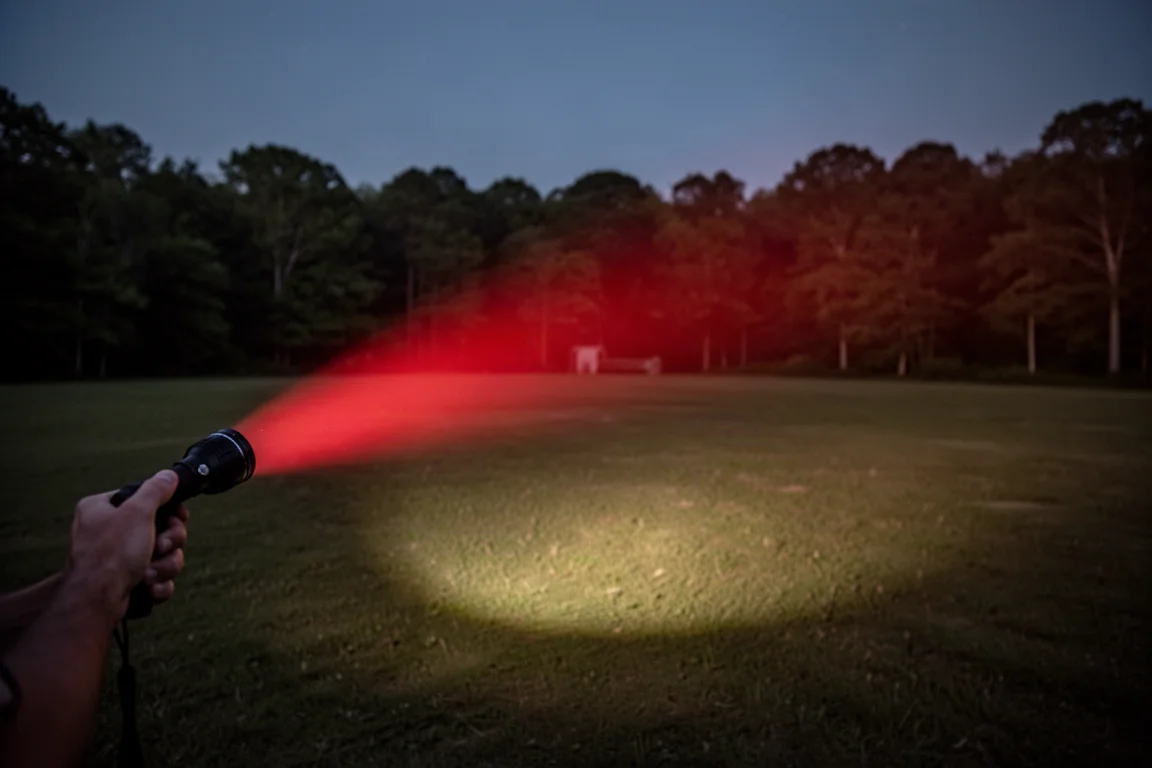
Green and blue follow the same pattern. At the highest green level the beam is bright and far-reaching, and even at the lowest setting it out-throws the Freyr. Blue is equally impressive for what it is. Then there is the spot mode: the 900-lumen, 600-meter white spot is on another level entirely, easily lighting up distant trees across a field.
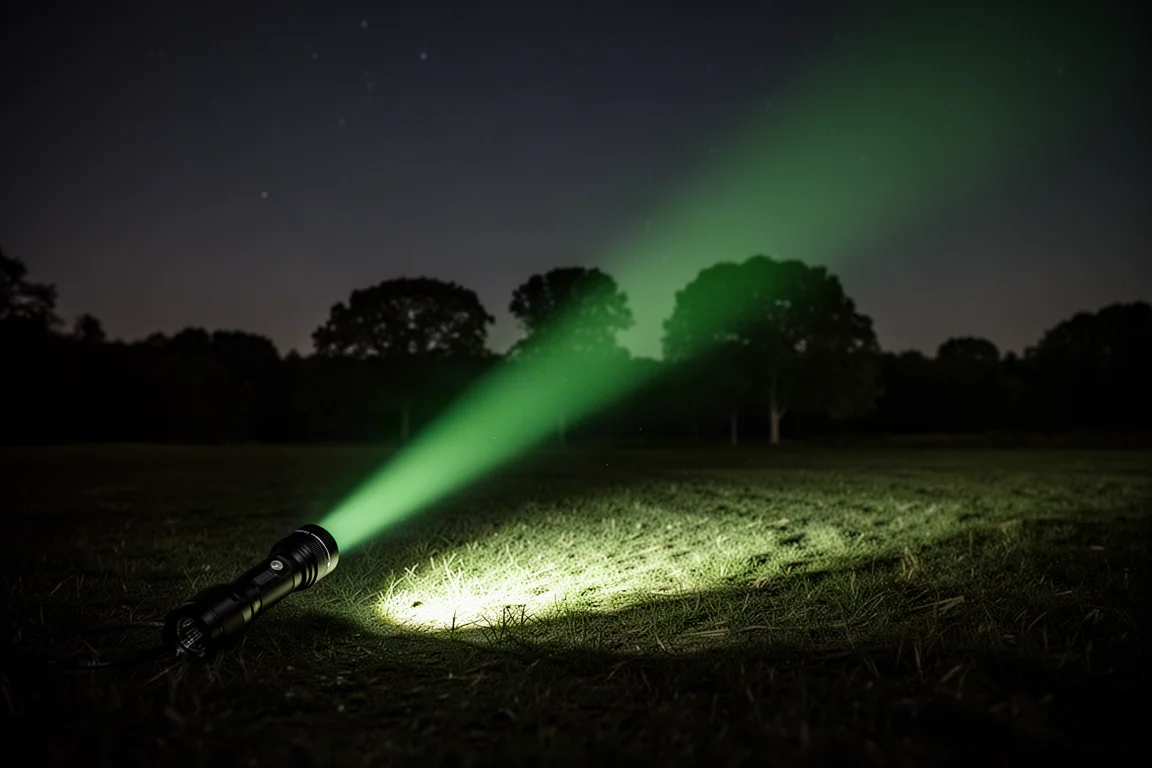
The takeaway is simple: the Freyr’s RGB modes cannot compete with the Marauder Mini’s intensity levels and throw. The Marauder Mini’s RGB is much brighter and reaches much farther.
Everyday Practicality: The Details That Matter
The Marauder Mini’s auto lockout after 10 seconds is a genuinely useful feature, preventing accidental activation in a bag. The flood and spot toggle is also one of its most appealing design choices, letting you switch beam types instantly.
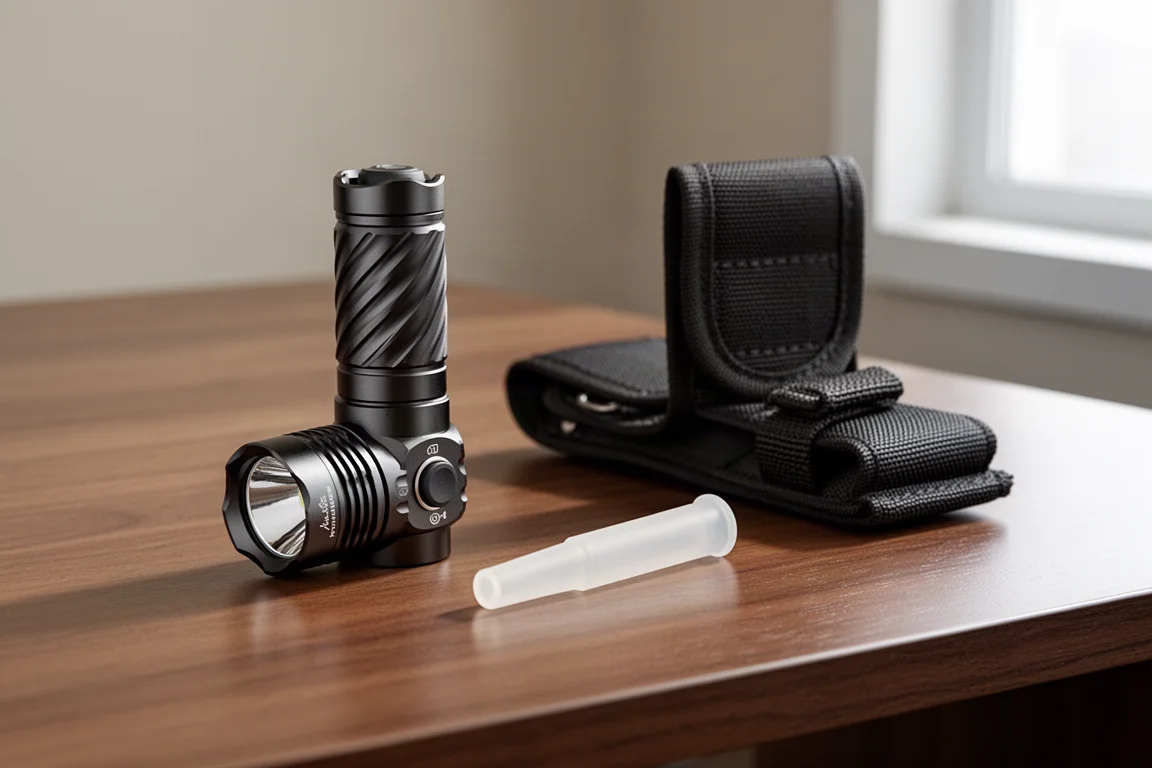
The Freyr’s standout feature, however, is the silicone traffic wand. This diffuser fits over the head and turns the light into a soft, spread-out beacon, which is why the Freyr earns a permanent spot in a car kit. In an emergency or breakdown situation, the wand makes the light far more visible and less harsh, and even in white mode it works nicely as a diffused lantern. The wand fits neatly into the included holster, and the holster itself is well made.
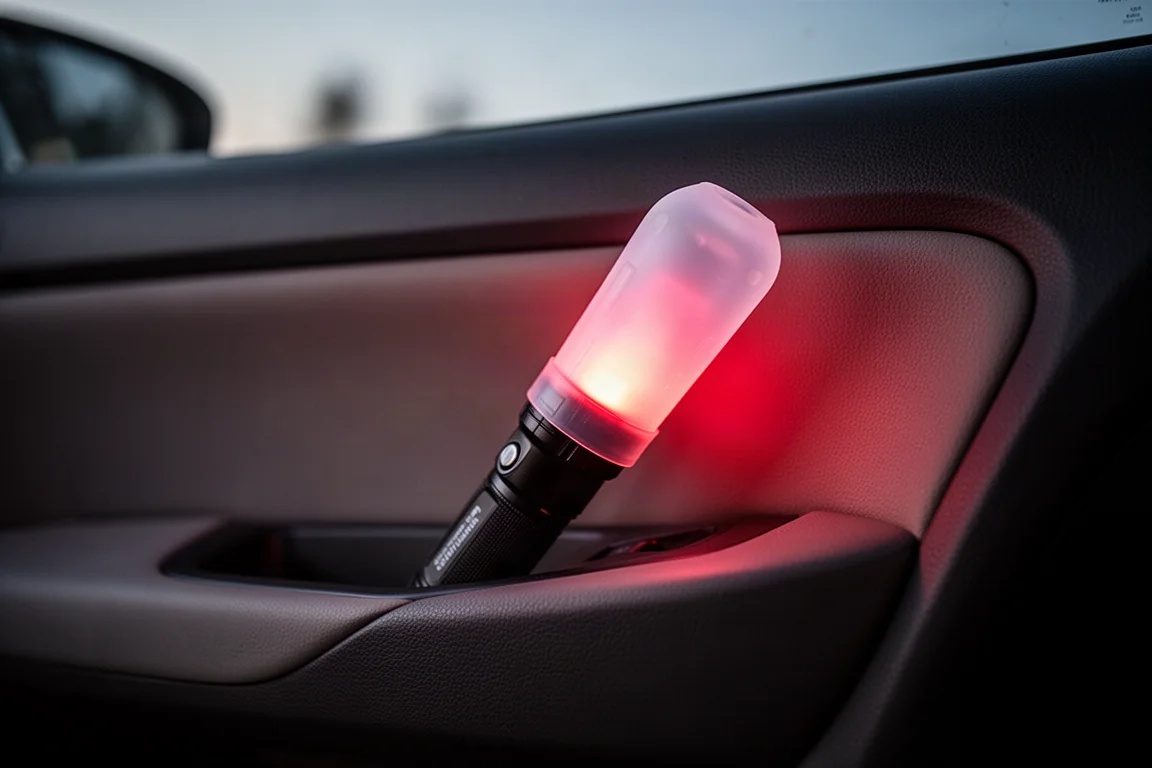
Availability is worth checking before you buy. At the time of this comparison, the Freyr was somewhat hard to find on the official store, though searching around online turned it up. The Marauder Mini was sold out on the official store, with restocks expected around the holiday sale.
Which One Should You Buy?
If you want the most capable RGB flashlight of the two, the Marauder Mini is the clear winner. Its RGB modes are dramatically brighter, its spot mode throws 600 meters, and features like the rotatable dial, flood/spot toggle, and auto lockout make it a pleasure to use. At $199.99, though, it demands both a bigger budget and a bigger pocket for storage.
If $70 of savings matters, or if your primary use case is a car emergency kit, the Freyr makes a strong case. Its white modes are still excellent at 1,750 lumens and 360 meters, its RGB modes have memory, and the silicone traffic wand alone justifies keeping it in the car. For many people, the RGB difference simply will not matter day to day.
Conclusion
The Marauder Mini is the better RGB flashlight by a wide margin: brighter colors, four intensity levels, longer throw, and a 7,000-lumen flood mode. The Freyr is the smarter buy if budget matters more than maximum RGB output, especially for drivers who value the traffic wand. Decide which you actually need, and the choice between these two becomes easy.
Further reading
Related Reviews
Flashlights
Best Flashlights 2026: Brightness, Battery, and Value Compared
We tested 18 flashlights across a wide price range to find the best performers in brightness, battery life, and durability.
Flashlights
Nitecore LA10 Review: A Tiny 2-in-1 Lantern That Nails the Basics
The Nitecore LA10 pairs a pocket-sized lantern with a single AA battery, a magnetic tail cap and a five-year warranty. Here is where it shines and where it struggles.
Flashlights
Wuben G5 Review: A Compact Everyday Carry Flashlight
The Wuben G5 is a small, rechargeable flashlight with a pivoting head, magnetic base, and color modes. Here is how it performs as an everyday carry light.