Everyday Carry
New Olight Gear to Know: Freeze 2 Knife, Arkfeld Update, and the Wyvern Bike Light
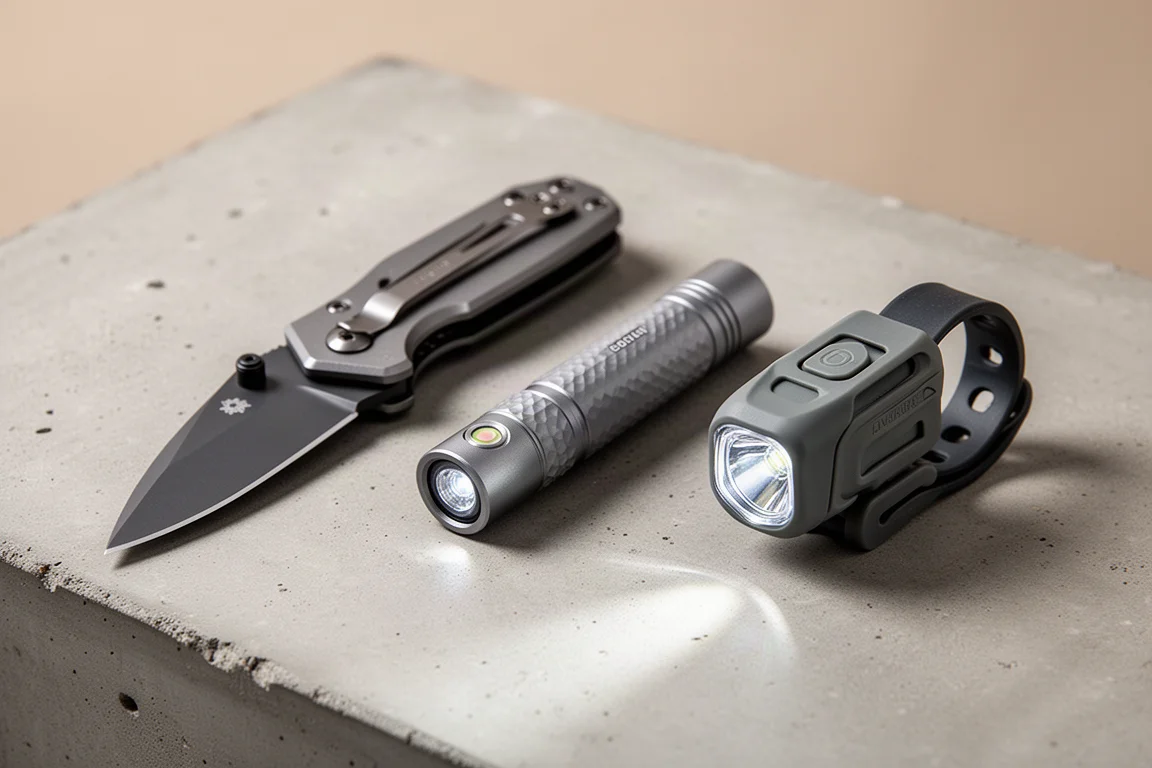
Three recent Olight releases cover tactical EDC, refined everyday carry lighting, and an ultra-light commuting bike light. Here is what each one actually offers.
Introduction
Olight has been expanding well beyond flashlights lately, and this round of updates shows three different directions at once: a more tactical take on their folding knife line, a more professional finish for one of their most popular flat EDC lights, and an all-new super-light bike light aimed squarely at commuters. None of these are dramatic reinventions, but each one fills a real gap, and together they give a decent picture of where the brand is heading.
Olight Freeze 2: A More Subdued Tactical Option
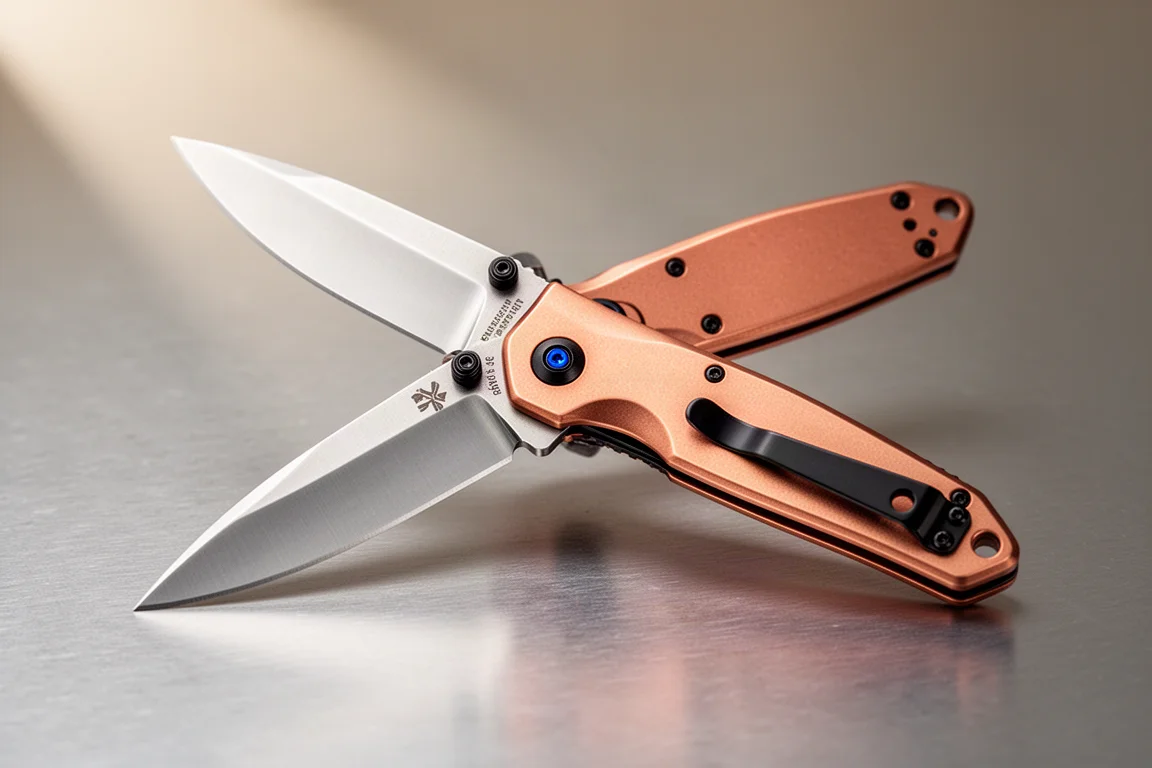
The Freeze 2 keeps the same 154CM blade steel as earlier versions but adds a new aluminum scale option. Where the first version leaned on copper or carbon fiber scales, this one uses 6061-T6 aluminum, the same alloy Benchmade uses on its own knife scales. The result is a knife that reads far more tactical and subdued, which suits office carry or anywhere you want something less flashy than bare stainless or copper.
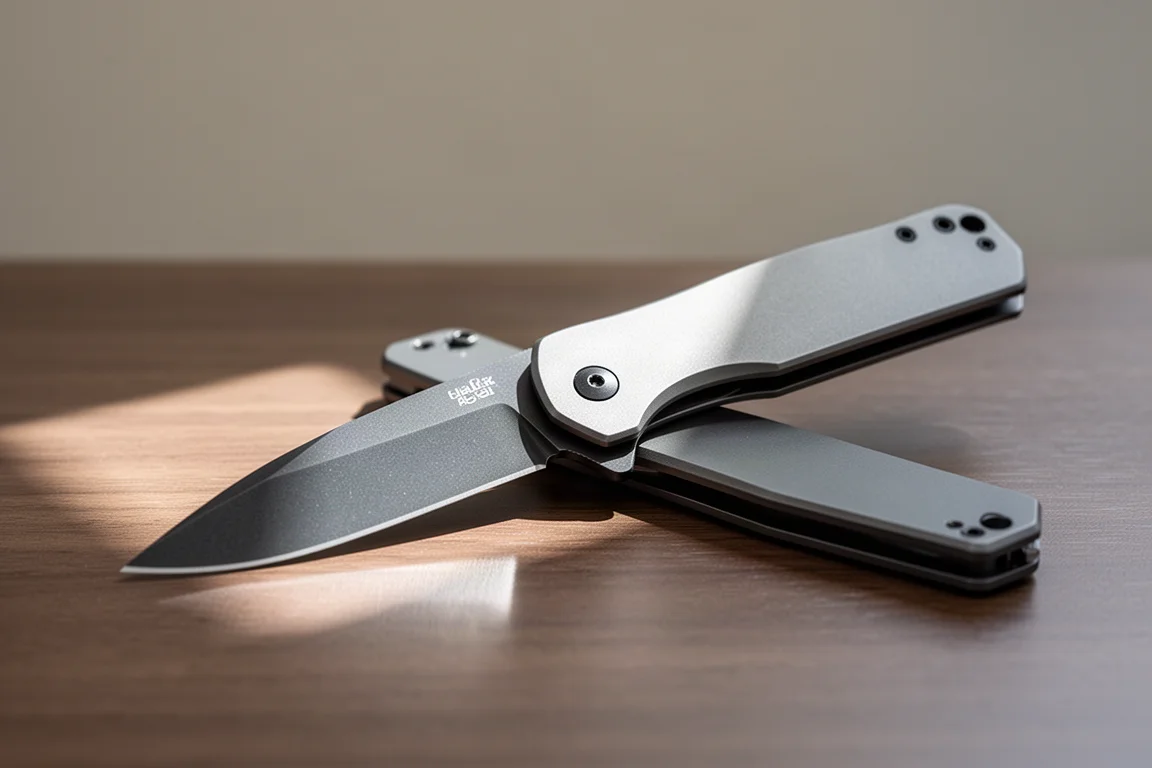
The other big change is the blade coating. Rather than a paint-like finish that chips off with use, the new version uses titanium PVD, or physical vapor deposition, which bonds the coating at the atomic layer. Olight has used this treatment on earlier models, and the experience there has been impressive: marks that look like wear often wipe right away, and the finish holds up to real use. It is a more expensive and labor-intensive way of finishing a blade, and it shows in the result.
The liner lock is also worth noting. It feels dialed in on this knife, smooth in operation with just the right amount of spring tension to release the blade. Liner locks are simple and very strong, but they usually need careful hand finishing to line up correctly, and this one shows none of the blade play or rattle that plagues cheaper examples. The overall package is a full-size folding knife that operates silky smooth, with a great in-hand feel and a genuinely refined look.
Olight Arkfeld: Same Performance, More Polished Look
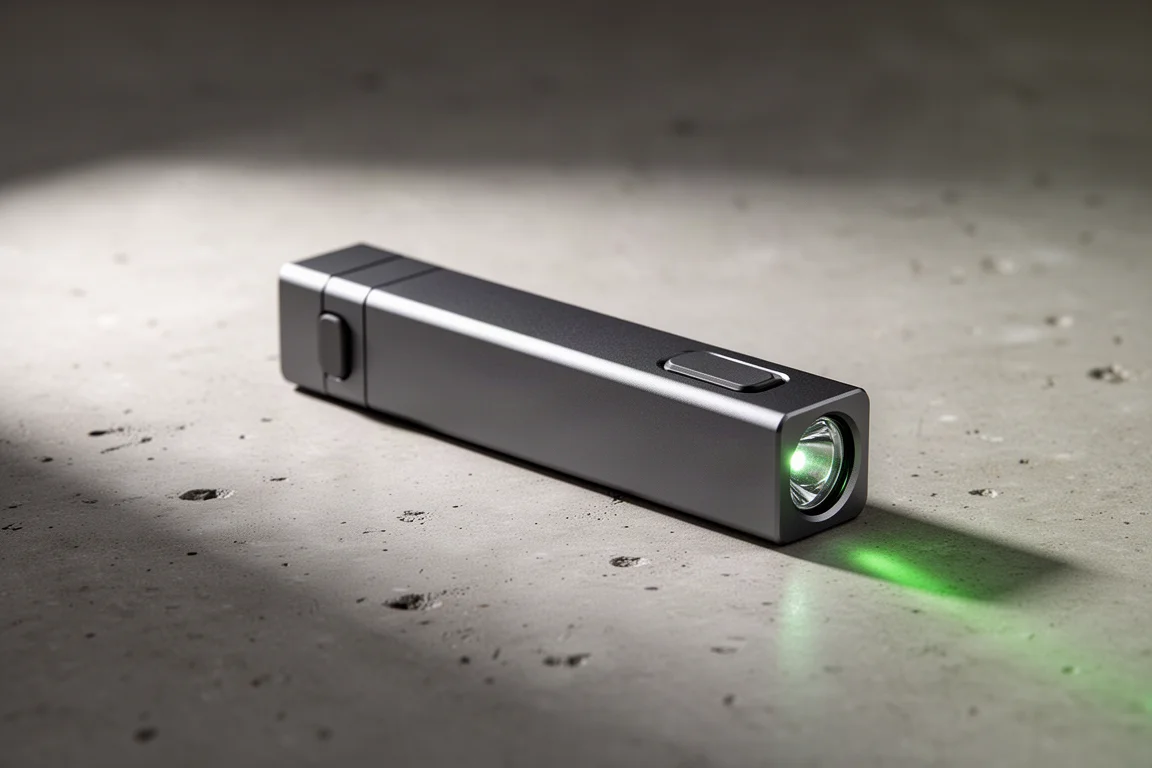
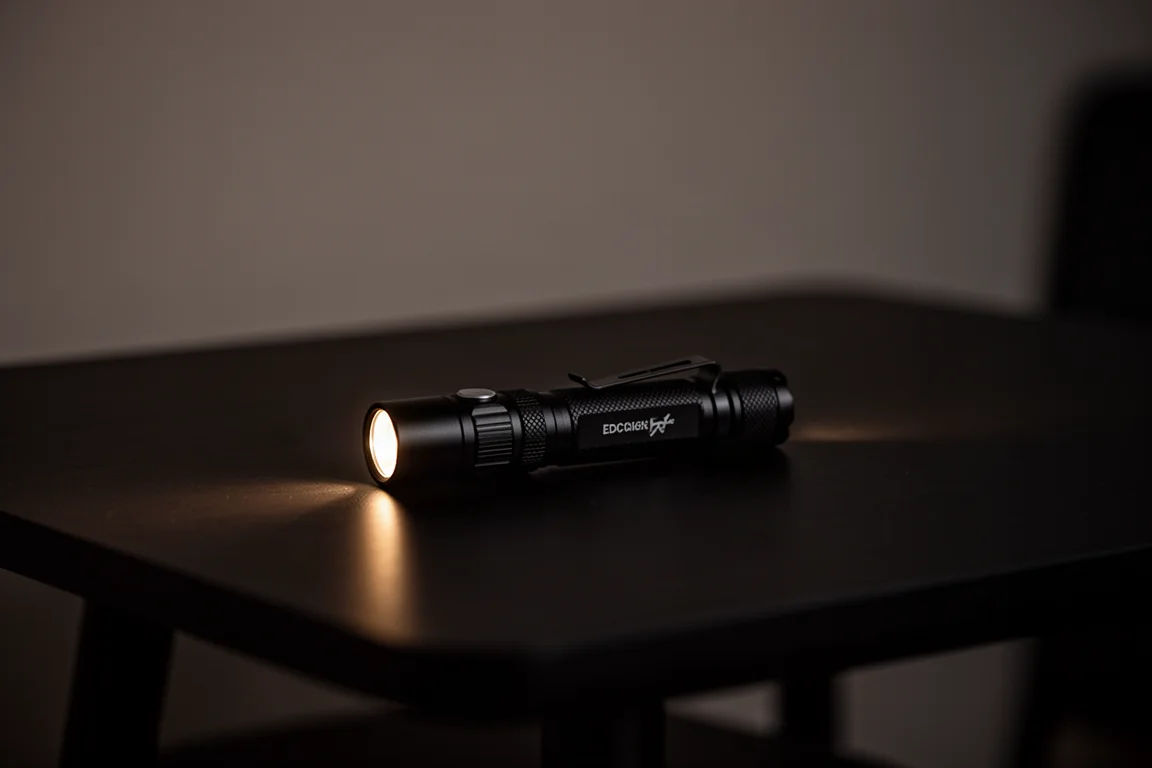
The Arkfeld update is mostly cosmetic, and that is not a knock. Output stays at 1,000 lumens, the built-in laser remains, and the light is now offered in two color temperature flavors: cool white and neutral white. The headline change is a new textured pinwheel gunmetal gray finish that looks genuinely stately and professional. The candy-colored versions are fun, but if you are carrying this into a meeting room and using the laser through an afternoon presentation, a more restrained finish makes sense.
The more interesting detail is how thoughtfully the interface works. You can cycle easily through the common brightness levels, jump to turbo when you need it, or trigger strobe as a warning mode. What stands out most is the moonlight mode: it is accessible straight away, so you can get to that tiny low output instantly without accidentally cycling through other settings first. Since a lot of everyday tasks only need a whisper of light, that kind of deliberate design matters more than a spec sheet bump. Even the transitions between brightness levels are smoothed out, which is the kind of polish you only notice after living with the light.
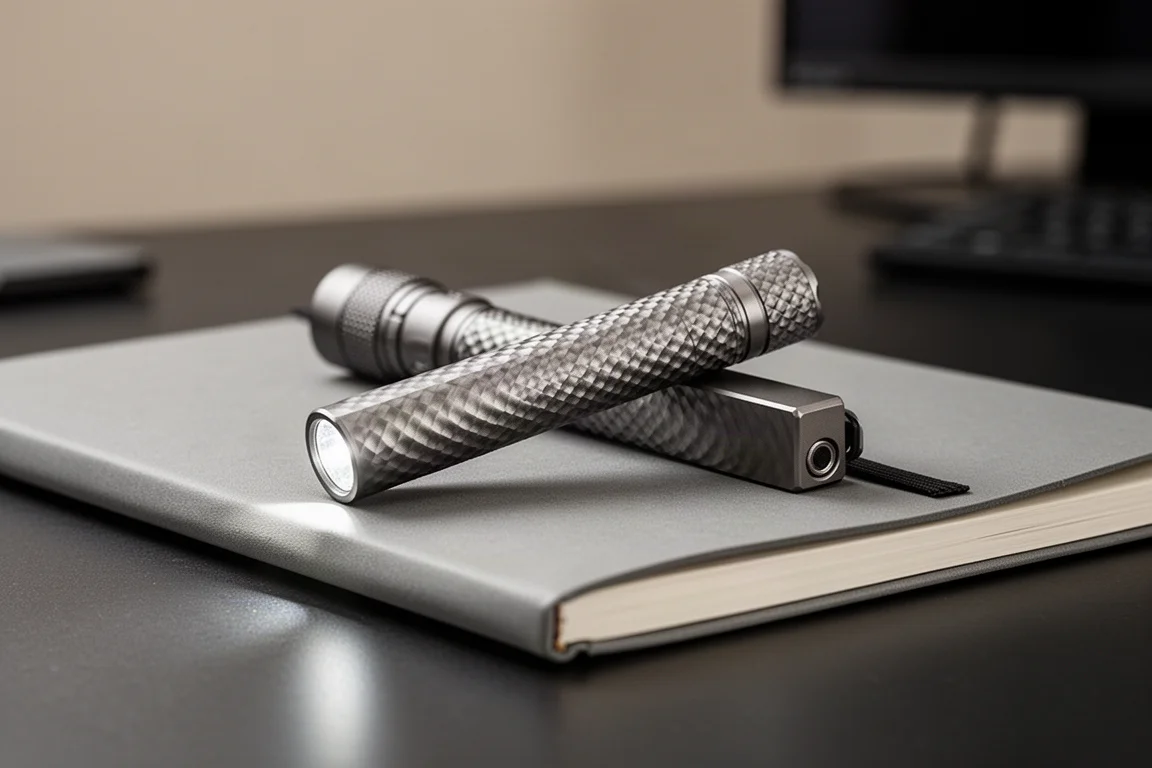
If you already own an Arkfeld, nothing here changes the fundamentals. If you have been holding off because the finishes felt too playful, the gunmetal gray option is the version that finally looks at home in a professional setting.
Olight Wyvern: A Purpose-Built Commuting Light
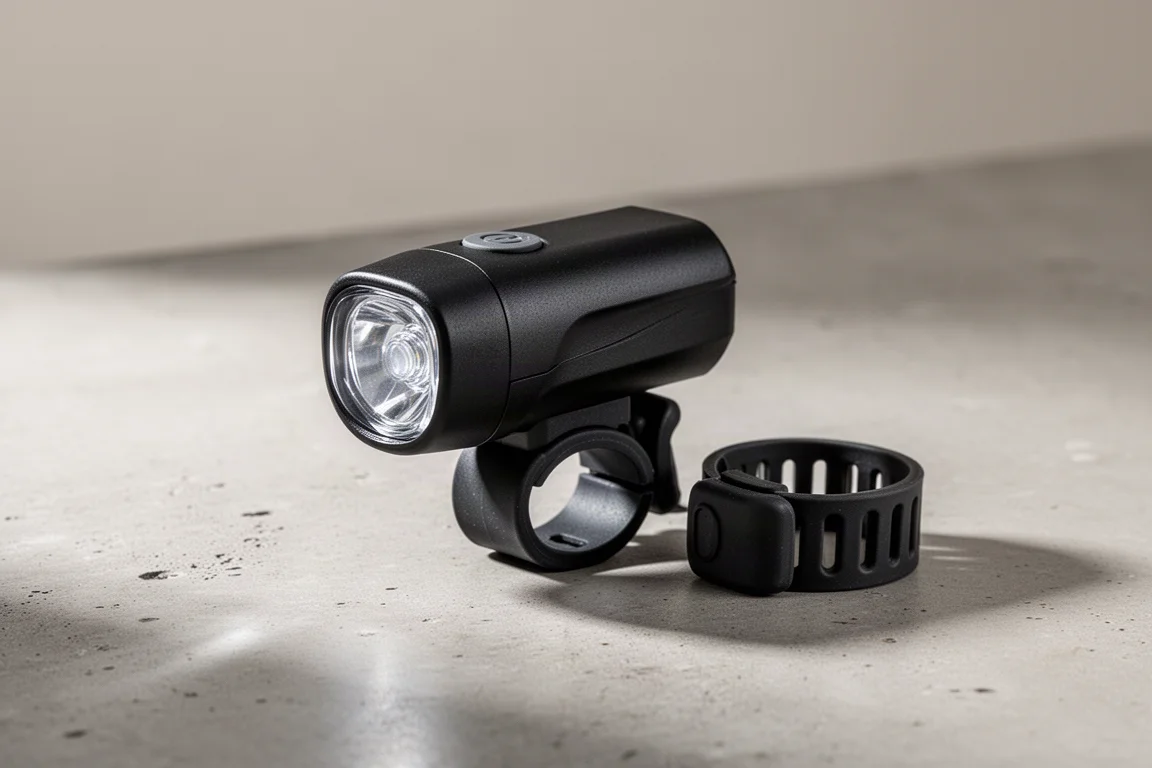
The Wyvern is a new 300-lumen bike light built around a plastic shell, likely ABS, with USB-C charging. At 300 lumens it is not built to light up dark trails, and it does not pretend to be. This is a commuting and city light, designed for streets that already have plenty of ambient light, where your main job is being seen and signaling rather than illuminating the road ahead.

It ships with a rubber strap mount, a common attachment method that works especially well here because the light is light enough to mount almost anywhere: on the seatpost facing backward, or on the frame, as a signal to traffic coming up behind you. That flexibility is exactly what a daytime road riding light needs, since a daytime running light is close to essential for road cyclists.
The standout spec is runtime. Small lights that use button cells or tiny internal batteries often quit after a short ride, but the Wyvern runs up to 13 hours on its low setting, which covers a full day of riding without a recharge. It also offers a lockout feature and mode memory, so it returns to your last setting. Cycling through the settings does take a deliberate press to turn on, but for a light that lives on a bike rather than in a pocket, that is a minor trade-off.
Buying Advice
Pick based on the job you actually need done. If you want a full-size folding knife with a subdued tactical look, genuinely durable blade coating, and a well-executed liner lock, the Freeze 2 is the standout of this batch. If you want one flat light that handles presentations, astronomy, and everyday tasks with a professional finish, the Arkfeld update is the most polished version yet. If your need is simple visibility on city commutes with maximum runtime and minimum weight, the Wyvern does exactly that without pretending to be a trail light.
Conclusion
None of these three products reinvent their categories, but each one refines its purpose in a way that makes the choice easy. The Freeze 2 adds material and finish options that broaden its appeal, the Arkfeld gets the professional look long-time fans were waiting for, and the Wyvern carves out a sensible niche as a lightweight commuter light with impressive endurance. Olight’s pace of iteration is notable, and this trio is a solid snapshot of it.
Further reading
Related Reviews

Everyday Carry
Everyday Gear That Deserved a Second Look
A roundup of solid everyday carry items: watches, pens, a pencil, a knife, and a smart ring that each earned a place on the table.

Everyday Carry
KORE Tactical Bifold Wallet Review: A Durable Everyday Carry Option
A close look at the KORE Tactical Bifold Wallet, a reinforced nylon wallet with magnetic closure and room for cards, cash, and IDs.

Everyday Carry
Krabby Wallet Review: A Slim, Simple Carry That Has Stood the Test of Time
A closer look at the Krabby Wallet, a slim canvas and elastic design with a loyal following and a simple, functional approach to everyday carry.