Flashlights
Olight Baton 4 Premium Edition vs Baton 3: Is the Upgrade Worth It?
The Baton 4 Premium Edition brings more output, longer runtime, and a redesigned charging case with power bank capability. Here is how it stacks up against the Baton 3.
Introduction
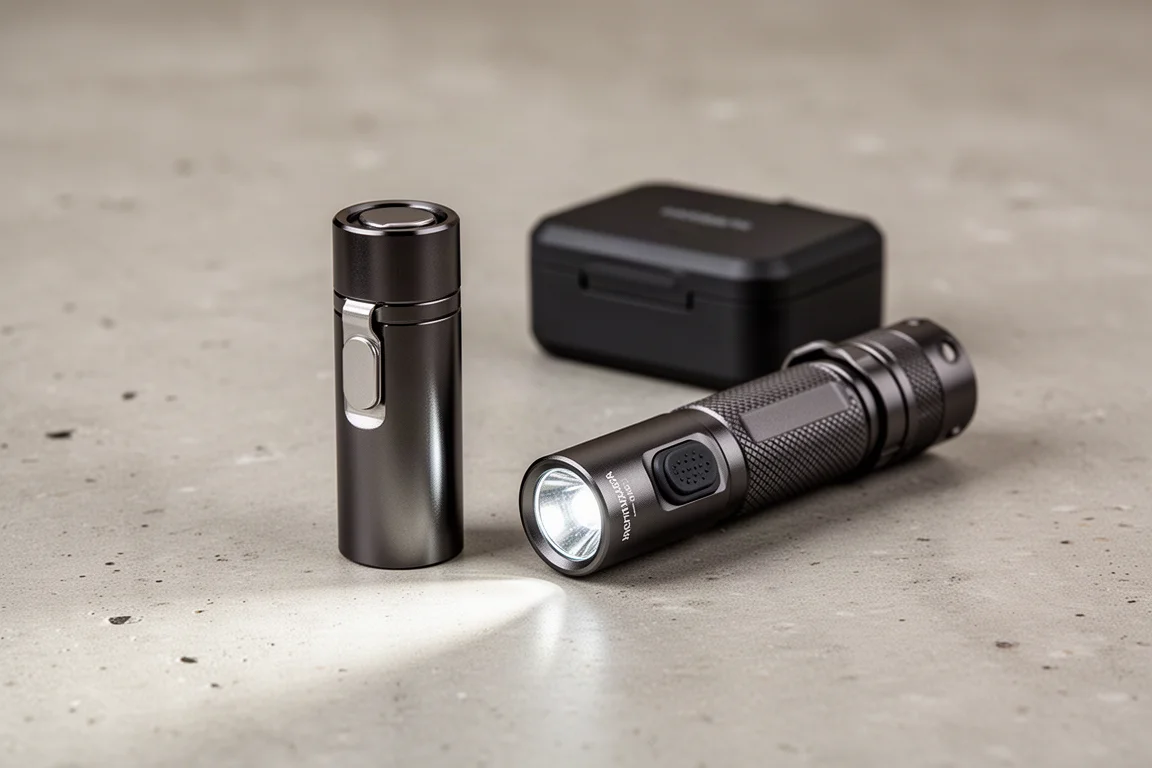
The Olight Baton 4 Premium Edition arrives with a familiar mission: take a well-liked compact EDC flashlight and squeeze a bit more out of it. On paper the gains look incremental. In practice, the biggest leap is not the flashlight itself but the completely redesigned charging case that ships with the Premium Edition. This comparison looks at how the Baton 4 measures up against the Baton 3, and where the extra money actually pays off.
What Is in the Box
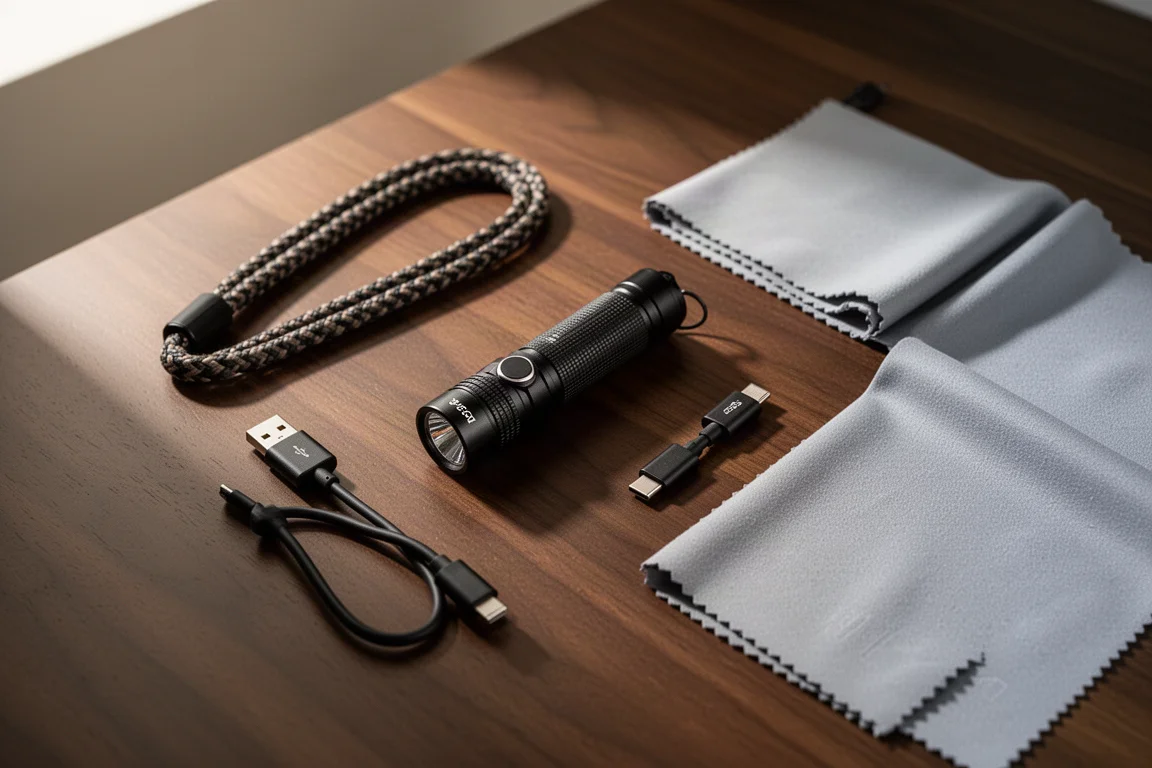
The Premium Edition package is generous for a pocket flashlight. Alongside the Baton 4 itself you get a type A to type-C charging cable, an adjustable lanyard, and a pin tool. New to this kit are a microfiber cleaning cloth for the lens, plus the usual safety information and user manual. The back of the box lists the lumens and runtime figures we will break down below.
Specs: Baton 4 vs Baton 3
The Baton 4 tops out at 1,300 lumens with a maximum throwing distance of 170 meters and a max intensity of 7,225 candela. The Baton 3 manages 1,200 lumens, 166 meters of throw, and 6,889 candela. On moonlight, the Baton 4 claims 30 days of runtime versus 20 days for the Baton 3.
Dimensions are effectively unchanged: 2.48 inches long, a 0.83 inch bezel diameter, and a measured weight of 1.9 oz (54 g) with the battery installed. With the flashlight inside the charging case, the total comes to 7 oz (198 g). Inside is a 3.6V 650mAh 16340 rechargeable lithium-ion battery, chargeable through the tail with Olight’s magnetic charger (sold separately) or simply by dropping it into the charging case, which has its own USB type-C port. The waterproof rating is IPX8, meaning it is submersible up to 6 feet of water, though dust proofing was not tested.
Design and Aesthetic Changes
Aesthetically, the changes are subtle but welcome. The Baton 4 replaces the Baton 3’s rubberized side switch with a metal one, and the LED that sat dead center of the old switch is gone. In its place is a new interface: battery life displays on one side and the brightness level on the other, shown as boot-up LEDs that switch off after a few seconds. It is a small touch, but having the indicators go dark when not in use feels cleaner.
Everything else carries over: the magnetic tail switch, the same two-way pocket clip, the same length and bezel diameter. The switch button is flatter on the Baton 4 compared to the rounder button on the Baton 3, a difference that matters more than it sounds once you see what the new charging case can do.
The Redesigned Charging Case
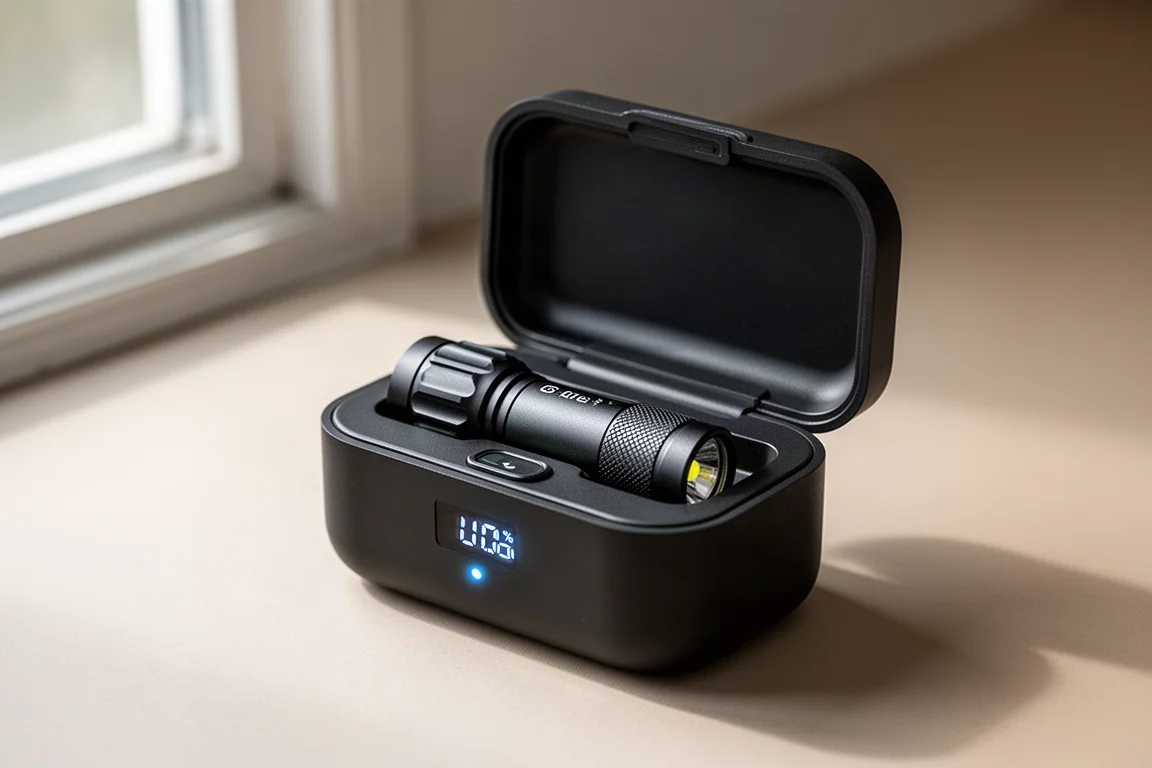
This is where the Premium Edition earns its name. The new case is slightly longer and noticeably thicker, with a 5,000 mAh battery that can recharge the Baton 4 up to five times, up from 3.7 times with the Baton 3 case. That gives you roughly six total charges for the whole system, which makes the package genuinely appealing for camping and long trips.
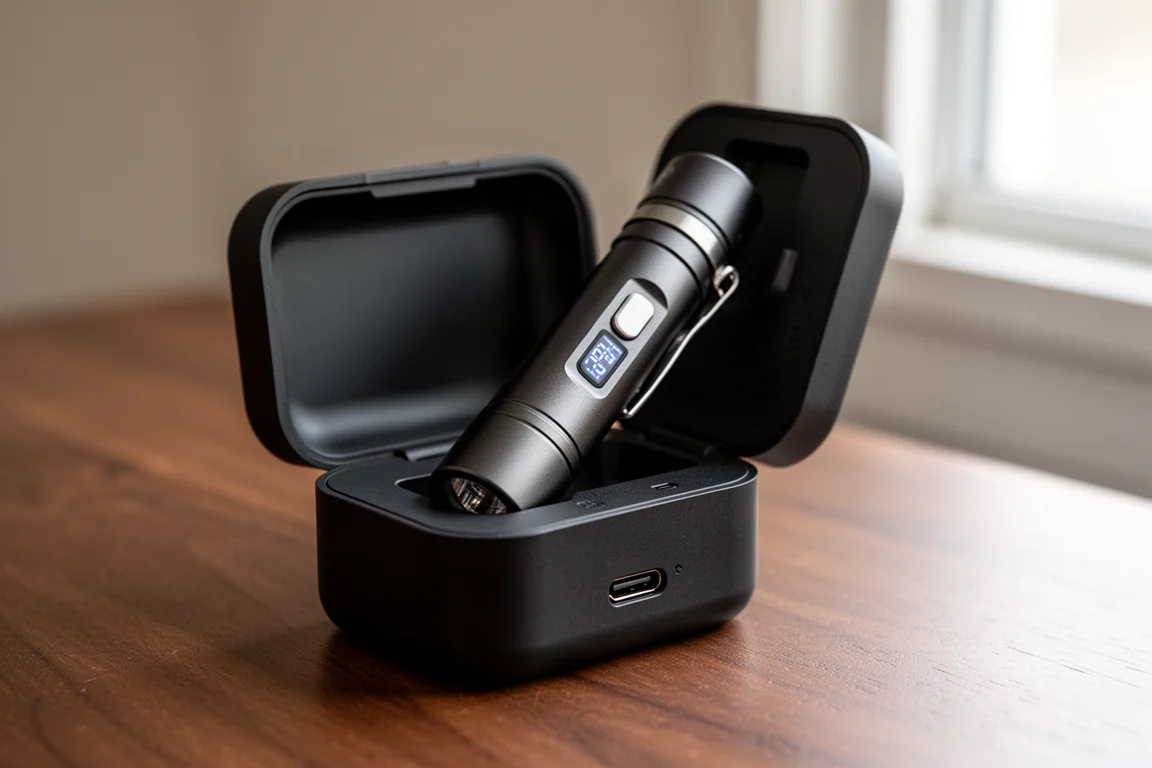
The case also adds four new tricks. First, the USB type-C port doubles as a power bank, so you can top up your devices from the same battery. Second, a digital battery life indicator shows the remaining charge when you open the case, alongside a charging LED that glows green when full and red while charging. Third, and arguably the standout feature: the digital display button is actually a button, and pressing it activates the Baton 4 while it sits inside the case. Close the lid and the light switches off. You can even press and hold that button for a stepless ramp up to Turbo and back down to low, and turn the flashlight on or off from outside without closing the lid. A long press while off activates half-lumen moonlight.
Fourth, and just as important, the case is far more versatile about what it charges. Beyond the Baton 4, it can charge the Baton 3, the S1R Baton 2, the Perun Mini, and the Perun Mini 2. Five different flashlights from one case is a serious quality-of-life upgrade. One caveat: only the Baton 4 can be operated while seated in the case. The other models will not light up from the case button, and while the Baton 3 technically works with the outside button, the stepless dimming does not.
UI and Everyday Handling
The Baton 4 runs five brightness levels plus strobe, controlled by a single side switch. Mode spacing is decent for a flashlight this size, though there are large jumps between medium (60 lumens) and high (600 lumens), and again between high and Turbo.
The UI is classic Olight and easy to learn: a single press toggles on and off, press and hold cycles low, medium, and high, double press jumps to Turbo, and triple click reaches strobe. Press and hold from off reaches half-lumen moonlight after a couple of seconds. There is a button press lockout and an optional auto-off timer of 3 or 9 minutes.
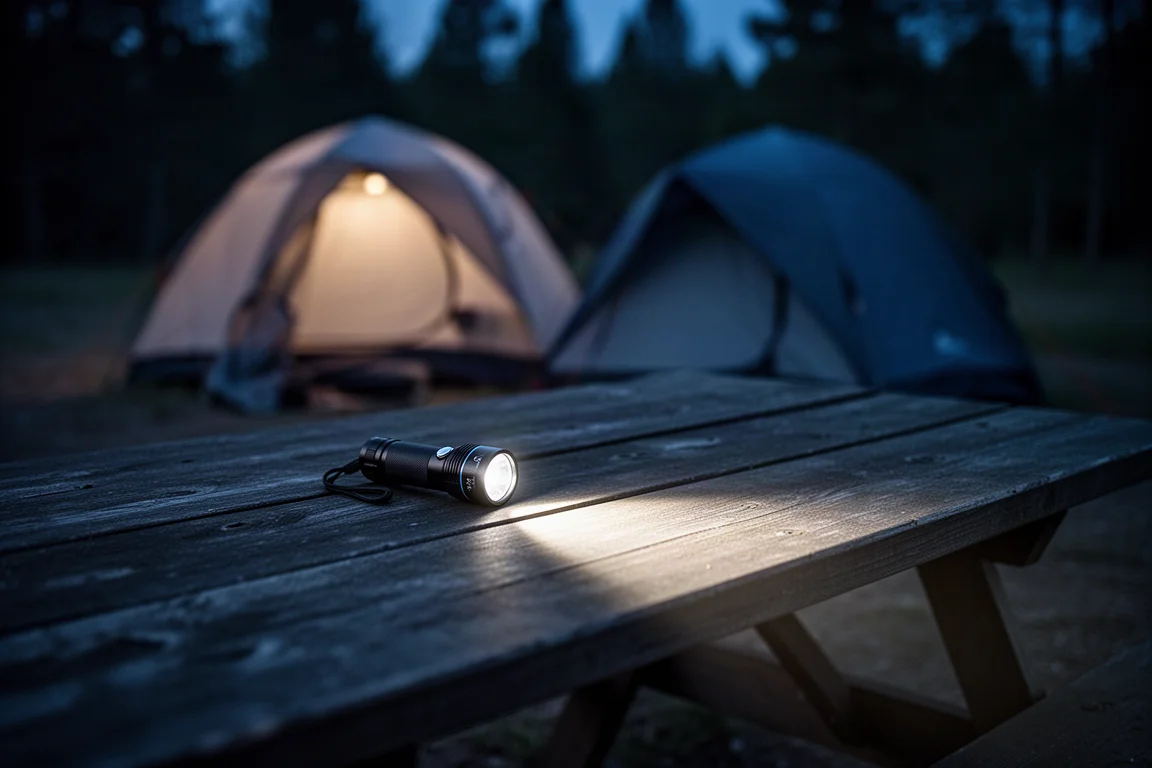
Inside the charging case, the UI simplifies further: one press on, one press off, and hold for that stepless ramp. Here lies the main disappointment. The stepless dimming works only while the flashlight is in the case. Outside the case, brightness moves in hard steps between low, medium, and high, with no ramping. It is not a dealbreaker, but after seeing smooth dimming in the case, the stepped behavior outside feels like a missed opportunity. The in-case ramping also has a quirk: you cannot let go of the button and immediately reverse direction. It keeps ramping to the maximum or minimum before you can change course.
Beam and Turbo Performance
In beam tests, the Baton 4 puts out a neutral white beam with a large, soft hotspot, which is exactly what most people want from an EDC light. In moonlight and low modes there is a slight greenish tint, but it is subtle and common in modern flashlights. On high, 600 lumens easily reach a barn and tree line at distance, and on Turbo the 1,300-lumen output lights up nearly everything in view for such a small light.
Interesting side note: the Baton 3 actually throws a slightly wider beam with a larger hotspot, while the Baton 4 has a crisper perimeter, more intensity, more throw, and more lumens. Neither is clearly better; it comes down to whether you prefer flood or punch.
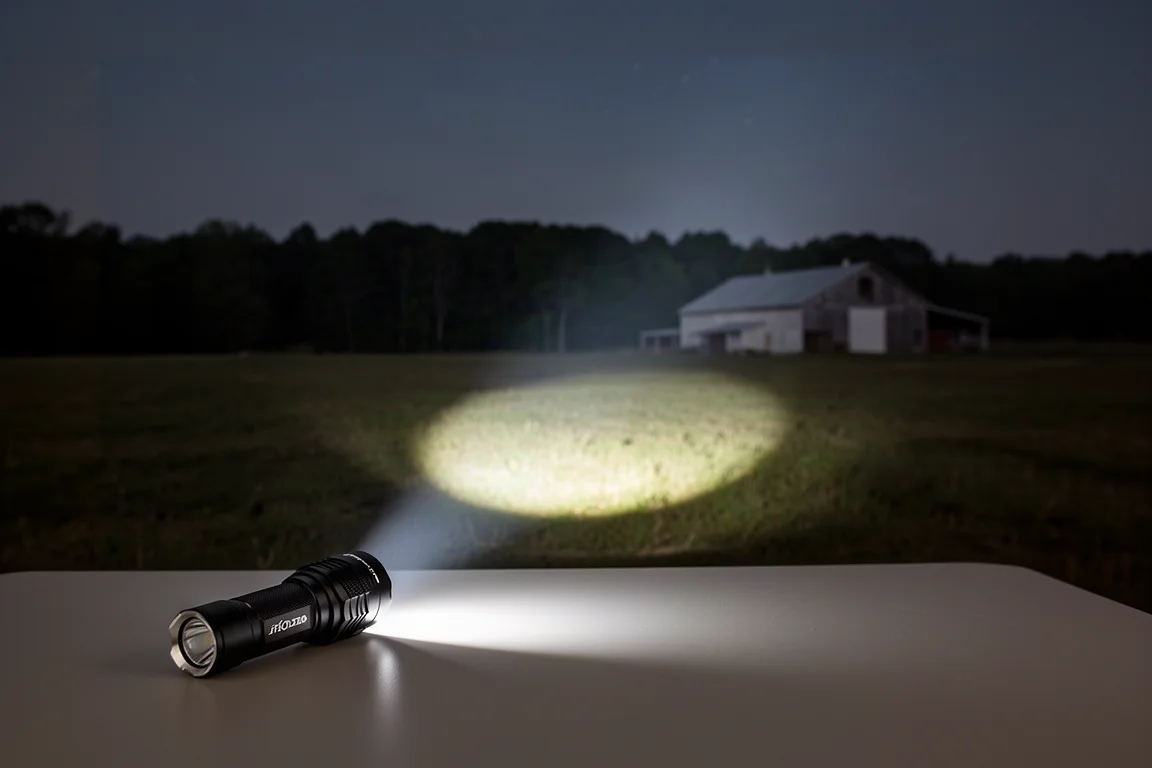
On the turbo front, the Baton 4 barely gets warm. Running it on Turbo for three minutes produced almost no noticeable heat, with a step-down in output occurring within that window. No dedicated heat testing was needed given how cool it runs.
Buying Advice
The honest verdict: the Baton 4 is an improvement over the Baton 3, but not a huge one. An extra 100 lumens, four more meters of throw, 336 more candela, and ten more days of moonlight runtime are real gains, yet the moonlight runtime figure in particular is unlikely to change daily use.
The genuinely huge improvement is the package. Five full recharges in the case instead of 3.7, compatibility with five different Olight flashlights, power bank capability, a digital battery display, and the ability to use the Baton 4 while it charges make the Premium Edition bundle a clear pick if you are choosing between the two side by side. If you already own a Baton 3 and its case, the flashlight-only gains are more modest and you may want to wait.
Conclusion
The Olight Baton 4 Premium Edition is a strong compact EDC flashlight wrapped around an excellent charging ecosystem. The flashlight itself is a steady, sensible upgrade, while the redesigned case is the feature that justifies the Premium Edition label. For campers, travelers, or anyone who wants a pocket light with real endurance, the Baton 4 package is easy to recommend.
Further reading
Related Reviews
Flashlights
Best Flashlights 2026: Brightness, Battery, and Value Compared
We tested 18 flashlights across a wide price range to find the best performers in brightness, battery life, and durability.
Flashlights
Nitecore LA10 Review: A Tiny 2-in-1 Lantern That Nails the Basics
The Nitecore LA10 pairs a pocket-sized lantern with a single AA battery, a magnetic tail cap and a five-year warranty. Here is where it shines and where it struggles.
Flashlights
Wuben G5 Review: A Compact Everyday Carry Flashlight
The Wuben G5 is a small, rechargeable flashlight with a pivoting head, magnetic base, and color modes. Here is how it performs as an everyday carry light.