Flashlights
Olight Baton 3 vs ThruNite T1S: Two Tiny EDC Flashlights, Two Very Different philosophies
Both flashlights hit 1,200 lumens in a palm-sized body, but battery size, charging, and clip design make them suited to different users.
Introduction
Small flashlights are having a moment, and two models sit right at the top of the tiny-but-powerful category: the Olight Baton 3 and the ThruNite T1S. Both are rated at 1,200 lumens, both are genuinely pocket-sized, and both come with a magnetic tail cap. On paper they look almost identical.
In practice, they are very different lights. The differences come down to battery capacity, charging style, clip placement, and beam character, and which one suits you depends almost entirely on how you plan to use it. Here is a side-by-side breakdown to help you decide.
First Impressions
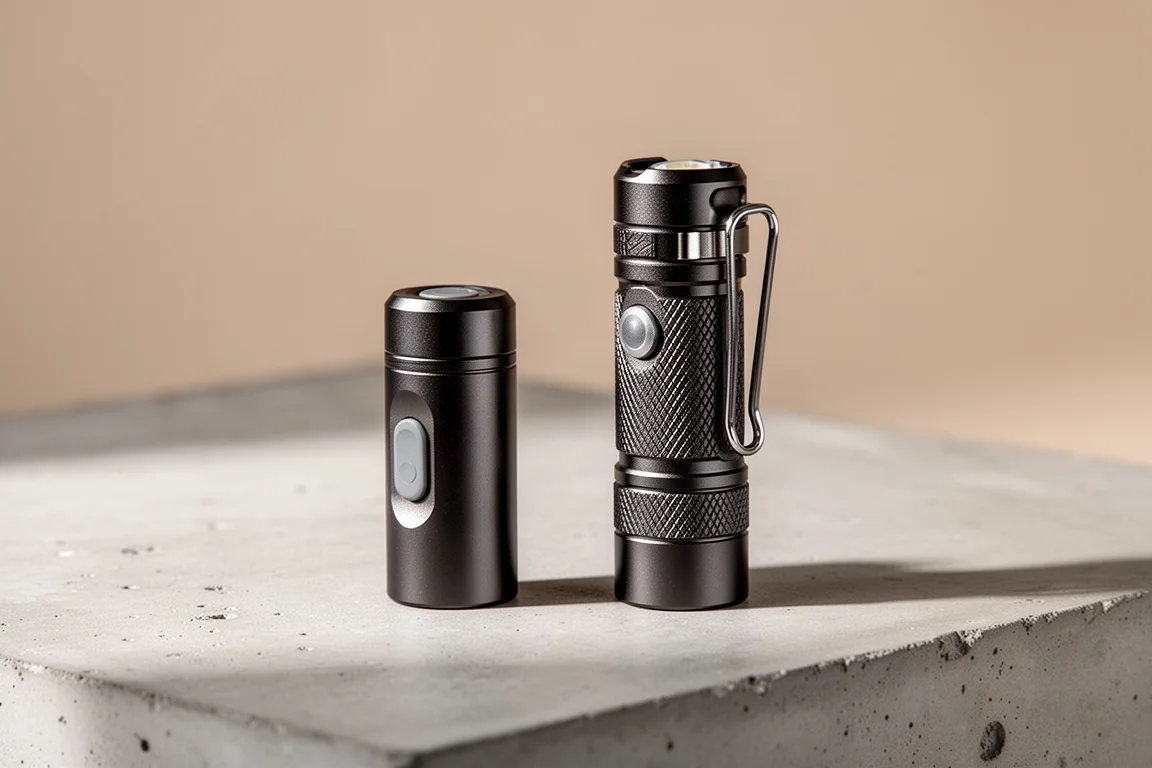
Held side by side, the two lights feel similar in the hand but not identical. The ThruNite T1S is about 2.7 inches long and weighs roughly 1.6 ounces, while the Olight Baton 3 is just over 2 inches long and a touch smaller overall. Both are easy to carry, though both share one practical quirk: the forward switch is small enough that double-tapping into turbo mode takes some precision, especially for larger hands.
Outside, the two are remarkably evenly matched. Turbo mode on either light is intense enough to light up a whole backyard, and telling them apart at night is genuinely difficult. The Baton 3 is marginally cooler in tone, and the T1S is described by ThruNite as cool white between 6,000 and 6,500K, though in use the ThruNite reads slightly warmer than the Olight.
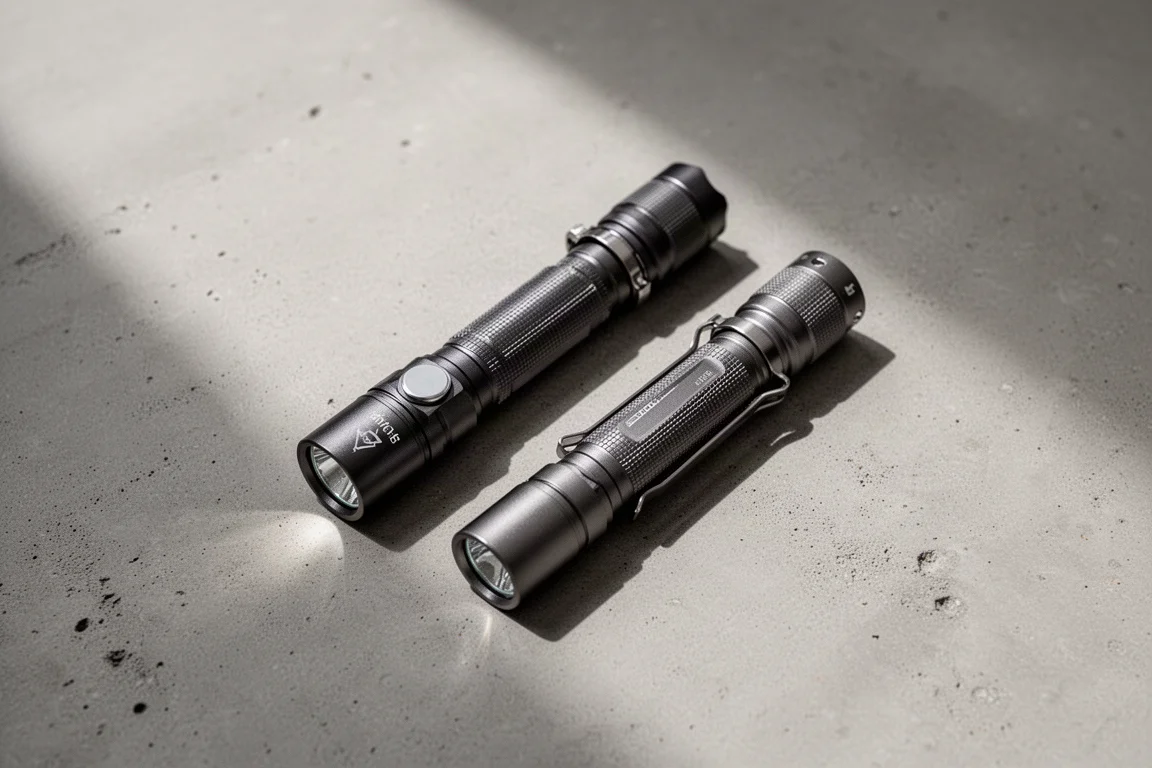
One important outdoor caveat: the T1S steps down from turbo to high fairly quickly to protect the battery, so sustained outdoor use at maximum output is limited. The same holds true in spirit for both lights, since a light this small simply cannot hold 1,200 lumens indefinitely.
Batteries and Charging
This is where the two lights start to diverge in a meaningful way.
The ThruNite T1S houses a 1,100mAh 18350 battery cell. The Olight Baton 3 uses a much smaller 550mAh 16340 cell. That larger cell in the ThruNite translates directly into more runtime between charges, which matters if you do not want to think about your flashlight very often.
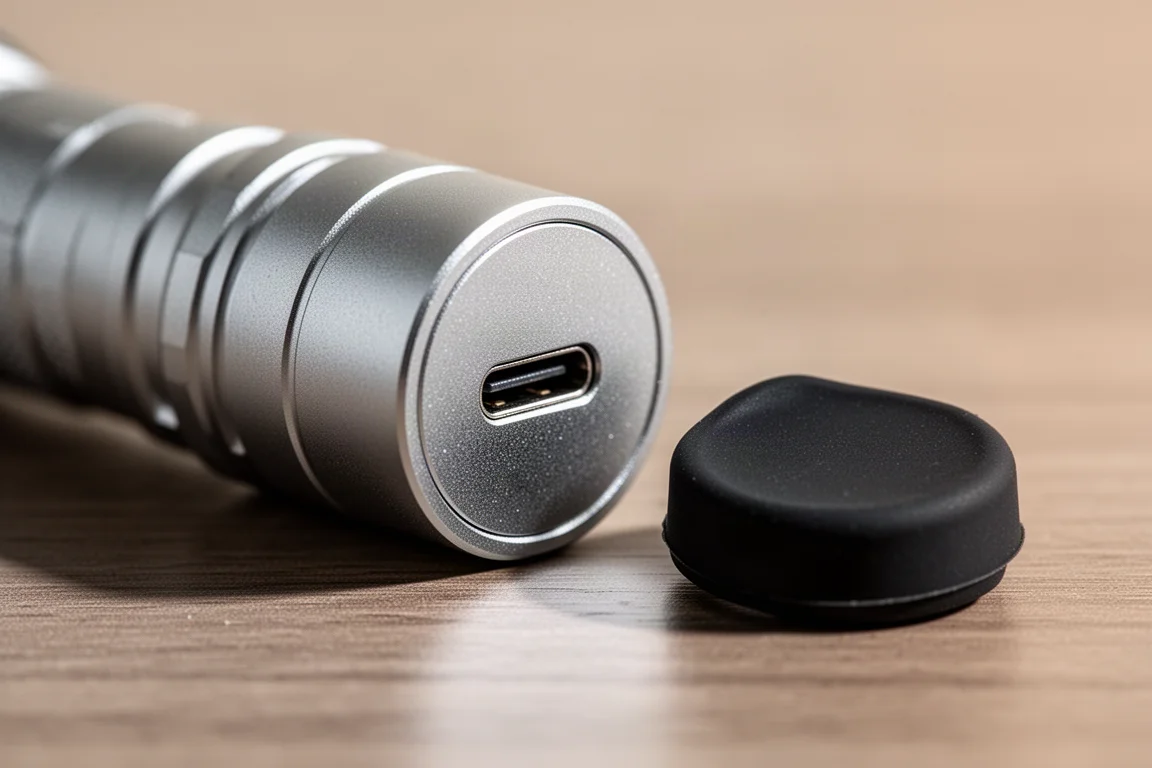
Charging is a bigger philosophical difference. The T1S charges over USB-C through a port on the body, with extra port covers included. The indicator on its switch shows blue when charged and turns red as the battery drops. Just about any USB-C cable will do, which makes topping it up nearly effortless.
The Baton 3 relies on a magnetic charger. Lose that proprietary cable and you will be ordering a replacement. Its indicator glows green when charged, shifting to orange and then red as the battery drains.
One surprise on the magnetic tail caps: the Olight’s magnet is significantly stronger than the ThruNite’s. In a simple stick test, the ThruNite slides down much more easily while the Baton 3 holds firm. Both will still stick to a steel surface and do their job, though.
Clips, Hats, and Pockets
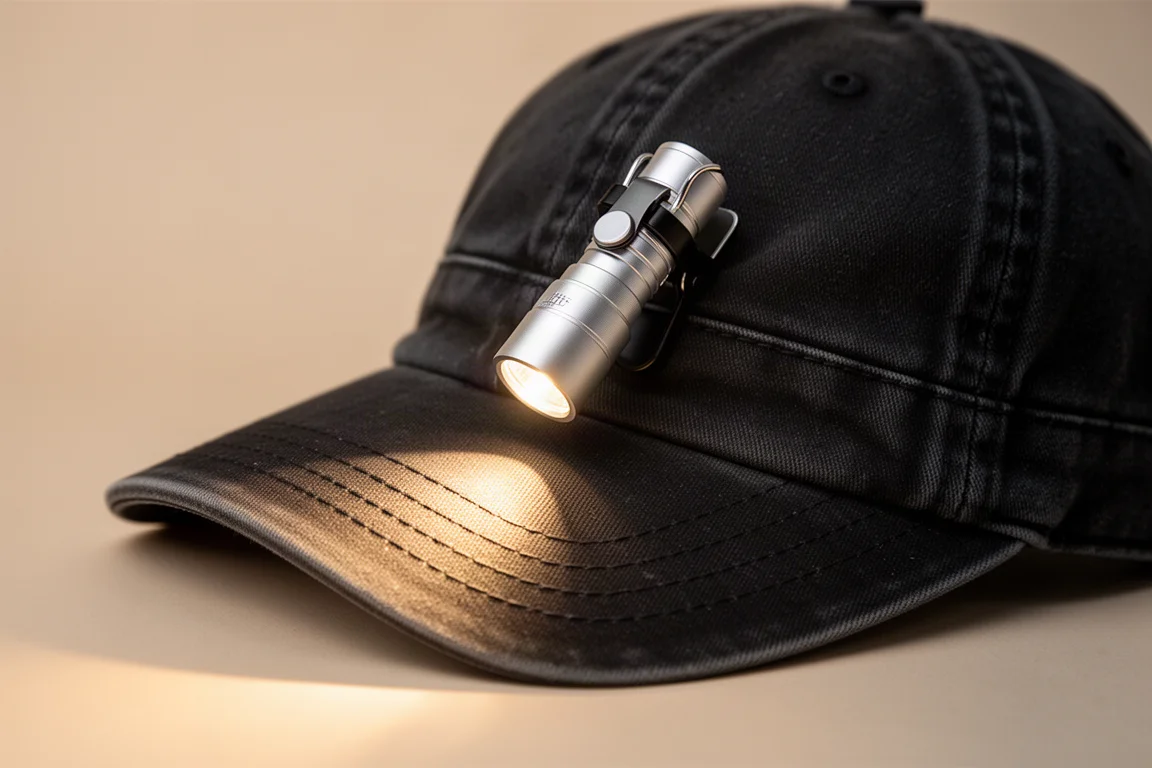
Both lights include a bidirectional pocket clip, and both work the same way in principle: clip it up or down in a pocket, or attach it to a hat brim to use the light like a headlamp. The placement differs, though, and that changes how each light behaves.
The T1S clips onto a belt or pocket more naturally, but on a hat it sits awkwardly and tends to work its way forward. The Baton 3 needs a different section of the clip, but once positioned it attaches to a hat brim much more securely. If wearing your flashlight as a makeshift headlamp is part of your plan, the Olight has the advantage here; if belt or pocket carry matters more, the ThruNite fits the bill better.
Beam and Everyday Use
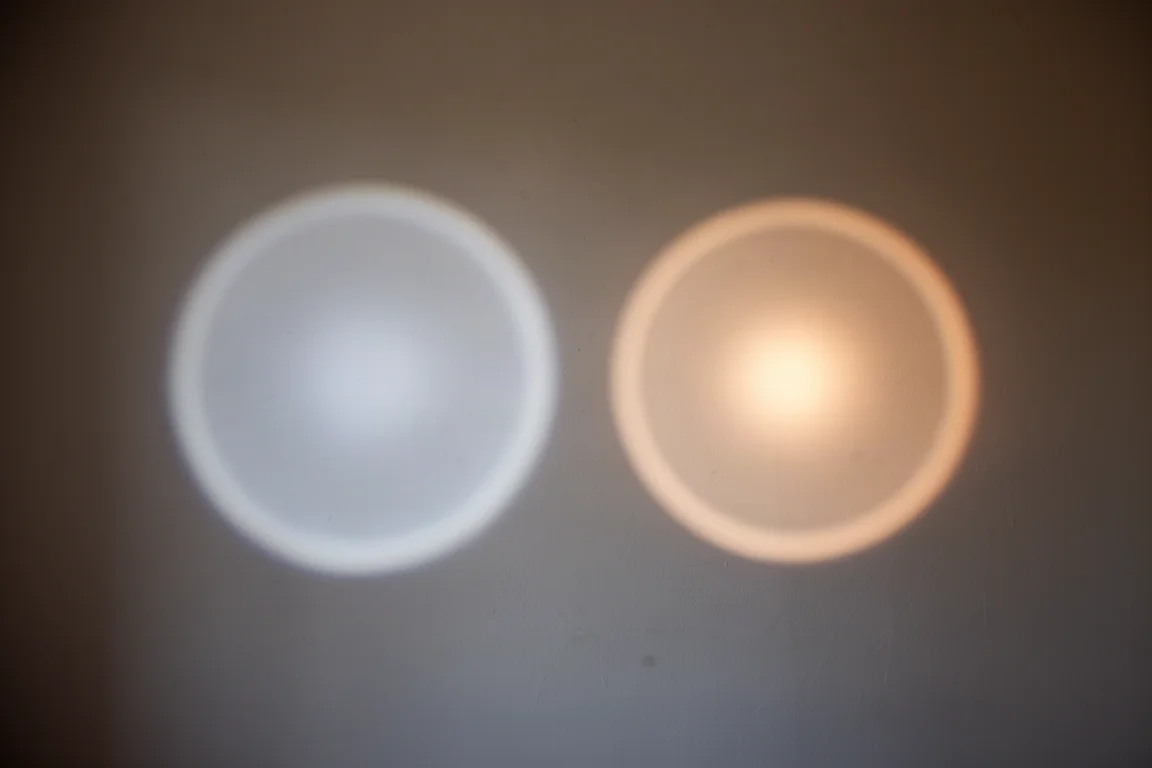
At roughly ten feet from a wall, the beam differences become visible. The Olight Baton 3 produces a large, well-defined hotspot with a slightly more floody character and a cooler tone. The ThruNite throws a slightly smaller but a touch brighter hotspot with a warmer cast, thanks to differences in lens and reflector design.
This is not a spot-versus-flood matchup in the dramatic sense. It is better described as the Olight being somewhat more floody and the ThruNite somewhat more directional. Mode spacing is similar, both include a low firefly mode with very long runtimes, and cycling through low, medium, and high feels comparable on each, though the Olight steps through its modes a little faster.
Buying Advice
If you want the simplest ownership experience, the ThruNite T1S at around $39 is easy to recommend. It has the larger 1,100mAh battery, USB-C charging you can find anywhere, and a clip arrangement that suits belt and pocket carry. Its turbo steps down quickly, and its magnetic tail cap is the weaker of the two.
The Olight Baton 3 at around $64 counters with a smaller, shorter body, a stronger magnetic tail cap, and better hat-clip behavior. Its premium package is also worth knowing about: it includes a small charging case with a built-in battery that can recharge the light roughly two to two and a half times without ever needing to be plugged in while you carry it.
Neither light is clearly better. They are small tools optimized for slightly different habits.
Conclusion
The Olight Baton 3 and ThruNite T1S prove that you no longer need a large flashlight to get serious output. Both deliver 1,200 lumens, both attach magnetically to steel surfaces, and both double as impromptu headlamps. Pick the ThruNite if battery life and convenient USB-C charging top your list, and the Olight if you value a more compact body, hat-friendly clipping, and the option of a self-contained charging case. Either one makes small projects around the house, under the car, or inside tight spaces noticeably easier.
Product link
View more details for Olight Baton 3
This product is mentioned in the review. Check the specifications, options, and compatibility before buying.
View more details for Olight Baton 3Further reading
Related Reviews
Flashlights
Best Flashlights 2026: Brightness, Battery, and Value Compared
We tested 18 flashlights across a wide price range to find the best performers in brightness, battery life, and durability.
Flashlights
Nitecore LA10 Review: A Tiny 2-in-1 Lantern That Nails the Basics
The Nitecore LA10 pairs a pocket-sized lantern with a single AA battery, a magnetic tail cap and a five-year warranty. Here is where it shines and where it struggles.
Flashlights
Wuben G5 Review: A Compact Everyday Carry Flashlight
The Wuben G5 is a small, rechargeable flashlight with a pivoting head, magnetic base, and color modes. Here is how it performs as an everyday carry light.