Flashlights
Olight Baton 3 vs Three ThruNite Rivals: Which Compact EDC Flashlight Wins?
The Olight Baton 3 faces off against the ThruNite W1, T1, and T1S in a head-to-head comparison of pocket flashlights with very different philosophies.
Introduction
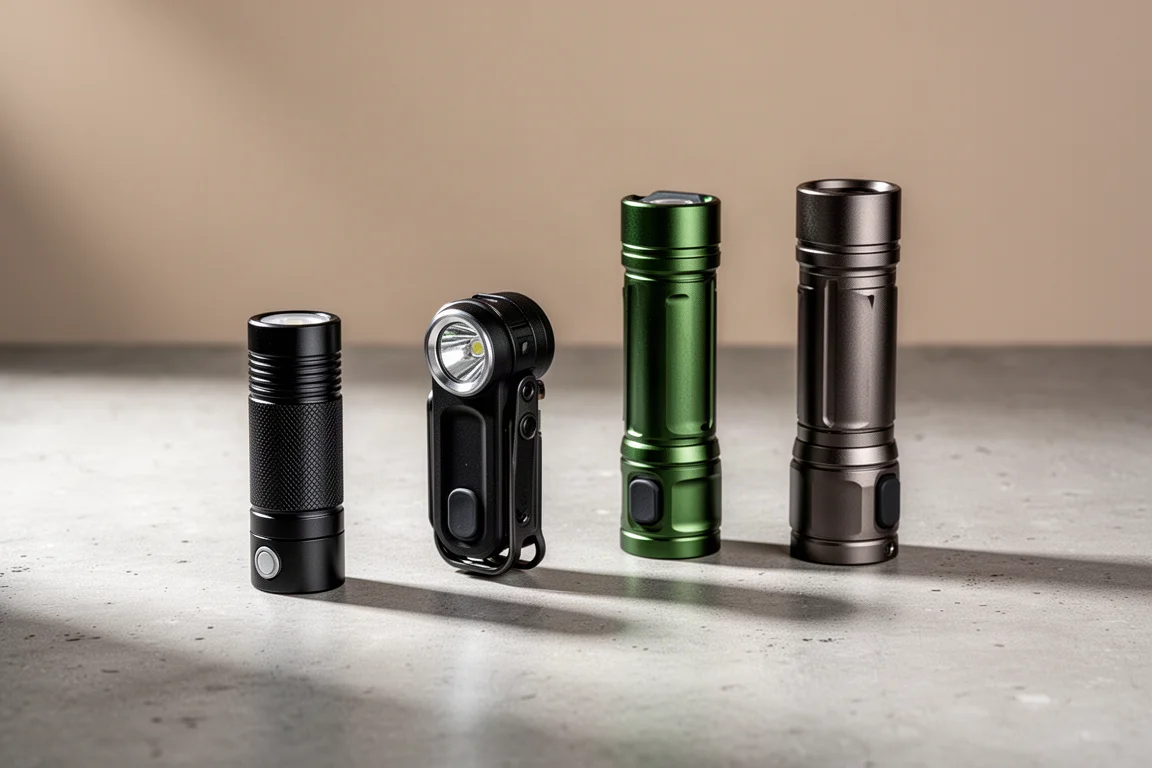
Compact pocket flashlights around two and a half inches long are one of the most competitive categories in EDC gear, and few lights in it are as popular as the Olight Baton 3. But popularity is not the same as value, and three ThruNite models, the W1, the T1, and the T1S, each take a different run at the crown. This comparison looks at where each one wins, where it falls short, and which light is worth your money at the end of the day.
The reigning pick: Olight Baton 3
The Baton 3 earns its status for good reasons. It tops out at 1,200 lumens, carries an excellent reversible pocket clip, and sits on a magnetic base that doubles as its charging dock. There are no silicone caps to lose, the body is IPX8 rated, and runtime is genuinely impressive: up to 22 days on the lowest mode. It is a light with a lot to overcome for any challenger.
That said, it has two real downsides, and both come down to proprietary design. The charging is magnetic-only, so the entire light has to sit on the pad; the customized battery cannot accept a standard CR123 cell, so recharging is essentially your only option. Olight does sell a small charging case, similar in spirit to wireless earbud cases, with a USB Type-C port and a built-in 18650 that can recharge the light roughly three and a half times before the case itself needs topping up. It is a genuinely clever setup, but it pushes the price up even further. Between the proprietary features and the cost, there is room for alternatives to make a real case.
ThruNite W1: the smallest of the bunch
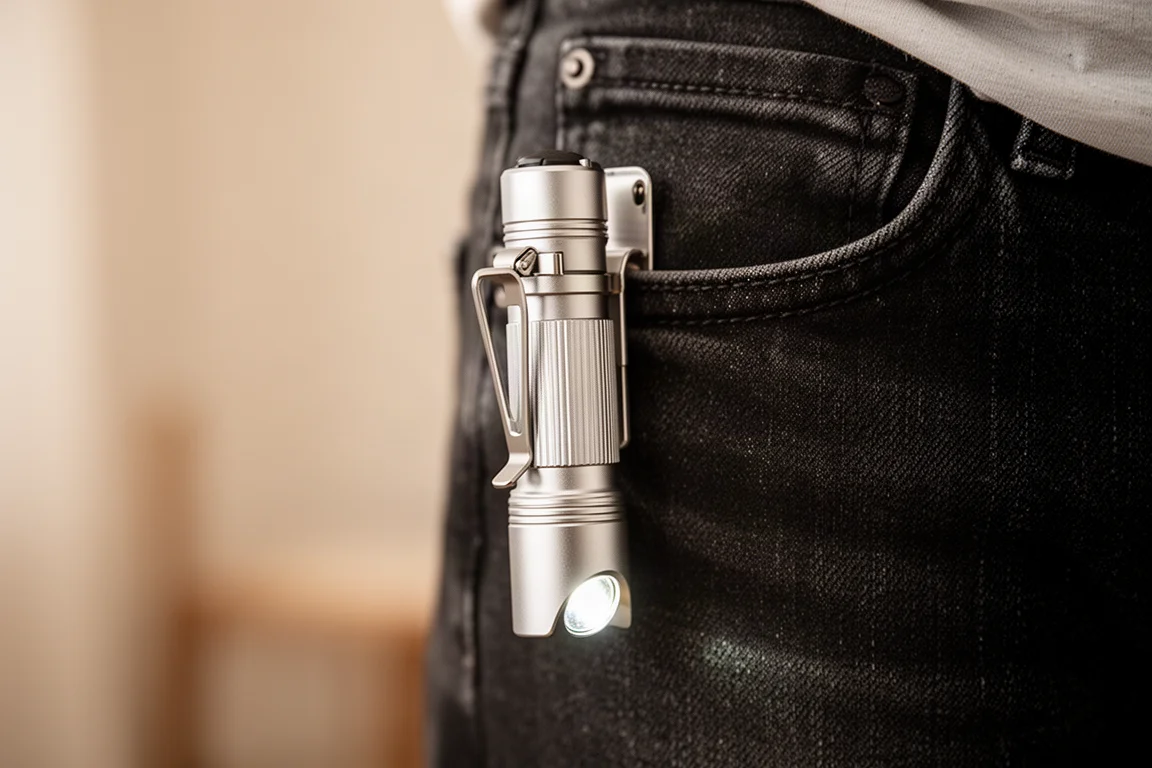
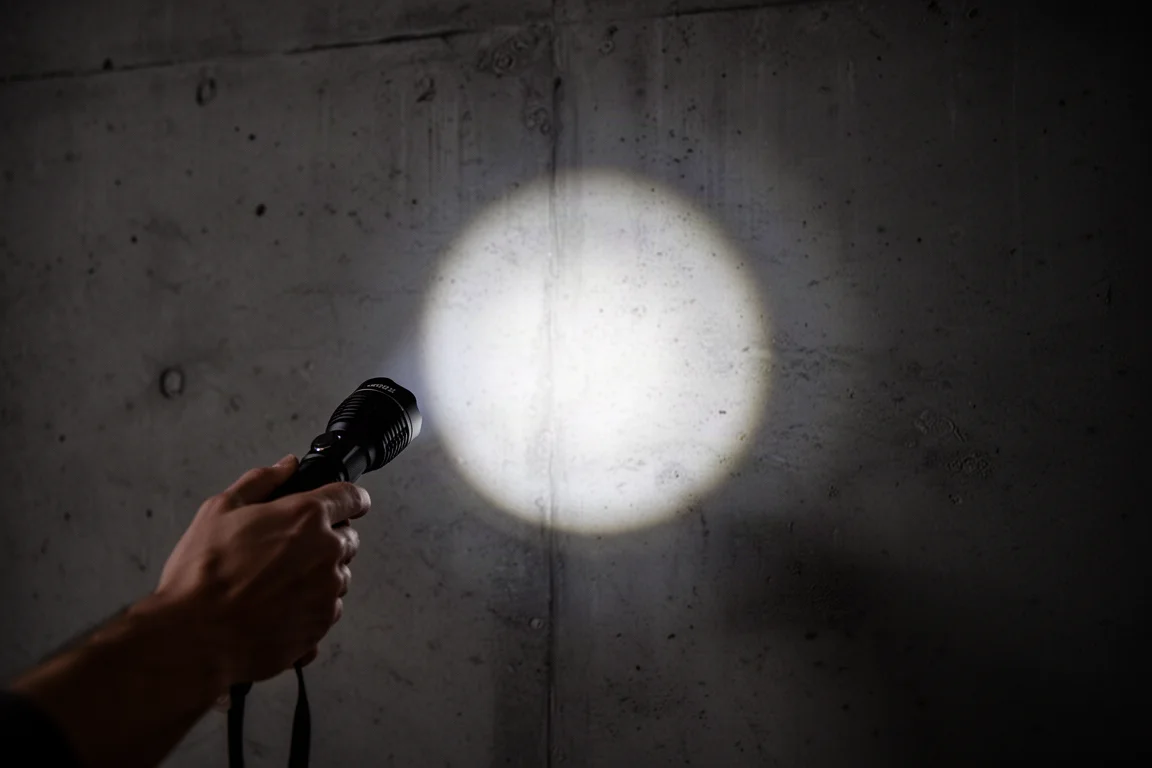
The W1 is the smallest of the four lights, and that is one of its biggest advantages. Its head is noticeably wider than the Baton 3’s, which you feel in the pocket, but the overall footprint stays slim. On paper the specs look worse: just under 700 lumens against the Baton 3’s 1,200. Look at the candela rating, though, and the story changes. Beam intensity and throw are effectively the same; the difference is beam shape, with the Olight’s beam being wider and the ThruNite’s much tighter and more focused.
Runtime on low modes favors the Olight, at 22 days versus about 12 days. Where the W1 fights back is flexibility: it can run on an off-the-shelf CR123 cell. It will not be as bright, but the light still works, something the Baton 3 simply cannot offer. The user interface is identical to the Baton 3, so switching between them takes no learning at all, with well-spaced output levels on both ends.
Charging is micro USB, which is a bit dated, though a move to USB Type-C seems a reasonable expectation given the direction of ThruNite’s larger models. The clip is a low-profile reversible design that sits head-down in the pocket, and while it does not perch on a cap as nicely as the Baton 3’s, it also catches on fewer things as you walk past. The biggest argument, though, is price: the green variant sells for around $30, a significant saving that makes the W1 a genuinely close call.
ThruNite T1: the floody all-rounder
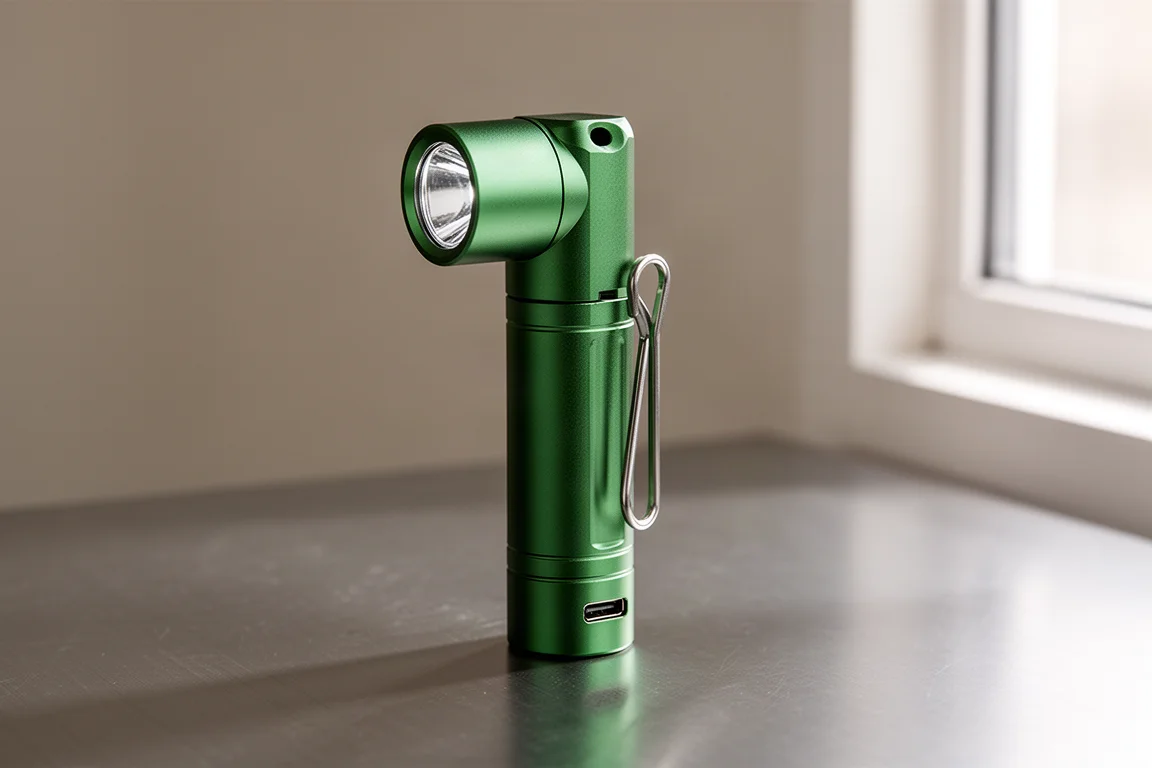
The T1 is larger than the W1 in the barrel but shares the same head width at its widest point, so it carries better than the dimensions suggest. It runs on 18350 batteries and accepts any 18350 on the market, which is a huge bonus: with a bay charger and a few spares, you can swap cells in seconds instead of waiting for a recharge. Charging on the light itself is again micro USB.
Output peaks at 1,500 lumens, but the candela rating sits much lower at 2,600, giving a very wide, floody beam. It opens up fast and floods a small area with light, which is excellent for close-up work and much less useful for seeing things at a distance. Maximum reach is around 102 meters, a significant drop compared to the Baton 3. The neutral white emitter is a genuine plus, and runtime improves over the W1, though not by as much as expected. On maximum, it also manages heat very well, staying cool enough to touch after a couple of minutes, which is not always the case with this much power in a small body. Of the four, this is the least competitive against the Baton 3, but the beam character and emitter make it appealing on its own terms.
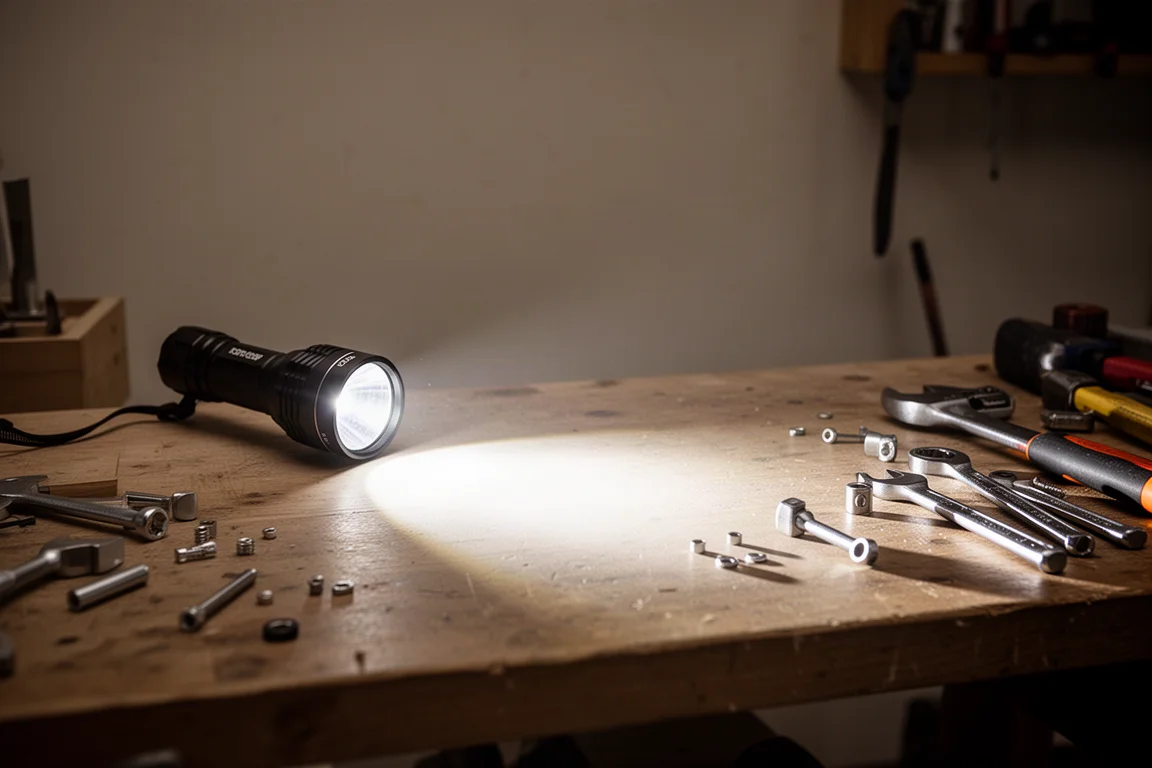
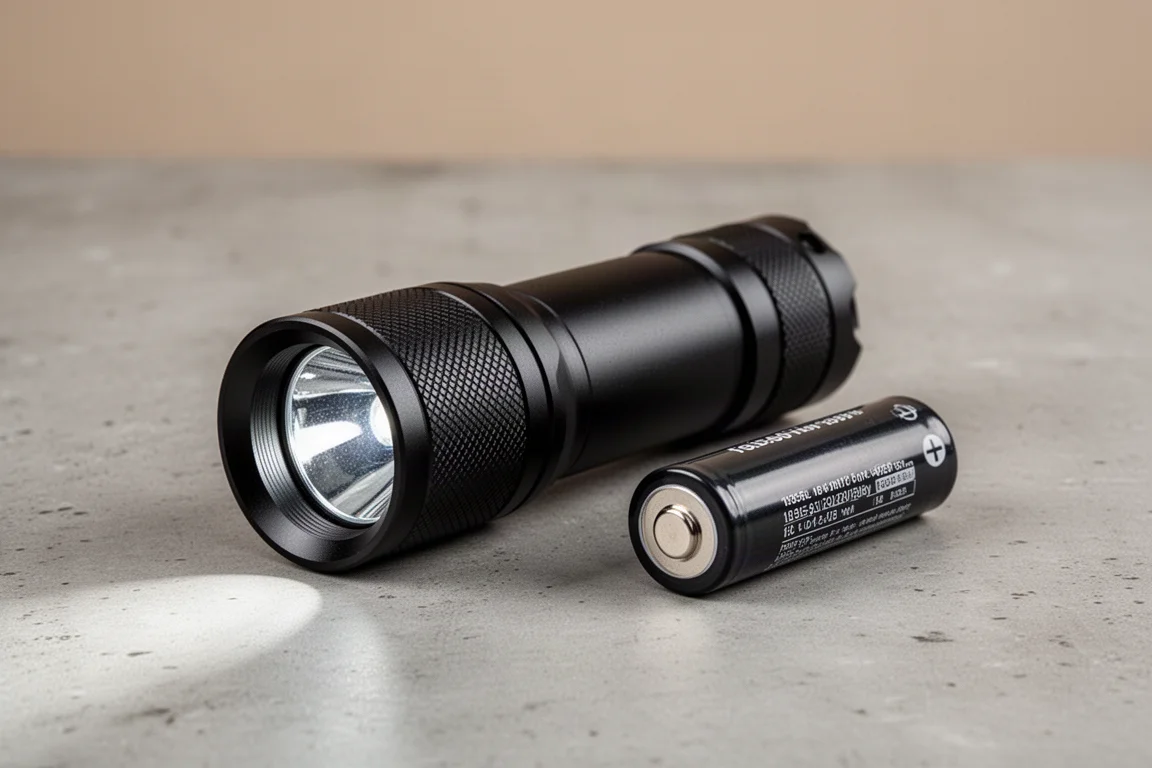
ThruNite T1S: the new king of the hill
The T1S uses optics similar in design to the Baton 3’s but larger, and this is where ThruNite finally levels the playing field. Both lights produce 1,200 lumens, but the T1S pushes 8,400 candela against the Baton 3’s roughly 6,900, giving it a significantly longer reach. Turbo runtimes are basically identical, with both stepping down after about five minutes, to around 317 lumens on the ThruNite and 300 on the Olight. High mode favors the T1S at 407 lumens with a longer runtime, helped by its larger battery capacity.
The moonlight modes are another strong point: a half-lumen low against about a lumen on the Baton 3, with 27 days of runtime versus 22 on a single charge. On paper these two are more equal than anything else in this comparison, with a slight edge to the ThruNite. The clip and heat dissipation look the same, and the T1S adds a magnetic tail switch that works like the Baton 3’s base, letting it stick to any ferrous surface. All three ThruNite lights share the same polarity, so that trick carries across the family.
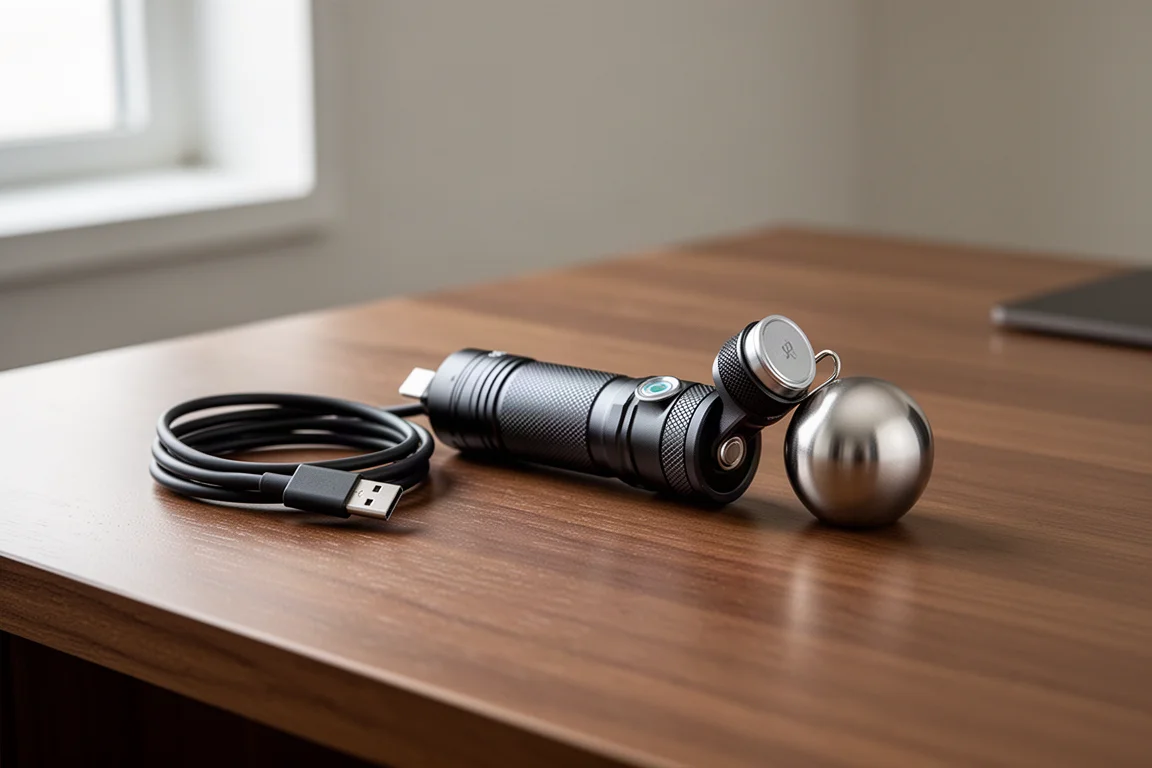
The biggest upgrade is USB Type-C charging: the same cable as every other device you own, no proprietary dock required. And then there is price. The Baton 3 lands somewhere around $60 to $70, while the T1S starts at $40 and sometimes goes on sale for less. You also avoid proprietary batteries entirely, since standard 18350 cells from any manufacturer work fine in a bay charger. Taken together, the T1S currently scores better than the Baton 3 in pretty much every category despite being slightly bigger, and it makes a strong case as one of the most recommendable flashlights in this size class.
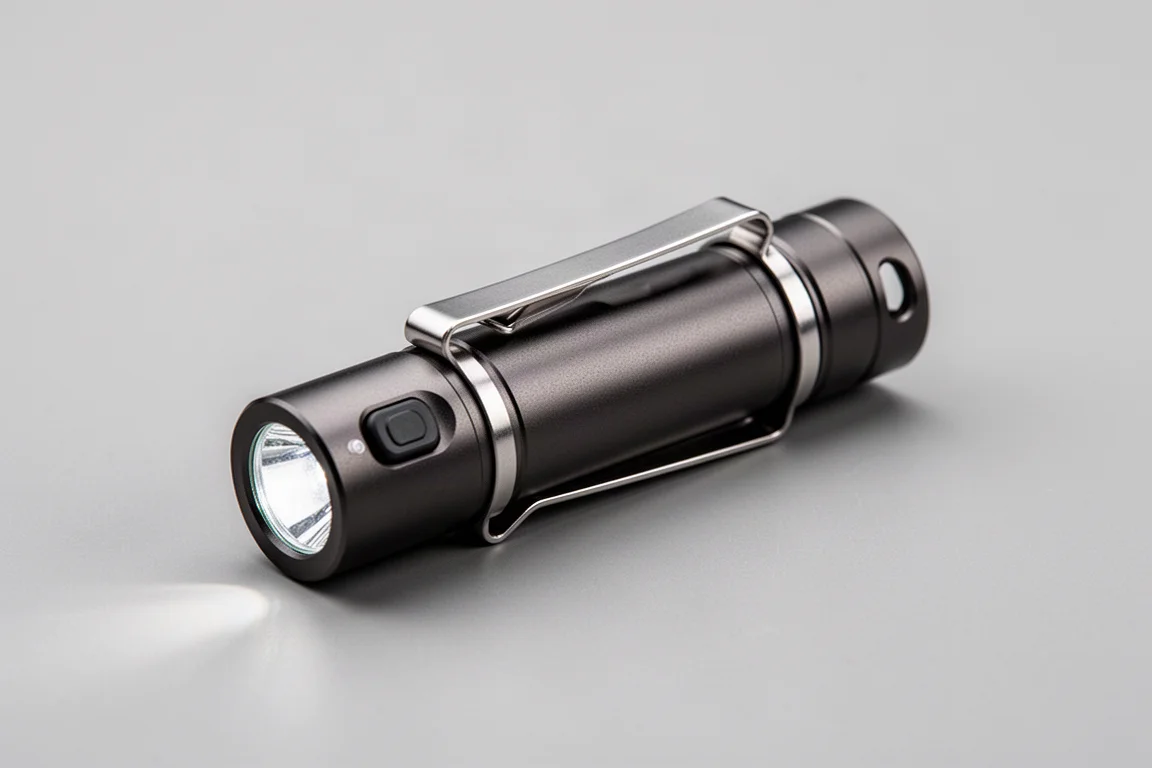
Buying advice: which one should you get?
If you value the polished charging ecosystem and do not mind the proprietary battery and dock, the Baton 3 remains an excellent light. If you want the smallest possible carry, standard CR123 compatibility, and a tight throw-focused beam for around $30, the W1 is a bargain. If you prefer a wide, floody beam and swappable 18350 cells, the T1 fits, even if it is the weakest match for the Baton 3. For most people, though, the T1S is the smart pick: comparable or better output and runtime, USB-C charging, a magnetic tail, and no battery lock-in, all at a noticeably lower price.
Conclusion
The Olight Baton 3 is a genuinely great flashlight, but it is no longer the automatic choice. The ThruNite T1S matches it where it counts, beats it on reach and price, and drops the proprietary baggage. If ThruNite tightens efficiency further, the Baton 3’s lead may disappear entirely. Until then, the T1S is the light to beat.
Further reading
Related Reviews
Flashlights
Best Flashlights 2026: Brightness, Battery, and Value Compared
We tested 18 flashlights across a wide price range to find the best performers in brightness, battery life, and durability.
Flashlights
Nitecore LA10 Review: A Tiny 2-in-1 Lantern That Nails the Basics
The Nitecore LA10 pairs a pocket-sized lantern with a single AA battery, a magnetic tail cap and a five-year warranty. Here is where it shines and where it struggles.
Flashlights
Wuben G5 Review: A Compact Everyday Carry Flashlight
The Wuben G5 is a small, rechargeable flashlight with a pivoting head, magnetic base, and color modes. Here is how it performs as an everyday carry light.