Camping Stoves
OEX Takana vs Jetboil Minimo: A Budget Camping Stove Against the Market Leader
Two one-litre camping stove systems compared on boil time, flame control, packing and price, from a roughly £35 budget option to a premium favourite.
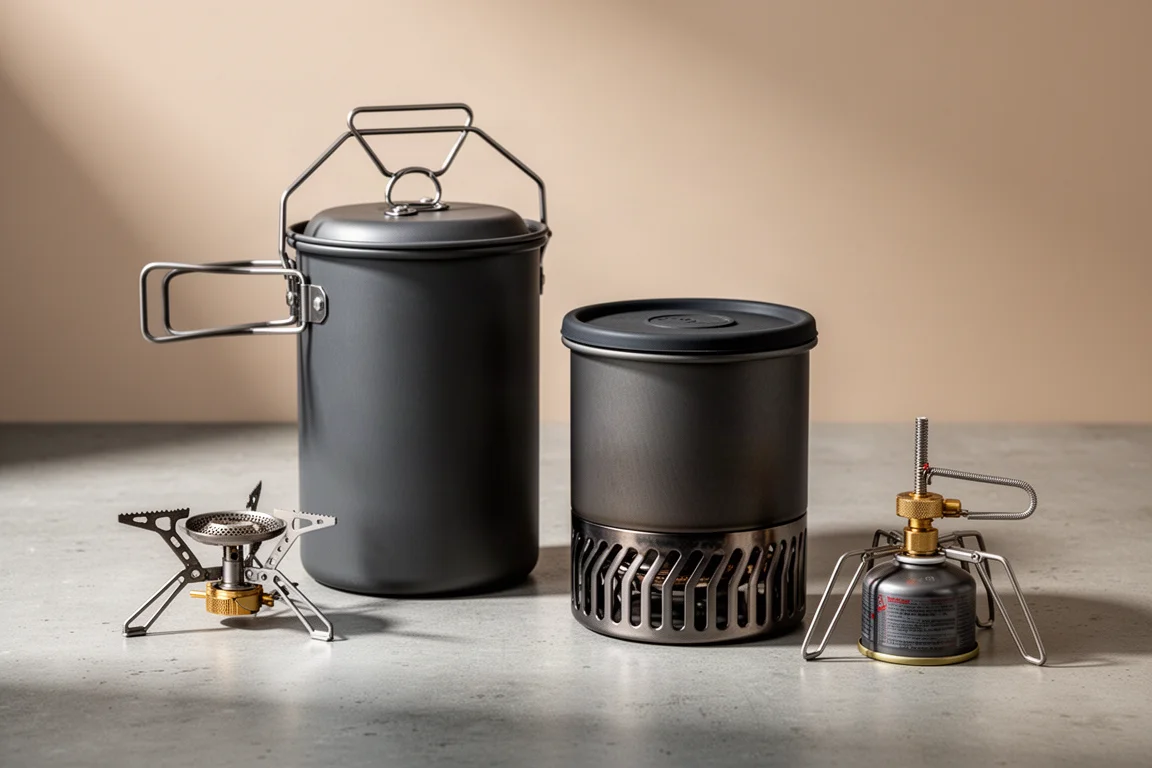
Introduction
All-in-one stove systems have become the default choice for backpackers, bikepackers and anyone who wants a hot drink without carrying a full cook set. Two one-litre systems sit at opposite ends of that market: the OEX Takana, which sells for around £35, and the Jetboil Minimo, which typically runs from about £100 to £160 depending on where you buy it.
Both follow the same basic recipe. A burner screws directly onto a gas canister, a pot locks onto the top of the burner, and a canister support stand clips to the base of the canister for extra stability. Both include a piezo igniter, and both come with a folding pot support for a frying pan or a second pot. The interesting question is what actually changes when one system costs roughly three times as much as the other.
What Matters in a Compact Camping Stove
Five things decide whether a stove system earns its place in a pack: how quickly it boils water, how precisely you can control the flame, how much it weighs, how neatly it packs, and how well it is built.
Boil time matters most for dehydrated meals and quick brews. Flame control matters if you genuinely cook rather than just boil. Packed size and weight matter on longer trips. Build quality shows up over seasons of use, and it is usually most visible in the valve that regulates gas flow.
OEX Takana: The Value-Focused Option
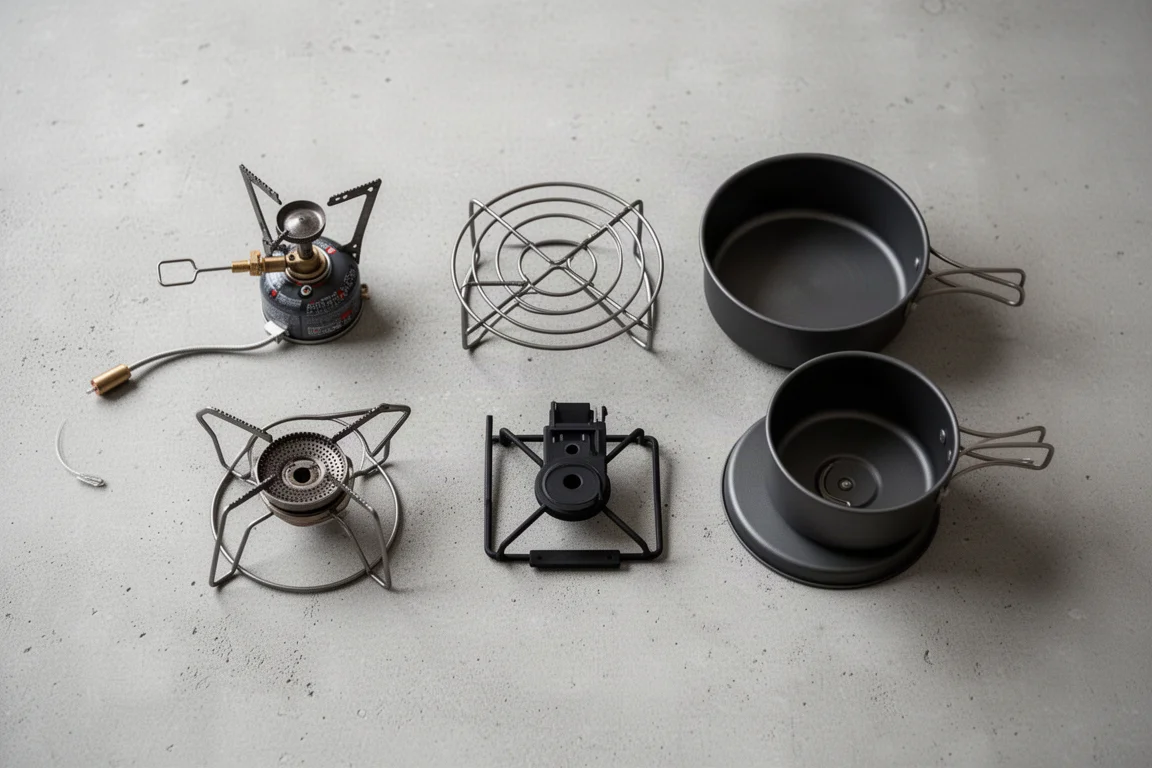
The Takana is a one-litre pot system that mirrors the layout of the market leader at roughly a third of the price. Its strongest feature is how it stores: the burner, the folding pot support and a 230g gas canister all nest inside the pot, and the lid clips down over the top with a small metal catch. Once packed, there is virtually no rattle.
The pot weighs around 617g, and the packed package is slightly larger than the Jetboil Minimo’s. A carry bag is included, which keeps soot away from everything else in a rucksack, although the bag is a little awkward to fit.
The regulator is where the compromises show. The valve moves from a low flame to full power within about half a turn, so fine simmering takes very small adjustments, and the burner runs noticeably louder than the alternative. The thread where the burner screws onto the canister is tight, which helps guard against leaks. The lid has a silicone section intended to keep hands off hot surfaces, and the handle locks into place and releases with a small button.
Jetboil Minimo: The Performance-Focused Option
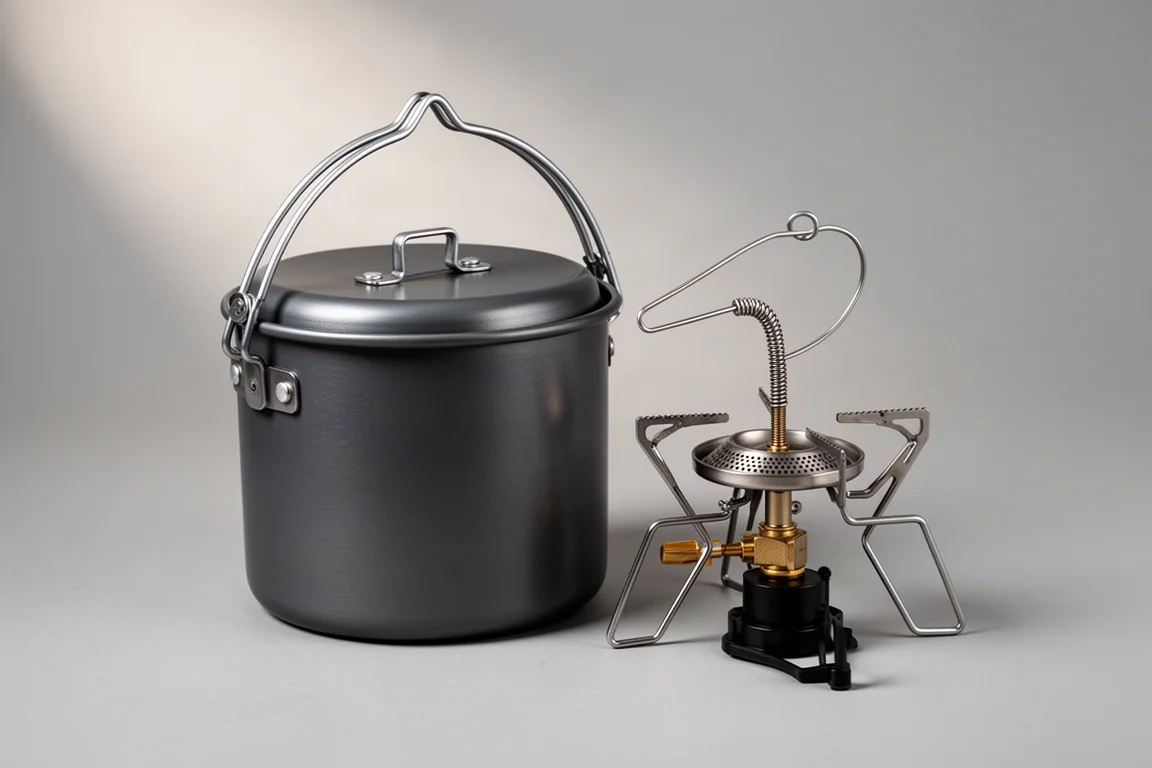
The Minimo is the benchmark this category is measured against. It weighs around 521g, roughly 100g less than the Takana, and its regulator allows genuinely fine flame control, from a flame low enough to simmer right up to full power. Heat arrives almost immediately once the burner is lit.
Build quality is a clear step up. The micro valve regulator is the best example, and the lid is a simple rubber design that stays firmly in place and lifts off easily. That lid also houses the canister support stand. The supplied measuring cup protects the bottom of the heat exchanger in transit, doubles as a cup with 100ml, 200ml and 300ml markers, and the pot includes a strainer and a lip guard so you can drink straight from it or drain water off food.
Packing is the trade-off. A large gas canister will not fit inside the pot alongside the rest of the components. A small canister can go in sideways with the burner, but then there is no room for the frying pan support and the lid will not seat properly, so in practice the canister ends up stored separately in a pack. It is also worth noting that simmer control is not universal across the wider Jetboil range, so check the specific model if a low, adjustable flame matters to you.
Boil Times and Flame Control
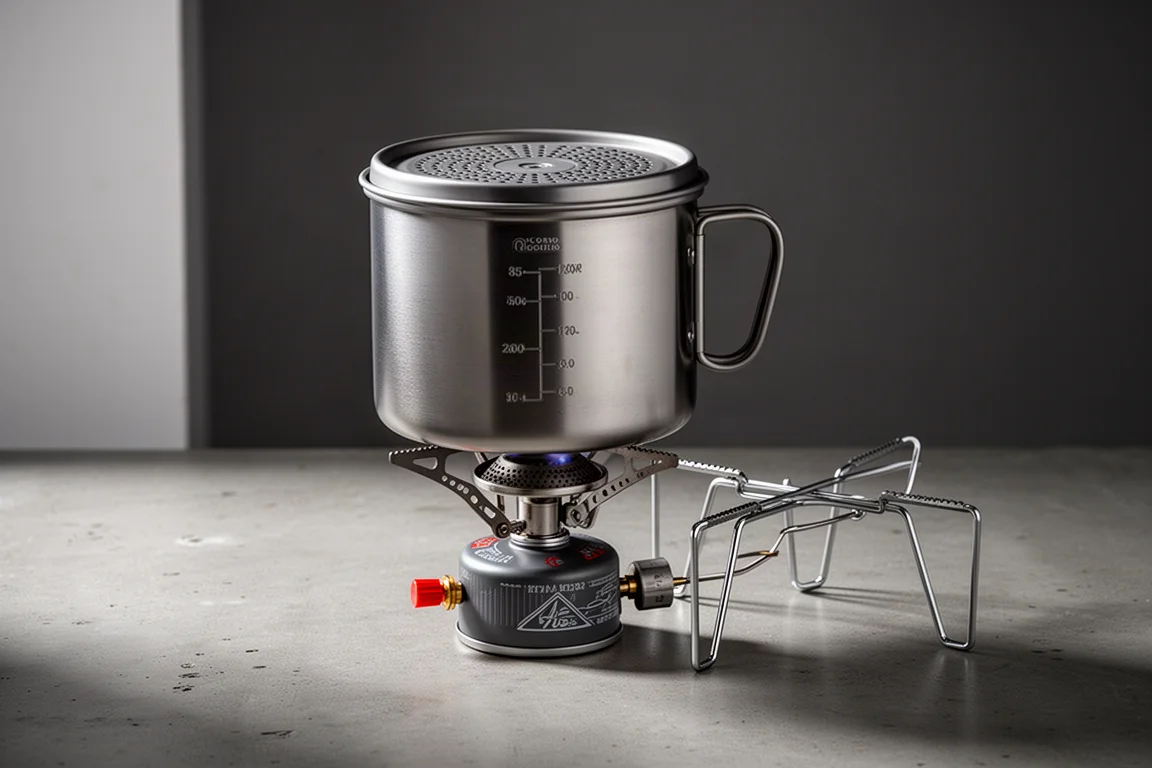
With half a litre of water in each pot, the Minimo reached a rolling boil in about two minutes and twenty seconds. The Takana took around four minutes. A gap of roughly two minutes is the single clearest performance difference between the two systems, and it compounds over a multi-day trip where every meal starts with boiled water.
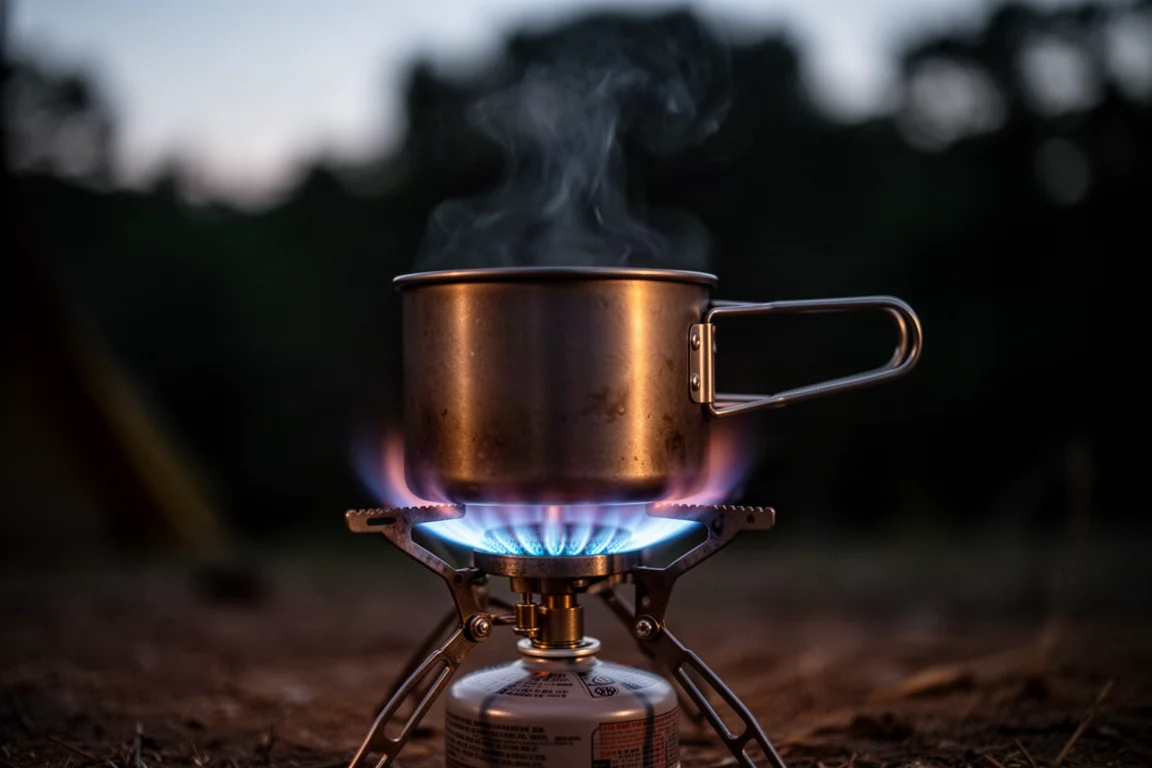
Flame control reinforces the same story. The Minimo’s valve offers micro adjustment, so you can hold a gentle simmer or push to full power without overshooting. On the Takana, the useful range of the valve is compressed into a very small movement, which makes a true simmer hard to hold. Both burners concentrate heat in the centre of the pot rather than spreading it across the base, which is normal for this style of stove.
Packing, Storage, and Portability
Packing the Takana is a neat routine: close the valve, drop the pot support to the bottom of the pot, slide the canister in, fold the legs, set the burner face down, then clip the lid on and lock the handle. The result is compact and quiet in a pack.
The Minimo is more involved. The canister twists off, a small lever folds over, the legs close around the pan support, and the assembly goes into a small bag that sits inside the pot to stop anything scratching the sides. The measuring cup then screws onto the base and, because it will not fit inside with everything else, has to be carried separately in a rucksack. The Minimo is the lighter of the two by around 100g, but it takes more pieces to manage.
Cooking and Everyday Use
Both systems include a folding pot support for a frying pan or a larger pot, and both perform well enough for real cooking rather than just boiling water.
The Minimo’s support lines up with the ridges on the matching skillet, so the pan sits very securely and barely moves. The Takana’s support is wider and holds a pan of the same size sturdily, though there is a little more movement because it is not designed around that specific pan. On both stoves, the centre of the pan runs hotter than the edges, which is worth remembering with anything that burns easily.
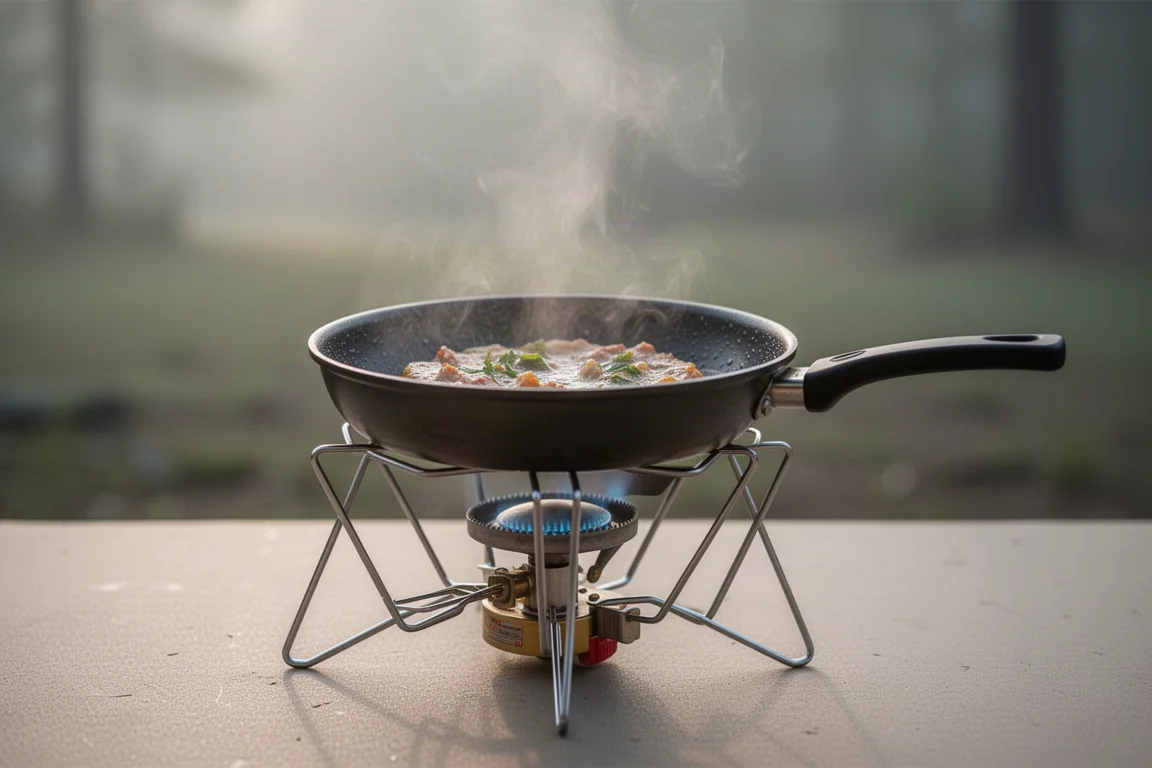
A canister support stand is included with each system and clips onto the base of the gas canister, adding stability so a pot is less likely to be knocked over inside a tent. Both also use a piezo igniter, so no separate lighter is needed.
Build Quality and Value Over Time
The Minimo is manufactured to a higher standard, and the micro valve regulator shows it most clearly. That is exactly what you would expect at roughly three times the price.
The Takana does everything a simple water-boiling stove needs to do, and its finish is reasonable for the money. Long-term durability is the open question with any budget stove, and it is the reason a cheaper system is worth judging over several seasons rather than a single trip.
Which Stove Should You Buy?
If boil speed, simmer control and component quality matter most to you, the Minimo is the stronger performer and the price reflects it. It is the system to choose if you cook properly on the trail, want a low, steady flame for sauces or reheating, and value a lighter pack.
If you mainly boil water, want a hot drink and a rehydrated meal without fuss, the Takana covers that ground for a fraction of the cost and packs away more neatly than its rival. For anyone starting out or working to a budget, it is a sensible first system rather than a compromise you will regret.
Conclusion
These two stoves answer different questions. The Jetboil Minimo wins on boil time, flame control and manufacturing quality, and it is the better tool for anyone who cooks rather than just boils. The OEX Takana is slower and harder to simmer on, but it boils water, cooks a simple meal, and stores everything, canister included, inside one pot at around a third of the price. Match the stove to how you actually use it and either will serve you well.
Further reading
Related Reviews
Camping Stoves
BCB Fire Dragon Mini Cooker Review: A Tiny Folding Stove With Real Trade-Offs
A palm-sized, fuel-flexible folding stove that heats water well enough, but brings flame control, stability, and fuel cost questions worth understanding first.
Camping Stoves
Boundless Voyage Titanium Alcohol and Wood Stove Review: Ultralight Cooking, Two Ways
A titanium alcohol and wood burning stove kit that weighs 4.5 oz complete, boils two cups of water in about 10 minutes, and costs $36.
Camping Stoves
BRS 32 Dual Burner Stove Review: A Folding Two-Burner That Packs Down Flat
A detailed look at the BRS 32, a slim folding dual burner camping stove that expands into a stable cooking platform for around $60.