Camping Stoves
OEX Hero vs MSR WindBurner: Two Compact Camping Stoves Compared
A practical comparison of two integrated, windproof canister stoves: what the budget OEX Hero gets right, and where the MSR WindBurner still earns its higher price.
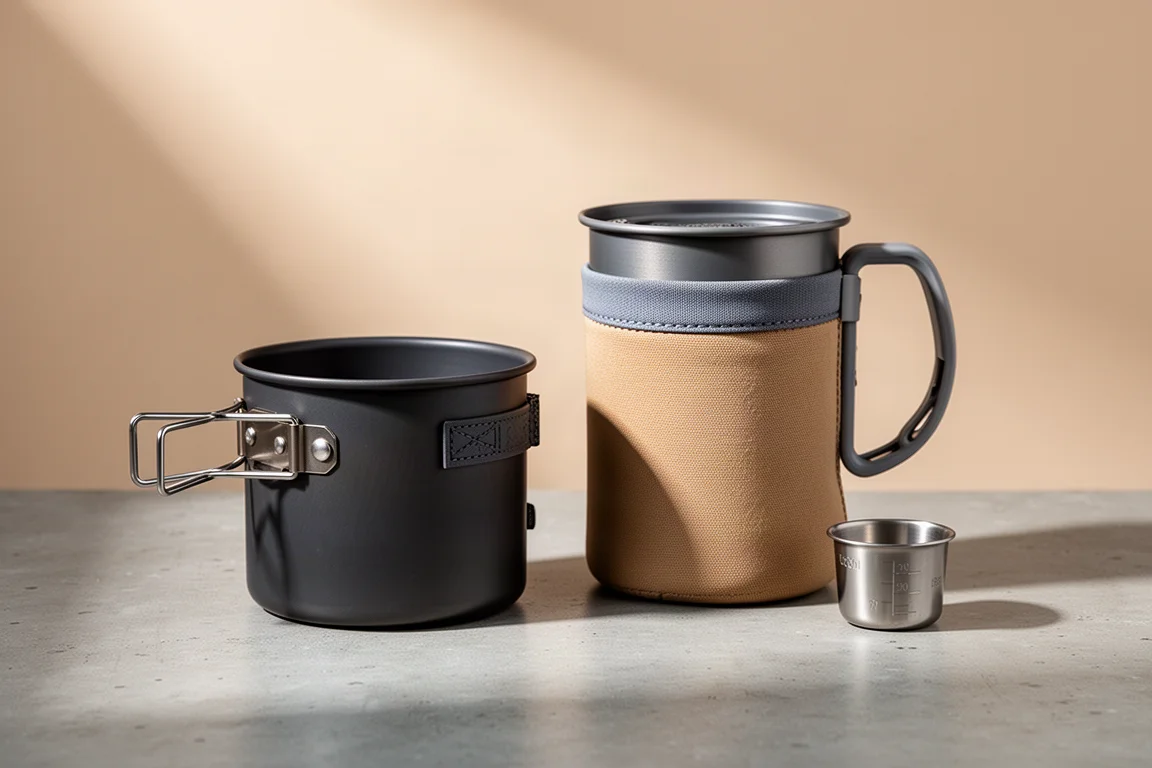
Introduction
Compact canister stoves make a simple promise: a pot, a burner and a gas canister that pack into one unit and keep working when the wind picks up. Two stoves in that category look remarkably similar on the shelf. The OEX Hero follows the same enclosed, integrated design as the MSR WindBurner, yet it sells for roughly a third of the price. That gap raises an obvious question about what you give up.
The OEX Hero is currently around £42 at Go Outdoors, where the £90 list price is discounted for members, and the same £42 price is available through the Go Outdoors storefront on Amazon. The MSR WindBurner generally sells between £140 and £170, and around £180 at Go Outdoors, which price matches other retailers. The differences between the two come down to details rather than whether either stove actually boils water in bad weather.
What Both Stoves Have in Common
Both are integrated, enclosed systems. The burner sits inside a shielded housing, and the heat exchanger is built into the base of the pot. That arrangement is what makes them windproof: the flame is protected from gusts while still drawing the oxygen it needs, and the heat exchanger pushes more of the flame’s energy into the water instead of into the air.
Both pots have a fabric sleeve on the outside, so a hot pot can be picked up without burning your fingers. Both lids fit tightly, and both stoves store the burner and a small gas canister inside the pot when packed. The two pots share the same diameter, and the burner and valve assemblies fold flat and screw onto a canister in the same way. Setup takes seconds on either stove.
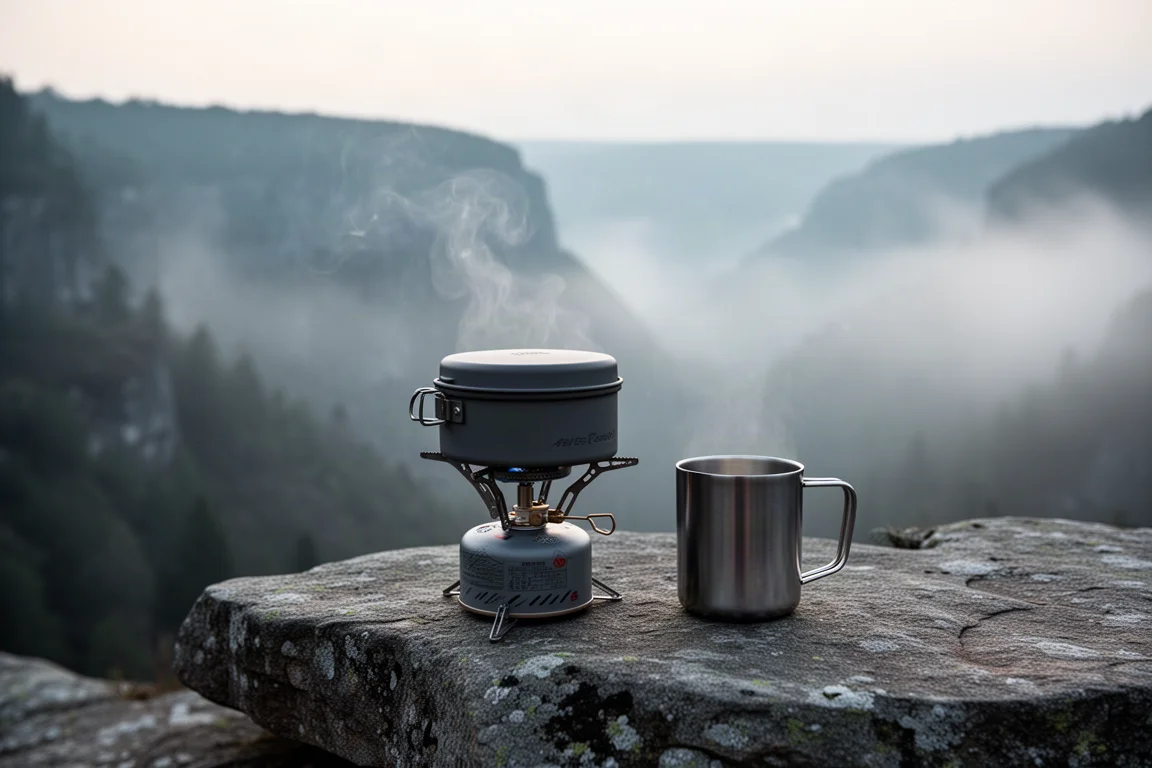
Neither stove is a full cook system in the traditional sense. They are built around boiling water quickly and reliably, which is exactly what most backpackers, bikepackers and van users want for a brew or a dehydrated meal.
OEX Hero: The Budget Pick
The OEX Hero weighs 370 g and its pot is rated at 600 ml, though the practical working volume is closer to 700 ml when it is filled to a comfortable level rather than to the rim. The lid includes a mouthpiece, a strainer and a small breather hole so steam can escape. A mesh stuff sack is included, and the handles are folding metal rather than a separate accessory.
The burner is a conventional flame design, and the stove ships with a built-in piezo igniter. That igniter matters more than it sounds. It works reliably and makes the stove noticeably easier to light in exposed, windy spots. The burner is louder in use than the MSR, and the valve assembly is described as having a regulator, though not specifically a pressure regulator, so it does not carry the same claim as its rival. Packed, the OEX rattles very little. A canister support is not included, but the MSR support fits neatly inside the OEX lid if you want one.
MSR WindBurner: The Established Choice
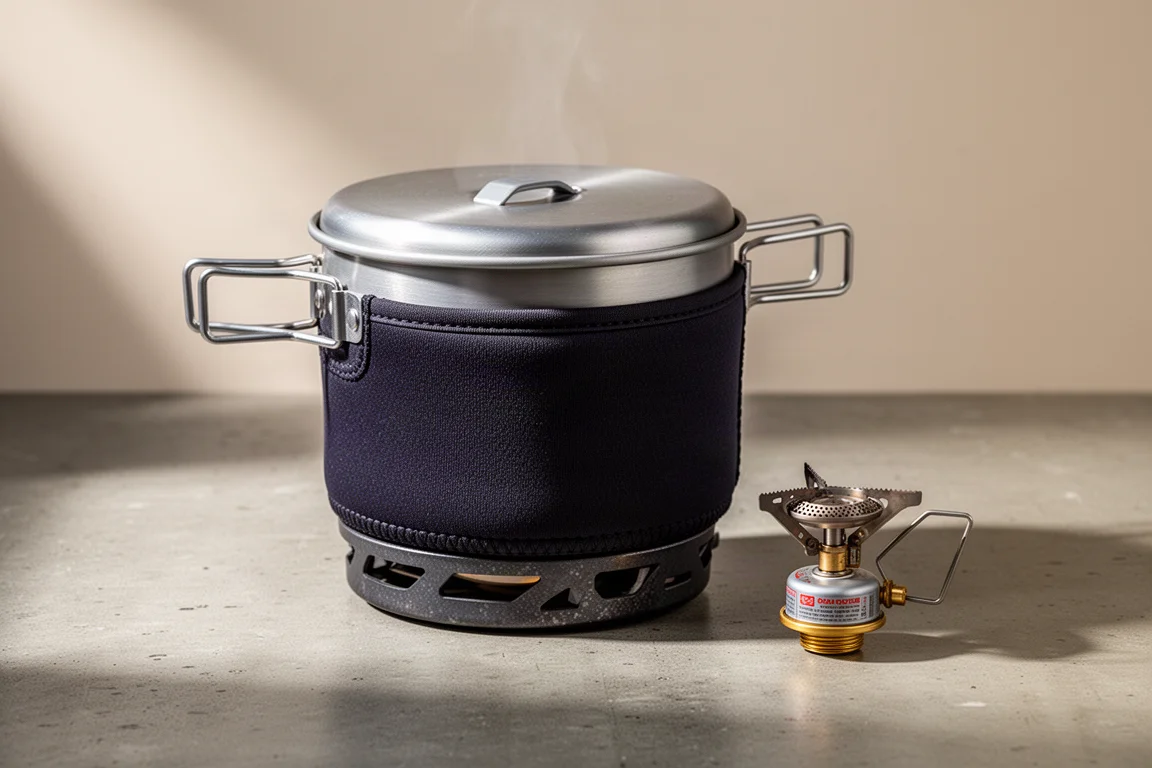
The MSR WindBurner weighs 430 g and its pot is rated at 1 L, although reaching that figure means filling it right to the rim. In normal use, around 800 ml is the realistic working volume, so the gap between the two pots is smaller than the numbers suggest. The kit includes a canister support and a measuring cup marked at 120, 240 and 360 ml plus fluid ounces. It also includes a small cloth that sits under the burner to stop it scratching the pot base.
The WindBurner uses a radiant burner that glows and radiates heat rather than producing a tall flame. Its micro regulator is designed to hold a constant gas pressure even when the canister is running low or the temperature drops. There is no igniter in the box, so a lighter or matches are required, and lighting it in strong wind takes patience. The pot sits taller than the OEX, and its single handle is a plastic and card construction rather than a pair of folding metal handles. It is available in several colours, including red.
Boil Times and Wind Resistance
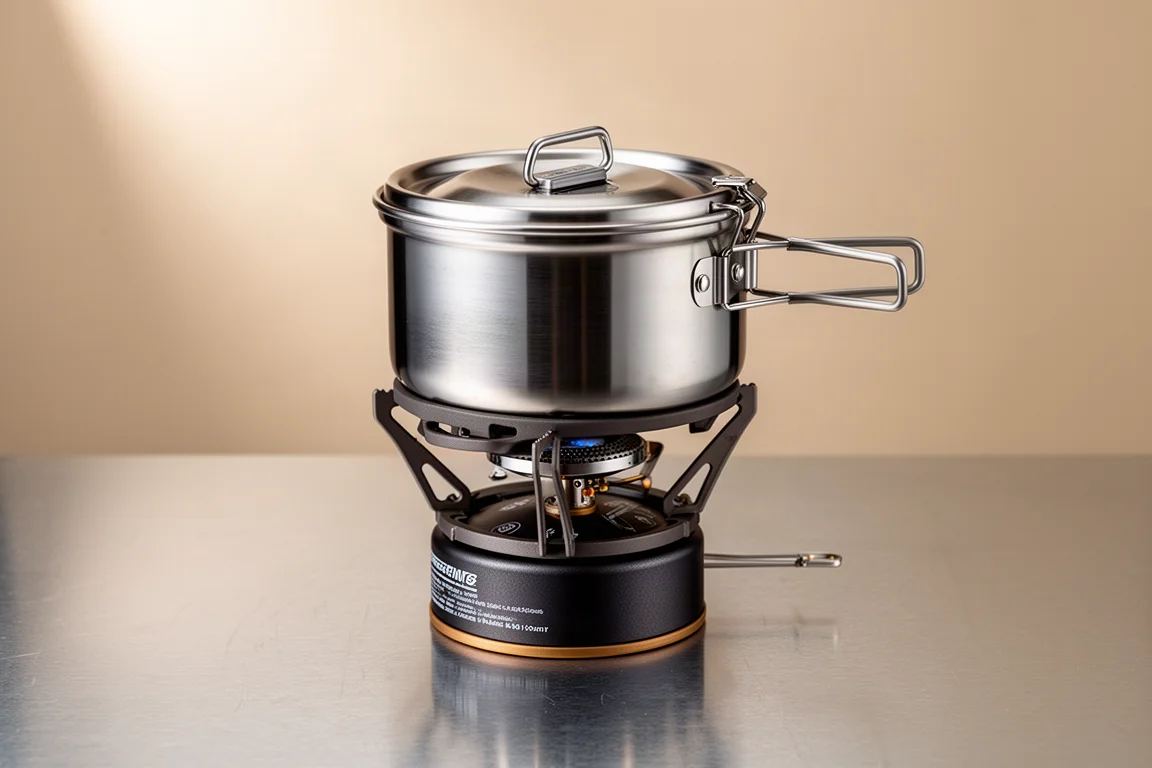
With 500 ml of water in each pot, both stoves reached a hard rolling boil within about ten seconds of each other, right around the 2 minute 44 second mark. On raw boiling speed, the price difference buys almost nothing.
Wind resistance is similarly close. Both stoves kept their flames going in gusty conditions, and neither blew out once the pot was in place. The real difference is ignition. Without an igniter, the MSR is awkward to light when the wind is strong, because the flame is repeatedly blown out during the attempt. The OEX piezo igniter sidesteps that problem, and because the burner sits inside the housing, the stove can even be lit with the pot already on top, although that is not the recommended or the safest method.
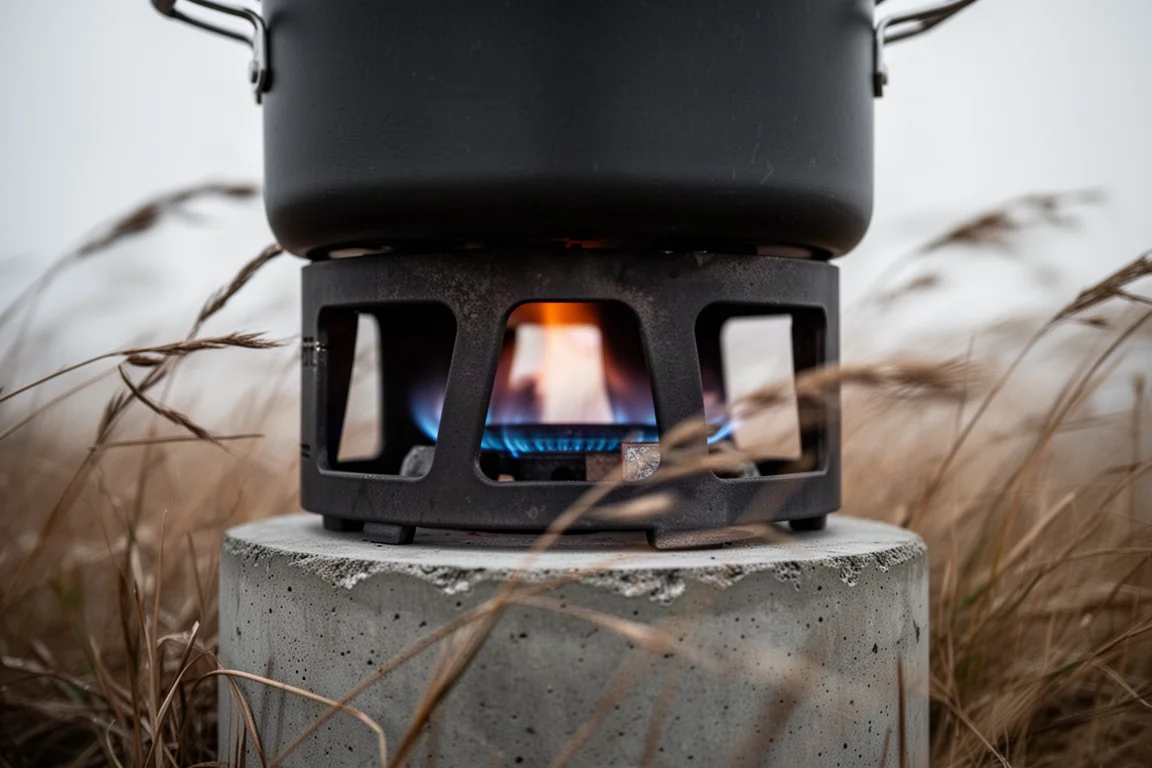
For anyone who brews up in exposed places, the igniter is the single most noticeable difference between the two stoves in daily use. It is a small feature that shapes how the stove feels on a cold, windy morning.
Packing, Weight, and Fuel Efficiency
Packing both stoves is straightforward. Unscrew the burner from the canister, fold the regulator flat, drop the burner and a 100 g canister inside the pot, and the lid goes on. The OEX is the lighter of the two at 370 g against 430 g, and it packs more quietly. The MSR’s looser internal fit produces more rattle, which the supplied cloth partly addresses.
Fuel efficiency comes down to the heat exchangers. The MSR uses a twisted helical coil inside the pot base, while the OEX uses a straighter exchanger closer in style to a Jetboil. Both are efficient with gas. The MSR’s micro regulator should hold performance steadier as the canister empties or the weather turns cold, and that consistency is a genuine advantage on longer trips where the last of a canister has to stretch.
Cooking Beyond Boiling Water
Both stoves can be turned down enough to simmer, though the control is closer to all or nothing than a dedicated camp stove. Where both fall short is frying. Neither has a pot support that accepts a regular frying pan, and placing a pan directly on top simply snuffs out the flame.
Aftermarket pot supports exist that may fit, but they are a workaround. MSR sells a dedicated WindBurner frying pan with a shaped base that fits only this stove family, and it costs around £70. Its heat distribution is uneven, with cooking concentrated in the centre rather than spread across the pan. For most buyers, these stoves are best treated as boilers rather than general cook systems.
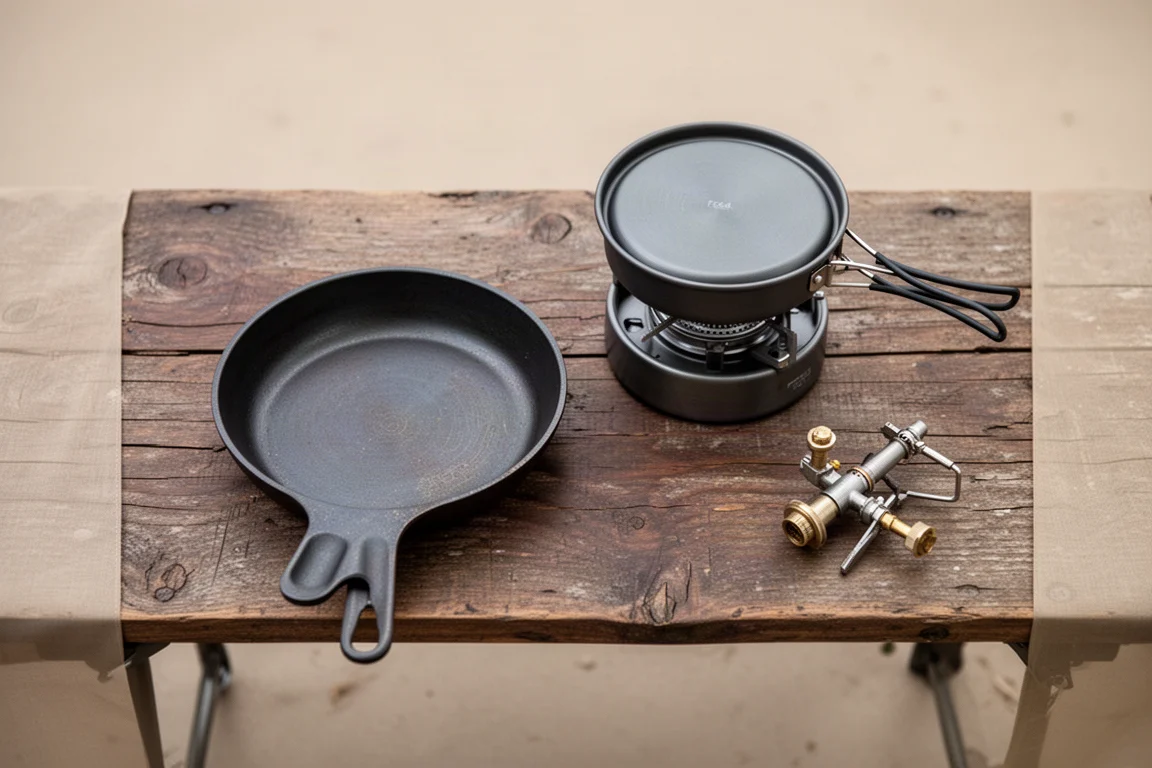
If frying is a priority, a separate pan-compatible stove makes more sense. As boilers, both of these units do exactly what they were designed to do.
Handles, Lids, and Everyday Handling
The OEX lid closes tightly and includes the drinking mouthpiece, so the pot doubles as a mug. The MSR cup is a separate piece that pushes onto the base of the packed stove. It has a tight fit, and pushing it on too far makes it difficult to remove, so it is worth checking before the lid goes on.
Handles are the clearest matter of personal preference. The OEX uses folding metal handles that feel secure, while the MSR uses a single plastic handle with a stiff insert. It does the job, but a rubber or silicone sleeve would improve the grip. The OEX sits lower when assembled, which should make it slightly more stable, though the taller MSR has not caused problems in practice. The MSR burner unscrews using a plastic grip around its body, and it only accommodates a 100 g canister.
Buying Advice
If value is the priority, the OEX Hero makes a strong case. It weighs less, packs quietly, includes an igniter that solves the hardest part of windy-weather cooking, and boils water within seconds of a stove that costs roughly three times as much. The lower price does come with a smaller pot and a less specific regulator claim than the MSR’s.
Choose the MSR WindBurner if you want the larger pot, the micro regulator’s steadier performance in cold conditions or with a low canister, and the wider accessory set, including the measuring cup and canister support in the box. It costs considerably more, and a lighter or matches are still part of the kit.
Either way, both stoves deliver on the core promise of fast, windproof boiling water, and neither feels like a compromise on reliability.
Conclusion
These two stoves are close enough in real-world performance that the decision comes down to price, pot size and small conveniences. The OEX Hero covers the essentials for around £42, while the MSR WindBurner asks for a premium in exchange for a bigger pot and more consistent fuel pressure. Match the stove to how you actually cook, and either one will serve you well.
Further reading
Related Reviews
Camping Stoves
BCB Fire Dragon Mini Cooker Review: A Tiny Folding Stove With Real Trade-Offs
A palm-sized, fuel-flexible folding stove that heats water well enough, but brings flame control, stability, and fuel cost questions worth understanding first.
Camping Stoves
Boundless Voyage Titanium Alcohol and Wood Stove Review: Ultralight Cooking, Two Ways
A titanium alcohol and wood burning stove kit that weighs 4.5 oz complete, boils two cups of water in about 10 minutes, and costs $36.
Camping Stoves
BRS 32 Dual Burner Stove Review: A Folding Two-Burner That Packs Down Flat
A detailed look at the BRS 32, a slim folding dual burner camping stove that expands into a stable cooking platform for around $60.