Kitchen Gear
Oaktastic End Grain Oak Cutting Boards Review: Budget End Grain Worth Buying?
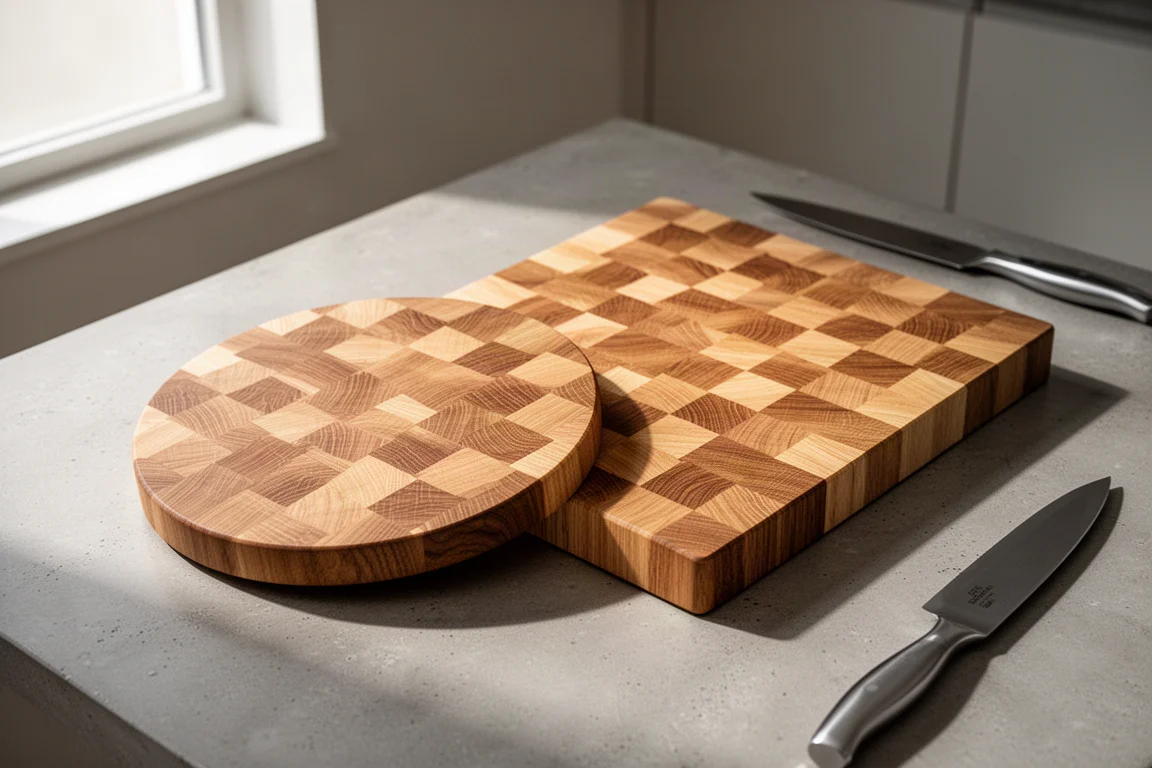
A 12-inch round and a 16x12 rectangular Oaktastic end grain oak cutting board, tested with three very different knives to see if budget end grain is genuinely worth it.
Introduction
End grain cutting boards have a reputation as the gold standard: easier on knife edges, better looking, and usually expensive. The question here is whether you can buy a genuinely good end grain board on Amazon without spending hundreds of dollars. Oaktastic sells oak end grain cutting boards through Amazon, and for this review two boards went through a full workout: a 12-inch round board and a 16 by 12-inch rectangular board, both priced well under $100 USD. They were unboxed, conditioned, cut on with three very different kitchen knives, and judged on sound, moisture behaviour, and edge friendliness.
First Impressions and Unboxing
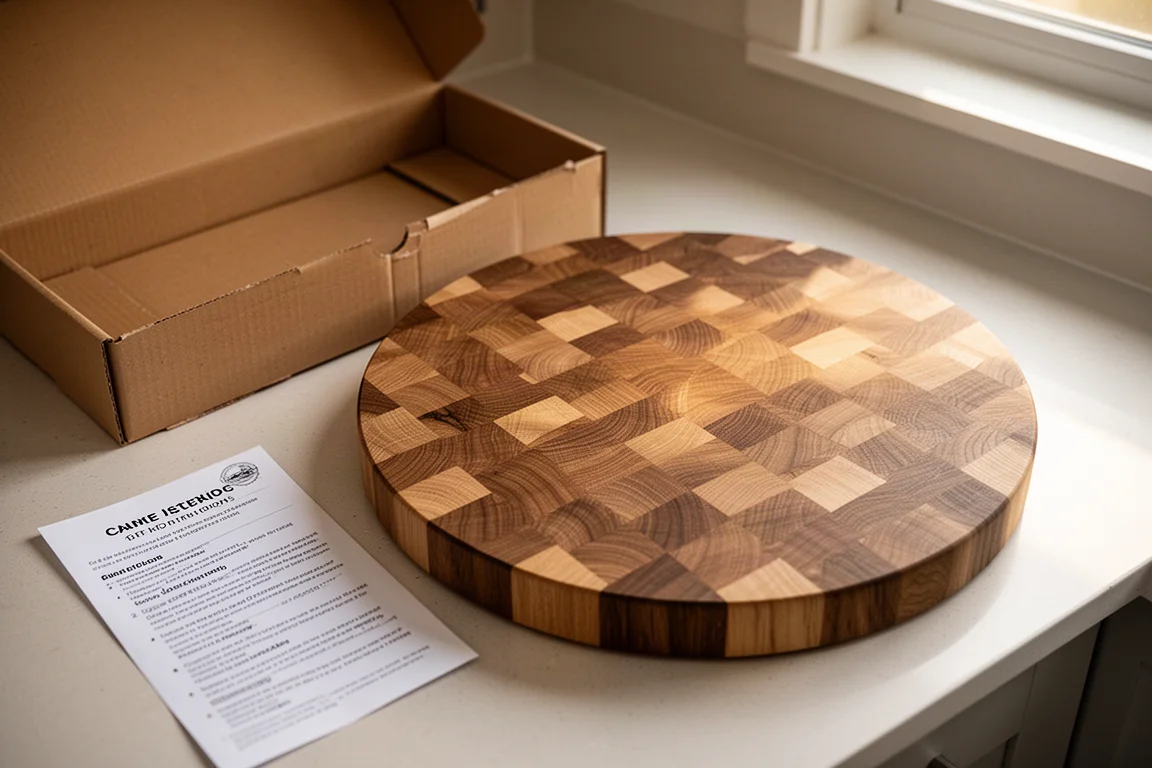
The unboxing experience earns a solid 7.5 out of 10. Packaging looked clean, branding was nice, and instructions were included. Two things hold it back. The maintenance instructions are a little too broad, suggesting warm soapy water after every use, which is unnecessary for many day-to-day tasks. Raw meat or heavily aromatic or staining foods absolutely call for a wash, but simply clearing the board is often enough otherwise.
The bigger issue: the boards arrived dry. After a heavy overnight conditioning they looked fantastic, but customers should ideally be able to pull these out of the box and start using them immediately. Pre-conditioning before packaging would make a much stronger first impression.
About Oak as a Cutting Board Material
The Janka hardness scale measures how hard a wood is, and oak sits above American walnut but below bamboo. In theory it should resist knife marks better than walnut while being less aggressive than bamboo. That matters because harder surfaces can be tougher on knife edges, especially very thin Japanese knives. The good news is that these boards are end grain, which helps significantly with edge friendliness.
How They Were Tested
Three things were under scrutiny. First, sound: extremely hard surfaces tend to produce a sharper, harsher impact, and the sound of a knife on a board reveals a lot. Second, moisture retention after conditioning and repeated use. Third, edge friendliness: would knives dull unusually quickly or chip?
To test that last point, three knives were used: a full carbon steel knife, a stainless steel knife, and one somewhere in the middle. The reason is that oak tannins have a reputation for causing carbon steel to darken quickly, and that was worth checking firsthand.
Living With the Round Board
One thing is obvious immediately: these boards are gorgeous. The grain pattern looks fantastic, food looks great on them, and knives look great on them. For food photography alone, they are seriously attractive.
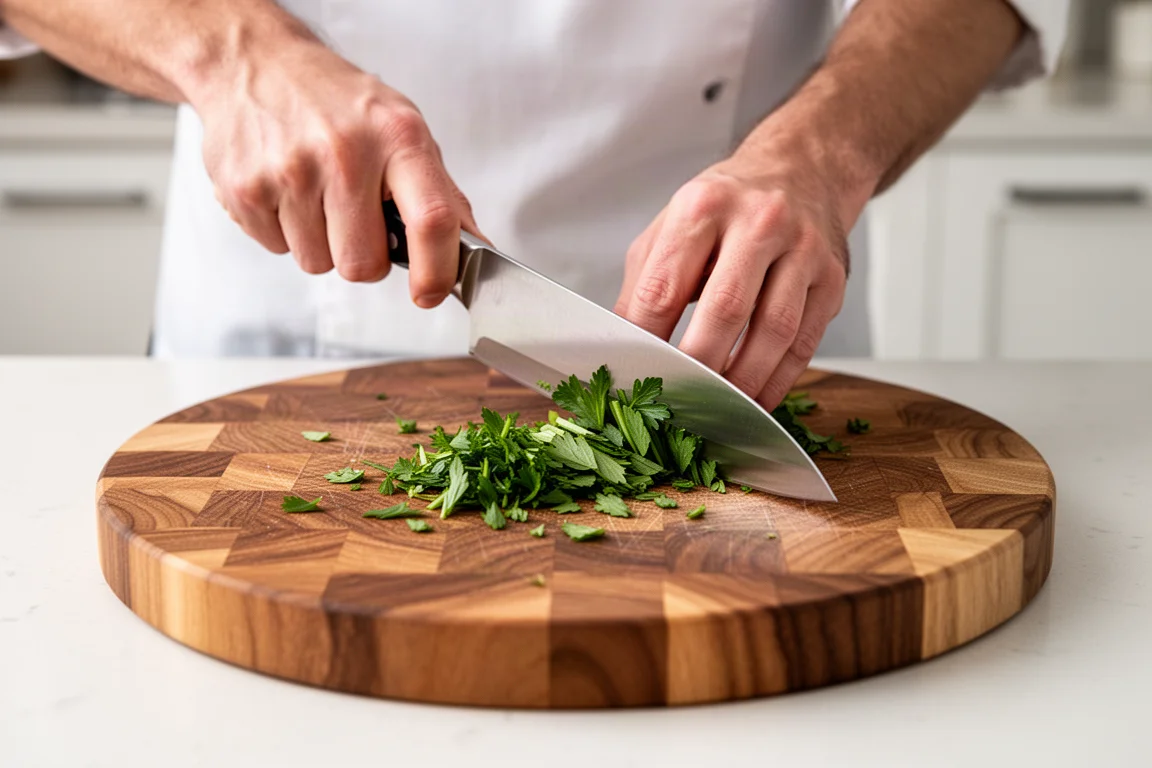
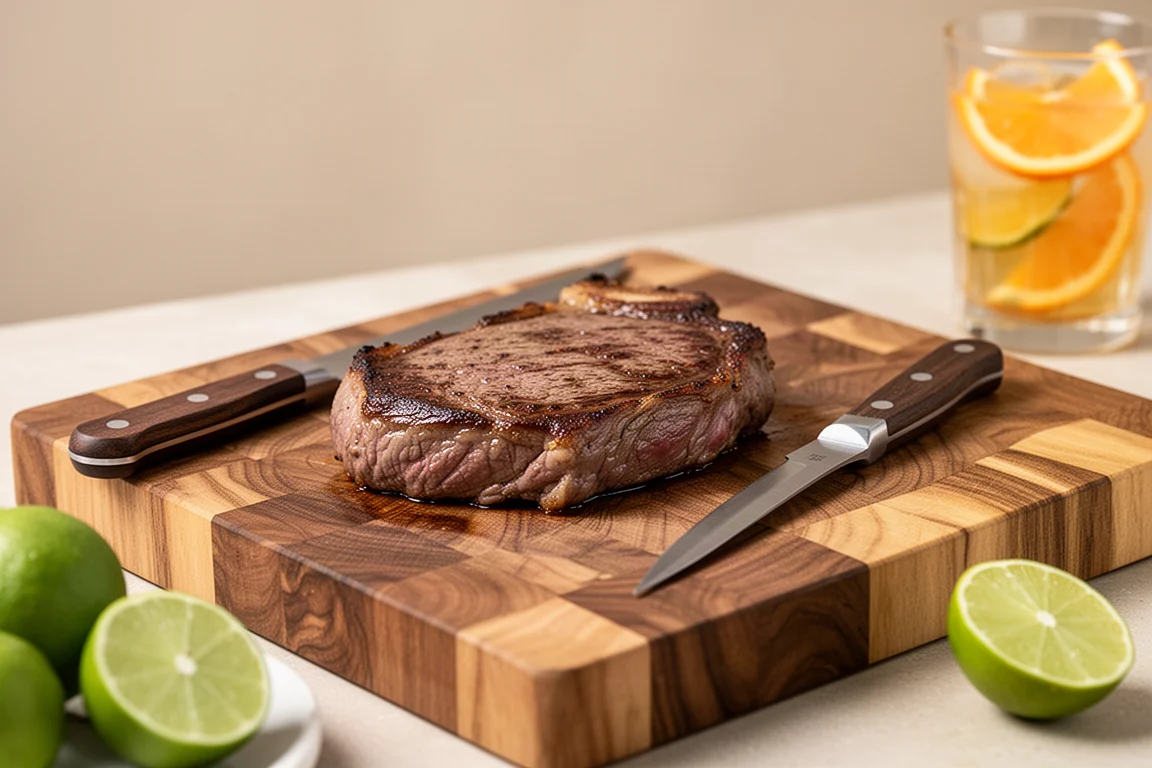
The round board was the bigger surprise. It is perfect for smaller prep tasks, perfect for serving, and perfect for tableside presentation. Imagine slicing a steak in front of guests or cutting citrus tableside. It turns prep into a bit of an experience. The limitation is real, though: if you are prepping multiple ingredients at once, space runs out quickly. For focused tasks, it is fantastic.
The Rectangular Board
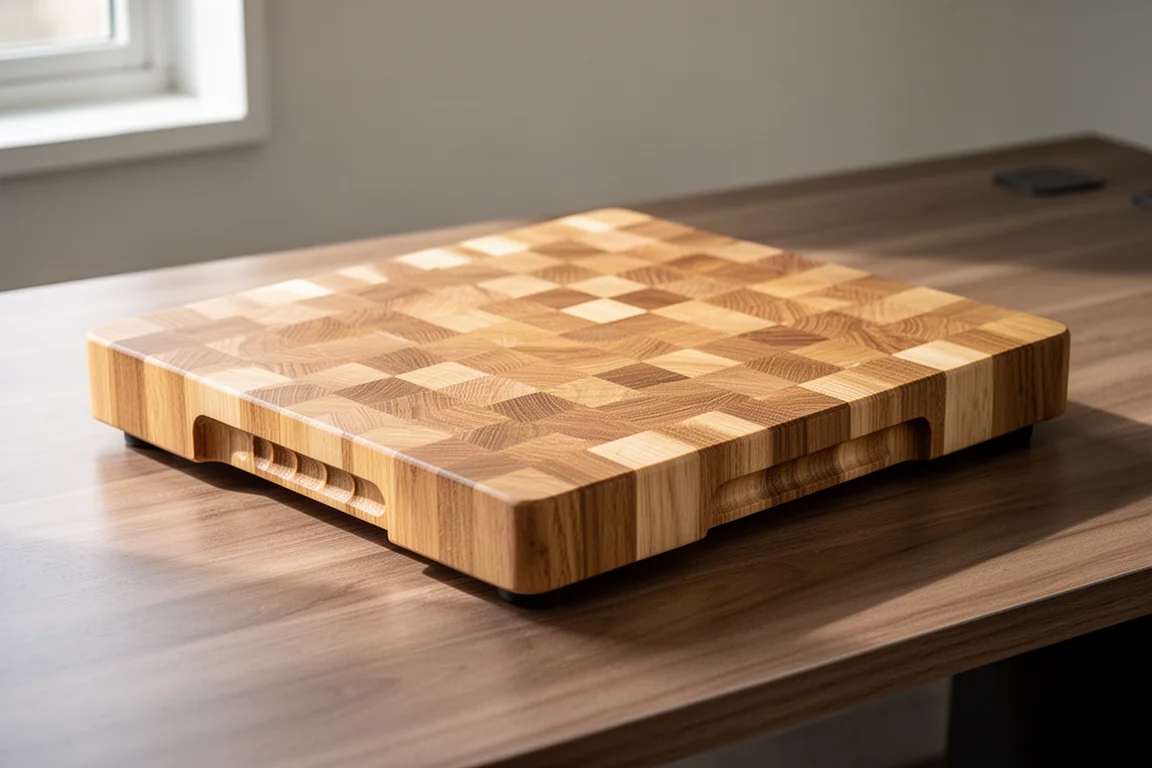
The 16 by 12-inch rectangular board performed well too. The main observation is that it feels more like a medium-sized board than a large one. Anyone who likes keeping ingredients on the board while continuing prep work will want more real estate, and an even bigger option in the lineup would be welcome.
Design Details That Matter
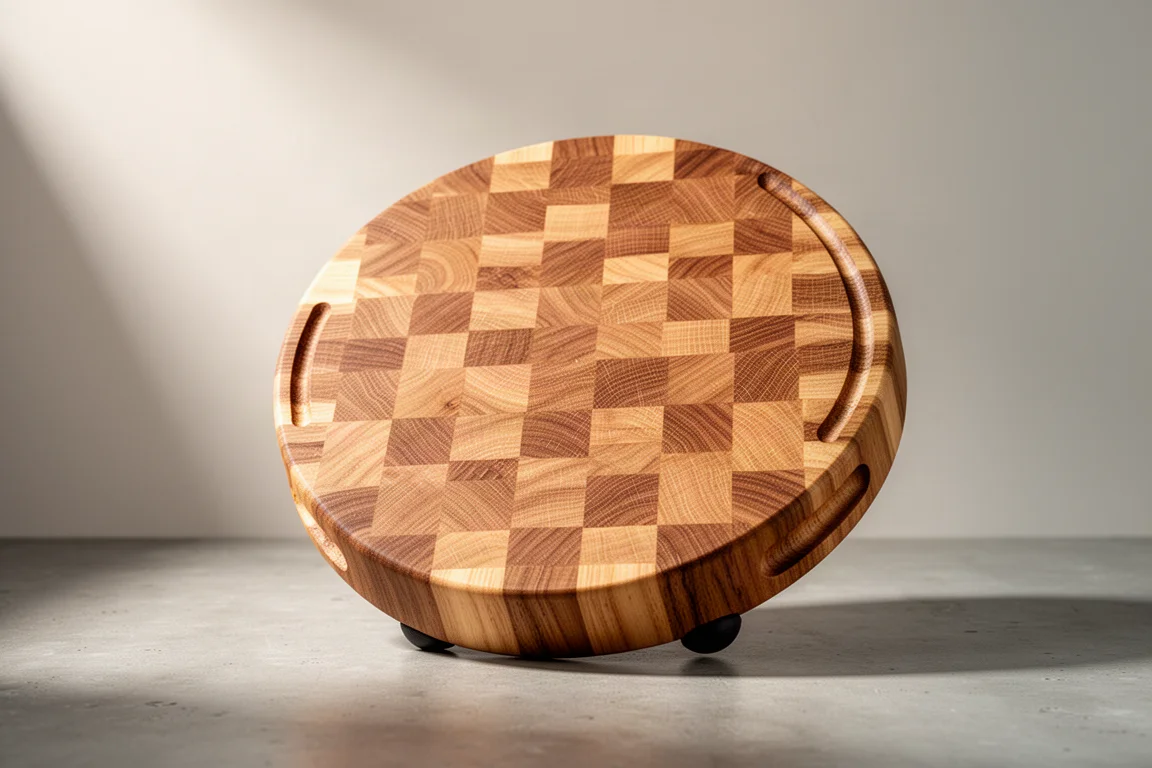
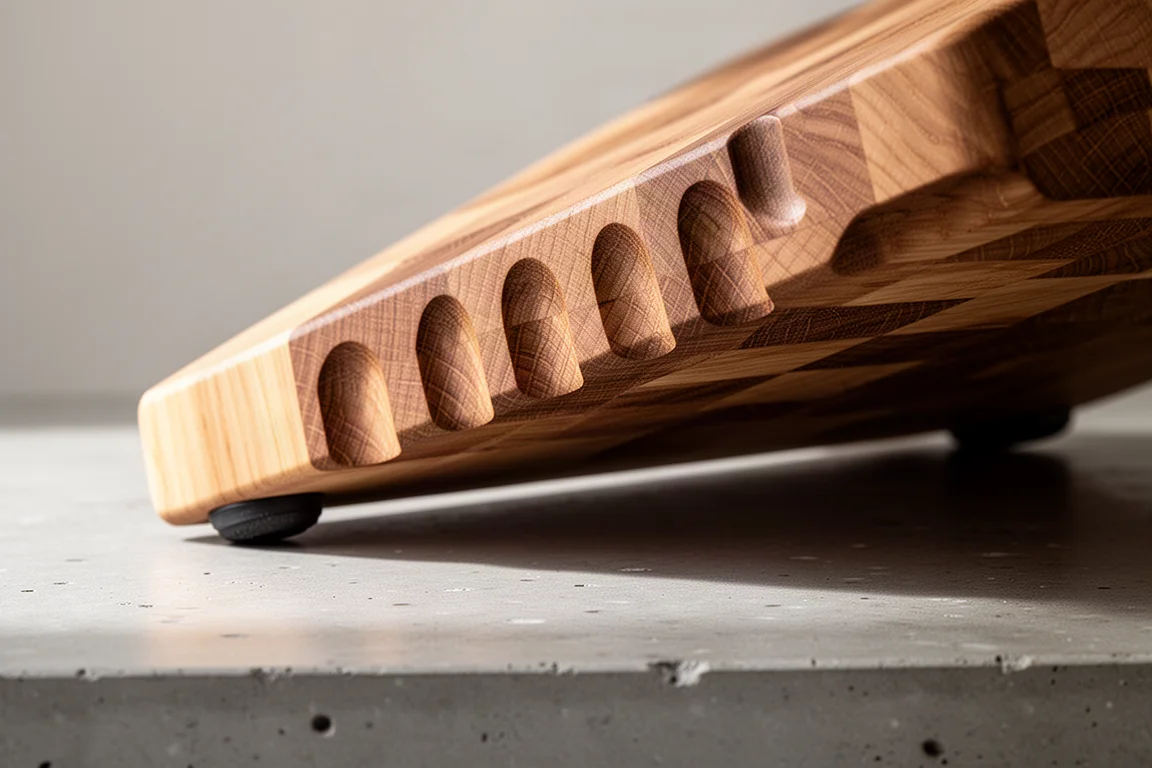
Several practical touches stand out. The finger grooves underneath made moving the boards around effortless during testing, and they are easily one of the favourite design elements here. There are no juice grooves, which is a genuine plus: they reduce usable surface area and trap food, and a properly rested steak should not flood the board anyway. The rubber feet deserve a mention too. No rocking, no wobbling, and the boards sat flat throughout testing. Exactly what you want to see.
Performance and Knife Edge Friendliness
Performance came in better than expected. Oak is definitely not the softest wood available, and you can hear that in the cut. But it also does not sound nearly as harsh as bamboo, glass, stone, or steel. Throughout testing there was no chipping, no unusual dulling, and no obvious concerns across all three knives, including the full carbon steel one.
One caveat for a specific audience: if your collection consists entirely of ultra-thin Japanese knives, oak is probably not the board to rush toward. Maple, walnut, and cherry remain safer recommendations for that particular case.
Nitpicks
The criticisms are simple. Number one: a logo somewhere, anywhere, on the side or the bottom, just to identify the board. Number two: the surface finish could be slightly smoother. Not enough to be a problem, just something noticeable. Number three: condition the boards before packaging so customers open the box and immediately fall in love.
Buying Advice
So, are budget end grain cutting boards worth buying? In this case, yes. For under $100 USD, these boards offer solid construction, good looks, multiple size options, excellent stability, and overall good performance. They will not replace the absolute favourite boards of a seasoned board collector, but that is not the point. These are for people who want a beautiful end grain board without spending a fortune, and for that audience Oaktastic has done a pretty good job.
If your prep style leans toward focused tasks, serving, and tableside work, the round board is the charming pick. If you want a general daily driver with more room to work, the rectangular board is the safer choice, with the caveat that it sits closer to medium than large.
Conclusion
Both Oaktastic boards deliver the end grain experience at a price that rarely gets you there. The round board in particular overperformed expectations, doubling as a serving and presentation piece. Dry-out-of-the-box conditioning and a missing logo are easy nitpicks rather than dealbreakers. For anyone shopping for a first end grain board under $100, these deserve a spot on the shortlist.
Further reading
Related Reviews

Kitchen Gear
Best and Worst Kitchen Gear for 2026: Stand Mixers, Pressure Cookers, and More
A practical guide to kitchen appliances worth buying and models to avoid, based on hands-on testing of stand mixers, pressure cookers, citrus juicers, dish racks, and espresso machines.

Kitchen Gear
Best Budget Kitchen Gear: Eight Value Picks That Punch Above Their Price
Eight kitchen tools that delivered excellent performance at a reasonable price, plus the trade-offs to weigh before you buy.
Kitchen Gear
Best Kitchen Gear Gifts: Seven Tested Picks From Budget to Splurge
Seven kitchen tools that earned their place, from a $15 vegetable peeler to a $1,000 indoor pizza oven.