Flashlights
Nitecore TM9K Pro Review: 9,900 Lumens and a True Spot-and-Flood Beam
The Nitecore TM9K Pro packs 27 LED cores into three emitters, hitting 9,900 lumens with a 510-meter throw. We compare it with the TM9K Tac and EDC35 to see who each light is really for.
Introduction
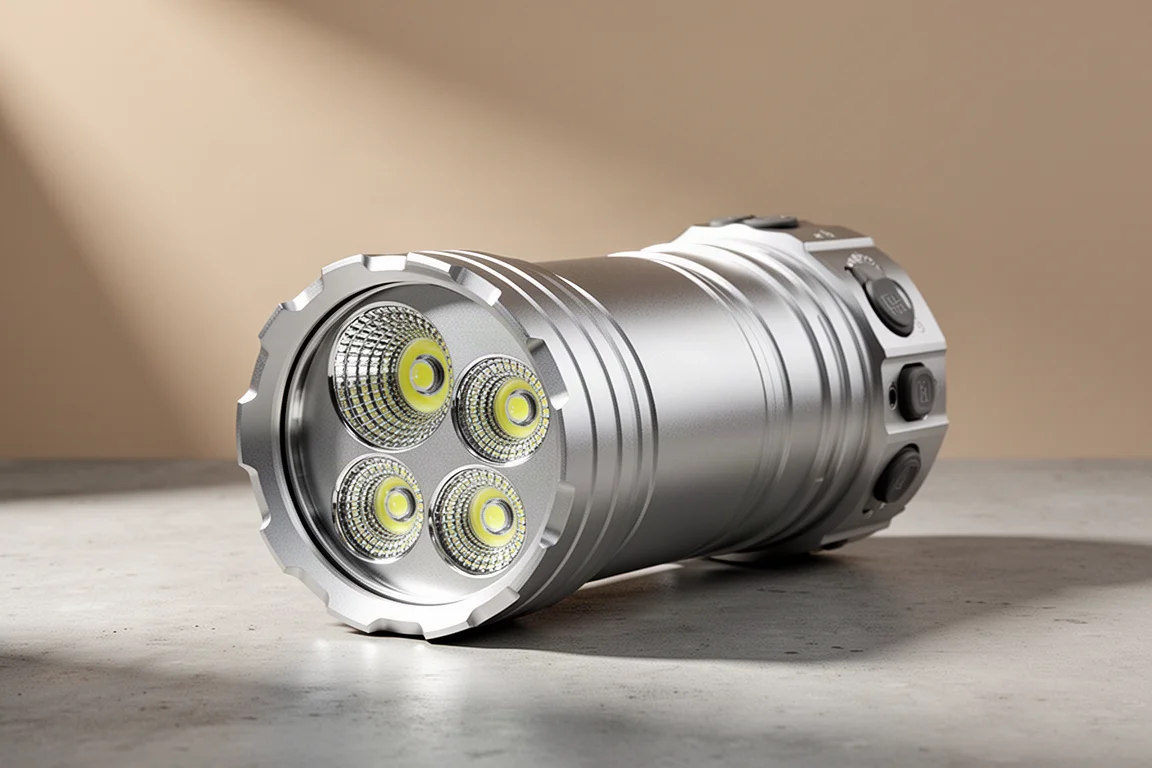
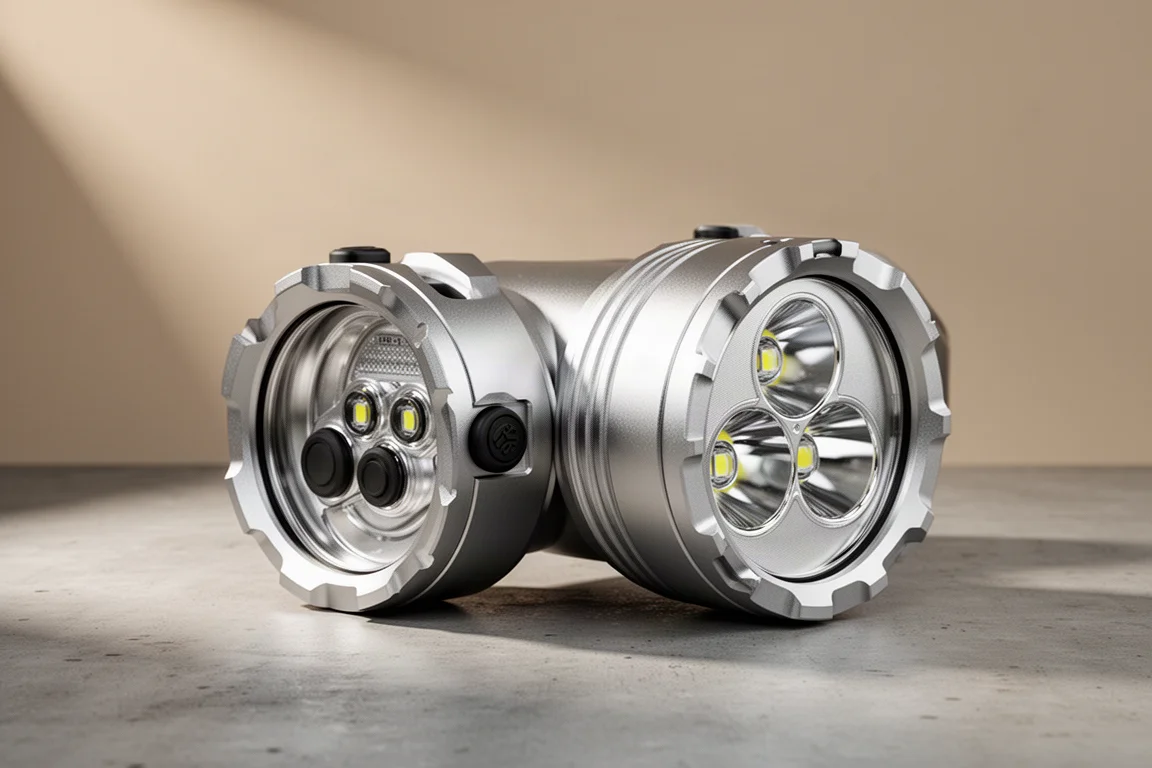
The Nitecore TM9K Pro is a compact, high-output flashlight built around a genuinely interesting light engine: instead of nine individual LEDs like its predecessor, it uses three large UHi 40 Max LEDs with 27 total cores. The result is a flashlight rated at 9,900 lumens, a 510-meter maximum throw, and a dual spot-and-flood beam from a body just over five inches long.
This review looks closely at what the TM9K Pro does well, where it falls short, and how it stacks up against two related Nitecore lights: the TM9K Tac, which shares nearly the same body, and the EDC35, which introduced the same LED technology in a smaller package.
Design and Build Quality
The TM9K Pro arrives in a reasonably nice box with a nylon holster, a split-ring pocket clip, a USB Type-C to Type-A charging cable, a lanyard, a user manual, and warranty information. The holster has a velcro-flapped pocket, a belt loop, and a D-ring, though it is a fairly generic accessory.
The body is aluminum with a Type III hard anodized finish, and it comes in a silver color rather than the black finish of the TM9K Tac. Because the battery is sealed inside, the light feels like one solid piece of machined metal. The only part that unscrews is the crenelated bezel, which reveals a lens that sits fairly deep inside. It is a self-defense bezel that is present without being overly aggressive.
Dimensions are 5.24 inches long by 1.02 by 1.57 inches, weighing 8.01 ounces (227 grams). That is compact for the output, but the relatively large head makes it less natural as an everyday pocket light.
Output and Beam Performance
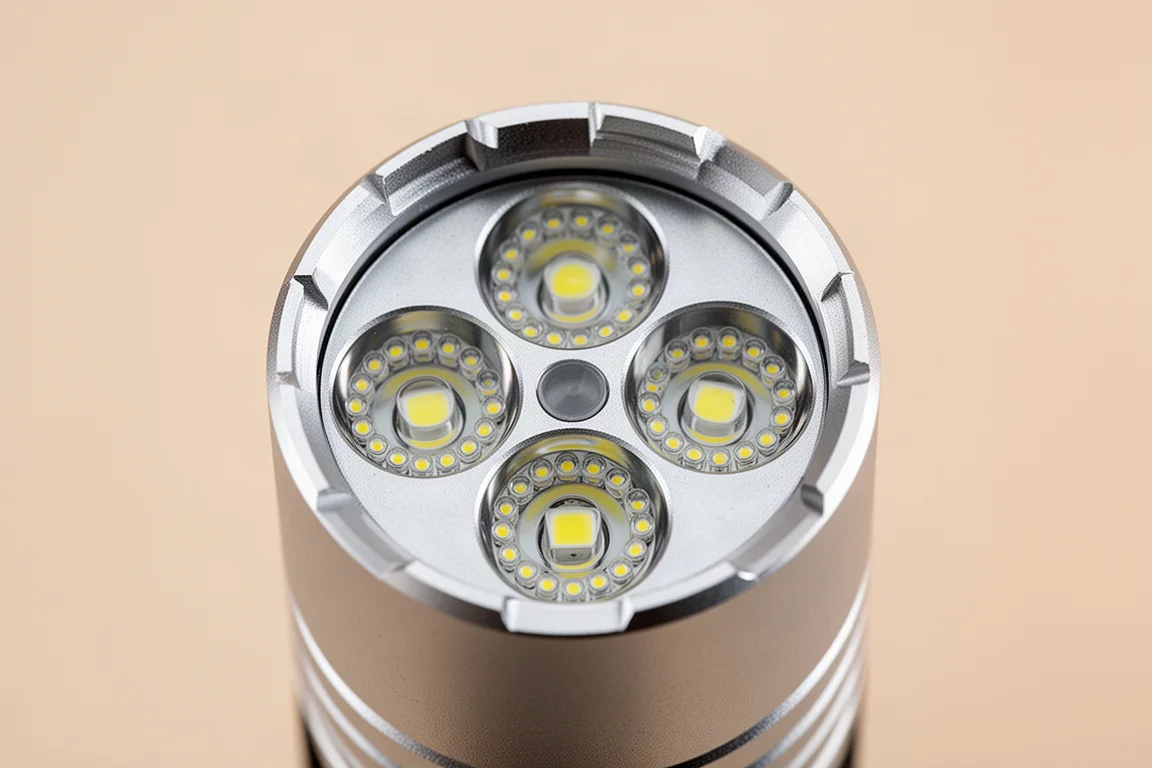
The headline numbers are impressive. The TM9K Pro is rated at 9,900 lumens, 65,500 candela of maximum intensity, and a 510-meter maximum throw, with up to 65 hours of runtime on Ultra-Low. The three UHi 40 Max LEDs each carry nine cores: the center core drives the spot mode, which Nitecore calls Search, while the surrounding eight cores drive the flood mode, called Lumen Shield. The same LED is used solo in the Nitecore EDC35.
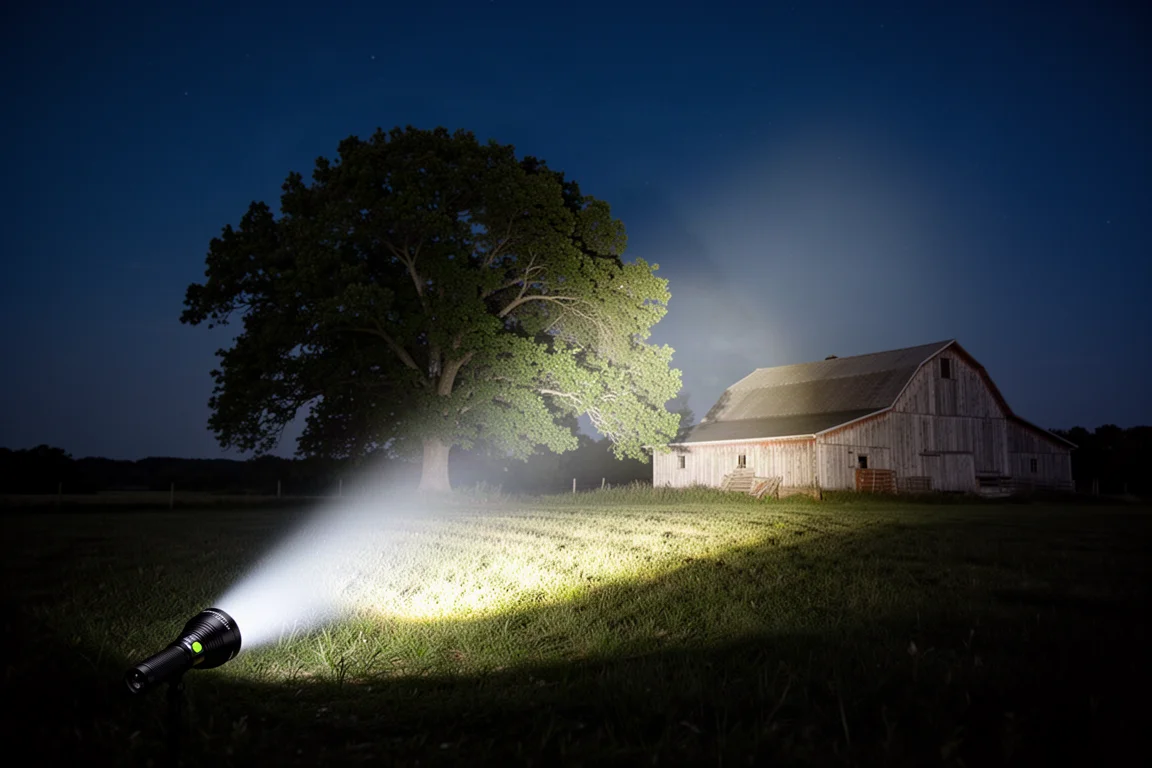
In practical use, the beam has a defined hot spot but a remarkably wide and even spill that stretches a long way to the sides. On lower modes the hot spot is quite pronounced, which is the one beam characteristic worth noting. When reading or working up close at night, the center core stays a touch brighter than ideal; an option to drive only the outer cores on low levels would be welcome.
User Interface and Lockout
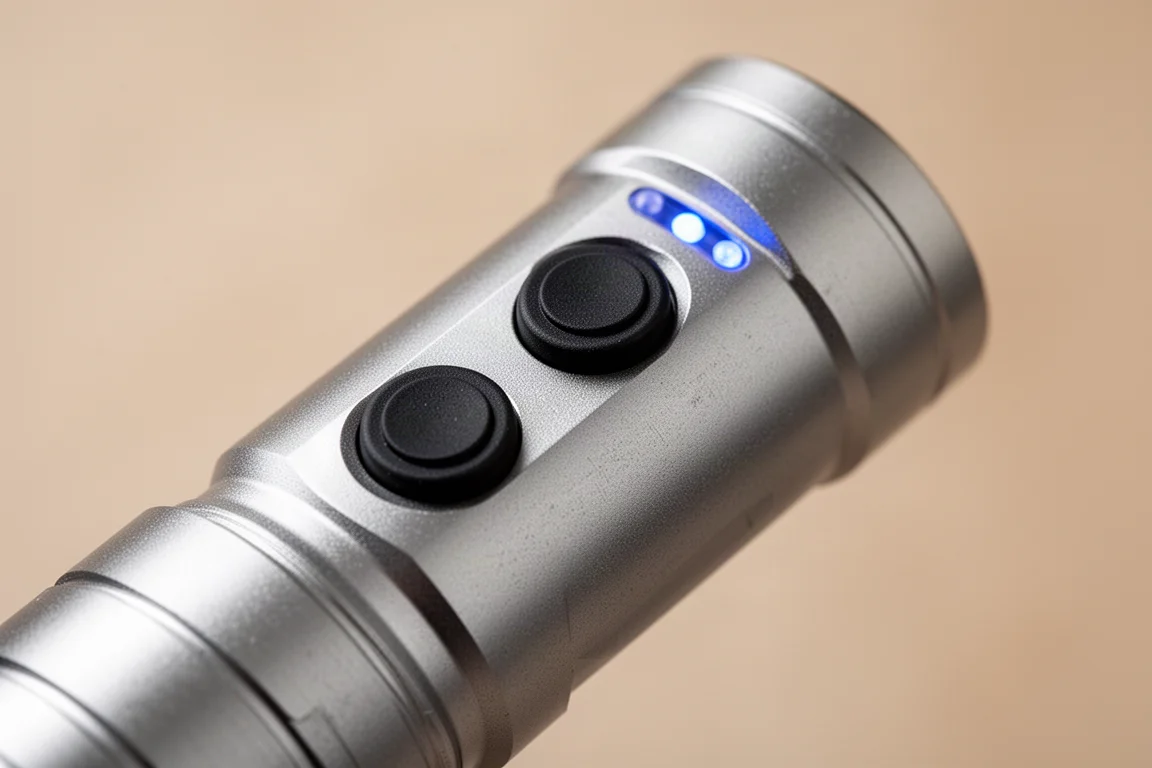
Everything is controlled by a dual-stage, dual-button tail switch: a power button and a mode button. A full press of the power button turns the light on, and a half press cycles through the four regular modes with mode memory. The mode button handles the special modes: a half press activates Search, and a full press activates Lumen Shield.
The four cycling modes are well spaced:
- Ultra-Low: 30 lumens, 65 hours
- Low: 130 lumens, 17 hours
- Medium: 500 lumens, 4 hours
- High: 2,000 lumens, 3 hours
Medium at 500 lumens with four hours of runtime is the sweet spot, and the 30-lumen Ultra-Low makes a moonlight mode unnecessary on a light like this. Search runs 6,000 lumens, and Lumen Shield runs the full 9,900 lumens. Both are burst modes with no published runtime; expect roughly 8 seconds per burst.
There are two lockout levels. A full press of the power button until the light flashes once engages half lockout, which disables the power button but leaves the special modes available. Holding until it flashes twice engages full lockout. Three presses of the power button unlock it from either state. It is not the most elegant lockout system, but with 9,900 lumens available, having one at all matters.
Notably, there is no strobe mode. That is an odd omission on a light marketed for self-defense, especially since the TM9K Tac includes one.
Safety Features
A proximity sensor near the head automatically limits output when the light gets too close to a surface, which is a sensible safeguard on a flashlight this powerful. In testing, the sensor correctly prevented Lumen Shield from reaching full output when the light was held near a desk, and allowed it once lifted away. Some proximity sensors can be triggered by raindrops, and long-term behavior of this one in wet conditions remains unverified.
Battery and Charging
The TM9K Pro uses a built-in 5,000 mAh lithium-ion pack with an 18W USB-C quick charge port, taking about three hours for a full charge. A three-stage battery indicator glows at boot and stays on while the light runs, though three stages is only a rough guide.
The sealed battery is the most significant drawback. Heavy use of the burst modes drains a 5,000 mAh pack quickly, and when it does, you are tethered to a charging cable for three hours instead of swapping in a fresh cell. On a flashlight designed around short, intense bursts, a replaceable battery would have made far more sense.
Heat Management
Heat is manageable in the regular modes but aggressive in the burst modes. After a 10-second Lumen Shield burst, the head measured around 110°F. After roughly two minutes of repeated bursts, the head reached about 135°F, and the light refused to re-enter the full 9,900-lumen mode, presumably a thermal limit. Because the body is small and fingers naturally rest near the head, repeated burst use is where gloves stop being an optional accessory.
How It Compares: Nitecore TM9K Tac
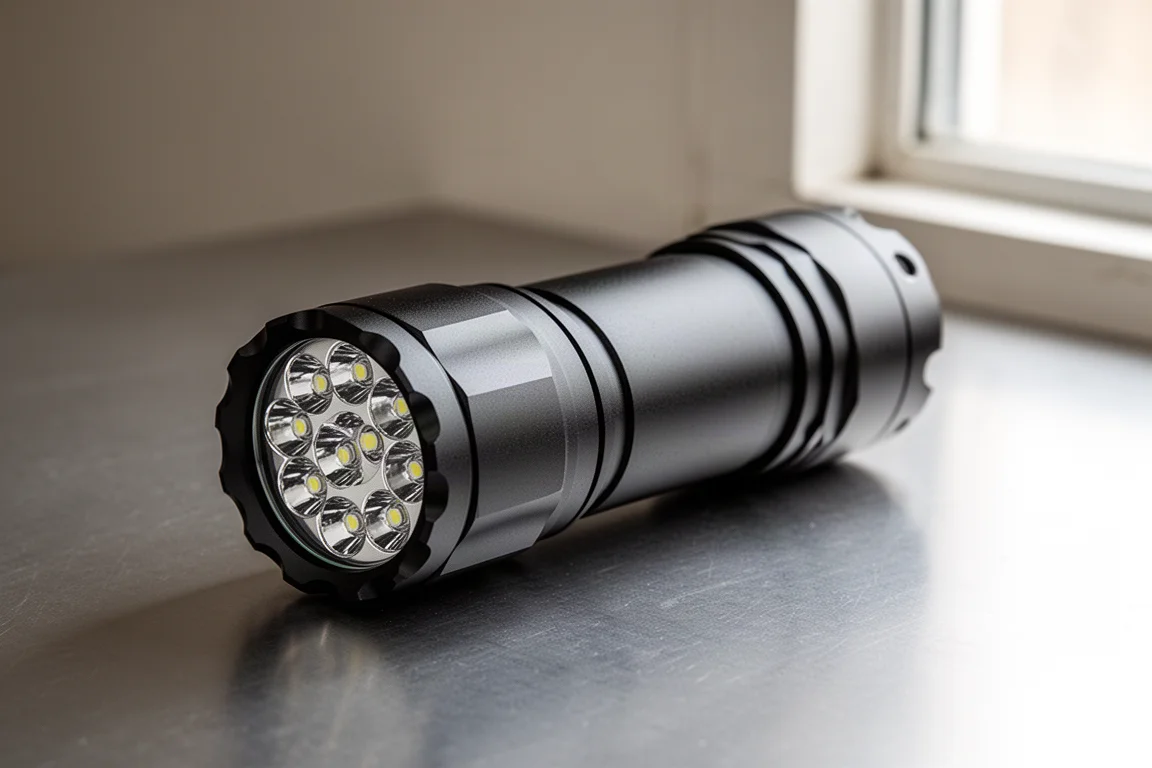
The TM9K Tac is the closest sibling. The two share an almost identical body, with the Tac about an eighth of an inch shorter and finished in black rather than silver. The Tac uses nine discrete LEDs for 9,800 lumens, with a maximum of 19,800 candela and a 280-meter throw.
The difference is the beam. The Tac produces a very even, spread-out flood with barely a hot spot, while the Pro has a clearly defined hot spot that drives its much longer reach. Both lights offer nearly identical lumen output on the cycling modes, and both step down quickly from maximum. The Tac keeps a strobe function; the Pro drops it in favor of Search and Lumen Shield.
If you want a wall of even light up close, the Tac still makes sense. If you want to reach distant objects, the Pro is the clear step forward.
How It Compares: Nitecore EDC35
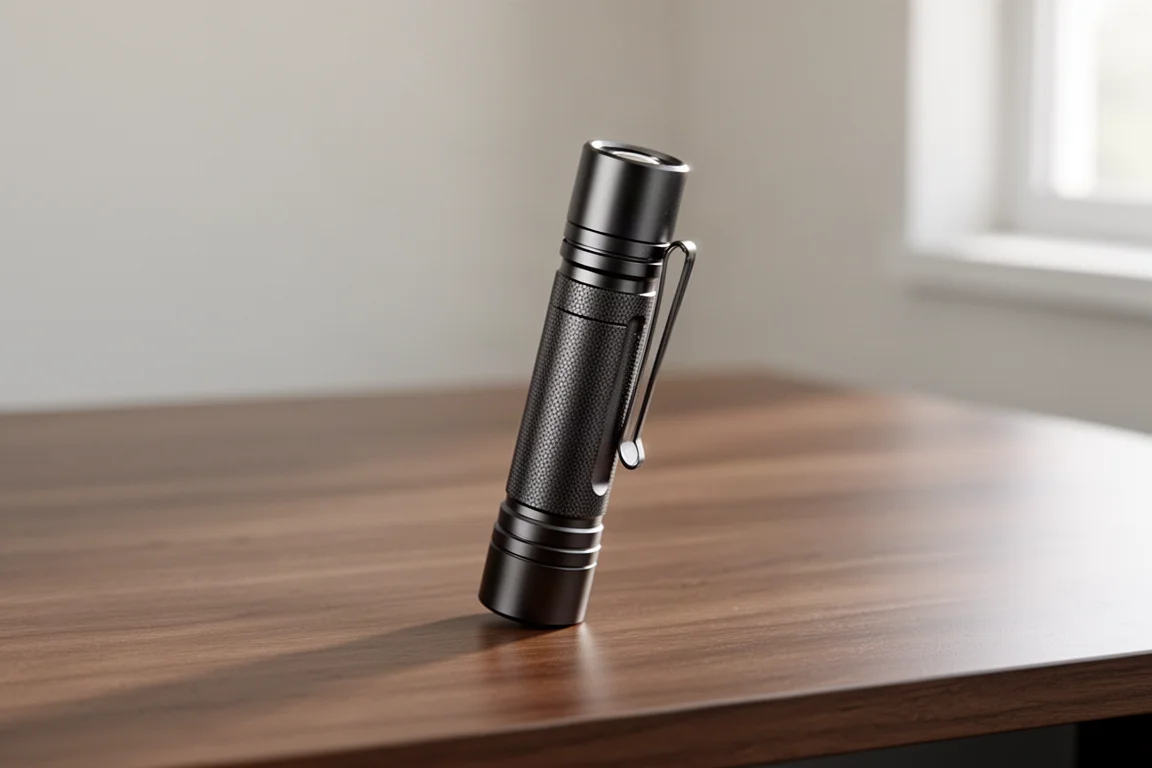
The EDC35 introduced the same UHi 40 Max LED in a single-emitter, everyday-carry format, and it also carries the Lumen Shield feature. Think of it as the more portable expression of the same technology: one LED instead of three, far less total output, but a slimmer body you can genuinely pocket daily.
Nitecore TM9K Pro: The Verdict
Buying Advice
Choosing between these three comes down to intended use:
- Nitecore TM9K Pro is the pick as a compact self-defense light. The 9,900-lumen Lumen Shield burst lasts about 8 seconds, which is realistically all you would need in that scenario, and the 510-meter Search mode reaches far beyond the Tac. As a pure searchlight, though, 8-second bursts limit its usefulness, and the large head makes it an awkward everyday carry.
- Nitecore TM9K Tac remains a strong choice if you want maximum even flood and a strobe in the same body, and do not need the extra throw.
- Nitecore EDC35 is the option for people who like this LED technology but want something small enough for daily pocket carry.
The shared trade-off across all three is the sealed battery. If swappable cells matter to you, factor that in before buying any of them.
Conclusion
The TM9K Pro is an impressive piece of engineering: 9,900 lumens from three LEDs in a 5.24-inch body, with throw the older nine-LED design could not match. The wide, even spill, sensible mode spacing, strong 500-lumen medium, and IP68 rating make it easy to like. The built-in battery, missing strobe, hot burst modes, and bright low-mode hot spot are the honest caveats. As a compact self-defense flashlight with serious search capability, it earns a recommendation; as a pure searchlight or daily carry, other Nitecore options fit better.
Further reading
Related Reviews
Flashlights
Best Flashlights 2026: Brightness, Battery, and Value Compared
We tested 18 flashlights across a wide price range to find the best performers in brightness, battery life, and durability.
Flashlights
Nitecore LA10 Review: A Tiny 2-in-1 Lantern That Nails the Basics
The Nitecore LA10 pairs a pocket-sized lantern with a single AA battery, a magnetic tail cap and a five-year warranty. Here is where it shines and where it struggles.
Flashlights
Wuben G5 Review: A Compact Everyday Carry Flashlight
The Wuben G5 is a small, rechargeable flashlight with a pivoting head, magnetic base, and color modes. Here is how it performs as an everyday carry light.